.jpg)
.jpg)
Photo Credit
Whether you’re training for an ultra, spending an afternoon on local trails, or tackling an alpine ridge scramble, a running vest is the perfect tool for hauling your essentials. The best designs—like our top-ranked Salomon ADV Skin 5—have a comfortable fit for moving quickly over long distances, front storage pockets for easy access to your phone and snacks, and multiple hydration options. These are our favorite running hydration vests and packs, including budget-friendly models for recreational runners, performance-oriented designs, and adventure packs built for fastpacking and technical mountain missions. For more background information, see our comparison table and buying advice, along with details about our testing process.
Editor's note: We updated this guide on December 30, 2025, to add the Nathan Pinnacle Pro 12, Nathan Peak Hydration Waist Pack, and Kiprun 15L Trail Ultra. We also pared down our list and swept the guide to ensure all other information was current at the time of publication.
 Category: Performance/recreational
Capacities: 5, 12L
Included hydration: 500mL soft flasks (2)
What we like: Comfortable, customizable, and great storage options.
What we don’t: Only one front zip pocket; not super breathable.
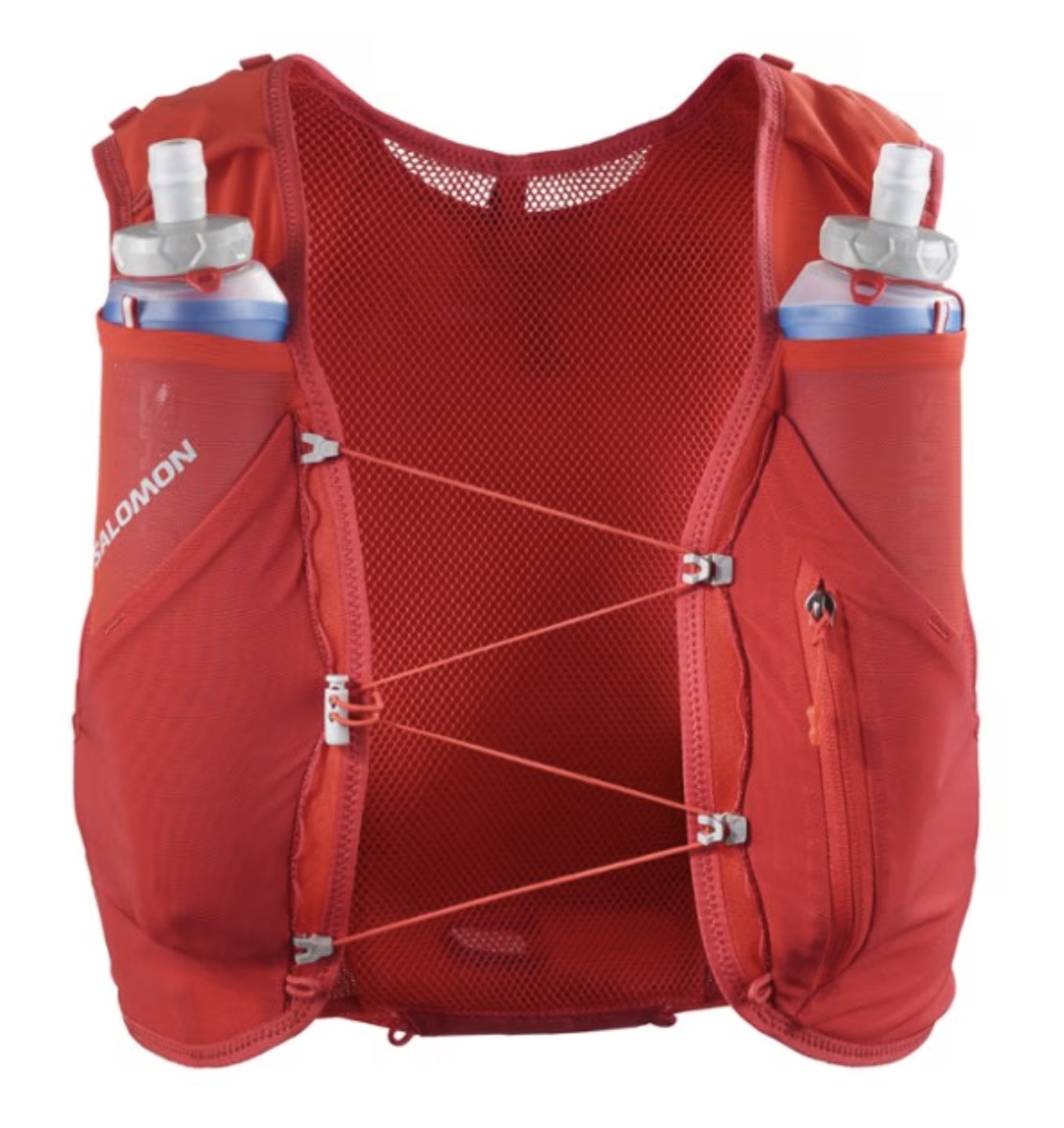
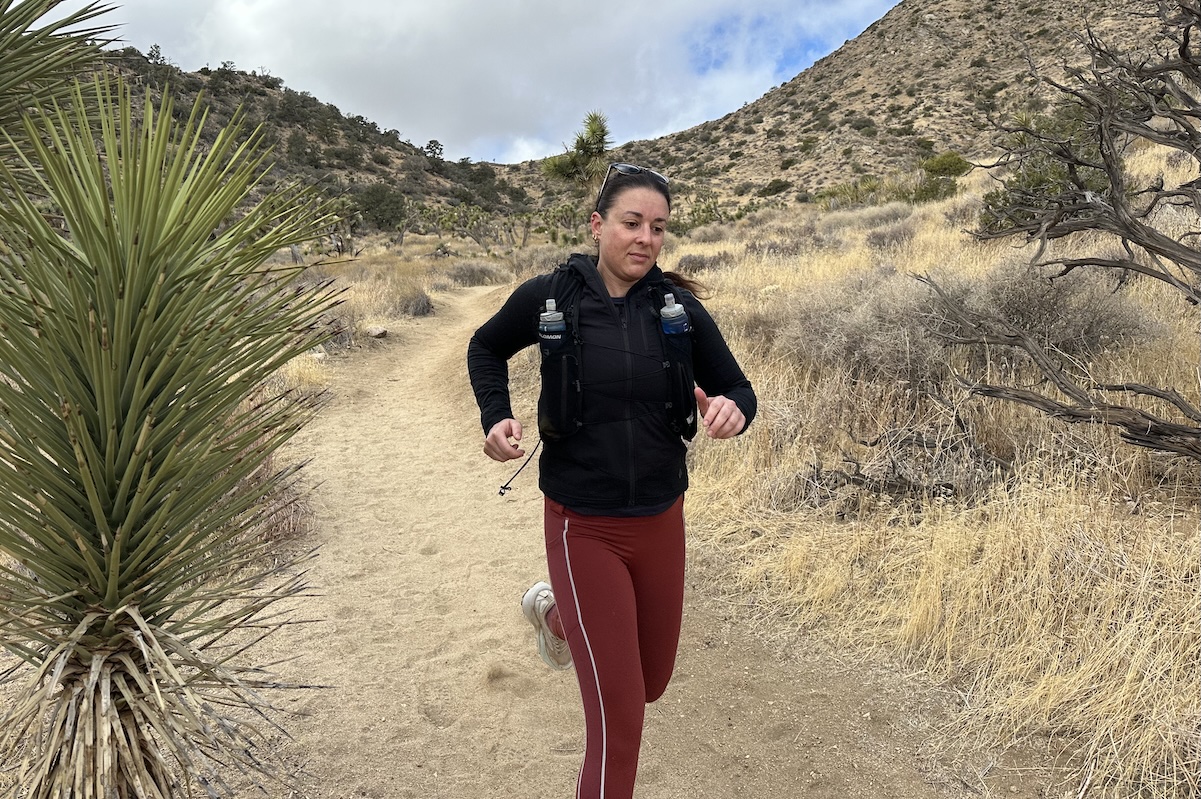
The best running vests operate like an extension of your body, with fit customizations and easy access to hydration, snacks, and layers. After logging plenty of miles in Salomon's ADV Skin 5 over the past several seasons, it continues to check all the boxes. With a stretchy, garment-like build and easy front and side adjustments, this vest minimizes bounce by keeping your load close, while side compression bungees and a sternum closure ensure a snug fit even when partially full. Salomon recently updated the fit of the ADV Skin with a Y-shaped construction to distribute weight better on the trail, and the five size options from XS to XL help dial in fit on the unisex build. We're also big fans of the front and rear hydration, numerous pockets, and multiple stash configurations for trekking poles. If you’re looking for one vest to accompany you on short lunch runs, full days on the trail, and everything in between, the ADV Skin is one of the most versatile and well-rounded options available.
Our gripes are few, but the ADV Skin does fall short on breathability: On hot days, we’ve been known to drench our vest with sweat. And if you’re moving quickly, the ADV Skin’s plethora of front and rear pockets does cause bounce, but we’ve only noticed it during speedwork on long runs. In the end, you’d be hard-pressed to find a better combination of fit, features, versatility, and durability—our vest is in great shape after three years of trail abuse and careless washing cycles. And in our opinion, Salomon's flasks are the most bounce- and slosh-free, and they have a newly conical build for easier stashing.
See the Salomon ADV Skin 5
 Category: Recreational
Capacities: 4, 8, 12L
Included hydration: 500mL soft flasks (2)
What we like: Incredible value and ample features for recreational runners.
What we don’t: No side storage and slightly less premium fit and finish.
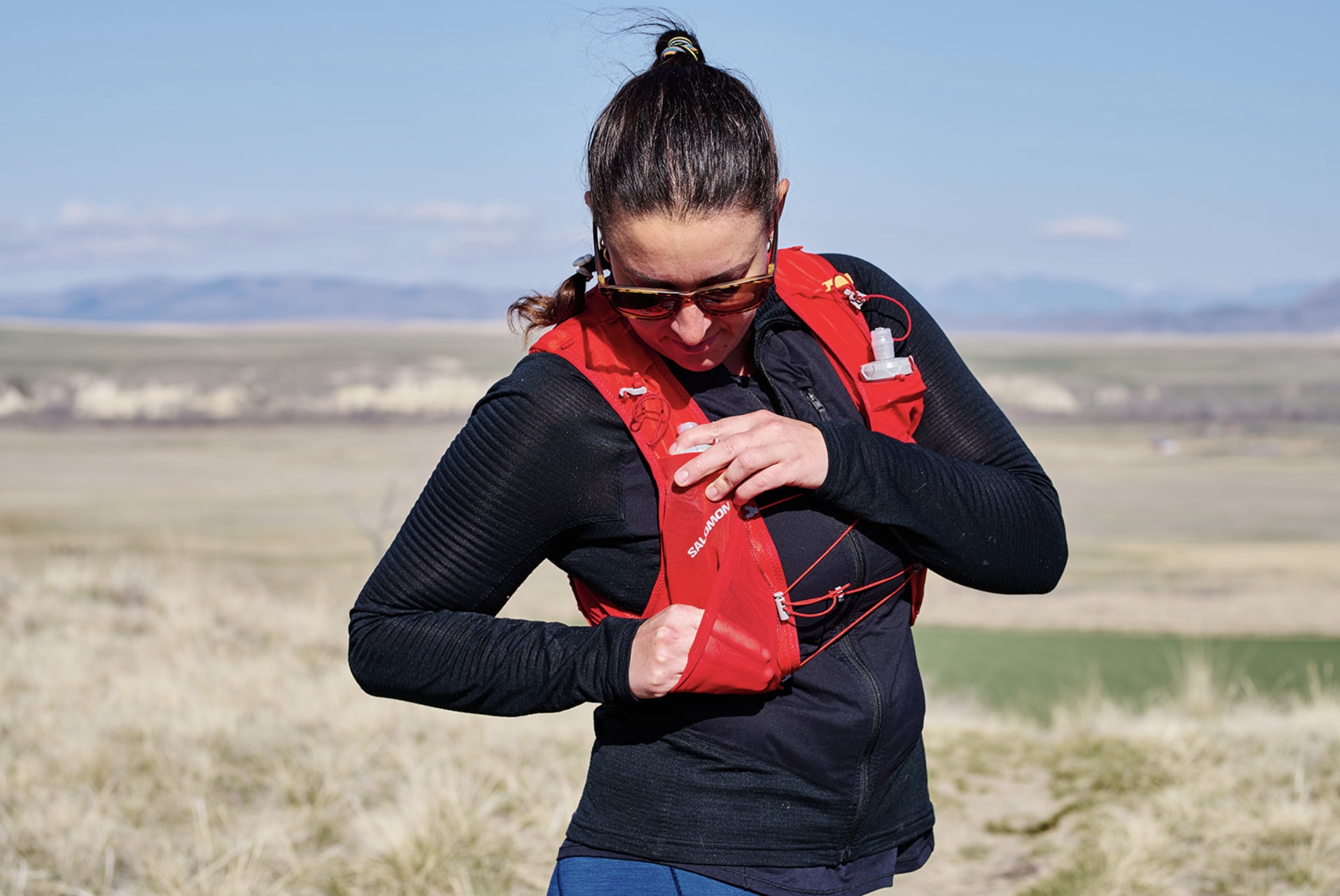
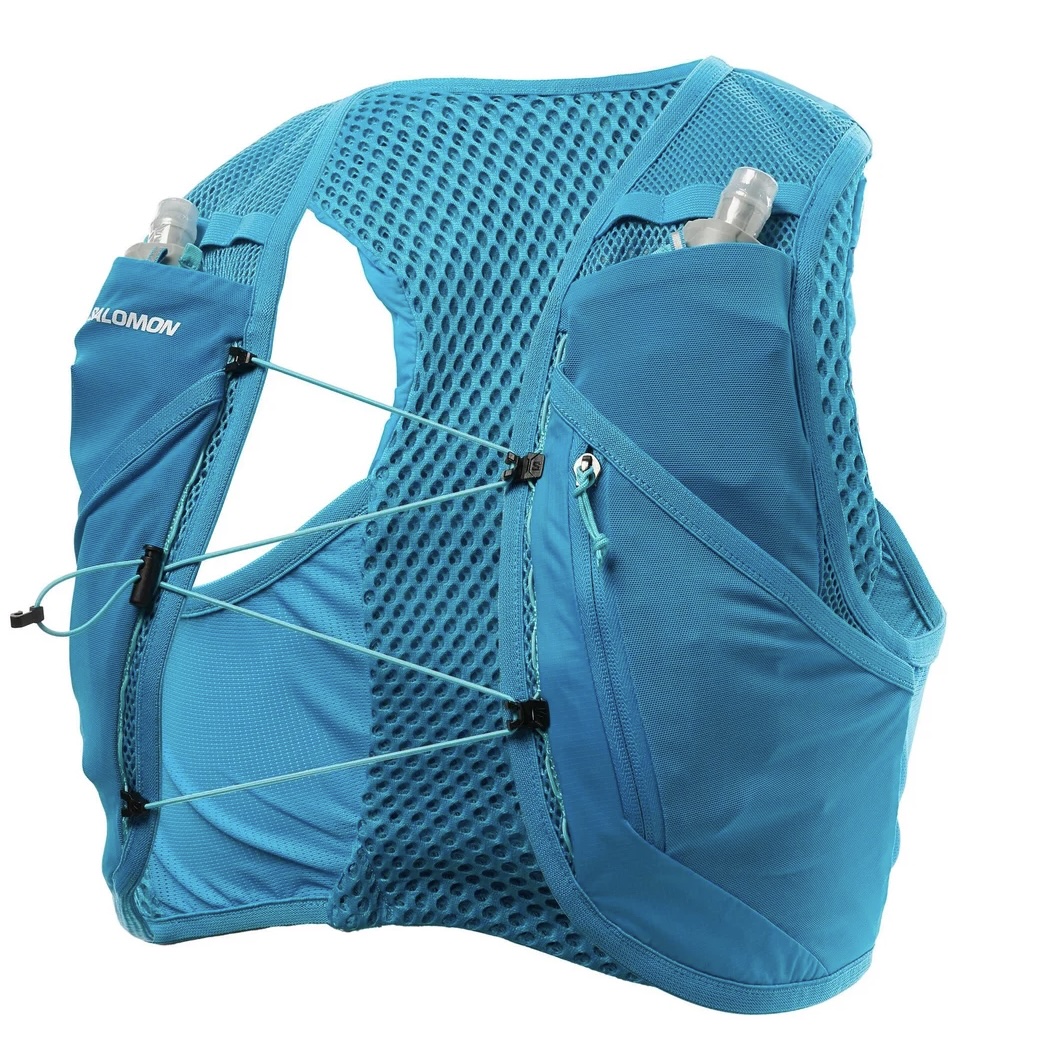
It’s hard to beat the Salomon ADV line's balance of quality, performance, and features, but the Active Skin 4 wins out in terms of value. For just $100, the Active Skin has many of the same design features as our top pick, at a more competitive price. You get four liters of capacity along with a bungee to secure a layer or compress loads, and it’s one of the only vests at this price to come equipped with a set of soft flasks. For runners of all abilities looking to save cash without compromising much in the way of performance, Salomon’s budget-friendly offering is good as it gets.
We expect to see trade-offs at this price, but our complaints are few with the Active Skin. Salomon reduced the stretch in the body fabric, which slightly affects fit and feel, and you don’t get the same underarm storage as in more premium designs. You also can't access the rear compartment from the side. But dollar-for-dollar, the Active Skin is a solid value and all-around performer. Salomon also offers 8- and 12-liter options for a slight price increase, a good option for runners who need the additional capacity.
See the Salomon Active Skin 4 See the Salomon Women's Active Skin 4
 Category: Performance
Capacity: 5, 10L
Included hydration: 500mL soft flasks (2)
What we like: Breathable and bounce-free design is great for speed.
What we don’t: Limited fit adjustments and storage.
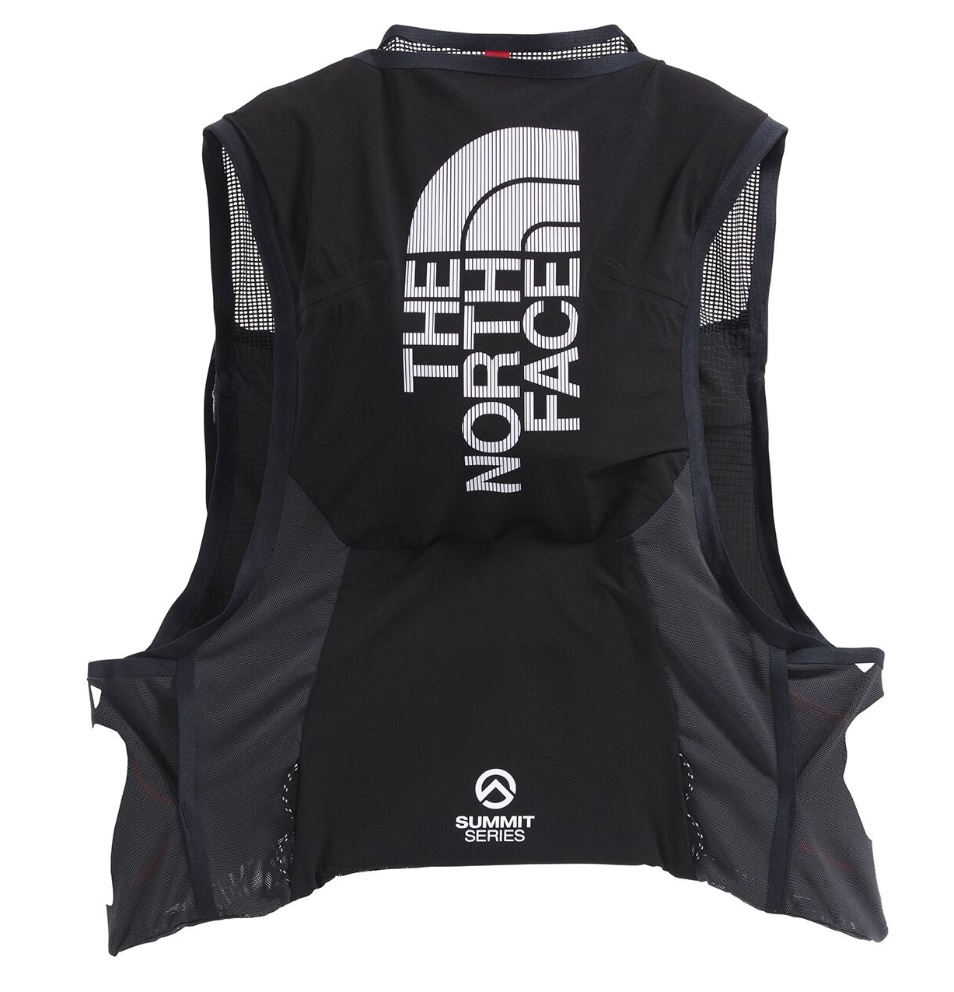
Recently updated from the 8-liter version to a more streamlined 5-liter, the Summit Series Run Vest 5 has a minimalist design that balances storage with a lightweight, stretchy build. Unlike the Salomon models, the Summit Series Run Vest forgoes a rear pouch, though it adds a horizontal slide-in pocket for trekking poles at the lower back. And like most performance-oriented vests, you get two included soft flasks, this time with pull cords to cinch the flasks in place for quick reloading at aid stations.
The North Face vest has a few things going for it over the more feature-heavy Salomon packs. At 6.2 ounces, it's just a hair over the ADV Skin 5's 6.0-ounce weight, but has an apparel-like build that reduces bounce with slightly more coverage. While the two vests have similarly form-fitting designs, the Summit Series Run Vest's lack of a rear compartment makes it more breathable and less prone to bounce. That said, some users have reported issues with getting a close enough fit, so we recommend trying the vest on in person. If you need more capacity, you can opt for the 10-liter model.
See TNF Summit Series Run Vest 5
 Category: Performance
Capacities: 5, 12L
Included hydration: 500mL soft flasks (2)
What we like: More than double the storage of the ADV Skin 5 for ultras, long unsupported efforts, and winter running.
What we don’t: The elastic sternum straps are too minimalist to reduce bounce with larger loads.
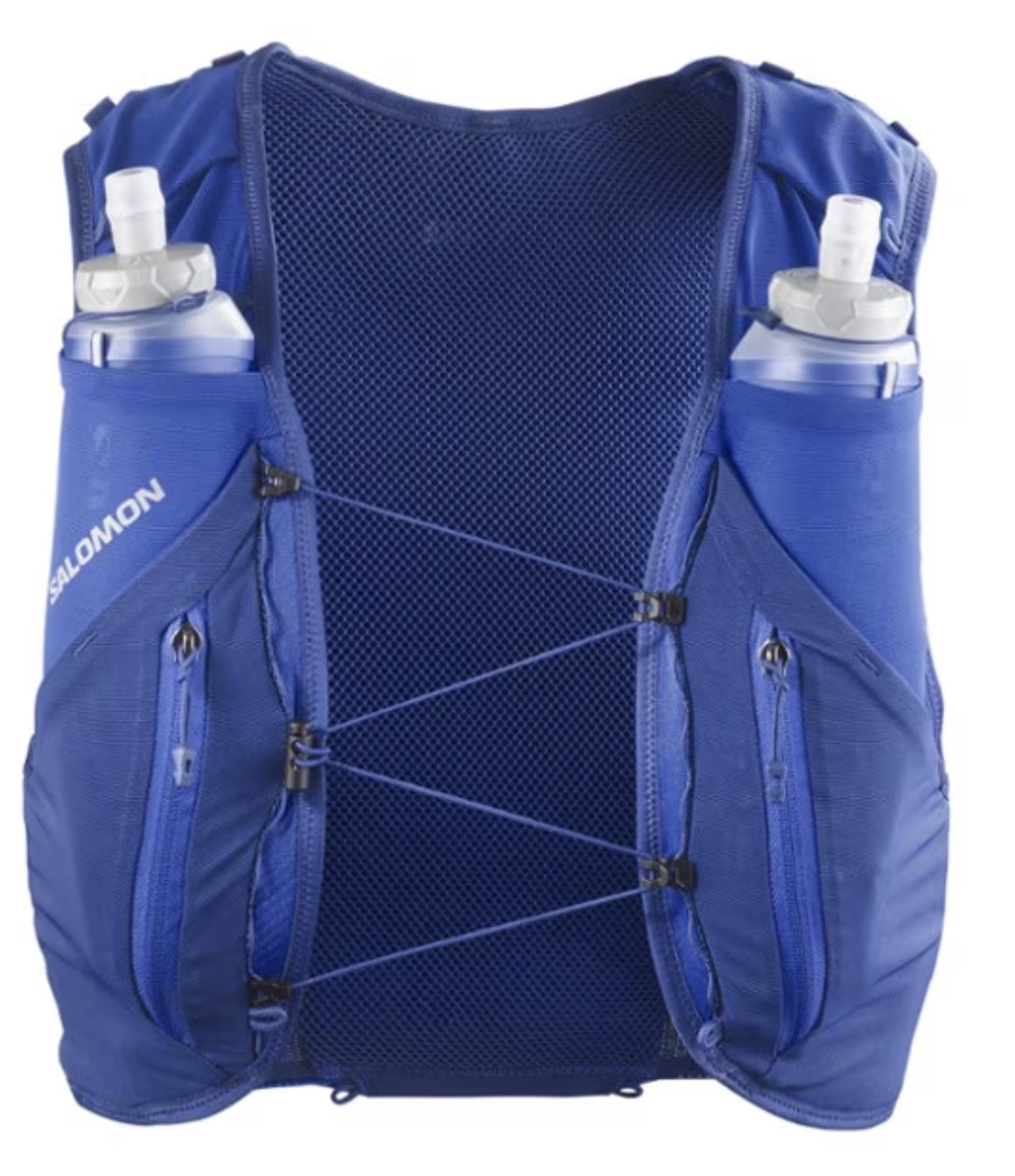
The ADV Skin 12 is everything we love about the ADV Skin 5—including comfort, fit, and convenient storage—but with more than double the capacity. For 2025, the pack features the same updated Y-shaped Sensifit build as the 5, plus the upgraded flask shape. The vest tacks on an extra zip pocket at the front, but the main event is the rear storage: Three stretchy sleeves expand to accommodate a healthy amount of gear, and an additional zip pocket boosts organization for small items. We've been impressed with the ADV Skin 12's carry comfort while hauling a 2-liter reservoir, though a full pack feels fairly bouncy with the minimalist front compression straps.
There isn't much to complain about with the ADV Skin 12, and its low weight of 8.4 ounces (without bottles) doesn't feel like overkill for smaller loads. There are sleeker packs out there, and the mesh backing isn't as soft as the Nathan Pinnacle 12 or Salomon Sense Pro 6. But overall, the organization is intuitive without being overkill, the bottles stay in place well, and it's an excellent all-around pack whether you're on a casual run/hike or tackling a competitive ultra. Salomon did away with their women's-specific model, but this unisex build comes in five sizes, and we haven't had any issues dialing in fit.
See the Salomon ADV Skin 12
Category: Recreational
Capacity: .75L
Included hydration: 18oz. bottle
What we like: Water bottle is easy to remove while running; low-bounce design.
What we don’t: Capacity is limited beyond keys, phone, and a gel.
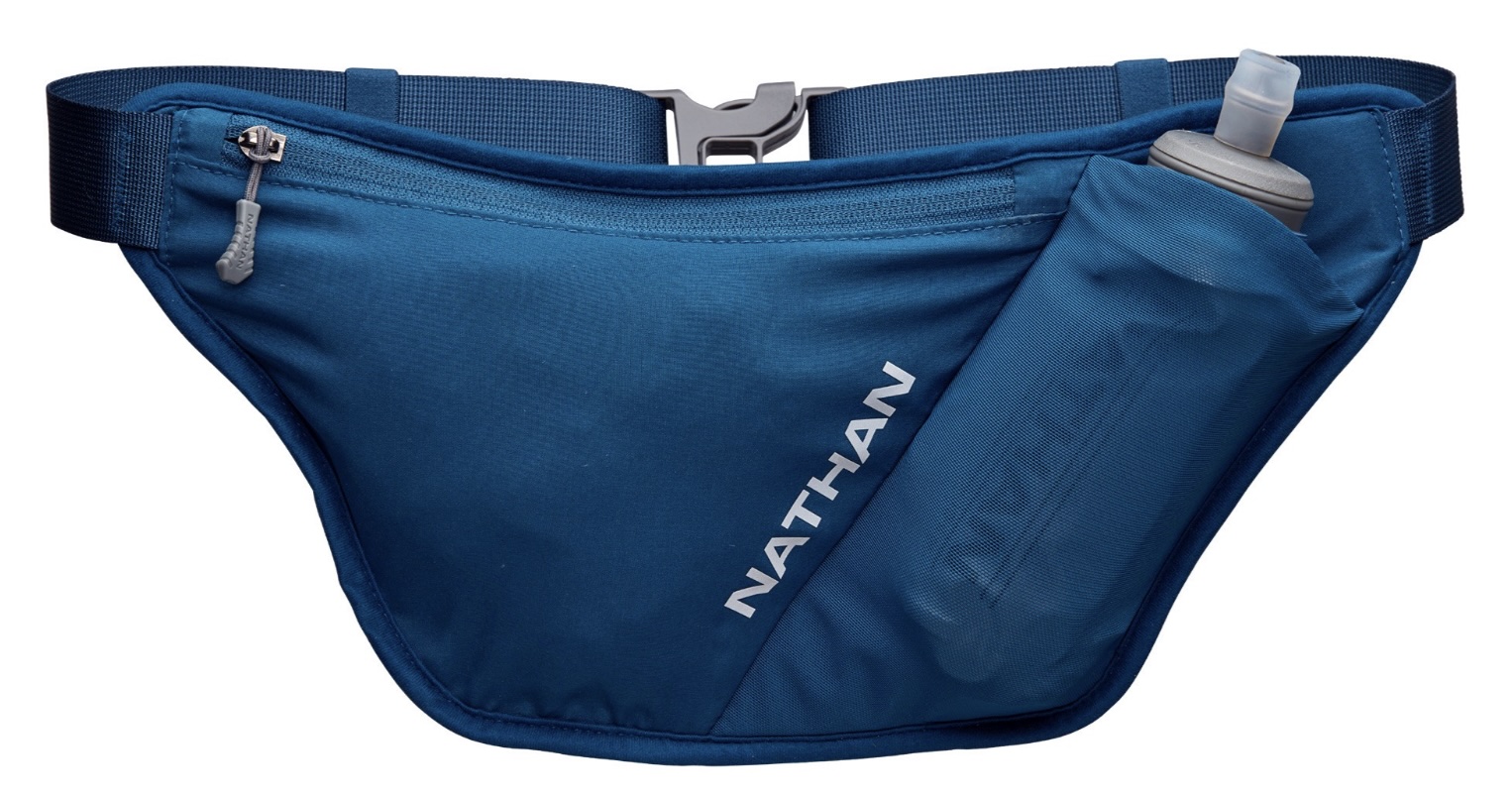
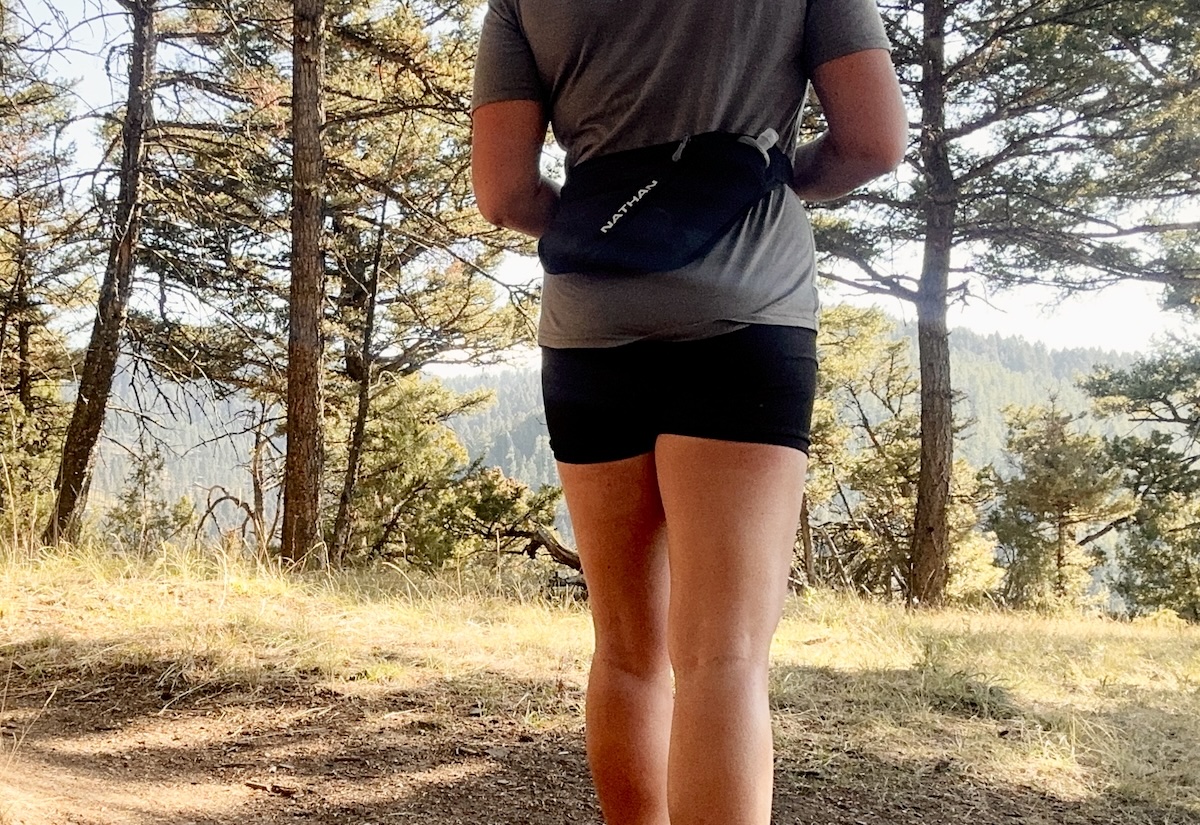
This sleek waist pack impressed us this season with its low-profile design and secure holster, which still lets us grab the bottle while on the move. Nathan included their 18-ounce soft flask with the pack, with an "ExoSpine" that has more structure than a fully collapsible soft flask. Aside from the bottle holster, this simple pack has just one zippered pocket: enough to carry the bare essentials and not much else. We were able to fit a gel, a car key, and a smartphone in here, but the smartphone was a squeeze due to the angled pocket design. The unisex design is just one size, but the webbing has a range of adjustability, and the front is just a simple, secure buckle that didn't budge during bouncy descents.
Despite having fewer features, the Pinnacle FeatherLite Hydration Belt unseated Janji's Multipass Sling Bag this year. While the Multipass Sling is a great travel pack and versatile enough for hiking and (some) running, the FeatherLite has a lower profile and closer fit, making it a better running option. What you lose is capacity: At less than one liter (not including water capacity), this is the smallest running pack on our list, and we wouldn't recommend it for runs where you need more than a single water bottle and a gel. In the future, we'd love to see a separate exterior pocket or a low-profile zipper around the side waistband, allowing us to stash a gel or credit card separately from the main pocket.
See the Nathan Pinnacle FeatherLite Hydration Belt
Category: Performance
Capacity: 12L
Included hydration: 1.6L reservoir
What we like: Stretch-free chest straps reduce bounce under any load.
What we don’t: We'd prefer two front zip pockets; the price is hard to justify.
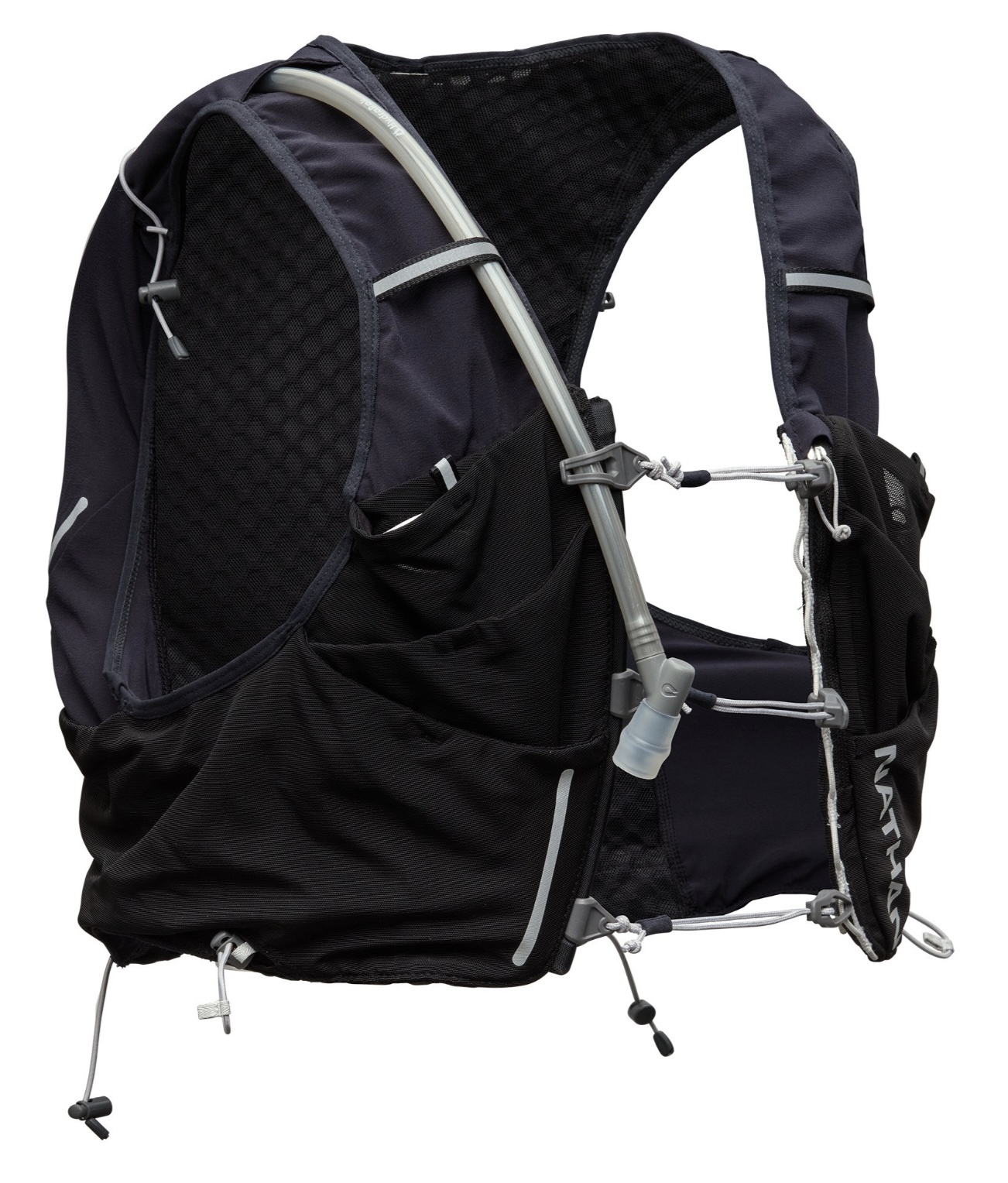
Nathan's Pinnacle Pro is the latest upgrade to their Pinnacle line. With a more abrasion-resistant fabric, updated pocket placement, and low-bounce design, it feels like a clear upgrade over past Pinnacle models. One of our favorite features is the diagonal-zip pocket that spans the entire back of the pack, providing easy access to a large rear pocket rather than the standard drop-pocket design of most packs. This helps prevent our small items from getting lost, and makes it easier to organize layers for races and extended runs. The pack also has three drop pockets on each shoulder strap: the tallest pockets fit a smartphone or soft flasks, and the left shoulder strap has a secure zip pocket similar to the Active Skin 4 and 5. The pack also comes with a 1.6-liter, hourglass-shaped reservoir that we've found is easier to stash in the pack than blockier bladders.
The Pinnacle 12 Pro feels similar in fit and function to Salomon's ADV Skin 12, but with less stretch in both the pack material and the front tension cords. We can get a closer, lower-bounce fit with the Pinnacle's non-stretchy chest straps, but they take more finagling to tighten. The pack's reduced stretch helps reduce bounce, though some runners might find it constricting. Ultimately, this pack landed lower on the list than our top 12-liter pack because of the price. While more than Salomon's price, and while the numerous front pockets allow maximum organization, it's easy to lose track of where you stashed small items. We'd also prefer two front zippered pockets in exchange for one of the drop pockets. Since the Nathan has less stretch than other models, some runners might want to size up for better adjustability.
See the Nathan Pinnacle Pro 12 See the Nathan Women's Pinnacle Pro 12
 Category: Performance
Capacity: 12L
Included hydration: 500mL soft flasks (2)
What we like: Great fit customization; lightweight, breathable mesh fabric.
What we don’t: Front pockets offer fewer options for organization than most.
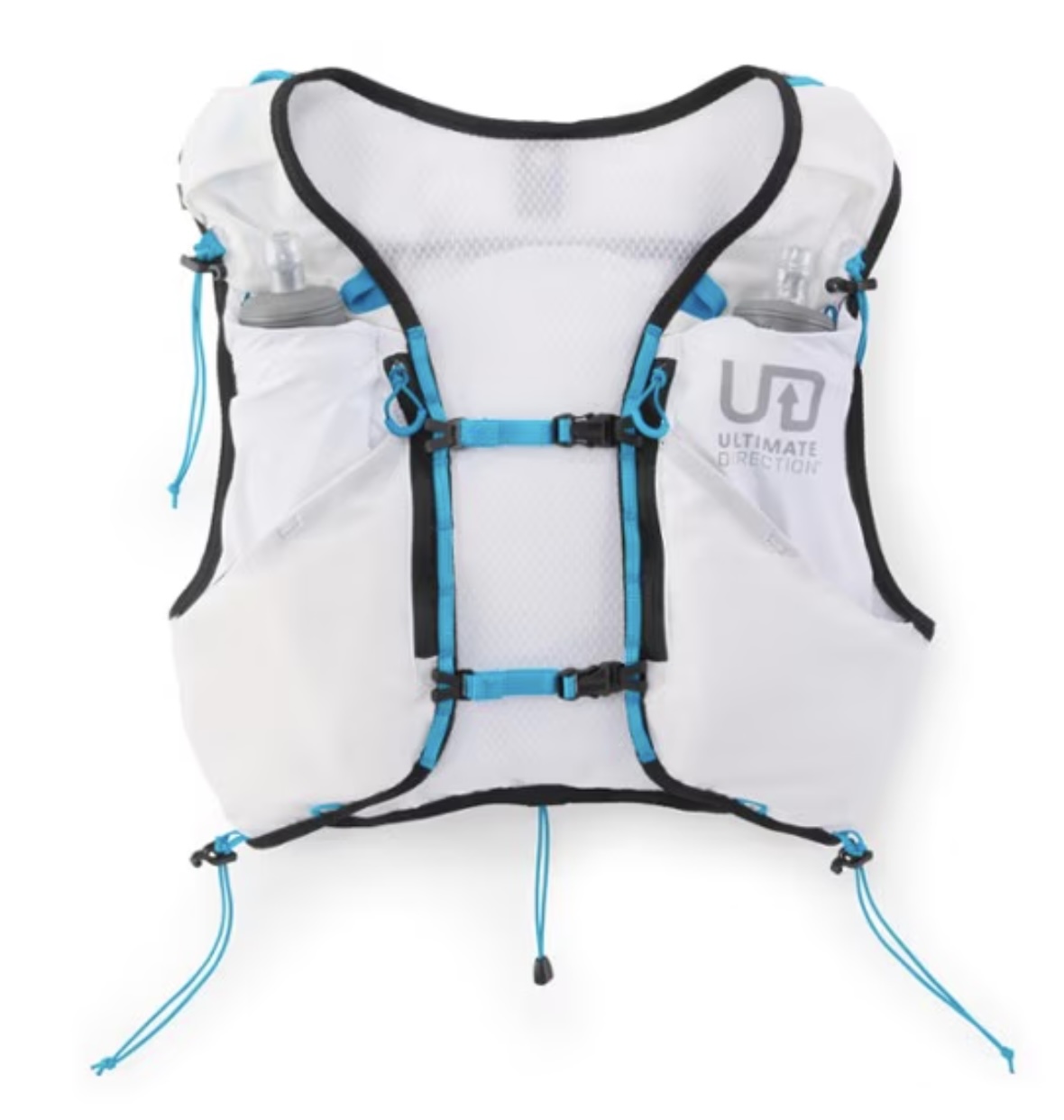
Ultimate Direction’s 12-liter Ultra Vest 12 is built to accommodate everything you need for a long day on the trail or racing an ultra, including snacks, hydration, layers, and essential safety items. See-through mesh makes it one of the most breathable vests in its class, stretchy side panels help ensure a precise fit, and the air-mesh build at the lower back reduces chafing. And we especially like the rear compartment, which includes a pass-through pocket for carrying extra layers.
The Ultra Vest 12 adds padding behind the front pockets to protect your ribs from the edges of your phone while maintaining a streamlined build that weighs under eight ounces for the medium. The pack is also compatible with a trekking pole quiver (not included) and has bungee loops at the front and back for multiple attachment options. We appreciate the dual front zippered pockets, and while some people might want more drop pockets, we often prefer simpler designs for easier organization. Overall, the Ultimate Direction Ultra Vest is a capable, lightweight option for unsupported runs and a good choice for ultras with aid stations.
See the Ultimate Direction Ultra Hydration Vest 12
 Category: Performance
Capacity: 6L
Included hydration: 500mL soft flasks (2)
What we like: Lightweight, race-ready build.
What we don’t: Only comes in one capacity; pricier than other Salomon options.
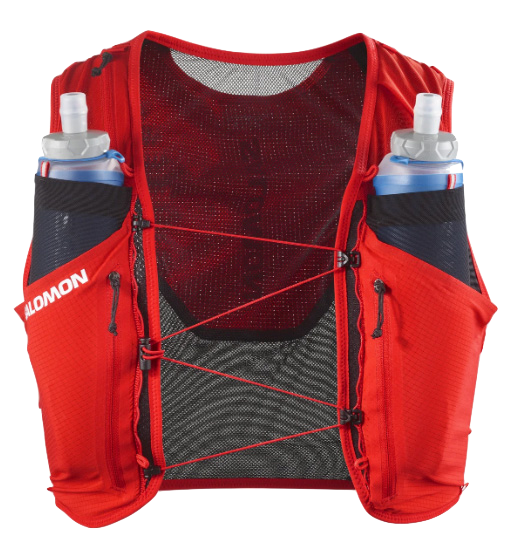
A stripped-down version of our top-ranked ADV Skin, the Sense Pro is built for racing with minimal materials, a limited feature set, and airy 3.8-ounce weight, sans bottles. The vest’s stretchy material feels more like an actual garment than those of other designs we tested, reducing rubbing and tight spots from bulkier designs. For front storage, the dual zippered pockets make it easy to stash gels and car keys, and the rear compartment can be accessed from either side. The Sense Pro comes with Salomon’s S/Lab flasks, which are easy to drink from while moving and have a tapered design that's easy to stash at quick-turnover aid stations.
The Sense Pro 6 is so streamlined that it doesn’t accommodate a bladder, so the vest is limited to race scenarios where you can refill the flasks regularly at aid stations. And while we love the close fit, the thin materials don't have the durability of some heftier Salomon packs. Finally, the lineup only includes the six-liter model, which might limit its overall appeal. That's about our only gripes, though. We've found this vest to be more breathable than the ADV Skin series and softer against bare skin. It's also a great race alternative to the North Face Summit Series 5L for racers who prefer having a rear pocket.
See the Salomon Sense Pro 6
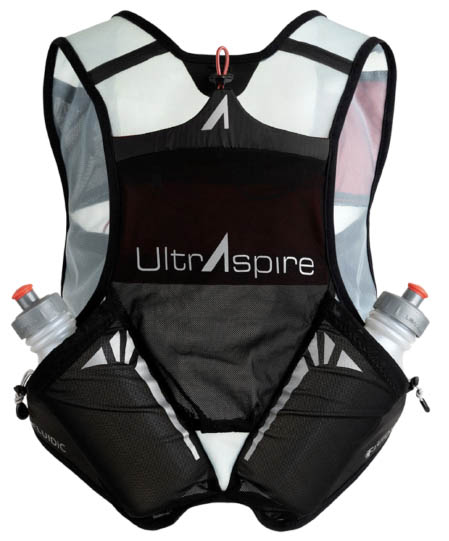 Category: Performance
Capacity: 6L
Included hydration: None
What we like: Contoured fit is comfortable and rides close to the body.
What we don’t: Doesn't come with bottles and can't accommodate a reservoir.
UltrAspire doesn’t have the recognition of many of the name brands, but their Momentum is a comfortable option for race day and training runs. Its most notable feature is its contoured fit, which traces the curves of the torso better than much of the competition. The result is a custom-feeling build that rides close to the body and effectively distributes the load. Unlike our other top picks, which carry water in front via flasks or on the back with a reservoir, the Momentum has two rear bottle holders, placing the weight at your lower back rather than higher on your torso. UltrAspire sells its compatible hard-sided UltraFlask 550 bottles separately, which is somewhat annoying but makes sense given the $115 pack price.
The updated UltrAspire Momentum 2.0 builds on the original design with improved water bottle holsters that make it easier to stow your flasks on the go. An upgraded shoulder pocket now accommodates larger cell phones, and the rear stash replaces the zipper closure for a more versatile, slightly larger drop-in pocket. Unfortunately, the Momentum 2.0 doesn’t accommodate a reservoir—UltrAspire’s Alpha 5.0 is a better choice for those who prefer to sip hands-free. But you do get nice features like soft microfiber edges that don't abrade your skin, and a useful magnetic pill pocket. If lumbar storage or hard bottles appeal to you, the Momentum is worth a closer look.
See the UltrAspire Momentum 2.0 Race Vest
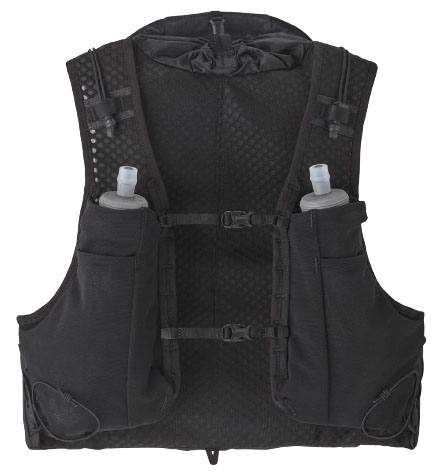 Category: Fastpacking
Capacity: 18L
Included hydration: 500mL soft flasks (2)
What we like: A high-capacity build that doesn't sacrifice a close fit.
What we don’t: No secure storage at the front; some users report discomfort from the collar.
Patagonia's Slope Runner lineup holds its own in a crowded field, and we love the Exploration Pack for fastpacking missions that take you far from the trailhead. This 18-liter pack holds a lot of gear yet remains vest-like and running-ready, making it practical for outings that combine hiking and trail running. We especially like the “cinch-forward” closure, with drawcords at each shoulder to bring the load closer to your back. And Patagonia didn’t skimp on fastpacking-ready features, including front trekking pole loops, lash points for securing a helmet, and a PU-coated exterior for added assurance in inclement weather. It's a thoughtfully designed kit for mountain athletes carrying a light all-day load.
However, the storage layout isn't the best. While the main compartment is generous, the small opening makes packing and unpacking fairly tedious, and it doesn't come with a zippered front pocket for stashing your phone. The mesh pockets work but don’t feel entirely secure, and you’ll need to take the pack off to access the rear storage. Finally, some users report that the collar can cause discomfort at the back of the neck. Weighing the pack down with water, layers, and other gear will help, but we recommend trying it on before you buy. If the fit works, the Slope Runner Exploration is a great addition to the fastpacking space. For full overnight storage options with a vest-like design, the Outdoor Vitals Skyline Fastpack is a comfortable 30-liter option.
See the Patagonia Slope Runner Exploration Pack
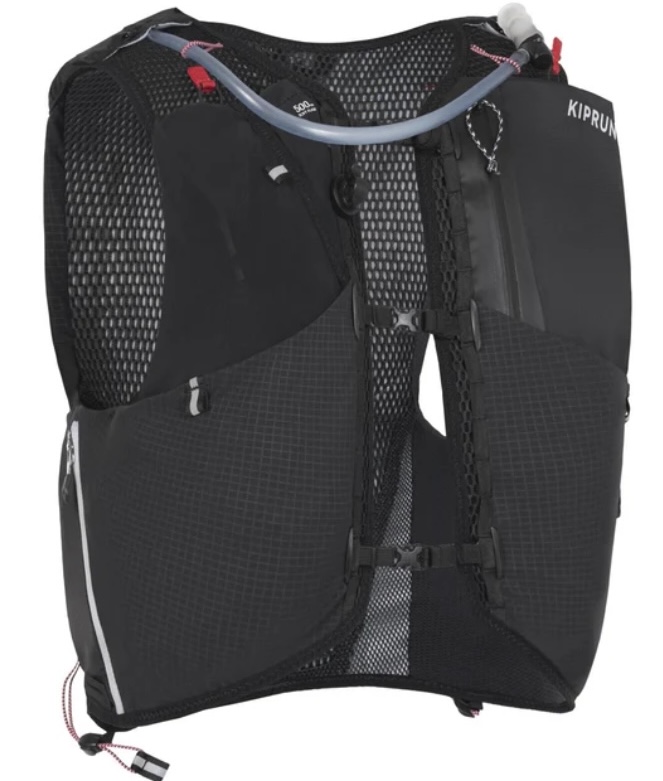
Category: Performance/fastpacking
Capacity: 15L
Included hydration: 2L reservoir
What we like: Tons of storage and organizational capacity, including a waterproof phone pocket.
What we don’t: Fit across the chest and shoulders is hard to nail; chest straps tend to loosen.
The 15-liter Ultra Trail is the largest-capacity model in Decathlon’s newly launched line of Kiprun running packs. This feature-rich model is snug enough for moving fast while spacious enough for fastpacking jaunts, and with 15 pockets, it’s almost comically equipped to handle any amount of snacks and layers for a long day. With traditional cinching pockets for a pair of 500ml bottles, large front mesh stash pockets, and dual zippered side pockets, the pack offers plenty of access without slowing you down. The additional waterproof, zippered pocket on the front provides safe phone storage, and the stretchy mesh at the back leaves space for poles or an extra jacket. Three adjustable chest straps and sturdy side cinches also help reduce bounciness when the Ultra Trail is loaded to the brim, and we were able to move at varying paces with minimal bounce on ascents and descents.
At 12 ounces, the 15-liter Ultra Trail is a reasonably lightweight option for all-day missions or fastpacking goals, but it feels bouncy when we carried only water and a few snacks. We also had trouble with the sizing. Decathlon is a European brand, and the unisex design only comes in three sizes. The fit was hard to nail, and we ended up sizing up to get proper tension across the chest straps. Even then, the design isn’t as form-fitting as some of the top offerings on this list. Finally, we noticed the chest strap material tended to loosen during testing. We’ll continue to put this through its paces, but we predict durability issues with the straps after more extended use. Overall, while this functions best with a full load and wouldn’t be our top choice for a short day, the Ultra Trail handles weight well and offers great organization if you can remember where you stashed what.
See the Kiprun Ultra Trail
| Running Vest/Pack | Price | Category | Capacities | Hydration | Weight* |
|---|---|---|---|---|---|
| Salomon ADV Skin 5 | $145 | Performance/recreational | 5, 12L | 2 soft flasks | 6.0 oz. |
| Salomon Active Skin 4 Women's Active Skin 4 | $100 | Recreational | 4, 8, 12L | 2 soft flasks | 6.9 oz. |
| TNF Summit 5L Run Vest | $149 | Performance | 5, 10L | 2 soft flasks | 6.2 oz. |
| Salomon ADV Skin 12 | $165 | Performance | 5, 12L | 2 soft flasks | 8.4 oz. |
| Nathan Pinnacle FeatherLite Hydration Belt | $66 | Recreational | .75L | 18oz. bottle | 3.7 oz. |
| Nathan Pinnacle Pro 12 Women's Pinnacle Pro 12 | $220 | Performance | 12L | 1.6L reservoir | 6.9 oz. |
| UD Ultra Hydration Vest 12 | $175 | Performance | 12L | 2 soft flasks | Unavail. |
| Salomon Sense Pro 6 | $180 | Performance | 6L | 2 soft flasks | 3.8 oz. |
| UltrAspire Momentum Race 2.0 | $115 | Performance | 6L | None | 8.0 oz. |
| Patagonia Slope Runner Exploration | $179 | Fastpacking | 18L | 2 soft flasks | 13.6 oz. |
| Kiprun 15L Ultra Trail | $149 | Recreational/fastpacking | 15L | 2L reservoir | 12 oz. |
*Weight listed does not include reservoir or bottles
The staff at Switchback Travel are big runners. From peak-bagging objectives to ultramarathons and relaxed after-work jogs, they do it all in all four seasons. This list began in 2021 with 19 vests handpicked by former senior editors. Contributing editor Maggie Slepian manages the guide as of 2025, using her trail miles in New Hampshire, Montana, and Utah to bring a range of climates and distances to the test arena.
Comfort is our number one concern when testing running vests, and we look for designs that are both bounce-free and breathable. Fit is another important consideration, often the result of the harness system design and sizing selection, as is the organization layout—easy access to our phone, snacks, and an extra layer is paramount. This year, we trimmed our list to eliminate redundancies and ensure our top-tested running vests were the best in each category. We focused on a narrower range as well, removing any packs that didn't fit as vests and weren't directly tailored for running.
.jpg)
We’ve chosen to combine hydration vests and packs under one umbrella and often refer to both as “vests” because of the front-of-the-body storage, though brands often use the terms interchangeably. As categories, packs and vests have similar intentions: They're both purpose-built for toting minimal necessities, prioritize a close fit, and offer on-the-go access to food, water, and other supplies. Unlike standard backpacks, they sit high and tight to the torso, moving as an extension of the body rather than bouncing up and down with each step.
.jpg)
That said, packs and vests do differ: Running vests sit flush against the torso and extend under the arms (like a standard vest), while a pack has more defined shoulder straps and a dedicated back compartment. As a result, vests like the Salomon Sense Pro 6 are intended solely for running. These often have less capacity than true packs, are more comfortable for moving quickly, and feature underarm storage and side drop pockets. A true pack, like the Black Diamond Distance 15 (not listed), sits farther from the body, doesn't have the same body-hugging shape, and won't be as comfortable for running as a vest-style option. A vest and pack can have similar capacities, but the intended use and comfort at speed will vary.
But as gear companies continue to innovate, the line between the two categories has become blurred, resulting in models like the Ultimate Direction Ultra Vest 12 (pack or vest?). In the end, the terminology matters less than the function. The majority of runners can’t go wrong with a true vest, but if you need a higher-capacity hauler for long days or more complex terrain, a pack-like design is likely the better option... just don't plan on running as much.
.jpg)
Running can take many forms, from mile-long lunch-break outings to full-day backcountry ultras. To accommodate this, hydration vests for running come in a wide variety of styles, from minimalist race models to capable all-day designs. For clarity, we've broken them down into three categories: recreational, performance, and fastpacking.
Recreational
Running vests aren’t just for folks who compete in ultras or spend all day in the mountains. For the casual runner looking for a way to carry water or gear, a recreational vest is a great place to start. The defining feature is typically affordability: At around $100-$130, recreational vests are often half the price of a performance or fastpacking vest, ideal for runners who don’t need to spend up for a precision fit or ultralight materials. Many of these models place a premium on versatility, with increased capacities or more pack-like designs that can double as gear for activities like hiking or biking. Finally, recreational vests will often have unisex or one-size-fits-all sizing, which is great for carrying layers or sharing between friends. Our favorite in this category is the Kiprun 15L Ultra Trail, which can pack a full day's worth of snacks and is comfortable for both running and hiking.

Performance
Vests in our performance category are designed for more serious runners who are willing to spend more for better comfort, quality, and weight savings. These top-of-the-line models have a close-to-body fit and a plethora of easy-access pockets at the front and sides. Performance running vests range in capacity from roughly 1.5 to 12 liters and run the gamut from minimalist race-oriented models to fully featured designs for unsupported missions. The former often includes soft flasks, thin fabrics, and minimal features, while the latter has hydration-reservoir compatibility, trekking-pole attachments, and compression bungees. To accommodate both ends of the spectrum, manufacturers often offer performance vests in multiple capacities, such as Salomon's ADV Skin 5 and ADV Skin 12. Whether you’re competing in a supported race or headed for a day in the hills, a performance vest will be your best bet for the rigors of long-distance trail running.
.jpg)
Fastpacking
With a focus on speedy overnights or multi-day adventures, fastpacking requires hauling additional gear, such as a shelter, technical equipment, or ice tools. This means vests in this category are the largest and most featured, with capacities at or above 15 liters. These packs will have durable fabrics, add-ons like ice axe loops, and typically include both a reservoir sleeve and front bottle pockets for maximum water capacity. To pare down our list, we removed packs that didn't fit the vest category, like the Black Diamond Distance 15, but Patagonia's Patagonia Slope Runner Exploration is a good vest-style example.
.jpg)
Capacity should be one of the first considerations when choosing a running hydration vest. Vests generally range from 1.5 to 15 liters, while some fastpacking models for mountain pursuits will be larger. A number of factors come into play here, including weather, whether your run is supported or unsupported, and its length and difficulty. It’s also crucial to consider access to streams, lakes, and other water sources. If you’re headed out for a full day, you might consider carrying an ultralight water filter or purifier so that you don’t have to shuttle more water than necessary—our favorite for running is the Katadyn BeFree. Finally, make sure to choose a pack with more storage than you need, as an overstuffed pack can be quite uncomfortable, especially over longer distances.

The majority of runners will opt for a vest in the 4- to 10-liter range, which is enough for carrying a liter of water, snacks, and an extra layer. Consider a higher-capacity pack (12-14 liters) for all-day runs requiring more food and water, and perhaps some of the 10 essentials. We find these packs to be the most versatile—load them up when you need the space or use the external compression bungees to snug down a less-than-full load.

Every vest here has a listed capacity in liters, but unfortunately, this spec isn’t standardized. Some capacities include the space taken up by the reservoir, while others do not. Further, vests with stretchier fabrics are likely to have more storage than their capacity suggests, and a size small pack will almost always have less space than a size large of the same model. Finally, consider where the storage is located and how spread out it is, especially if you plan to carry bulky items.
Running vests are lightweight and often streamlined, but pack a big punch when it comes to organization. There are a number of factors to keep in mind when loading your pack, including accessibility of gear (you’ll want to be able to reach all the essential items without removing your pack), security (valuables in zippered pockets vs. dump pockets), and weight distribution—after all, a properly balanced load is always more comfortable.
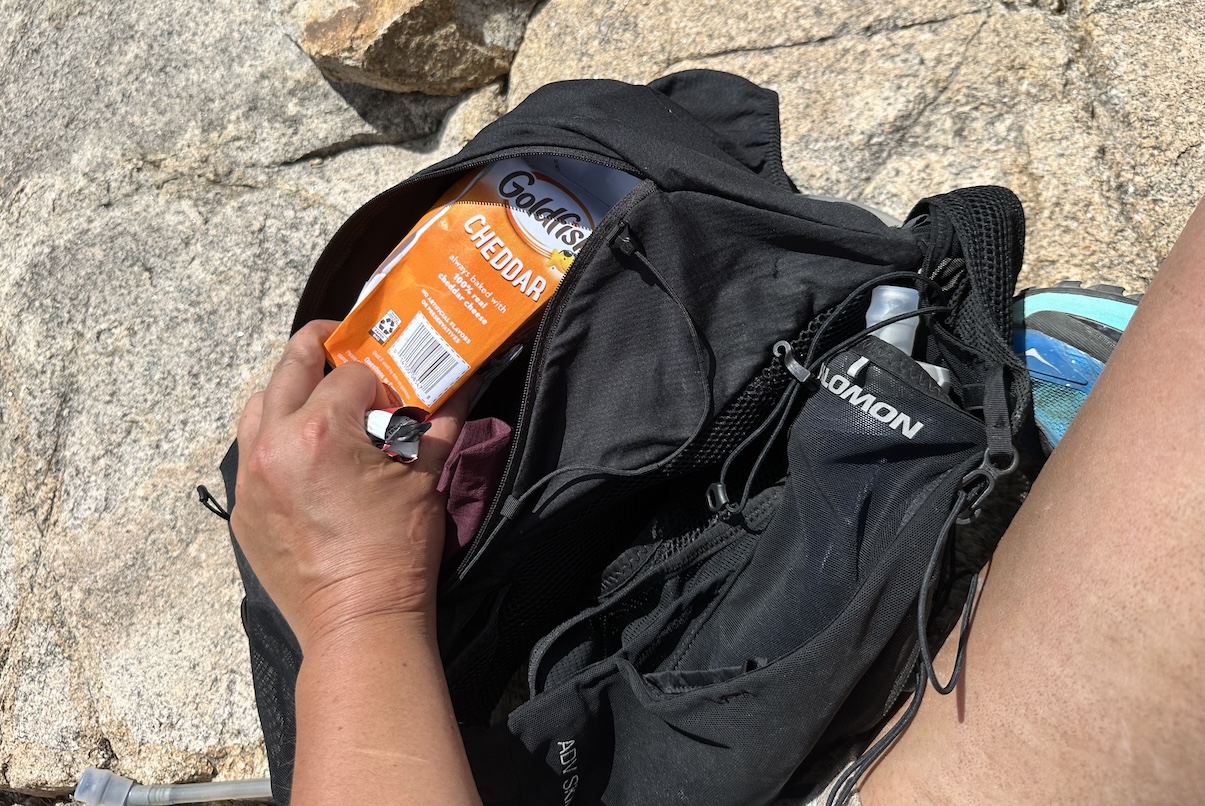
Front Pockets
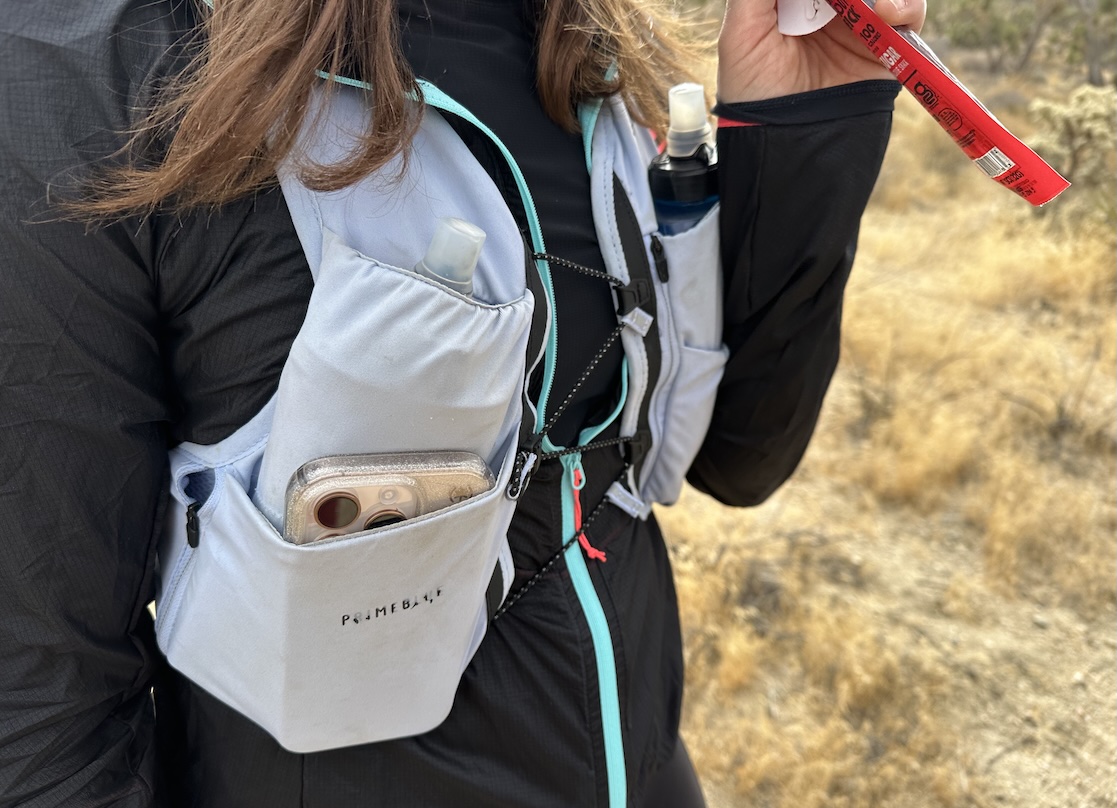
A running vest’s front pockets are ideal for accessing snacks, water, and other supplies on the go. You’ll find a wide variety of organization, including dump pockets (great for stashing gels and soft flasks), zippered pockets for valuables, sweat-proof pill pockets, and even waterproof zippered pockets for cell phones. Be sure to take a good inventory of what you’ll need to access with your pack on and make sure there’s ample space. Security is also important, and we appreciate zippered or cinch closures on the front of our vest to help keep our belongings secure when we’re bending over.
Side Pockets
If you opt for a vest that wraps around your body (rather than a backpack-style design), chances are it will come with pockets under the arms on each side. In general, we love the additional storage these offer, although we usually only use them when our front pockets are full. Most side pockets are stretchy dump pockets, and many also extend to the rear compartment, allowing you to grab a layer without taking off your vest. In the end, whether or not a vest has side pockets will not make or break our decision, but the added organization and weight distribution certainly come in handy.
Rear Compartment
Not all vests have rear storage, including some streamlined race designs, such as The North Face Summit 5L. Moreover, many runners prefer to carry their gear and food items along the front and sides to improve weight distribution, comfort, and accessibility. That said, for those who want to carry more than a liter of water and a few snacks, the ability to store gear on your back is essential.
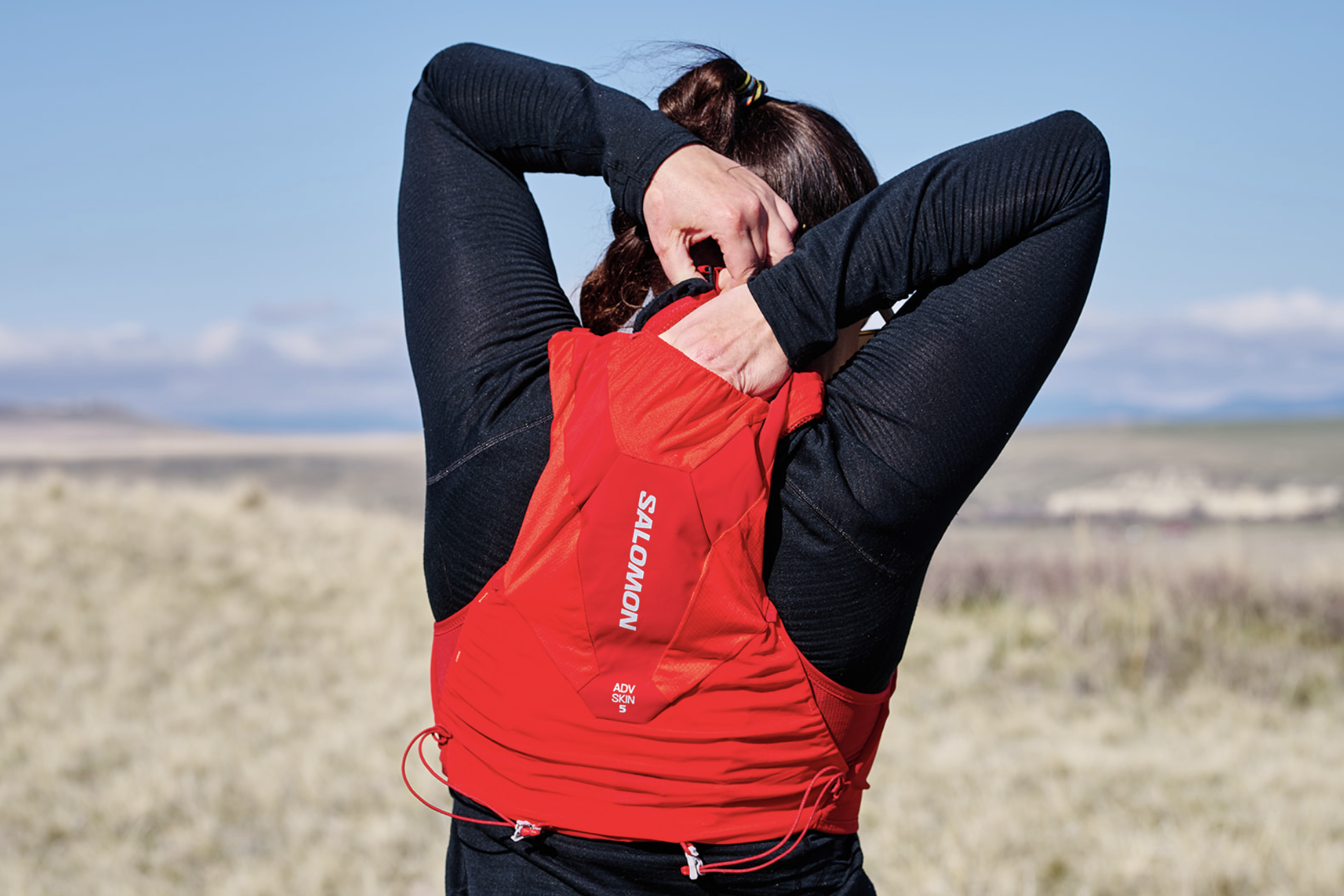
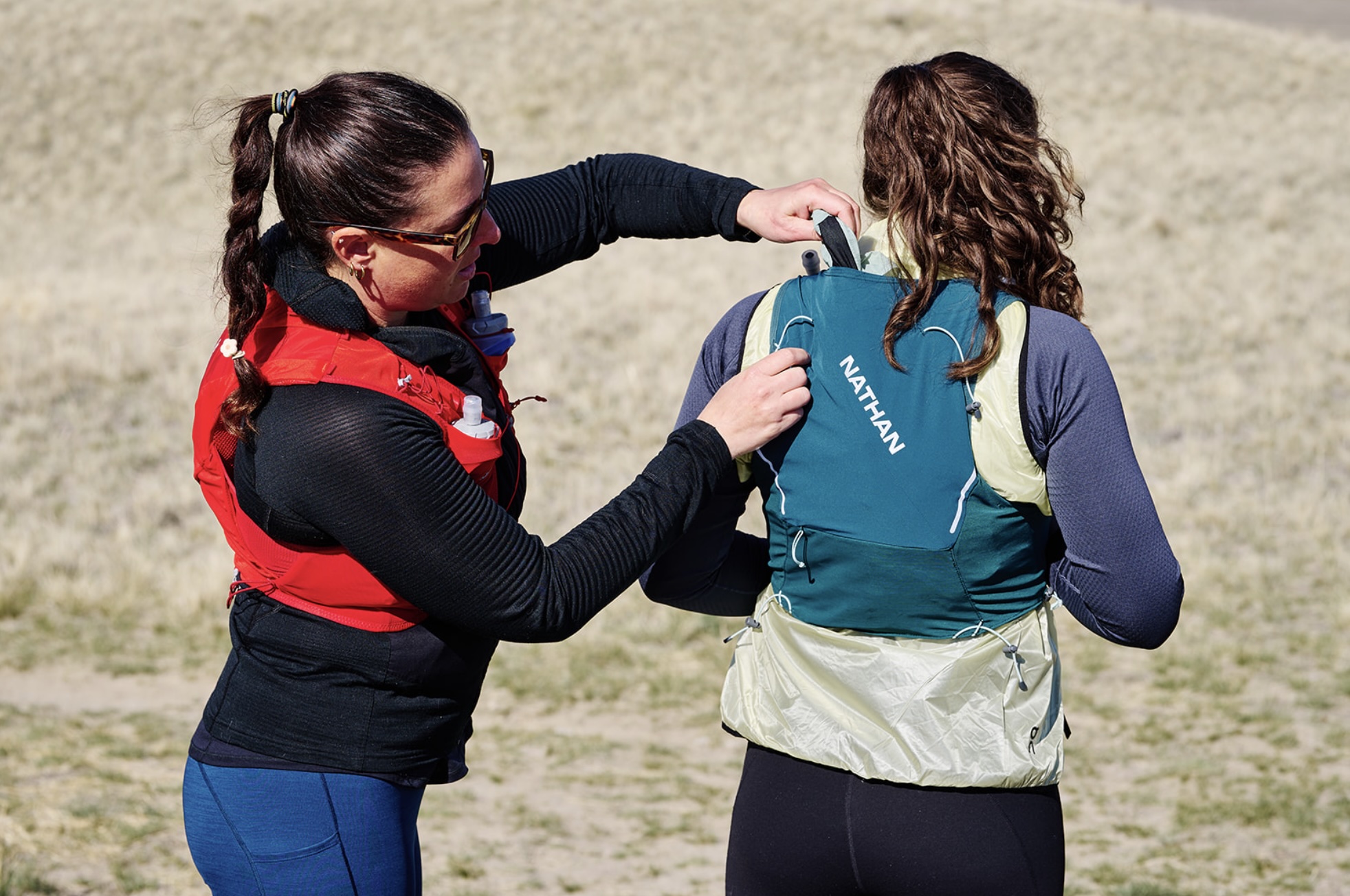
Rear compartments are usually accessed with a top-down drop pocket, like the Salomon ADV Skin 5, or a full-zip access, like the Nathan Pinnacle Pro 12. As mentioned above, most designs allow you to access their rear compartment from the sides, making it easier to stuff a jacket or trekking poles away or to retrieve your water filter without removing the vest. Finally, most backpack compartments have a built-in reservoir sleeve, and some are even insulated to keep your water cold and separate from your back.
Quick and easy access to water is one of the biggest incentives for wearing a vest, so hydration compatibility should be a key consideration. In general, vests accommodate water in two main ways: bottles and/or hydration reservoirs. However, keep in mind that not every vest comes with an included bladder or bottles. Especially when buying online, be sure to do your research beforehand so you know what comes stock and what you’ll have to purchase separately. To help, we’ve listed the included hydration (if any) in our product specs and comparison table.
Water Bottles
Bottles range in size from about 250 to 600 milliliters and are a popular form of hydration for supported races, short runs, and routes near natural water where you can replenish your supply. Bottles are easier to refill than reservoirs and don’t require you to take off your vest. It can also be easier to monitor how much liquid remains. Most runners also carry two bottles, allowing them to drink two different liquids—often water and an electrolyte drink—and balance the weight.

Bottles are typically stored on the shoulder straps and stay in place via tall, stretchy pockets. Most bottles are compatible with straws as well, which brings the water close to your mouth like a reservoir hose. Some vests, like the UltrAspire Momentum 2.0 Race, have bottle pockets along the lumbar, though this isn't as common. The majority of water bottles are soft flasks, which are lightweight, collapse in size as you drink, and allow you to drink without removing the bottle from the vest. Soft flasks, however, are more difficult to stow away than hard flasks, and they’re less durable as well.
.jpg)
Hydration Reservoir (Bladder)
Some runners will use a hydration reservoir (also referred to as a bladder) for longer runs with limited resupply opportunities, as it can hold more liquid than bottles. We prefer a reservoir over bottles for all-day outings. The greater capacity and easier accessibility mean we stop less and hydrate more often. However, reservoirs make it difficult to monitor how much water you have left, are time-consuming to refill, and can be challenging to stuff into a full pack. They also place more weight on your back than on your front, which can be a downside for some runners.
.jpg)
While some of the more streamlined performance vests are not compatible with hydration reservoirs, most models feature a dedicated sleeve and hose attachment points. Reservoirs range in size from around 1.5 to 3 liters, which is the maximum we recommend for running. Those with a slider across the top are easier to fill without removing from the pack, and we find that they also provide the most secure closure. We also prefer nozzles that feature an open/close function—we’ve accidentally sat on our hose and drained our bladder more times than we’d like to admit. Finally, when it comes time to clean, bladders with wide openings provide the easiest access.
For longer days that require extra supplies, external storage is a good option. Most race-specific vests don't offer much external storage, but we see more carrying features on larger-capacity models in the performance and fastpacking categories. These include trekking pole attachments, ice tool holders, and compression straps and bungees.
Trekking Pole Attachments
For those who run with lightweight trekking poles, it’s nice to have a way to attach them to your vest so you can go hands-free when needed. There are a range of solutions for trekking pole storage, including along the shoulder straps, diagonally in front or across the back, or on either side of the vest. Often, vests let you customize the straps to fit your trekking poles. Over the past few years, aftermarket pole quivers have become popular for ultras and long mountain days. No matter how you choose to stow your trekking poles, the goal is that they’re comfortable, out of the way, and you can access or stow them without removing your vest.

Compression Straps and Bungees
Some larger-capacity vests feature bungees or compression straps for cinching down a partially full load. For example, the Salomon ADV Skin 12 has crisscrossing bungees on each side. In addition to compression, some bungees function to secure a jacket or other light wind layer at the rear of the vest. This makes us a bit nervous—gear is more secure inside a stuff pocket or compartment—but bungee systems are typically reliable.
A vest that fits well will distribute weight evenly, allow you to move freely, and adapt to changing loads as you drink water, eat food, and add layers. Ill-fitting vests, on the other hand, can feel heavy and bouncy, and can cause sore backs or shoulders. Over extended periods, poorly fitted packs can result in chafing, blistering, and nerve damage.
Sizes and Shapes
Most vests are available in a range of sizes and allow you to tailor fit significantly, and we recommend trying them on in the store to ensure that all the components are in their proper place. For instance, our petite female tester has to make sure the water bottle holders don’t end up in her armpits after cinching. Further, look for a size that offers a sweet spot in the adjustment straps, and make sure not to max them out in either direction. For online shopping, start by taking your chest measurement and finding the corresponding size on the manufacturer’s chart. Keep in mind that the more loaded-down your running vest is, the snugger the fit will be—if you plan to pack a full load and are between two sizes, it’s a good idea to size up. Most vests in our guide have at least four sizes, which makes it easier to dial in the fit. We've also noted when a vest's size chart didn't match our testing experience.

Vest shape is also worth noting, as it varies widely across models and can play a significant role in overall comfort on the trail. Some race-oriented vests in the performance category, like the UltrAspire Momentum 2.0 Race, contour around the shoulder blades to allow greater freedom of movement and shave weight, while others cover the majority of the back. We haven’t felt restricted by any of these more full-coverage vests, but many runners who prioritize a quick stride will appreciate those with ergonomic shapes and less material.
.jpg)
Adjusting the Fit
Once you’ve found the right size and shape, you’ll want to dial in the adjustments every time you wear the vest. Most have two two primary adjustment points: across the front of the body and at each side. Starting at the front, most vests have two straps or a cross strap. These should be snug enough to keep the vest in place but not overly tight—a good rule of thumb is about three to six inches between the shoulder straps. Next, move to the side adjustments, which bring the load closer to your body. Give each of these a good, equal tug, aiming to get the vest as close as possible without compromising comfort. The goal is to get everything balanced and snug to minimize movement as you run.
Several vests on our list come in women’s-specific models, though more brands seem to be angling toward a unisex fit these days. In general, male and female torsos vary in shape and size, and some women might find unisex vests too wide across the shoulders. If you can't find a size that works in unisex, opting for a women ’s-specific running vest is a safe bet. These are shaped for narrower shoulders and bustier chests, and often feature modified organization and deeper S-shaped shoulder straps.
.jpg)
It's important to note that even the lightest and best-fitting vests will still be a burden on your stride. In fact, one of our gear testers resisted wearing a vest for so long that she ran a 41-mile race with handheld bottles and gels stuffed down her shirt. But she’s since changed her ways, and today’s vests are more comfortable than ever.
The most comfortable vests are those that look more like clothing than backpacks. Rather than the adjustable straps typical in a pack, these use stretchy materials that sit close to your body and hug your torso. Running without a shirt is still a gamble, but to maximize comfort, you’ll want to opt for a design with a soft next-to-skin feel, like Salomon's Sense Pro 6. Any vest will feel different when fully loaded, so you'll want to choose one that fits well and has a soft, breathable lining. Finally, fit and sizing are crucial, as an ill-fitting vest can lead to uncomfortable rubbing and movement on the trail.

Running is inherently a high-intensity sport, and therefore it’s important that your vest is effective at wicking moisture as you sweat. Keep in mind that no running vest will completely eliminate it, but some will make your outing more comfortable than others. If breathability is a top priority—say you’re prone to sweating, like to run with your shirt off, or venture out in warm temperatures—there are a few features to look for that will increase your chances of staying cool and comfortable on the trail.

The vast majority of running vests are built with air-permeable materials (such as mesh or other thin, well-ventilated fabrics) along the back panel, shoulder straps, and underarm panels. We’ve also found that models that incorporate padded mesh with airflow channels breathe better than thinner fabrics, as illustrated by the Nathan Pinnacle Pro 12. Think about size here, too: a vest that covers more of your torso will offer less breathability than a smaller-capacity, more minimalist design.
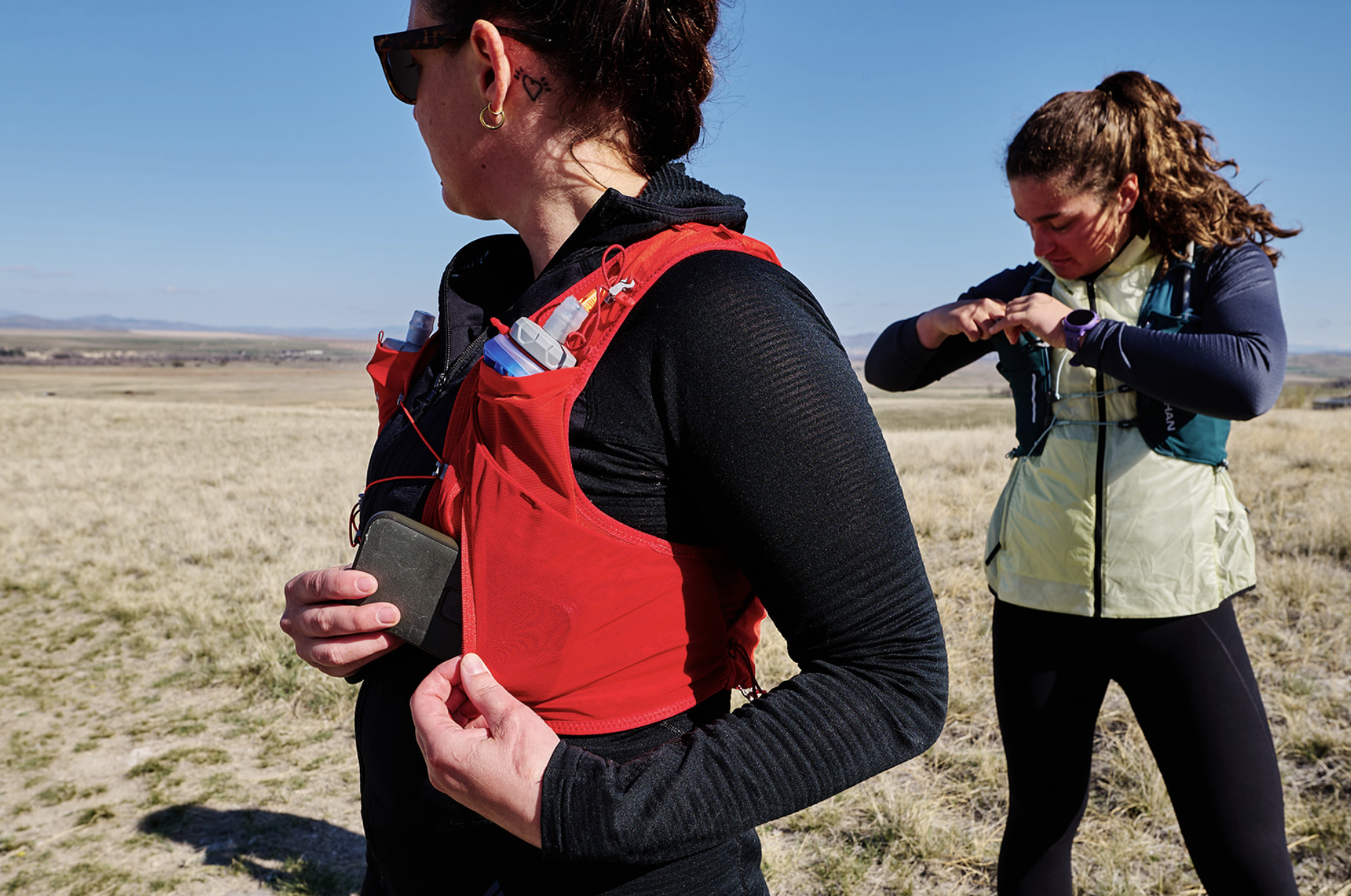
Running packs are designed to provide maximum function at minimal weight, but some models achieve this balance better than others. Most packs hover in the 7- to 10-ounce range, not including bottles and reservoirs. Depending on hydration style and capacity, empty bottles or a reservoir will add roughly 2 to 6 ounces to your load. If weight is a top priority, look for mesh materials, thin straps and buckles, limited feature sets, smaller capacities, and removable features, including straps and reservoir sleeves. As is the case with all outdoor gear, the lighter you go, the more sacrifices you’ll make in durability and comfort. Thinner fabrics are more likely to rip, lose structure, or form holes, and they don’t carry a load as well as more robust materials.
.jpg)
Running vests run between $120 and $180. It’s fairly typical to see higher prices on larger-capacity vests, but there are other factors at play. High-performance options use more expensive materials and often pack in impressive feature sets at a low weight, though not everyone needs a premium design. If you think you’ll only wear your vest a few times a year or are just dipping your toes into running, we recommend starting out with one of the more affordable options.
It’s also important to consider what extras are included with each vest. For example, the Patagonia Slope Runner Exploration Pack costs $179 but comes with two 500-milliliter HydraPak flasks, while the UltrAspire Momentum 2.0 Race Vest is only $115 but comes without a reservoir or flasks. Considering that HydraPak’s UltraFlask Speed 600 soft bottles cost $25 a piece and reservoirs run around $30-$40, you’ll probably end up saving less than initially expected. That said, for those who already have a set of flasks or a reservoir, the savings of the UltrAspire or similar vest make sense.
We’re happy to see many major outdoor brands stepping up on sustainability lately, with measures like recycled materials and PFC-free DWR coatings that forgo the use of harmful perfluorocarbons. Patagonia is a longstanding leader in this space, and its Slope Runner Exploration Pack uses recycled nylon and polyester.
We love running vests for longer missions and carrying a liter or more of water, but for shorter pursuits or well-supported races, you may be able to get away with a running belt/waist pack or a handheld water bottle instead. As far as running belts go, Nathan's Zipster Max Waistbelt is a great option for carrying a phone and a credit card. Alternatively, waist packs like the top-ranked Nathan Pinnacle FeatherLite Belt and formerly listed Janji Multipass Sling Bag are larger, and can hold a phone, car keys, and a small bottle.

Handhelds, on the other hand, are water bottles designed for easy portability and often feature ergonomic designs and sleeves to secure them to your hand (Nathan's Quick Squeeze Lite is a great example). This sleeve usually has a compartment for a bar and a car key, and wraps around your hand so you can hold it without gripping. Handhelds are ideal for quick runs when you don’t want to go without water, but their overall utility is limited. In the end, we prefer to keep our hands free when the terrain gets even slightly technical, and we find that the added weight in our hands can be rather fatiguing over even moderate distances.
Back to Our Top Running Vest Picks Back to Our Running Vest Comparison Table



bb95.jpg)
d1f5.jpg)
0afa.jpg)

e412.jpg)
_04154.jpg)