.jpg)
 (m).jpg)
Photo Credit
Skiing is an expensive, gear-intensive sport. And whether you’re doing laps at your local resort or skinning deep into the backcountry, you’ll need a quality jacket and pant combo to keep you comfortable. From budget-oriented companies like Columbia to high-end, touring- and ski mountaineering-focused brands like Arc’teryx and Norrøna, the picks on our list represent the most well-known and respected players in the world of ski apparel. Below we break down each brand individually, including a brief history and background, each company’s most popular models, and what sets them apart from the competition. For more information and our top picks in each category, see our ski gear reviews.
Editor's note: We updated this article on January 8, 2026, to update our top picks from each brand and add women's options to the lineups. We also swept the guide to ensure all products were current atthe time of publishing.
Location: Ventura, California
Popular men's products: Powder Town, Storm Shift, SnowDrifter
Popular women's products: Powder Town, PowSlayer, SnowDrifter
What we like: Wide range of quality resort and backcountry options; strong focus on sustainability and social responsibility.
What we don’t: Less refined fits than Arc'teryx and Norrøna, more expensive due to brand recognition.
Founded in 1973 by rock climber and now-environmentalist Yvon Chouinard, the company creates some of the highest-quality outerwear on the market while also dedicating a significant amount of money and time to environmental and social stewardship. With initiatives like their Worn Wear used gear program, traceable down and recycled fabrics, and commitment to donating 1% of sales to environmental non-profit groups, Patagonia is head and shoulders above much of the competition when it comes to advocacy and sustainability. This year, they released a new Work in Progress report, with an inside look at how the brand is evolving its sustainability work.
.jpg)
Patagonia's ski collection covers both resort and backcountry riders. The Powder Town is their core resort jacket, featuring the brand's H2No waterproofing in the shell, as well as the insulated and 3-in-1 version. The Storm Shift is designed for touring, featuring a breathable, lightweight two-layer Gore-Tex ePE construction. Many of their other ski jackets are tuned for backcountry use, ranging from the minimalist and breathable Upstride to the three-layer Gore-Tex Untracked. The recently updated Stormstride falls between the two, with a three-layer build that shaves a minor amount of weight off the Untracked. You pay a premium for the brand name, but Patagonia offers repair services at select locations, as well as a mail-in option, which makes it easy to extend the lifespan of your gear and reduce waste.
Location: North Vancouver, Canada
Popular men's products: Sabre, Macai, Rush, Alpha SV
Popular women's products: Sentinel, Andessa, Rush, Alpha SV,
What we like: Top-notch quality, performance, fit, and styling.
What we don’t: Incredibly pricey with no budget-oriented options.
Founded in the late 1980s as a climbing company, British Columbia-based Arc’teryx is now one of the most venerable brands in the ski industry. In many ways, they’re the gold standard among backcountry enthusiasts, with a wide range of high-end and technical shells that excel in harsh conditions and mountain environments (this comes as little surprise given the company’s proximity to the rugged and demanding Coast Mountains). One of our long-time favorites and the brand’s flagship jacket is the Alpha SV shell (short for “severe weather”), a bombproof design intended for serious alpine expeditions and multi-day ski tours. As with most Arc’teryx builds, the jacket boasts a high-end fit and finish, seals out the weather exceptionally well (they use Gore-Tex for all their waterproof clothing), and looks great to boot.
.jpg)
Arc’teryx’s shells are high-quality and attractive, with fantastic fits and features, but they’re also some of the most expensive, like the $900 Alpha SV. The company also offers more resort-friendly designs, including the Sabre Jacket (which comes in both insulated and SV versions) and Macai, although those will also cost you a pretty penny. Newer skiers might be better off with more budget-friendly offerings from brands like Columbia or The North Face, but there’s a reason that Arc’teryx’s ski apparel consistently ranks at the top of our ski jacket and ski pant guides. For committed resort-goers, avid backcountry enthusiasts, and ski mountaineers, it doesn’t get any better.
Location: Oslo, Norway
Popular men's products: Alpha, Legendary, Sogn
Popular women's products: Powchaser 2.0, Legendary, Sogn
What we like: Their resort designs excel in comfort and all-around performance.
What we don’t: Not a standout in the freeride or touring markets, although they're making progress.
Dating back to the late 1800s, Norway-based Helly Hansen (HH) was originally established to provide waterproof clothing to seafarers. Although rainwear remains a major part of their lineup, the brand has been a popular presence on the slopes for years. In fact, many of the liftees, ski patrol members, and mountain guides we see wear custom-made HH gear. The company was also the baselayer provider of the U.S. Alpine Ski Team at the 2012 Sochi Olympics and now outfits Canada’s alpine and para-alpine ski teams, which speaks volumes about the performance-oriented design of their pieces.
.jpg)
We’ve had Helly Hansen’s Alpha ranked near the top of our ski jacket round-up for years, thanks to its combination of warmth, freedom of movement, and clean styling—all at a price point that significantly undercuts most Arc'teryx offerings. You’d be hard-pressed to find better on-piste performance for less money. The Alpha 4.0 costs $485, while Arc'teryx's insulated Macai costs $1,100. Helly Hansen also dips into the touring and freeride markets, although most of their standout products are resort-oriented. It’s worth noting that HH has held up to modern times better than the Spyders and Obermeyers of the world, which just goes to show that their Norwegian expertise and overall value are hard to match.
Location: Lysaker, Norway
Popular men's products: Lofoten, Trollveggen, Tamok
Popular women's products: Lofoten, Lyngen, Tamok
What we like: A true Arc’teryx competitor in quality and attention to detail.
What we don’t: Overkill in both price and performance for casual resort-goers and areas with limited snowfall.
Another Norwegian brand worth having on your radar is Norrøna. While not a household name like Arc'teryx or Patagonia, this backcountry specialist is gaining popularity in the U.S., and we think the attention is well-deserved. Overall, we’ve found their products to be very competitive with Arc’teryx for big-mountain and alpine uses, with premium Gore-Tex builds, functional feature sets, and precisely executed designs. Their flagship ski offering is the Lofoten, which is available in several styles and compares favorably with the Arc’teryx Sabre Jacket. Throughout testing, we found it to be impressively weather-worthy, exceptionally hardwearing, and nicely appointed for serious big-mountain riding.
.jpeg)
Norrøna is a high-end brand that specializes in robust, mountain-ready pieces for harsh alpine conditions. With that in mind, casual resort-goers and those who don’t need the utmost in protection and durability can save considerably with less performance-focused designs from brands like Patagonia or Helly Hansen. Norrøna’s ski lineup has grown considerably since we started covering the brand, and they now offer four core styles—the Lofoten, Lyngen, Tamok, and Møre—with several variations of jackets, pants, and bibs to choose from. If you can justify the premium performance and prices, Norrøna gear won’t disappoint.
Location: Seattle, Washington
Popular men's products: Hemispheres, Snowcrew, Carbide
Popular women's products: Powderverse, Snowcrew, Carbide
What we like: Consistently some of the best bang for your buck among performance designs.
What we don’t: Lacks the fit and finish of Arc’teryx and Patagonia.
Outdoor Research (OR) might not have the same nationwide popularity as brands like Patagonia or Columbia, but this Seattle-based company has a loyal following among adventurers in the Pacific Northwest. We’ve tested a lot of their ski-specific apparel, including the hybrid resort/backcountry Carbide, and especially like their AscentShell membrane, an in-house waterproofing technology that outperforms much of the competition with a stretchy, breathable, and highly protective design. It’s not as bombproof as Gore-Tex, but it’s substantially cheaper and offers comparable all-around performance.
.jpg)
OR has a reputation for being value-driven, and their ski apparel typically undercuts the premium competition by $100 or more. That said, build quality is a step down from the painstaking attention to detail you get from Arc’teryx, Norrøna, or Patagonia, and we’ve had a few fit and finish issues throughout testing. But if you’re looking to level up from Columbia without reaching into the upper stratosphere price-wise, Outdoor Research is a great middle ground. And as a bonus, all of the company’s gear is backed by their “Infinite Guarantee,” which provides some added assurance should you encounter a defect.
Location: Salt Lake City, Utah
Popular men's products: Recon Stretch, Dawn Patrol, Factor
Popular women's products: Recon Stretch, Dawn Patrol, Factor
What we like: Technical apparel at approachable prices.
What we don’t: Durability and quality control can be subpar.
Black Diamond is a climbing company at heart and a relative newcomer to the world of ski apparel, but we like what they’ve come up with so far. One of their leading designs is the Recon Stretch Shell, which combines BD’s proprietary waterproofing with four-way stretch for excellent comfort and mobility both in and out of bounds. Another skin-track favorite is the Dawn Patrol Hybrid, which combines the brand's waterproof B.dry membrane with body-mapped softshell sections for maximum breathability without sacrificing protection in key areas. All in all, we've found BD's designs to be a good-looking bunch with clean styling and classy color choices, and they often undercut the competition by a good amount.
.jpg)
It’s worth noting that Black Diamond discontinued their Gore-Tex Mission Ski Shell some seasons back, which stacked up to premium alternatives like the Arc'teryx Sabre and Sentinel for a lot less. With the Mission gone, their fully waterproof ski shell options are limited to the Factor and Recon Stretch. To be fair, both collections include standard as well as insulated models, and the Recon is also available in an LT ("lightweight") variation. For those who like to match their kit, BD offers the Recon in pant/bib variations, along with an insulated pant for resort riders. Time will tell if BD can catch up and become a big-time player in the ski outerwear market, but they have name recognition and a knack for making quality products on their side.
Location: Denver, Colorado
Popular men's products: Baker, Malone, Quantum Pro
Popular women's products: Foxy, Lucy, Avery, Billie
What we like: Trendy colorways, quality builds, and they don't take themselves too seriously.
What we don’t: Fit can be either a bit long and baggy for some designs and not very size-inclusive for others; not everyone loves the urban styling.
Like many outdoor companies, Flylow Gear got its start when its founders—two Colorado natives and avid telemark skiers—couldn’t find gear that worked for them. In this case, they needed backcountry ski pants that weren’t overly technical for mountaineering but also were a step up in quality and breathability from typical resort offerings. Since its first product debuted in 2005, Flylow has established itself as a competitive brand with an extensive lineup of backcountry- and sidecountry-ready apparel that stands out with its bright colorways, two-tone designs, and quality constructions.
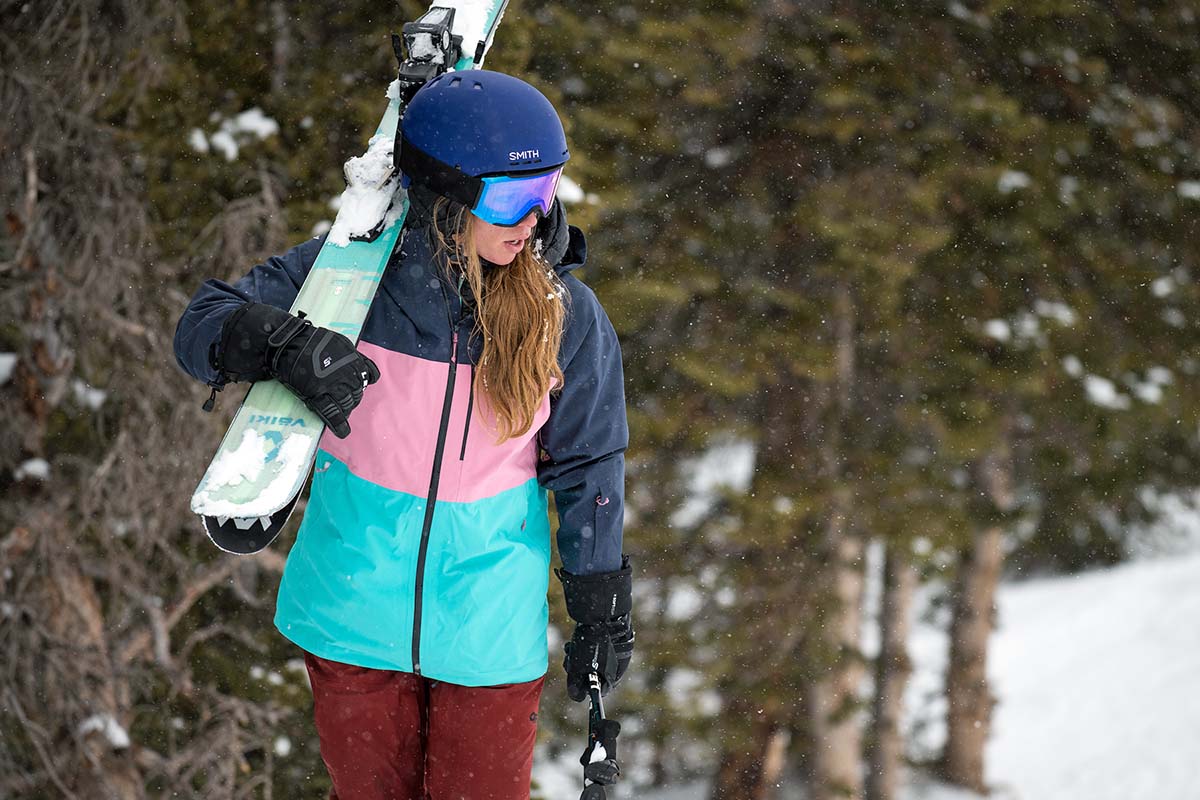
One of our favorite products from Flylow is their best-selling Baker Bib (top-rated in our ski bib article), which has a strong track record of excellent performance in deep conditions. In terms of jackets, their Quantum Pro has been a longtime favorite, the Malone/Lucy collection impressed us with solid weatherproofing, and the newer Domino women's jacket features a premium Gore-Tex build. The brand is also loyal to its fun-loving freeride roots—their product videos often include a humorous nugget or two—and their designs share a similar ethos. Some might not like the baggier looks or longer cuts that lean toward the park and snowboard end of the spectrum, and we've found the women's bibs run small and aren't made in sizes for curvier women. However, the high-end tech and urban styling are appealing to many performance-focused riders.
Location: Kent, Washington
Popular men's products: Powderbound, First Chair
Popular women's products: Powderbound, First Chair
What we like: Good bang for your buck and enticing member benefits.
What we don’t: Limited selection and not a performance leader.
When REI jumped into the ski outerwear market with a small collection of resort-focused pieces, we were pleasantly surprised by the overall value. Their Powderbound Insulated Jacket is very competiviely priced while still including a waterproof build, cozy 80-gram synthetic insulation around the core, great organization, and functional features like a powder skirt and pit zips. The First Chair GTX is a step up price-wise, but is made with higher-end Gore-Tex waterproofing, which is unusual at this price point. The jacket's smooth interior, thoughtful features like dual-entry chest pockets, and a host of sustainability efforts come together to make a worthy ski jacket. Both lineups also include matching pants/bibs, and REI also offers the Powderbound 3-in-1 for more versatility.
.jpg)
In addition to value, another big reason to shop at REI is their well-established member program, which includes benefits like a yearly dividend (you get 10% back on all full-priced items), access to Garage Sales, and discounts on gear rentals and shop services. We also appreciate the brand’s ever-growing focus on sustainability, community initiatives, and conservation efforts. You don’t get the same attention to detail or top-notch finishes as you do from brands like Arc’teryx or Patagonia—the Powderbound is only critically seam-sealed, and the First Chair’s two-layer build sacrifices some breathability—but REI’s foray into ski apparel has been promising, and we’re eager to see what they come up with next.
Location: Alameda, California
Popular men's products: ThermoBall Snow Triclimate, Freedom
Popular women's products: ThermoBall Snow Triclimate, Freedom
What we like: Wide collection of winter-ready gear and accessories.
What we don’t: Cheaper-feeling designs than many other brands.
Founded in the mid-1960s as a mountaineering retail shop in San Francisco, The North Face has become practically synonymous with casual winter apparel. It wasn’t until the 1980s that they shifted their focus to ski apparel, and currently do well in the resort-oriented jacket category. Their 3-in-1 ThermoBall Snow Triclimate is nicely fitted, features pit zips for quickly dumping heat, and includes their down-mimicking ThermoBall Eco synthetic insulation, which does a great job of combining warmth and weather protection. The Freedom Insulated Pant is another favorite, with a great combination of insulation and durability for regular inbounds use.
.jpg)
The North Face has a top-notch athlete team, but continues to focus much of their efforts on more affordable ski apparel like the Freedom Bibs, which are our favorite budget shell bibs. That said, they recently made a push at the premium and backcountry ends of the spectrum with their Summit Series collection, which comprises a few high-end shells—including the Verbier GTX Jacket and Torre Egger Jacket—as well as several touring-focused midlayers and high-fill-power down pieces. Time will tell how the new pieces fare over extended use, but we're happy to see the company has been making notable inroads in both quality and sustainability.
Location: Portland, Oregon
Popular men's products: Cosmic, Jefferson, Capow
Popular women's products: Stella, Astoria, Chariot
What we like: Excellent durability and protection with trendy freeride styling.
What we don’t: Heavier and bulkier than many competitors.
For those unfamiliar, Trew Gear is an Oregon-based brand that excels in the mid-range and high-end of the resort and backcountry markets. Their designs are well built with durable, clean styling and offer protection on par with pricier Gore-Tex designs. One of our favorites from Trew continues to be their Cosmic Jacket Primo and women’s Stella Jacket Primo, which targets the crossover resort and backcountry space with a hardwearing three-layer construction, ample storage for full days on the slopes, and built-in stretch to maximize comfort and range of movement. For those who stick primarily to the resort, their cheaper Jefferson and women’s Astoria offer a similarly competitive mix of durability and protection in a two-layer construction.
.jpg)
Another Trew Gear hallmark is their freeride styling—many of their pieces (including both the Cosmic and Jefferson) are sold in multi-toned colorways that add a nice dose of flair and boast relaxed fits. One trade-off we've observed is that Trew Gear’s designs are typically on the heavier and bulkier end of the spectrum. Their crossover resort/backcountry Cosmic Jacket Primo checks in at 1 pound 14.1 ounces, which is considerably heavier than streamlined alternatives like the Outdoor Research Carbide (1 lb. 5.5 oz.). But if you like the styling and don’t mind a little extra heft on the slopes, Trew Gear is a standout when it comes to durability, build quality, and protection for a reasonable price.
Location: Portland, Oregon
Popular men's products: Bugaboo, Whirlibird, Last Tracks
Popular women's products: Whirlibird, Bugaboo, Platinum Peak
What we like: Extensive lineup of affordably priced but well-executed resort gear.
What we don’t: A noticeable step down in quality from the brands above.
Columbia started in the late 1930s as a hat manufacturer but quickly evolved into the ubiquitous sportswear brand that we know today. From hiking pants to winter accessories and “athleisure,” they have a longstanding reputation for creating capable products that regularly undercut the competition in price. Their focus on value holds true within their ski apparel collection, which is highlighted by the Bugaboo line. The Bugaboo III Interchange Jacket is a cost-effective 3-in-1 piece that offers enough warmth and weather protection to keep most casual resort-goers happy. Beginners and recreational skiers can outfit themselves for under $350 by combining the jacket with the insulated Bugaboo IV pants, and it's fairly common to find both items on sale.
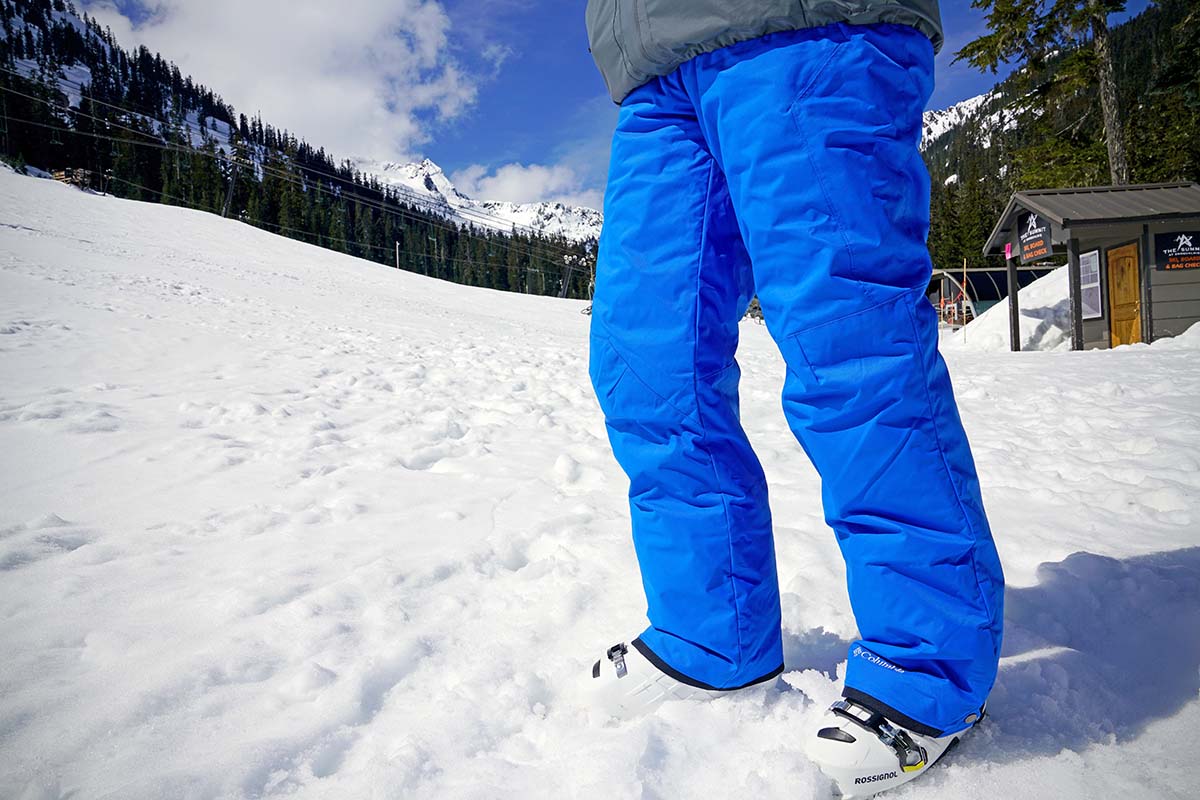
To be sure, Columbia’s offerings are far less premium than those from brands like Patagonia, Arc'teryx, and Helly Hansen. With the Bugaboo, for instance, you get a basic shell and lining that aren’t very breathable, feel bulky, and are more prone to wetting out than the Gore-Tex-equipped models from Arc'teryx and Norrøna—even Patagonia’s proprietary H2No membrane is superior. However, not everyone requires technical features, standout mobility, or top-of-the-line waterproofing, and options like the updated Platinum Peak have sleeker styling more aligned with higher-end brands.
Location: Aspen, Colorado
Popular men's products: Capitol, Pyramid, Nomad
Popular women's products: Bliss, Meadow, Cloud 9
What we like: Distinctive styling, high-quality materials, and local roots.
What we don’t: Lineup isn’t as extensive as those of larger brands.
Located at the base of Aspen Highlands Resort in Colorado, Strafe Outerwear is a technical apparel specialist with strong backcountry roots. Their Pyramid shell and Capitol Pant have been some of our favorite designs for off-piste use, balancing breathability and mobility while packing in more comfort than similar Gore-Tex-equipped options like the Arc’teryx Sabre and Norrøna Lofoten kits. Strafe’s proprietary waterproofing is less weather-worthy than Gore-Tex and even falls short of OR’s AscentShell membrane, but for those living in places with dry powder (including Colorado and Utah), the trade-off in comfort is worth it.
.jpg)
Strafe is relatively new to the scene (their first products were launched in 2010), which means you don’t get the proven track record of brands like Arc’teryx and Patagonia that have been around and innovating for decades. This also translates to a less extensive lineup, but if you need a comfy backcountry setup or frequently explore the sidecountry and alpine bowls at your local resort, Strafe is a good brand to have on your short list.
We love supporting our local gear shops, but when it comes to ski apparel, buying online often offers convenience and a wider selection of manufacturers, colors, and sizes. Evo is one of our go-to retailers—especially for winter—with helpful online staff, a large array of ski apparel and accessories, and free shipping. Backcountry also excels in the outerwear market, with some of the best variety of brands and available colors/sizes (as well as free shipping on most items). In addition, we've seen REI Co-op make a strong push in ski apparel in recent years, adding smaller companies like Strafe and Norrøna. Plus, you get the convenience of their nationwide stores, well-documented return policy, and member benefits. Finally, a number of the companies above have great websites where you can see more of their full collections, including Patagonia, Arc'teryx, Outdoor Research, The North Face, and more.
Back to Our Top Ski Apparel Brands See Our Ski Gear Reviews

.jpg?h=fbc67360&itok=wmPMXiEZ)
.jpg?h=fbc67360&itok=qF2arFUM)
_0.jpg?h=fbc67360&itok=1DYb7NL0)
_0.jpg?h=fbc67360&itok=2QtRHpTq)
_0.jpg?h=fbc67360&itok=JN5sRDFr)

_0.jpg?h=fbc67360&itok=iQeCJzhj)

