Photo Credit
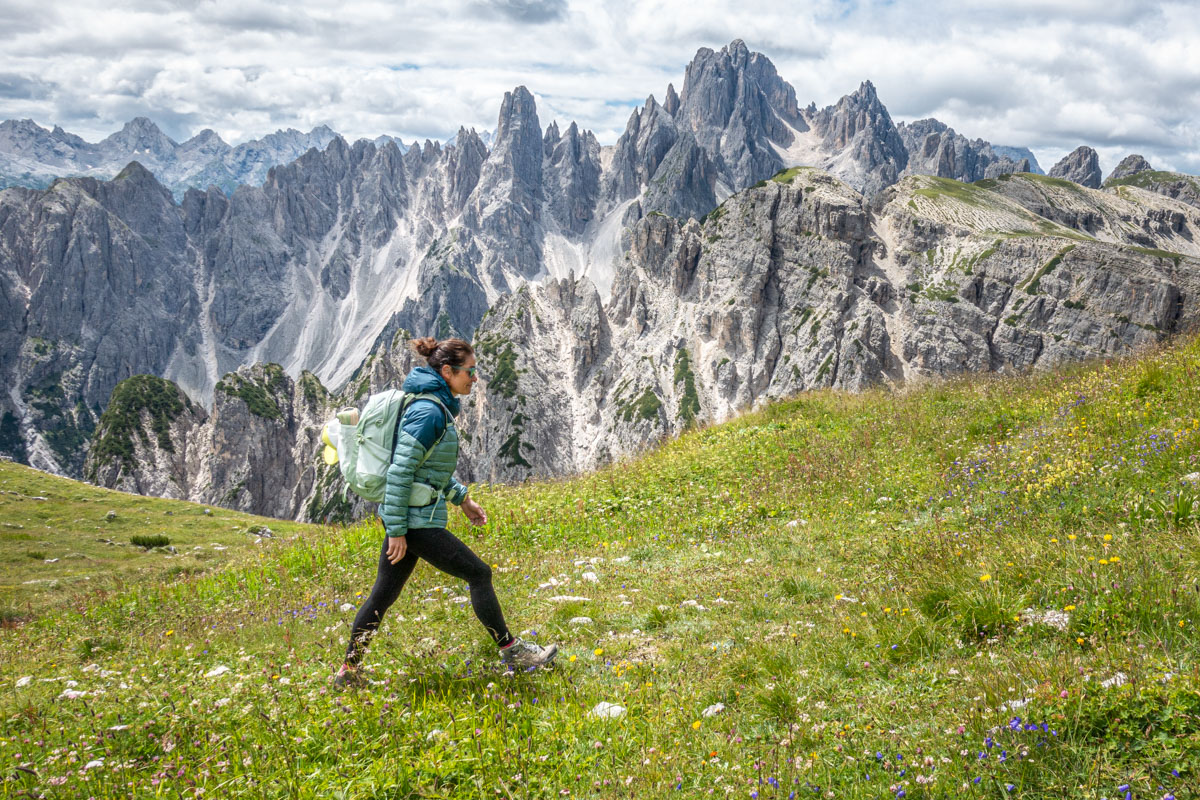
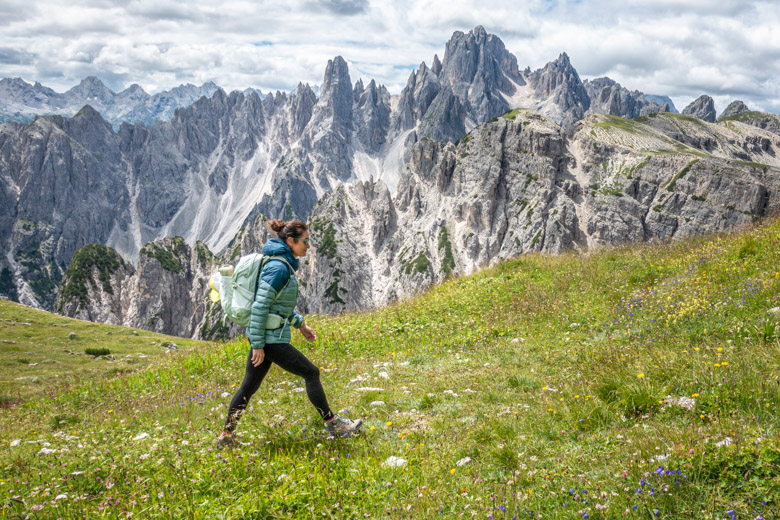
Hiking boots are critical to your comfort and performance on the trail, but this no longer has to mean a stiff and burly model that will weigh you down. The modern-day trend is toward lighter materials that still offer decent support, and waterproof boots are the most popular by far. After years of testing, our trail-hungry team narrowed down a selection of 17 worthy models for this round-up. Our nominees for the best hiking boots are broken down into three main categories: lightweight boots for day hiking and fastpacking, midweight options that work well for most backpacking trips, and heavy-duty options for rough terrain or hauling a large load. For more information, see our comparison table and buying advice below the picks, along with details about our testing process. Note: Although this lineup includes boots for both men and women, we also have a dedicated review for women's hiking boots.
Editor's note: We updated this guide on January 7, 2026, to crown the La Sportiva TX Hike Mid Leather GTX as the best overall hiking boot, add the Scarpa Rush 2 Pro Mid GTX and Lems Boulder Boots to our lineup, and to remove some boots that we felt were no longer as competitive—you can read more about these in our tested and dismissed section.
 Category: Lightweight
Weight: 1 lb. 15 oz. (men's), 1 lb. 12.6 oz. (women's)
Waterproof?: Yes (Gore-Tex)
What we like: Great blend of an approach shoe and a lightweight hiking boot.
What we don’t: Some may prefer a little more stiffness and support.
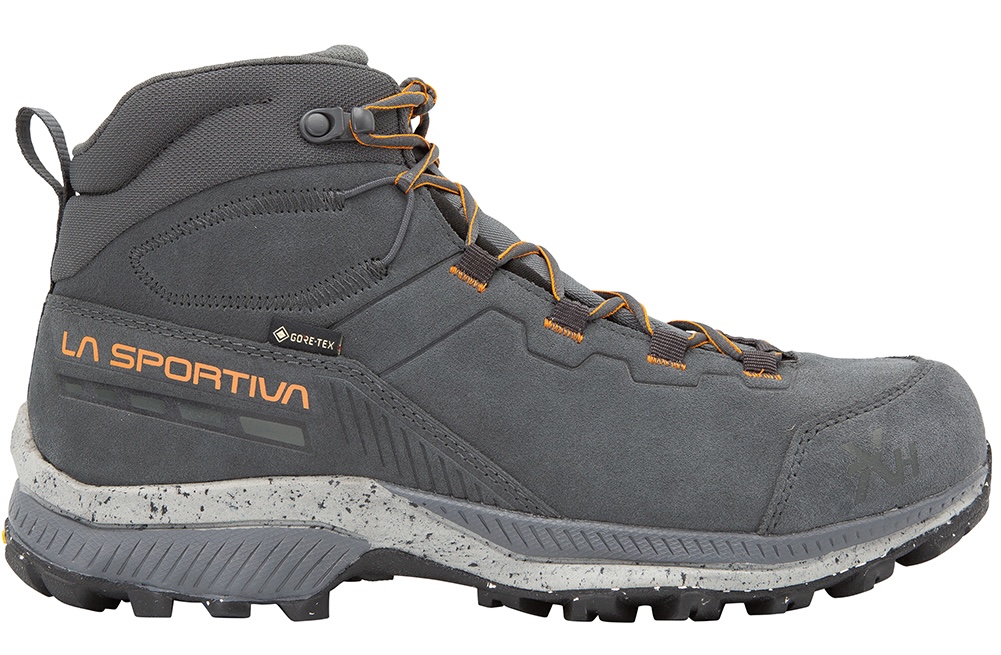
La Sportiva’s TX approach shoe line has long been a sneaky favorite among the hiking crowd—the low-top TX4 has been in our hiking shoe round-up for years. But they leaned into the hiking and backpacking space even more with the TX Hike Mid Leather. We've been overwhelmingly pleased with La Sportiva's foray into the hiking boot realm—so much so, we gave the TX Hike our top award. This boot is a true joy to trek in. Like its approach shoe sibling, the TX Hike features a relatively roomy toe box and prioritizes comfort. We wore the boot out of the box on the Ptarmigan Traverse—a classic multi-day mountain traverse in Washington’s Glacier Peak Wilderness—and were happy with the mix of grip, agility, toughness, and cushioning. It was clear this was the boot’s ideal application: hauling a pack through rocky and technical cross-country terrain.
For those who prefer a highly supportive and stiff setup, this boot may not be the right choice. However, we feel it offers a stellar balance of comfort and rigid durability. The leather upper becomes softer and more flexible with use, and the collar sits lower than other boots in this lineup. The flip side to the broken-in feel is that the boot has standout comfort—we had zero complaints even at the end of our various testing trips. Additionally, as we touched on above, it fits noticeably wide, which could be a problem for those with narrow and/or low-profile feet (it worked great for us, though). All told, we think La Sportiva cooked up another winner in the TX Hike, blending approach shoe performance with the added height and long-distance comfort of a hiking boot.
Read more: La Sportiva TX Hike review (women's version)
See the Men's La Sportiva TX Hike See the Women's La Sportiva TX Hike
.jpg)
Category: Light/midweight
Weight: 1 lb. 11.1 oz.
Waterproof?: Yes (Merrell Dry)
What we like: Standout price for a proven and extremely comfortable day hiking boot.
What we don’t: Lacks the nimble feel of many modern alternatives.
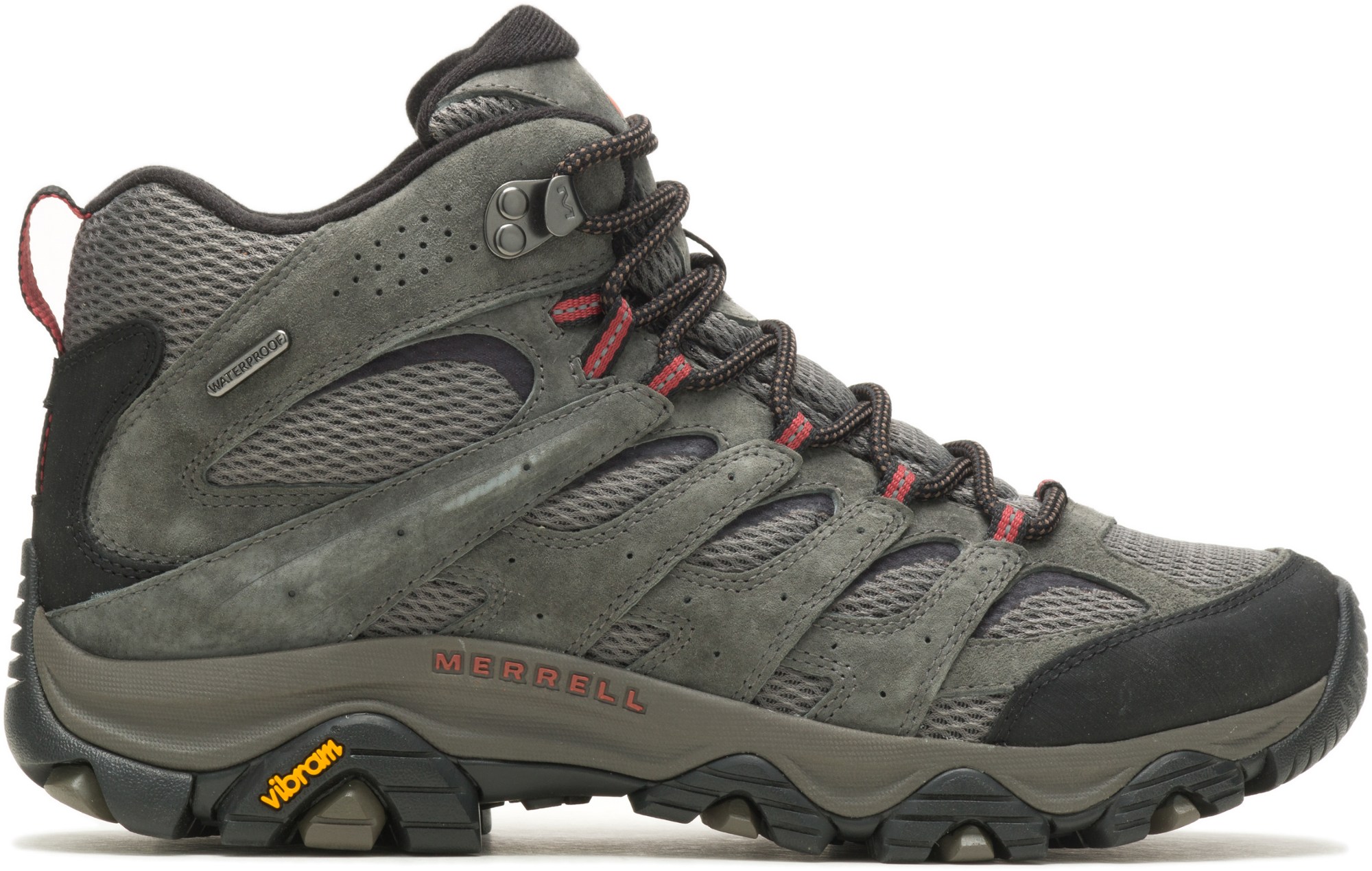
For day hikers and lightweight backpackers who stick mostly to maintained trails, our top value pick is the Merrell Moab 3. What makes this boot so popular is its foot-friendly, comfortable feel, and reliable trail chops at such a reasonable price. For $170, you get great cushioning underfoot and around the collar, a trusty Vibram outsole, and Merrell’s in-house waterproof membrane. The Moab was updated to the "3" a while back, but they didn't fuss much with the proven design—no need to fix what isn't broken. Notable changes included greater use of recycled fabrics (including the mesh lining and laces) and slightly more aggressive traction. While there are cheaper models available, we still feel this one deserves our best budget award due to its versatility, durability, and waterproofing at a price that undercuts most of the competition.
What are the downsides of the Moab 3 Mid Waterproof? Compared to some of the pricier models on this list, the boot lacks support for carrying a heavy load or scrambling on rocky or rough trails. Second, it feels heavier than its weight would suggest. All the cushioning and thick materials make the boot feel a bit clunky and dated compared to a nimble and modern alternative, such as the La Sportiva TX Hike or Salomon X Ultra 5. But for a notable discount, the Moab offers the right mix of comfort and performance for many day and weekend adventures. And if you prefer a non-waterproof design, the standard Moab 3 Mid is a similarly great value at $150.
Read more: Moab 3 Mid Waterproof review
See the Men's Merrell Moab 3 Mid WP See the Women's Merrell Moab 3 Mid WP
.jpg)
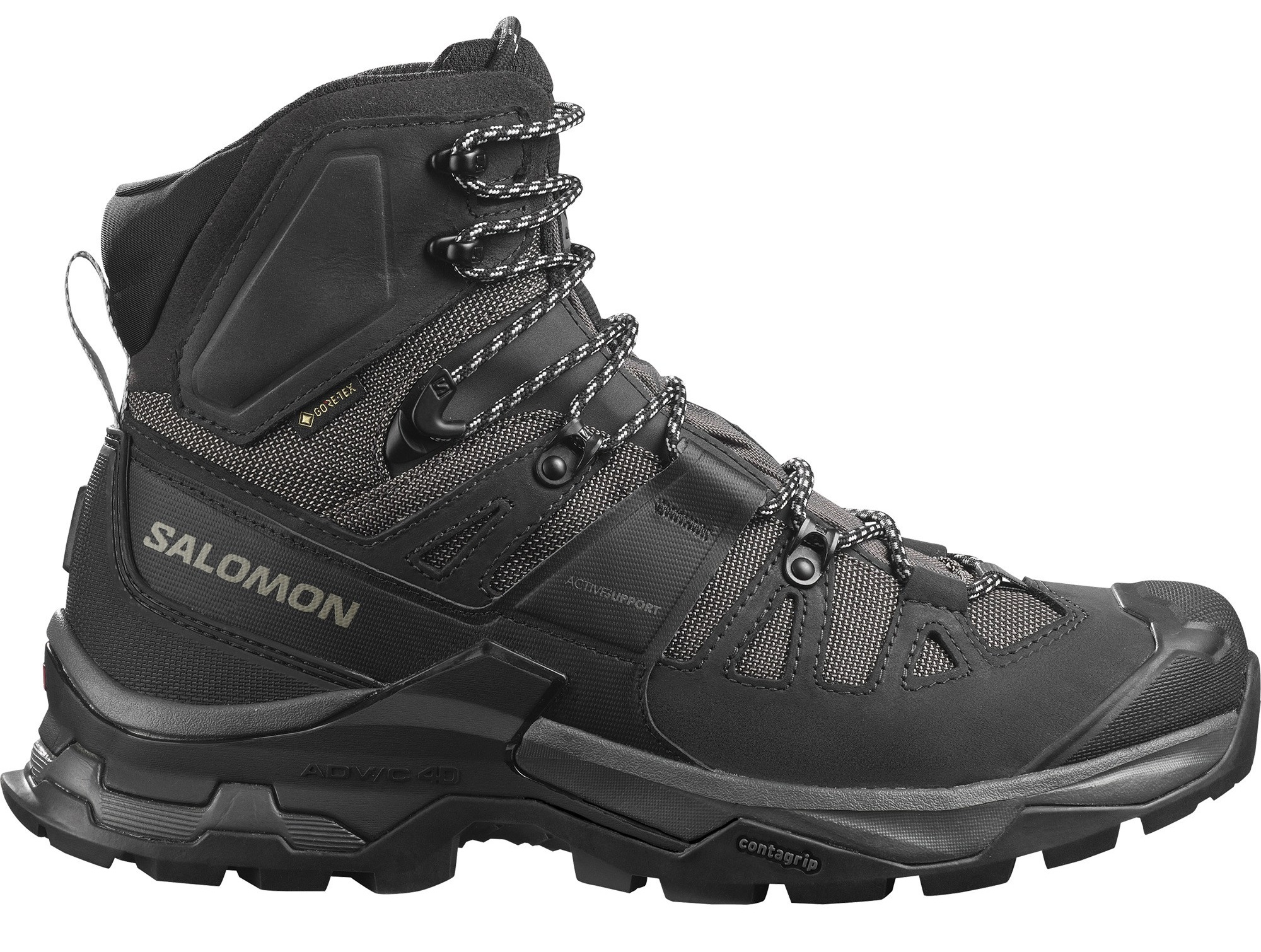 Category: Mid/heavyweight
Weight: 2 lb. 14 oz. (men's), 2 lb. 6 oz. (women's)
Waterproof?: Yes (Gore-Tex)
What we like: Tough, protective, and supportive yet comfortable; excellent lacing system.
What we don't: A bit heavy and overkill for most day hiking; durability issues for some users.
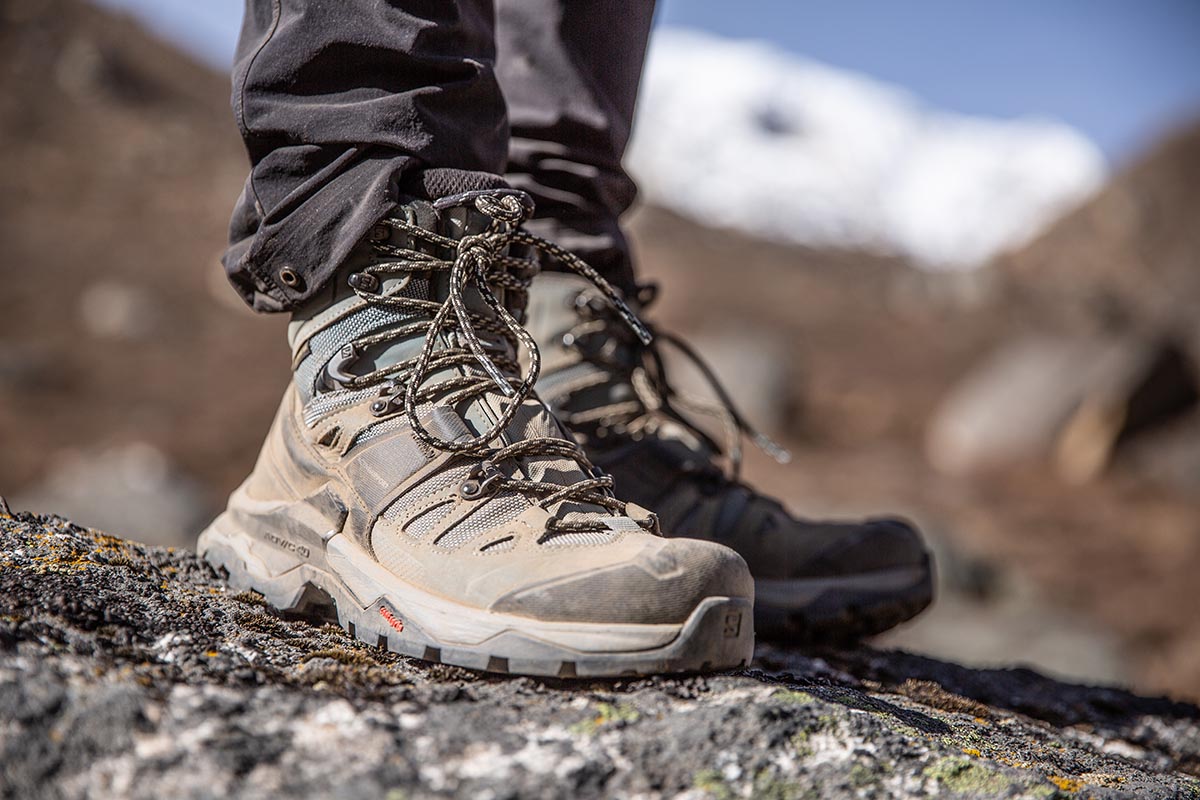
If you’re in the market for a tough boot for serious day hiking and backpacking, Salomon’s Quest 4 GTX is the whole package. The fourth generation of the line features a top-notch performance fit, aggressive stance, and one of our all-time favorite lacing systems—the eyelets at the base of the ankle do an excellent job locking your heel in place. In addition, it has a modernized yet very durable upper, and the cushioning and protection underfoot impressed us on rocky trails, when hauling a heavy load, and on high-mileage days. Taken together, the Quest is a burly boot that truly excels in the backcountry.
The Quest 4 sits solidly in our midweight category. It is a bit overbuilt for people who don’t need the extra protection or want to move fast and light on well-maintained trails. Those folks will be better off with a lighter and nimbler boot option like Salomon's own X Ultra 5 Mid GTX. But for those who are psyched on demanding hikes, backpacking trips that feature steep climbs, and off-trail adventuring while carrying a full pack, the Quest is a solid contender. Notably, a striking number of users have had durability issues, particularly with the sole, but so far, that hasn't been our experience through multiple rounds of testing. We will report back if that ever changes.
Read more: men's Salomon Quest 4 review and women's Salomon Quest 4 review
See the Men's Salomon Quest 4 GTX See the Women's Salomon Quest 4 GTX
.jpg)
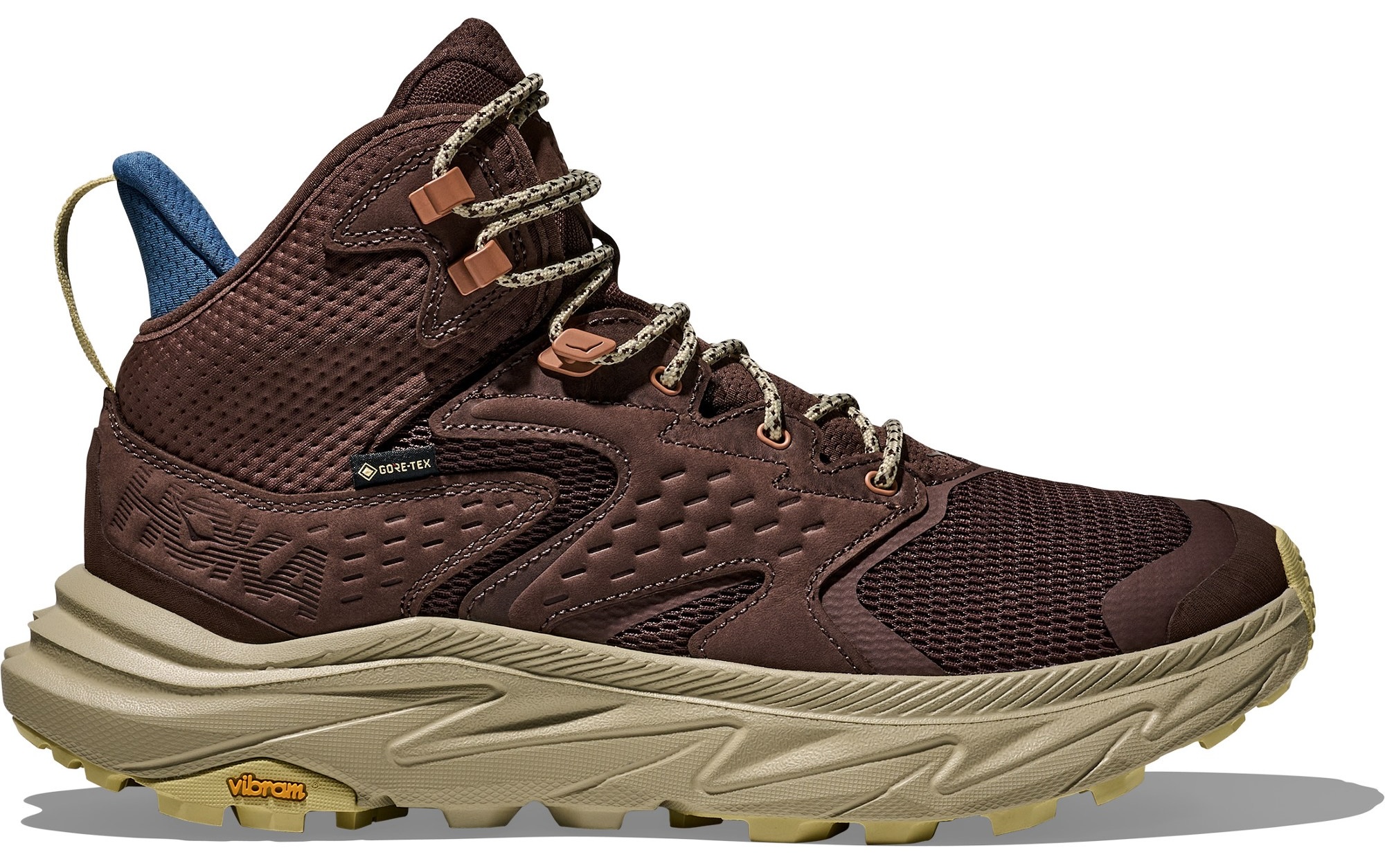
Category: Lightweight
Weight: 2 lb. 4 oz. (men's), 1 lb. 13.4 oz. (women's)
Waterproof?: Yes (Gore-Tex)
What we like: Extremely cushioned and comfortable, excellent fit, and smooth ride.
What we don’t: We still have some durability concerns with the outsole; swallowtail heel is a little polarizing.
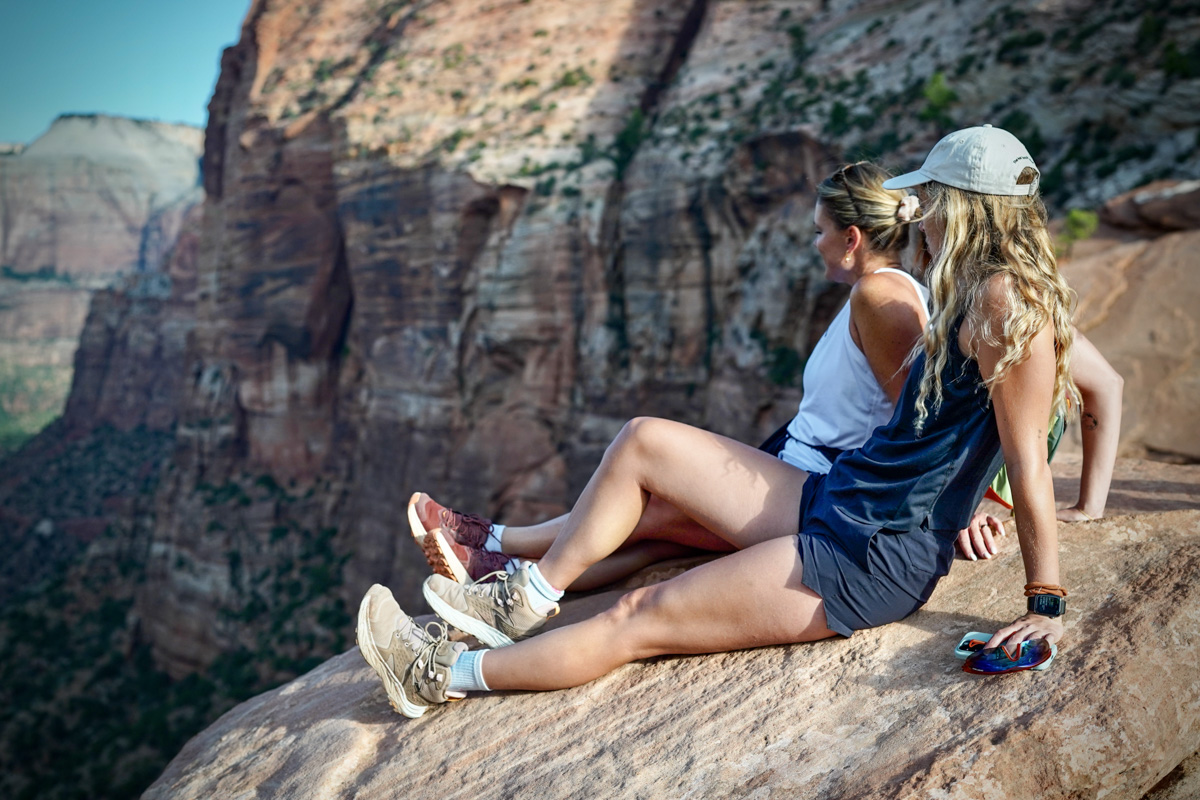
Since their inception, Hoka has churned out futuristic designs with cutting-edge tech, and the Anacapa 2 carries the torch. Two separate editors tested the low-top and mid-height versions of the “2” in Zion National Park and on a backpacking trip in Patagonia, and both came away incredibly impressed. As expected from a Hoka design, the Anacapa feels great on the trail with generous cushioning and a rockered sole that promotes a smooth and fast-moving personality. It also boasts an excellent fit that’s secure but with enough space to account for natural foot swelling, is made with high-quality materials, including a durable Nubuck leather upper and tacky Vibram Megagrip outsole, and offers solid protection and support for such a light and agile design. Although we approached the eccentric silhouette with caution, the boots ultimately made a lasting impression on us.
Our main concern with the original Anacapa was the longevity of its outsole. We’re happy to report that Hoka made improvements between the original Anacapa and the "2" by reducing the amount of blown rubber—an air-injected, foam-like compound common in road running footwear—on the bottom of the sole, although we wish they had outfitted the “2” with a full rubber outsole. We also found the laces below the top two eyelets notably stiff and difficult to snug down over the top of the foot, and the protruding SwallowTail heel can sometimes snag on rocks and roots (or even your other foot). Still, overall, we think the latest iteration is a nice improvement over the original, including the use of recycled materials and leather certified to the highest standard by the Leather Working Group. If you stick mostly to established trails and prioritize cushy comfort and a nimble feel, the Anacapa is well worth trying.
Read more: men's Hoka Anacapa 2 Mid GTX review and women's Hoka Anacapa 2 Mid GTX review
See the Men's Hoka Anacapa 2 Mid GTX See the Women's Hoka Anacapa 2 Mid GTX
.jpg)
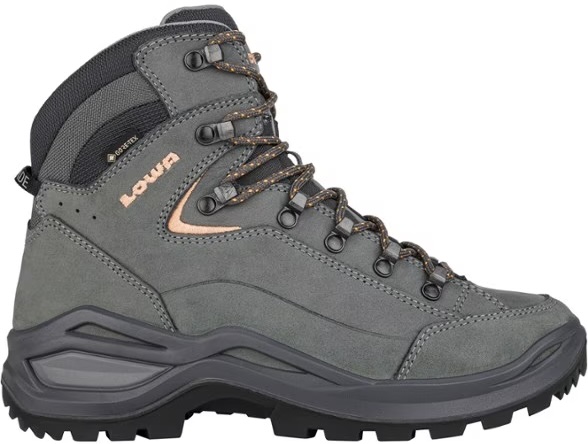 Category: Light/midweight
Weight: 2 lb. 2.2 oz. (women's), 2 lb. 9.6 oz. (men's)
Waterproof: Yes (Gore-Tex)
What we like: Great support, comfort, and protection for covering long distances with a full pack.
What we don’t: Overkill for easy hiking; only offered in a waterproof version.
Year after year, Lowa’s Renegade remains a staple on the trail, delivering classic hiking boot performance with a surprisingly manageable weight. Built with rugged leather and sturdy construction, it excels in terms of stability, protection, and support on demanding terrain. What really sets it apart, though, is comfort: It’s offered in narrow, regular, and wide widths, and unlike slimmer modern designs, features a taller, stiffer collar for excellent ankle support. In the end, the Renegade strikes a near-ideal balance between traditional leather durability and modern comfort, making it a standout pick for backpackers.
The biggest drawback of the Renegade is cost. But if you’re willing to invest, the leather build will likely outlast most synthetic competitors. That said, the Renegade won’t be for everyone: For hikers who value speed, agility, and a lighter feel, it may feel too substantial underfoot. And while the Gore-Tex lining is great for wet weather, mountain environments, and shoulder-season use, it can run warm in summer conditions. Still, for those tackling rough trails, carrying heavier loads, or prioritizing long-term durability and support, the Renegade remains a top-tier all-rounder that seamlessly blends comfort, protection, and longevity.
Read more: men's Lowa Renegade review and women's Lowa Renegade review (prior versions)
See the Women's Lowa Renegade Evo GTX Mid See the Men's Lowa Renegade Evo GTX Mid
.jpg)
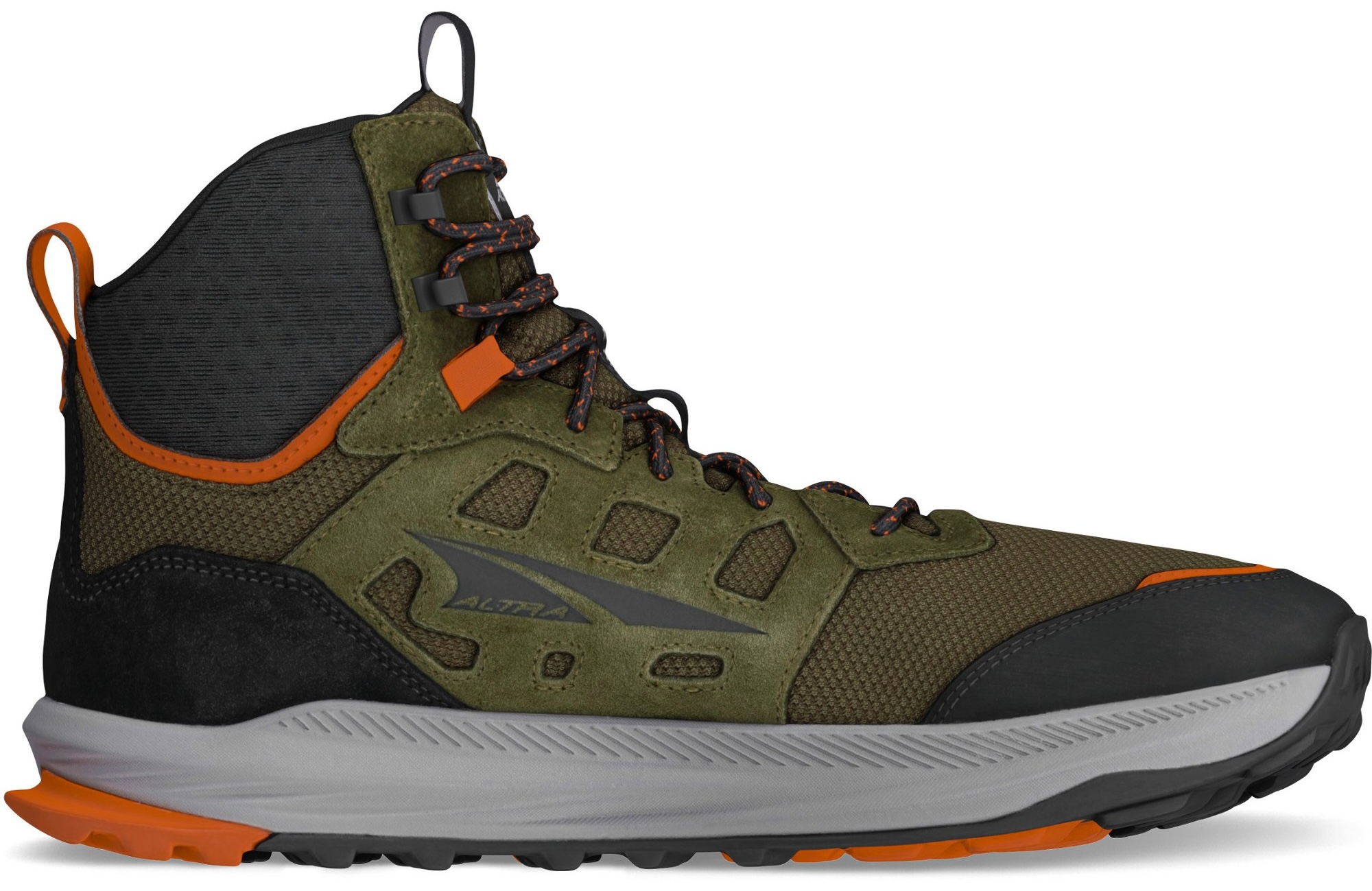
Category: Lightweight
Weight: 1 lb. 11.4 oz. (men's), 1 lb. 8 oz. (women's)
Waterproof?: No (available)
What we like: The comfort and mobility of a trail running shoe with added durability and support.
What we don’t: Can feel sloppy on technical terrain; a couple ounces heavier than the prior version.
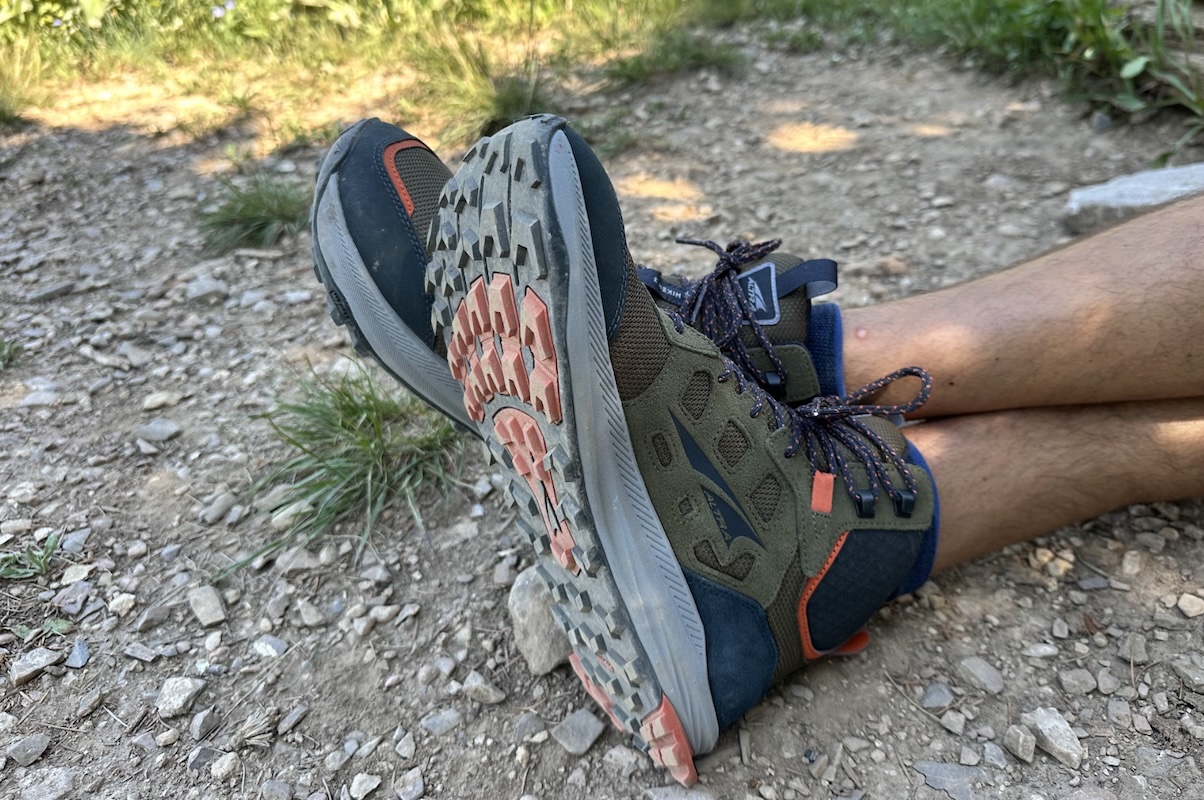
Altra’s Lone Peak trail running shoes have developed a serious following among thru-hikers, making the streamlined boot version an intriguing concept. Combining an ankle-height design with the Lone Peak’s trademark wide toe box, generous cushioning, and zero-drop profile, the Hiker 3 offers instant comfort alongside a bit of extra support and coverage. Further, at 1 pound 11.4 ounces, it’s extremely light, which is a game-changer for high-mileage days. We’ll admit that we were initially skeptical about the hiking-boot-meets-trail-runner design, but we found the Lone Peak Hiker 2 (the 3's predecessor) to be a surprisingly capable piece. As we've tested the Hiker 3, it has proven to be just as impressive, and it's an appealing option for weight-conscious hikers who don't want to sacrifice on durability.
However, as a more serious backcountry boot, the Lone Peak Hiker has several compromises. The wider fit felt a bit sloppy to us on longer, more technical outings, and this caused some hot spots to develop for our tester (though, to be fair, he's a guide and took them straight from the box out on 17 days of backpacking with an extra-large and heavy pack—something we wouldn't recommend for the average user). The insoles that come with the Hiker 3 are also thin and floppy, and our high-arched tester opted to replace them with his custom liners, which immediately improved support and alleviated his achy knees. Additionally, while the taller height of the Hiker provides a slight increase in support over the Lone Peak low-top, it's not as substantial a difference as we'd hoped. If you don't already own the low-top Lone Peak, this is a viable choice, but if you do, it might make more sense to stick with those and opt for a slightly more boot-like boot.
Read more: Altra Lone Peak Hiker 3 review (men's version)
See the Men's Altra Lone Peak Hiker 3 See the Women's Altra Lone Peak Hiker 3
 Category: Lightweight
Weight: 1 lb. 10.8 oz. (women's), 2 lbs. 1.6 oz. (men's)
Waterproof: Yes (Gore-Tex Surround)
What we like: A lightweight leather boot with excellent breathability.
What we don’t: A bit narrow (wide sizes are available) and expensive.
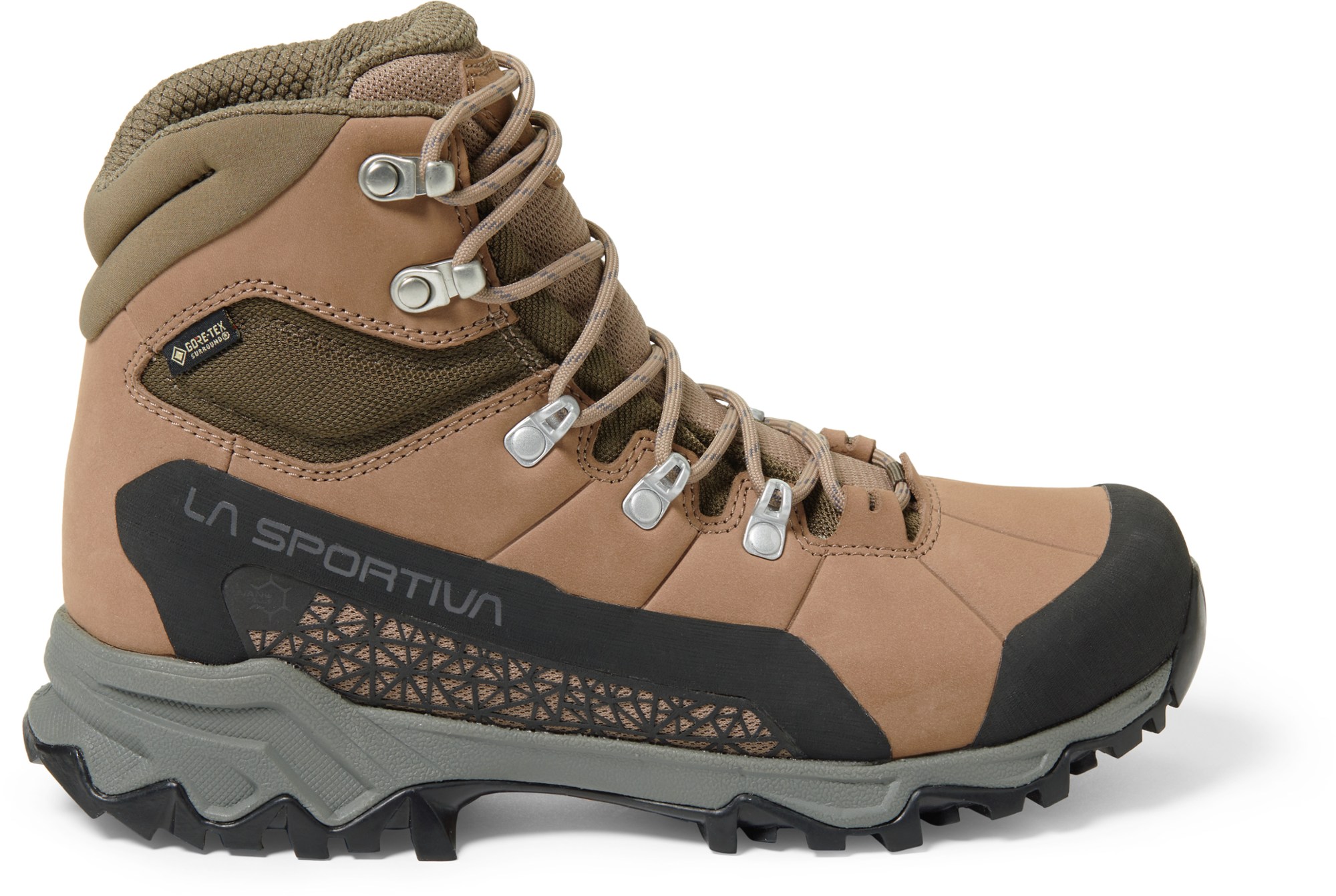
La Sportiva’s Nucleo High II GTX exemplifies the modern hiking boot: lightweight and nimble while still offering ample support for day hikes and most backpacking missions. Weighing just 1 pound 10.8 ounces, it competes with many synthetic models, yet its leather build adds a noticeable bump in durability and protection. It shares similarities with the brand’s TX Hike Mid, but the Nucleo stands out with a more cushioned and lively underfoot feel, making it particularly well-suited for established trails. Breathability is another highlight, courtesy of a Gore-Tex Surround liner and Nano-Cell technology—unlike standard waterproof designs that only vent through the upper, Surround allows airflow through the sole as well, helping your feet shed heat from all sides. Nano-cell mesh panels along the sides further enhance ventilation and are reinforced with a rubberized web for added durability.
All told, the Nucleo is an impressively breathable and hardwearing package for the weight. You’ll pay a premium for the tech, and like many La Sportiva offerings, the fit runs narrow (though wide sizes are available). Those seeking a stiffer and more supportive boot should consider the Lowa Renegade or Salomon Quest 4—our tester found the Nucleo’s collar to be fairly flexible. However, overall, this is a notable upgrade in performance and build quality over budget options like the Merrell Moab 3 Mid, and it feels much more agile than the modest weight difference would suggest.
Read more: La Sportiva Nucleo High II GTX review
See the Women's La Sportiva Nucleo High II GTX See the Men's La Sportiva Nucleo High II GTX
Category: Lightweight
Weight: 2 lb. 0 oz. (men's), 1 lb. 10.2 oz. (women's)
Waterproof: Yes (Gore-Tex)
What we like: Super comfortable; lightweight; excellent traction.
What we don’t: Lightweight build and low collar lacks some stability.
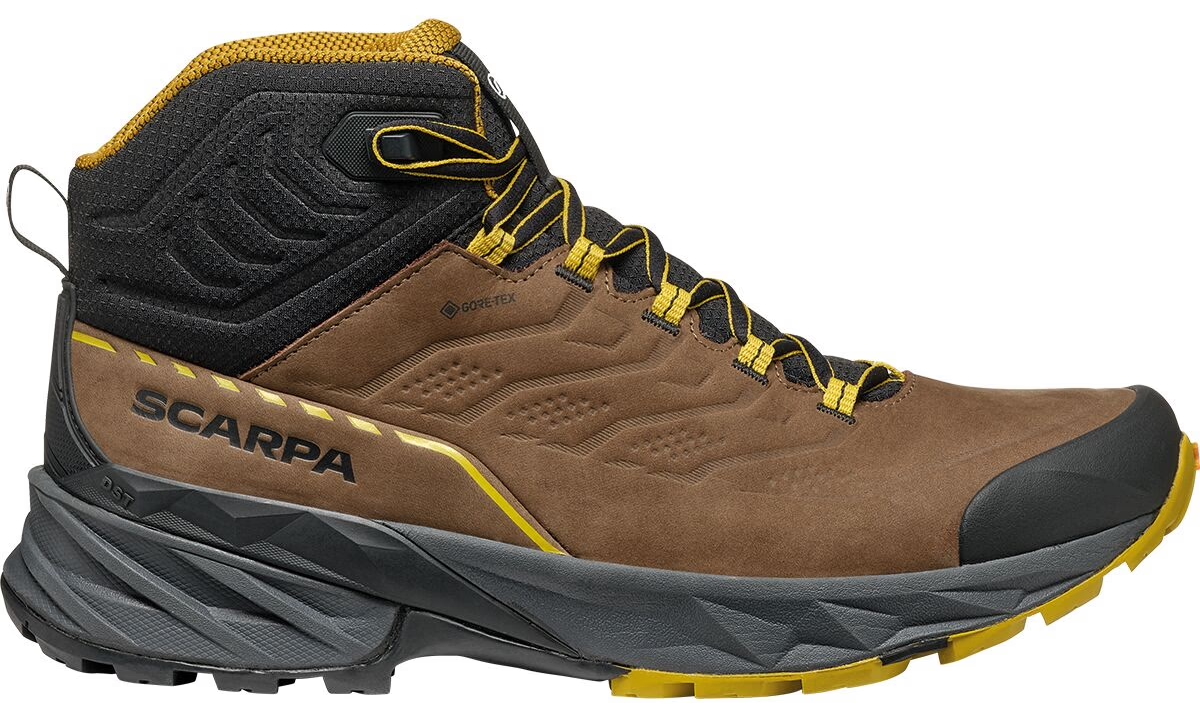
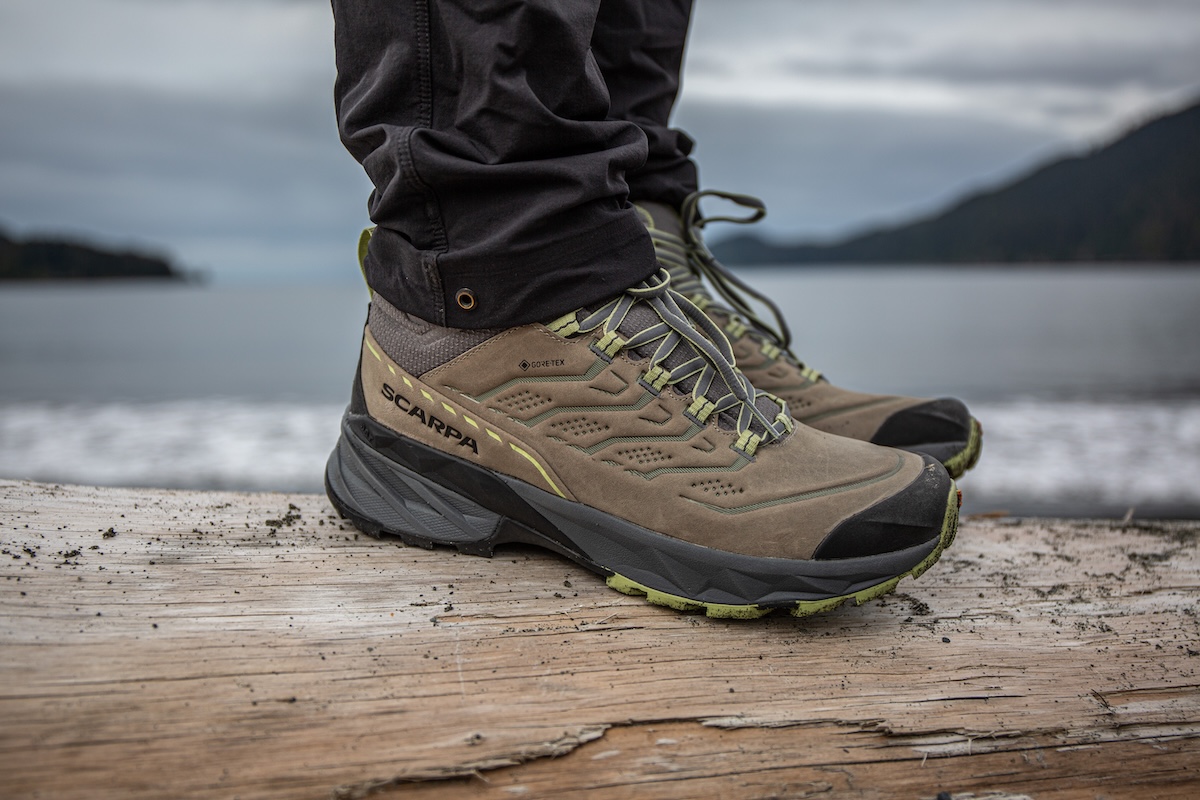
Scarpa’s Rush 2 Pro Mid GTX is an excellent pick for hikers who want trail-runner-like agility without giving up the protection of a boot. On a recent trip through the German Alps and Italy’s Dolomites—including steep climbs, spicy descents, boulder fields, and muddy meadows—it felt nimble, cushioned, and comfortable straight out of the box. The flexible one-piece collar and tongue fit like a sock, keeping debris at bay, while the springy 2D EVA midsole and Presa outsole absorbed impacts and shielded feet from sharp protrusions, despite the lack of a shank. The Rush 2 Pro Mid is impressively light and easy to move quickly in—even while jogging to catch a Dolomite sunset—yet still offers enough support for full-day outings and short backpacking trips. Traction is another strong point: The Presa/SuperGum rubber outsole delivered confident grip on wet ladders, polished rock, clay, sand, loose dolomite, and even early-season snow, performing more like an approach-shoe hybrid than a traditional boot.
As with most lightweight synthetics, however, stability has its limits. The low collar doesn’t provide much ankle lock (the single row of eyelets doesn’t help), and the height is better at keeping moisture and trail debris out than offering real support—those wanting a stiffer feel should look to a more substantial hiking boot. That said, the Rush 2 Pro Mid’s DST TPU frame wrapped the heel securely and kept torsion in check, and we never came close to rolling an ankle. Waterproofing is reliable in rain, drizzle, and shallow stream crossings, though the low cut means you’ll want to watch water depth; once wet, the boot takes time to dry, though it stays comfortable while hiking in the meantime. Durability has also proven excellent: the Nubuck leather upper, rubber toe cap, and Presa outsole exhibited minimal wear after varied testing, and sizing feels more accommodating than in previous Rush models. For fast-moving day hikers who want comfort, low weight, and standout grip, the Rush 2 Pro Mid GTX is a superb match—just don’t expect max stability from its pared-down build.
See the Men's Scarpa Rush 2 Pro Mid GTX See the Women's Scarpa Rush 2 Pro Mid GTX
Category: Lightweight
Weight: 1 lb. 6 oz. (women's), 1 lb. 8 oz. (men's)
Waterproof: Yes (Gore-Tex)
What we like: A capable hiker with a classy modern finish; ultralight weight.
What we don’t: Lacks ankle support and has shallow lugs.
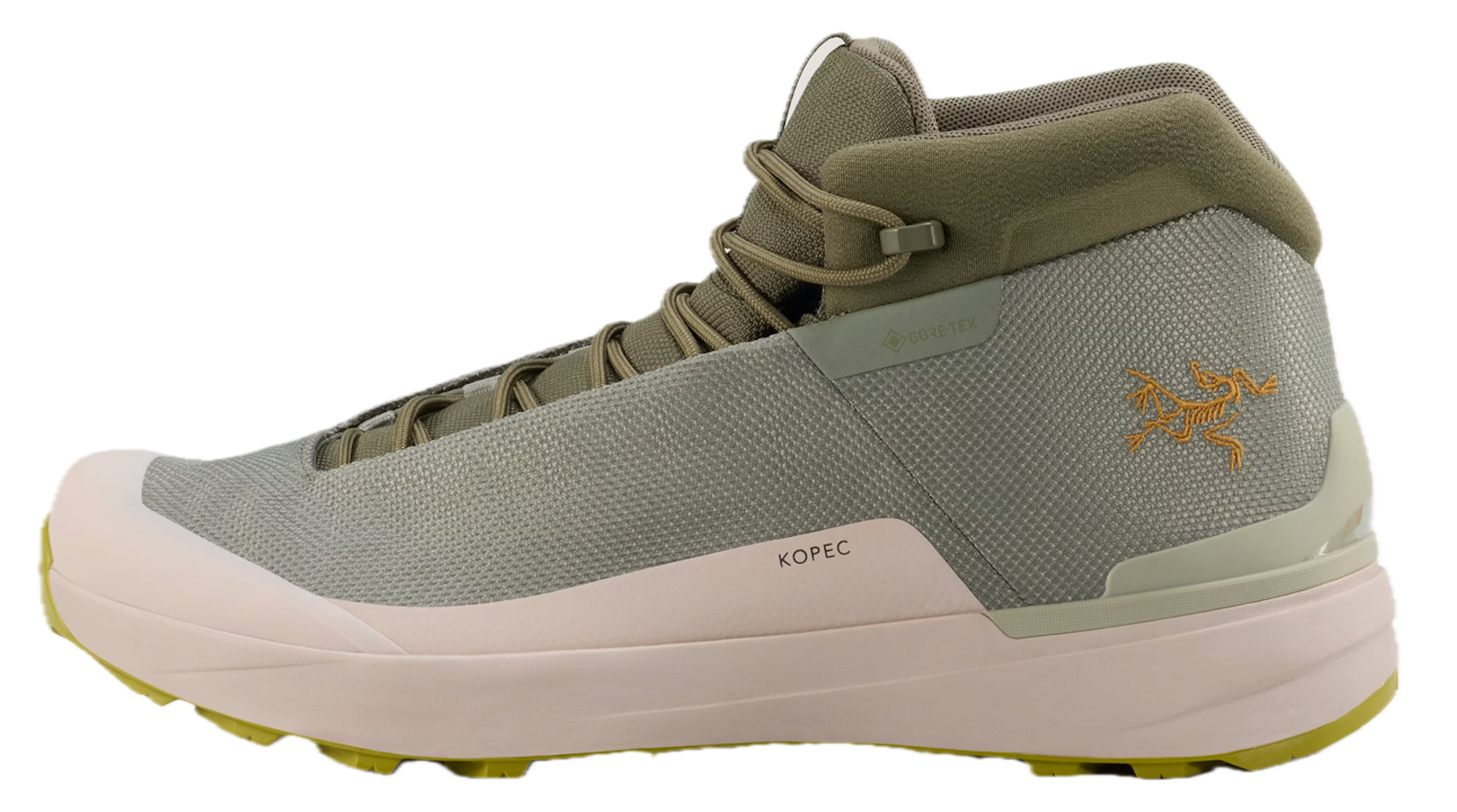
We don’t typically reach for hiking boots when heading into town, but the Arc’teryx Kopec Mid has us rethinking that habit. This sleek, mid-height design delivers a sharp, modern aesthetic that feels far more refined than the traditional leather or sporty synthetic options on this list. But it’s not just good looks—the Kopec impressed on the trail, too. It feels light, comfortable right out of the box, and moves effortlessly over technical terrain with a nimble, precise feel. They kept our feet dry without running hot, and after more than 30 miles of tough testing, our pair shows remarkably little wear—exactly what we’d expect from Arc’teryx’s premium build quality.
As with most lightweight synthetic hikers, the Kopec isn’t the most supportive. The flexible collar offers great freedom of movement—and we appreciated it while scrambling—but it won’t provide standout ankle stability. The shallow lugs also struggled on loose dirt and mud, although the Vibram outsole felt secure on rock, gravel, and packed trail surfaces. And while the Cordura upper resisted wear impressively, our white pair picked up stains along the rubber toe bumper. All that said, our overall experience was overwhelmingly positive. Perhaps most telling: We weren’t rushing to kick these off before dinner in town after a backpacking trip—a testament to both their comfort and standout styling.
Read more: Arc'teryx Kopec Mid GTX review (women's version)
See the Women's Arc'teryx Kopec Mid GTX See the Men's Arc'teryx Kopec Mid GTX
 Category: Lightweight
Weight: 1 lb. 15 oz. (men's), 1 lb. 12 oz. (women's)
Waterproof?: Yes (Gore-Tex)
What we like: Fast, light, flexible, and reasonably priced.
What we don’t: Thinner underfoot and less stable than others on this list.
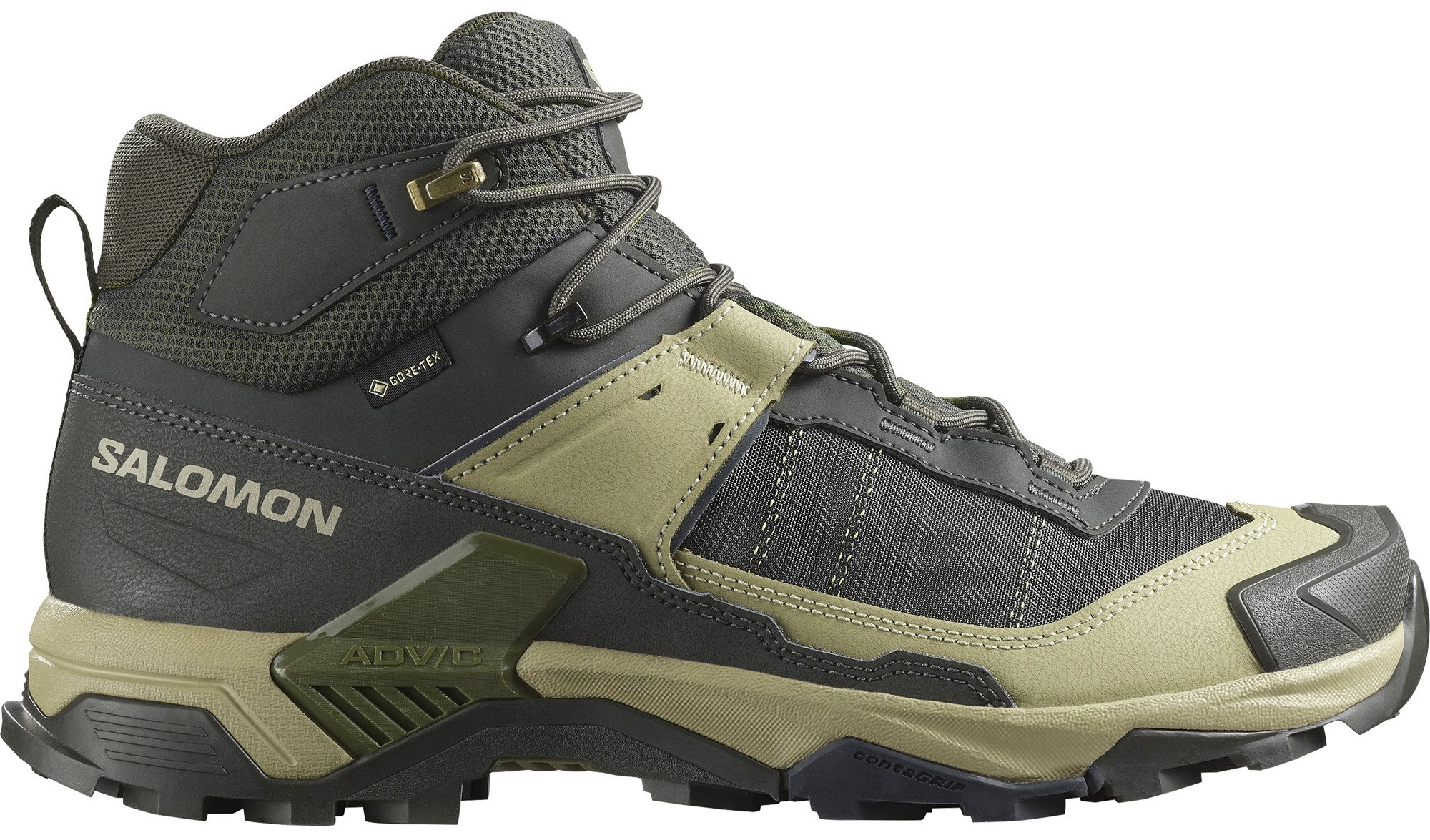
Built like a trail running shoe but with added ankle support and protection, the Salomon X Ultra 5 Mid is one of the most popular hiking boots around. For a while, it held our top award, but recent testing raised some concerns, bumping it lower on our list this time around. That's not to say it isn't a worthy boot to consider. Most of our praise is due to the boots' well-rounded nature: The X Ultra offers an impressive combination of comfort and low weight—all while retaining solid toe protection, stability, and traction on a wide variety of surfaces. You also get reliable Salomon build quality, which we’ve found tends to withstand more abuse on the trail than other boots in this weight and price range. For fast-moving day hikers, lightweight backpackers, and even thru-hikers, we heartily recommend the X Ultra 5 Mid.
There are several compromises that come with the X Ultra’s lightweight construction. The most significant drawback is the lack of underfoot protection, which is thinner than that of the burly Salomon Quest 4 and the max-cushioned Hoka Anacapa 2. In addition, the X Ultra is fairly flexible and doesn’t sit as high on the ankle as the Quest, so it isn’t as supportive over technical terrain or when carrying a heavy pack. That said, we tested the X Ultra 5 on a multi-day backpacking trip in the Pasayten Wilderness in Washington state and found that it offered plenty of support and toe protection for the loose and rocky trails. We’ve also noticed a significant boost in durability over the previous version: Salomon’s latest upper is reinforced with Kevlar, which is hard-wearing yet lightweight. Shoes are intensely personal, and there is no perfect hiking boot, but overall, the X Ultra 5 is a solid contender if you want to stick with a lighter-weight option.
Read more: Salomon X Ultra 5 Mid review (women's version)
See the Men's Salomon X Ultra 5 Mid GTX See the Women's Salomon X Ultra 5 Mid GTX
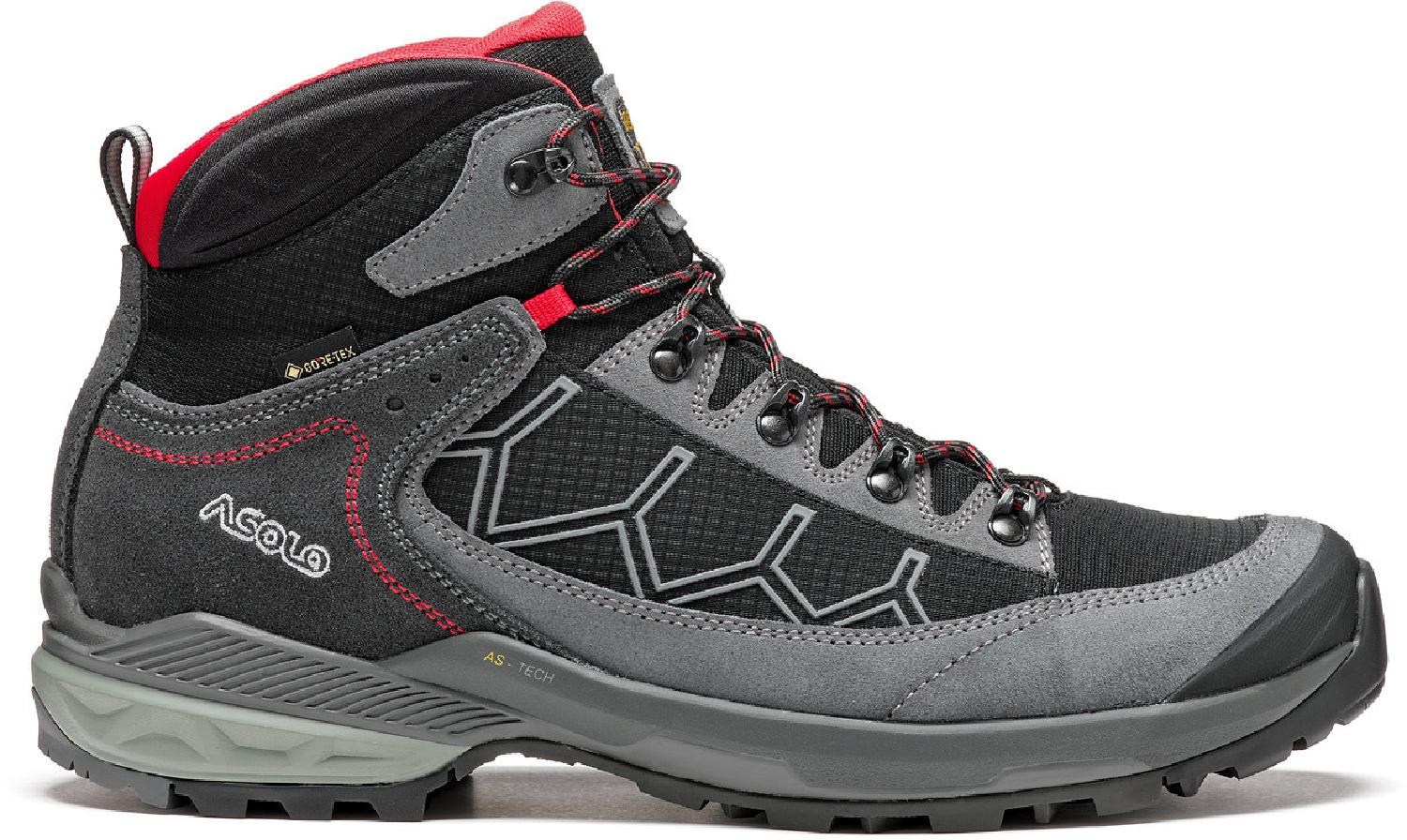 Category: Lightweight
Weight: 2 lb. 0 oz. (men's), 1 lb. 9 oz. (women's)
Waterproof?: Yes (Gore-Tex)
What we like: Well built, extremely comfortable and tough, and competitively light.
What we don't: Very pricey and not quite as supportive as some of the heavier boots on this list.
When we think of Asolo, the first thing that comes to mind is a classic, leather hiking boot like their TPS 520 GV Evo. The sleeker and more modern Falcon Evo GV, however, represents where hiking footwear has clearly headed: less weight and support than a traditional hiking boot but with serious technical chops. We took the updated Falcon Evo GV on and off trail over the course of a rugged trek in Patagonia and came away impressed. It's well built, extremely comfortable right out of the box, and can handle just about anything you throw at it. We honestly didn't feel like it needed any break-in period, as we experienced zero hotspots while logging significant miles in the backcountry.
The biggest downside in choosing the Asolo Falcon Evo GV is compromised stability and coverage. If you're used to a high-cut boot with tons of support, the Falcon isn't it—we found ourselves often wishing for a second eyelet and a smidge more height. Still, laced up tight, we wore it backpacking with a relatively heavy load over all types of terrain with few issues. Speaking of the laces: We found that they tend to come untied more easily than other models we've tested, so plan on double-knotting them. At the end of the day, for those who don't require ultimate levels of stability and want a lightweight, comfortable do-it-all boot for everything from day hiking to more serious backpacking, we really like the Falcon Evo GV.
Read more: Asolo Falcon Evo GV review (men's version)
See the Men's Asolo Falcon Evo GV See the Women's Asolo Falcon Evo GV
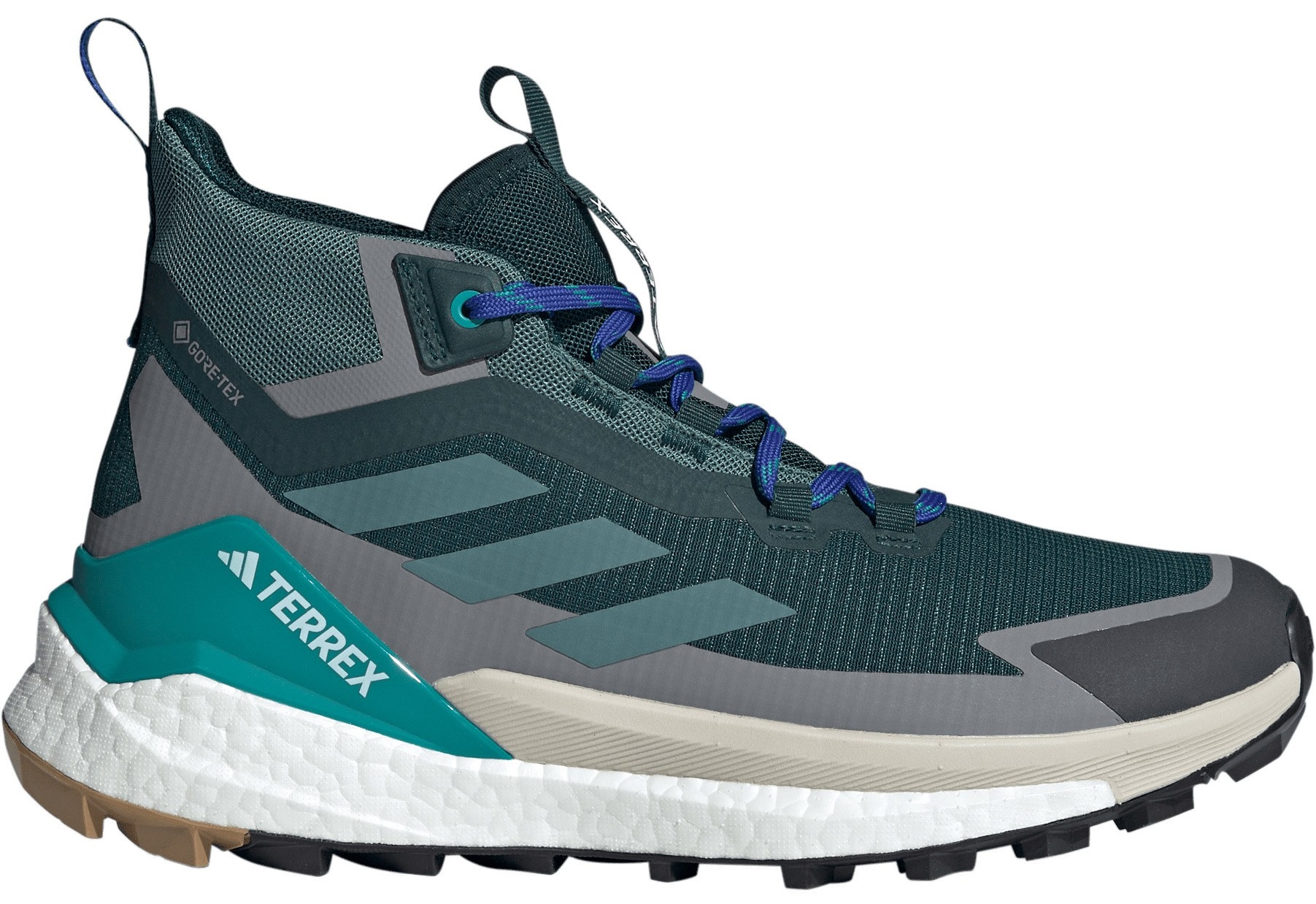
Category: Lightweight
Weight: 2 lb. 4.2 oz. (men's), 1 lb. 15.2 oz. (women's)
Waterproof?: Yes (Gore-Tex)
What we like: Looks do deceive—this is a capable and great-fitting boot.
What we don’t: Durability concerns with the exposed midsole.
It’s always fun to be pleasantly surprised by a piece of gear, and the Adidas Terrex Free Hiker 2 did just that. At first glance—or fifth—the boot looks nothing like an outdoor-ready piece. But after sliding them on, our impression quickly changed. The Free Hiker has a sock-like fit that’s super comfortable with great cushioning on the tongue and collar, and the soft Boost midsole does a great job limiting foot fatigue even on demanding days. Throughout our testing, traction also proved to be excellent on everything from wet rock to loose dirt, thanks to the tacky Continental rubber and aggressive lug shape. Competitively lightweight (just over 2 lb. for our men’s size 9) and with a proven Gore-Tex liner, the Free Hiker is a great option on the market.
The Terrex Free Hiker 2 was a fantastic technical day hiking option on a trip we took to Patagonia, but it does come with some limitations. The most polarizing aspect is its appearance, which falls into the love-it-or-hate-it category (though not as much as with a Hoka, like the Anacapa above). A second, more substantive concern is durability. Specifically, Adidas opted to leave its Boost foam midsole quite exposed along the outside of the boot. After just a few hikes—albeit on very rocky terrain that involved a fair amount of scrambling and squeezing between boulders—pieces of that exposed midsole were starting to fall off in small chunks. It’s a big enough downside to drop the boot a bit on our list, but as a fun day hiker or for lightweight backpacking, the Terrex is still well worth a look.
Read more: Adidas Free Hiker 2 GTX review (men's version)
See the Men's Adidas Terrex Free Hiker 2 See the Women's Adidas Terrex Free Hiker 2
.jpg) Category: Midweight
Category: Midweight
Weight: 2 lb. 8.2 oz. (men's), 2 lb. 1.2 oz. (women's)
Waterproof?: Yes (Keen.Dry)
What we like: An affordable option with a tough leather upper.
What we don’t: Not very secure on rough trails; on the heavy side.
With great out-of-the-box comfort, the Keen Targhee line is an extremely popular boot for day hiking and easy to moderate backpacking trips. The boot boasts a surprisingly tough build, featuring a generously sized toe cap and Nubuck leather upper, a moderately wide fit, and a collar height that sits just high enough on the ankle to provide decent rollover protection. That said, the Targhee is still a clear step down in stability and ankle support from other beefier designs here, though it offers sufficient stability and grip for most subalpine adventures—at a significantly lower price point than others, too. Finally, we appreciate that Keen has a strong sustainability focus by incorporating recycled laces and responsibly produced leather. This boot also features stellar durability, thanks to a compression-resistant midsole and a beefier outsole compared to previous iterations, which we think are excellent improvements over the past-generation III (and worth the weight penalty).
The Targhee’s main competitor is the Merrell Moab 3 above, and both models have been top sellers for years. The Targhee is more durable overall due to its full leather construction, but the Moab is lighter, features more cushioning, and keeps you cooler with its mesh-heavy design. The price and comfort differences are still significant enough to give the edge to the Moab on our list, but the Targhee remains a solid choice, particularly for those with wide feet. For folks looking to save, the Targhee III is still available at a discount while supplies last.
Read more: Keen Targhee IV review (women's version)
See the Men's Keen Targhee IV WP See the Women's Keen Targhee IV WP
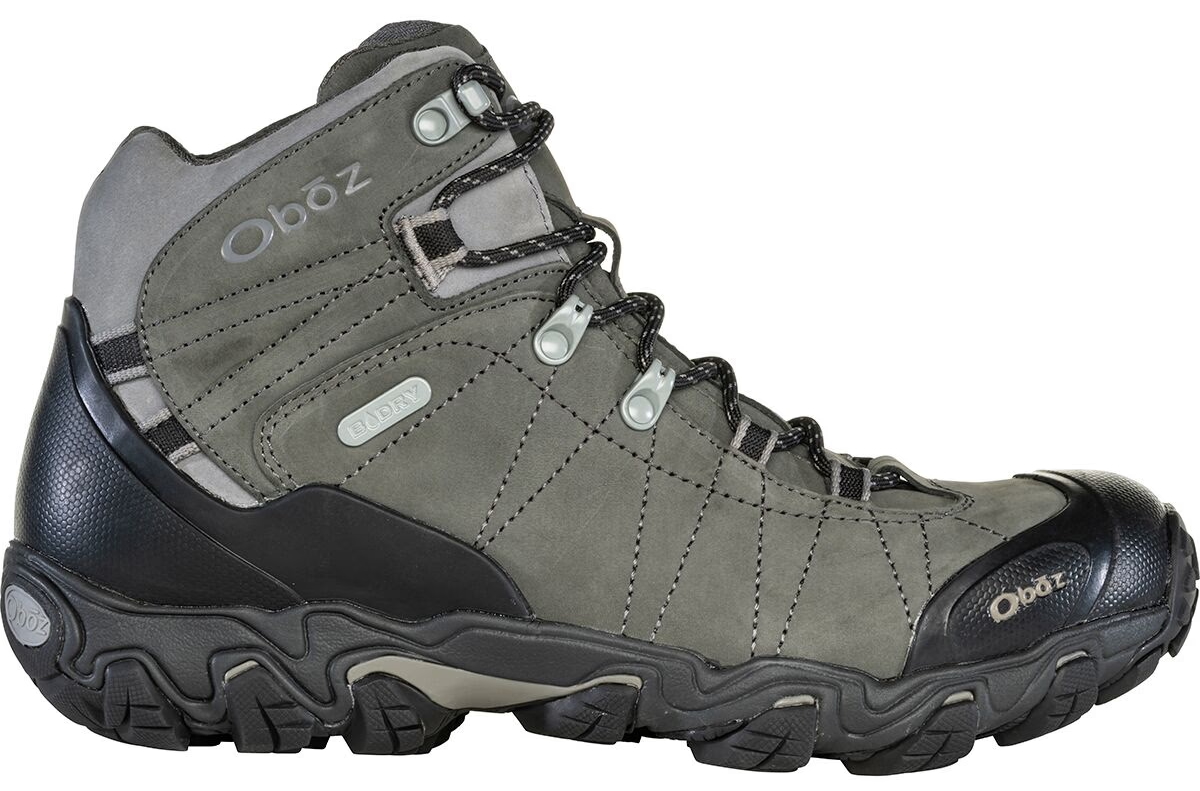
Category: Midweight
Weight: 2 lb. 6 oz. (men's), 2 lb. 3.4 oz. (women's)
Waterproof?: Yes (B-Dry)
What we like: Sturdy and supportive for the price; quality insole included.
What we don’t: Feels a bit slow and heavy on the trail.
Based in Bozeman, Montana, Oboz has a reputation for making tough, comfort-first footwear. Our favorite over-the-ankle design from their lineup is the Bridger Mid, which, in many ways, is akin to the Keen Targhee IV. It’s nicely cushioned and protective underfoot, thanks to TPU reinforcements and a nylon shank, although it lacks the lightness and flexibility of many modern options. The upside is that the boot is stable and supportive—the leather upper can withstand considerable abuse, and the midsole reinforcements provide a planted feel. For anything from weekend backpacking trips to snowshoeing in the winter, the Bridger Mid Waterproof is a comfortable choice.
On the other hand, the Bridger feels slower and heavier on the trail than competitors like the Merrell Moab 3 Mid or Keen Targhee IV Mid, in part due to the chunky tread underfoot. Further, the in-house B-Dry waterproof membrane makes the boot run warm even in moderate temperatures. For a slightly cheaper option from Oboz, the Sawtooth X is another mid-height boot that features more mesh in its build, but it’s less tough and supportive, albeit at a similar weight.
Read more: Oboz Bridger Mid BDry review (men's prior version)
See the Men's Oboz Bridger Mid WP See the Women's Oboz Bridger Mid WP
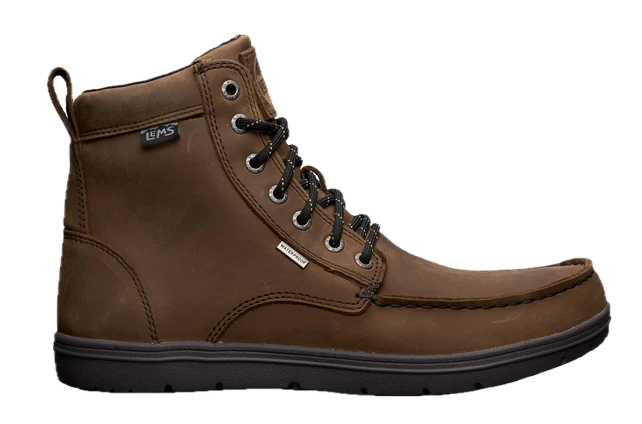
Category: Lightweight
Weight: 1 lb. 9.8 oz.
Waterproof?: Yes (pig skin leather)
What we like: Stylish; ultralight weight; comfortable, natural foot-shaped toebox.
What we don’t: Squeaky sound out of the box that lasts for a while; not as durable as beefier leather models.
Ultralight style and function intersect in this unique, zero-drop design from Lems. The Boulder Boot won't be for every hiker, but as a solid trail-to-town option, it's often the first kick we grab. While these boots can't hold a candle to beefier models out there in terms of durability and cushion, for the right adventurer, these are game-changers. If you often find yourself wandering around town, then hitting a spontaneous hike, only to end up back at the bar, don't sleep on the Boulder Boot. We love the laid-back, weathered leather look (that quickly gains character with use), and the natural foot shape and zero-drop silhouette make them extremely cozy. They also feature a waterproof pig skin leather membrane. Top it off with one of the lightest scale-readings of any boot in our wardrobe, and you have a fantastic quiver-of-one travel pick.
While this is one of our favorite versatile models for all sorts of trips, the Boulder Boot has a serious jack-of-all-trades, master of none vibe. The outsole isn't particularly tacky (and features a very tame lug design), so while we've taken this shoe on some light, off-trail bushwhacking, the performance just isn't there compared to some of the more aggressive lug patterns here. Also, while we love the leather styling, for some reason our pair has a slight "squeak" to it as we walk, which really hasn't gone away with use. It has diminished, so we're hopeful it will soon disappear altogether. Finally, while we love the secure fit of the lacing all the way up the ankle, we prefer open hook eyelets for easier on and off. These qualms aside, if you need a lightweight, stylish boot that disappears in your pack but can also hold its own on light adventures, this is a great option.
See the Men's Lems Waterproof Boulder Boot See the Women's Lems Waterproof Boulder Boot
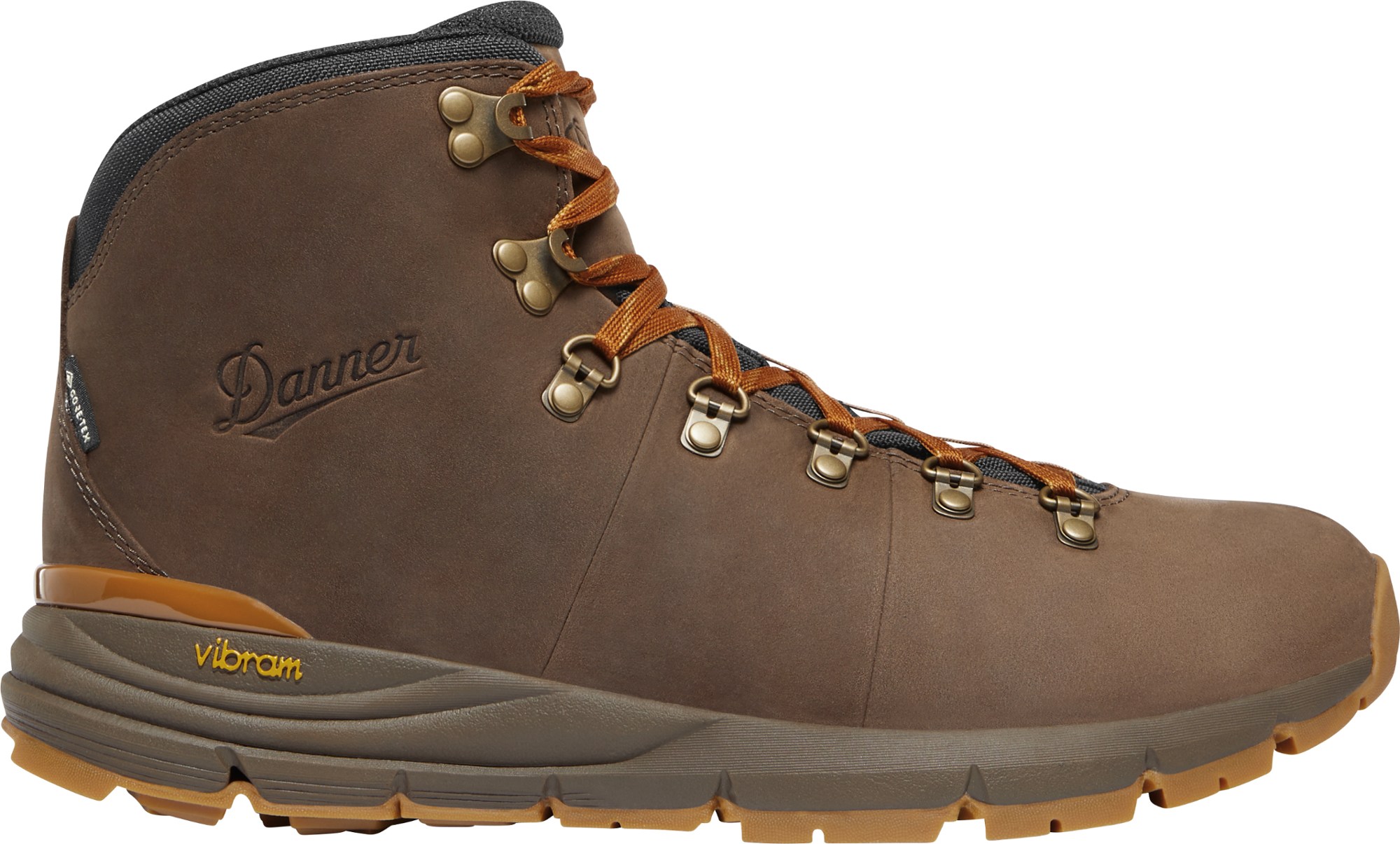 Category: Light/midweight
Weight: 2 lb. 4 oz. (men's and women's)
Waterproof?: Yes (Gore-Tex)
What we like: Classic Danner looks in a lightweight package; option to resole.
What we don’t: Pricey relative to its on-trail performance.
Danner is best known for their throwback, full-leather boots, but their Mountain 600 Leaf has struck a chord with the day-hiking crowd. The over-the-ankle design is relatively light, surprisingly flexible underfoot, and has a sharp look with a full-grain leather upper and quality lacing hardware. The 600 Leaf is also part of Danner’s “recraftable” collection, which allows you to send the boot in for a resole after the tread has worn down. It features a sustainable Gore-Tex liner (made from 45% recycled materials) and a nice range of earthy color options.
If you prioritize out-of-the-box comfort, styling, and everyday versatility, the Mountain 600 Leaf remains a top boot option for day hikes and occasional backpacking. But at a high price and with only moderate levels of support, it’s a bit of a tweener: The Danner can’t hold a candle to the technical performance of the Salomon Quest 4, nor is it as light and nimble as modern alternatives like La Sportiva’s Nucleo High II. But the option to resole and extend the life of a pair of boots is well worth celebrating—it will justify the extra cost for some—and it’s hard not to be smitten with Danner’s classic looks and all-day comfort.
See the Men's Danner Mountain 600 Leaf See the Women's Danner Mountain 600 Leaf
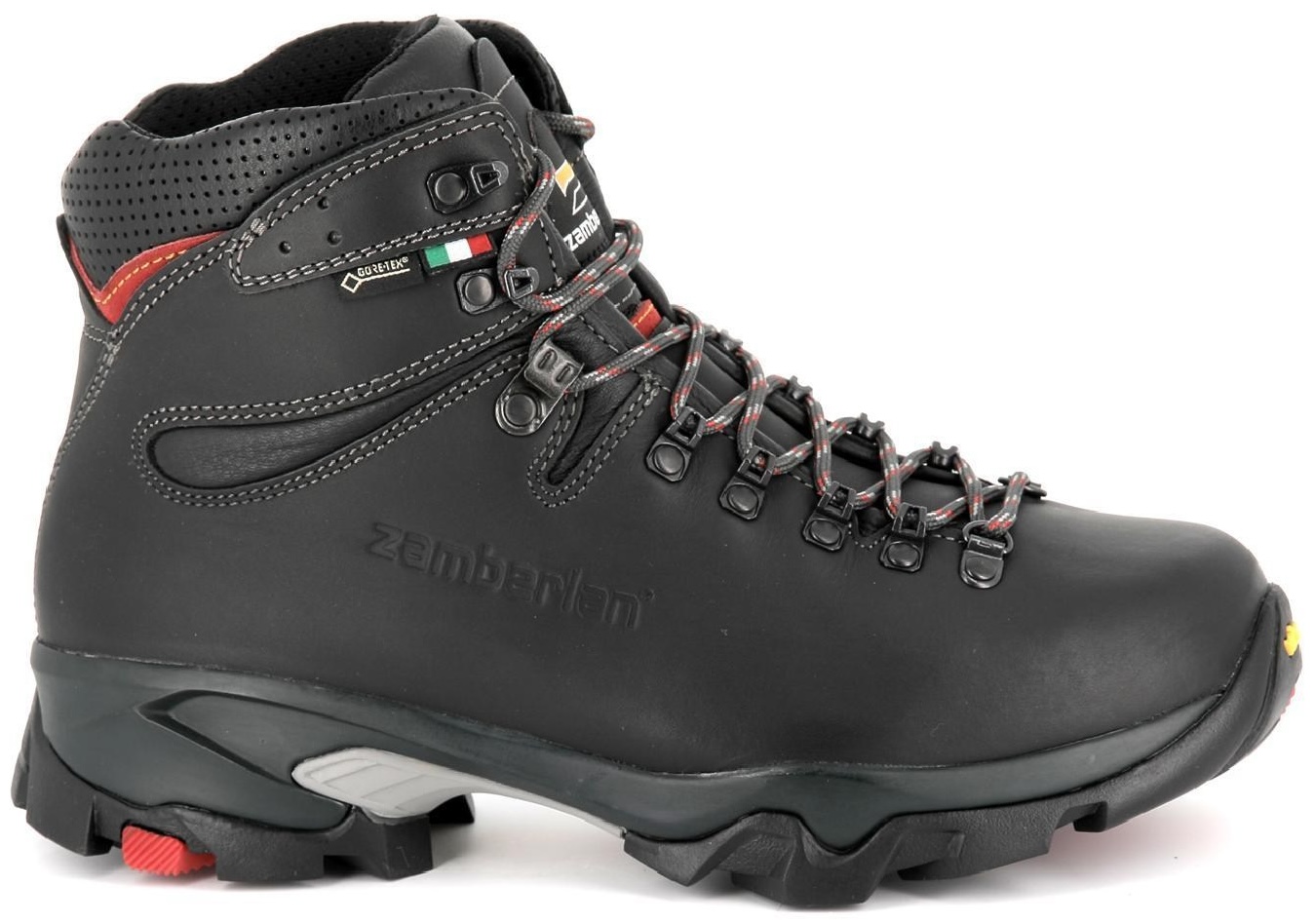 Category: Heavyweight
Weight: 3 lb. 2.4 oz. (men's), 2 lb. 13.2 oz. (women's)
Waterproof?: Yes (Gore-Tex)
What we like: Beautifully made and absolutely bomber on rough terrain.
What we don’t: Heavy and very expensive.
The hiking boot market has been trending away from traditional heavyweight leather designs for years, but there’s still a time and place for these classics. In this category, the Zamberlan 996 Vioz GTX is among the all-time greats: The Italian-made leather construction is gorgeous and built to last, the interior is soft and isolates you amazingly well from a rough trail, and the stiff structure provides reliable support. For long slogs with a serious load or even light mountaineering, the Vioz GTX is a proven choice.
Unfortunately for the Vioz, there is a good reason why you see fewer of them on the trail these days (and why it's at the bottom of our list). A heavy boot makes it that much harder to cover ground, and at over 3 pounds for the men's version (just under for the women's), it weighs more than anything else on this list (which you'll feel as the miles add up). In the end, we think even serious backpackers will be better off in most cases with a boot like the Salomon Quest 4. But the Vioz remains a favorite among traditionalists who want a truly durable boot that will be your hiking partner for years (you can even resole its Vibram rubber).
See the Men's 996 Zamberlan Vioz See the Women's 996 Zamberlan Vioz
Beyond the hiking boots highlighted above, we’ve logged many miles in a wide assortment of models that ultimately didn’t make the final cut. Our aim is to showcase true standouts—pieces that deliver top-tier performance, durability, and overall value season after season. Every boot we recommend has been thoroughly vetted in real-world conditions, so you can count on its reliability. Still, we think it’s helpful to offer a look behind the scenes at the other contenders we’ve tested, to give you a broader sense of the available options.
In light of the Scarpa Rush 2 Pro Mid GTX, we decided to remove the legendary Scarpa Rush TRK GTX from our list this round. We love this boot, but feel that the Rush 2 Pro is more deserving of a spot in our roundup (and it's also more widely available). The Rush TRK GTX was the boot we wore for a full-on remote bushwhack across a national park in East Africa, and it held its own through some of the most gnarly conditions our tester has battled through. If you're looking for a truly reliable boot at an approachable price, this remains a worthy option.
The Scarpa Zodiac Plus GTX lived in our guide for a long while, but has since lost its appeal in light of the competition. It is a stiff, rugged boot designed for trekking over harsh terrain, but it is extremely pricey, and stock is quite low at the time of publishing. Still, this was our steed of choice for a wild adventure in Peru’s Cordillera Huayhuash, and kept us well-protected on all manner of tough trails. If you can get your hands on a pair, they are still worth a look for the serious adventurer.
The Salewa Mountain Trainer Lite Mid GTX is another model we removed this round, primarily due to its low stock. The tall stack height is also somewhat polarizing, and they feel a bit too stiff and burly for general backpacking. The Mountain Trainer Lite Mid GTX takes Salewa's classic Mountain Trainer 2 Mid and trims things down for a lighter and more streamlined ride, but it is still a bit overkill for most applications.
| Hiking Boot (Men's/Women's) | Price | Category | Weight (M/W) | Waterproof? | Upper |
|---|---|---|---|---|---|
| Men's La Sportiva TX Hike Women's La Sportiva TX Hike | $219 | Lightweight | 1 lb. 15 oz./ 1 lb. 12.6 oz. | Yes (Gore-Tex) | Nubuck leather |
| Men's Merrell Moab 3 Mid WP Women's Merrell Moab 3 Mid WP | $170 | Light/mid | 1 lb. 11.1 oz. | Yes (Merrell Dry) | Leather / mesh |
| Men's Salomon Quest 4 GTX Women's Salomon Quest 4 GTX | $230 | Mid/heavy | 2 lb. 14 oz./ 2 lb. 6 oz. | Yes (Gore-Tex) | Leather / textile |
| Men's Hoka Anacapa 2 Mid Women's Hoka Anacapa 2 Mid | $195 | Lightweight | 2 lb. 4 oz./ 1 lb. 13.4 oz. | Yes (Gore-Tex) | Nubuck leather |
| Men's Lowa Renegade Evo GTX Women's Lowa Renegade Evo GTX | $280 | Light/mid | 2 lb. 9.6 oz./ 2 lb. 2.2 oz. | Yes (Gore-Tex) | Nubuck leather |
| Men's Altra Lone Peak Hiker 3 Women's Altra Lone Peak Hiker 3 | $160 | Lightweight | 1 lb. 11.4 oz./ 1 lb. 8 oz. | No (available) | Mesh / suede |
| Men's La Sportiva Nucleo High II Women's La Sportiva Nucleo High II | $259 | Lightweight | 2 lbs. 1.6 oz./ 1 lb. 10.8 oz. | Yes (Gore-Tex) | Nubuck leather |
| Men's Scarpa Rush 2 Pro Mid GTX Women's Scarpa Rush 2 Pro Mid GTX | $199 | Lightweight | 2 lb. 0 oz./ 1 lb. 10.2 oz. | Yes (Gore-Tex) | Nubuck leather |
| Men's Arc'teryx Kopec Mid GTX Women's Arc'teryx Kopec Mid GTX | $200 | Lightweight | 1 lb. 8 oz./ 1 lb. 6 oz. | Yes (Gore-Tex) | Synthetic |
| Men's Salomon X Ultra 5 Mid Women's Salomon X Ultra 5 Mid | $190 | Lightweight | 1 lb. 15 oz./ 1 lb. 12 oz. | Yes (Gore-Tex) | Leather / textile |
| Men's Asolo Falcon Evo GV Women's Asolo Falcon Evo GV | $295 | Lightweight | 2 lb. 0 oz./ 1 lb. 9 oz. | Yes (Gore-Tex) | Suede / nylon |
| Men's Adidas Terrex Free Hiker 2 Women's Adidas Terrex Free Hiker 2 | $220 | Lightweight | 2 lb. 4.2 oz./ 1 lb. 15.2 oz. | Yes (Gore-Tex) | Synthetic |
| Men's Keen Targhee IV Mid WP Women's Keen Targhee IV Mid WP | $180 | Midweight | 2 lb. 8.2 oz./ 2 lb. 1.2 oz. | Yes (Keen.Dry) | Nubuck leather |
| Men's Oboz Bridger Mid WP Women's Oboz Bridger Mid WP | $220 | Midweight | 2 lb. 6 oz./ 2 lb. 3.4 oz. | Yes (B-Dry) | Nubuck leather |
| Men's Lems Boulder Boot Women's Lems Boulder Boot | $185 | Lightweight | 1 lb. 9.8 oz. | Yes (Leather) | Pig skin leather |
| Men's Danner Mountain 600 Leaf Women's Danner Mountain 600 Leaf | $250 | Light/mid | 2 lb. 4 oz. | Yes (Danner Dry) | Suede leather |
| Men's Zamberlan 996 Vioz GTX Women's Zamberlan 996 Vioz GTX | $390 | Heavyweight | 3 lb. 2.4 oz./ 2 lb. 13.2 oz. | Yes (Gore-Tex) | Full-grain leather |
Switchback Travel's team of dedicated trail trotters is no stranger to the sore feet and blisters accompanying long days outside. This guide was founded back in 2015 with an initial selection of 12 hardy boots. Ever since, we've tirelessly tested, researched, and abused new and noteworthy models from the moment they hit the market to ensure this round-up represents the most deserving kicks out there. Senior editor Chris Carter took ownership of the guide in 2024. A seasoned thru-hiker and international backpacker, Chris is an alumnus of the Triple Crown of hiking (PCT, AT, CDT), and has worn a seemingly permanent groove in his shoulders from schlepping heavy loads across the country—and won’t settle for just any old hiking boot.
Our current list of 17 models represents the crème de la crème of these stalwart boots. To truly test the mettle of each design, we put them through a series of real-world tests on and off trail, keeping a keen eye on durability, weight, support, and stability to help inform our reviews. We test boots all over the world, from the dusty African savannah to rocky alpine scree fields in Nepal, to ensure our picks perform well on a wide range of terrain. Finally, we recognize that the competition for the hiking boot podium is fierce and constantly evolving, which is why we've scheduled this guide for regular updates to ensure the list remains current and relevant. If you prefer to go even lighter and faster, check out our article on the best hiking shoes.
.jpg)
Lightweight
Boots in this lightweight category are, not surprisingly, light and flexible, yet still tough enough for a longer day hike or a short overnight backpacking trip. Options range from the more traditional Keen Targhee IV to the light and fast Salomon X Ultra 5 Mid, and even lighter Lems Boulder Boot (1 lb. 9.8 oz.). Waterproof liners are the norm, but they’re typically the less expensive type (read: non Gore-Tex). Materials used in the construction trend toward a heavy use of mesh and nylon, with leather mixed in. This keeps cost and weight down, but doesn’t make them as durable as some pricier full-leather options. You also won’t see as stiff a structure, as the boot’s shank and support won’t be very substantial. As long as you’re not carrying a heavy pack, that shouldn’t be a deterrent.
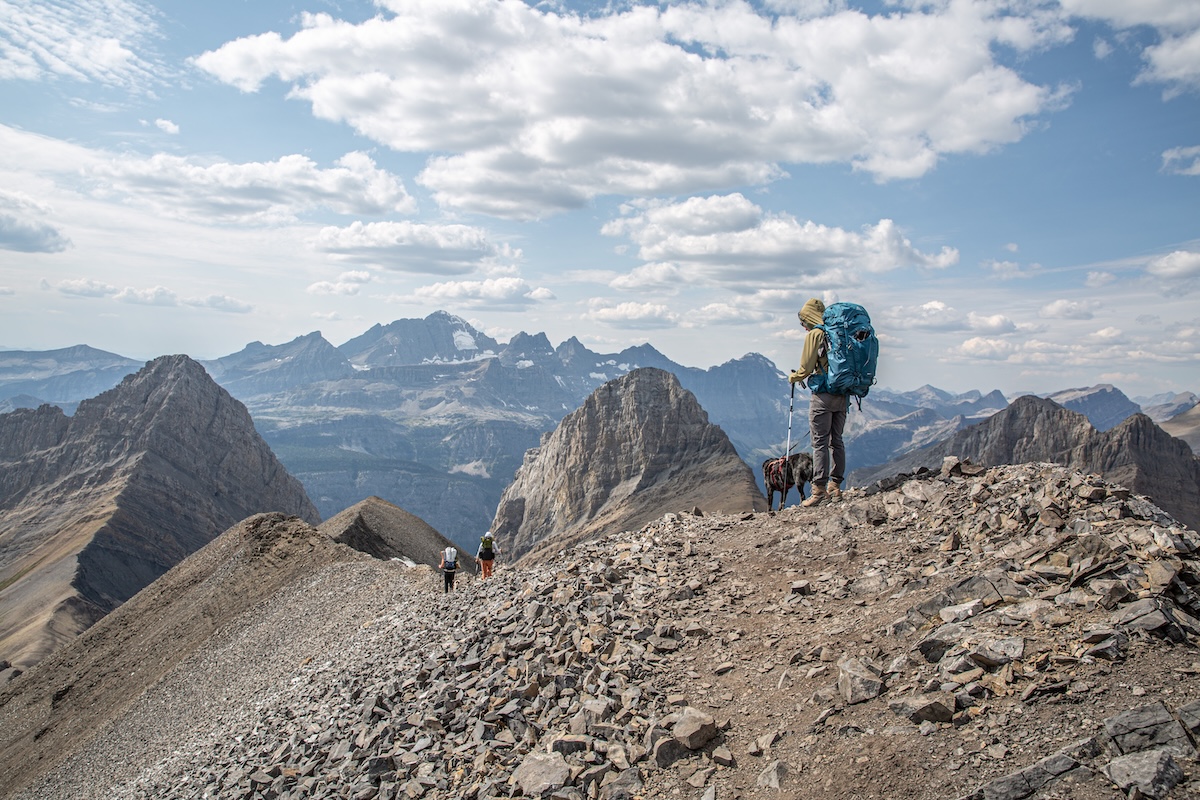
The popularity of trail running shoes for hiking and backpacking has given rise to a new variation in the lightweight category of over-the-ankle trail runners. The basic concept is to take a popular running shoe, such as Hoka's Speedgoat or Altra’s Lone Peak, and bring the collar and lacing system up a few inches. This provides a light boost in protection and support from a low-top trail runner, while retaining the lightweight, cushy, and fast feel characteristic of that footwear category. As we’ve found, however, there are several compromises, including reduced durability, inadequate toe and foot protection due to the thin materials, and insufficient support in technical terrain or when carrying a heavy load. But those who like to move fast and light and even mix in some running during their adventures may find that the pros of a nimble boot like Altra's Lone Peak Hiker 3 outweigh the cons.
.jpg)
Midweight
Midweight boots are skilled compromisers, with enough support to carry a heavy load but without feeling like someone stuffed lead in your socks. It’s a rapidly growing category, reflecting demand from backpackers and serious day hikers for a light but capable option. It's also home to some of our favorite boots—such as the Lowa Renegade Evo. Solid support underfoot makes the boots a bit stiffer than your day hikers, but not excessively so. Due to the high quality of materials and construction techniques, prices in this category typically start at around $200. At that price point, the quality of the waterproof bootie improves, and you’ll typically find GTX (Gore-Tex) in the name.
.jpg)
Heavyweight
Stiff, tough, and incredibly reliable, boot legends of the past were made in the heavyweight category. Classic models like the Zamberlan 996 Vioz GTX remain popular among those seeking a full-leather design, but the shift towards lighter weights in boot construction has expanded the category to include several additional models.
In general, heavyweight boots are built for tough, rocky trails and long slogs with heavy backpacking packs. While the thick upper materials and Gore-Tex make for excellent performance in wet and snowy conditions, they can run warm in hot weather (some prefer a non-waterproof leather boot instead). Their solid structure also alleviates some of the strain of long ascents by preventing the heel from dropping at each step, and often makes them compatible with strap-on crampons for light mountaineering. A final tip: Don’t pick up one of these boots and head directly to the trailhead for a long trip. Spend the time to break them in, and you’ll have a backpacking footwear partner for years to come.
.jpg)
From a quick look at our comparison table above, it’s clear that hiking boot weights vary a lot. You can choose an over-the-ankle design anywhere from well over 3 pounds to under 2 in the case of the trail runner-inspired Altra Lone Peak Hiker 3 (1 lb. 11.4 oz.) and Salomon X Ultra 5 GTX (1 lb. 15 oz.). What’s equally obvious is how the various weights have an impact on a boot’s performance. To start, while the correlation isn’t perfect, a lighter boot (such as the Scarpa Rush 2 Pro) generally will offer less protection, support and stability, and durability over the long term. This can present a problem if you’re carrying a heavy pack and traveling over rough terrain, but for thru-hikers or minimalists, going lightweight can be a great idea.
.jpg)
Whenever possible, we try to keep the weight of our boots to a minimum, providing enough comfort and support for the weight of our pack and the conditions, without having to lug around anything extra. Depending on the trip, this can mean a lightweight trail-runner style for fastpacking all the way up to a burly boot for trekking through Nepal. If you’re going to choose one boot to do it all, the Salomon Quest 4 GTX does a great job balancing weight and performance.
In general, a hiking boot is designed to be stable, which typically involves a piece of hard plastic inserted between the midsole and outsole, known as a shank. The length of the plastic can vary from just under the arch to the full length of the boot, depending on intended use. The benefit of a stiff boot is that the heel will not drop on an ascent, which helps reduce calf fatigue. This is why the stiffness of a boot will increase along with its technical abilities, culminating in extremely unyielding mountaineering boots that can better handle long summit pushes. On the other end of the spectrum, some lightweight boots lack this additional structure, instead resembling tall, flexible hiking shoes.
.jpg)
For day hikes on flatter or less technical terrain or if you're aiming to move fast and light, we can’t recommend a lightweight and flexible hiking boot enough. Shoes like the Altra Lone Peak Hiker 3 or Salomon X Ultra 5 Mid are standouts for these uses. However, as your trips become longer and your pack gets heavier, a more substantial boot that provides increased ankle support is a better choice. Consider the Lowa Renegade Evo or Salomon Quest 4 for a great all-around option that excels equally at summit peaks and multi-day backpacking trips. At the extreme end, heavyweight boots are excellent for hiking in areas that require maximum support, such as off-trail bushwhacking, traversing exposed terrain, or trekking over rough ground.
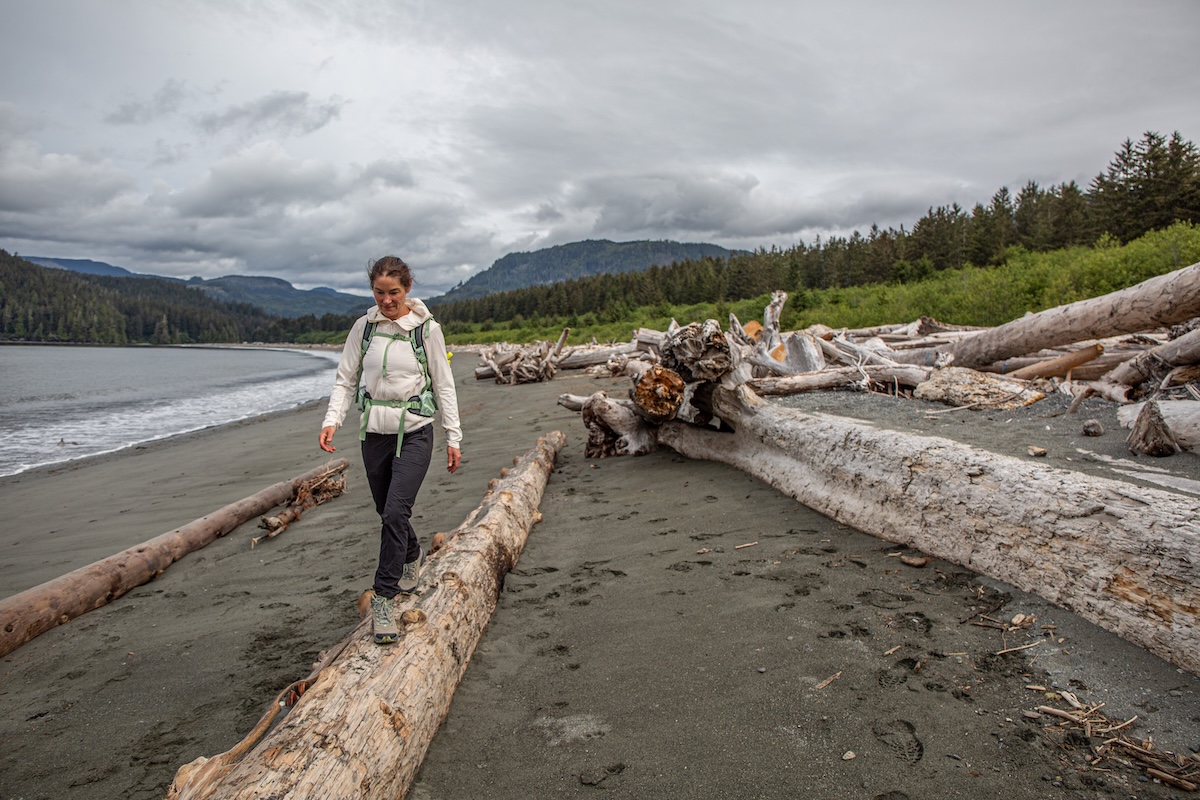
The vast majority of hiking boots are waterproof, and the security from a surprise deluge on a backpacking trip is reason enough for most folks to choose a GTX or Gore-Tex model. To make these boots waterproof, most designs have a waterproof and breathable bootie inserted inside the outer fabric. Gore-Tex liners are the most popular and have the brand cachet, but even in-house technologies like Keen's Keen.Dry are similar in terms of waterproofing performance (breathability and some inconsistency between models is where they’ll differ). In addition, a water-repellent coating is added to the boot to help bead up and shed water droplets.
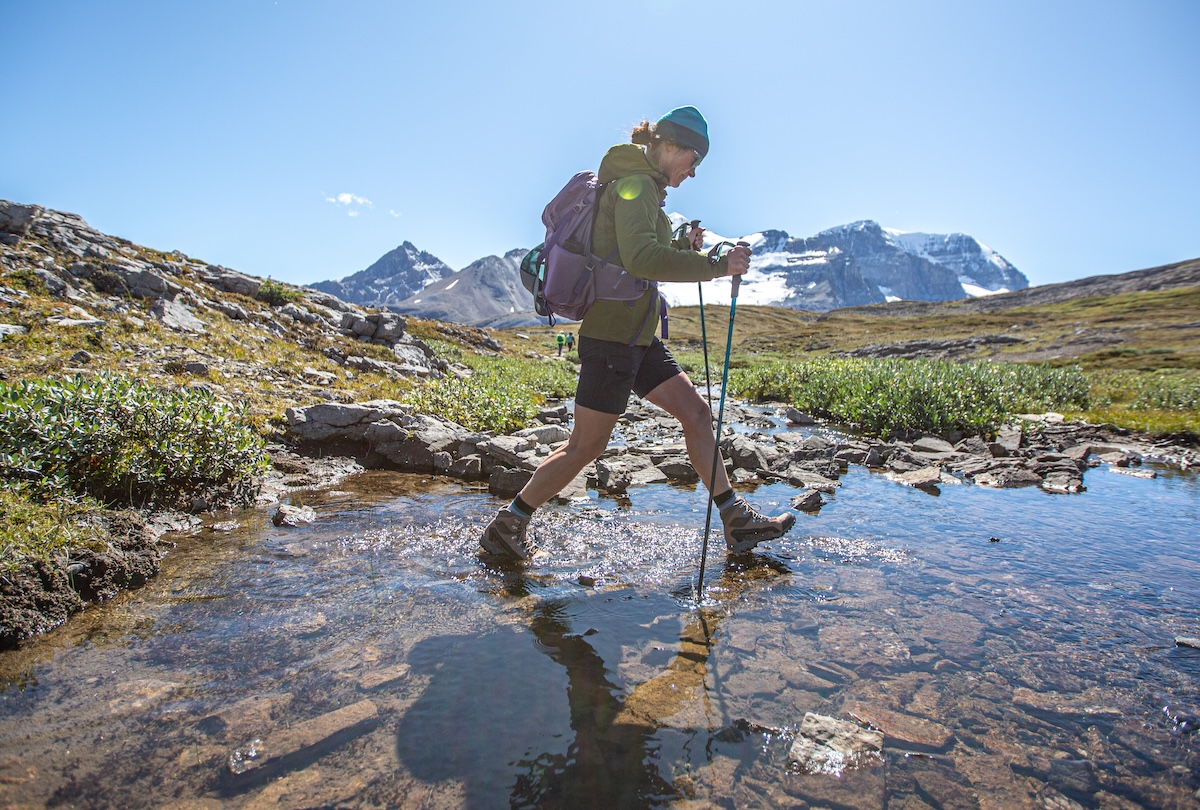
Most hiking boots are waterproof, but does that necessarily mean they should be? It’s nice to have waterproofing so your feet don’t get wet walking through mud or crossing a stream, but all the waterproofing does on a spring or summer backpacking trip to a place like Canyonlands is make your feet hot and sweaty (we cover breathability in greater detail below). An argument can be made that your feet will eventually get soaked, regardless of the waterproof design, in truly wet and miserable conditions. As an alternative, some backpackers opt for non-waterproof shoes paired with gaiters for added weather protection. While this won’t keep water from entering at the sides, the boots will dry much quicker. And the gaiters keep water, snow, or trail debris from entering over the top of the boot.
Our take on waterproofing is that it’s best for most folks, and particularly those who venture out in mountainous regions where water on the trail or a rainstorm is always a possibility. The designs aren’t perfect, but a quality waterproof lining will keep you reasonably dry in all but the worst weather. And if you hike in the shoulder seasons, the extra layer adds some insulation from the cold. But hikers in uniquely hot and dry places like Arizona and Utah may be best served with a non-waterproof model, regardless of the limited options available on the market. In this camp, we like the Merrell Moab 3 Mid (a sibling of the Moab Mid 3 WP on this list) and the Altra Lone Peak Hiker 3. For a deeper dive on the topic, see our article on waterproof hiking footwear.
.jpg)
Regardless of what marketers claim, making a boot waterproof inherently affects its breathability. By keeping water from entering from the outside, less moisture (your sweat) can quickly and easily escape from the inside, which means all forms of waterproof footwear can run warm in the summer months. There are, however, big differences between boot models in their ability to ventilate.
We’ve found that heavyweight leather boots with a Gore-Tex lining are often the worst performers, while the Gore-Tex Surround in the mesh-heavy La Sportiva Nucleo High II is a step above. In between, the Lowa Renegade Evo and Salomon Quest 4 both perform decently thanks to their nylon and leather construction and Gore-Tex liners, and are completely suitable for summer backpacking trips. The cheaper membrane in the Oboz Bridger Mid boot fell short of those pricier options in our testing. Alternatively, if you are willing and able to ditch the waterproof lining altogether, boots like the Merrell Moab Mid are great options for hikers and backpackers.
.jpg)
Laces are an often-overlooked feature on hiking boots, but they play an important role in ensuring proper fit and comfort. If a shoe has a poor lacing system prone to loosening, you’ll find yourself having to readjust constantly on the trail or deal with hot spots and blisters. If the culprit is just the laces themselves, it’s an easy fix: There are many quality replacement laces available, which can usually be found at a local outdoor shop. However, if the system itself doesn’t fit your foot well or hold it securely, we recommend looking elsewhere. For this reason, we are hesitant to recommend the single-pull speed lace designs from Salomon and Adidas. Although convenient, it can be more difficult to customize fit, which can lead to discomfort over long miles and when wearing a heavy pack.
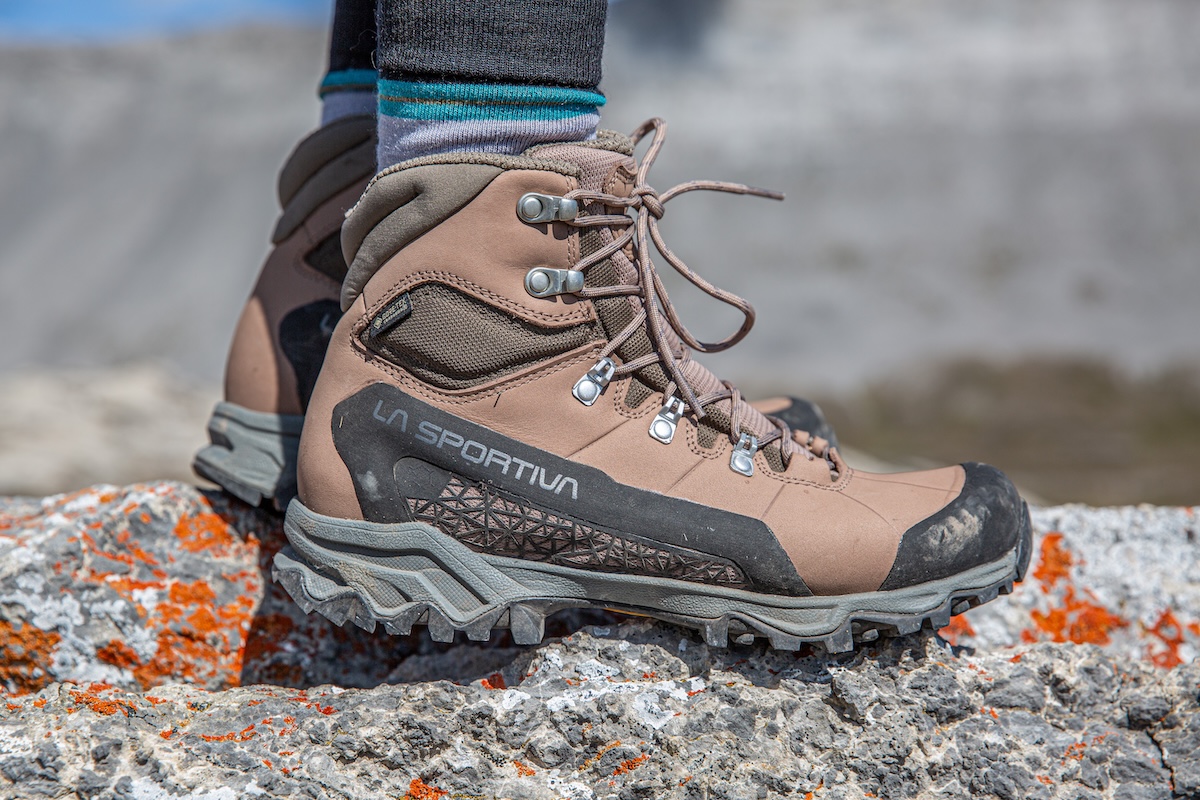
As you upgrade to more aggressive designs, the lacing systems should also advance. Notable upgrades for boots include locking hooks near the bend at the ankle, such as those on the Salomon Quest or Lowa Renegade Evo boots. These hook eyelets keep the laces in place extremely well, which increases comfort and on-trail performance. Boots without these locking hooks can come untied more easily by snagging on underbrush while hiking, which can get extremely annoying. Ensure you feel comfortable with the lacing system and hook eyelets of your boots before venturing into the backcountry.
.jpg)
The type of material used in a shoe’s upper, which is the fabric that connects to the rubber outsole, correlates directly with its durability, water resistance, and ability to breathe. Most often, a boot or shoe is made with a mix of synthetic materials (typically nylon), mesh, and leather. There are exceptions, particularly at the high-end with one-piece leather constructions. Below, we outline the pros and cons of the most common materials used in hiking footwear.
Synthetic Nylon and Mesh
Woven nylon and open mesh nylon panels are commonly used on entry- and mid-level boots to enhance breathability. They’re not as well known for their durability, but they do a great job of cutting weight. Moreover, the fabric can absorb moisture faster than a leather boot. Exceptions include the Salomon Quest 4, which is made of tightly woven nylon panels that offer comparable durability to some Nubuck leathers, despite having a lot of exterior stitching.
.jpg)
Nubuck and Suede Leather
Made of full-grain leather, but given a brushed finish that has a suede-like feel, Nubuck leather is a common sight on mid-range boots. The softer touch leather is lighter and more flexible than traditional, glossy full-leather options; however, its thinner construction is less durable. It is, however, more durable than most nylon mesh inserts, and as a result, it’s common to find a mix of Nubuck leather and mesh, with the leather elements providing the boots with a little extra toughness. Additionally, Nubuck leather tends to breathe better than full-grain leather and is less prone to showing scuff marks thanks to its brushed finish.
.jpg)
Full-Grain Leather
This type of upper is most often found on tough, heavyweight boots. You’ll find one-piece leather uppers on high-end boots like the Zamberlan 996 Vioz GTX, Asolo TPS 520 (not listed above), or in Danner’s boot collection. These designs are not light or as breathable, but are incredibly tough and water-resistant. They do require some maintenance to keep the leather in good shape, but they’ll reward those cleaning efforts with a construction that is built to outlast everything else on the market. As an added bonus, some boots, like the Danner Mountain Light, can be re-soled, so you don’t need to replace the entire boot once the lugs wear down.
While wearing hiking boots, it’s common to carry a substantial amount of weight, which puts considerable stress on your feet. Combined with the rubber outsole, the midsole plays an essential role as a shock absorber against impacts and provides an additional layer of protection from sharp rocks. Depending on the design, midsoles vary from very thin (in fastpacking boots) to stiff and substantial (in full leather hiking boots). Most include EVA foam, PU (polyurethane), or a combination of both in their construction.
EVA
The majority of light and midweight hiking boots use EVA foam in the midsole. The cushy, soft material helps alleviate the impact on your heel or midfoot and is also extremely lightweight. Not all EVA should be treated equally, and proprietary versions can vary from super-soft to mildly stiff. For logging serious miles on tougher terrain, we prefer a firm and supportive midsole over excessive cushioning. Those overly soft midsoles also tend to break down over time, much like a running shoe. In general, you pay more for an improved midsole design and a higher-quality EVA compound.
.jpg)
PU
For tougher applications or when it’s a priority to isolate your feet from rough impacts, manufacturers will use a PU or polyurethane midsole. This durable foam is far less cushy than midsoles with only EVA, but it will last longer and better handle a heavier load. In addition, they’ll keep their shape longer and won’t be prone to compressing like EVA. Boots like the Asolo TPS 520 Evo use a polyurethane insole, but the material’s popularity is expanding to mid-range options—despite the extra cost.
.jpg "The Scarpa Zodiac Plus has a hybrid EVA and PU midsole design")
The motivation behind upgrading from a flimsy cross-trainer to a real hiking boot or shoe is often to improve traction. In short, hiking footwear is significantly better when the terrain becomes rocky, slippery, and steep. In much the same way that Gore-Tex dominates the market for mid- to high-end waterproofing, Vibram occupies a similar niche for outsoles. Not all Vibram models should be treated as equals, however, as the rubber manufacturer tailors its designs for specific footwear and brands. Some models feature significantly larger lugs underfoot (listed in millimeters) for enhanced grip in mud, while others prioritize durability or sticky rubber for scrambling over rocks (the Megagrip compound is a popular choice). There are also more entry-level options that just do well on easier trails, like the lugs you’ll find on the bottom of the Merrell Moab boots and shoes. The lesson is that it's worth taking a look at the lug depth and description of the compound type to find out where a specific outsole will perform best.
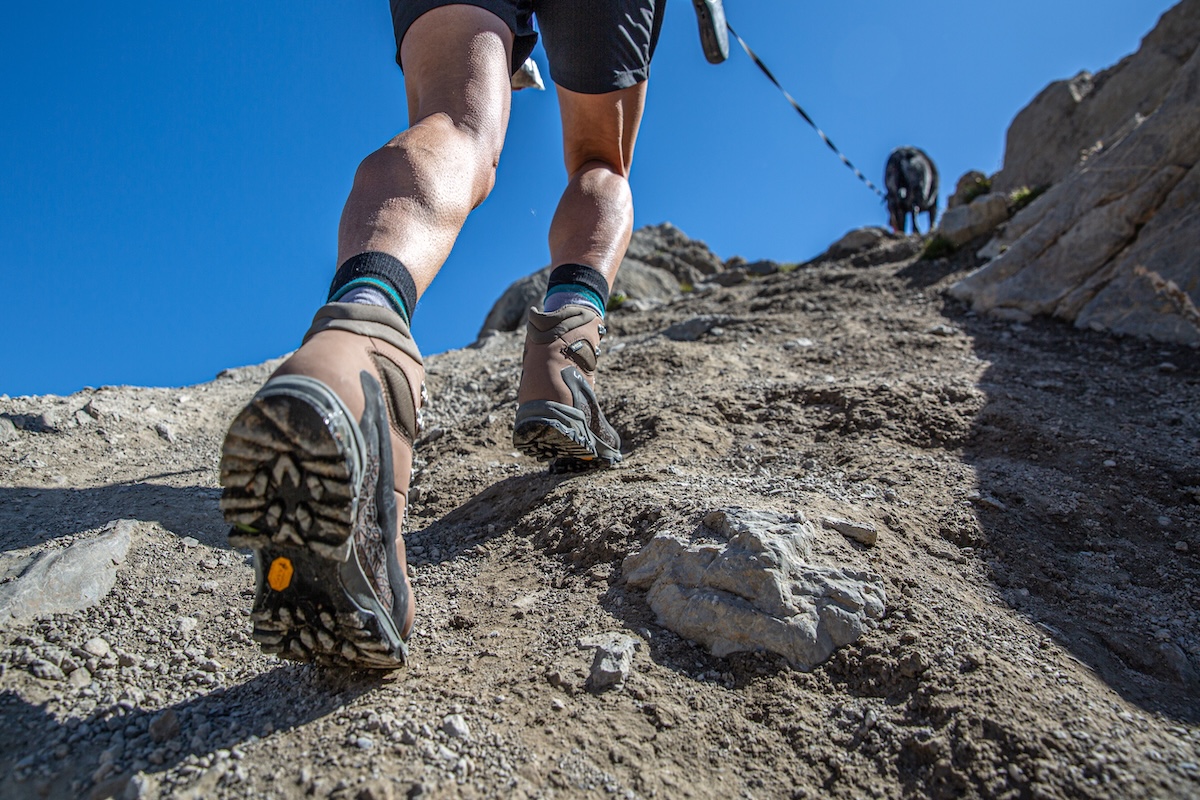
Salomon is one brand that doesn’t outsource their traction needs. Instead, they use their in-house Contagrip brand for all of their boots and shoe models. And with years of experience in everything from trail running to hiking, they aren’t short on expertise. The level of quality and performance is in line with the Vibram offerings across the board, on anything from their fast-and-light X Ultra Mid hiking boots to the burly Salomon Quest 4 backpacking boots.
.jpg)
Toe caps or rubber rands cover the front of many hiking boots, and we consider them an essential element of backpacking boot design. These thick pieces of rubber are there to keep your toes in one piece should you accidentally—and in our case, eventually—kick a rock on the trail. To reduce weight, some manufacturers may occasionally remove or reduce this feature. If you opt for a lightweight shoe, toe protection is one area where you may need to compromise.
Getting a proper fit can be a real pain, and in many cases, the blame is a generic, flat insole. Thankfully, removing your stock insoles is extremely easy, and replacing them with an aftermarket model that’s specifically designed for your foot size and shape can remedy most shoe maladies. New insoles can provide more or less volume to fill out the shoe, improve the fit under the arch, and adjust the cushioning and impact shock. We recommend checking out Superfeet insoles for their wide selection of options and trusted reputation in running shoes, ski boots, and hiking footwear.
.jpg)
Each year, more and more brands are innovating to utilize eco-friendlier materials. Whether that means using recycled or recyclable materials, repurposed components, or new innovations, we appreciate the push in this direction. This information is typically easy to find, as brands want people to know when they've put effort or resources into improving their lineup. Additionally, as a shopper, you can make sustainable choices by opting for more durable footwear. While going lighter is all the rage these days, lightweight designs simply don't last as long as beefier boots. If you're OK with some added weight and a longer break-in period, choosing a boot with heftier components and more leather could mean having a well-performing hiker for a decade instead of just a season or two. Lastly, it's worth checking if your brand of choice offers options for fixing worn components or resoling—services like Danner's Recrafting are specifically committed to this. And when the time comes for moving on, there are some great recycling programs to explore, like Ridwell and TerraCycle.
One of the key decisions in choosing hiking footwear is selecting either an over-the-ankle boot or a low-top shoe. Each style has its respective strengths, and we use them interchangeably for hiking and backpacking trips. We’ve found that hiking shoe models vary just as much as the boots listed above, so you can choose from stiff and supportive down to light and nimble.
.jpg "Keen's Targhee III is made in both mid-height boot and low-top shoe variations")
Ultimately, the key differentiators between boots and shoes are protection, stability, and weight. Many hikers gravitate toward boots for the added ankle support and coverage they offer. However, many hikers—primarily long-distance backpackers and those who prefer to travel fast and light—are migrating to low-top shoes or even trail runners to reduce weight and leg fatigue over the long haul. Over time and with proper training, the muscles around the ankle can be trained and strengthened to allow hikers to trek over the same terrain in low-top shoes that they would otherwise tackle with traditional boots. For rocky terrain, water crossings, snow, and carrying a heavy backpacking pack, a boot is still our preferred option. There isn’t a definite right answer in this debate, but the weight of your gear and the conditions you’ll be hiking in can make the decision a lot simpler. For many dedicated outdoorspeople, it’s worth having at least a pair of each in their quiver.
Back to Our Top Hiking Boot Picks Back to Our Hiking Boot Comparison Table

_08b31.jpg)
f7dd.jpg)
c9f6.jpg)
_083fa.jpg)
24de.jpg)
00b0.jpg)
6079.jpg)