

Photo Credit
Synthetic insulation is a miracle material: It’s breathable, water-resistant, and modern blends come close to matching the loft and light weight of down. We’ll lounge around in our down jacket any day, but for performance use, it’s all synthetic (almost) all the time, whether we’re building heat on the trail or throwing on a layer halfway up an alpine rock climb. We've put jackets through their paces over the years across all seasons, and after years of testing, the Arc’teryx Atom Jacket is our top pick. This guide is geared towards women and their individual needs surrounding fit, but if you're looking for a unisex selection of synthetic jackets, check out our best synthetic jackets guide, which includes both men's and women's styles.
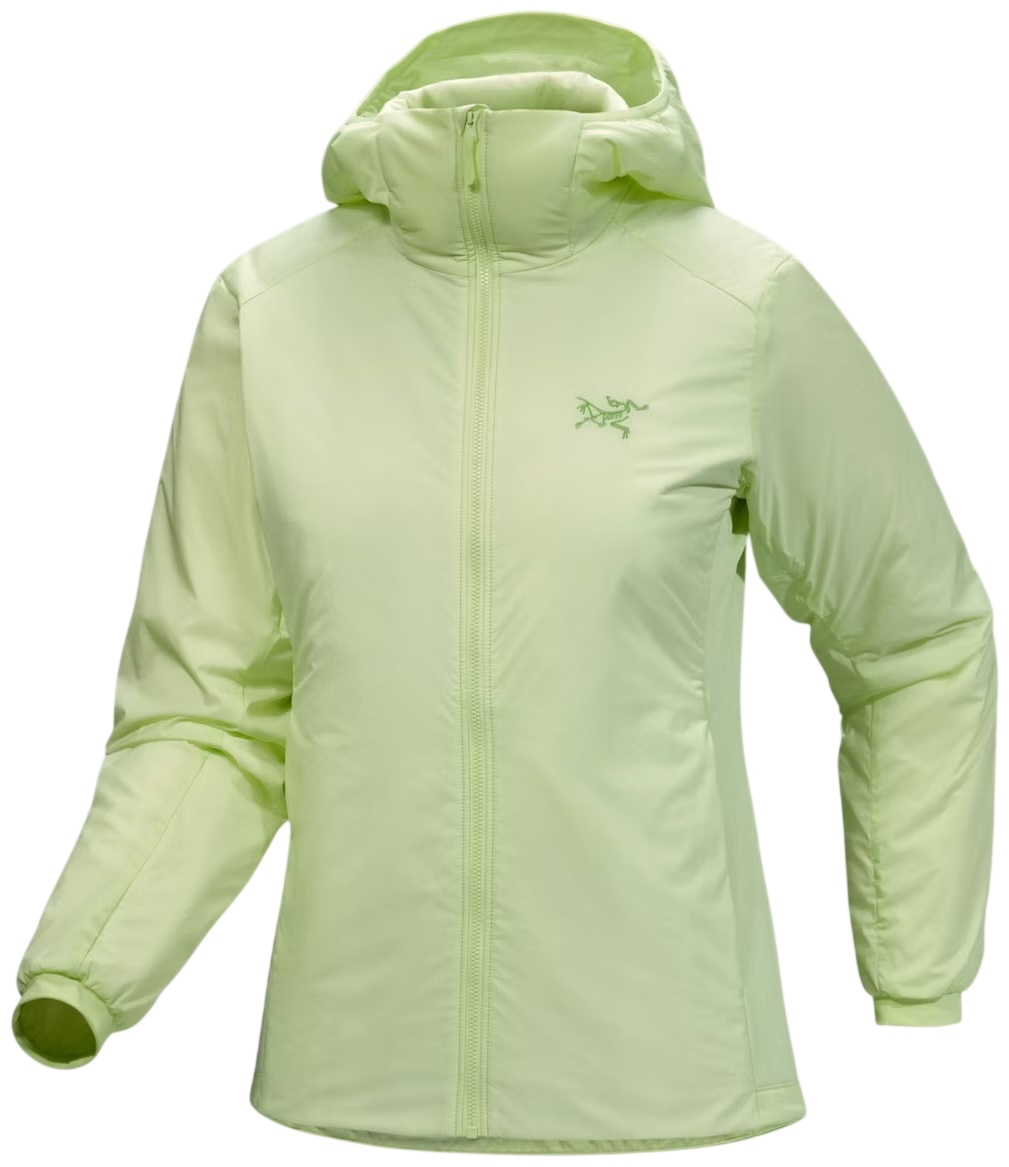
Category: Casual/performance
Weight: 11.3 oz.
Insulation: Coreloft Compact (60g)
What we like: A durable yet comfortable jacket for both front- and backcountry use.
What we don’t: Does not excel in any particular performance category.
Arc'teryx's venerable Atom collection has been a consistent favorite of ours over the years, and the flagship design has a lot to offer. This synthetic hoody strikes a nice balance for both casual and performance use, with a durable yet soft 100% nylon shell, stretchy fleece side panels for comfort and ventilation, and Arc’teryx’s celebrated StormHood, which is helmet-compatible and comes with a small brim. We also love the sleek look and the variety of classy colors, making it a great piece for around town. It’s a fantastic quiver-of-one jacket that can keep up with most outdoor and casual endeavors, and the features are well sorted. Arc’teryx’s attention to detail is showcased in this design, from the flattering fit to the premium, durable touch points (like fleece-lined pockets and plastic zipper pulls).
That said, the Atom is a master of no specific discipline. While it cuts wind and resists wear better than thinner active insulators, it’s too warm and bulky for high-output use. It’s also not the most weather-resistant, and dedicated backcountry travelers might want something that can withstand precipitation and wind better. And depending on your aesthetics and hometown, it might not be the best casual piece, either. Down-mimicking jackets like the Patagonia Nano Puff feature stylish baffles that might fit in better. It's also on the pricey end, and you can save some cash by opting for the non-hooded version. But for most hikers, backpackers, and ski tourers who aren’t trying to break speed records or spend multiple days in the backcountry, the Atom is a great all-around choice.
Read more: Arc'teryx Atom Hoody review
See the Arc'teryx Atom Hoody
Category: Casual/performance
Weight: 13.2 oz.
Insulation: Polyester (60g)
What we like: Reasonably-priced active layer with a trim fit and good storage options.
What we don’t: A less precise fit leads to a reduced range of motion; short hem and no hood.
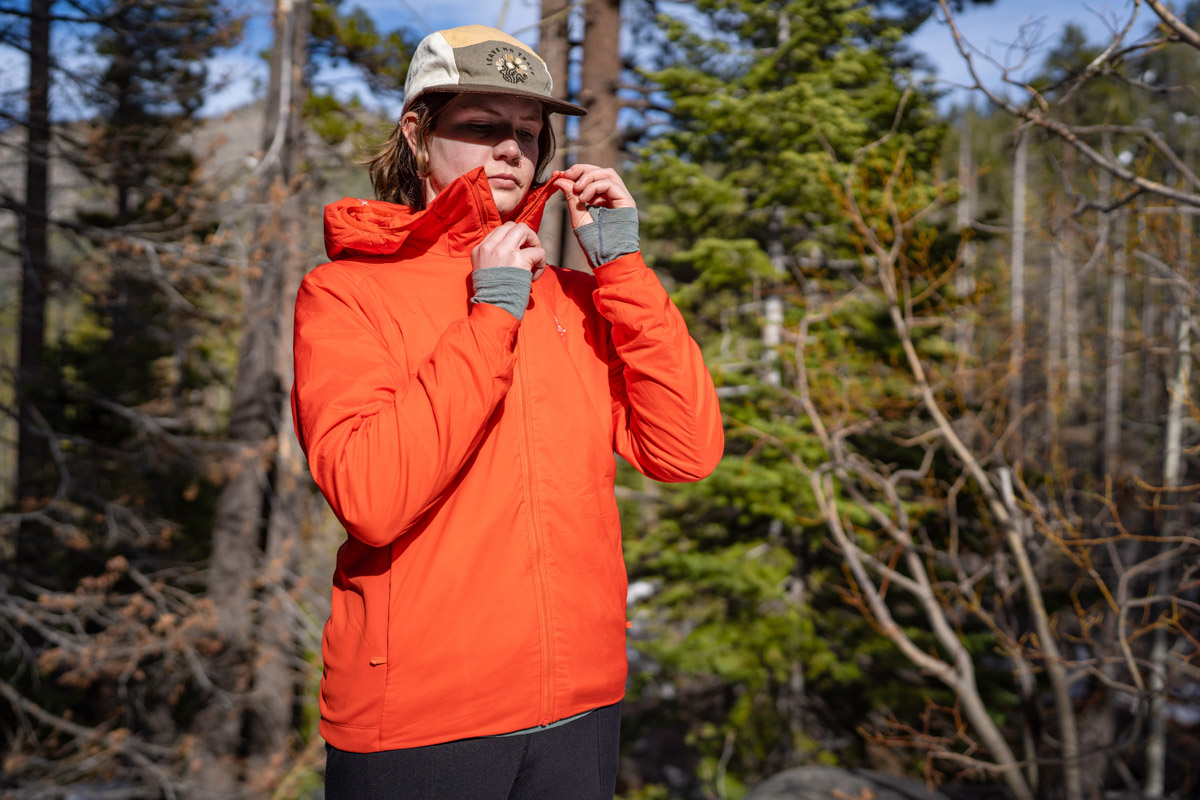
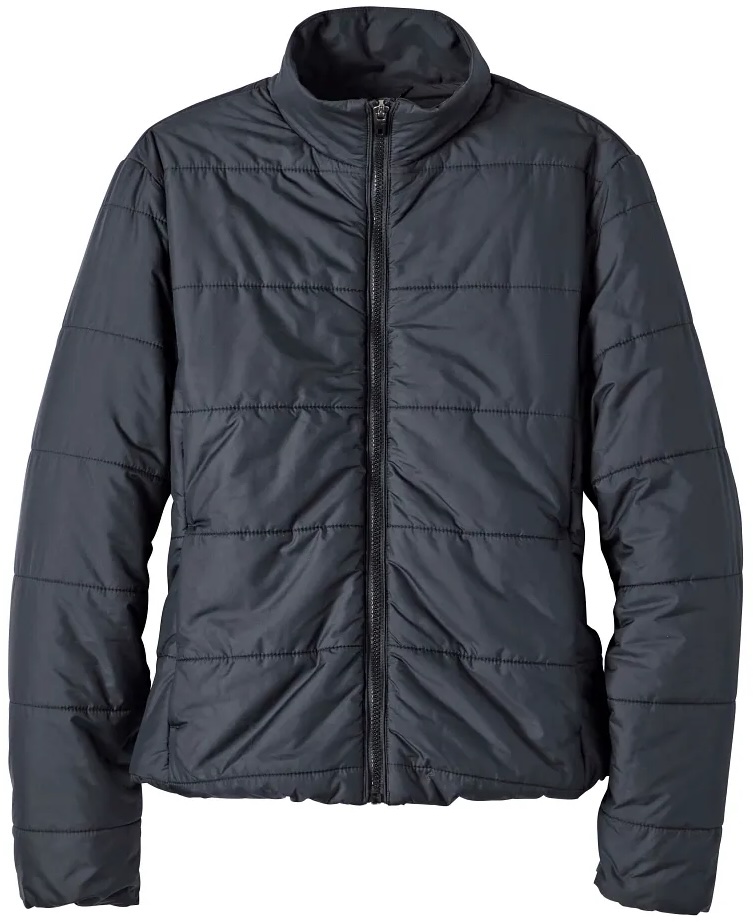
Synthetic jackets aren't exactly an inexpensive layer, but it is possible to save some cash without sacrificing too much in performance and durability. Road Runner Sports' Korsa Horizon Quilted Jacket is our favorite in the budget space. It's a simple, streamlined jacket that fits snugly over a thin baselayer. It can pull double duty as both an active and casual piece, which adds to its value. It can keep up on the trail with a highly water-resistant shell that dumps heat when you need it to, and the sleek fit and stylish baffles look great around town, too. The jacket is well-made, even for the price, and we haven't experienced any durability issues in testing. We also like the storage options, which include two hand pockets and an interior dumb pocket that can hold a phone. Put together, the Korsa is a well-rounded jacket for a great price.
The main downside to this jacket is the fit. Unlike the more premium (pricey) jackets on this list, the Korsa has a simpler patterning with little articulation, which impacts the range of motion in the arms and shoulders. This jacket is also an inch or two shorter than most insulated layers, which works well for running by allowing full freedom from the waist down, but some might find the in-between length (not full length and not cropped) to feel odd. The short hem and lack of a hood also aren't ideal for low-output activities like belaying or cold-weather camping, where trapping warmth is essential. These downsides are far from dealbreakers for us, however, and we think the Korsa manages its priorities well. If your budget is tight, it's a great option.
See the RRS Korsa Horizon Quilted
Category: Performance
Weight: 11.8 oz.
Insulation: VerticalX Octa
What we like: Best-in-class mobility and breathability for shoulder-season conditions.
What we don’t: Not as warm as most jackets here.
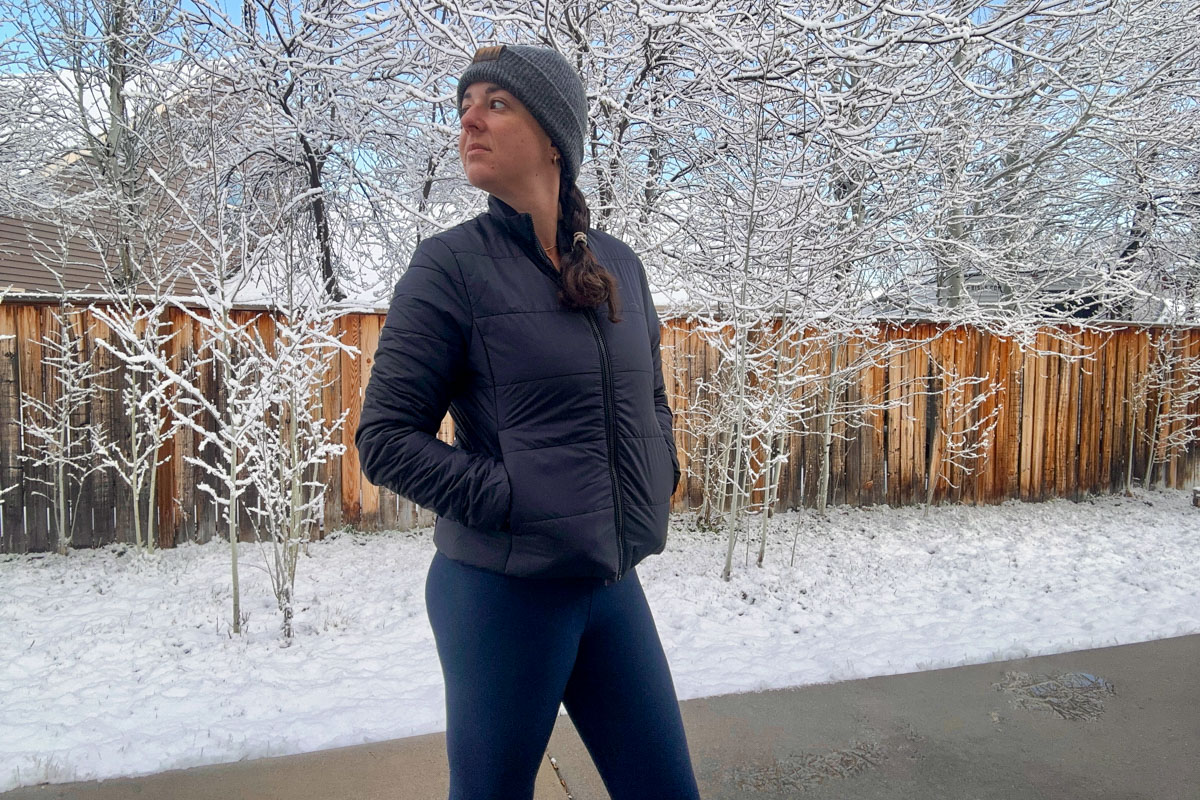
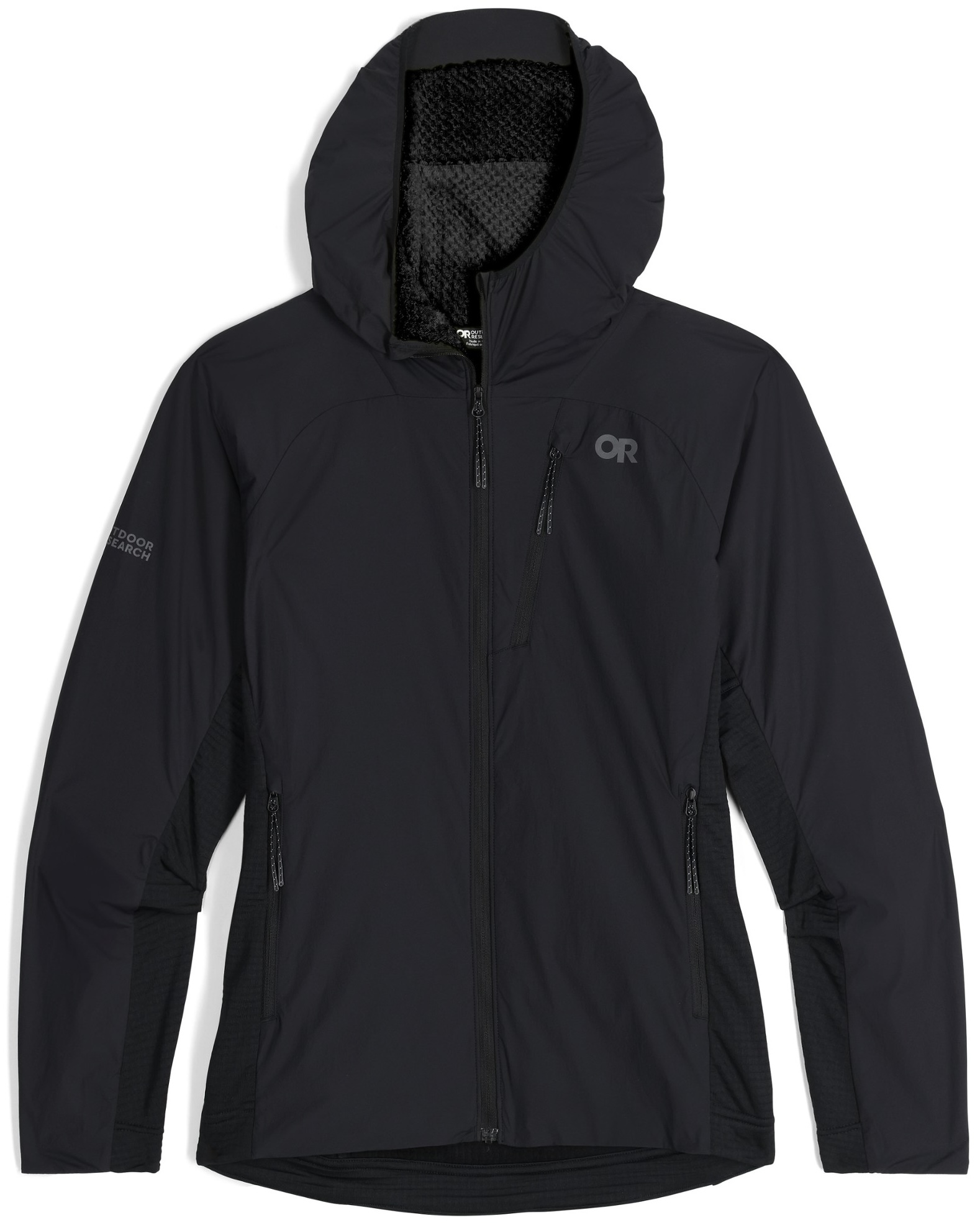
For high-output use, you’ll need something lightweight and breathable, and Outdoor Research’s Deviator Hoodie is our favorite in this category. This jacket offers an intelligent combination of lightweight synthetic fill (a mesh-like fill called VerticalX Octa) at the front and thin fleece at the back, sides, and underarms. VerticalX Octa is unique in that it doesn’t require a liner, which works wonders when you’re working up a sweat: The exposed insulation efficiently wicks moisture and feels uber-plush next to the skin (we often layer just a t-shirt underneath). Tack on stretch-woven softshell fabric with a DWR finish at the front (20D), and the Deviator is one of our go-to jackets when moving quickly through a range of shoulder-season weather.
The Deviator isn’t as insulative as most jackets here. The VerticalX Octa is much thinner than a standard 60-gram fill, and the fleece panels don’t do much to keep out the wind, but it’s a good example of less is more. This design is ideal for when jackets like the Atom above are just too much, whether you’re running, climbing, biking, Nordic skiing, etc. And the wind- and water-resistant front offers a nice dose of assurance compared to a standard fleece jacket. Keep in mind that the Deviator is meant to fit snugly, which makes it ideal for active use. For another option for working hard in cold winter conditions, check out the Arc’teryx Proton Hoody or The North Face’s Summit Series Casaval Hybrid Hoodie below (the former is warmer). But we recommend the Deviator for milder conditions or those who run hot.
See the Outdoor Research Deviator Hoodie
.jpg)
Category: Performance
Weight: 1 lb. 2.4 oz.
Insulation: PrimaLoft Gold Eco (133g + 40g in core)
What we like: Impressive warmth and weather protection for cold and wet conditions.
What we don’t: Overkill for most uses.
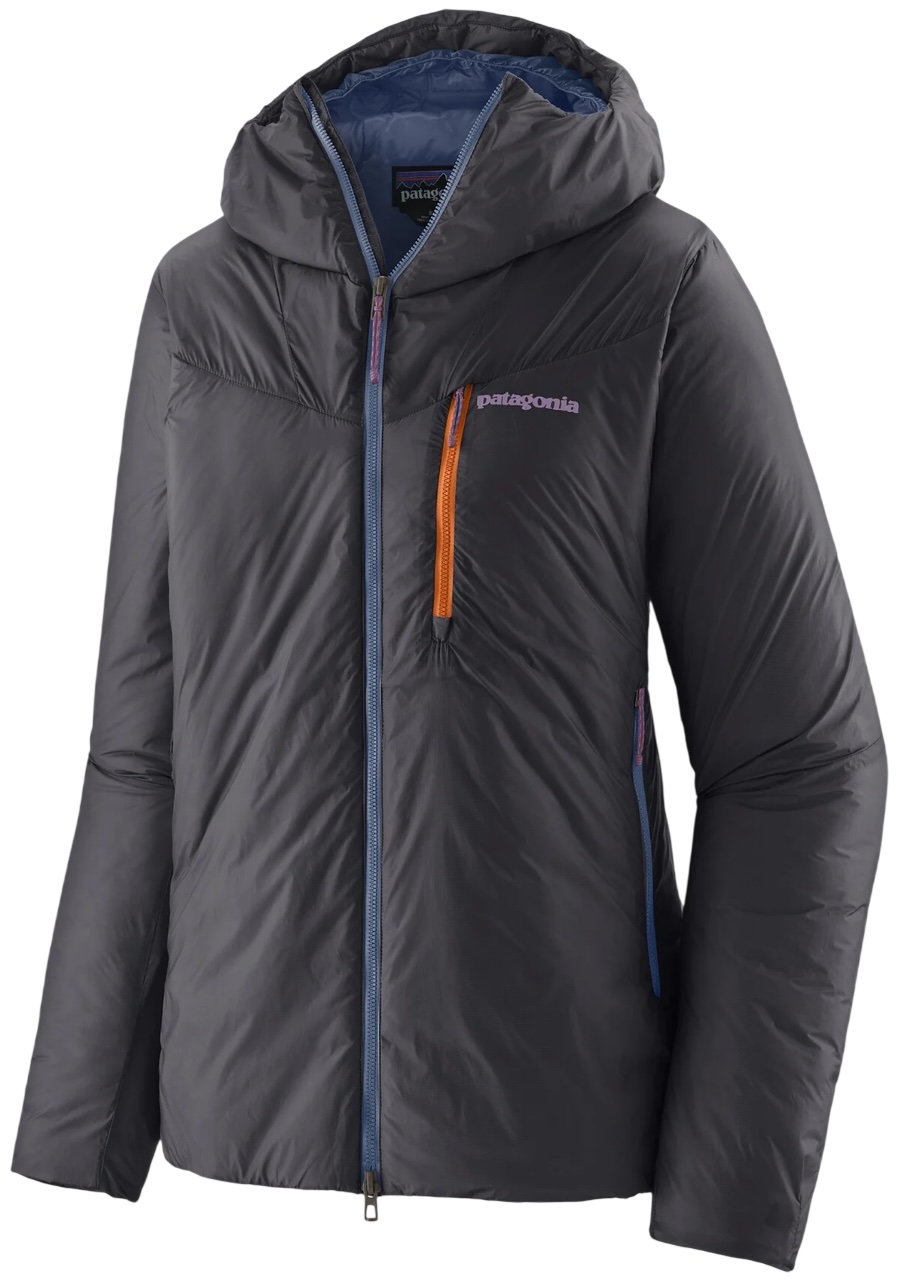
Since its debut decades ago, Patagonia's DAS Parka has been a go-to synthetic jacket for winter climbers due to its impressive warmth and weather protection in a lightweight package. Not only is it the warmest synthetic jacket in Patagonia's lineup, but it's also the most insulative option on our list with a mix of 133-gram fill throughout and an extra layer of 40-gram fill around the core. To be sure, the DAS is so warm that you won't want to keep it on during any sort of movement, but it’s an ideal choice for cold belays, breaks while skiing, and other low-output activities. And to keep you protected, the DAS features a highly weather-resistant polyurethane-coated shell for added assurance against tears and snags.
The DAS Parka is built to take a beating and has held up very well throughout our testing despite its thin (10D) shell fabric. It has all the trimmings for performance use, too, including an alpine-helmet-compatible hood, a two-way front zipper backed by a wind flap, large internal dump pockets (great for stashing gloves, climbing shoes, or climbing skins), and elasticized cuffs that double as thumb loops. With a high price and a weight north of a pound, you’ll have to ask yourself whether you really need the next-level warmth of the DAS Parka. But for chilly, damp conditions when down isn't an option, it's tough to beat.
Read more: Patagonia DAS Parka review
See the Patagonia DAS Parka
 Category: Performance
Weight: 9.0 oz.
Insulation: PlumaFill (65g)
What we like: An excellent down mimicker with the performance benefits of synthetic fill.
What we don’t: Trim fit and thin shell fabric limit the jacket's everyday appeal.
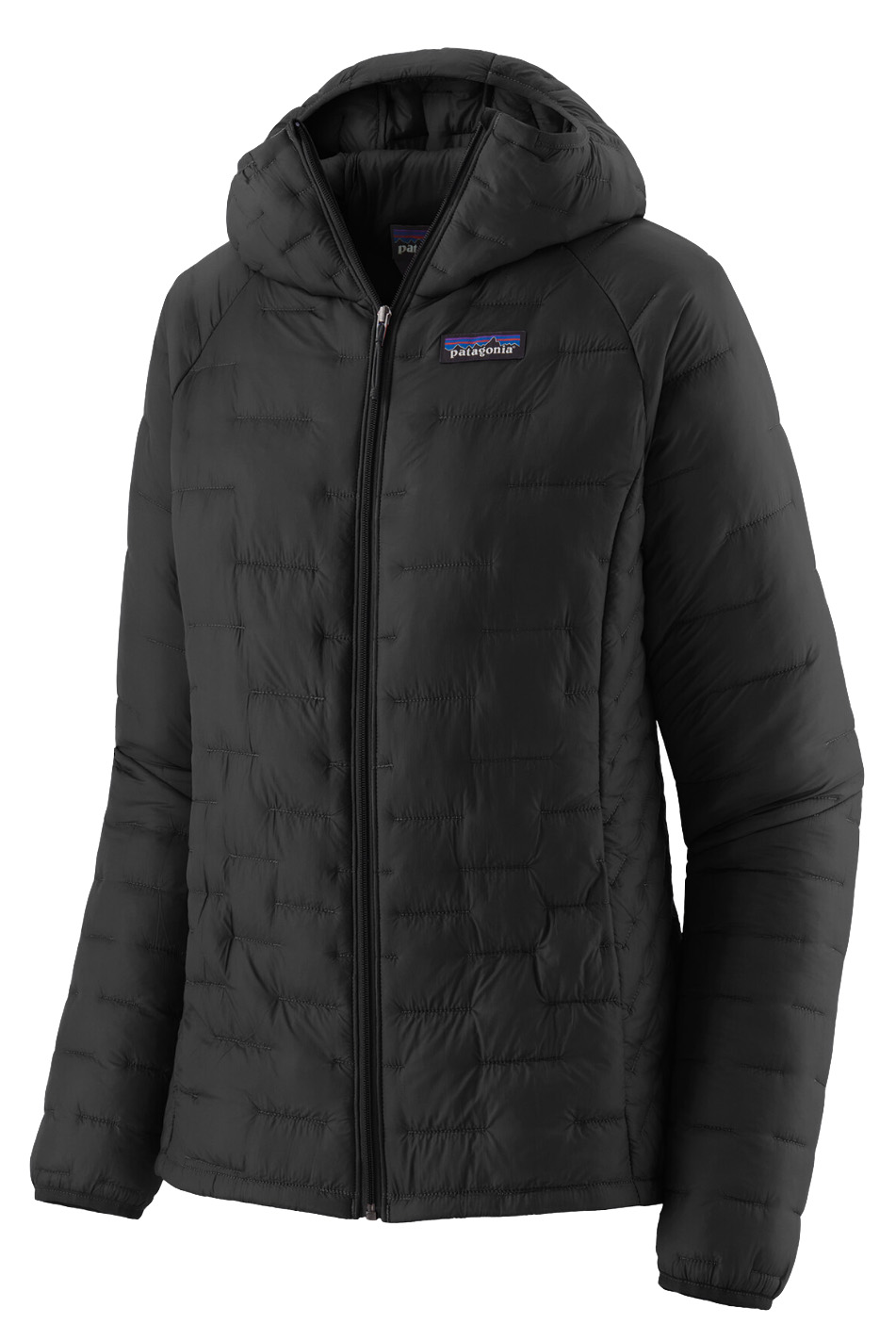
For weight- and space-conscious missions like multi-pitch climbing, backcountry skiing, and ultralight backpacking, you’ll want a lightweight and packable jacket, and Patagonia’s Micro Puff Hoody is our favorite in this category. At just 9 ounces, the Micro Puff stands out as the lightest option on our list and offers impressive warmth thanks to Patagonia’s down-mimicking PlumaFill insulation, which does a great job mimicking down’s loft and compressibility. In fact, the packed size is competitive with that of a down jacket of similar weight. For reference, the Micro Puff stuffs down into its left-hand pocket to about the size of a 32-ounce Nalgene bottle with a built-in carabiner loop for attaching to a climbing harness. Tack on two drop-in-style pockets along the interior, a trim fit that layers nicely under a hardshell, and a functional under-the-helmet hood, and the Micro Puff is hard to beat for technical backcountry pursuits when you want to keep heft and bulk to an absolute minimum.
At first glance, the Micro Puff bears a strong resemblance to Patagonia’s own Nano Puff below, but the two have very different priorities. In addition to being an ounce lighter, the Micro Puff features a thinner, more weather-resistant shell. We’d still advise packing a waterproof layer if heavy or extended rain is in the forecast, but the Micro Puff is windproof and has a major leg up over most down jackets when it comes to wet-weather assurance. It’s also worth noting that the Micro Puff lacks helpful backcountry features, such as a two-way main zipper and a helmet-compatible hood (it is possible to wear the hood under a helmet, however). Finally, the Micro Puff is decidedly lacking in everyday appeal with thin fabrics that require added care to avoid snags and tears. But for shoulder-season warmth in a feathery package, the Micro Puff is in a class of its own.
Read more: Patagonia Micro Puff Hoody review
See the Patagonia Micro Puff Hoody
_0.jpg)
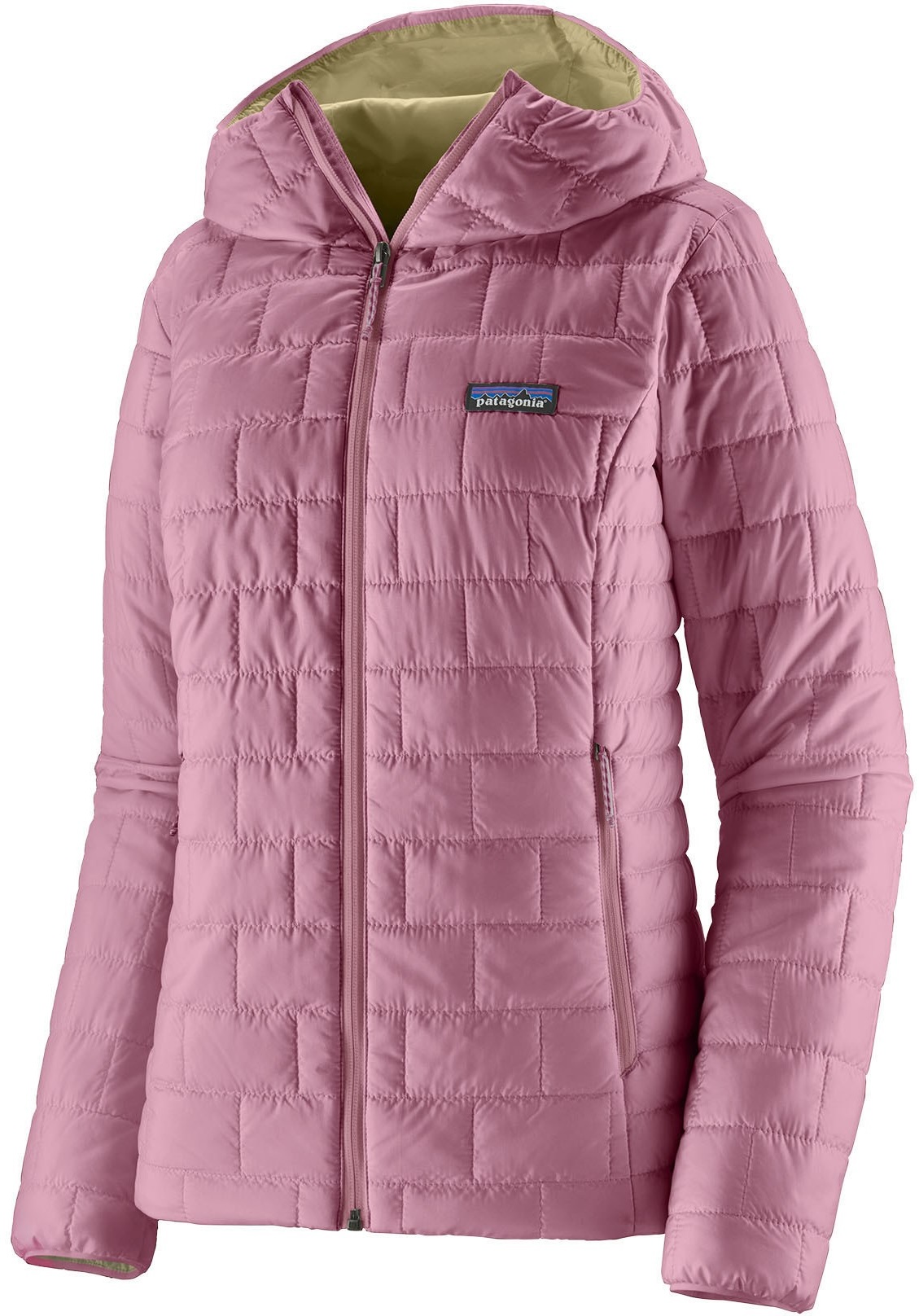
Category: Casual
Weight: 12.3 oz.
Insulation: PrimaLoft Gold Eco (60g)
What we like: A timeless classic for everyday and casual backcountry use.
What we don’t: Not particularly breathable or weather-resistant.
For a versatile synthetic jacket that gets the job done both on and off the mountain, it doesn’t get any more classic than the Patagonia Nano Puff Hoody. The Nano Puff looks and feels similar to a down jacket, with a shiny baffled shell (made from recycled fishing nets) and lofty PrimaLoft Gold Eco insulation, but offers all the strengths of synthetic fill, including better wet-weather performance and breathability, at a lower cost. And with two hand pockets, an internal chest pocket, a roomy yet lightweight build, and the choice between hooded and non-hooded designs, it has all the trimmings of a functional everyday jacket.
The Nano Puff isn’t as tech-savvy as the Atom Hoody or the more specialized jackets on this list (despite being Patagonia’s most popular jacket). For active use, we’d reach for the stretchier and more breathable options on this list. And for weight-conscious activities or alpine conditions, the lighter, more packable, and more weather-resistant Micro Puff Hoody is our go-to. But for everyday use with a backcountry day mixed in here and there (think casual hiking or backpacking, resort skiing, or cragging), the Nano Puff is a well-balanced, do-it-all jacket.
Read more: Patagonia Nano Puff Hoody review (men's version)
See the Patagonia Nano Puff Hoody
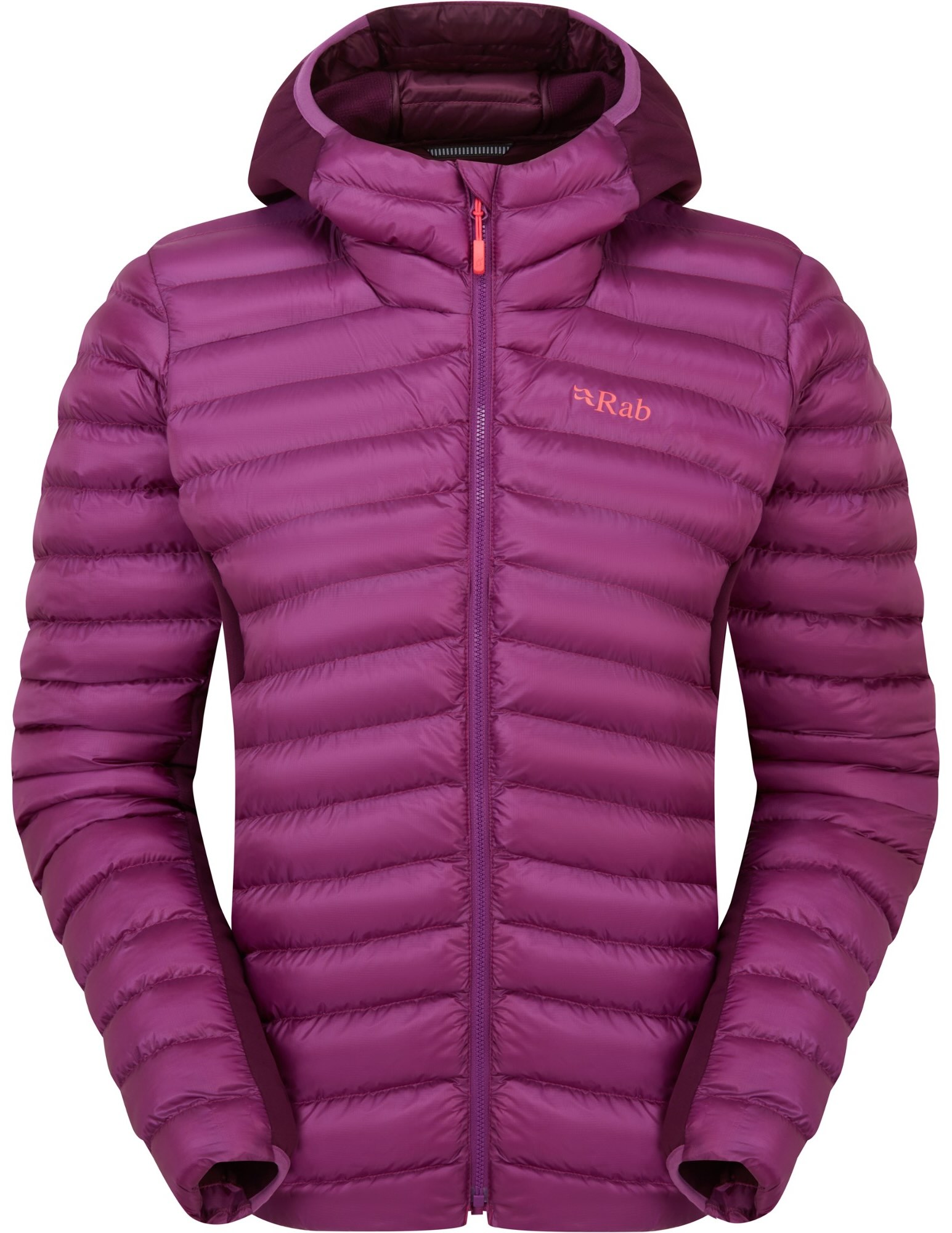
Category: Performance
Weight: 13.4 oz.
Insulation: PrimaLoft Silver (130g)
What we like: A versatile and mountain-ready synthetic jacket at a great price.
What we don’t: Not super weather-resistant.
U.K.-based Rab is no stranger to variable alpine conditions, and their Cirrus Flex is a great companion for serious mountain-goers. This mid-range jacket combines a thick fill with a durable 20-denier shell, resulting in the look of a down puffy with all the performance of synthetic. The down-like insulation and 100%-nylon shell don’t add up to great breathability, but Rab tacked on stretchy underarm panels that are effective at dumping heat. The feature set also includes internal stash pockets and a packable design, both of which we love for activities like climbing and skiing. And we’d be remiss not to call out the price, which is far lower than that of any of the other performance picks on this list.
You’d be hard-pressed to find a better value than the Cirrus Flex, and you can save more by opting for the non-hooded version. While its baffled design makes it more susceptible to gusts, it still delivers impressive warmth for its weight. We’re big fans of the stretchy side panels, which make it a great midlayer option for activities like resort skiing and winter hiking. Keep in mind that the Cirrus Flex runs small, and we recommend trying it on before buying, as you’ll likely want to size up. The stretchy panels are also prone to the cold, and our editor noted they felt even colder in the wind. For a step up in warmth, Rab’s Cirrus Alpine features a thicker shell fabric (30D) and more insulation but lacks the Flex’s stretchy side panels, weighs more, and costs more.
See the Rab Cirrus Flex Insulated Hoodie
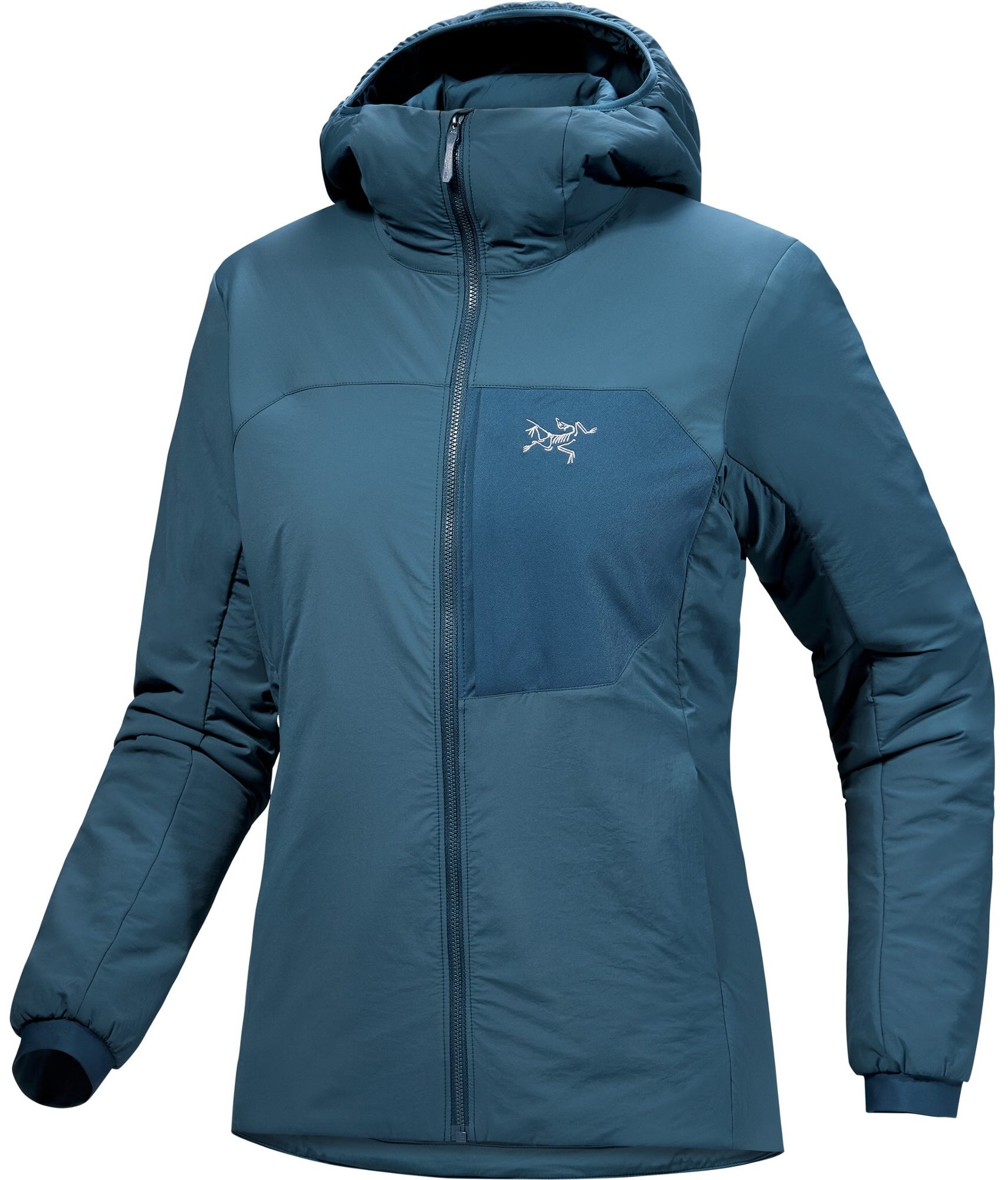
Category: Performance
Weight: 12.7 oz.
Insulation: Coreloft Compact (80g & 60g)
What we like: A cozy, stretchy, and breathable jacket you won't want to take off.
What we don’t: Too warm for high-output use in mild conditions.
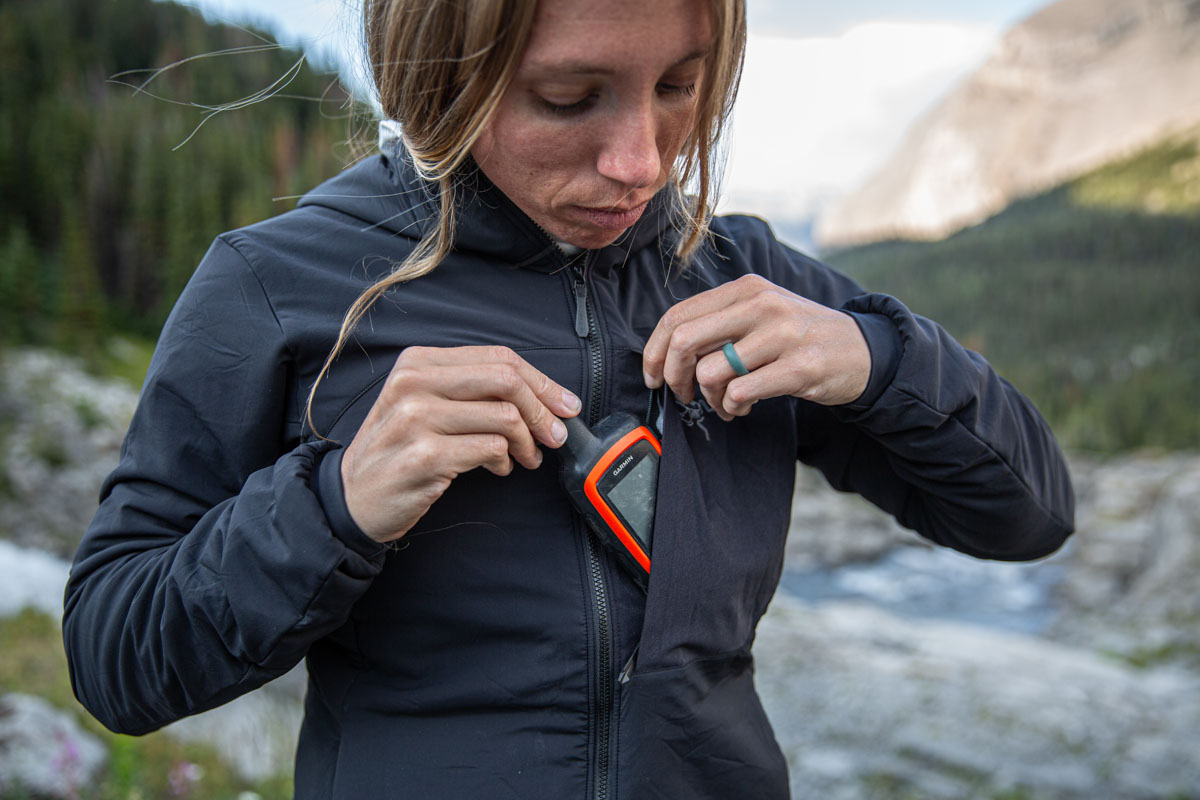
Warmth and breathability are always at odds when it comes to insulation, and things can get trickier in true winter use. But Arc’teryx pulls off an impressive cold-weather active insulator with their Proton Hoody. In contrast to Outdoor Research’s Deviator above, the Proton features thick 80-gram insulation, which is far warmer than the Deviator’s fleece-like insulation. But it’s an impressive breather, too, thanks to the stretchy and permeable face fabric. The fit is exceptional, and the details are well-sorted, as we’ve come to expect from the brand. There are three pockets total (two hand pockets and an exterior chest pocket), a cinchable hem, elastic cuffs that keep drafts at bay, and the helmet-compatible StormHood.
Depending on how cold or warm you run, the Proton is comfortable enough to wear around the house and into town. What's more, the stretchy Fortius shell fabric can take a beating, which is helpful around sharp equipment and surfaces like skis or ice tools, climbing gear, and gritty alpine rock. However, keep in mind that the Proton is too much jacket for mild temperatures or real-deal redlining. For that, we turn to designs like the Outdoor Research Deviator, which has much thinner insulation. Another big downside is the price, which is among the highest on this list. But for mid-winter hikes or ski touring, the Proton Hoody is tough to beat.
See the Arc'teryx Proton Hoody
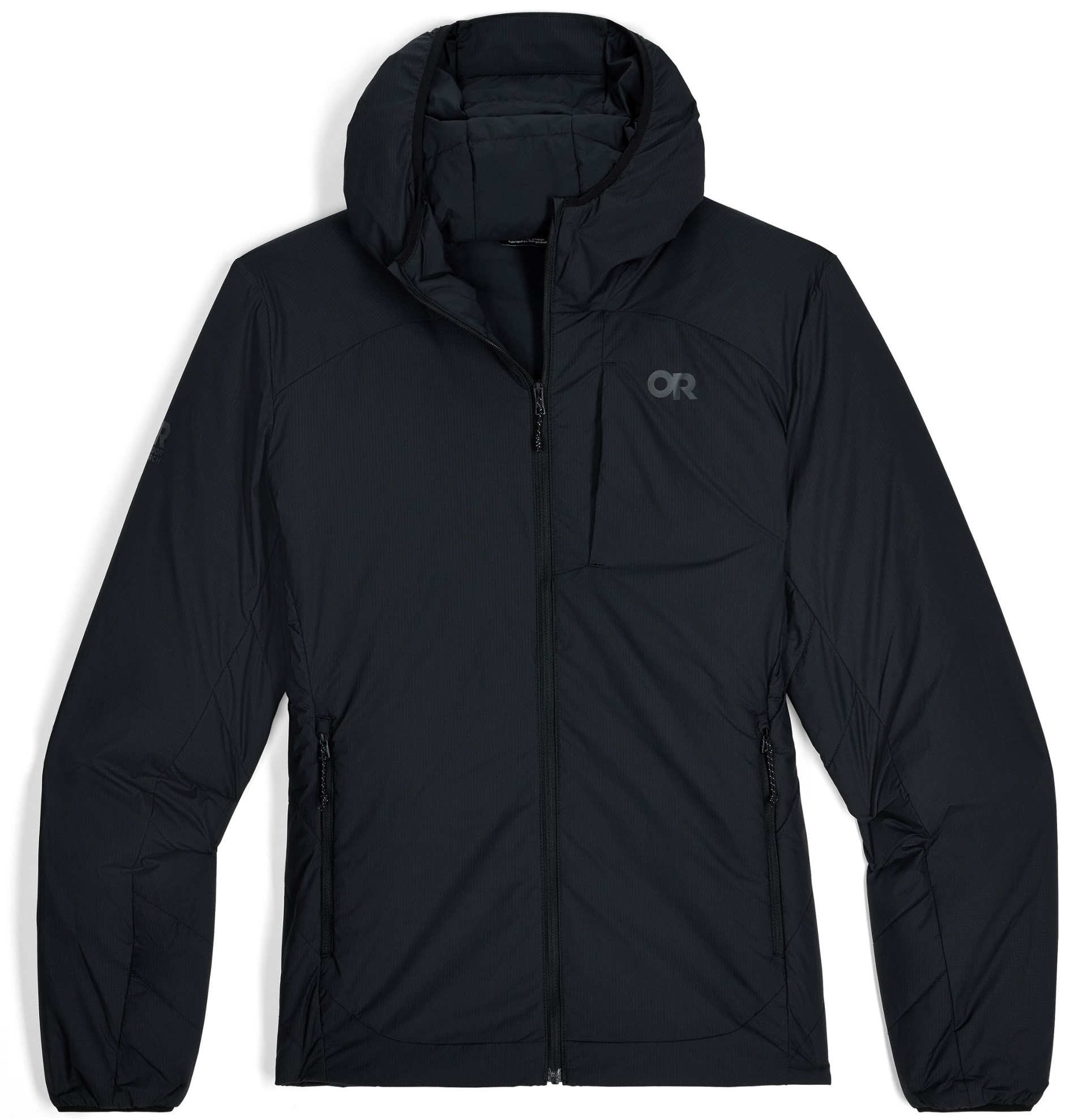
Category: Performance/Casual
Weight: 11.3 oz.
Insulation: Vertical C Eco SR (45g)
What we like: Very comfortable and crosses over well between casual and performance use.
What we don’t: Shorter cut and thinner insulation isn’t the most protective.
We got our hands on Outdoor Research’s Vesper Hoodie last season, and it’s remained one of our go-to synthetic hoodies for both casual and performance use. The highlight is its comfort and styling, which is why we choose it over others for day hikes with friends that end with lunch. The fabric is sleek and soft, offering a sweatshirt-like coziness. And the fit just works. The arms are the perfect length, and it’s even comfortable when fully-zipped, which isn’t always the case. It doesn’t extend as far down the back as other performance jackets, but we think the “cropped” look is flattering (it ends just below the belt). With a nice dose of stretch in the face fabric, the Vesper is one of those jackets you just put on and forget about, no matter the situation.
For the longest time, Patagonia’s Nano Air Hoody held this special place in our hearts, and while we still think it’s a stellar, very comfortable jacket, the Vesper edges it out for several reasons. First, the Vesper is less expensive, but doesn’t feel cheap. We also prefer the Vesper's fit, especially in the arms. The shorter cut does limit the Vesper's protection, however, and it has less insulation than the Nano Air, so some might find it too cold for low-output use. But it does a great job regulating temperature despite its low insulation, and it’s far from bulky. Overall, we think this design is a win, and we’re excited to see that it comes in at an approachable price.
See the Outdoor Research Vesper Hoodie
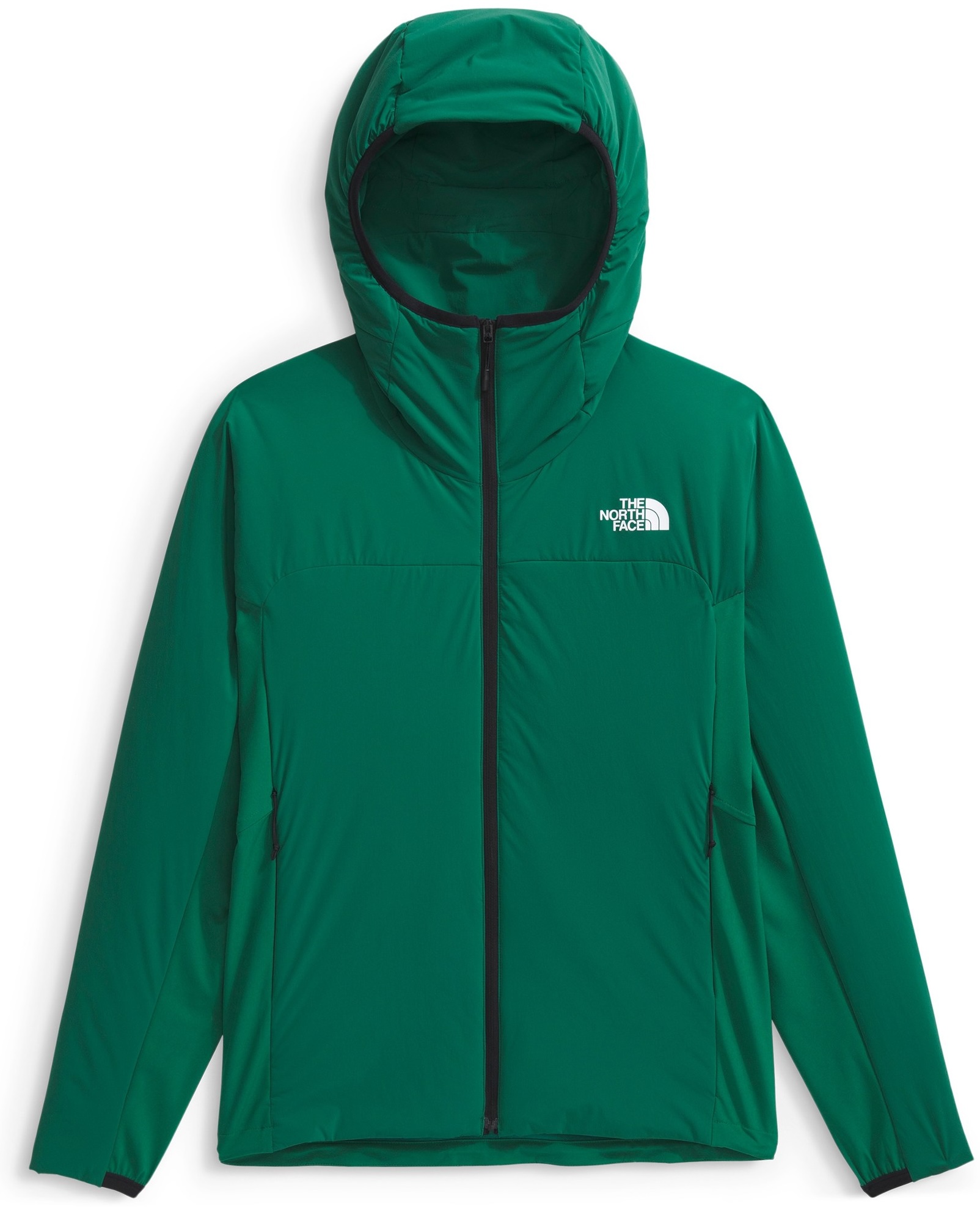
Category: Performance
Weight: 14.8 oz.
Insulation: Ventrix (60g & 40g)
What we like: Best-in-class breathability and backcountry-ready athletic cut.
What we don’t: Not as wind-resistant as most jackets here; design doesn’t cross over well for casual use.
The North Face’s Summit Series is known for high-performance gear that serves the needs of some of the world’s best athletes, and the Casaval Hybrid is no exception. The Casaval Hybrid sits solidly between the OR Deviator and Arc’teryx Proton above: It has a moderate 60 grams of insulation (40 in the hood), a highly breathable, sweatshirt-like shell, and stretch-woven fabric at the hem and under the arms that adds comfort, freedom of movement, and breathability. We also like that the insulation is perforated at the back for additional venting, though we wish it extended further up the back for better venting when wearing a backpack. But small nitpicks aside, this hoodie performed very well on several hikes and backpacking trips in the Alberta wilderness late last fall. It regulated temperature so well that we wore it on both the up and the downhill on several day hikes without breaking out in a sweat.
Aside from the Casaval Hybrid’s chart-topping breathability, one of our favorite features is its fit. The jacket is streamlined, and the stretch-woven fabric at the hem offers a tailored look and feel. What’s more, durability is excellent: We’ve used and abused the Casaval on various alpine climbs, backcountry ski outings, and during a 124-mile traverse of the North Cascades, and its fabric has yet to pill or abrade (it has amassed a few minor holes and stains). It does sit in an interesting middle ground, however. It could be too hot for those who run warm, but not warm enough for true winter use. In fact, we have found it tends to lean cold in gusty conditions. But if you’re looking for something that’s a solid middle ground and can keep up in most situations, it’s a great choice, and it’s been a staple of this list for years for that reason.
Read more: The North Face Summit Series Casaval Hybrid review
See the The North Face Summit Series Casaval Hybrid
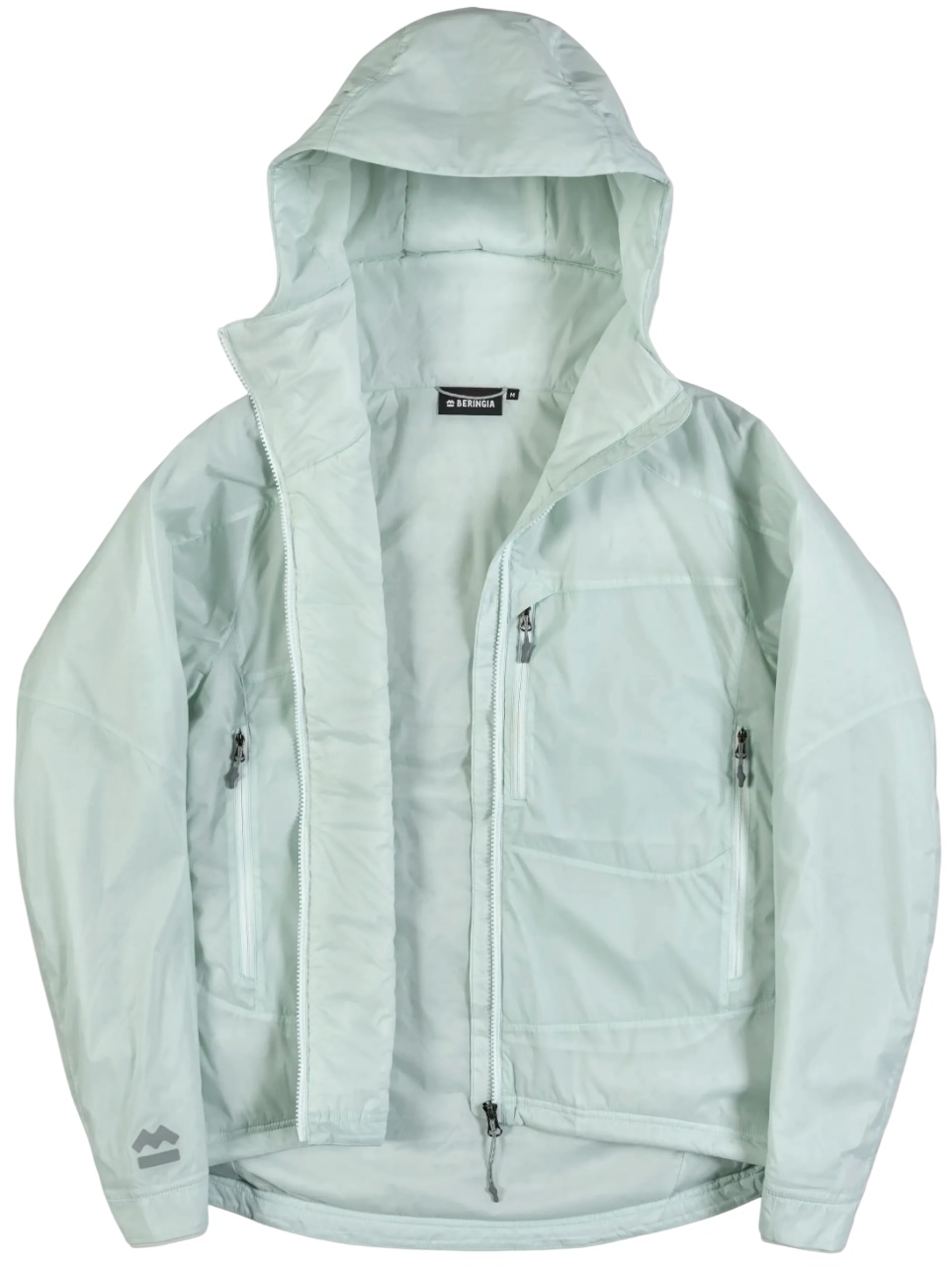
Category: Casual/performance
Weight: 9.8 oz.
Insulation: Vivo Extreme Eco (60g/40g/25g)
What we like: One of the best women's-specific tailoring we've tested, resulting in excellent mobility and layering capabilities.
What we don’t: Expensive, and the fabric could be more breathable
It's clear that Beringia puts a lot of care into their tailoring and material choices, and their Lightstream Full Zip Hoody is an excellent example of their craft. The women's-specific cut is built on an entirely different model than the men's version, resulting in a Goldilocks-fitting layer that allows maximum mobility without sacrificing layering options. Our tester found it especially comfortable around the shoulders and back, which are areas we commonly feel restricted in women's-specific layers. The jacket is made from thin polyester with a matte finish and is very abrasion-resistant for its weight. Perforations on the synthetic insulation also reduce weight without sacrificing warmth, and the jacket is built with three insulation weights for body-mapped mobility and warmth.
The Lightstream has been one of our go-to synthetic jackets for both winter activities and travel. We crammed it into the outside pocket on a travel pack for a week straight, and it shook out good as new. We've seen no compression or abrasions in the insulation despite heavy use. But the fit is where this jacket shines. Designed for unrestricted movement, the articulated arms and shoulders can fit a base layer and a midlayer underneath without feeling too tight, and the insulated hood has a single drawcord in the back for cinching. That said, it's not the most breathable option. It's worked well for hikes and snowshoeing, but we start to overheat quickly during higher output activities (Beringia knows this and has noted that its upcoming iteration will feature a similarly durable but more breathable material). It's also one of the more expensive jackets in this list. But if you're okay with the investment, the Lighstream isn't likely to disappoint.
See the Beringia Lightstream Full Zip Hoody
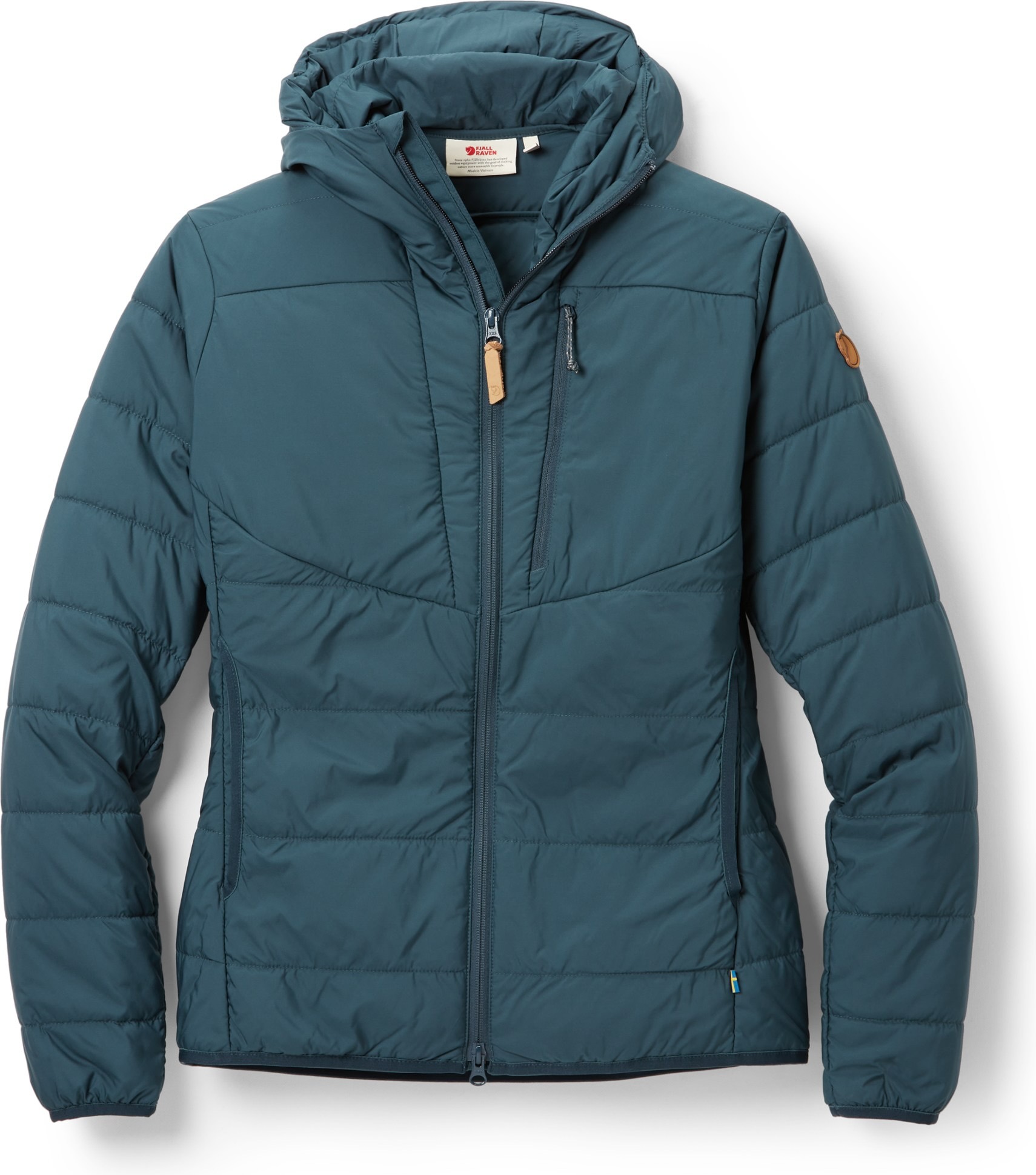
Category: Casual
Weight: 1 lb. 0.2 oz.
Insulation: PrimaLoft Black (60g)
What we like: Classy Fjallraven vibes and premium quality.
What we don’t: Heavy; no zippers on the hand pockets.
Many of the designs on this list have a performance slant, but few can match the casual appeal of the Keb Padded Hoodie. Simply put, this is one of the best-looking synthetic jackets with Fjallraven’s signature classy aesthetic. On the outside, the Keb features creative baffling that elevates its style beyond a standard puffy, while the 100%-polyester shell is available in an assortment of sophisticated colors. On the inside, the insulation traps air like down and provides ample warmth for temperatures into the 40s Fahrenheit. Added up, you get a premium urban jacket that can also pull double duty for light fall and winter adventuring.
Like most Fjallraven apparel, the Keb Padded Hoodie has its limitations for performance use. Without a doubt, you don’t get the high-tech insulation of similarly priced jackets from brands like Arc’teryx and Patagonia, which means that breathability and packability aren’t as good. What’s more, the Keb is one of the heaviest offerings here at over a pound, and the choice to forgo zippers on the hand pockets solidifies it as a casual piece. But everyday users will appreciate the durable shell, and details like hood and hem adjustments, a two-way main zipper, and ample pockets keep things functional.
See the Fjallraven Keb Padded Hoodie
_0.jpg) Category: Casual
Category: Casual
Insulation: Omni-Heat Reflective
What we like: Classy mid-thigh length at a great price.
What we don’t: Not as warm as most jackets here.
If you’re in the market for a casual insulated jacket for everyday use, give the Columbia Heavenly Long a closer look. The Heavenly’s mid-thigh length offers a sophisticated look that you won’t get from more backcountry-ready jackets, and the extra coverage translates to more warmth below the waist, too. It’s true that Columbia’s Omni-Heat Reflective insulation can’t match the loft or performance of higher-end offerings, but it’s enough to cut the chill on shoulder-season days around town, and is easier on your wallet, too.
Many women will opt for a loftier down parka for everyday winter use, but synthetic jackets have their place. We especially like the Heavenly Long for milder, wetter climates like the Pacific Northwest, where temperatures rarely drop below freezing, and moisture hangs in the air all winter. What’s more, the jacket’s svelte silhouette means it can layer well under a rain shell, such as the thigh-length Outdoor Research Aspire Trench. And if you prefer a more versatile hip-length jacket, Columbia also offers the Heavenly with a 27-inch center back length (compared to the Long’s 34-in.), which comes in both hooded and non-hooded varieties. But we like the long version for its classiness and around-town styling.
See the Columbia Heavenly Long Hooded Jacket
It's tough to narrow down the best synthetic jackets, especially since new designs are constantly hitting the market. The women on our team regularly test synthetic jackets, and we've developed high standards as a result. We consider fit, comfort, durability, and price when narrowing down our favorites. Of course, not every jacket we test makes our cut, and we understand you might wonder what models we've tested and decided to dismiss.
Perhaps most notably, we decided to remove the Patagonia Nano Air Hoody from this list. This iconic jacket is a great design, but it's expensive for what it delivers. We also recently tested the OR Vesper Hoodie, and found it just as cozy as the Nano Air for a fraction of the price. We also think the fit translates better into casual use. For more information, check out our in-depth review of the Patagonia Nano Air Hoody.
We also removed the Black Diamond Solution 2.0 Hoody. Above all else, we didn't like the fit of the Solution Hoody, which was too short and restrictive in the arms and shoulders. It also rode up on our hips, and we had to pull it down repeatedly throughout the day.
The Outdoor Research SuperStrand LT Hoodie didn't make the cut either. It has a nice, lightweight design, but it's neither the most durable nor weatherproof (it gets wet quickly in light rain and doesn't hold up well against wind).
We replaced the Cotopaxi Capa Hybrid Insulated Hooded jacket with the Road Runner Sports Korsa Horizon Quilted Jacket in this update as our favorite budget synthetic jacket. Not only is the Korsa Horizon less expensive than the Capa, but it also offers more insulation and is a better active piece, especially in cold temperatures.
There were a few jackets that just didn't stand out from the competition, such as the Rab Xenair Alpine Light Insulated Jacket and Mountain Hardwear's Kor Stasis Hoody. Neither is a bad jacket by any means, but they didn't outperform any of the other picks on our list.
| Jacket | Price | Weight | Insulation | Fabric | Packable |
|---|---|---|---|---|---|
| Arc'teryx Atom Hoody | $300 | 11.3 oz. | Coreloft Compact (60g) | 20D | No |
| RRS Korsa Horizon Quilted | $150 | 13.2 oz. | Polyester (60g) | Unavail. | No |
| OR Deviator Hoodie | $255 | 11.8 oz. | VerticalX Octa | 20D | No |
| Patagonia DAS Parka | $449 | 1 lb. 2.4 oz. | PrimaLoft Gold Eco (133g & 40g) | 10D | Yes |
| Patagonia Micro Puff Hoody | $345 | 9.0 oz. | PlumaFill (65g) | 10D | Yes |
| Patagonia Nano Puff Hoody | $299 | 12.3 oz. | PrimaLoft Gold Eco (60g) | 20D | Yes |
| Rab Cirrus Flex Insulated | $200 | 13.4 oz. | PrimaLoft Silver (130g) | 20D | Yes |
| Arc'teryx Proton Hoody | $350 | 12.7 oz. | Coreloft Compact (80g & 60g) | 20D | No |
| Outdoor Research Vesper Hoodie | $255 | 11.3 oz. | Vertical C Eco SR (45g) | 20D | No |
| TNF Summit Casaval Hybrid | $260 | 14.8 oz. | Ventrix (60g & 40g) | 40D & 75D | No |
| Beringia Lightstream Full Zip | $350 | 9.8 oz. | Vivo Extreme Eco (60g/40g/25g) | 15D | No |
| Fjallraven Keb Padded | $270 | 1 lb. 0.2 oz. | PrimaLoft Black (60g) | Unavail. | No |
| Columbia Heavenly Long | $160 | Unavail. | Omni-Heat Reflective | Unavail. | No |
The female editors at Switchback Travel know the value of a quality synthetic jacket, whether we’re trekking deep into the backcountry with a full backpacking pack or braving wintertime conditions while cross-country skiing or touring. Compared to down jackets, synthetics offer much better protection in inclement weather (synthetic fill maintains its insulating properties when wet, while down tends to clump when wet), and are generally more breathable and comfortable to boot. As a result, many of the 13 designs above have seen a lot of time outside, from being toted up multi-pitch climbs to being stuffed haphazardly in our packs. When testing these pieces, we focus on key performance metrics such as warmth, breathability, weather resistance, and durability, all of which we break down in more detail below. Of course, each person’s needs will vary depending on their objectives and intended use(s), which is why we made a concerted effort to diversify the picks above.
This round-up was launched in 2023, with 18 jackets selected by former senior editor Jenny Abegg. As a native to the gloomy Pacific Northwest, Jenny knows what makes or breaks a synthetic jacket and curated the list with her years of backpacking, multi-pitch climbing, and mountaineering in mind. Editor Maddie Downie took over the guide in 2024 and loves putting synthetic jackets to the test on technical and casual adventures, from backcountry skiing in the North Cascades to cozying up with a good book. As the market evolves, we’ll continue to stay on top of new and noteworthy releases, fine-tuning our list based on how their performance stacks up against the picks currently featured above. Finally, it's worth noting that we took a similar approach with our round-up of the best synthetic jackets, which comprises both men's and women's styles.
.jpg)
 How to Choose a Synthetic Jacket
On our list above, we break synthetic jackets into two main categories: performance and casual. Performance-oriented synthetic jackets are our first choice for activities like backpacking, ski touring, Nordic skiing, alpine climbing, and other backcountry endeavors. Depending on whether they’re down-mimicking or active insulators (more on this below), they’ll have different priorities: either a lightweight and packable build (and sometimes weather resistance) on one hand, or mobility, comfort, and breathability on the other. Either way, you get premium shell materials, high-end insulation, and features like helmet-compatible hoods, internal dump pockets, and intelligent patterning that maximizes ventilation. Performance jackets are often trim-fitting (great for layering under a hardshell or rain jacket) and forgo unnecessary style features in the name of weight savings.
.jpg)
On the other hand, jackets within the casual category are our top picks for daily use, whether you’re commuting to work, running errands around town, or even logging a few laps at the ski resort. These jackets function well as outer layers, with roomier dimensions, decorative baffling (Fjallraven Keb Padded and Columbia Heavenly Long) or vibrant colors, and durable shells. And unlike performance-oriented jackets, casual pieces offer a choice between hooded and non-hooded versions (the Road Runner Sports Korsa Horizon Quilted is one of the only non-hooded designs on our list). For cutting the chill on shoulder-season days around town, it doesn’t get much better than a synthetic jacket, and they’re generally more durable and weather-resistant than down insulators, too.
.jpg)
In general, we see two main styles of synthetic insulated jackets: those that aim for maximum warmth at a minimum weight and packed size (similar to a down jacket) and breathable offerings intended primarily for active use. Between these two categories, the key differences include the style of synthetic fill and the weight and makeup of the shell fabric. When considering which synthetic insulated jacket is best for you, choosing between these two categories is a great place to start.
Down-Mimicking Insulation
Synthetic insulated jackets that mimic the style and function of down jackets are great for those primarily concerned with maximizing warmth while minimizing weight and bulk. These jackets pair thin 100% nylon shells with synthetic fillings that look and act much like down (Patagonia’s PlumaFill and The North Face’s ThermoBall are two of the biggest names). Like down puffies, jackets in this category aren’t standout breathers; on the other hand, they’re decently weather-resistant, especially those with Pertex Quantum Pro shells. Added up, down-mimicking synthetic insulators are great options for low-output endeavors or activities that prioritize weight-savings. Some of our favorite jackets in this category include the Patagonia Nano Puff, Micro Puff, and Rab Cirrus Flex Insulated.
Active Insulation
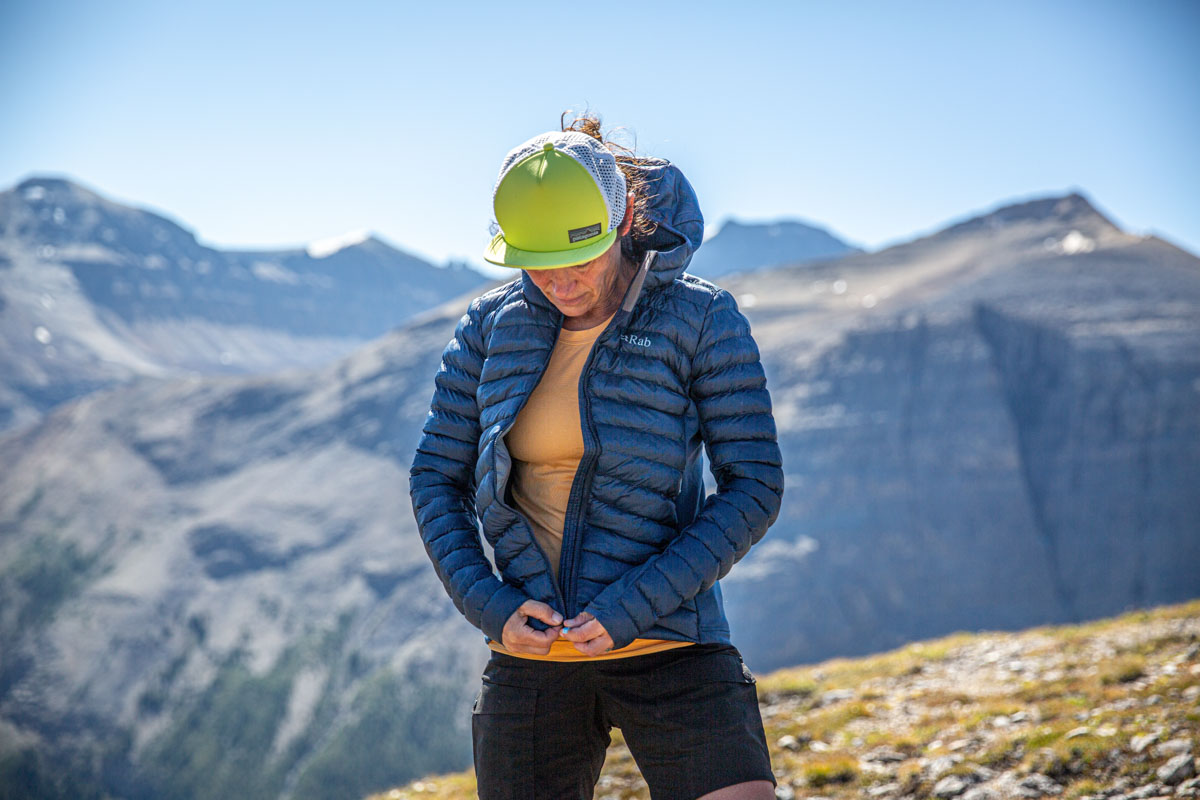
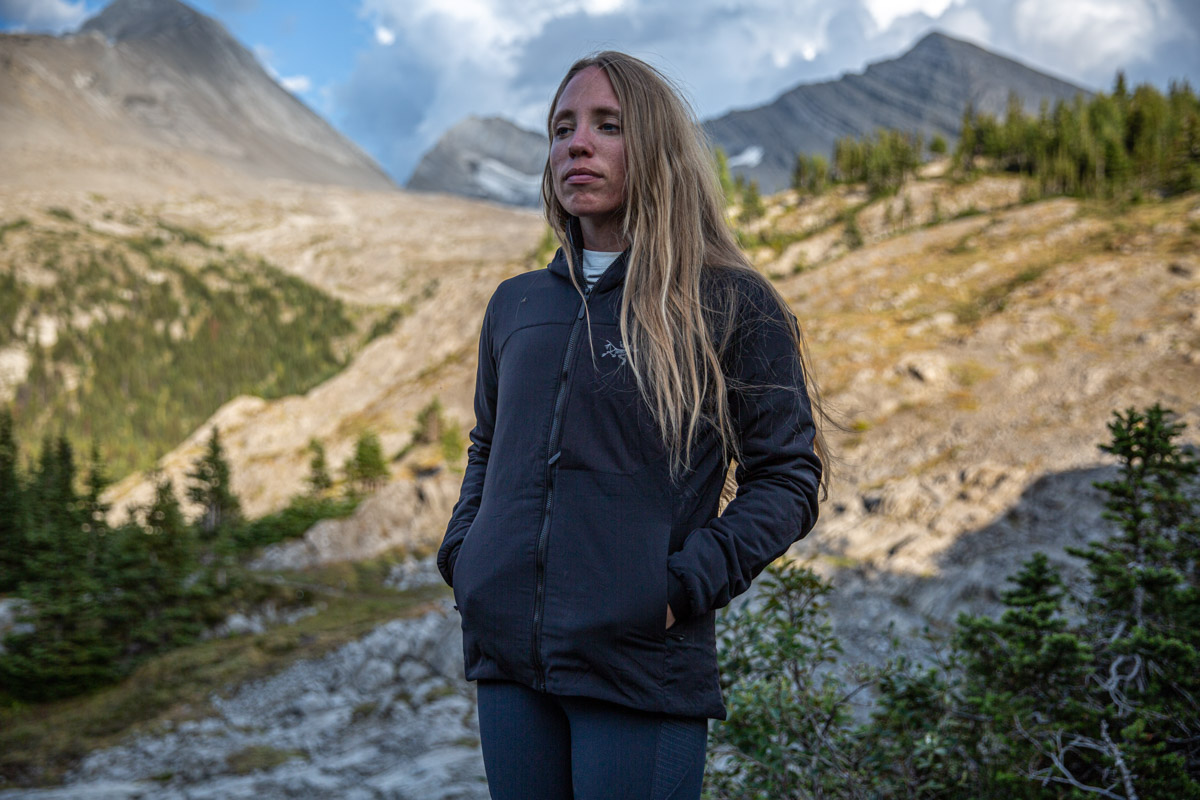
For high-output activities like backcountry skiing and hiking, we look to synthetic jackets in the active insulation category. These jackets feature soft and stretchy shell materials and sheets of synthetic insulation that don’t require baffles to keep them in place (common names include Coreloft and FullRange). While this style of insulation doesn’t mimic down plumage, it still does a great job trapping heat (albeit with more bulk and weight). Due to their more sweatshirt-like material, active insulation pieces move and breathe well but are less wind- and water-resistant than the all-nylon shells mentioned above. We love jackets in this category for all-day wear and active use when comfort and mobility matter more than weight. Some of our favorite active insulation jackets include the Arc'teryx Proton Hoody (for cold weather), Patagonia Nano-Air, Outdoor Research Deviator, and TNF Summit Series Casaval.
Wool Insulation
Wool—specifically Merino wool—is a popular material among baselayers due to its next-to-skin softness, impressive warmth-to-weight ratio, and natural odor-resistant properties. It’s not as common to see wool used as an insulation in jackets, but brands like Smartwool and Ortovox have expanded the market with their wool-insulated jackets. In most cases, the wool is spun with synthetic fibers to increase durability. While these jackets might stretch the definition of “synthetic” insulation, they perform similarly. Most notably, wool still insulates when wet, which is the biggest difference between down and synthetic insulation (down does not). The primary downside to opting for a wool-insulated jacket is price: In most cases, they cost significantly more than their true synthetic counterparts.
The single biggest selling point of synthetic fill over down fill is that it retains its insulating ability when wet. With a down jacket, prolonged exposure to rain or snow will eventually lead to soaked feathers, causing them to lose their loft and their ability to retain warmth. Even hydrophobic down technologies eventually give in to sustained moisture. A wet-down jacket is heavy, won’t keep you warm, and takes much longer to dry than a synthetic one. By contrast, synthetic insulation resists moisture. Instead of being absorbed, water sits between the fibers, allowing the fibers to retain their shape, continue to insulate, and dry more quickly. The degree to which synthetic insulation resists water varies by type, but all synthetics repel moisture much better than down.
.jpg)
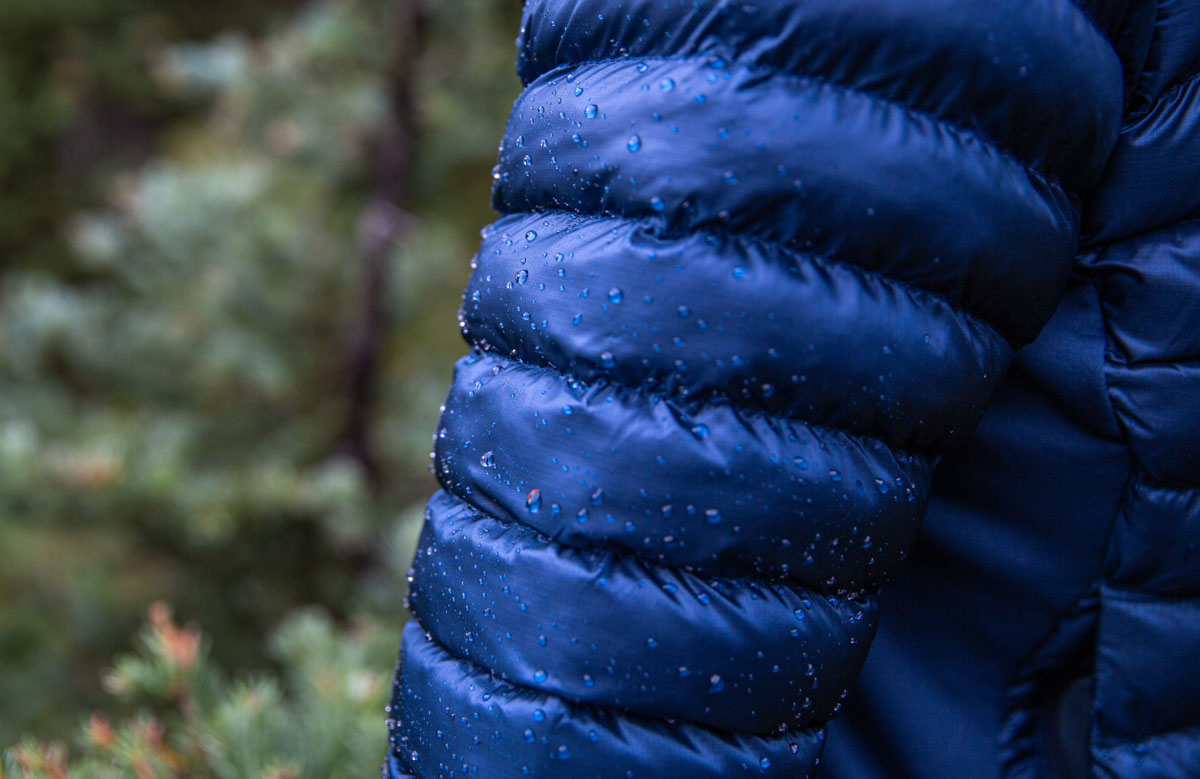
The other factor in a jacket’s water resistance is the shell material. We see the range here: 100% nylon shells do a great job keeping moisture at bay, while stretch-woven shells are more permeable to wind and rain. On both sides of the aisle, shell materials feature a DWR (durable water repellent) treatment that causes water to bead off the shell rather than collecting and eventually soaking through to the jacket’s interior. DWR treatments do a good job at repelling light to moderate precipitation, but by no means waterproof the jacket. All told, synthetic jackets do a much better job than down in wet conditions, but for prolonged exposure, you’ll want to bring along a rain jacket, hardshell, or ski jacket.
Without trying on a synthetic jacket, it can be difficult to gauge how warm it will be. The warmth of synthetic fill is measured by the weight of a 1-meter-by-1-meter piece. For example, the 60-gram FullRange weighs 60 grams per 1-meter-squared piece of insulation. The majority of insulations are around 60- to 65-gram, but they can be significantly heavier, like the 133-gram PrimaLoft Gold Eco packed inside Patagonia's DAS Parka, or much lighter, like the Outdoor Research Deviator Hoodie's VerticalX Octa (unfortunately, OR does not specify a weight). In most cases, a larger number indicates warmer insulation, but it doesn’t tell you how much of the insulation is stuffed into the jacket, which can make a sizable difference in warmth. Here, the jacket's weight is our best clue.
Most of our picks above weigh 10 to 12 ounces and provide a similar level of warmth, ideal for cool-weather fall and spring use. For freezing winter conditions, parkas like Patagonia's 1-pound-2.4-ounce DAS are true winter-weight synthetic jackets. But weight isn’t a perfect guideline: Heavier jackets like the Fjallraven Keb Padded aren’t necessarily warmer than the competition, they just feature thicker shell materials. And compared to down, synthetic insulation provides less warmth per unit weight. For example, you can expect that a 12-ounce down jacket will be warmer than a 12-ounce synthetic jacket. However, down-mimicking synthetics in particular do a respectable job in this department and are only getting better.
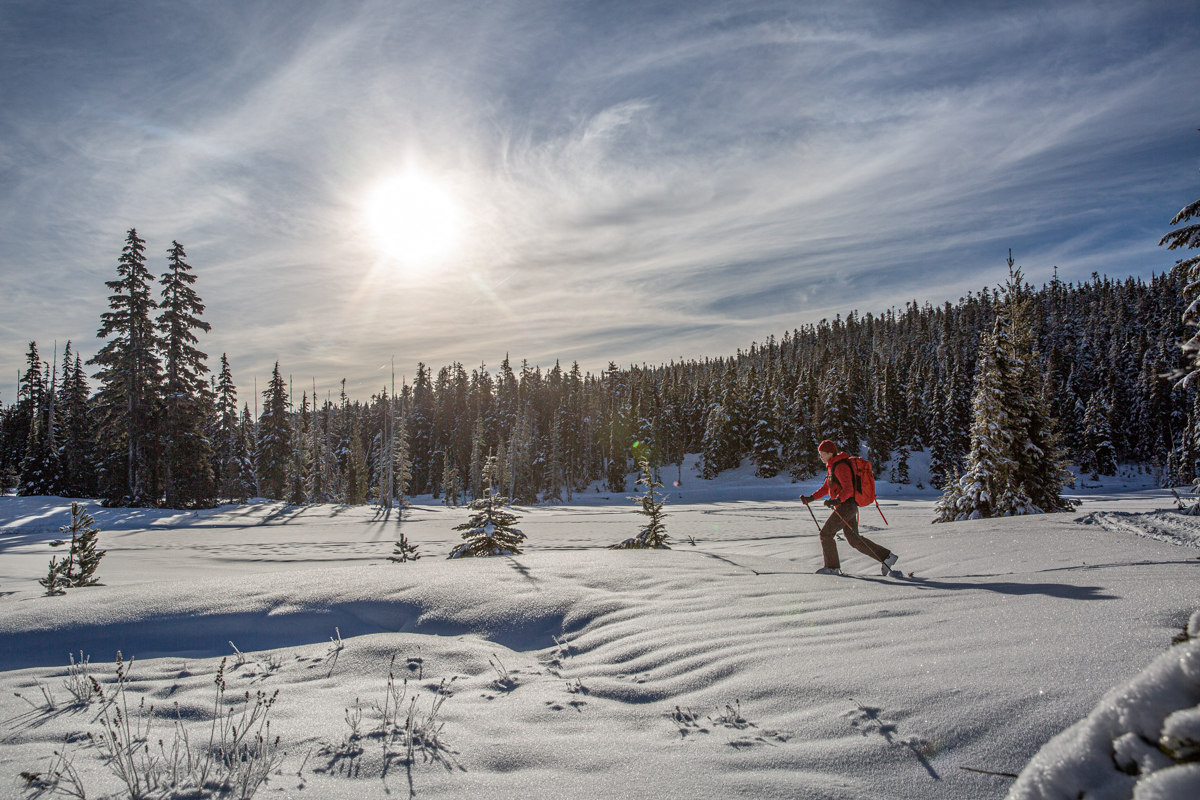
The breathability of a synthetic jacket comes down to two main factors: the type of fill and the style of shell and lining materials used. Fills that mimic down tend to breathe the least, while active insulations like Coreloft and FullRange do a great job regulating heat. In terms of the shell materials, jackets with stretch-infused or sweatshirt-like fabrics are good at moisture wicking and breathability, while all-nylon shells perform the worst.
If the purpose of your jacket involves movement (like backcountry touring, cross-country skiing, or snowshoeing), active insulation pieces like the Outdoor Research Deviator and TNF Summit Series Casaval are great choices. These jackets deftly balance warmth and temperature regulation, and their soft shells maintain high mobility. But it should come as no surprise that they are by nature more air-permeable, meaning they don’t trap heat as well as down or down-mimicking synthetic jackets. On the other hand, if you’re aiming for all-out warmth in a heavyweight design, expect breathability to suffer.

Synthetic insulation doesn’t compress as tightly as down, but recent improvements make it more impressive than ever. In general, down-mimicking jackets like the Micro Puff have smaller packed sizes than active pieces, due to the makeup of both the insulation and shell fabrics. Regardless of their packed size, most synthetic jackets on this list either pack down into a pocket or come with a stuff sack. If packability is your highest priority, we still recommend a down jacket, but for casual use and adventuring when space isn’t at an absolute premium, synthetics aren’t far behind.
.jpg)
Synthetic jackets might not offer the sleeping-bag loft of down jackets, but they still offer a lot in terms of comfort. First, their ability to regulate body temperature: Synthetic fill is decently breathable (much more so than down), which means it can adapt to a wide range of environments. We can walk the dog in 45-degree weather, then move indoors to the office without missing a beat. What’s more, many synthetic jackets (like the Arc’teryx Atom or Outdoor Research Vesper Hoodie) feature soft, sweatshirt-like shells that feel like your favorite hoody or fleece jacket. In contrast to a comparable down jacket like the Arc’teryx Cerium, they’re less bulky, quieter, and easier to move around in. It’s hard to beat down in terms of coziness, but synthetic jackets are by far our preferred choice for all-day wear.
.jpg)
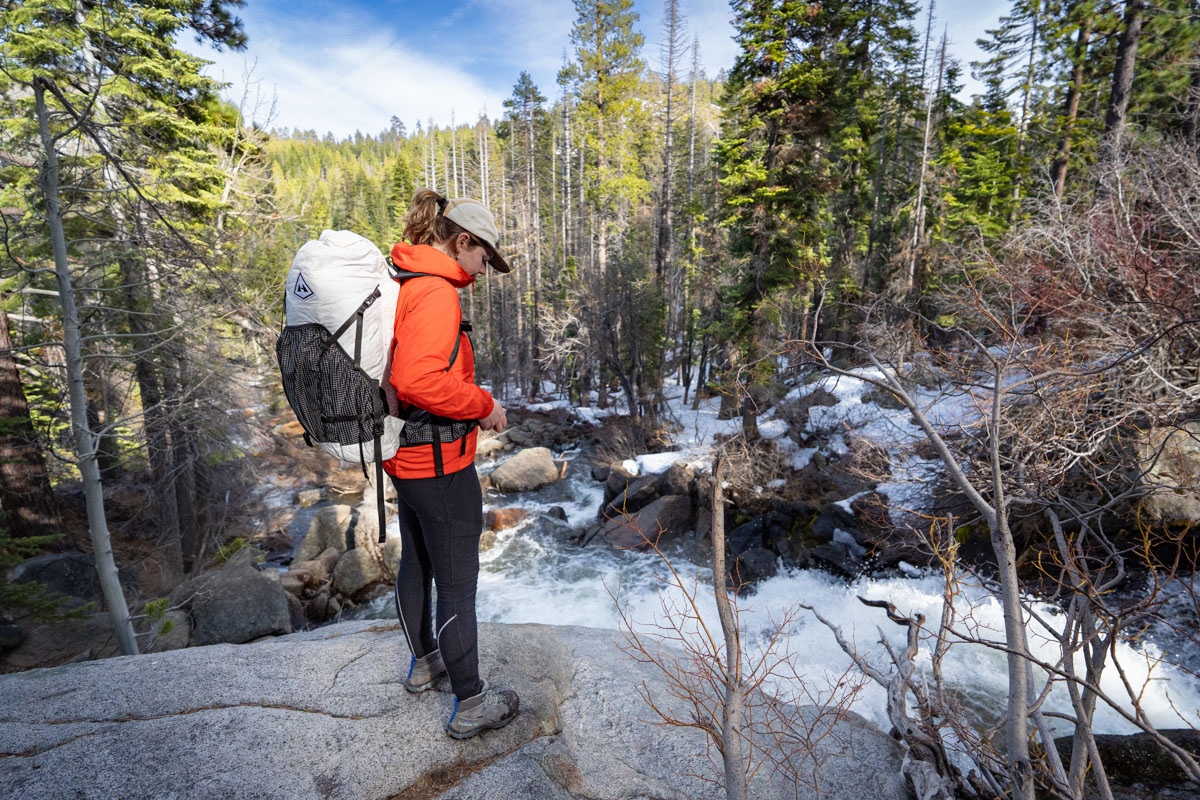
Women's synthetic jackets vary widely in fit. Most performance pieces are built to wear over a baselayer or thin midlayer and easily layer underneath a rain jacket, hardshell, or ski jacket. However, some performance pieces, like the Outdoor Research Deviator, have a trim cut that removes excess fabric for added mobility, efficient ventilation, and easy layering. On the other hand, heavyweight jackets like the Fjallraven Keb Padded Hoodie are roomy. If you’re in search of a jacket adept at both, an option like the Arc'teryx Atom may be the ideal choice, with enough room to be comfortable but not so loose as to be useless in the backcountry. We also had great luck with the fit of the Beringia Lightstream Full Zip Hoody, which layered easily over midlayers without feeling restrictive in the arms and shoulders.
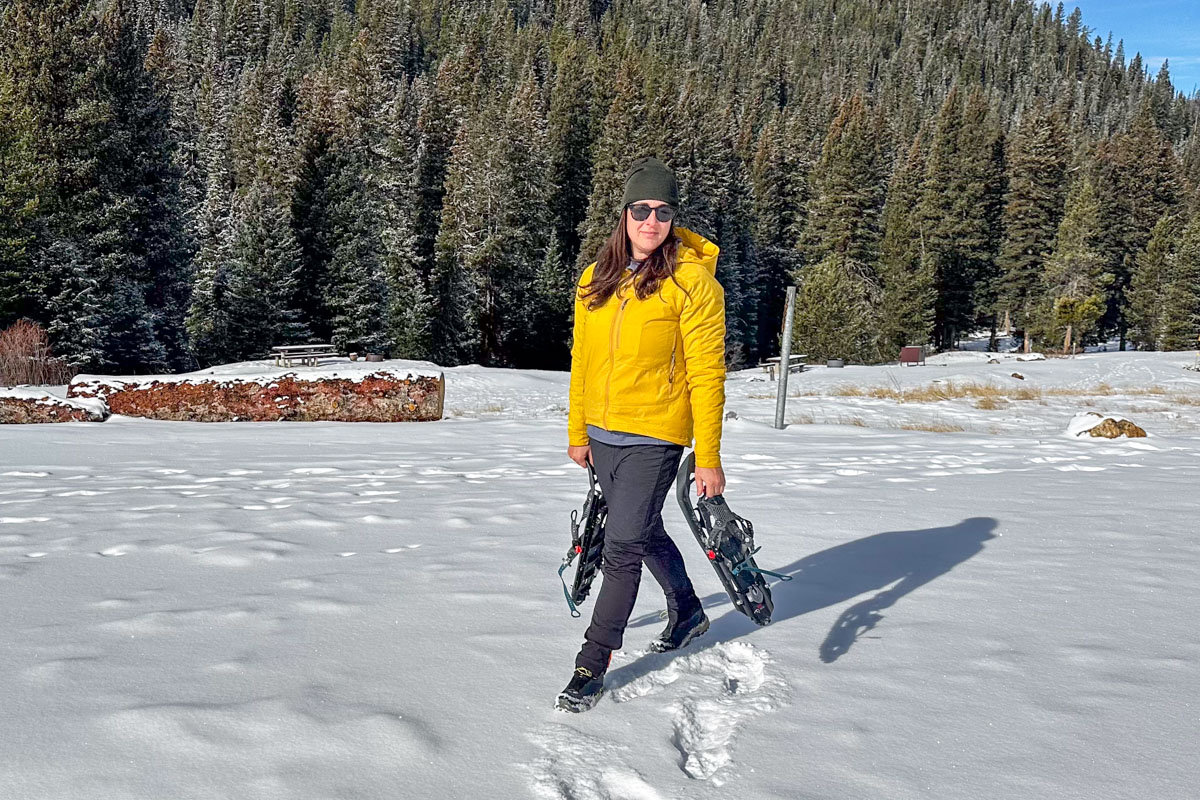
Many of our top-ranked synthetic jackets are available in either a hooded or non-hooded style, and what’s best for you will depend on your use. We reach for an insulated vest or non-hooded jacket as a midlayer while skiing or around town, and the hoody is great as an outer layer or if it’s really cold. It’s also worth considering what other layers you plan to wear with your synthetic jacket and whether they have hoods. Pairing three mid- and outer-layer jackets with hoods can result in a pileup. Expect to pay up to $50 extra for the hoodie version of the same piece. A down jacket purchase shares many of the same considerations, and we’ve covered this question in greater detail in the article: Does Your Down Jacket Need a Hood?
.jpg)
One big selling point of synthetic jackets is that they are easier to care for than down jackets. First, you don’t have to worry as much about moisture, and they don’t lose feathers, meaning that you don’t have to be as vigilant about keeping a close eye on your jacket. Second, many synthetic jackets have thick shells with some built-in stretch (such as the Outdoor Research Vesper and Arc'teryx Atom Insulated Hoody), which lend great durability for everyday wear. And finally, most synthetic jackets are machine washable and don’t require special supplies and care for cleaning.
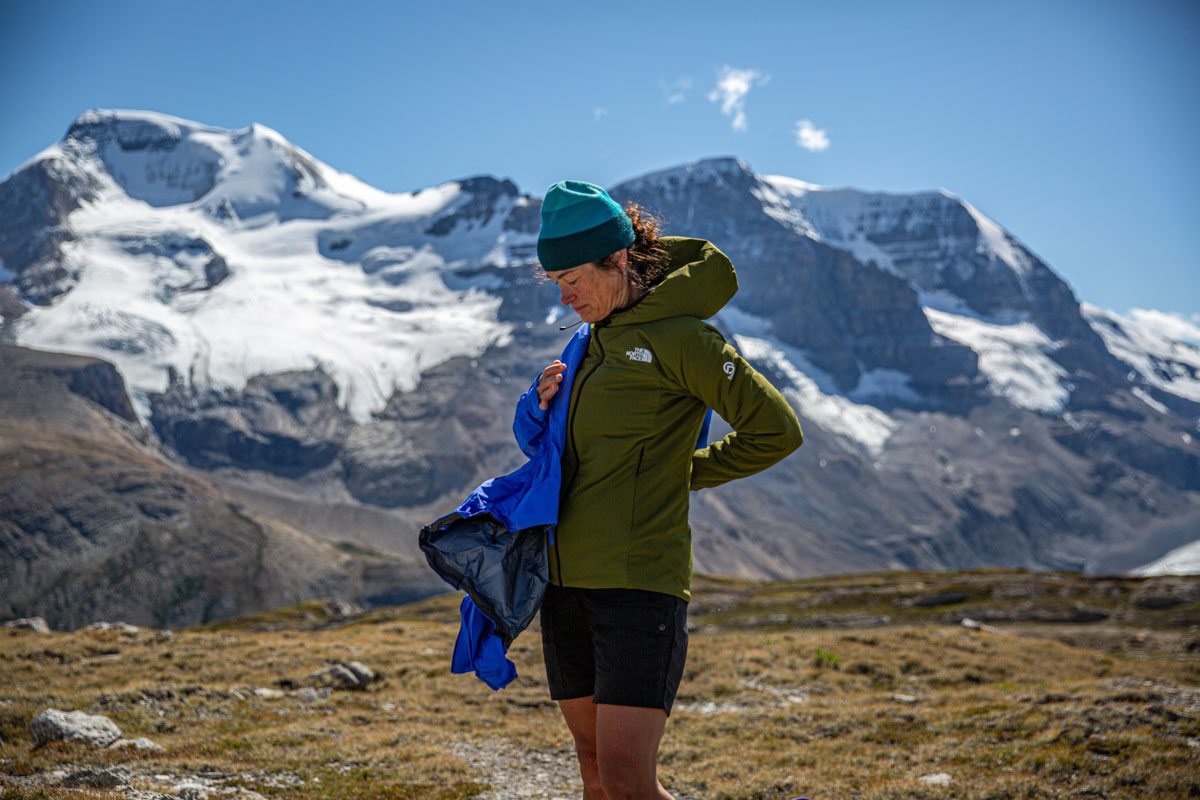
However, it’s important to note that synthetic insulation will break down over time, leading to a loss of loft and the ability to trap heat. In this respect, it’s a much less durable product. We have down jackets passed down from our parents that are arguably just as warm today as they were 40 years ago. On the other hand, synthetic jackets have a shorter lifespan, and their insulating capabilities will not last throughout generations.

Synthetics have been less scrutinized than down (particularly by animal rights activists), but they have their own set of issues. For one, most are petroleum-based, which results in greenhouse gas emissions and potentially unsafe work environments. Many manufacturers have attempted to make their production more sustainable by using recycled materials, which is a great start (most jackets here are built primarily with recycled shell and fill materials). To add to the debate, some synthetic fills release microplastics into the water during each wash, an issue that is becoming increasingly widespread (a wash bag, like this one from Guppyfriend, can help keep your wastewater plastic-free). In the end, the most sustainable solution is to buy nothing at all and do what you can to extend the life of what you already own. And if you do make a purchase, we encourage you to be a responsible consumer and choose products made with a sustainable ethos.
.jpg)
If you’re looking for a warm yet lightweight jacket, your choice will be between down or synthetic fill. Thankfully, the two materials have different attributes that can help ease the decision. As we’ve touched on above, synthetic’s primary strength is its water resistance: Even when wet, synthetic fill maintains its loft and thus continues to insulate. Certain varieties of synthetic fill are also breathable, especially those used in active insulation, and their sweatshirt-like shells can be a lot more comfortable for all-day use. Finally, due to the sheet-like nature of synthetic fill, you don’t have to baby your jacket as much as down. Thus, if we’re anticipating inclement weather, plan to build heat in cold conditions, or know we’ll be wearing our insulation as an outer layer while rock climbing, we’ll take along a synthetic jacket.
.jpg)
Down, on the other hand, excels in two primary metrics: warmth-to-weight ratio and compressibility. Materials engineers are getting closer and closer to creating a synthetic fill that’s as lofty as down (Patagonia’s PlumaFill is an impressive impersonation), but there’s still no substitute for the real thing. As a result, down jackets can offer more warmth at a lower weight and packed size, which is important for fast-and-light activities like mountaineering, backcountry skiing, and fastpacking. They’re also arguably cozier, and unlike synthetic jackets, they won't pack out over time. The choice can be difficult, but if we anticipate dry conditions, know we’ll only wear our insulation at rest, and need to prioritize minimal weight and bulk, we’ll turn to down. For a more detailed explanation of this topic, see our article on down vs. synthetic insulation.



_0f523.jpg)
9104.jpg)
jpg209a.jpg)
1df8.jpg)

b6aa.jpg)