_0.jpg)
_0.jpg)
Photo Credit
Whether you’re headed to the beach, tailgating before your favorite sporting event, or camping in the wild, there's a good chance you'll want to keep your food and drinks cold. Thankfully, there are plenty of high-quality coolers that excel at everything from short day trips to week-long adventures. Below, we break down our favorite hard-sided designs, including budget-friendly Coleman models, ultra-premium Yeti models, and popular offerings from brands like Pelican and RTIC. In fact, our top cooler is RTIC's 52 QT Ultra-Light, which has a great combination of price, features, and durability. For those concerned about weight and portability, we also included one soft-sided option. Depending on your needs and intended use(s), we’ve also compiled lists of the best soft coolers, best backpack coolers, and best wheeled coolers.
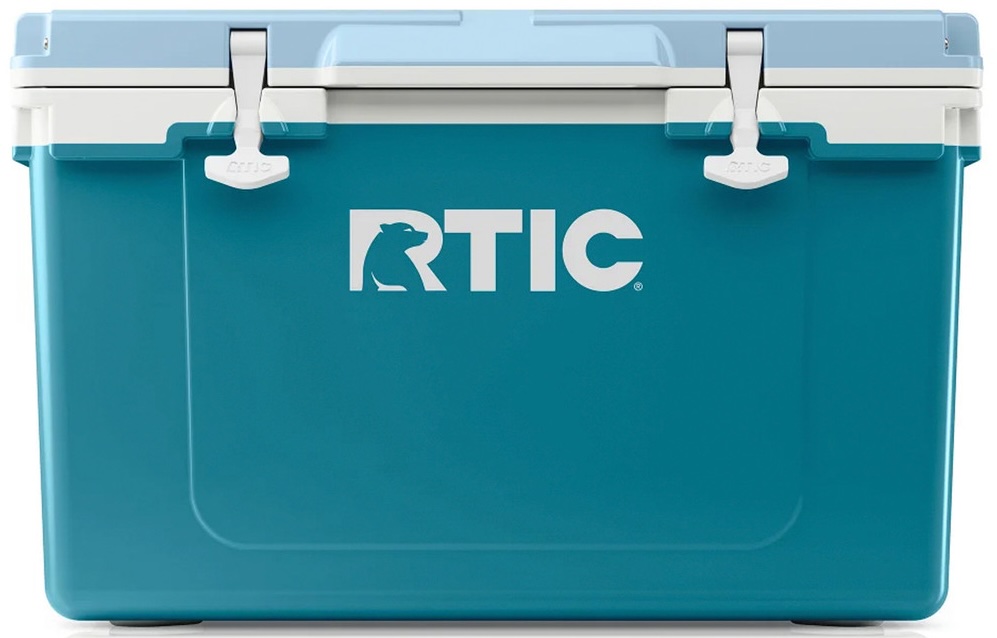
Construction: Injection-molded
Capacity: 52 qts. (49.2L)
Weight: 21 lb.
Other sizes: None
What we like: Good price, versatile size, competitive ice retention, and easy to transport.
What we don’t: Primarily sold online; injection-molded construction is less premium than rotomolded designs.
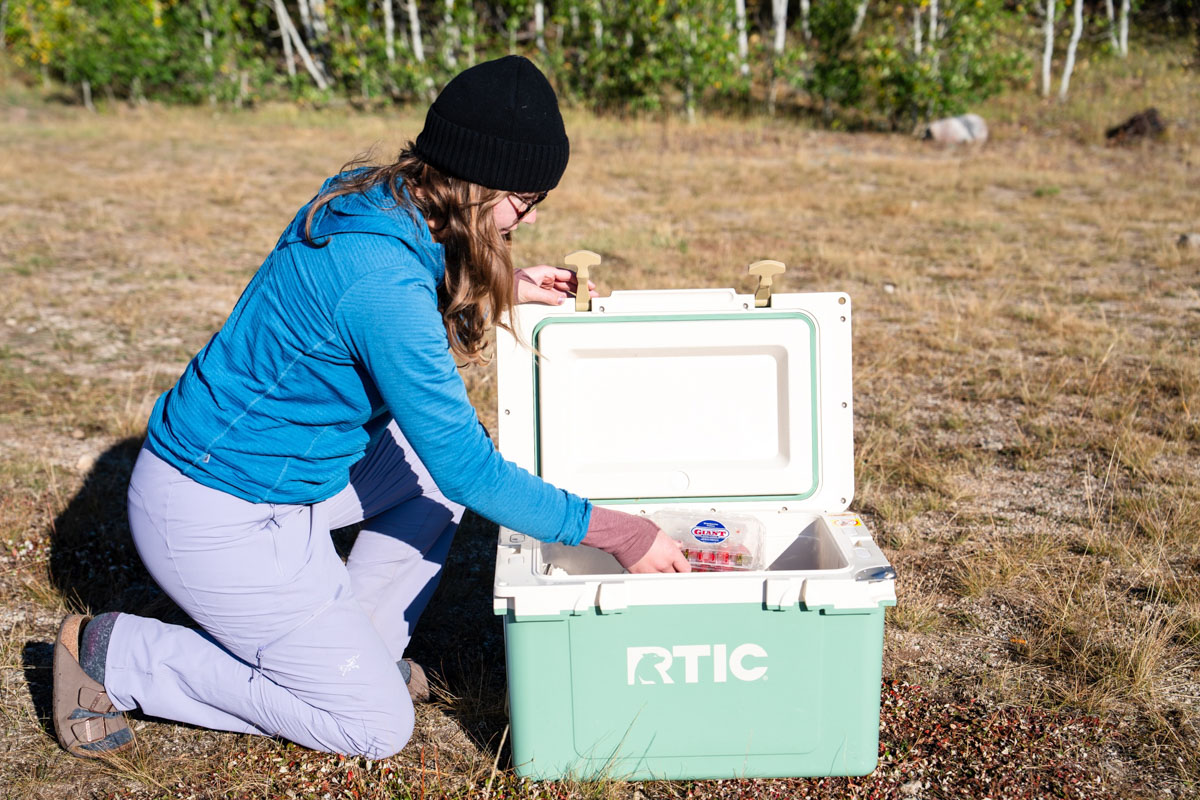
The best hard-sided coolers nicely balance capacity, ice retention, portability, and price, and RTIC’s 52 QT Ultra-Light checks all those boxes emphatically. If you're looking for a cooler for camping, the Ultra-Light is a great choice. Starting with capacity, you get a versatile 52 quarts of storage that easily fits in a trunk yet still offers sufficient space for two campers heading out on a long weekend (for reference, most alternatives are either 45 or 65 qts.). As the name suggests, the 21-pound RTIC is well made yet notably lightweight, making it easier to carry than most similarly sized options, including Yeti's smaller Tundra 45 (24 lb. 9.6 oz.). Other highlights include an integrated bottle opener, comfortable carrying handles, and a nice seal even without the latches secured. Last but not least is cost: By selling direct to consumers (and consistently discounting their coolers on their own site), RTIC’s prices are significantly lower than much of the competition.
What are the downsides? First is the lack of convenience: While you can see and pick up a Yeti and many other brands at your local outdoor shop, you don’t get the same luxury with online-only RTIC. Additionally, the Ultra-Light’s injection-molded construction means it falls short in durability compared to the Tundra and other premium rotomolded options, though the trade-offs are a more manageable weight and reduced cost. The RTIC also falls behind in ice retention, although the differences aren't as stark as the price gap would suggest. Finally, we came away with a few nitpicks during testing. The drainage port is too high, so the cooler has to be tipped to dump the melted ice. And the loose handles make a ruckus on bumpy roads. But small gripes aside, the Ultra-Light is almost everything we need for beach days, summer camping, and boating trips, and the combination of value and performance earns it our top spot.
See the RTIC 52 QT Ultra-Light
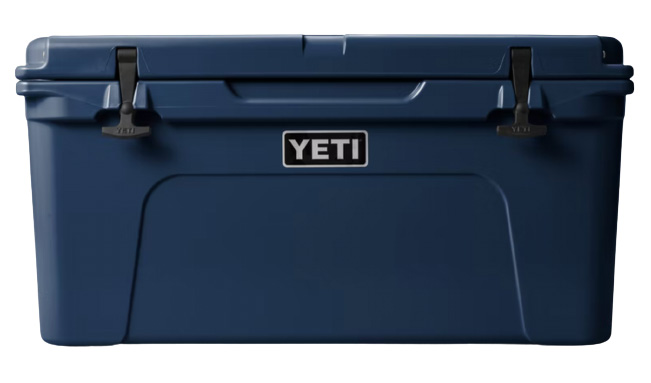 Construction: Rotomolded
Capacity: 60.9 qts. (57.6L)
Weight: 30 lb. 4.8 oz.
Other sizes: 35 to 350 qts.
What we like: A premium cooler in every way, built to last for years and years.
What we don’t: Expensive for the capacity and heavy; overkill for short trips.
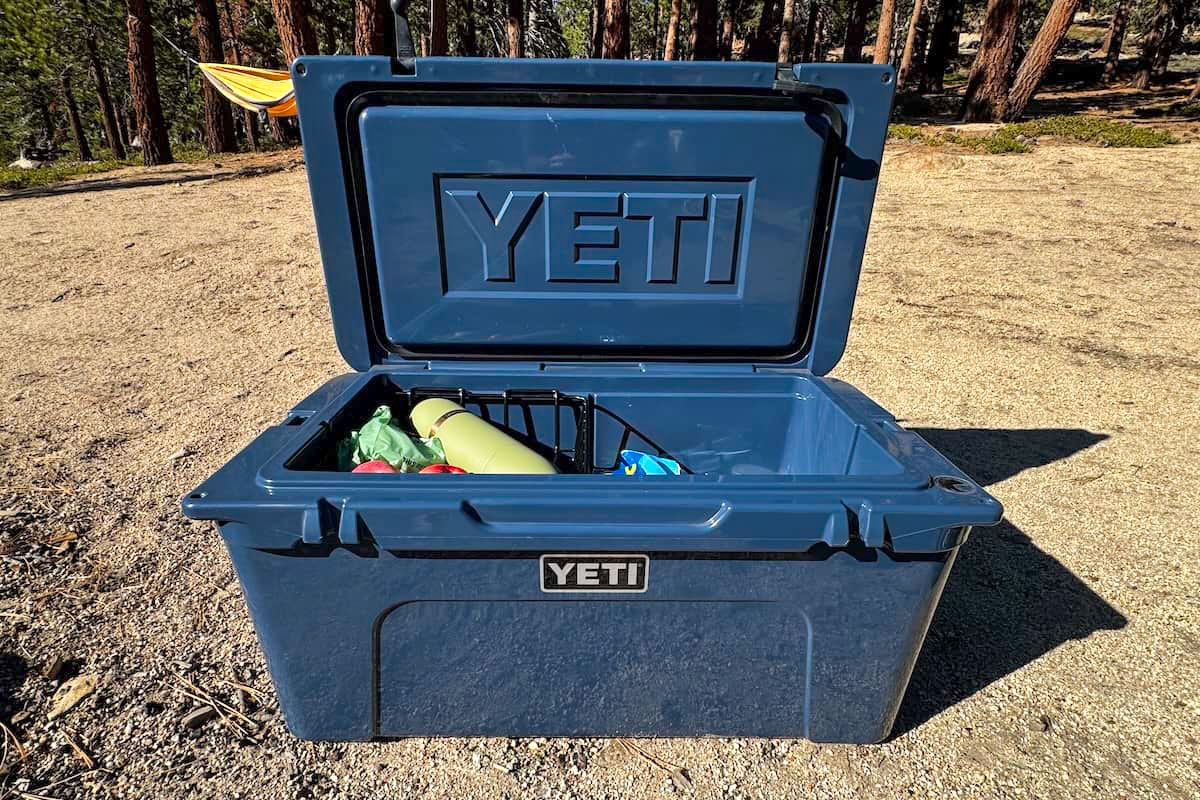
In the world of coolers, Yeti pioneered the high-end concept, and the Tundra is its best-selling and most versatile model. This popular line features premium cooling and ice-retention capabilities with a thick, rotomolded build that’s more durable and less prone to cracking than injection-molded options. Further, you get a handy basket for dry goods, secure closures, and multiple tie-down slots to easily secure it on a boat or truck bed. What's more, the Tundra is certified as bear-resistant (locks are sold separately), which is great for those who plan to spend time in bear country. Throw in Yeti's clean styling and a nice selection of classy colors, and the Tundra 65 is a well-built, good-looking option for everything from car camping to road tripping to long days on the water (provided you have a large boat).
The biggest downside of buying a Yeti is price. This cooler is more expensive than comparable models from brands like RTIC. In addition, the “65” in the Tundra’s name is a misnomer: With its 2-inch-thick walls, the capacity is closer to 60 quarts (the other Tundra sizes are also smaller than the product titles suggest). And finally, the Tundra's rotomolded build means it lacks integrated add-ons like cup holders or a bottle opener (though there are a lot of organization add-ons you can purchase separately). But if you’re set on a Yeti, we understand. You do pay a premium for the brand, but it's hard to beat the durability of a rotomolded cooler (ours has been going strong for over 10 years), and the Tundra has an excellent track record of performance.
See the Yeti Tundra 65
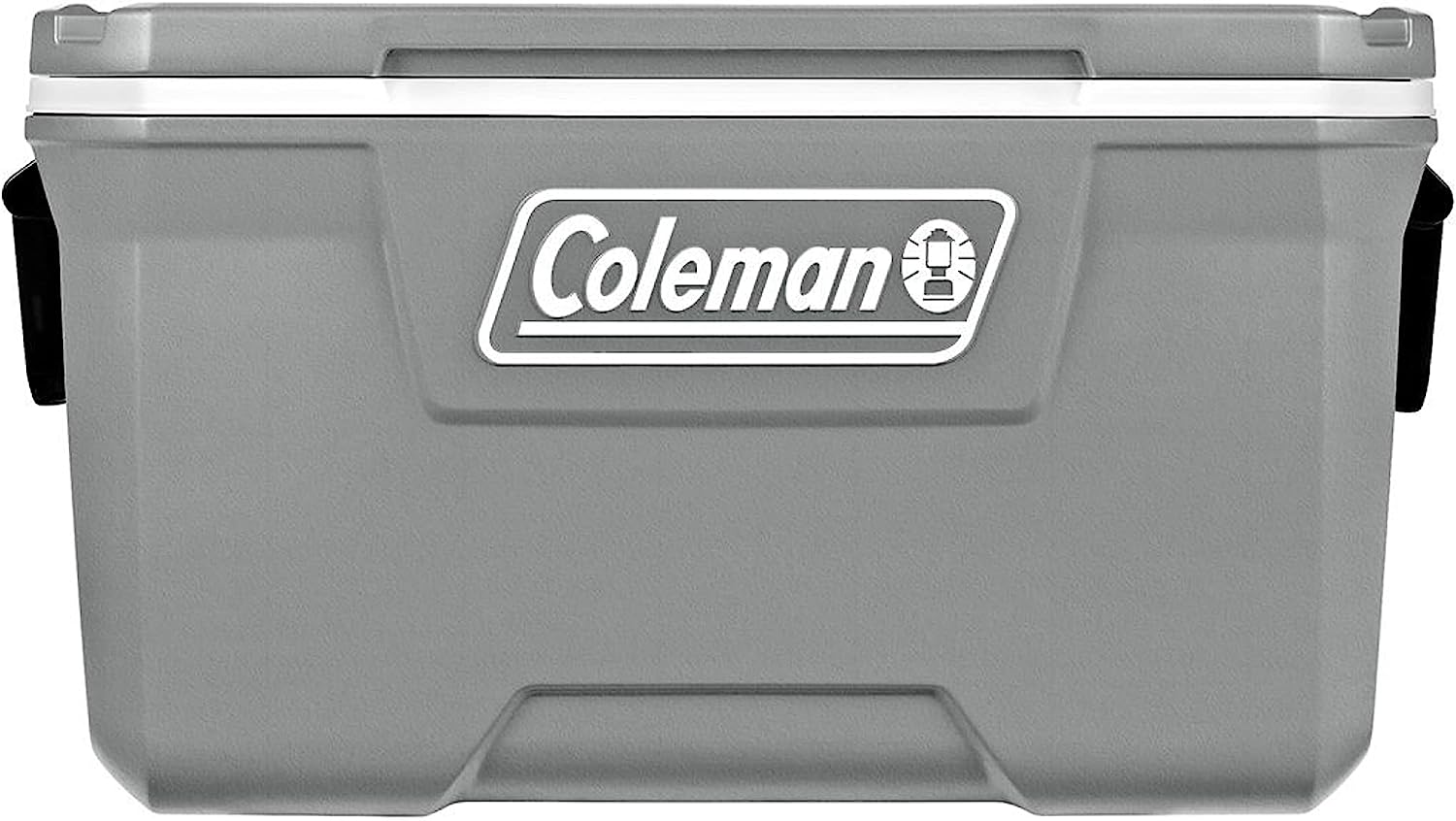 Construction: Plastic
Capacity: 70 qts (66.2L)
Weight: 11 lb. 6.4 oz.
Other sizes: 52, 120, 150 qts.
What we like: Cheap, lightweight, generously sized, and doubles as extra seating.
What we don’t: You get what you pay for in terms of quality and ice retention.
Coleman is nearly synonymous with car camping and offers a wide range of products at very reasonable prices. In the budget cooler category, we like their 70-quart Classic Series model best. For a price that undercuts most similarly-sized coolers, you get a generous amount of interior space, Coleman’s Have-a-Seat lid that supports up to 250 pounds (we frequently use our coolers as added seating, so this is a nice touch), and four handy cup holders on top. It’s not a Yeti, but this inexpensive cooler is durable for the price and will far outperform Styrofoam and other cheaper models.
The Coleman’s biggest downfall is its inability to keep ice frozen for long. Ice retention is listed at three days, but in our experience, it’s closer to two in good conditions (the lack of lid latches doesn’t help). We recommend pre-chilling the cooler before loading it and keeping it in the shade to maximize performance. But given that the Coleman undercuts the price of most high-end rotomolded competition, it’s hard to be overly critical. In other words, for casual outings and shorter ones in particular, the Coleman is all that many campers need and nothing they don’t.
See the Coleman Classic Series 70-Quart
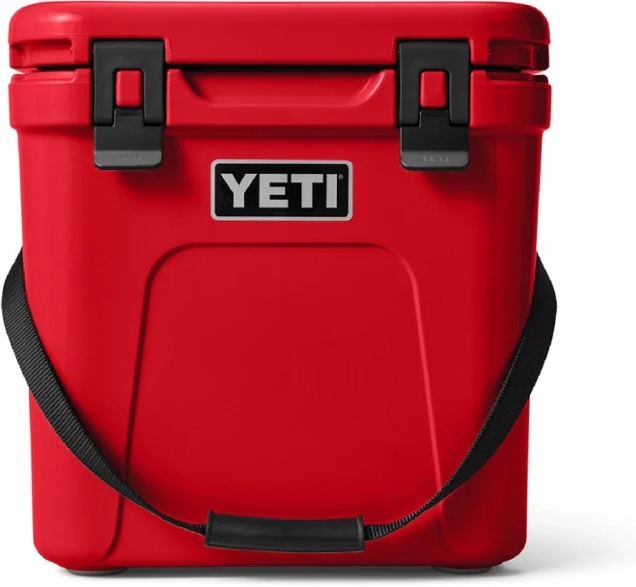 Construction: Rotomolded
Capacity: 23.6 qts. (22.3L)
Weight: 13 lb. 1.6 oz.
Other sizes: 15 qt.
What we like: Best-in-class ice retention in an easy-to-carry package.
What we don’t: Very pricey for its diminutive size.
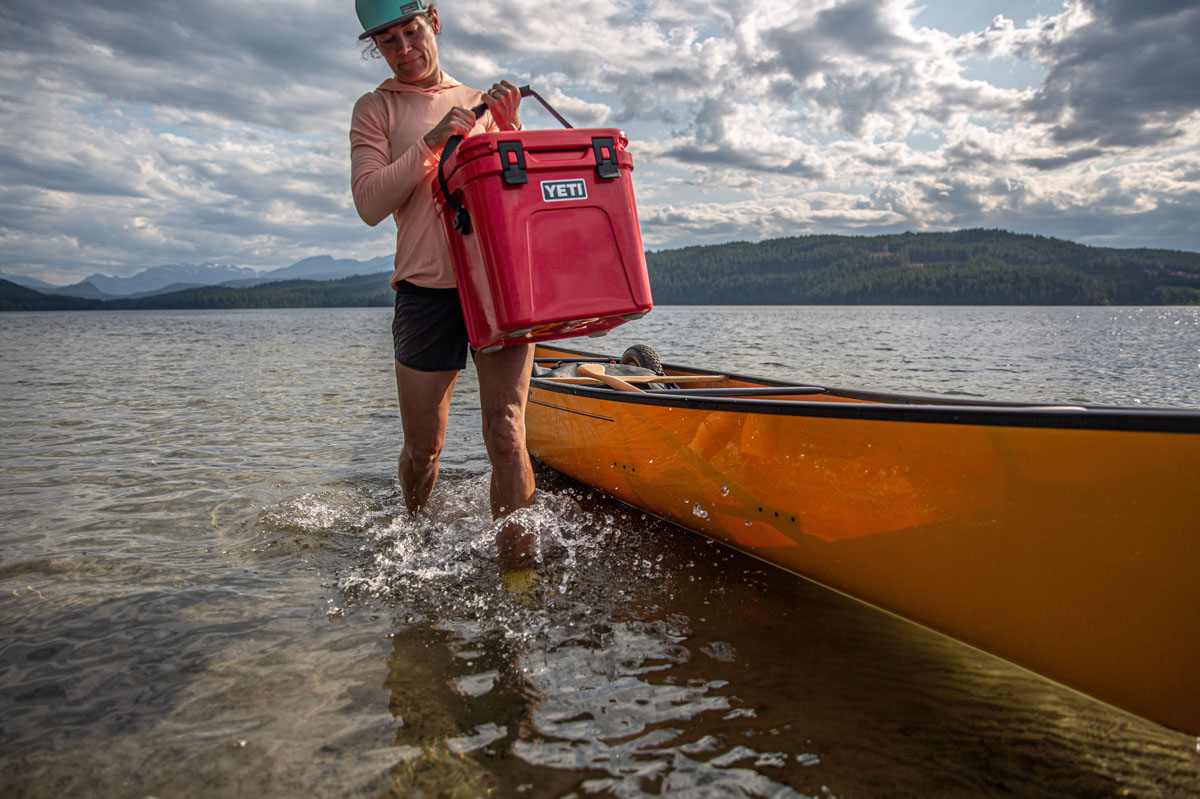
Yeti's Roadie is far more convenient and manageable than the larger coolers above, making it ideal for day trip uses like paddling, picnics, or outdoor concerts. The 24-quart Roadie offers the quality and impressive ice retention that Yeti is known for, in a small, lightweight package. Importantly, despite its diminutive size, Yeti didn’t skimp on features: You get a stout rotomolded construction, thick rubber latches that can be opened and closed with one hand, and compatibility with the brand’s Tie-Down Kit to secure on a boat, in a truck bed, or trailer. All told, if most of your adventures are of the done-in-a-day variety, the Yeti Roadie is a great option.
However, despite its competitive feature set, the Yeti Roadie is decidedly undersized for most. For reference, RTIC’s 52 QT Ultra-Light above offers around double the capacity at a smaller price, giving it the clear edge in value. On the flip side, the Roadie is considerably lighter, takes up far less space in a trunk, and retains the same impressive cooling capabilities that we love about the brand’s Tundra series. But while it’s hard to argue with the premium quality and rugged nature of a Yeti rotomolded build, the Roadie 24 realistically is a niche cooler with a steep price. But if storage space is limited or you know you’ll only need a small cooler for short outings, the Roadie is a fantastic choice.
Read more: Yeti Roadie 24 review
See the Yeti Roadie 24
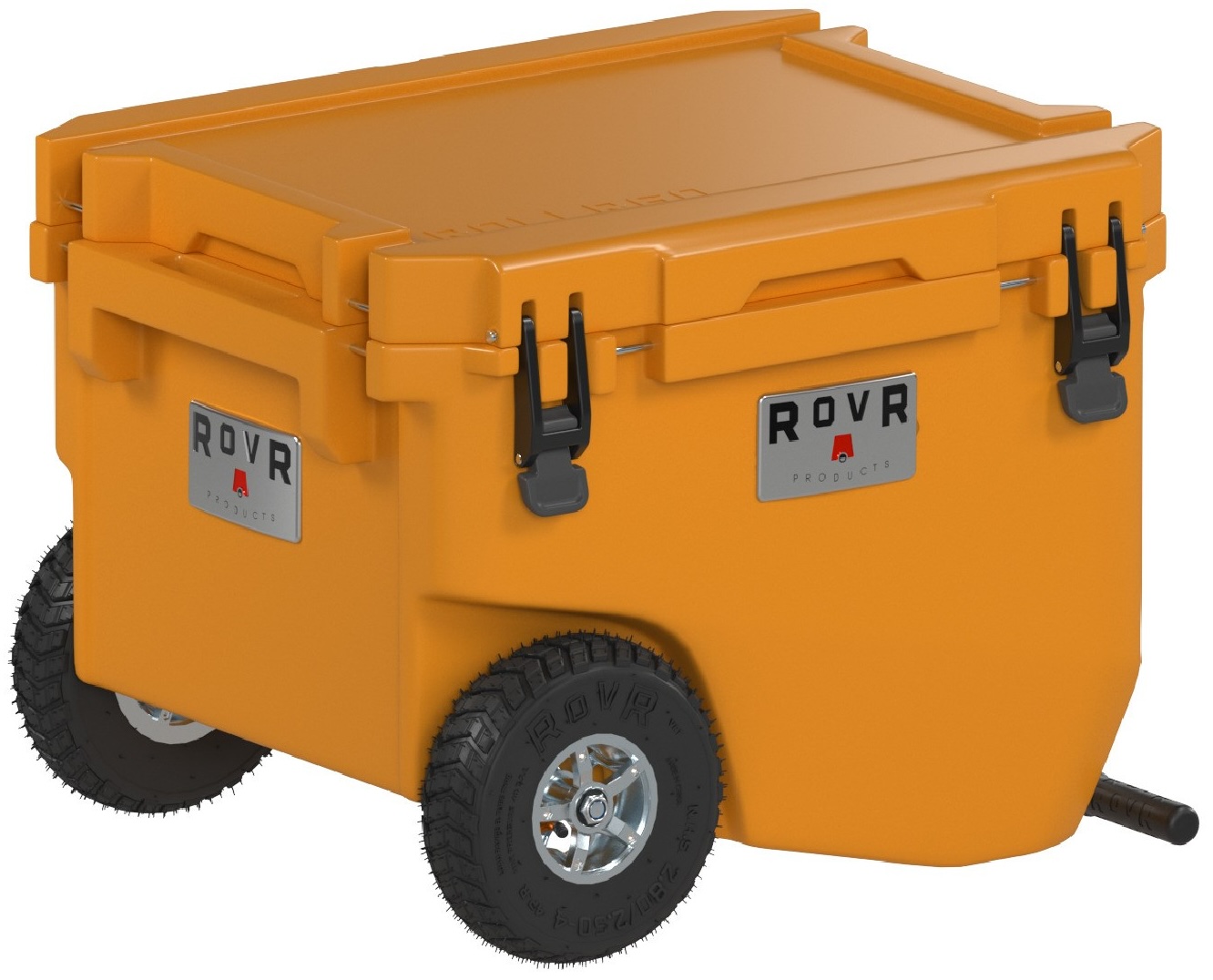
Construction: Rotomolded
Capacity: 60 qts. (56.8L)
Weight: 41 lb.
Other sizes: 30, 45 qts.
What we like: Wheels are well equipped for handling varied terrain; great selection of accessories and add-ons.
What we don’t: Expensive and heavy; falls short of Yeti in ice retention.
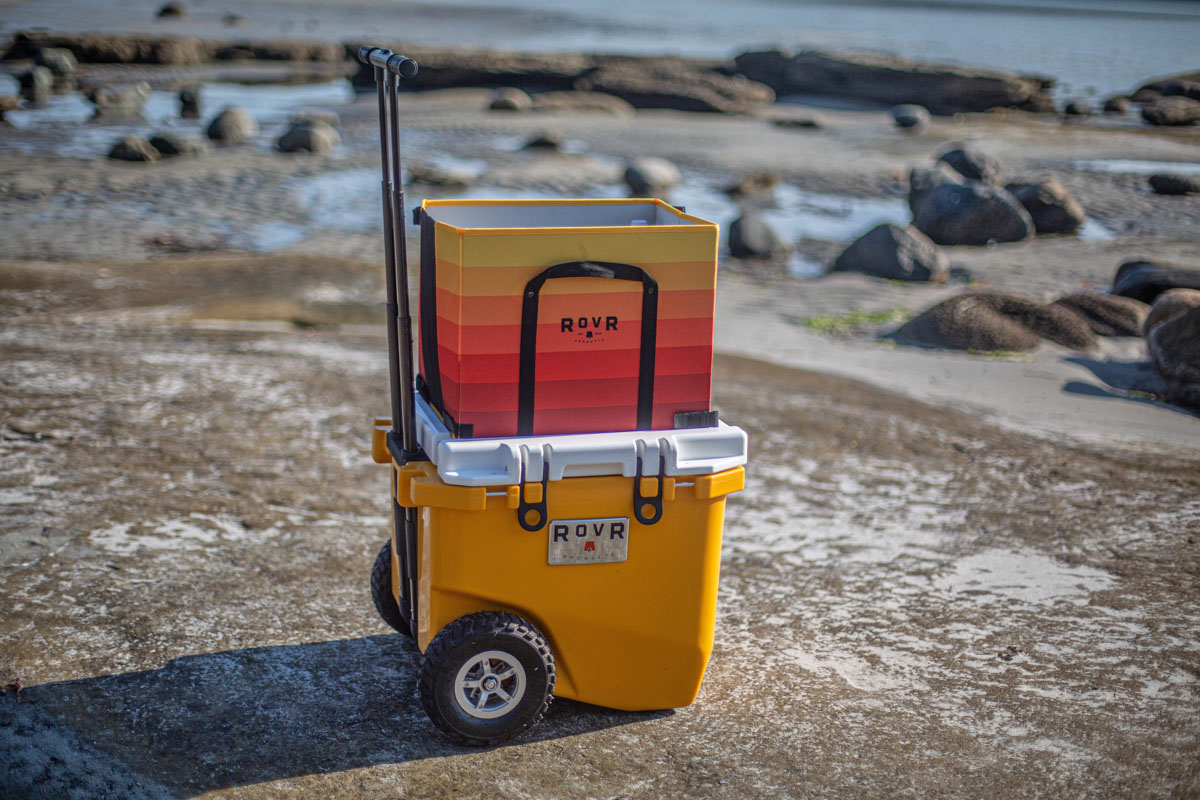
If you plan to cover any distance from your vehicle to your campsite, wheels can make transport a whole lot easier. And no cooler is better equipped for the job than the RovR RollR. This Boulder-based wheeled-cooler specialist offers its signature RollR in three capacities from 30 to 60 quarts, with the mid-range 60-quart model offering the best versatility of the bunch, in our experience. On all versions, you get big and burly wheels that work over most terrain (including tricky surfaces like sand and rocky trails), a long handle that’s easy to grab from either side, and a big dry goods bin for stashing perishables that you want to keep fresh. A final feather in the RollR’s cap is the wide selection of fun add-ons, from kitchen basics like a prep board and cup holders to canvas bins that fit perfectly inside the cooler, beefier tires for longer-distance sand or heavy-load shuttling, and even an attachment kit for towing behind your bike.
As you might expect from a cooler with this many bells and whistles, the RovR RollR 60 is expensive. We also found that the RovR falls short in ice retention compared to Yeti's offerings. It's for this reason that Yeti’s Roadie 48 tops our wheeled cooler round-up, while also saving you considerable weight and bulk. But the RovR's all-terrain functionality and customizability are second to none, and there's no denying the all-around fun factor. Depending on your needs and objectives, both are premium and expertly built designs that will stand the test of time.
Read more: RovR RollR 45 review
See the RovR Products RollR 60
Construction: Soft-sided
Capacity: 30 cans
Weight: 4 lb.
Other sizes: 12, 20, 50 cans
What we like: Lighter and less expensive than most hard-sided coolers.
What we don't: Soft-sided coolers can't hold a candle to the ice retention and long-term durability of hard-sided designs.
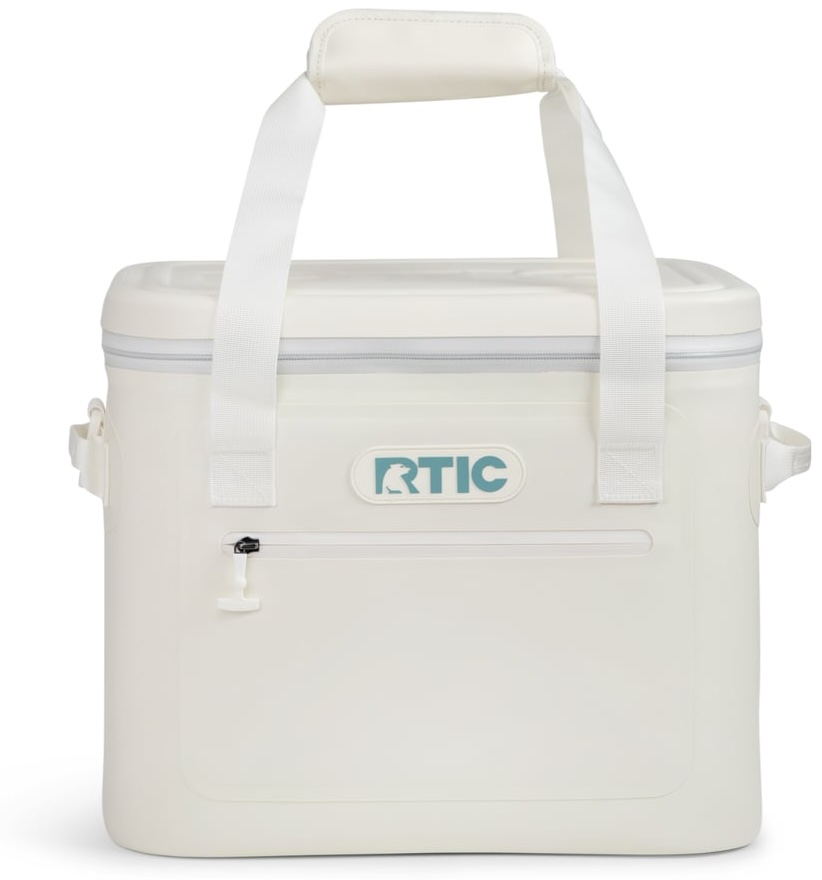
As much as we appreciate the impressive ice retention and long-term durability of a hard-sided cooler, there are times when a soft cooler makes more sense. In general, soft coolers are considerably lighter, much easier to carry and store, and a whole lot cheaper than their hard-sided counterparts. We love them for day trips to the park or beach, tailgates, afternoons on the water, or quick errands like grocery store runs. Our favorite in this category is RTIC's 30-can Ultra-Tough Cooler, which combines competitive insulating performance for a soft-sided design with practical features and a price that undercuts the hard-sided competition. Those who spend a lot of time on the water will also appreciate that it floats, unlike hard-sided competition boats.
Again, however, soft-sided coolers do have their limitations. The biggest is ice retention: While the Ultra-Tough's listed two-day ice retention is respectable for a soft-sided design, it can't hold a candle to premium rotomolded options that can keep ice frozen for over a week. Compared to other soft coolers, the RTIC is also low on features, including just a single, narrow pocket at the front and no daisy chain system for attaching accessories externally. And like the other RTIC coolers on this list, this cooler is only available directly through RTIC's website. But the value remains hard to beat, and we often reach for a soft cooler over (and in addition to) a hard one.
See the RTIC Ultra-Tough Soft Cooler 30 Can

 Construction: Rotomolded
Capacity: 60 qts. (56.8L)
Weight: 31 lb.
Other sizes: None
What we like: Burly cooler with hunting and fishing-specific features.
What we don’t: Not bear-certified and doesn’t come with a basket for dry goods.
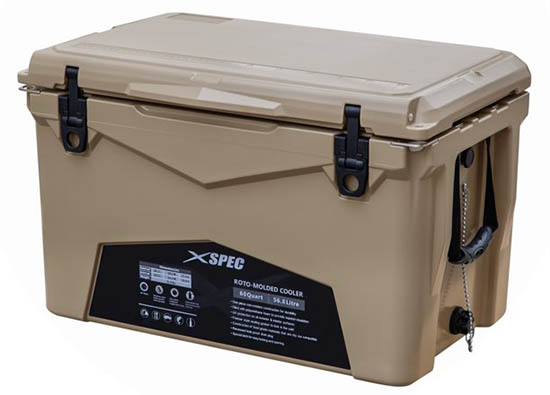
Xspec's Pro 60 Quart cooler has a lot going for it, especially when compared directly to the pricer coolers above. Not only does it boast a reasonable price for its capacity, but a durable rotomolded build that holds up to regular abuse. But unlike most other rotomolded coolers, the Pro 60 offers a range of features, including a built-in bottle opener and built in compass. Outdoorsmen who want a cooler for fishing and hunting trips will also like the built-in ruler, comfortable carrying handles, and a grippy bottom. The air-release valve is also a nice addition to the standard drain plug. You don't have to be a hunter or fisher to enjoy this cooler; it offers a great value for campers and tail-gaters, too.
It's important to note that the Xspec isn't certified as bear-resistant, which is a downside for those who frequently camp in areas where bear-proof gear is required. It also lacks a dry goods basket, which can help keep produce fresher longer. Some users have noted that it doesn't keep ice as well as Yeti, though there's a lot that can be done to mitigate that (pre-cooling and keeping the cooler out of the sun are easy ways to prevent ice from melting quickly). As long as these aren't deal-breakers for you, the Xspec is a great choice, offering an impressive combination of price, features, and overall quality.
See the Xspec Pro 60 Quart
 Construction: Metal
Capacity: 54 qts. (51.1L)
Weight: 18 lb. 1.6 oz.
Other sizes: None
What we like: Good durability in a classy and time-tested design.
What we don’t: Ice retention still isn’t great.
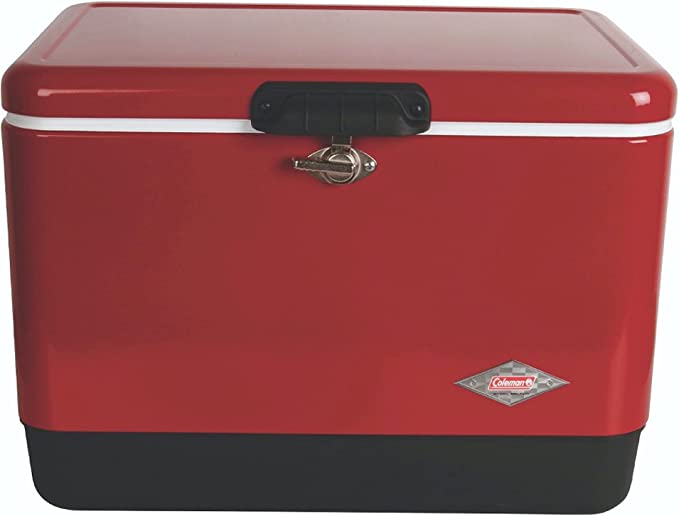
For many people and uses, the pricey high-end coolers on this list are overkill. And if you want a step up from a budget model but don’t need premium cooling or a bear-proof design, the Coleman Steel Belted is a nice middle ground. You get a tough build with metal components along with a classic look that’s been a mainstay at campgrounds and backyard cookouts for decades. The claimed four days of ice retention may be optimistic in the real world, but this cooler is more than enough for road tripping, campouts, and day use. And we like the 54-quart capacity, which holds a decent amount of ice, cans, and food while keeping the weight at just over 18 pounds.
In terms of build, the Steel Belted is a noticeable improvement from Coleman’s plastic Classic Series model above, but falls well short of high-end rotomolded designs. In addition, the single-latch lid doesn’t seal as easily or effectively, and the thin metal handles are uncomfortable to grab and hold for extended periods, especially when loaded down. All told, the Coleman is great for casual outings like camping, backyard parties, or beach trips, but it’s less at home on a boat or in situations where you need maximum ice retention, portability, or toughness. If you like the vibe, know that Coleman also offers a modernized Reunion variation with a matte finish and built-in bottle opener.
See the Coleman Steel Belted Cooler
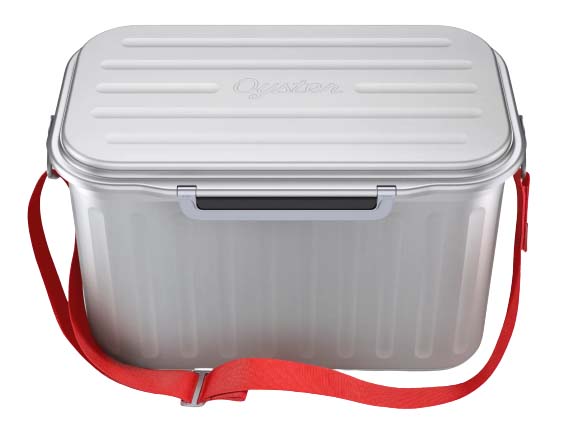 Construction: Aluminum
Capacity: 24 qts. (22.7L)
Weight: 12 lb. 4.8 oz.
Other sizes: None
What we like: The vacuum-insulated aluminum build provides excellent cold retention without ice taking up most of the space.
What we don’t: Very expensive for the capacity, and the handle design could be improved.
It’s always risky business trying to reinvent the wheel, but Norway-based Oyster pulled it off well with their innovative Tempo Cooler. Unlike most competitors, the Tempo boasts a double-wall aluminum build that’s vacuum-insulated (similar to a thermos or travel mug), which is designed to trap cold inside the cooler and block external heat from entering. Between the walls, Oyster used silica in place of traditional foam or plastic to maximize the interior (it takes up much less space while providing similar thermal efficiency). The brand makes some big claims about overall cold retention and performance that are hard to verify, but reports have been positive: The Tempo is on par with or better than most premium rotomolded designs. And perhaps most importantly, you don’t need to adhere to the usual 2:1 ice-to-food ratio; just throw in a couple of cold packs.
It's worth noting that the Oyster Tempo isn’t the only vacuum-insulated cooler you can buy. Yeti’s stainless steel V Series is considerably larger at 55 quarts (it fits 96 cans compared to the Oyster’s 36) but weighs over 34 pounds empty. By comparison, the 13-pound Tempo is much easier to tote from car to campsite but realistically doesn’t have enough capacity for large groups or more than a couple of days away at most. We also think the Tempo's carrying comfort could be improved: The aluminum handle in the bundle isn't all that comfortable, and the shoulder strap isn't padded. In any case, the Tempo is a very promising design, especially for activities when insulation matters more than capacity (think keeping meat chilled at a cookout or spending an afternoon at the park or on the water). As a final bonus, know that it works with hot items, too.
See the Oyster Tempo Cooler
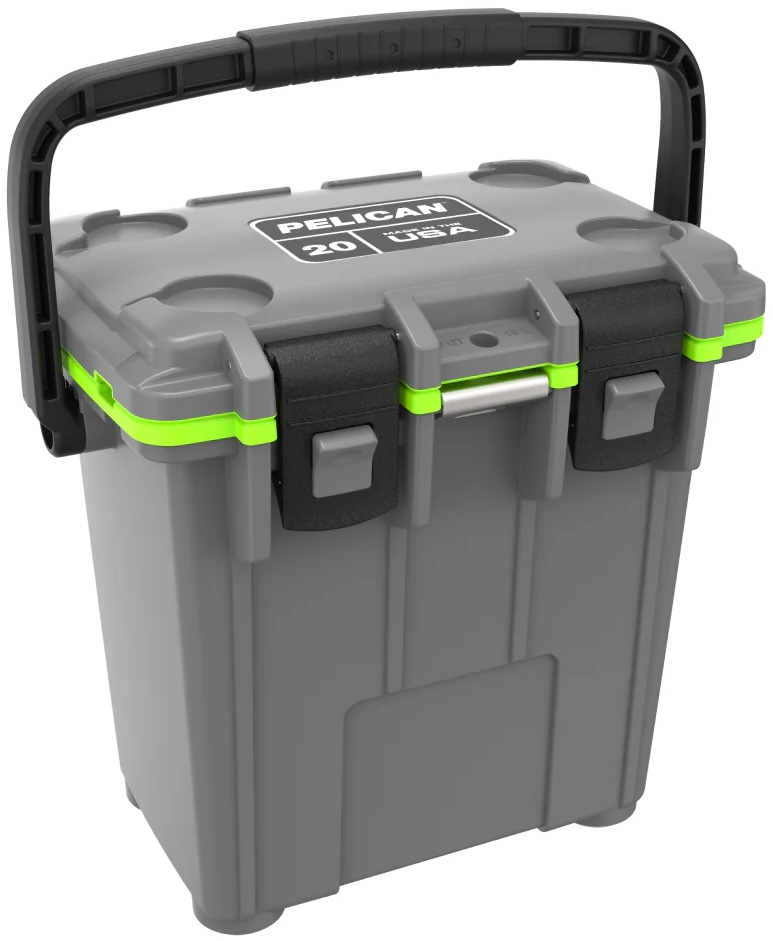 Construction: Injection-molded
Capacity: 20 qts. (18.9L)
Weight: 12 lb. 8.3 oz.
Other sizes: 8 to 150 qts.
What we like: Lightweight, durable, and well-priced.
What we don’t: Not the highest-end choice.
For those who don’t know, Pelican is an industry leader in tough, dependable cases for storing and protecting everything from camera equipment and laptops to guns and drones. Therefore, the jump to hard-sided coolers was a logical progression. Their 20QT Elite here is a lower-capacity option for day trips on the water, strapping to the back of an ATV, and other short outings away from home. Stacked up against the similarly-sized Yeti Roadie, the Pelican is cheaper (albeit with less storage) but comes with functional extras like integrated cup holders, easier-to-use latches, and a more robust carry handle. We also like the unique assortment of multi-toned colors that add a nice dose of flair.
Why do we rank the Roadie above the Pelican? The biggest compromises are quality and performance: While the rotomolded Roadie is lauded for its impressive ice retention and top-shelf build, the injection-molded Pelican is a step down in overall durability and cooling performance (ice retention is listed at an unimpressive 2 days, although that should be plenty given the small size). And it’s worth noting that the Pelican doesn't have a drain plug, which can make dumping melted ice an involved process. That said, if you’re looking for a portable option for day trips, the Pelican’s compact design and reasonable price make it a competitive alternative to Yeti. And for personal use and for those who work outside all day, Pelican sells smaller, lighter 8-quart and 14-quart models.
See the Pelican 20QT Elite
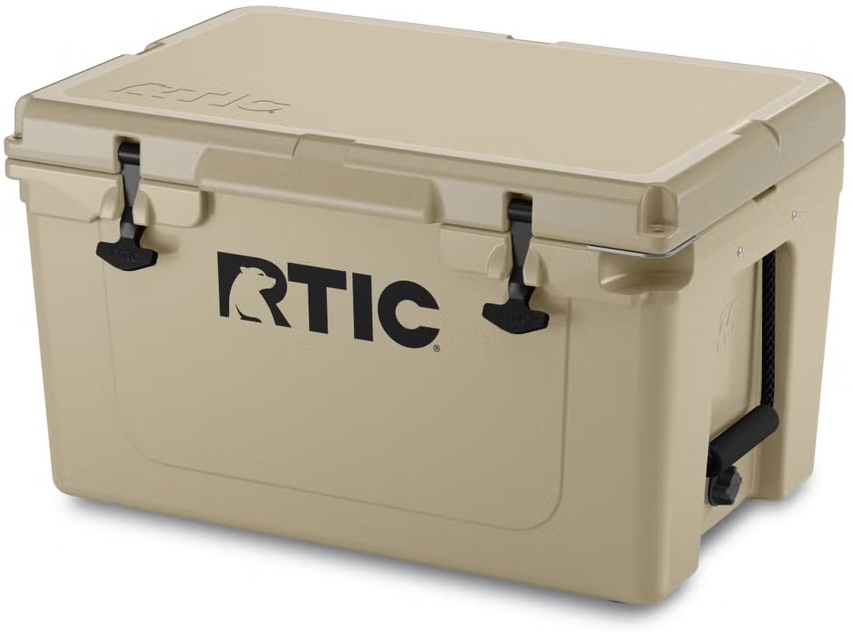 Construction: Rotomolded
Capacity: 45 qts. (42.6L)
Weight: 29 lb. 8.0 oz.
Other sizes: 20, 65, 110, 145 qts.
What we like: A tough cooler that's less expensive than similar designs.
What we don’t: Might be too small for long outings, and on the heavy end.
RTIC’s 45 QT Ultra-Tough cooler is another strong value from the brand. In fact, it’s the least expensive rotomolded design on our list, even undercutting coolers with smaller capacities (such as the Yeti Roadie). It also comes nicely appointed with two ports for quickly draining excess water, durable T-handles that keep the lid locked securely in place, grippy rubber feet, and rope handles with comfortable grips for easy hauling. Overall, we think the Ultra-Tough is a nice alternative to the Ultra-Light series for those who don’t mind the extra heft for added durability. Campers and overlanders who are tougher on their gear will appreciate the burliness of this cooler.
However, the 45-quart Ultra-Tough cooler is an odd capacity, and might be limiting for large groups or longer camping trips. There’s a 65-quart version available, but the price and weight are higher. What’s more, ice retention is listed at just 5 days, compared to a full week for the Ultra-Light 52 above. That said, we haven’t noticed any notable difference in insulating performance. So long as you’re okay with a few compromises in heft and size, the Ultra-Tough is a nice investment for those who are harder on their gear or who want something that will last years of regular use.
See the RTIC 45 QT Ultra-Tough Cooler
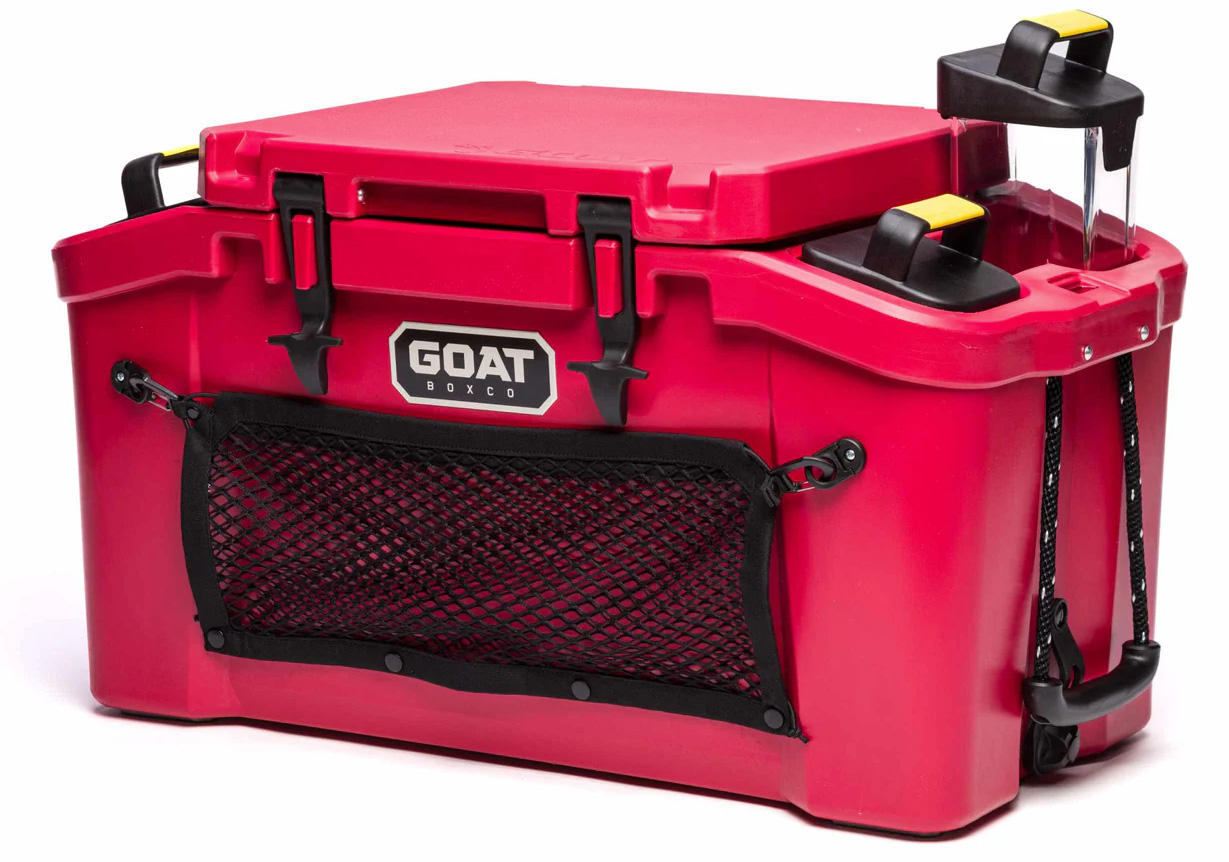 Construction: Rotomolded
Capacity: 38 qts. (36L)
Weight: 25 lb.
Other size: 62 qts.
What we like: Built-in storage and seemingly endless customization options.
What we don’t: Pricey for the capacity and overkill for most casual campers.
If storage is a priority, or you’re looking for a way to keep your camp setup more organized, it’s worth considering Goat’s Hub cooler. The design is highlighted by a creative built-in storage system: Deep slots along the sides pair with the brand’s signature containers (four are included with purchase), which are great for stashing small camp and kitchen accessories. You also get a handy cargo net at the front for securing lighter items like snacks, a thin jacket, or a collapsible dog bowl. And for those who like to geek out on their gear, Goat offers the option to build your own Hub system with customizations for capacity, color, and cans, which come preloaded with essentials like first-aid supplies, hygiene basics, and more.
That said, while we love the Hub's creative gear storage solution, it does eat up usable space in the main cooler compartment. For reference, the Hub 50 here has a capacity of just 38 quarts for ice, food, and beverages, while most similarly sized competitors offer around 45 to 50 quarts. Goat does sell a larger 62-quart Hub 70, but it’s even pricier and hefty at over 42 pounds (the Hub 50 is manageable at 25 lb.). That said, the built-in storage helps offset the capacity drop, and the overall quality is top-notch. From overlanding and hunting to casual days at the lake or beach, the Hub is a real standout and makes organization a breeze.
See the Goat Hub 50
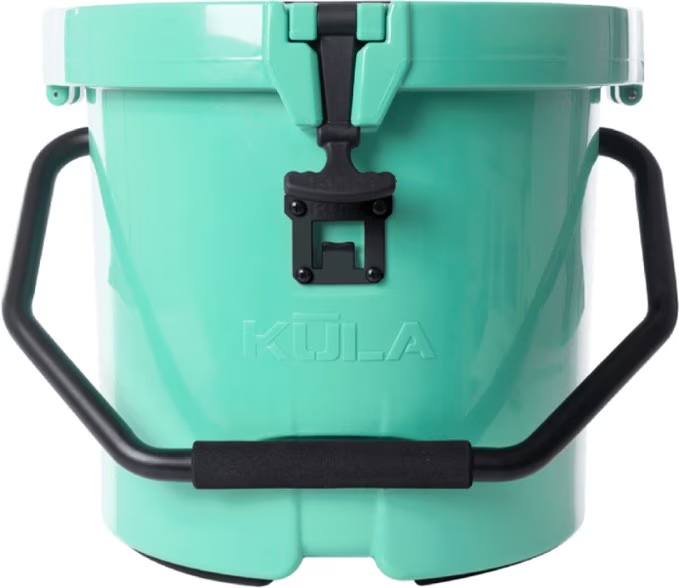 Construction: Rotomolded
Capacity: 20 qts. (18.9L)
Weight: 13 lb.
Other sizes: 10 qts.
What we like: A boat-friendly rotomolded cooler with a thoughtful feature set.
What we don’t: Can't beat the competition in terms of cold retention, capacity, and price.
Florida-based Bote is a paddleboard specialist that stands out from the competition with their bucket-like Kula coolers. The Kula 5 Magnepod here is essentially a 5-gallon bucket that's been upgraded with premium cooler features: Its rotomolded construction and freezer-quality gasket give it solid durability and cold retention, and you get a nice array of user-friendly touches including a padded handle and detachable carrying strap, an easy-to-access drainage plug, an integrated bottle opener, and a grippy surface on the top for traction when sitting or standing. The lid also features Bote's Magnepod magnet that keeps metal water bottles and thermoses upright in choppy waters, which is a thoughtful and practical addition. Finally, paddlers and fishermen in particular will appreciate the single-latch lid that opens with one hand, along with attachment points for securing the cooler to a board or boat.
Bote loyalists and those who spend a lot of time on the water will find a lot to like about the Kula, but campers who stick to dry land will likely prefer the Yeti Roadie 24 above. For reference, we tested the Kula on a late-summer car camping trip in Wyoming and found ice retention to be a noticeable step down from Yeti's. Its bucket shape also wasn’t ideal for storing food: While packaged food can be arranged side-by-side in the Yeti, the Kula’s round interior requires more stacking. Not to mention, the Bote is more expensive than the Roadie while offering less capacity (plus, it's just as heavy). But for those who plan to utilize the water-specific features, the Kula is a well-built design with all the trimmings we look for in a premium rotomolded cooler.
See the Bote Kula 5 Magnepod
| Cooler | Price | Construction | Capacity | Weight | Other Sizes | Ice* |
|---|---|---|---|---|---|---|
| RTIC 52 QT Ultra-Light | $229 | Injection-molded | 52 qts. (49.2L) | 21 lb. | None | 7 days |
| Yeti Tundra 65 | $395 | Rotomolded | 60.9 qts. (57.6L) | 30 lb. 4.8 oz. | 35-350 qts. | Unavail. |
| Coleman Classic Series 70 | $85 | Plastic | 70 qts (66.2L) | 11 lb. 6.4 oz. | 52-150 qts. | 3 days |
| Yeti Roadie 24 | $250 | Rotomolded | 23.6 qts. (22.3L) | 13 lb. 1.6 oz. | 15 qt. | Unavail. |
| RovR Products RollR 60 | $400 | Rotomolded | 60 qts. (56.8L) | 41 lb. | 30, 45, qts. | 10 days |
| RTIC Ultra-Tough Soft Cooler | $129 | Soft-sided | 30 cans | 4 lb. | 12, 20, 50 cans | 2 days |
| Xspec Pro 60 Quart | $227 | Rotomolded | 60 qts. (56.8L) | 31 lb. | None | Unavail. |
| Coleman Steel Belted | $200 | Metal | 54 qts. (51.1L) | 18 lb. 1.6 oz. | None | 4 days |
| Oyster Tempo Cooler Bundle | $575 | Aluminum | 24 qts. (22.7L) | 12 lb. 4.8 oz. | None | N/A |
| Pelican 20QT Elite | $207 | Injection-molded | 20 qts. (18.9L) | 12 lb. 8.3 oz. | 8-150 qts. | 2 days |
| RTIC 45 QT Ultra-Tough | $239 | Rotomolded | 45 qts. (42.6L) | 29 lb. 8.0 oz. | 20-145 qts. | 5 days |
| Goat Hub 50 | $500 | Rotomolded | 38 qts. (36L) | 25 lb. | 62 qts. | 8-10 days |
| Bote Kula 5 Magnepod | $299 | Rotomolded | 20 qts. (18.9L) | 13 lb. | 10 qts. | Unavail. |
*Editor's note: This number represents claimed ice retention. In real-world use and depending on the specific circumstances, we've found these times to be quite a bit lower. More in our "Ice Retention and Cooling Capabilities" section below.
Camping is all about maximizing comfort while spending time outdoors, and having fresh food and cold drinks can make all the difference. Senior editor Maddie Downie took over this guide in 2024, drawing from her extensive camping experiences throughout temperate western Washington and dry, hot Colorado.
Our current lineup of coolers reflects our ongoing testing, firsthand insights from contributors, and feedback from the online camping community. When we put coolers to the test, our primary consideration is ice retention, which we evaluate by exposing each cooler to varying conditions—from midday heat and full sun to cool nighttime temperatures—and noting how long ice stays frozen. We also consider weight and portability by filling our coolers to the brim and hauling them into camp, and we use each feature (e.g., drain systems, cup holders, and bottle openers) to gauge overall quality and functionality. We recognize that the cooler market isn’t static and, as a result, continue to test new and noteworthy designs as they become available.
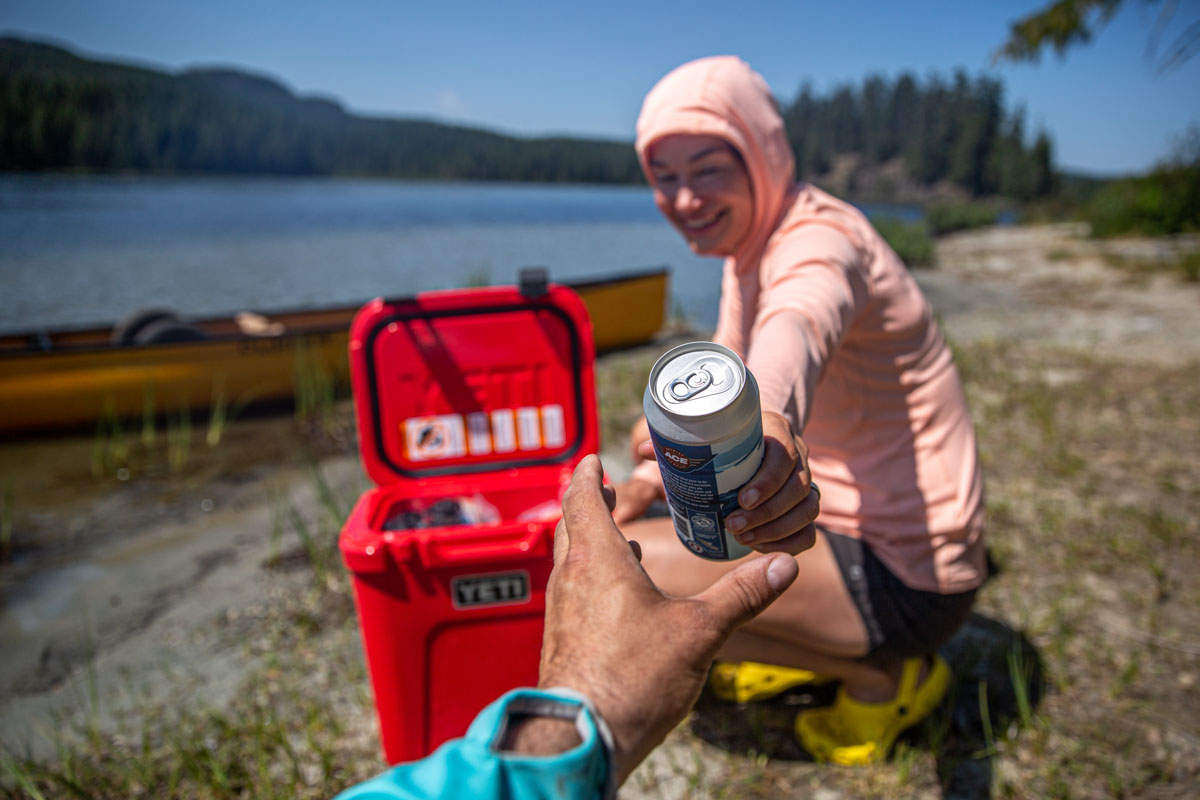
Our list above comprises mostly hard-sided coolers, with just one soft-sided offering: RTIC's Ultra-Tough Cooler 30 Can. In deciding which style is right for you, your preferences for insulation performance, durability, weight, and cost will determine the choice. In general, hard-sided coolers will keep your food and beverages cold for significantly longer than soft-sided designs, and they are built with much tougher materials that hold up better over time. For example, the RTIC Ultra-Tough has a listed ice retention of 2 days, while premium hard coolers from Yeti, RovR, and others listed above will keep ice frozen for a week or longer. Hard coolers are also typically available in much larger capacities than soft coolers, which is worth considering if you often camp with a group.

That said, soft coolers make a lot of sense for day trips, afternoons on the water, or outings to the grocery store or farmer's market. In addition to being substantially lighter, soft coolers are much easier to tote thanks to their straps and grab handles, and some even come with backpack-style straps for covering longer distances. As a final bonus, soft coolers are generally much cheaper than their hard-sided counterparts. In the end, those who plan to use their cooler every weekend will benefit from spending more on a hard-sided model. But if you're looking for a cheap way to keep food and drinks cold for the day, a soft cooler is a great alternative. For a full breakdown of options, check out our articles on the best soft coolers and best backpack coolers.
Construction techniques for premium hard-sided coolers fall into two types: rotational molding (rotomolding) and injection molding. Starting with rotomolding, this process was popularized by Yeti (though they weren’t technically the first to make a cooler this way) and currently dominates the high end of the market. These coolers are made from a single continuous piece of plastic that is rotated until it forms the desired shape. The advantages are fewer stress points (these coolers are less likely to crack under pressure) and a consistently thick outer shell, resulting in exceptional durability. Primary disadvantages are cost and weight.
%20.jpg)
What about injection molding? These coolers are made by inserting hot plastic into a defined mold, allowing it to cool, and then removing it from the mold. The process is simpler and cheaper than rotomolding and allows greater precision due to the molded shapes. But they’re made from multiple pieces—unlike the single, uninterrupted form used in rotomolding—which can lead to reduced durability and increased susceptibility to cracking. That being said, a high-end build like RTIC’s 52 QT Ultra-Light stacks up favorably to top rotomolded coolers in overall toughness. Many injection-molded designs also offer multiple mounting locations for accessories like tables, cup holders, and cutting boards, something you don’t typically get with rotomolding.
If you're researching this, you may be wondering how the two designs compare in overall cooling performance. All else being equal, a cooler's construction does not affect ice retention. In other words, a premium injection-molded cooler should stack up favorably in terms of insulation performance against a comparable rotomolded design. That said, because most high-end coolers use rotomolded construction, the two tend to correlate more often than not. A quick check of our list reveals that most rotomolded designs retain ice for about 10 days (based on manufacturer claims), while many injection-molded offerings come up well short at 2 to 4 days. But again, there are exceptions to this rule: The aforementioned injection-molded RTIC 52 QT Ultra-Light, for instance, is rated to keep ice frozen for up to seven days, while their rotomolded 45 QT Ultra-Tough Cooler is listed at just five days.
.jpg)
Before we jump in, there are a few considerations to note regarding sizing. Most importantly, not all coolers measure interior capacity in the same way. Some use cans as a unit of measure, while others use liters, quarts, or gallons. That said, quarts are what most manufacturers list, and we’ve used that unit throughout this article (when available). And a final note: Don’t be misled by the number in a product’s name. The Yeti Tundra 65, for example, has a capacity of only around 60 quarts once you account for its thick walls. The RTIC 52 QT Ultra-Light's capacity is also smaller than its designation suggests, and the RovR RollR's tiered interior also sacrifices some volume. Most cooler manufacturers publish the interior dimensions of their coolers online, which can be a good way to compare models if you're on the fence.
Small: 10-35 Quarts
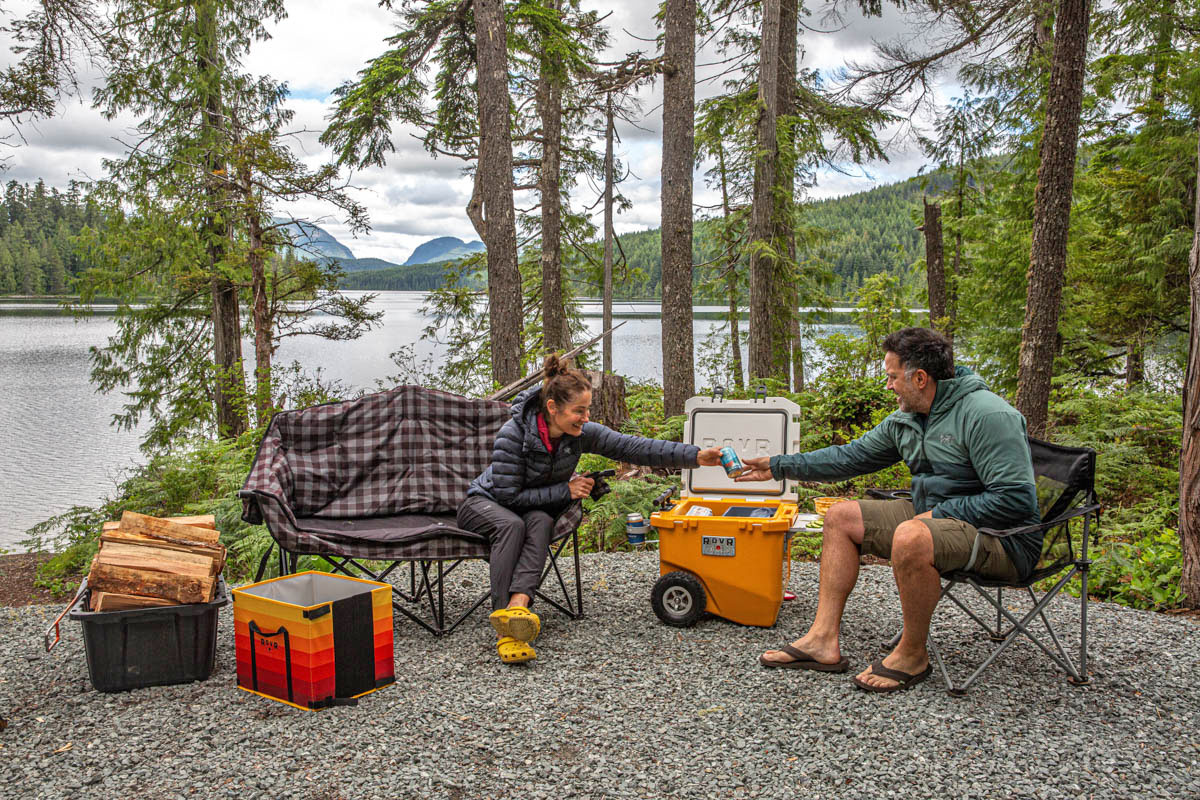
If you most often travel solo or prioritize portability, a small cooler could be a good match. At the low end of the capacity range, expect to fit a small amount of ice, a few drinks, and a meal, while 35-quart coolers should hold enough for one or two days. It’s worth noting that even a 30-plus-quart design will be pushing it for multiple people over a weekend once you properly fill it with ice, so these coolers lack the versatility of the larger sizes. Among our favorites in this category, the Yeti Roadie 24 balances a burly yet compact build (16.6 in. long and 17.4 in. tall) that is sized right for throwing on a backseat or strapping to an ATV or stand-up paddleboard. Oyster's Tempo Cooler is another standout in this space, boasting 24 quarts in a sleek aluminum package.
.jpg)
Medium: 35-55 Quarts
Stepping up to the 35- to 55-quart range gets you an all-purpose model: These coolers are compact enough to squeeze into a loaded car trunk or truck bed, can typically be carried by one person, and don’t take up too much space on a boat or raft. In our testing, we found that 35-, 40-, or 45-quart coolers were sufficient for groups of 1 to 2 for a couple of days. If your party exceeds that, it’s worth bumping the capacity up to 55 quarts or higher for the same time frame. Some of our favorites in this space include Coleman's Steel Belted Cooler and Goat's Hub 50. But if you plan an extended outing or are traveling with a large group, you’ll want to check out the larger sizes below.
.jpg)
Large: 55-75 Quarts
As we touched on above, if you’re headed out with two or more people over multiple days, it’s worth packing a large cooler. It’s true that you’ll likely need a second person to help transport it to and from the car, but the upside is that there's enough space to use a proper 2:1 ice-to-food ratio to maximize performance (we cover this in more detail below). In the 55- to 75-quart range, we like Yeti's Tundra 65 best: It offers a good balance of storage capacity, ice retention, and features that should meet the needs of most small groups on extended weekends or larger families on overnight trips. But at more than 30 inches long and 16 inches high, it does take up a fair amount of space in a trunk or pickup bed.
.jpg)
Extra-Large: 75+ Quarts
Coolers in the 75-quart-and-larger range are typically reserved for the committed outdoorsperson. While undoubtedly expensive, bulky, and heavy, these extra-large models have their place for big groups and certain activities, such as fishing and hunting. On the smaller end of the spectrum, 75- to 85-quart hard-sided coolers are ideal for weekend adventures for groups of around four or five, or longer trips with fewer people.
.jpg)
One of the trickiest things to nail down in researching coolers is ice retention. First and foremost, external factors play a huge role here. Air temperature has a big impact, as does direct sun, and the amount of ice you use is another important factor (most brands recommend a 2:1 ice-to-food ratio). It also matters how often you open the lid, thereby allowing cold air out and warm air in. For maximum performance, you can pre-chill your cooler before loading it. This involves filling the interior with ice for at least a few hours to lower its temperature. When you’re ready to hit the road, swap in some fresh ice at that optimal ratio along with your drinks and food. On the flip side, if you leave your cooler sitting out in the sun before loading it, you can expect it to be preheated like an oven and not nearly as effective.
.jpg)
Most cooler manufacturers provide a “claimed ice retention” spec in their product listings (Yeti is one major brand that does not). A quick look at the table above shows that the times range from 10 days at the high end for premium designs like the RovR Products RollR 60 and Goat Hub 50 to just two days for Pelican's 20QT Elite and RTIC's soft-sided Ultra-Tough 30 Can. That said, we always take manufacturer-provided specs with a grain of salt, and there isn’t an established, standardized test here. In practice, most of the claimed ice retention times feel inflated to us, perhaps due to favorable testing conditions (storing the cooler inside with the lid closed in cool temperatures, for example). If we had to generalize, we would say you can expect approximately half the claimed ice retention time in real-world use, give or take, depending on your specific circumstances.
.jpg)
If you are looking for maximum cooling power, premium rotomolded coolers from brands like Yeti and RTIC are the clear leaders in keeping ice cold for long stretches. You definitely pay for the privilege, but you can expect multiple days of cold temperatures and solid ice in your cooler with these high-end offerings, and that time goes down as you move toward cheaper hard-sided coolers and soft-sided designs. If you need ice for extended periods (we’re thinking of you, rafters and multi-day campers), the cost is worth it. But for those on day trips or shorter overnight outings with access to new ice, an inexpensive cooler like the Coleman Classic Series is a fine option.
For those who plan to carry or move their cooler regularly, weight should be an important consideration. Even when empty, hard-sided options weigh 10-15 pounds for low-capacity models and 50+ pounds for premium designs with 75+ quarts of storage. Once loaded down with ice, food, and beverages, that number skyrockets. And despite including carry handles, they're too hefty to travel with for long distances. If portability is a priority, we recommend looking at options with wheels, such as RovR’s RollR 60. Although this cooler is hefty, the wheels make it much easier to transport for extended periods, even by one person. Alternatively, soft-sided designs like the RTIC Ultra-Tough Cooler 30 Can (4 lb.) weigh even less, although insulating performance and durability are notable compromises.
%202.jpg)
As we prefaced above, if your cooler must-haves include easy mobility, large capacity, and maximum ice retention, it's best to consider a rolling hard-sided model. From our picks above, the RovR Products RollR 60 has rear wheels and tow handles, and Yeti's Tundra and Roadie collections also include wheel-equipped variations. Downsides are even more weight, bulk, and cost. Additionally, these wheeled beasts still struggle over rough terrain and may require carrying if you don't have a defined path to follow. But for camping, days at the beach, or even tailgating, a rolling cooler can be a solid choice. For a full look at options, see our round-up of the best wheeled coolers.
.jpg)
Well over half of the coolers on our list cost $200 or more, which shows how pricey these units can be. But in our opinion, the cost is easy to justify. Hard-sided coolers from Yeti, RTIC, and others keep ice frozen for significantly longer than budget options from companies like Coleman or Igloo. And while bags of ice are cheap, it can be a real pain to have to drain your cooler and replace the ice daily (not to mention the hassle of traveling to buy more). Another benefit of high-end hard-sided units is durability: The difference in quality is immediately apparent, and some of the best out there are meant to last a lifetime. All that said, if you just need a reliable cooler for days at the beach or packing a lunch on the road, it’s a good idea to save your cash. But if you consistently head outside for days at a time, the investment is well worth it.
A final factor to consider when choosing a high-end cooler is longevity. Coolers are unlike most other categories of outdoor gear, which may last only a couple of seasons before needing to be replaced. We have a family member who purchased an original Yeti Tundra back when the line first hit the market in 2008, and the cooler is basically like new today (he had to replace one rubber latch after more than 10 years of use, but that’s it). This means that when you’re making the calculation of whether spending $300 or $400 on a cooler is worth it, you are getting a product that literally should last for decades. That said, if you don’t need multi-day ice retention, even a cheaper hard-sided cooler should last for many years.
.jpg)
A cooler’s latch or closure system is one of the defining characteristics of a premium model and plays a significant role in overall cooling performance. Among high-end hard-sided coolers, you’ll commonly find two rubber T-handles along the front that keep the lid locked securely in place. These handles are user-friendly, strong, and minimize any openings for cold air to escape. At the other end of the spectrum, budget-oriented models like the Coleman Classic Series forgo latches completely and rely on a good fit between the lid and cooler body. This results in reduced insulating performance and means you need to keep a close eye on the lid to ensure it doesn’t pop loose or fall off during transport.
.jpg)
Many of the top hard-sided coolers are listed as bear-resistant, which is a worthwhile consideration if you're camping in bear country. Specifically, you should look for an IGBC (Interagency Grizzly Bear Committee) rating, which indicates that a cooler has undergone the required testing and been deemed compliant with the organization’s regulations. However, not all coolers listed as bear-resistant carry this certification. You can see a full list of certified coolers here. If you frequent the backcountry or will be traveling where bear-proof gear is required, make sure your cooler is on the list.
Most of the hard-sided coolers on our list have drainage systems to help you empty out water once your ice has melted. Typically, this comes in the form of a screw-on or pop-off cap at the base of the cooler. Some also boast drainage channels that funnel water through the opening, a nice touch that helps with the clean-up process. We like the drainage plug on the Bote Kula 5, which is located at the very bottom of the cooler, making draining a breeze. Yeti's Roadie 24 and Pelican’s 20QT Elite are notable exceptions that don’t come with drain plugs, which can make dumping excess water a hassle. However, given these coolers’ smaller capacities, most users will restock their contents frequently anyway.
.jpg)
There are a number of useful add-ons and aftermarket accessories available for many coolers. For example, food baskets can be a great way to store fruit and other fragile items, dividers are handy for cordoning off various meals, and external attachments like cup holders and side tables can significantly increase storage and prep space. Most well-known brands sell these accessories directly on their websites, though doing so can substantially increase the overall cost. Three of our favorite unique add-ons are RTIC’s Ultra-Light Cooler Cushion (they also make cushions for their Ultra-Tough series), Yeti's fishing rod attachment, and RovR’s Prep Board, which doubles as a side table for beverages. A final design worth calling out here is Goat's innovative Hub cooler: It comes with built-in slots along the sides that fit their cans, which are great for stashing smaller camp and kitchen accessories like headlamps, snacks, and more.
.jpg)
As committed cooler enthusiasts know, the type of ice you use heavily impacts how much you’re able to store and how long it stays cold. Crushed ice is the most readily available, and you can find it at most gas stations and supermarkets for cheap. The major draw is that it easily fills the gaps between your food and beverages, cooling them quickly and efficiently. However, crushed ice melts the fastest, and you’ll likely need to replace it frequently. Blocks of ice, on the other hand, take much longer to melt than crushed ice. However, blocks are bulky and take up a lot of space in the cooler because they don’t fit your food or cans. If we have enough space, our preferred method is to use both block and crushed ice together, and RTIC has more great tips here.
If you’re worried about re-stocking, ice packs are a viable alternative. Most major brands have their own designs that work well in their coolers, and the best part is that you can use them repeatedly without ever having to drain melted ice. That said, ice packs are expensive (Yeti's range from $15 to $30 depending on size) and require refreezing once they lose their coldness, which limits practicality for longer trips.
.jpg)
A final option to consider is dry ice. Since dry ice is frozen carbon dioxide, it passes directly from a solid to a gaseous state, meaning no water to deal with as it melts. However, dry ice can be dangerous to touch (you need heavy gloves to prevent frostbite), doesn’t last long, and many coolers aren’t even rated to handle it. All told, it might take some finessing to perfect your ice strategy, but we think a combination of crushed and blocks is the best (and safest) method.
Coolers are undoubtedly expensive, but having a generous warranty can help ease some of the buying anxiety. A look at the market reveals a wide range of manufacturer guarantees. At the top end are Orca and Roam, which offer lifetime warranties that cover defects, while most others offer warranties of 1 to 10 years (Yeti has a 5-year warranty on their coolers). It’s also important to note that some companies offer different warranties for their hard-sided and soft-sided offerings, so it's worth doing your research ahead of time.


%20(s)%20(1)8245.jpg)

1030.jpg)
371b.jpg)
fa52.jpg)
58ff.jpg)
%20(s)2b8c.jpg)

446f.jpg)