_0.jpg)
_0.jpg)
Photo Credit
As impressively warm and cozy insulators, down jackets are one of our favorite pieces of outdoor gear. Whether you’re looking for an uber-light alpine piece for the mountains, a casual and well-tailored option for around-town use, or something in between, there’s a down jacket that fits the bill. Switchback Travel’s female editorial staff hit the slopes, trails, and city streets to compile this list, which ranges from technical, performance-oriented jackets to casual everyday designs. Below are our picks for the best women's down jackets of 2026, with the Patagonia Down Sweater Hoody coming out on top. For more information, see our women's down jacket comparison table and buying advice below the picks, along with details about our testing process.
Editor's note: We updated this guide on January 15, 2026, to add the Katabatic Tincup Down Jacket, Decathlon Simond MT100 Hooded Down Puffer, and Norrøna Falketind Down750 to the lineup. We also added new photos from recent testing trips and created a tested and dismissed section to provide insight into products we've tried out and decided not to include in our recommendations.

Category: Lightweight
Weight: 12.1 oz.
Fill: 4.0 oz. of 800-fill down
What we like: Impressive versatility; made with a recycled shell and ethically sourced down.
What we don't: Pricey for the level of warmth; minimal water resistance.
Some down jackets are unmistakably casual, while others are designed specifically for the backcountry. But if you’re looking for one jacket that can do it all, the Patagonia Down Sweater Hoody is perhaps the most versatile option on the market. Like some of the more specialized picks below, the Down Sweater is light enough to pack on your next hiking trip yet warm and streamlined enough to layer under a shell for skiing. And with Patagonia's premium build quality and finish, along with a variety of fresh colorways, it doesn’t look overly technical for walking around town or grabbing a drink after a long day in the mountains.
The Down Sweater features a NetPlus shell made from recycled fishing nets, warmth-enhancing elements like large side baffles and a structured collar, and drop-in pockets for added storage. Patagonia also managed to lower the weight of the Down Sweater Hoody compared to older versions, making the current iteration the most versatile it has ever been and giving performance-minded designs like the Arc'teryx Cerium a run for their money in terms of warmth-to-weight ratio. We’ve been wearing the current version for more than two years now and are huge fans of its flattering fit and soft, sleeping-bag-like construction. For those who want added coverage, the Down Sweater is also available in a non-hooded version that weighs just 10.3 ounces and will save you some cash.
Read more: Patagonia Down Sweater Hoody review
See the Patagonia Down Sweater Hoody
.jpg)

Category: Lightweight
Weight: 10.2 oz.
Fill: 3.1 oz. of 800-fill down
What we like: Streamlined, durable, and surprisingly well built for the price.
What we don’t: Not as warm or lofty as expected; better for mild temps or layering.
The Simond MT100 has built a loyal following—and it’s easy to see why. At just $119 and an impressively low 10.2 ounces, it’s a clear value-winner in the lightweight down jacket category. Despite the budget-friendly price, the MT100 features an athletic yet comfortable fit, a shell that feels more durable than expected, and excellent packability for travel or shoulder-season missions. Unlike many entry-level puffies, the Simond doesn’t come across as fragile or disposable, and the clean, minimalist design layers well under a shell or over a fleece. The fit does run on the slimmer side (something Decathlon notes up front), but sizing up works well for most and maintains good freedom of movement for hiking or climbing.
As expected at this price point, there are some trade-offs. While the Simond MT100 uses 800-fill-power down, it lacks the loft and outright warmth of premium competitors and is best suited for mild conditions, active pursuits, or use as a midlayer in colder weather. That said, for shoulder-season hikes, travel, everyday wear, or as a lightweight “just in case” layer, this is one of the most versatile and well-executed budget down jackets available. We used to have the REI Co-op 650 Down Jacket in this spot, but the MT100 is cheaper, has higher-quality down fill, and features a hood at the same overall weight (for some unknown reason, the REI 650 Down is only offered in a non-hooded jacket version for women).
See the Decathlon Simond MT100 Jacket

Category: Lightweight
Weight: 10.2 oz.
Fill: 3.2 oz. of 850-fill down & 80/100g Coreloft
What we like: Great warmth and weather protection in a 10-ounce package.
What we don’t: Pricey and not super durable.
The Patagonia Down Sweater Hoody is a great pick for everyday and light performance use, but you’ll want a more purpose-built piece for serious days out. Arc’teryx’s Cerium Hoody is the definition of a performance down jacket, combining high-fill-power down, a thin shell fabric, a svelte fit that maximizes mobility with minimal bulk, and a simple yet functional feature set. With a total weight of 10.2 ounces, it can stuff away into a corner of your backpack or the included stuff sack, but when deployed, the 850-fill down packs an impressive punch. Importantly, Arc’teryx also added synthetic Coreloft insulation in areas most prone to getting wet, including the shoulders, underarms, cuffs, and collar. All told, for backcountry skiers, backpackers, climbers, and other weight-conscious adventurers, the Cerium Hoody is one of the best-equipped options on the market.
While we love the Cerium Hoody for days that venture far from the car, it doesn’t cross over particularly well for daily wear. First, the 15-denier face fabric is notably thin and requires careful handling to prevent snags and tears, although our jacket has held up flawlessly. Additionally, the trim fit may be a bit restrictive depending on your layering preferences, but we found it to be spot-on in our usual size, with a low-profile but accommodating shape that worked well (and looked great) with a variety of layering combinations. Finally, at such a high price, you might be paying for a whole lot of premium tech that you don’t really need. But serious backcountry-goers will benefit from the top-notch warmth-to-weight ratio and added wet-weather assurance.
Read more: Arc'teryx Cerium Hoody review
See the Arc'teryx Cerium Hoody
.jpg)

Category: Ultralight
Weight: 8.0 oz.
Fill: 2.1 oz. of 900-fill down & PrimaLoft Gold
What we like: Great price for a very premium ultralight jacket.
What we don’t: Thin shell is too fragile for everyday use.
Rab’s Mythic Alpine Light beats out the Mountain Hardwear Ghost Whisperer as our top-ranked ultralight pick. We haven’t stopped singing the jacket’s praises since we first tested it. It’s incredibly premium, considering the price point, boasting 900-fill down and PrimaLoft Gold insulation, along with a protective and durable Pertex Quantum shell. And at just 8 ounces, it’s an excellent option for those looking to maximize warmth for weight. But the Mythic Alpine Light is not all function: It’s also a great-looking piece with boxed baffles and a few classy colorways, and we love the flattering length that offers a bit of extra coverage down the back.
If you’re considering the Arc'teryx Cerium Hoody above, don’t overlook the Mythic Alpine Light here. It's a couple of ounces lighter, features more premium down (900 vs. 850-fill-power), and costs less. What’s more, it’s almost 3 inches longer than the Cerium, which we love for standalone use but might cause the Mythic to peek out from underneath the hem of a rain jacket or hardshell. You also get a bit more warmth with the Cerium, and its marginally thicker shell (15 vs. 10D) makes it the more durable offering. But as a slightly more minimalist option (both in terms of weight and price), the Mythic Alpine Light is well worth a closer look. For those who want a bit more warmth, Rab also makes the standard Mythic Alpine, which features more than double the down for just 2 ounces more and a bit more cash. And for the ultimate in loft and compressibility, Rab’s Mythic G packs in 4 ounces of ultra-lofty, 1,000-fill down, but is even thinner with a 7D shell, and comes with a higher price.
See the Rab Mythic Alpine Light Down Jacket

 Category: Heavyweight
Weight: 2 lb. 5.0 oz.
Fill: 8.3 oz. of 600-fill down
What we like: Great styling and a major boost in warmth over shorter down jackets.
What we don’t: Bulky packed size; not everyone will like the length.
Down is the best insulator for weight-conscious mountain activities, but it’s also an ideal choice for staying warm around town. For a high-quality option that doesn’t skimp on style, the Patagonia Down With It is our favorite women's down parka. You get a healthy 8.3 ounces of 600-fill down, a PFAS-free DWR finish for repelling light moisture, and cozy features like a fleece-lined collar and pockets. Further, the Down With It earns major style points with its chevron baffles and princess seams, removable hood, and a pair of snaps at each side that ensure you can wear it while seated without pesky bunching (many parkas don’t have this feature, and it’s a good one).
The big difference between the Down With It Parka and the other options here is length, and not everyone will need the knee-length coverage and bulk. Some parkas, like Marmot's Montreal below, are classified as thigh-length rather than knee-length, but the added inches here are especially nice in cold climates like the Midwest or Northeast (the Patagonia’s center back length is 35 in.). And while the Down With It doesn’t compress well for travel, it’s got one big thing going for it: warmth. 600-fill isn’t as light and compressible as higher-fill-power down, but this is less of a concern for casual use, and 8.3 ounces is a generous supply. For warmer conditions, the Down With It is available in a hip-length version, which packs in 7.1 ounces of 600-fill down and is more affordably priced.
Read more: Patagonia Down With It Parka review
See the Patagonia Down With It Parka
.jpg)

Category: Heavyweight
Weight: 1 lb. 2.3 oz.
Fill: 6.4 oz. of 800-fill down
What we like: Plenty of premium down.
What we don’t: Heavy and the left-hand zip can take some getting used to.
U.K.-based Rab is among our favorite outdoor clothing brands, and the Neutrino Pro is their staple down jacket for cold-weather climbing and mountaineering. The latest update added a water-resistant Pertex Quantum Pro shell, while retaining everything else that has made it a classic. Most importantly, it packs in a ton of down—6.4 ounces of 800-fill hydrophobic down, to be exact—at only a slightly higher price than less-insulative options from Arc’teryx, Patagonia, and Mountain Hardwear. Further, the 20-denier shell has a quality feel and offers surprisingly good abrasion resistance. Even at $425, that’s a lot of bang for your buck.
What are the downsides of the Neutrino Pro? The first is the total weight at 1 pound 2.3 ounces, which is reasonable for serious winter use but too heavy for shoulder-season conditions. Second, while minor, the left-hand zipper can take some getting used to. Finally, since the Neutrino Pro is overkill for all but the coldest days, it isn't as versatile as some of the midweight options on this list, like the OR Coldfront. These issues aside, the Neutrino is an exceptionally warm and comfortable winter piece at a good price. For an even warmer yet lighter jacket, consider Rab’s impressive Mythic Ultra Down, which features 900-fill-power down and a 10-denier Pertex Quantum shell.
Read more: Rab Neutrino Pro review
See the Rab Neutrino Pro

 Category: Lightweight
Weight: 11.0 oz.
Fill: 4.0 oz. of 850-fill down & synthetic
What we like: Arc'teryx-like fit and feel at a more approachable price point.
What we don’t: Cuff design isn't our favorite; not as widely available as many competitors.
Himali might lack the name recognition of brands like Arc’teryx and Patagonia, but make no mistake: This Colorado-based brand specializes in premium performance pieces at hard-to-beat prices. Their Accelerator Down Jacket is a case in point, combining a healthy 4 ounces of lofty and compressible 850-fill down (bonus: It's hydrophobic) with all the technical features we look for in a backcountry-ready design. These include a water-resistant shell and zippers, synthetic fill in moisture-prone areas, hood and hem drawcords, and a trim but not restrictive fit. When we first donned the jacket on a trip to Patagonia, we were immediately struck by its high-end feel, which is reminiscent of Arc’teryx’s pricier Cerium Hoody above.
In addition to costing less than the Cerium, the Himali Accelerator is slightly warmer with additional down. It’s also more weather-resistant thanks to the Pertex Quantum shell, although neither jacket will be able to withstand heavy and sustained rainfall. But we did have a couple of nitpicks with the Accelerator’s cuff design: Since the elastic is tucked inside, some of the shell fabric is exposed at the wrists, which led to premature stains and packing out. This was particularly noticeable in the Golden Hour colorway that we tested, although the darker designs likely won’t show wear as readily—and we confirmed with Himali that the cuffs will be redesigned for the next update. For many, the bigger issue will be availability: Himali gear is only sold through a few retailers, and you likely won’t have the chance to try the jacket on before buying. But we’ve had nothing but positive experiences with their customer service team, and performance for the price is truly exceptional.
See the Himali Accelerator

Category: Light/midweight
Weight: 11.7 oz.
Fill: 5.0 oz. of 850-fill down
What we like: Excellent warmth for the weight; great materials, construction, and fit; reasonable price for the quality and performance.
What we don’t: Limited colors; only available to purchase directly from the manufacturer.
The Katabatic Gear Tincup strikes an impressive balance between warmth, weight, and price, earning its place among the best-performing down jackets we’ve tested. It weighs just 11.7 ounces and is filled with five ounces of 850-fill-power hydrophobic down, all wrapped in a supple 20D Pertex Quantum Eco ripstop shell with a DWR treatment. The result is a jacket that delivers warmth on par with premium offerings from Patagonia, Arc’teryx, and Rab, but at a more approachable price point. We also appreciate the well-executed fit—neither overly trim nor boxy—which makes the Tincup equally capable for technical missions and everyday wear. Lightweight and highly packable, it’s a versatile insulator that transitions seamlessly from the backcountry to around-town use.
There’s little to fault with the Tincup’s overall design and execution. It hits all the marks we look for in a quality down puffy and even stands out with one of the smoothest, easiest-to-use zippers we’ve encountered. The biggest drawback is availability: As a small, boutique brand, Katabatic sells direct-to-consumer only, which means no REI dividends or in-store try-ons. Color options are also limited, although the current lineup is tasteful and well-chosen. All told, Katabatic makes up for these minor limitations with strong performance and excellent value, and the Tincup is a compelling option for anyone looking to step outside the usual big-brand lineup.
See the Katabatic Tincup

Category: Lightweight
Weight: 15.5 oz.
Fill: 3.3 oz. of 700-fill down
What we like: Soft, stretchy, and durable face fabric.
What we don’t: Not equipped for wet weather and shorter cut than much of the competition.
Mountain Hardwear's Stretchdown line is defined by its softness, stretchiness (hence the name), and welded seams (as opposed to stitched baffles). The idea behind this approach is to combine the insulation of down with the mobility, comfort, and durability of a softshell jacket, and Mountain Hardwear executed this well: The knit fabric of the Stretchdown Hoody is notably rugged, and the stretch brings a plushness to the feel that down jackets typically lack. Add to that a clean and understated style, and the Stretchdown is both a practical and good-looking everyday choice.
The Mountain Hardwear Stretchdown has some drawbacks, though. It's a bit heavy and bulky for the warmth it provides, and the 700-fill-power down isn't as lofty or compressible as other options on this list. And while we love the soft outer fabric, it can stain more easily, so you'll want to take care to keep it looking nice. If you don't need something quite so specialized, you can opt for a more casual design and save a not-insignificant amount of money with a model like the REI 650 Down or Decathlon Simond MT100, or pay just a little extra and get a warmer performance piece like the Himali Accelerator. Still, the Stretchdown is a standout for comfort and durability, and we receive compliments on its appearance quite frequently.
See the Mountain Hardwear Stretchdown Hoody

Category: Lightweight
Weight: 10.2 oz.
Fill: 3.3 oz. of 650-fill down
What we like: Considerably cheaper than most other jackets on this list, yet surprisingly well built.
What we don’t: Not warm enough for true winter use; no hooded option available.
In a sea of expensive down jackets, it's a breath of fresh air to have high-quality and reliable budget options available. REI's 650 Down Jacket is a stellar option for anyone who just needs a functional layer without any overly technical upgrades. Despite the low price point, this is a well-rounded piece, featuring 3.3 ounces of RDS-certified 650-fill down, a wind- and water-resistant shell, and a reasonably lightweight design. It also features a hem adjustment and a durable 20D recycled ripstop nylon shell. Overall, the 650 Down is a great budget choice for everything from daily use to hiking and resort skiing.
Keep in mind that although this jacket stuffs into its hand pocket, the 650-fill-power down isn’t as lofty or compressible as more premium models that hit 800-fill-power or higher. As a result, the 650 falls short of the pricier options here in terms of warmth-to-weight ratio. For example, the Arc'teryx Cerium is much warmer and weighs the same, even with the inclusion of a hood—REI doesn’t offer the 650 Down in a hooded version for women (only for men, for some bizarre reason). We also used to have the 650 ranked up top as our best budget option, but it got dethroned this year by the Decathlon Simond MT100, which weighs the same but features a hood, higher-quality downfill, and a slightly cheaper price. Still, for a functional down jacket at a great price, the REI is a solid option, and the lack of a hood makes it easier to layer under a rain jacket or hardshell. For a step up in warmth, we also like REI’s Magma 850, which comes in both hooded (10.5 oz.) and non-hooded versions (9.2 oz.), and features loftier and more compressible 850-fill down with a hydrophobic treatment for added moisture resistance.
Read more: REI Co-op 650 Down Jacket review (men's version)
See the REI Co-op 650 Down Jacket
 Category: Midweight
Weight: 2 lb. 0 oz.
Fill: 700-fill down
What we like: Mid-thigh length and soft liner.
What we don’t: Fits small and some might prefer a longer cut.
Casual down jackets come in all shapes and sizes, but we love the extra warmth and coverage that a parka provides. Marmot’s Montreal checks all of the important boxes with 700-fill down, good freedom of movement, and a super cozy hood with a removable faux fur liner. The inside of the jacket has a fleece liner that is noticeably soft to the touch, and the outside has a DWR treatment to help with light precipitation. Add in clean lines and some classy colorways, and the Montreal is a great all-around parka for the cold at a reasonable price point.
Keep in mind that the Marmot Montreal's thigh-length cut is a little shorter than competitors like the Patagonia Down With It Parka, which translates to less protection and warmth (but a more playful style). And in our experience, the Montreal is slightly less insulated and not suited for temperatures much below freezing without layers underneath. In terms of the all-important fit factor, we found that the jacket runs slightly small and would recommend sizing up if you're in between sizes or plan on layering. But if you can get the fit dialed, the Montreal is a winner.
Read more: Marmot Montreal Coat review (prior version)
See the Marmot Montreal Coat

Category: Lightweight
Weight: 13.5 oz.
Fill: 3.5 oz. of 750-fill down; synthetic
What we like: Thoughtful design boosts weather resistance and durability.
What we don’t: A little heavy for true backcountry use, limited storage.
Norrøna may fly under the radar for some, but the Norwegian brand has long built a reputation for premium, performance-driven outerwear, and the Falketind Down750 is a strong example of that pedigree. This lightweight down jacket has proven versatile for both cold-weather layering under a hardshell and standalone use in milder conditions. Notable features include smartly body-mapped insulation—concentrating down through the core while using synthetic fill in more exposed zones for added durability and moisture resistance—as well as 45-denier reinforcements at the shoulders and lower arms to fend off abrasion. We relied on the Falketind Down750 through a full winter of travel, including extended trekking in Nepal and backcountry skiing in British Columbia, and it consistently delivered dependable warmth and protection across a range of fall and winter conditions.
There are a few design quirks of the Down750 worth noting. The handwarmer pockets on our samples had internal stitching that limited usable space (we attempted to remove the stitching in one pocket, but it ultimately damaged the zipper), and the jacket lacks internal dump pockets—something we like for stashing skins or gloves. Additionally, the low-set hand pockets sit beneath a backpack hipbelt, making them less practical on the move. At the end of the day, the Falketind Down750 is also heavier than many lightweight competitors, though most users will find the added weight a reasonable compromise for its increased weather resistance and rugged build. Taken together, this is a durable, thoughtfully executed down jacket that reflects the high construction standards Norrøna is known for.
Read More: Norrøna Falketind Down750 Hood review (men's version)
See the Norrøna Falketind Down750

Category: Midweight
Weight: 1 lb. 3.4 oz.
Fill: 5.6 oz. of 700-fill-power down & 150g VerticalX Eco
What we like: Comfy, classy, and well-priced for what you get.
What we don’t: Doesn’t pack down nearly as small as more premium options.
We're often impressed by the quality of Outdoor Research products, especially given the price, and the Coldfront Down Hoodie is a perfect example. It's an excellent down jacket at a great price that barely lags behind some of our more premium picks. Upon donning it for the first time, we were struck by the cozy loft from the mix of 700-fill down and synthetic VerticalX Eco insulation (the latter of which bodes well for weather resistance). The shell itself is durable yet soft, and we love the thoughtful extras like cuff gaiters with thumb loops, fleece-lined hand pockets, and tasteful branding. If you don't need a super technical jacket and would rather have something well-rounded for everyday wear or casual winter adventures, the Coldfront is a great option.
How does the OR Coldfront stack up to the picks above? It’s warmer than lightweight options like the Patagonia Down Sweater and Arc’teryx Cerium but falls short of a heavyweight like Rab’s Neutrino Pro for truly frigid conditions. It’s also on the heavier side for performance use and lacks the Neutrino's weather-ready shell and hydrophobic down, which go a long way in boosting protection on particularly wet adventures. Lastly, the Coldfront doesn’t pack down as small as the higher-fill-power options here. That said, considering the price and warmth, this is all most folks will need in a down jacket.
See the Outdoor Research Coldfront Down Hoodie

Category: Ultralight
Weight: 8.5 oz.
Fill: 2.8 oz. of 800-fill down
What we like: One of the best warmth-to-weight ratios on this list.
What we don’t: Not as premium as the more affordable Rab Mythic Alpine Light.
For backcountry missions when every ounce counts, you’ll need a jacket that offers big warmth for a low weight. Enter the 8.5-ounce Mountain Hardwear Ghost Whisperer, one of the most impressive jackets in its class. You get 2.8 ounces of premium 800-fill down in a package that stuffs down smaller than a 1-liter Nalgene (complete with a carabiner clip loop). Impressively, despite the low weight and small packed size, the Ghost Whisperer doesn’t compromise much on functionality or features with zippered hand pockets, hood and hem adjustments, and decent wind and water resistance. Mountain Hardwear even incorporated synthetic fill at the first baffle of each cuff, which is a small but thoughtful addition that helps prevent wetting out when playing in the snow or washing your hands.
However, while the Ghost Whisperer is built to resist a light chill at the belay ledge or during a summer evening at camp, it’s notably less insulated than most other options here—when you factor in the difference in fill power, it’s approximately as warm as the REI 650 above. And with a thin (10D x 10D) shell, we don’t recommend it as your daily driver. Also, compared to the Rab Mythic Alpine Light, the Ghost Whisperer is pricier, slightly heavier, and uses lower-fill-power down with synthetic fill only at the cuffs (the Rab features synthetic fill at the sides, cuffs, shoulders, and the base of the hood for improved wet-weather performance). However, for the most diehard ounce counters, Mountain Hardwear also makes the Ghost Whisperer UL Hoody, which features a 5-by-7-denier shell, 1,000-fill down, and clocks in at only 6.2 ounces.
Read more: MH Ghost Whisperer Hoody review (prior men's version)
See the Mountain Hardwear Ghost Whisperer Hoody
 Category: Lightweight
Weight: 11.1 oz.
Fill: 3.7 oz. of 900-fill down
What we like: Premium build quality and superb warmth-to-weight ratio.
What we don’t: Not a standout value; older versions were lighter.
Most of the brands here design and produce full lineups of outerwear, ranging from hardshells to hiking pants and more. But not Feathered Friends. As their name implies, just about every product made by this Seattle-based company is stuffed with high-quality down, from sleeping bags and insulated pants to jackets and bedding. As true down specialists, Feathered Friends’ jackets stand out from the rest for their quality craftsmanship, ethically sourced materials, and high performance for serious outdoor-goers.
With that in mind, it's little surprise that the Feathered Friends Eos is one of the most technically savvy jackets here. The Eos packs 3.7 ounces of 900-fill goose down into an 11.1-ounce package—a very impressive amount of warmth for the weight. You do pay a bit of a premium, and the boxier fit isn't tailored as flatteringly as the Down Sweater or Cerium. What’s more, the hood drawcords lack the fit and finish of most modern designs—you’ll need two hands to adjust the hood at each side of the collar, and the elastic sticks out at the neck when cinched. But for lightweight warmth in a premium package, the Eos is a great match for serious adventurers.
Read more: Feathered Friends Eos review (prior version)
See the Feathered Friends Eos

Category: Lightweight
Weight: 12.0 oz.
Fill: 800-fill-power down
What we like: Retro styling with premium down fill.
What we don’t: No fill weight provided, and not the softest hand feel.
As you know, if you've gotten this far in our lineup, there's no shortage of down jackets to choose from, but the Cotopaxi Fuego stands out with its fun, retro styling. Featuring premium 800-fill down and a versatile 20-denier shell that is reasonably tough yet lightweight, the Fuego is well built and capable despite its casual lean. Of course, the retro styling is its calling card, and the Fuego is offered in a lot of fun colorways, as well as some more toned-down solid designs if that's more your jam. Throw in responsibly sourced down and the fact that Cotopaxi is a certified B Corp, and the Fuego is an easy jacket to get behind.
In terms of competitors, Patagonia’s Down Sweater Hoody uses the same 800-fill-power down and 20-denier shell, and has a similar weight. Without the Cotopaxi’s fill weight, it’s difficult to precisely nail down which is the better-insulated jacket, but the Patagonia is the winner when it comes to warmth-to-weight, based on our testing. On the other hand, the Fuego will save you some bucks, and Cotopaxi’s trademark colorblocking has become a common sight on both mountain slopes and city streets. The most noticeable difference is material quality: The Fuego feels slippery compared to the smooth, cozy Patagonia. But for those who can't say no to unique color choices, the Cotopaxi Fuego hits a nice balance of casual appeal and value, which is why it’s included here.
Read more: Cotopaxi Fuego Hooded review (men's version)
See the Cotopaxi Fuego Hooded
Beyond the jackets highlighted above, we’ve put a number of other impressive down layers through their paces, but they ultimately didn’t make the final cut. Our aim with this round-up is to spotlight true standouts—jackets that deliver the best blend of long-term value, performance, and durability. Every model we recommend has been tested across multiple seasons in real-world conditions, so you can feel confident in their reliability. Still, we think it’s helpful to pull back the curtain and acknowledge the other strong contenders we’ve tested to give a more complete sense of the current landscape.
The Outdoor Research Transcendent Hoodie is one we decided to remove this round. While this is a competent jacket, it bears a strong resemblance to the Patagonia Down Sweater Hoody but can't match its performance over the long run. We found the fit to be boxier and less flattering than the well-tailored cut you get from jackets by Patagonia or Arc’teryx.
We also opted to remove the Rab Microlight Alpine in this update. It's a decent value pick, but we feel it can't match the Patagonia Down Sweater or many others in this guide in terms of warmth-to-weight ratio, so it didn't stand out enough to merit real estate above.
We nixed the Outdoor Research Coze Down Parka, as it's a better fit in our women's winter jacket lineup. The Coze is extra long (45 in. down the back), durable with a 70 x 90D shell, and unarguably cozy, but it's also expensive and less versatile for most users and climates than the Patagonia Down With It Parka and Marmot Montreal.
Finally, we gave the boot to the Fjallraven Expedition Pack Down Hoodie. While it's a good-looking insulator, it runs on the heavy side for the warmth it offers and just doesn't deliver the performance we were hoping for overall, given its price.

| Jacket | Price | Weight | Category | Down Fill | Denier | Packable |
|---|---|---|---|---|---|---|
| Patagonia Down Sweater | $329 | 12.1 oz. | Lightweight | 4.0 oz. of 800 fill | 20D | Chest pocket |
| Decathlon Simond MT100 | $119 | 10.2 oz. | Lightweight | 3.1 oz of 800 fill | 15D | Hand pocket |
| Arc’teryx Cerium Hoody | $400 | 10.2 oz. | Lightweight | 3.2 oz. of 850 fill | 15D | Stuff sack |
| Rab Mythic Alpine Light | $330 | 8.0 oz. | Ultralight | 2.1 oz. of 900 fill | 10D | Stuff sack |
| Patagonia Down With It Parka | $349 | 2 lb. 5.0 oz. | Heavyweight | 8.3 oz. of 600 fill | 50D | No |
| Rab Neutrino Pro | $425 | 1 lb. 2.3 oz. | Heavyweight | 6.4 oz. of 800 fill | 20D | Stuff sack |
| Himali Accelerator | $345 | 11.0 oz. | Lightweight | 4.0 oz. of 850 fill | Unavail. | Stuff sack |
| Katabatic Tincup Down | $309 | 11.7 oz. | Light/midweight | 5.0 oz. of 850 fill | 20D | No |
| MH Stretchdown | $320 | 15.5 oz. | Lightweight | 3.3 oz. of 700 fill | Unavail. | No |
| REI Co-op 650 Down Jacket | $129 | 10.2 oz. | Lightweight | 3.3 oz. of 650 fill | 20D | No |
| Marmot Montreal Coat | $300 | 2 lb. 0 oz. | Midweight | 700 fill | Unavail. | No |
| Norrøna Falketind Down750 | $369 | 13.5 oz. | Lightweight | 3.5 oz. of 750-fill | 20Dx45D | Hand pocket |
| Outdoor Research Coldfront | $279 | 1 lb. 3.4 oz. | Midweight | 5.6 oz. of 700 fill | 30D | Hand pocket |
| MH Ghost Whisperer Hoody | $380 | 8.5 oz. | Ultralight | 2.8 oz. of 800 fill | 10x10D | Hand pocket |
| Feathered Friends Eos | $409 | 11.1 oz. | Lightweight | 3.7 oz. of 900 fill | 12Dx20D | Stuff sack |
| Cotopaxi Fuego Hooded | $295 | 12.0 oz. | Lightweight | 800 fill | Unavail. | Inner pocket |
The Switchback Travel team has been testing down jackets all over the world for a decade. We started with our unisex round-up before creating this women's-specific guide in 2020 based on feedback from our female editorial staff and testers. The market is always shifting and changing—especially for women's wear—and so has this guide, though some options have withstood the test of time, including the longstanding Patagonia Down Sweater and Arc'teryx Cerium Hoody. Editor-in-chief Penney Garrett heads up this review, putting these down jackets to the test in Lake Tahoe, California, a location with no shortage of wind, snow, and cold. Whether she's out on a daily dog walk or strapping on her ski boots, Penney loves picking out the perfect jacket for the job. Sarah Nelson has also played a role in keeping this lineup current, contributing her expertise as an avid climber, backpacker, and skier who spends most of the year traveling to explore crags, trail networks, and ski resorts across the country.
To determine which models make it into this competitive round-up, we start by deep-diving into market research and consumer trends. We are also always talking to friends and athletes in our community to learn what they love, what they are excited about, and why. We assess every spec, from fill power to waterproofing treatments to denier, and then hit the trail, crag, or slopes with multiple options on hand. From weight to packability to features, the jackets on our list are here for a reason. As always, we continue to update our picks as new products get released or updated.
.jpg)
The first step in finding the best women's down jacket is determining your end use. Although many down jackets are ideal for mountain environments and outdoor activities, given their lightweight and packable nature, down jackets are also our first choice for everyday warmth in the cold winter months. In our picks above, we often call out a jacket’s intentions. If you’re in the market for a technical piece for skiing, hiking, climbing, and other human-powered activities, look for high fill power, low weight, and features such as a helmet-compatible hood and a two-way zipper. These jackets will likely have thinner fabrics (read: less durability), trimmed-down feature sets, and slim fits (the Arc’teryx Cerium Hoody and Rab Mythic Alpine Light are prime examples). For everyday use, jackets will have thicker shell fabrics, regular fits that are great for layering, and even features like knee-length hems and fur-brimmed hoods for the parkas. Casual jackets will also generally use lower-quality down and weigh more.
.jpg)
Some jackets do a great job at splitting the casual/technical difference, with competitive warmth-to-weight ratios but fits and finishes that transition nicely for around-town use. The entire down sweater category fits this bill, a designation that describes a traditional-looking puffy jacket with fewer performance-focused features than the technical pieces mentioned above. For example, the Patagonia Down Sweater Hoody and Cotopaxi Fuego are great for casual wear but also lightweight enough to pack for active pursuits. If you’re in the market for a single down jacket that works well in almost every environment, down sweaters are a great place to start.
Lightweight
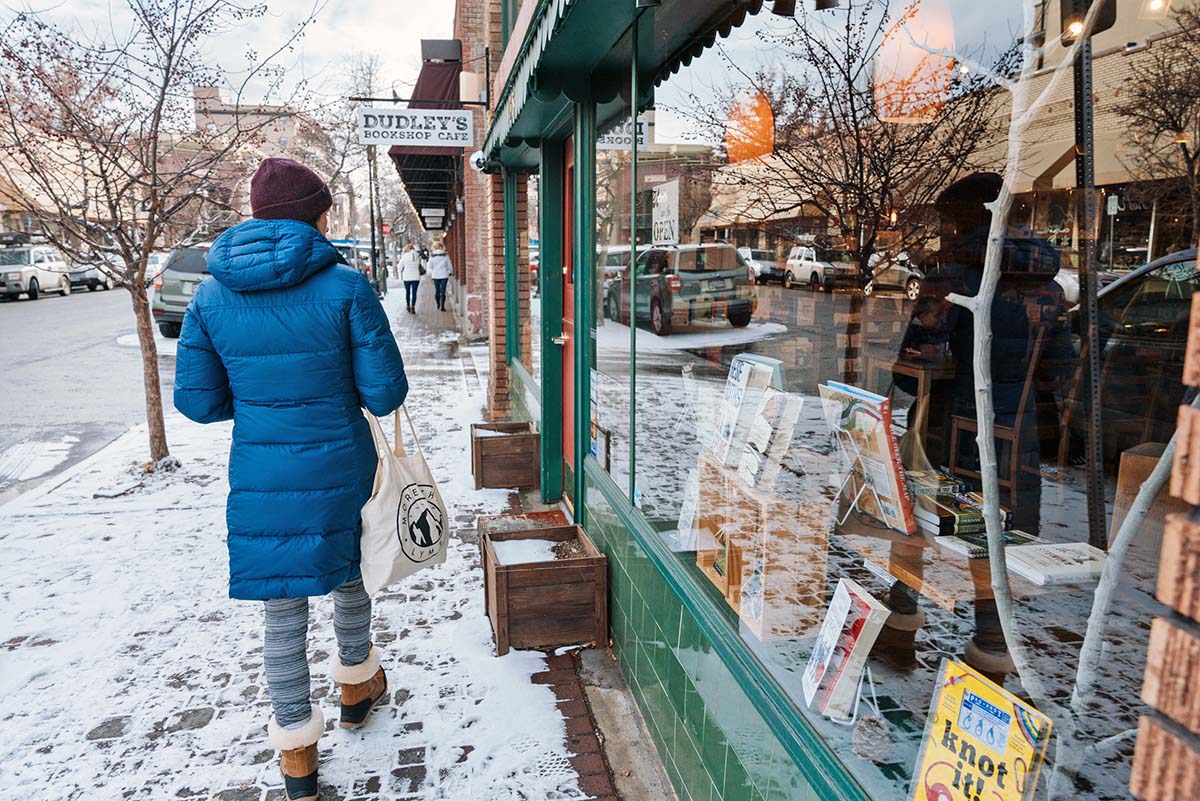
This is the industry's most popular down jacket category thanks to its versatility. We love lightweight options for everything from daily wear to easier adventures to winter sports. This category encompasses most down sweaters, and these lightweight pieces are great either on their own or as a midlayer in a more comprehensive layering setup. Another bonus is that lightweight options usually have more features and better durability than ultralight models while remaining less bulky and cumbersome than mid- or heavyweight contenders. The ideal temperature for lightweight jackets will depend on how you are layering and what you're doing, but we feel they are best in the 35- to 50-degree Fahrenheit range (we discuss this more in “Our Estimated Temperature Scale” below). Some of our favorite examples in this category are the Patagonia Down Sweater, Norrøna Falketind Down750, and Decathlon Simond MT100.
.jpg)
Ultralight
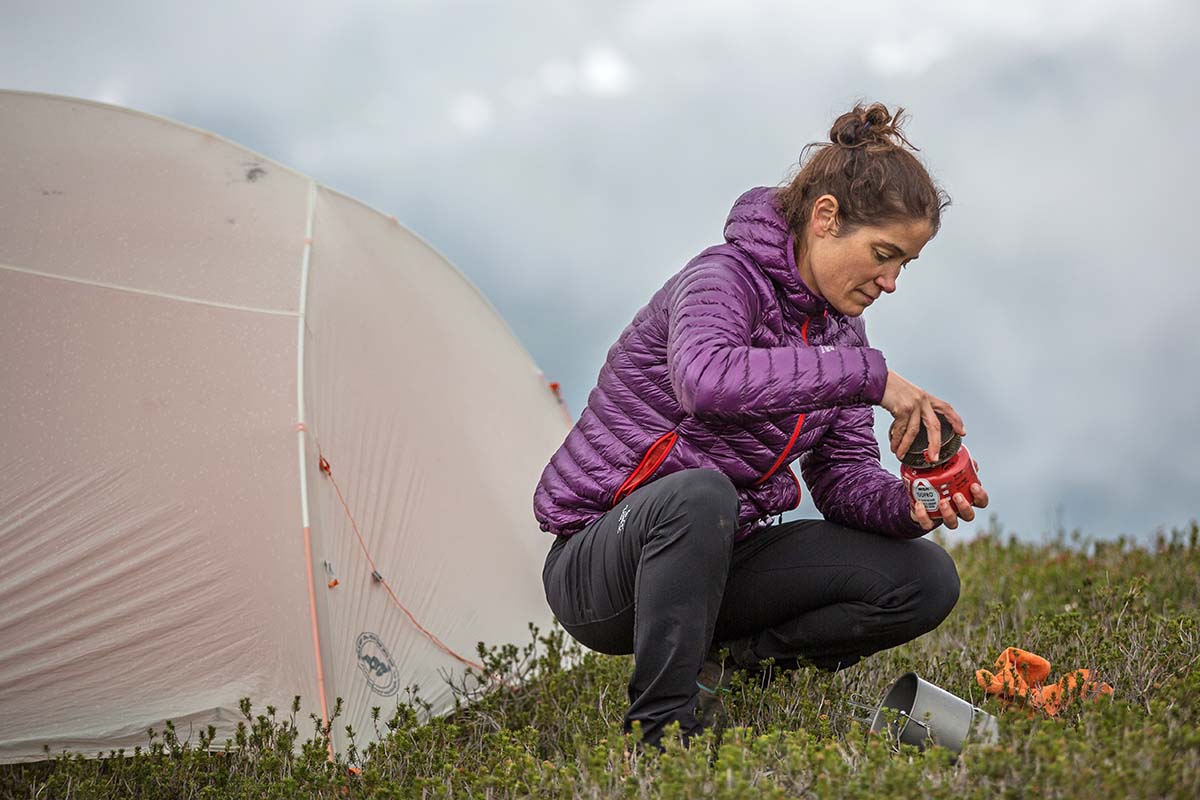
If you're looking for something targeted and purpose-built for backpacking, backcountry skiing, climbing, or other weight-conscious activities, then an ultralight down jacket is not to be missed. These jackets often have similar fill weights to lightweight options but can shave ounces thanks to premium down, minimal features, and thinner shell fabrics. While we often see jackets in this category like the Mountain Hardwear Ghost Whisperer Hoody or Rab Mythic Alpine Light worn around town, this isn't something we'd recommend due to their minimalist and more fragile designs. We like to reserve these high performers for fast-and-light pursuits, where every ounce counts.
Midweight and Heavyweight
If you know you need something significantly warmer than the above categories, consider a mid- or heavyweight jacket. Designed for more serious winter conditions, jackets in this sector will have fill weights of 6 to 7 ounces or more. These options are also much puffier, so keep in mind that they won't pack down as compactly if space is a concern. Our lineup here has several options that fit in this designation (such as the Rab Neutrino Pro), but for more winter-specific options, check out our article on the best women's winter jackets.

Simply put, nothing beats the lofty and premium warmth that down provides. Down insulation functions so effectively because the loose clusters of feathers are great at trapping body heat. We’d love to have a temperature rating system to measure this warmth, but unlike sleeping bags (which are given an official EN rating), down jackets are more like the Wild West. Below is information that should help you fill in the gaps.

Fill Power
The quality of down is measured by fill power (700-fill, 800-fill, etc.); the higher the fill power, the better the down. This number (also known as loft) denotes how much space one ounce of down feathers takes up in a cylindrical tube. The more fill power or loft in a garment, the more body heat it can trap and, subsequently, the warmer you will be. To get the same level of warmth from lower-fill-power down, you need to use more of it, which adds bulk and weight to the final product.
550- to 650-fill down is what you can expect in most entry- and mid-level down jackets and is just fine for daily use, though it's not the level you want for higher performance. Premium down will be 800-fill or above, and it's what you'll find in the most technical jackets from brands like Patagonia, Arc'teryx, and Mountain Hardwear. If you go for this level, you can expect the best that down has to offer: A high level of warmth in a lightweight and ultra-compressible package. Some cottage brands like Feathered Friends even use 900-fill down or higher, though this is pretty rare.
.jpg)
Fill Weight
You hear a lot about fill power, but fill weight is just as important—if not more so—when it comes to the actual warmth of a jacket. Fill weight is the amount of down stuffed into your garment, measured in ounces. If you have one jacket with 3 ounces of 800-fill down and another with 6 ounces, the jacket with more physical down will be warmer. By how much? We would guess the jacket with 3 ounces more down will be about 10 to 20 degrees Fahrenheit warmer. Down with a lower fill power will be less warm per ounce, so to retain a similar level of warmth, you would need a higher fill weight. We've noticed that fill weight gets a lot less press than fill power, adding to confusion for shoppers who only know to look at the fill power. It's not uncommon for manufacturers not to provide fill weight, and we've definitely had to call and email to track down this information (check out our article on Down Fill and Insulation Explained for more info on this topic).
.jpeg)
Our Estimated Temperature Scale
As mentioned above, there is an official EN rating (superseded by the new ISO standard) for sleeping bags, but nothing comparable for jackets—hence the difficulty in pinpointing exact temperature ranges for comfort at varying temperatures. A lot of things play into this, including fit, other layers you are wearing, level of exertion, circulation, personal metabolism, and wind/weather. That said, we've found that ultralight and lightweight jackets, which generally have about 2 to 4 ounces of down, can provide adequate warmth for conditions in the 35- to 60-degree Fahrenheit range. A baselayer can add on another 5 to 15 degrees, depending on its quality and thickness. For this reason, UL and lightweight jackets are ideal for 3-season high-altitude use and all but the coldest days in most U.S. cities.
When it gets truly cold (below freezing), it's time to step up to a mid- or heavyweight down jacket. Look for a fill weight of at least 4 ounces, though 5 to 6 ounces and above is probably ideal. The heavyweight Rab Neutrino Pro and Patagonia Down With It Parka have 7 and 8.3 ounces of down, respectively, and are great for truly frigid temps. If you'll be at high altitude or in the bitter cold, look for something even heavier, like the Arc’teryx Cerium SV Hoody (the "severe weather" version of the regular Cerium Hoody we feature above).
.jpg)
For uses like backpacking, climbing, mountaineering, ski touring—or whenever you have to lug around your own gear—the total weight of your down jacket should play a significant role in your buying decision. Jackets like the Rab Mythic Alpine Light (8 oz.) and Mountain Hardwear Ghost Whisperer (8.5 oz.) weigh very little for their warmth, and they will compress down extremely small in your pack. However, they also cost considerably more than a typical, casual down sweater. On the other hand, if you need a layer for around-town and occasional outdoor use, like downhill skiing, you'll be completely fine with a somewhat heavier, more affordable build like the 1-pound-3.4-ounce Outdoor Research Coldfront.
.jpg)
“Ultralight” is a buzzword of sorts that you will inevitably run into when shopping for a down jacket, and it’s worth noting that there aren’t hard-and-fast rules as to what qualifies. We keep a close eye on the ratio of fill weight to total weight to see what lengths the manufacturer went to trim weight (the shell denier is a good hint too, and more on that below). At the extreme end of the spectrum is Mountain Hardwear’s Ghost Whisperer UL (see our in-depth review here), which packs 1.9 ounces of down inside a superlight 6.2-ounce package. When gear companies really prioritize cutting weight, you’ll see changes to zippers, a trim fit, and a lack of pockets. Some even opt for a pullover style to cut out half of the zipper. No matter what the manufacturer names a jacket, keep a close eye on fill weight and total weight to make your own determination.
.jpg)
Down enthusiasts love its compressibility for good reason. An ultralight jacket like the Arc'teryx Cerium Hoody can be stuffed into its own pocket and end up much smaller than a Nalgene bottle. The tiny packed size means you have little reason to leave it behind and can fit it easily into either a daypack or an overnight backpacking pack.
Keep in mind that the higher the fill power, the more easily your jacket will compress. This is noticeable when you get into premium levels of down (800-fill and above), which pack down to seemingly impossible sizes yet bounce back after only a few minutes out of the bag (as long as you don’t store it compressed for too long). Fabric thickness also plays an important role, and lower-denier fabrics logically pack down smaller. Along with warmth-to-weight, compressibility is an area where down dominates over the vast majority of synthetic-insulated jackets.
.jpg)
As the casing that holds the all-important down, a jacket’s shell fabric is a crucial component to consider. The thickness of a jacket’s outer fabric is listed in denier (D), which is a measurement of the weight of a thread. The lower the denier, the thinner the fabric. Thin shells are less durable and more susceptible to tears or punctures, but they’re also lighter-weight. That said, almost all of the jackets on this list are made with reasonably lightweight shell fabrics. Thin 10-denier shells are found on ultralight options like the Rab Mythic Alpine Light and Mountain Hardwear Ghost Whisperer. On the other hand, options like the Patagonia Down With It Parka offer a robust 50-denier shell. 10 denier is fairly standard for ultralight pieces, and a more substantial 20 denier is what you’ll find most often in an average down sweater. Don’t underestimate the impact of denier: Even a difference of 10 to 20 denier can significantly affect the jacket's total weight and potential lifespan.
.jpg)
Other than denier, there are a few other factors that impact the overall durability of your jacket’s shell. First, a fabric with stretch, like the Mountain Hardwear Stretchdown, will have much more give, meaning it will stretch under pressure rather than rip. Very few down jackets are made with stretchy shell fabrics, but we like Mountain Hardwear's innovations in this area. Another consideration is the material. For example, we find the difference between Pertex Quantum Pro and regular Pertex Quantum to be palpable (the former is much more durable). Finally, some jackets will use higher-denier fabrics in high-use areas such as the sleeves and shoulders, which can make a huge difference. To summarize: If durability is one of your top priorities, you’ll want to dig a little deeper than the initial denier spec.
.jpg)
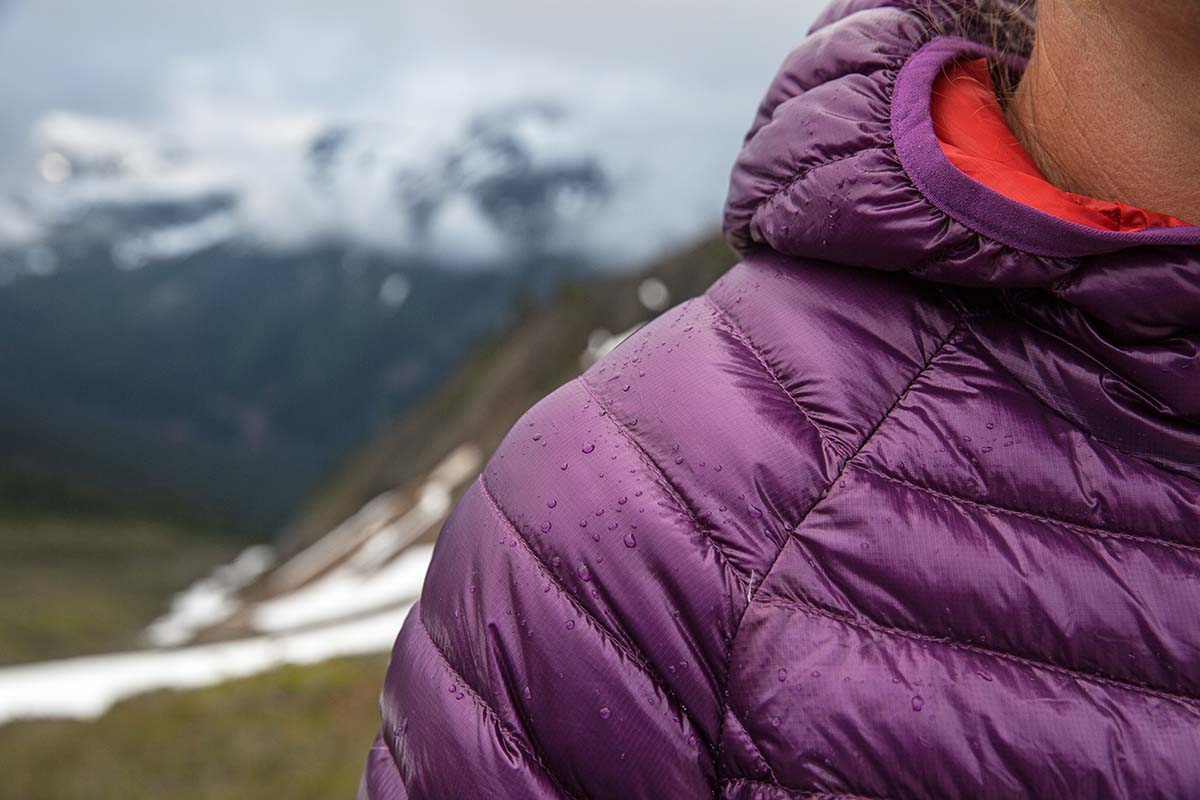
Unfortunately, down feathers lose much of their insulating ability when wet, turning into a clumpy, soggy mess. This makes them a serious liability in wet conditions or if you’re sweating heavily, which is why some folks prefer synthetic jackets, which continue to insulate when wet. However, gear manufacturers have found a way to treat down to make it more water-resistant. They do this by adding a polymer to the down before filling the jacket, so it resists water better and you don’t have to worry as much about light precipitation. Even though hydrophobic down still doesn’t match the wet-weather performance of synthetics, it can be an extra line of defense. If you’re headed out in a wet area like the Pacific Northwest or New Zealand, a jacket with hydrophobic down (along with a waterproof shell) is a smart choice.
Another way gear manufacturers fight moisture is by incorporating synthetic fill in moisture-prone areas. Several of the jackets on our list above feature this type of “hybrid” construction, among them the Arc’teryx Cerium, Rab Mythic Alpine Light, Himali Accelerator, and Outdoor Research Coldfront. Compared to down, synthetic insulation is less warm, heavier, and less compressible, but doesn’t lose its loft when wet. This means it will continue insulating even when soaked. Given their more specialized builds, you often have to pay a premium for jackets that use both types of fill (the Coldfront bucks this trend and is a great value), but the added wet-weather assurance could be well worth it depending on your objectives. And if you’re debating opting for a jacket that’s insulated exclusively with synthetic fill, we cover a couple of our favorites in the section on synthetic jackets below.

A final—and very common—line of defense against moisture is a DWR (short for durable water-repellent) treatment on the outside of the jacket. This coating causes water to bead up and roll off the shell fabric rather than soaking through. But while a DWR finish provides a nice line of defense for short bouts of light rain, it's easily overwhelmed in sustained moisture. For full protection against wet weather, you'll want a rain jacket or hardshell over your down jacket.
Fit is jacket-specific, but there are two main considerations here. First, casual jackets and down sweaters generally have a more casual fit than ultralight or performance jackets, including boxier torsos, arms, and hoods (when available). Second, fit varies significantly by brand. From our experience, Arc’teryx jackets like the Cerium Hoody have a slimmer fit and are a good match for athletic folks who demand mobility from their jackets (this can also be good for layering under a shell). Norrøna and Rab also err on the trimmer side, while brands like Outdoor Research and Mountain Hardwear often have more accommodating shapes that balance everyday comfort with performance.
.jpg)
You’ll also want to consider length when buying a down jacket. Simply put, a longer cut provides more coverage and warmth, though it does affect mobility. On the shorter end of the spectrum, many down sweaters and other lightweight pieces end right around the waist or hips. This is great for movement, but your legs remain uninsulated. A number of down parkas, like the Marmot Montreal, offer thigh-length coverage, providing a nice boost in warmth compared to down sweaters. And models like the Patagonia Down With It Parka go all the way to the knees, which is excellent for staying cozy when it's really frigid.

Many down jackets on this list are offered in hooded and non-hooded versions. The non-hooded version is slightly cheaper and lighter, but you don’t get the extra warmth, coverage, or comfort of a hood. For casual use or as a midlayer for skiing, many go without the hood and carry a separate beanie instead. For uses like backpacking and climbing, the opposite is the case: Most pay extra for a hood and don’t regret it. Ultimately, it all comes down to intended use and how you plan to layer for your preferred activities. For a deeper dive into the topic, see our article: Does Your Down Jacket Need a Hood?
.jpg)
Our impact on the environment has never been of greater concern, and it’s nice to see gear companies step it up with more sustainable practices. One measure we’re seeing more and more of is the use of responsibly sourced down (look for an RDS certification or, in the case of Patagonia, Advanced Global Traceable Down). In short, this translates to greater transparency into where the down comes from and ensures the birds were treated humanely and not subjected to unnecessary harm, such as force-feeding or live plucking. In addition, the use of recycled fabrics has grown substantially over the past few years, with companies like Patagonia, REI Co-op, and Mountain Hardwear prioritizing them.
.jpg)
A final trend to touch on is the use of PFAS-free durable water-repellent (DWR) finishes. We detail the benefits of DWR above, but regarding sustainability, traditional DWRs use perfluorinated compounds (PFAS), chemicals linked to a range of environmental and health issues. The good news is that many brands are shifting to PFAS-free DWR, as states like California and New York have banned the sale of new textiles containing intentionally added PFAS.
.jpg)
There is a lot to be said for synthetic insulated jackets, which insulate better than down when wet, are more breathable, and generally cost considerably less. For insulation that we wear during activity (such as while climbing or backcountry skiing), we’ll reach for synthetic over down nine times out of 10. However, when it comes to particularly cold weather or weight- and space-conscious pursuits (when you’re carrying your jacket in your pack), down is the gold standard.
We’ve tested a number of synthetic jackets like the Arc’teryx Atom and Patagonia Micro Puff, both of which are very comfortable and reasonably light. However, the warmth-to-weight and packability just aren’t the same as down options, and there’s simply no substitute for the comfort that lofty plumage brings. Optimally, you would have both, but if you’re only in the market for a single jacket, there’s simply no better insulator than down. For a more detailed explanation of this topic, see our article on down vs. synthetic insulation.
Back to Women's Down Jacket Picks Back to Women's Down Jacket Comparison Table


_0.jpg?h=fbc67360&itok=9jCMZqJc)
.jpg?h=fbc67360&itok=MlO21D2b)

.jpg?h=fbc67360&itok=ZxkLZwnx)
.jpg?h=fbc67360&itok=hflPKImt)
 s.jpg?h=fbc67360&itok=ovyj8HOv)
.jpg?h=fbc67360&itok=1-YoXtmw)
