Photo Credit
Synthetic insulation might not offer the warmth-to-weight ratio of down, but it resists moisture, breathes better, and is more cost-efficient. With both jacket types in our gear closet, we consistently reach for synthetics for performance use, including alpine climbing, ski touring, and wet-weather hiking and backpacking. We've been testing these capable pieces since 2015, and currently, the Men's Arc'teryx Atom Hoody and Women's Patagonia Nano Puff Hoody are our top picks. For more background information, see our comparison table and buying advice. Of note: This article includes picks for both men and women, but we’ve also written a dedicated round-up on the best women’s synthetic jackets.
Editor's note: We updated this guide on December 26, 2025, to remove several dated products, add the Patagonia Hi-Loft Nano Puff Hoody and Beringia Lightstream Full-Zip Hoody, make the guide more unisex overall, include a tested and dismissed section, include photos from recent testing trips, and comb through the guide to ensure all information was current at the time of publishing.
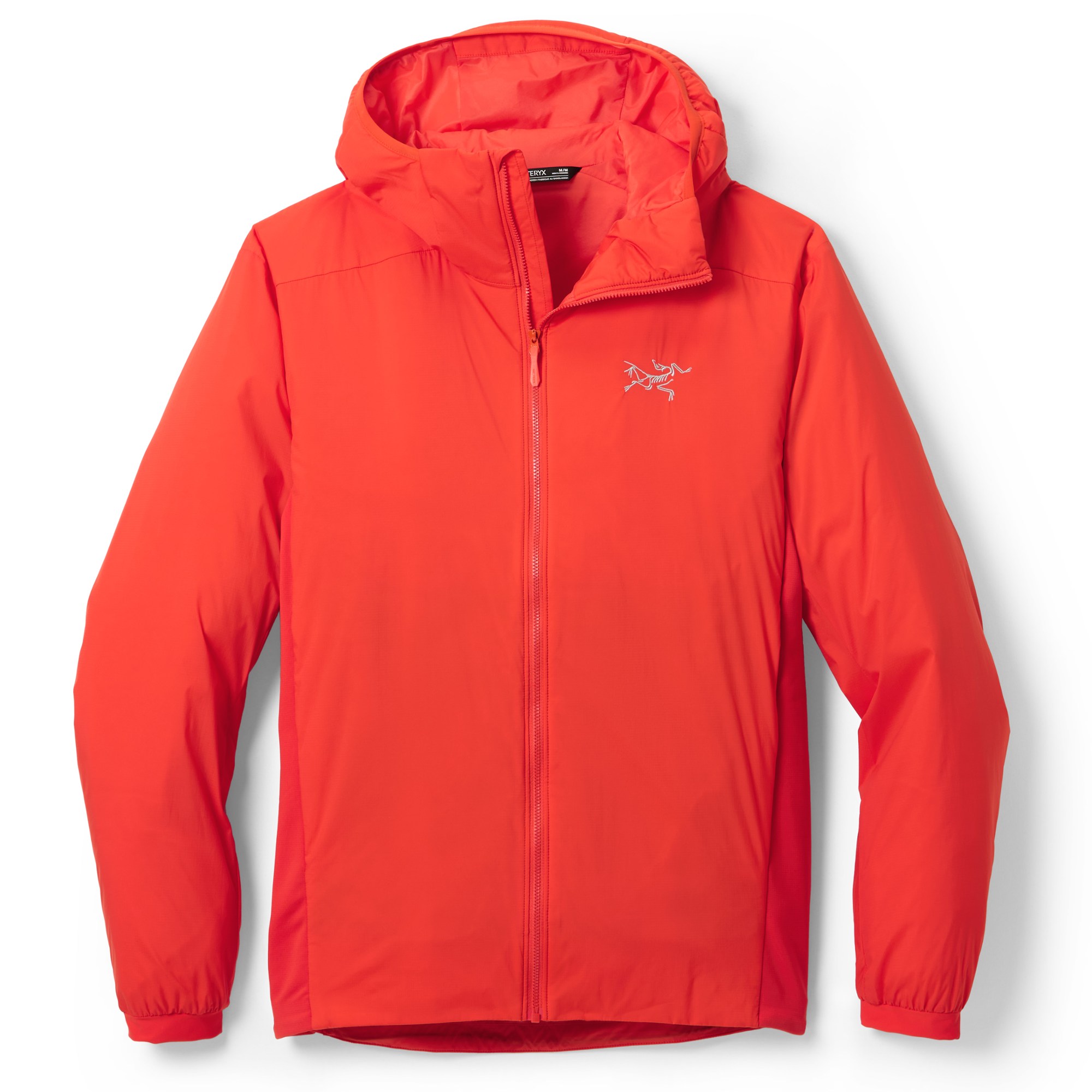 Weight: 12.5 oz. (men's), 11.3 oz. (women's)
Insulation: Coreloft Compact (60g)
What we like: Great mix of warmth, mobility, and comfort.
What we don’t: Breathability could be better.
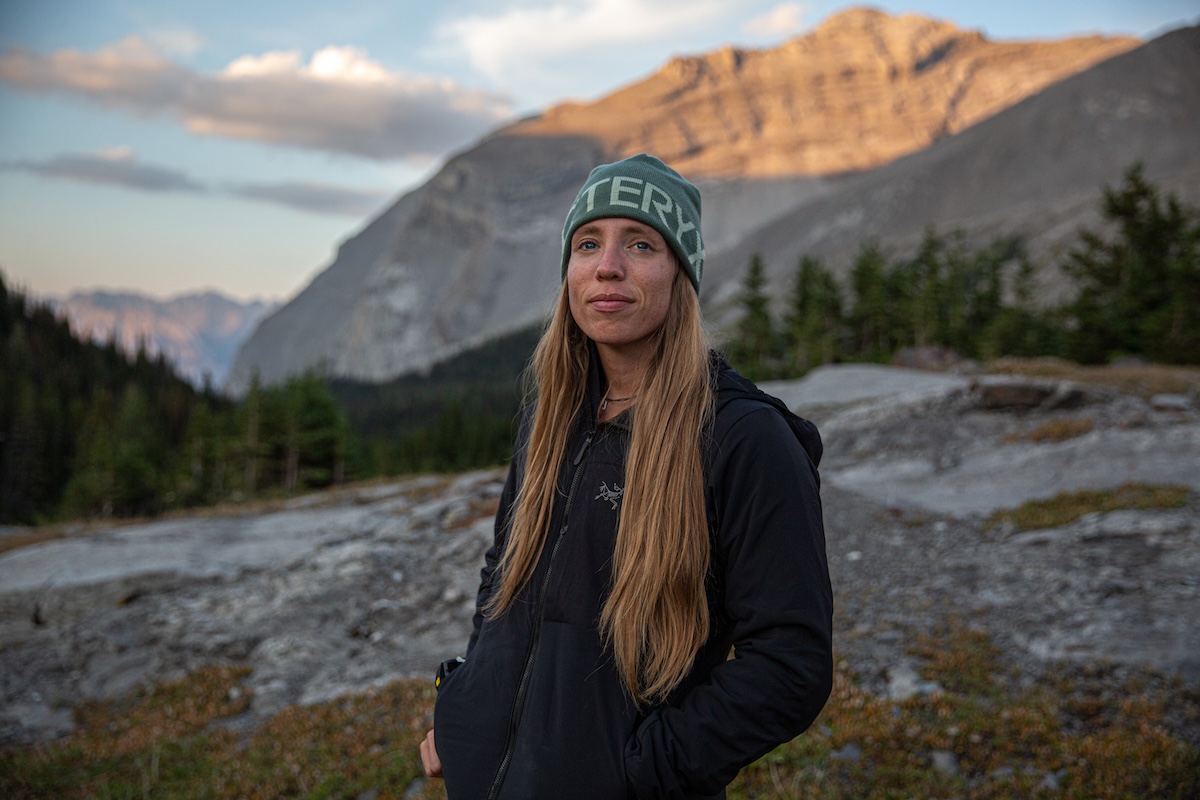
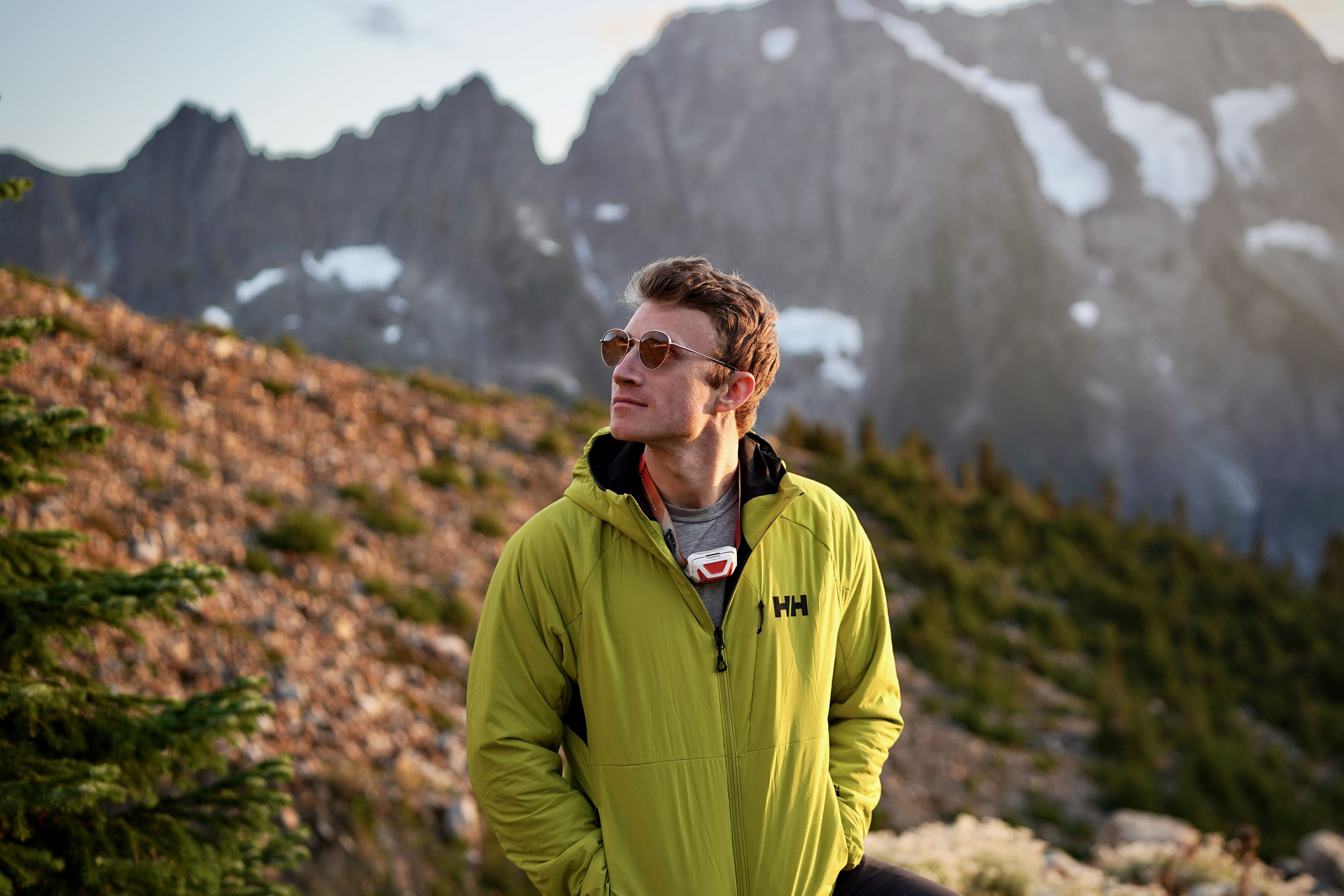
Arc’teryx makes some of the top jackets and shells, and the Atom Hoody (previously called the Atom LT Hoody) is perhaps their most well-known model. This synthetic jacket absolutely nails the essentials: It delivers impressive warmth for the weight, supreme comfort, a useful feature set—including an adjustable, insulated hood and stretch-knit cuffs—and a sleek design. Unlike Patagonia's Nano-Air, which has a softer shell and interior fabric, the Atom is tough and shows less wear over time. And with a just-right fit and articulated patterning that boosts mobility, it works great as both an outer layer and a midlayer.
We’ve worn the Atom during all kinds of outdoor activities, from hiking and biking to cross-country skiing, so how does it compare? The Atom isn’t as breathable as jackets like The North Face Casaval Hybrid, but the Coreloft Compact insulation and stretchy fleece side panels still work well for active use. On the other hand, it can't match the light weight and packability of the down-mimicking pieces here, but we still don't hesitate to bring it along on most backcountry outings. Most of all, we love the versatility: The Atom is no slouch when it comes to performance, but it’s also one of the best options on this list for everyday wear.
Read more: Arc'teryx Atom Hoody review (men's version)
See the Men's Arc'teryx Atom Hoody See the Women's Arc'teryx Atom Hoody
.jpg)
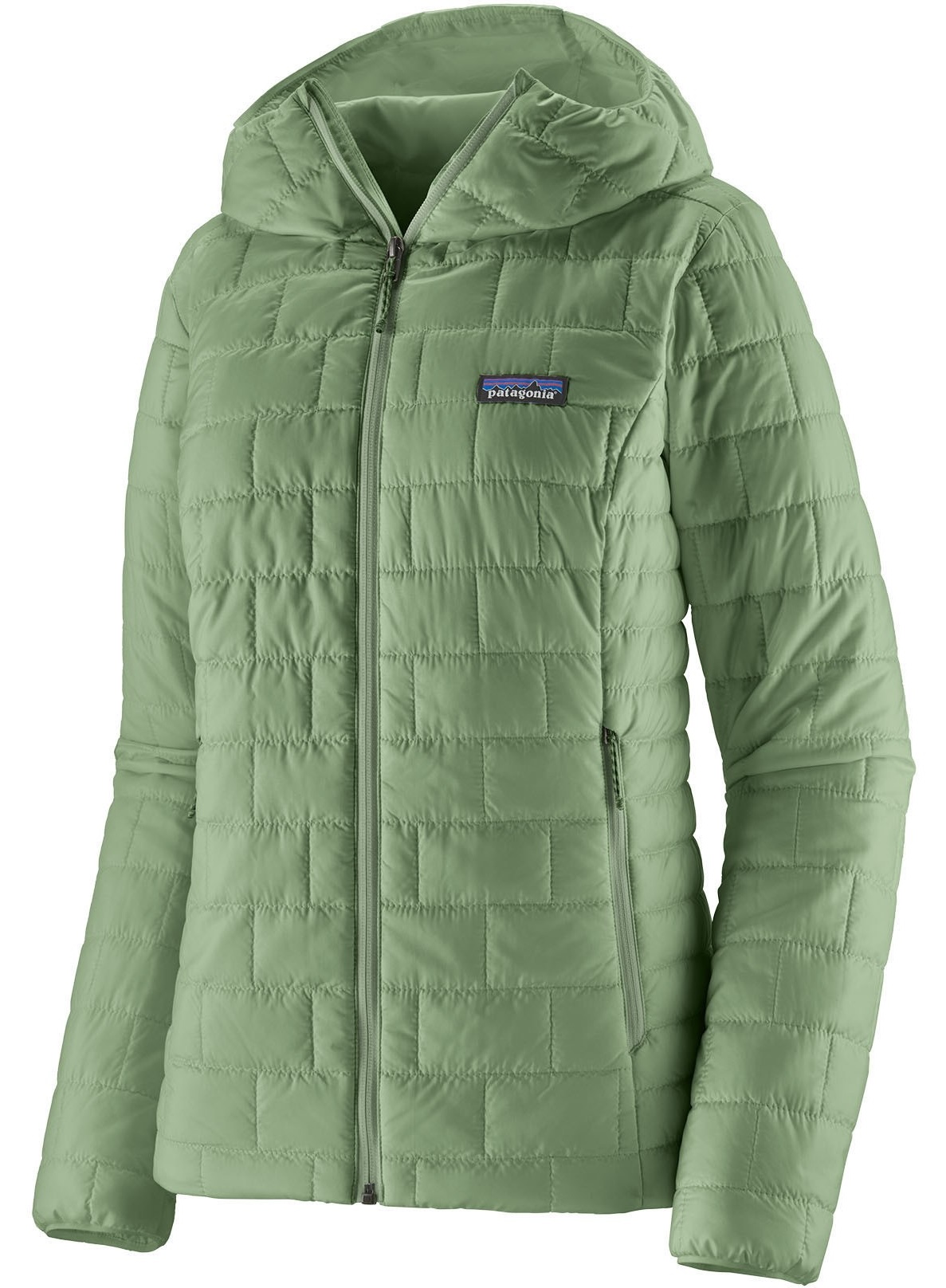 Weight: 12.3 oz. (women's), 14.1 oz. (men's)
Insulation: PrimaLoft Gold Eco (60g)
What we like: A timeless classic for everyday and casual backcountry use.
What we don’t: Not particularly breathable or weather-resistant.
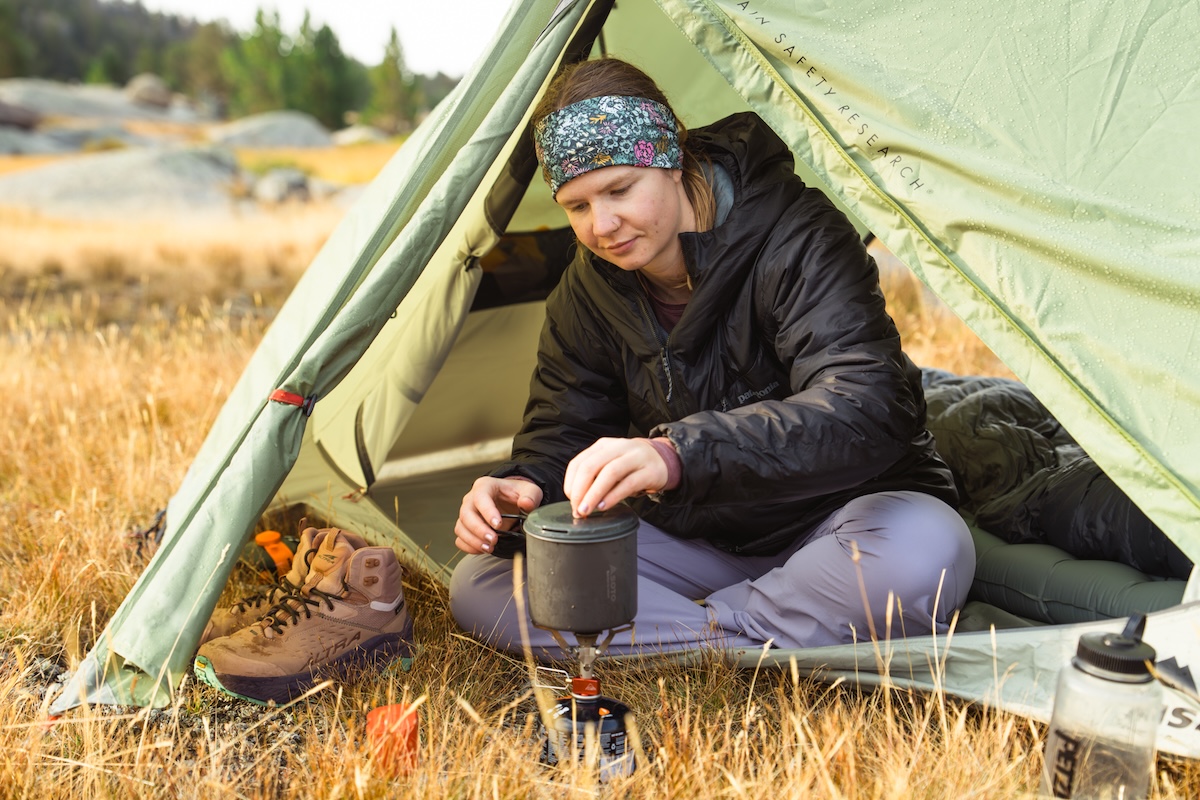
A true staple in the synthetic-insulation world, the Patagonia Nano Puff Hoody remains an easy pick for anyone who wants one jacket that can slide seamlessly between town wear and trail duty. It carries the clean, glossy aesthetic of a lightweight down jacket, but its PrimaLoft Gold Eco fill (wrapped in a shell made from recycled fishing nets) adds the reliability of synthetic insulation—steady warmth even when damp, solid breathability, and a friendlier price. Add in the basics like two handwarmer pockets, an interior chest pocket that doubles as a stuff sack, and both hooded and non-hooded versions, and you get a simple, functional everyday layer with just the right amount of technical polish. We most recently took this jacket to Alaska and Canada for testing, where it endured everything from chilly, wet kayaking to a late-summer backpacking trip in the alpine.
Patagonia offers a deep lineup of synthetic pieces, and the Nano Puff is undeniably the crowd favorite, though it isn’t the most specialized option in their quiver. If you’re heading out for high-output missions, the Nano-Air or Nano-Air Ultralight are much better suited with their stretchy shells and more breathable builds. And when weight and packability matter most—think alpine missions or fast-and-light pursuits—the Micro Puff Hoody stands out as the more performance-oriented pick. Still, for those who split their time between daily wear and the occasional hiking, skiing, or climbing outing, the Nano Puff hits a sweet spot of warmth, versatility, and value.
Read more: Patagonia Nano Puff Hoody review (men's version)
See the Women's Patagonia Nano Puff Hoody See the Men's Patagonia Nano Puff Hoody
Weight: 1 lb. 8.0 oz. (men's and women's)
Insulation: PrimaLoft Gold PURE (40g)
What we like: Hybrid construction effectively balances breathability and warmth; eye-catching colorways and flattering fit.
What we don’t: Minimally insulated; cheaper options are available.
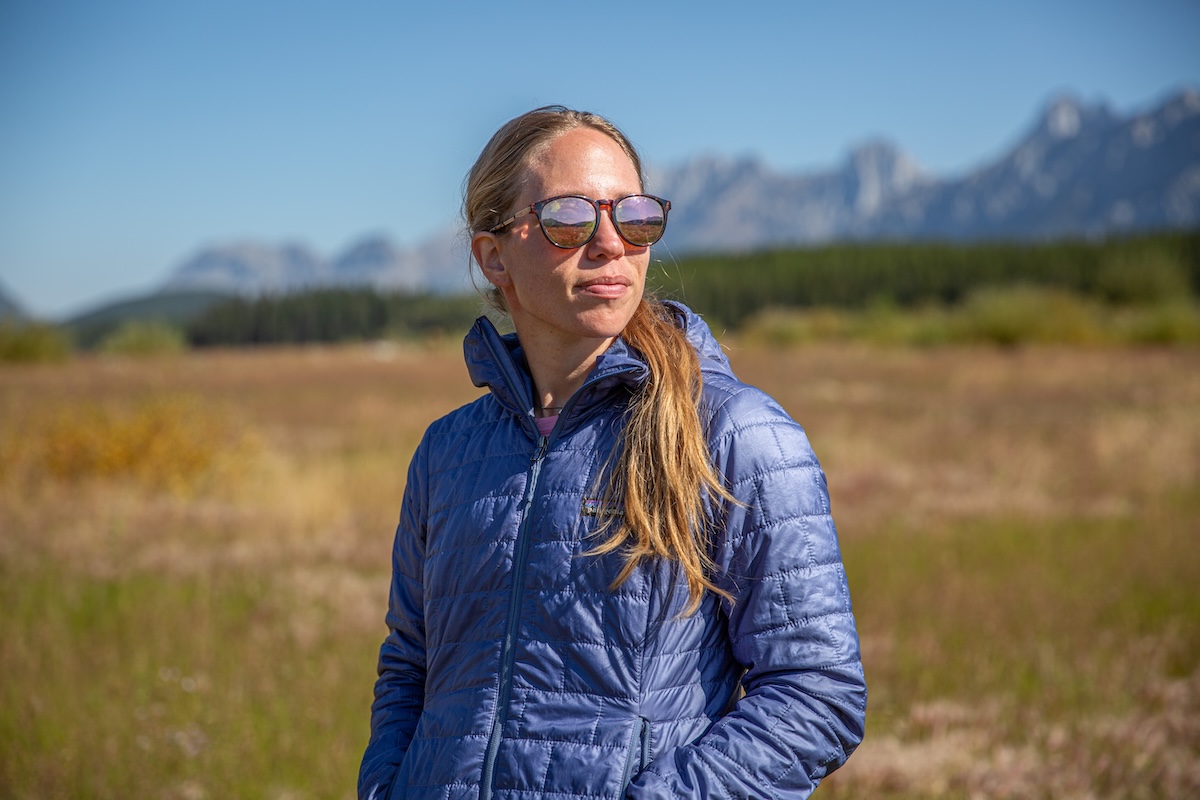
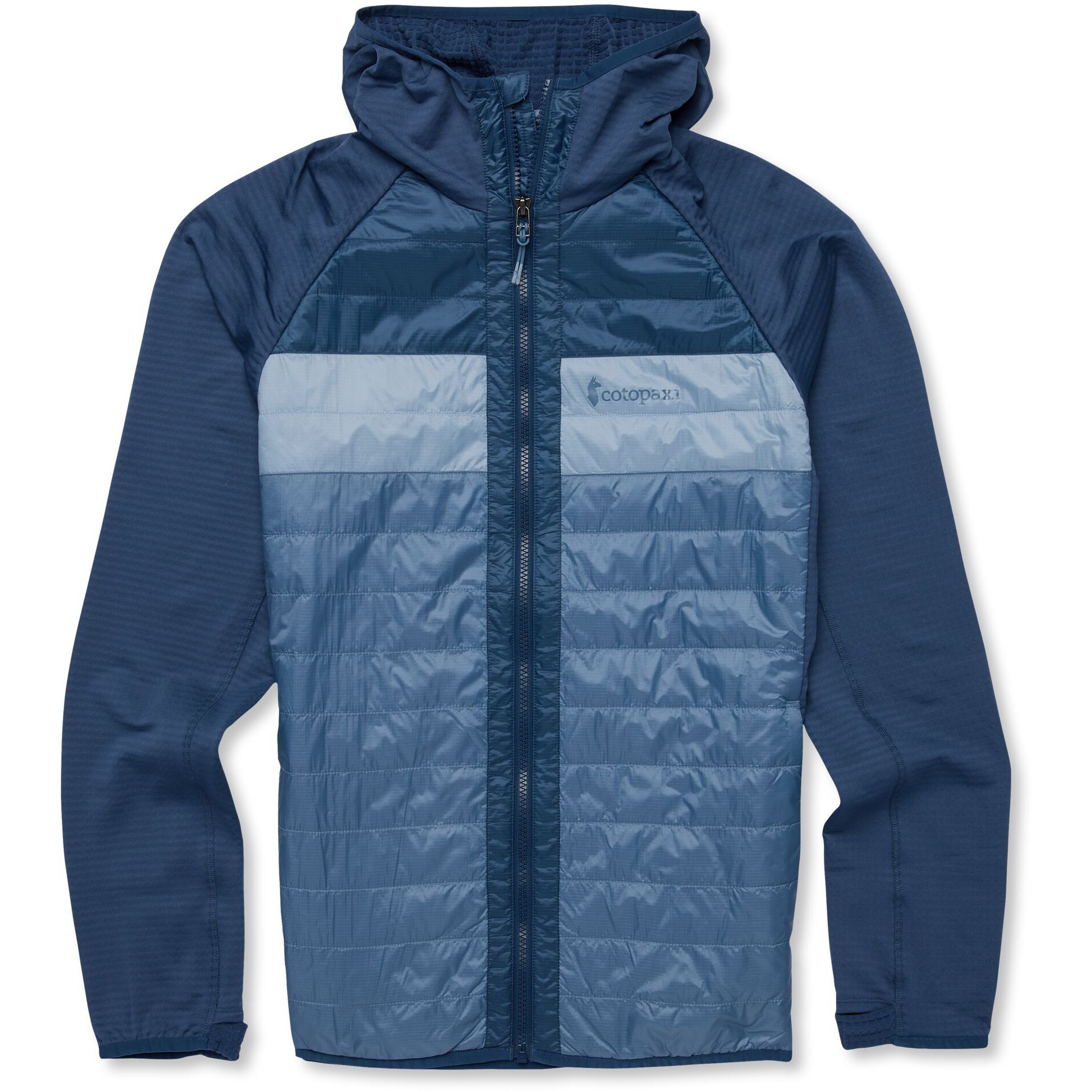
Salt Lake City–based Cotopaxi has earned a devoted following with its eco-minded approach and unmistakably bold aesthetics, and the Capa Hybrid embodies that formula perfectly. It pairs a recycled shell with recycled insulation, while the signature color blocking and polished tailoring make it equally at home on backwoods trails or downtown sidewalks. The “hybrid” design stems from its strategic build: 40-gram insulation wraps the torso for core warmth, while the knit sleeves and side panels boost freedom of movement and airflow during more dynamic outings. One of our testers even wore the Capa Hybrid while paramotor gliding last fall and was impressed by the warmth it provided at roughly 1,000 feet. Rounding out the package are thoughtful extras like a soft interior, convenient thumb loops, a trim yet flexible fit, and a sleek scuba-style hood that sits securely.
As with many Cotopaxi layers we’ve used, the Capa Hybrid shines for those who want a jacket that transitions smoothly between everyday use and active outdoor pursuits. Its main limitation is baked into its name: The uninsulated sleeves and side panels mean it’s not the warmest choice when temps dip, and for frigid outings, we prefer jackets with heavier (60g or more) fill throughout. That said, our Tennessee-based tester wore the Capa comfortably into the 40s Fahrenheit while on the move and relied on it as a midlayer for colder backpacking nights without complaint. Price is another consideration—budget seekers may prefer something like REI’s Co-op Trailmade Insulated Hoodie, which costs less while offering a beefier 80 grams of insulation (we’re currently evaluating this piece). All told, the Capa Hybrid remains a cozy, great-looking, and well-designed jacket that, with the right layering, covers a surprisingly broad range of conditions.
See the Men's Cotopaxi Capa Hybrid Insulated Hooded See the Women's Cotopaxi Capa Hybrid
Weight: 1 lb 0.6 oz. (men's), 14.8 oz. (women's)
Insulation: Ventrix (60g + 40g)
What we like: Best-in-class breathability and durability.
What we don’t: A little heavy; air-permeable build sacrifices some warmth.
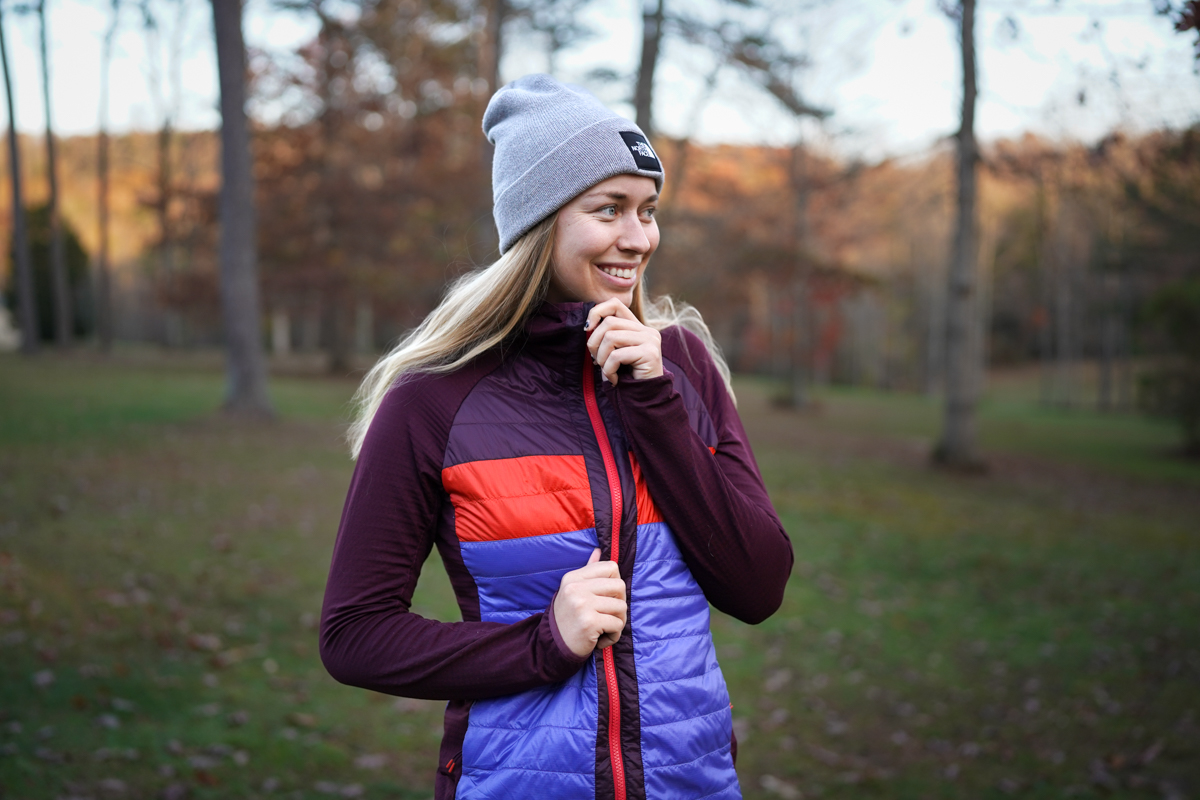
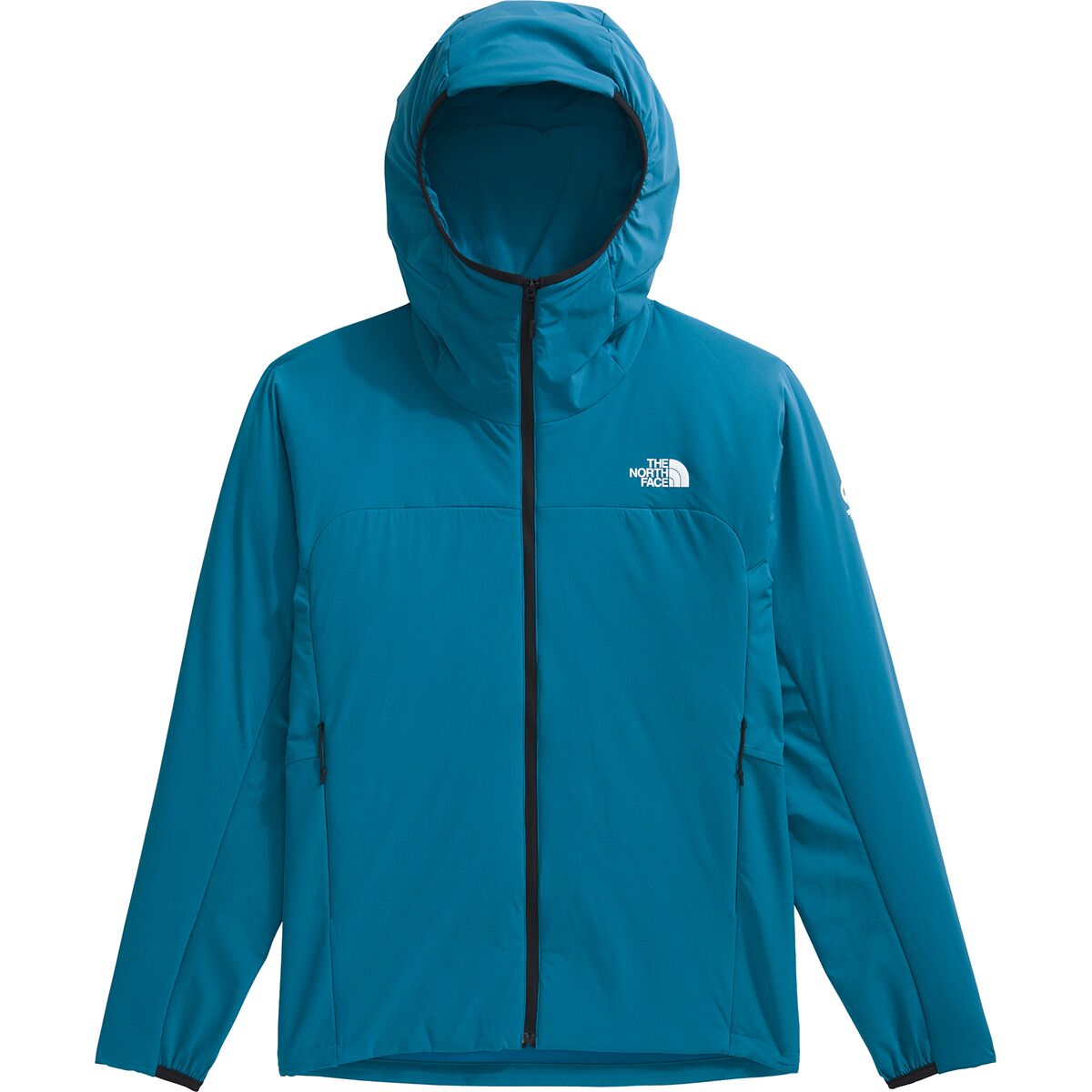
In the synthetic-versus-down-insulation, active insulation continues to shine for high-output pursuits, and The North Face’s Summit Series Casaval Hybrid Hoodie remains one of our favorite examples. The formula is familiar—60-gram Ventrix insulation up front (40g in the hood) paired with breathable, sweatshirt-like panels under the arms and along the hem—but the execution stands out. During recent testing in the Canadian Rockies, the Casaval proved impressively versatile: warm enough to take the edge off frosty, pre-sunrise starts, yet breathable enough that our tester was still comfortable while moving quickly in fluctuating temps. The mix of 40- and 75-denier fabrics remains one of the more durable builds in the category, and the hood’s single-pull adjustment held up even in gusty alpine winds. For everything from backcountry skiing to trail running and summer ridge scrambles, it’s one of the most capable “move fast, stay dry” layers we’ve worn. This was also our synthetic insulator of choice for a fast-paced mission on the North Cascades High Route.
Hybrid active insulators naturally sacrifice warmth in the name of airflow, and the Casaval is no exception—our tester often threw a shell over the top when stopped in cold wind, and found the jacket less ideal for sitting around camp. It’s also on the heavier end at just over a pound for the men’s version, and some may prefer more pockets or a lighter option. And while it sheds light drizzle with its non-PFC DWR, it will wet out in sustained rain (at which point you’ll want a shell). Still, the breathability is truly standout—our tester repeatedly remarked that they forgot they were even wearing an insulating layer—and the tough construction, thoughtful fit, and solid value make the Casaval Hybrid a reliable companion for full-day missions with steady exertion. It’s not a quiver-of-one midlayer, but for active mountain travel, it’s a winner.
Read more: The North Face Casaval Hybrid Hoodie review (women's version)
See the Men's TNF Casaval Hybrid Hoodie See the Women's TNF Casaval Hybrid Hoodie
.jpg)
Category: Performance
Weight: 12.7 oz. (women's), 14.6 oz. (men's)
Insulation: Coreloft Compact (80g)
What we like: A cozy, stretchy, and breathable jacket you won't want to take off.
What we don’t: Too warm for high-output use in mild conditions.
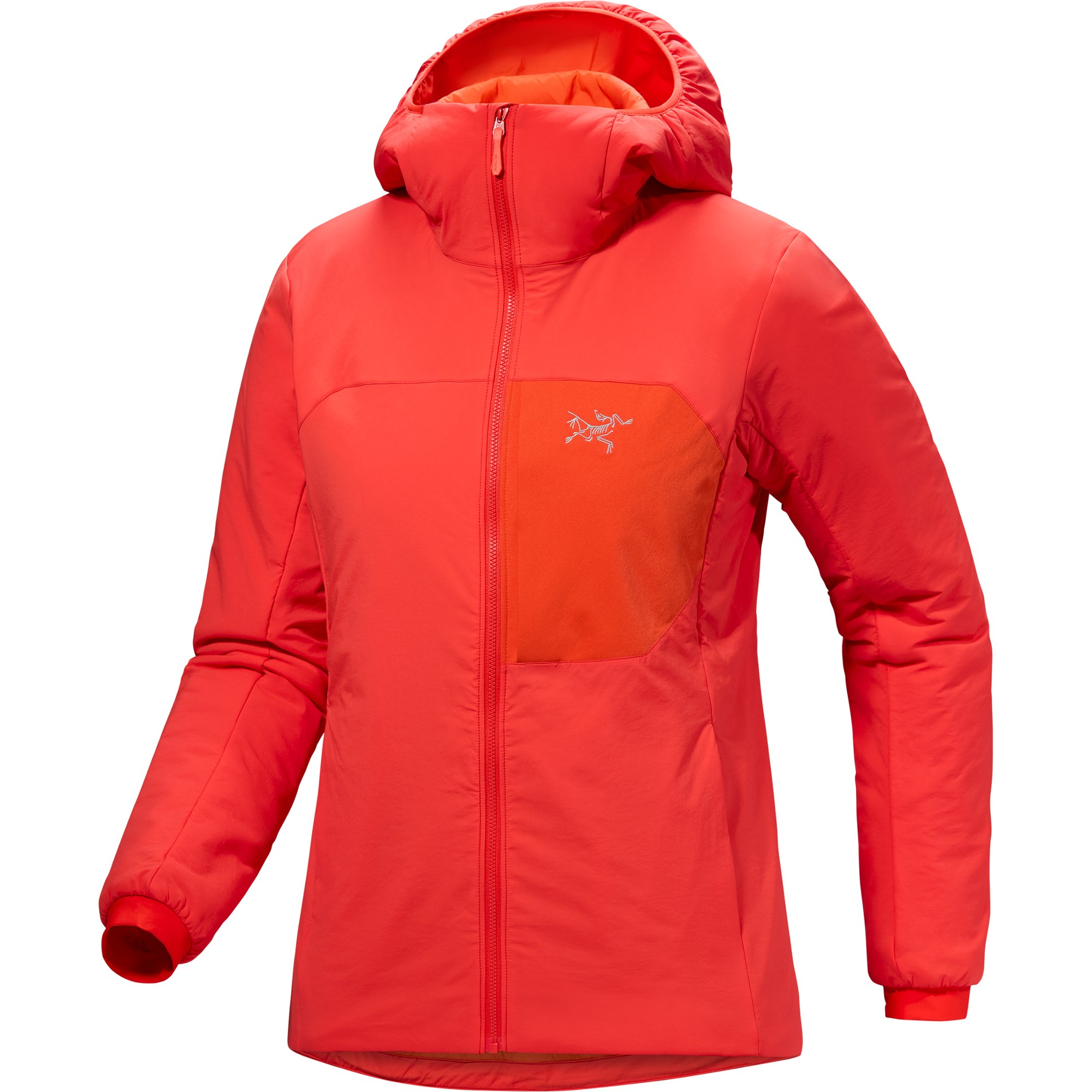
After a slew of rowdy, real-world tests, the Arc’teryx Proton Hoody surfaced as our favorite women's active insulator of the year. Unlike down-style synthetics such as Patagonia’s Nano Puff or Micro Puff—which use lightweight ripstop shells and emphasize warmth-to-weight—active insulators lean into stretch-woven fabrics and highly air-permeable insulation to keep you cool and mobile while working hard. They’re not the lightest layers out there, nor are they great at blocking wind, but they excel during high-output pursuits like ski touring, cross-country skiing, cold-weather trail runs, and brisk winter hikes. Arc’teryx’s Proton Hoody sits near the top of the field with its supple, stretchy build, breathable construction, and close-to-the-body fit that stays out of your way when you’re on the move.
True to its category, the Proton Hoody is one of those rare jackets you can pull on at the start of the day and forget about until you’re back at the car—and yes, it’s cozy enough that we’ve found ourselves wearing it indoors, too. The durable Fortius shell fabric is another highlight, shrugging off abrasions from skis, climbing hardware, ice tools, and gritty rock far better than many synthetic midlayers. The main caveat is temperature: the Proton can feel too warm during mild-weather outings or when you’re pushing your heart rate into the red. For those scenarios, we often reach for lighter designs. But when winter hits its stride, and you need a breathable, hardwearing midlayer for demanding days outside, the Proton Hoody remains a standout choice.
See the Women's Arc'teryx Proton Hoody See the Men's Arc'teryx Proton Hoody
Weight: 1 lb. 3.6 oz. (men's), 1 lb. 2.4 oz. (women's)
Insulation: PrimaLoft Gold Eco (133g & 40g)
What we like: Warm and impressively weatherproof.
What we don’t: Expensive and overkill for most.
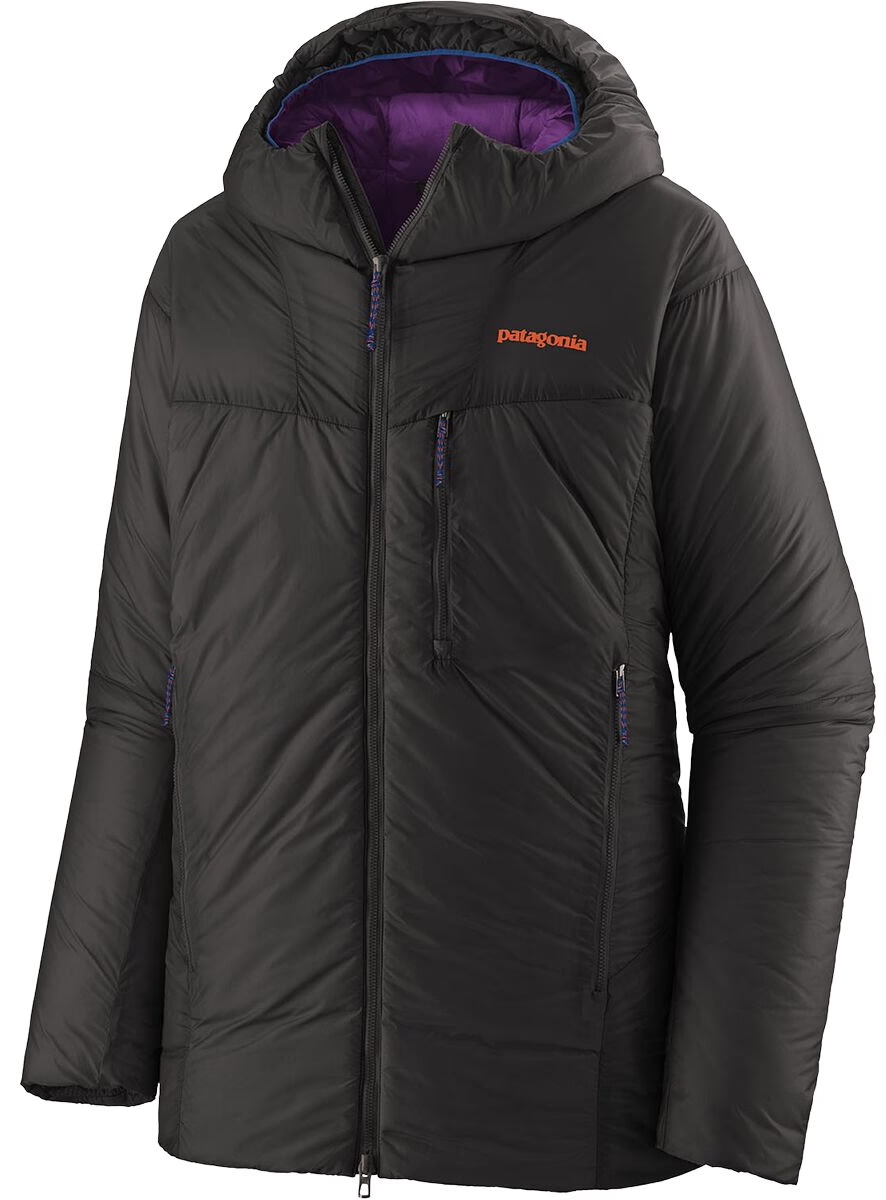
Synthetic already has a leg up over down in terms of weather resistance, but couple that with a highly water-repellent face fabric and hefty DWR coating, and you get an insulated jacket that can truly hold its own against the elements. The Patagonia DAS Parka earns a spot in our round-up for this reason, and it’s been a favorite among the winter climbers on our staff in particular. Its Pertex Quantum Pro fabric keeps the wet at bay, and the 133-gram PrimaLoft insulation (with additional lighter 40g added to the core) makes the DAS one of the most insulated jackets on this list (impressive given its 1 lb. 3.6 oz. weight). In fact, the DAS Parka is so warm that you won’t want to keep it on during any sort of movement, but it’s an ideal choice for cold belays, breaks while skiing, and other low-output activities.
It’s worth noting that we previously had Patagonia’s less insulated DAS Light Hoody ranked here, which used lighter PlumaFill insulation (65g) for added versatility in mild conditions. While considerably warmer, the DAS Parka is no slouch: Although thin, the 10-denier shell is surprisingly abrasion-resistant and has held up well to wear and tear, and the parka is impressively cozy and protective for its weight. It’s a steep investment, but for the right uses—think drippy alpine belays and blustery backcountry transitions—the DAS Parka is a true standout.
Read more: Patagonia DAS Parka review (women's version)
See the Men's Patagonia DAS Parka See the Women's Patagonia DAS Parka
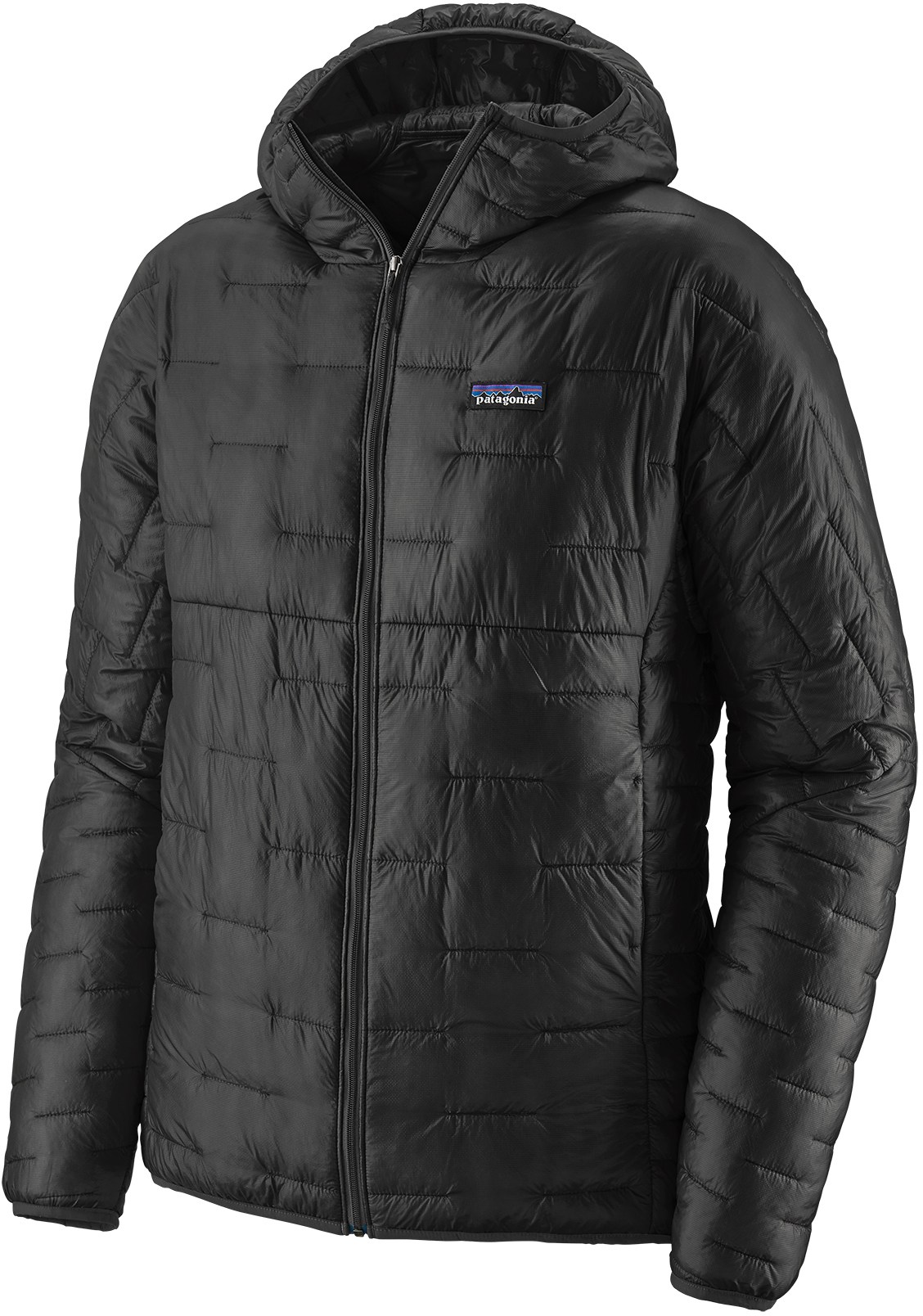 Weight: 10.5 oz. (men's), 9.0 oz. (women's)
Insulation: PlumaFill (65g)
What we like: Impressive warmth for the weight.
What we don’t: Not as weather-resistant as the DAS Parka.
Few synthetic jackets, if any, have received the same level of hoopla as the Micro Puff from Patagonia. As many brands have attempted, the jacket’s PlumaFill insulation aims to mimic the loftiness and warmth of down. Patagonia has done an excellent job here, and the Micro Puff lives up to its billing: It’s warm, light at just over 10 ounces, and compresses small for a synthetic, which makes it a nice companion for space-conscious activities like multi-pitch climbing and backcountry skiing. And with the most recent update, the jacket now features a more durable NetPlus shell (made with recycled fishing nets) and a longer, slightly trimmer fit that slides well under a hardshell.
The Micro Puff bears similarities to Patagonia’s DAS Light. Both jackets are stuffed with 65-gram PlumaFill insulation, feature 10-denier shells, and are highly packable. But the two pieces have different uses in our arsenal: While we love the DAS Light as an outer layer, the Micro Puff is the better midlayer thanks to its trimmer fit and increased breathability (it lacks the DAS Light’s Pertex Quantum shell). It also comes in a non-hooded version, which can be great when pairing the jacket with a hooded hardshell or rain jacket. On the other hand, the DAS Light is the more versatile design, with a more accommodating fit, a weather-resistant shell, a two-way zipper, and a helmet-compatible hood. But for those prioritizing weight savings above all else, the Micro Puff can’t be beat.
Read more: Patagonia Micro Puff review (women's version)
See the Men's Patagonia Micro Puff See the Women's Patagonia Micro Puff
.jpg)
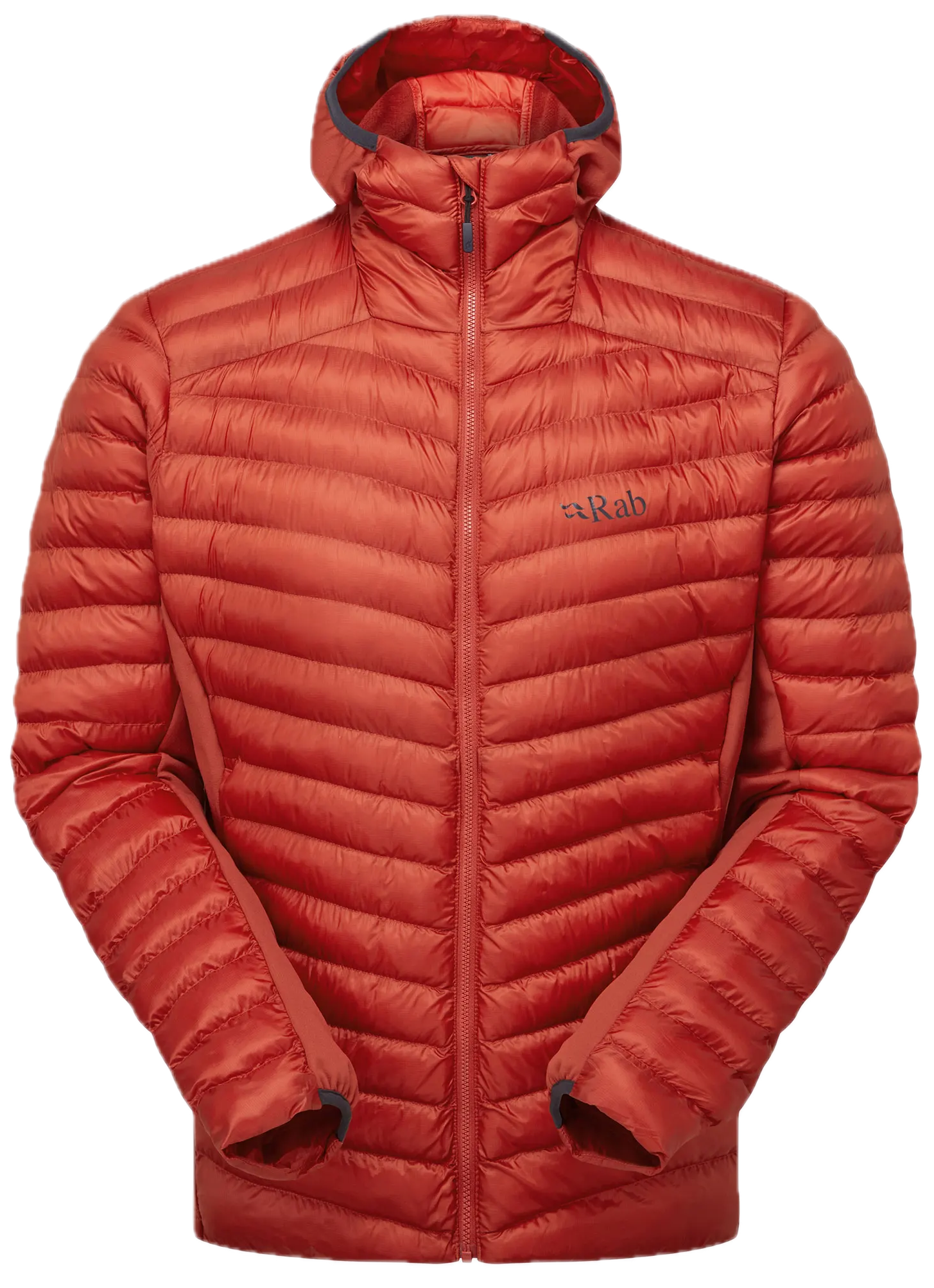
Weight: 15.7 oz. (men's), 13.4 oz. (women's)
Insulation: PrimaLoft Silver RISE (157g men's; 130g women's)
What we like: A versatile and mountain-ready synthetic jacket at a good value.
What we don’t: Heavier than most of the competition, and runs small.
U.K.-based Rab is no stranger to variable alpine conditions, and their Cirrus Flex is a great companion for serious mountain-goers. This mid-range jacket combines thick PrimaLoft Silver RISE fill (157g) with a durable 20-denier Pertex Quantum shell, making it more resistant to moisture than the more sweatshirt-like designs here. These two factors (down-like insulation and a 100% nylon shell) don’t add up to great breathability, but Rab tacked on stretchy underarm panels that are very effective at dumping heat. The feature set also includes internal stash pockets and a packable design, both of which we love for more technical activities like climbing and skiing. This was one of our insulators of choice for a long climb of the Cirque of the Towers Traverse in Wyoming.
At an approachable price, you’d be hard-pressed to find a better value than the Rab Cirrus Flex, but we hesitate to recommend it as a dedicated high-performance layer. The primary reason for this is its weight and bulk: At 15.7 ounces, the Cirrus Flex is noticeably heavier and less packable than down-mimicking designs like Patagonia’s Micro Puff. This could be a dealbreaker for weight-conscious mountain missions, but you’re unlikely to notice the difference when day hiking, cragging, or walking around town. Finally, keep in mind that the Cirrus Flex runs small—we recommend trying it on before buying, as you’ll likely want to size up. For a step up in durability, Rab’s Cirrus Alpine features a thicker shell fabric (30D) and more insulation but lacks the Flex’s stretchy side panels, weighs more at 1 pound 2.2 ounces, and costs more. The men's and women's Cirrus Flex are largely identical, aside from a slightly different baffle pattern, and the men's features 157g of insulation while the women's has 130g.
See the Men's Rab Cirrus Flex See the Women's Rab Cirrus Flex
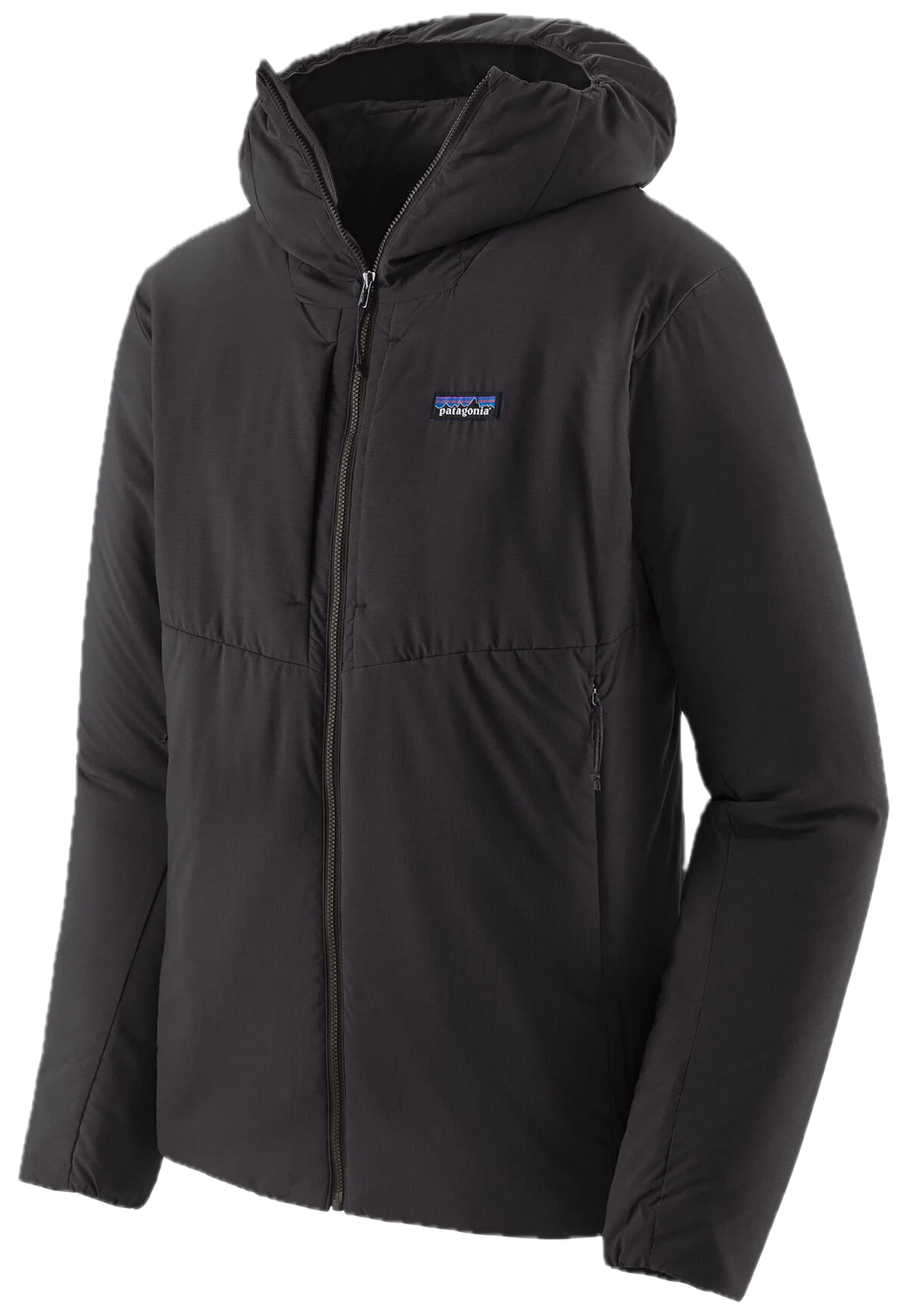 Weight: 14.1 oz. (men's), 12.4 oz. (women's)
Insulation: FullRange (60g)
What we like: Best-in-class comfort.
What we don’t: Doesn’t excel in any performance category.
The Nano-Air from Patagonia may not be our top overall pick, but it wins outright in one important category: comfort. This pillowy synthetic jacket feels like a combination of a high-end performance piece and your favorite sweatshirt; it’s extremely soft, stretchy, and breathable. Climbers and active folks love its ability to move and breathe (the FullRange insulation and stretchy shell are noticeably more airy than the Atom), and you won’t find a cozier piece for daily use or travel. Back when the jacket was introduced, Patagonia marketed it with a “put it on, leave it on” campaign, which is a great synopsis of the Nano-Air’s strengths.
The Nano-Air features a regular fit, a light and 100%-recycled face fabric, two chest pockets, and an adjustable hem. But despite having a price that rivals many of our top picks, the jacket doesn’t shine in any performance category. It’s fairly heavy and bulky at 14.1 ounces, isn’t particularly weather-protective (you do get a PFC-free DWR coating), and, with thicker insulation and roomier dimensions, can’t compete with the Casaval Hybrid for active use. But for daily wear, casual backpacking, and even resort skiing, you won’t find a more comfortable jacket. It’s also worth checking out Patagonia’s Nano-Air Light Hybrid, which uses 40-gram FullRange insulation at the front and patterns more breathable fleece at the back and under the arms.
Read more: Patagonia Nano-Air review (women's version)
See the Men's Patagonia Nano-Air Hoody See the Women's Patagonia Nano-Air Hoody
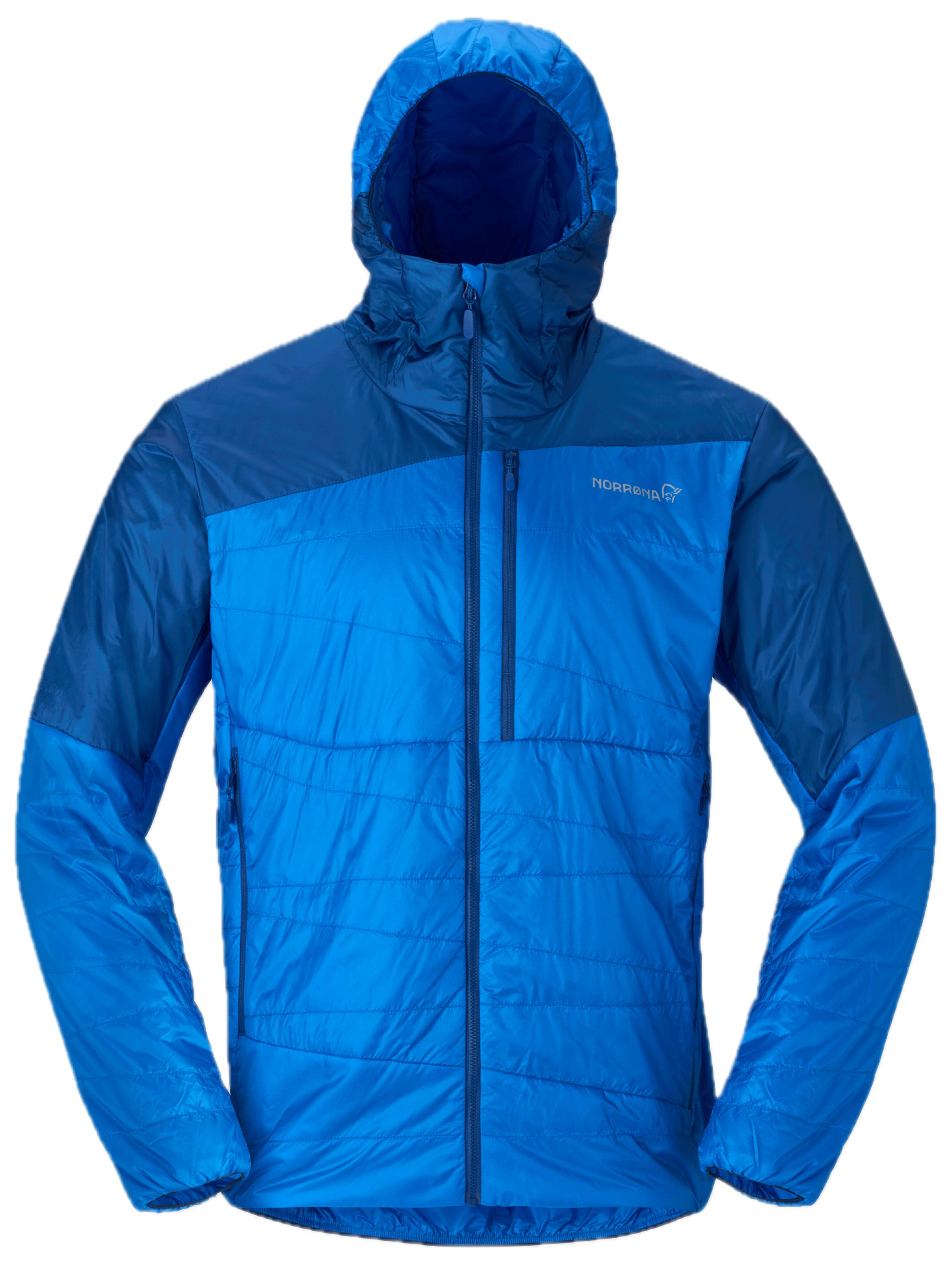 Weight: 11.3 oz. (men's), 9.7 oz. (women's)
Insulation: Thermo40 (40g)
What we like: Performance-oriented warmth and packability at a competitive price.
What we don’t: No stuff pocket and thin shell fabric.
Norrøna might fly under the radar this side of the Atlantic, but the Norwegian outdoor clothing brand gives names like Patagonia and Arc’teryx a run for their money. From their Falketind mountaineering collection, the Thermo40 is a high-quality synthetic jacket that’s priced competitively. Clocking in at a decently light 11.3 ounces, the Norrøna is ready for the mountains, with windproof and water-resistant protection, a drop-tail hem for added coverage, and an adjustable and helmet-compatible hood. Further, the 10-denier shell fabric is soft, smooth-moving, and made from recycled materials (it’s also treated with a PFC-free DWR finish).
The Thermo40 is in Norrøna’s Thermo series and replaced the Thermo60, which was warmer. Though the 40 forgoes the 60’s stuff pocket, it has a longer cut and is both lighter and more compressible due to its thinner insulation. To be sure, Thermo synthetic doesn’t have the brand cachet of names like PrimaLoft or PlumaFill, but it offers a nice amount of loft despite the jacket’s competitive weight and packability. And we do have qualms about the thin 10-denier shell, which isn’t the most confidence-inspiring for use around sharp equipment. But for less cash than the competition, the Thermo40 has a lot going for it and could be well worth the savings for everything from backpacking to multi-pitch climbing and mountaineering. The men's and women's Falketind are largely identical, except for slightly different stitching and baffle patterns.
See the Men's Norrøna Falketind Thermo40 See the Women's Norrøna Falketind Thermo40
.jpg) Weight: 14.3 oz. (men's), 11.5 oz. (women's)
Weight: 14.3 oz. (men's), 11.5 oz. (women's)
Insulation: PrimaLoft Gold Active
What we like: A stretchy, breathable insulator purpose-built for skiing and climbing.
What we don’t: Not as durable as the Nano-Air.
Black Diamond specializes in climbing and skiing, and their jacket collection reflects this expertise with a number of purpose-built offerings for everything from expedition use to heart-pumping dawn patrols. We like their heavyweight Solution 4.0 Parka for cold weather, but the First Light 2.0 Stretch is a much more active synthetic that can be worn in a range of conditions as an outer layer or midlayer. To be sure, the jacket’s designers have ski touring and climbing in mind—they call the First Light an ideal “start-stop” piece, and its build and feature set support that claim. If you’re in the market for a soft synthetic jacket (much like the Nano-Air) but want more of a performance focus, the Black Diamond is worth a closer look. We most recently wore this jacket on several cragging trips around Colorado, and it was our go-to jacket for long, all-day multi-pitches in chilly temps and whipping wind.
Like many active insulators, the First Light 2.0 Stretch has a soft, supple face fabric that can take some use and abuse and holds up decently to light rain or snow (thanks to a PFAS-free DWR). And with a fairly recent update to PrimaLoft Gold Active insulation (along with a baffle-free design), the latest jacket is both lighter and more efficient than the prior model. It's a tough call between the First Light Stretch and the aforementioned Nano-Air: The Nano has thicker face fabric (30D vs. 20D) and an extra external chest pocket, while the First Light is slightly more trimmed-down for performance use. In the end, both are great active insulators that will get the job done whether in the mountains or around town. Finally, it's also worth mentioning a new offering from BD in a similar category: the Solution Hoody. We have been swapping between that and the First Light Stretch for several climbing missions this season. Note: Backcountry labels the jacket as simply the "First Light Stretch Hooded", but it is the same as the 2.0, and the name simply hasn't been updated yet.
See the Men's BD First Light Stretch Hoody See the Women's BD First Light Stretch Hoody
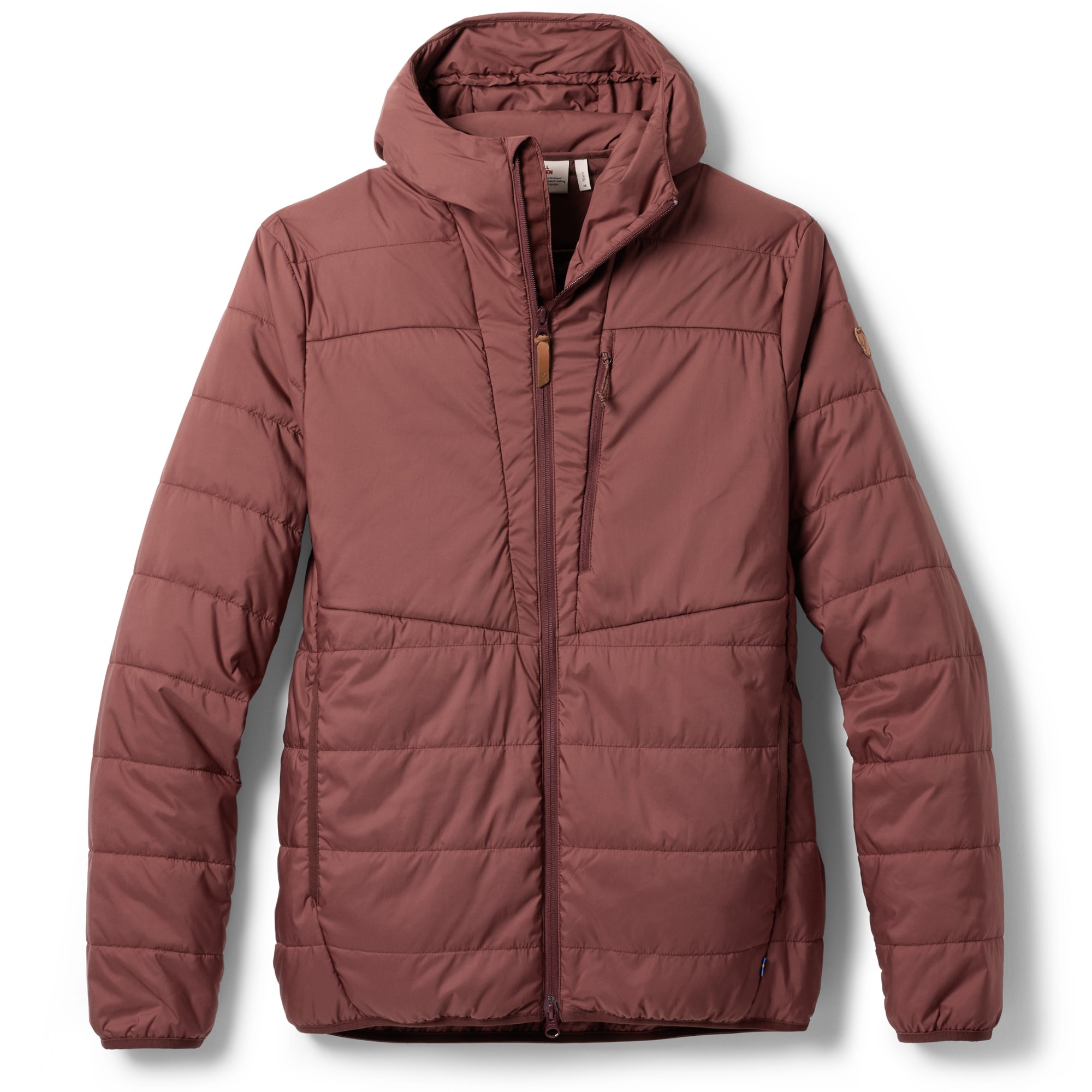 Weight: 1 lb. 2.0 oz. (men's), 1 lb. 0.2 oz. (women's)
Insulation: G-Loft Supreme (60g)
What we like: Everyday appeal and premium build quality.
What we don’t: Pricey, given its casual slant.
Many of the designs on this list have a performance slant, but few can match the casual appeal of the Keb Padded Hoodie. Simply put, this is one of the best-looking synthetic jackets with the sleek styling that Fjallraven is known for. The insulation is 100% polyester called G-Loft Supreme, and the fibers are hollow and intended to create pockets of air like down (we’ve found that this is executed with varying degrees of success). And we appreciate details like hood and hem adjustments, a two-way main zipper, and ample pockets, including one at the chest and one on the interior. Added up, the Keb is a great urban piece that also can work well for light fall and winter adventuring.
Like many Fjallraven gear items, the Keb Padded Hoodie is both expensive and limited in its functionality. Without a doubt, you don’t get the high-tech active insulation of similarly priced jackets from top brands like Arc’teryx and Patagonia, which means that breathability and packability aren’t as good. For a similar price, you can get a nice down jacket that offers even more warmth. But the Keb will perform better in wet conditions than down, and again, we love the look and build quality of Fjallraven products in general. Of note: Fjallraven also makes the Expedition X-Latt, which has a much lighter build (11.2 oz.) and is better suited to active pursuits like hiking and backcountry skiing.
See the Fjallraven Keb Padded Hoodie See the Women's Keb Padded Hoodie
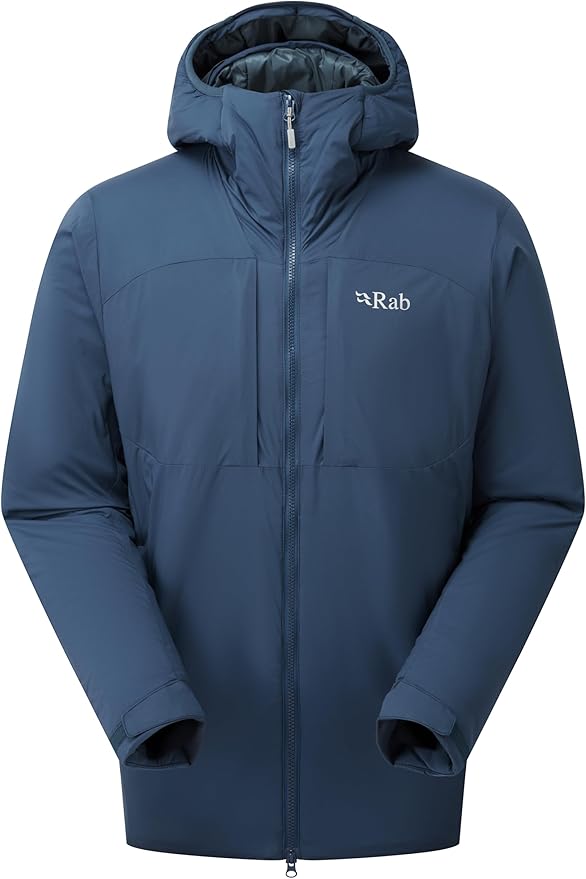 Weight: 1 lb. 3.5 oz. (men's), 1 lb. 1.2 oz. (women's)
Insulation: PrimaLoft Gold Active+ (133g)
What we like: Comparable warmth and performance to the DAS Parka for considerably less.
What we don’t: Heavy and sacrifices some wet-weather protection in the name of breathability.
Patagonia’s DAS Parka is our favorite weather-protective synthetic jacket for cold-weather use, but Rab’s Xenair Alpine Insulated isn’t far behind and costs considerably less. Like the DAS Parka, the Xenair is packed with thick, 133-gram PrimaLoft insulation (in this case, their Gold Active+ variety) and boasts a weather-ready Pertex Quantum Air shell for added assurance when the skies open up. Importantly, the small differences in insulation and shell type give the Xenair the clear edge in breathability—one of our editors, who is an avid backcountry skier, finds it to be a nice middle ground between Patagonia’s Nano-Air and DAS Parka—although it's still best suited for low-output activities in cold conditions. And perhaps most notably, the Xenair undercuts the DAS Parka significantly in price, which is truly a steal for such a warm and technically capable piece.
We've most recently been using this jacket as a winter belay layer at more remote crags that require a bit of bush-bashing to access. The durable shell affords more confidence than many other jackets we own. Why, then, don’t we rank the Xenair higher? Unfortunately, the stronger focus on breathability results in a drop in wet-weather performance compared to the DAS Parka, though neither jacket is built to handle heavy or prolonged precipitation. It’s also on the heavier end (right on par with the DAS), lacks internal drop-in pockets for stashing items like climbing skins or gloves during transitions, and doesn’t come with a stuff sack or pocket for stashing away when not in use. For a step down in warmth and price, Rab’s Xenair Alpine Light Insulated Jacket swaps in thinner 60-gram insulation and at a competitive 10.9 ounces. But for heart-of-winter use while belaying or transitioning, the warmer Xenair is a well-built DAS Parka alternative at a hard-to-beat price.
See the Men's Rab Xenair Alpine See the Women's Rab Xenair Alpine
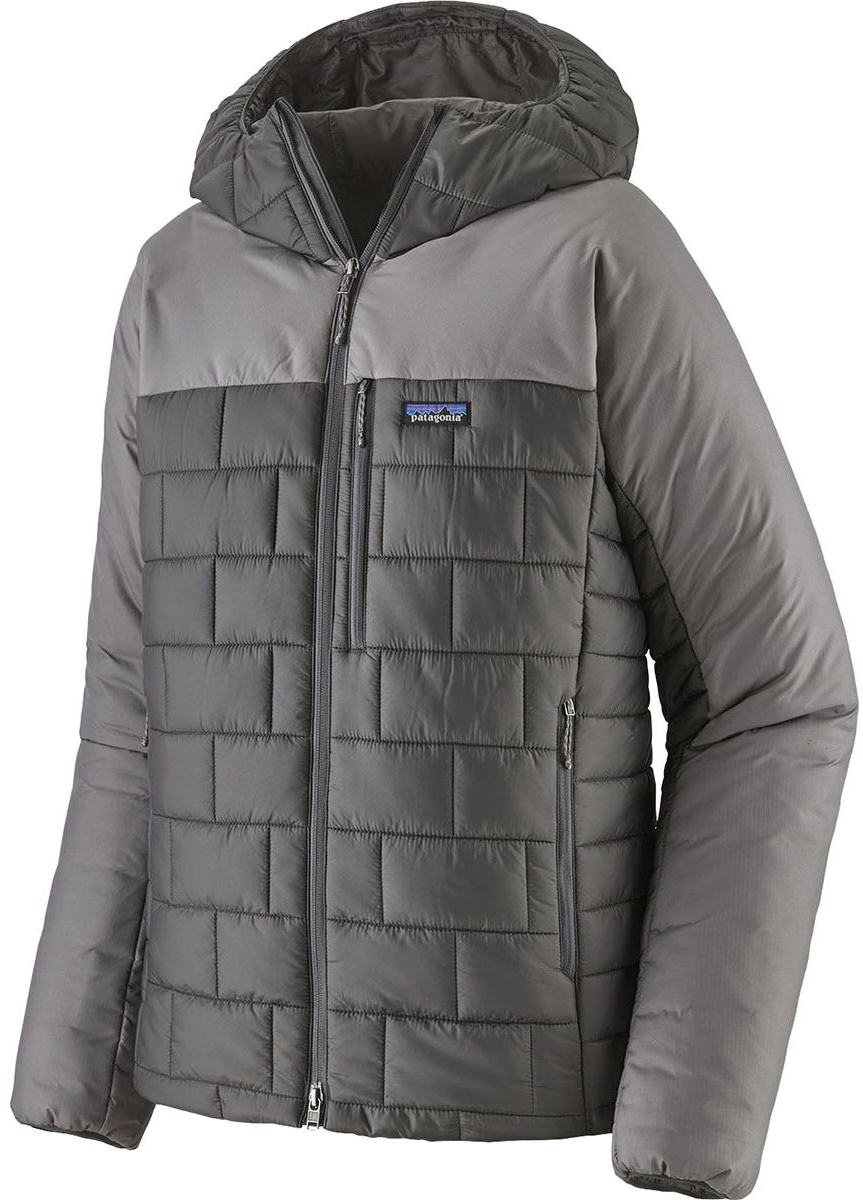
Weight: 1 lb. 10.8 oz. (men's), 1 lb. 8.6 oz. (women's)
Insulation: PrimaLoft Silver Eco (170g & 200g)
What we like: Super warm; highly durable; lots of useful features.
What we don’t: Heavy and bulky compared to others here.
The Patagonia Hi-Loft Nano Puff Hoodie is an absolute furnace of a jacket, packing 170g and 200g of PrimaLoft Silver Eco insulation, making it arguably even warmer than Patagonia’s own expedition-ready DAS Parka. It sits in a category of its own: technically a belay-style piece, but just as practical for everyday winter wear around town thanks to its cozy warmth and approachable design. It shines for cold-weather climbing, especially in damp, mixed conditions where synthetic insulation outperforms down, and doubles as a stellar option for cold-weather car camping or general winter activities. That said, the boxy fit and technical look may not be for everyone, especially if you’re after a more streamlined urban piece.
Durability is another highlight, with a 20D recycled shell throughout the body reinforced by burly 50D panels at the shoulders, arms, and cuffs for abrasion resistance. At 1 lb. 10.8 oz., it’s undeniably heavy and bulky compared to sleeker alpine puffies, but Patagonia balances that weight with a full feature set: two handwarmer pockets, two chest pockets, two internal drop-in pockets, an adjustable hem cinch, and a helmet-compatible hood. A DWR finish helps shed light moisture, but it’s not highly water-repellent—this is a jacket best suited for below-freezing temps where snow can be brushed off the shell rather than soaking in. The result is a rugged, protective, and supremely warm piece that appeals to climbers, campers, and anyone who doesn’t mind carrying a little extra weight in exchange for a durable synthetic jacket with near-parka-level insulation.
See the Men's Patagonia Hi-Loft Nano Puff Hoody See the Women's Patagonia Hi-Loft Nano Puff
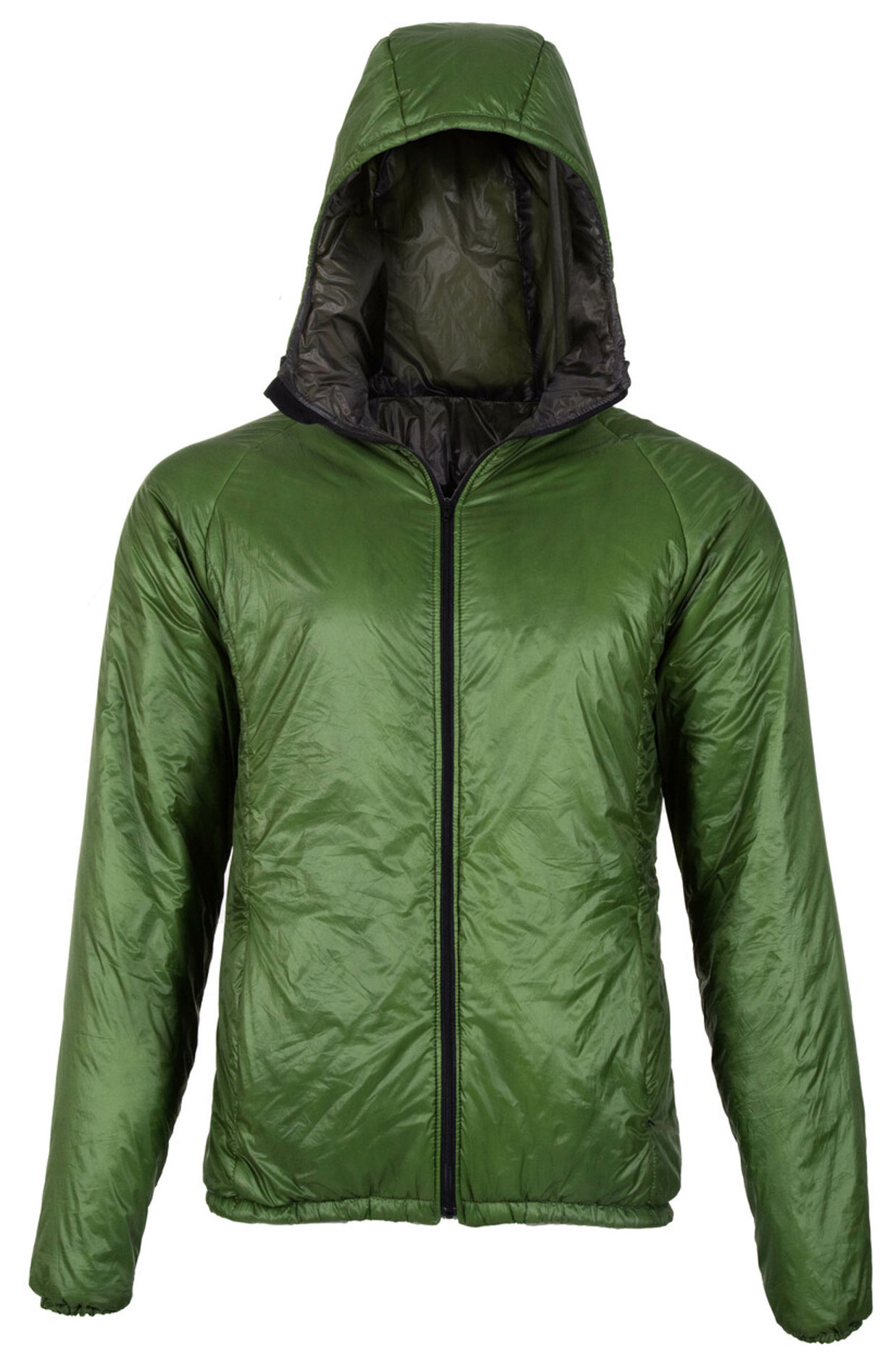 Weight: 8.9 oz. (men's medium 10D), 7.6 oz. (women's small 10D)
Insulation: Climashield Apex (65g)
What we like: Ultralight, warm, and reasonably priced.
What we don’t: Lack of storage, no cord adjustment in the waistband, and the jacket takes weeks to ship (for custom orders).
The majority of the jackets on this list aim to balance performance and casual use, but the Enlightened Equipment Torrid is an outlier. Simply put, this is a true ultralight synthetic-insulated jacket built for serious thru-hikers. It weighs just 8.9 ounces for the hooded version in a men’s medium, is made of 10D fabric, filled with 65g Climashield Apex insulation, and has a 10-denier shell with a DWR finish (to cut even more weight, a 7D fabric option is available). You won’t get fancy logos or much in the way of everyday appeal, but the Torrid is beloved by long-distance hikers. The Torrid was one of our author's steeds of choice for back-to-back thru-hikes of the CDT and AT. One jacket lasted him the entire 5,000-mile journey with only a few rips and tears to speak of.
Another interesting UL option comes from Utah-based Outdoor Vitals. Their Vario Jacket is just a tad heavier than the Torrid (9 oz. for the men’s medium), but uses a stretchy and more durable ripstop nylon face fabric that’s similar to designs like the Casaval Hybrid and Atom. With thinner 40-gram insulation, a more air-permeable shell, and perforated underarm vents, the Vario is a better fit for active pursuits (such as hiking), but the Torrid remains a more suitable choice for chilly evenings at camp. Most other competitors are ultralight down jackets, such as the Mountain Hardwear Ghost Whisperer and various Montbell models, which we don’t recommend in wet or damp conditions.
See the Men's Enlightened Equipment Torrid See the Women's Enlightened Equipment Torrid
Weight: 12 oz. (men's), 9.8 oz. (women's)
Insulation: Vivo Extreme Eco (60g/40g/25g)
What we like: Excellent mobility and layering sizing; body-mapped insulation paneling.
What we don’t: Not the most breathable face fabric.
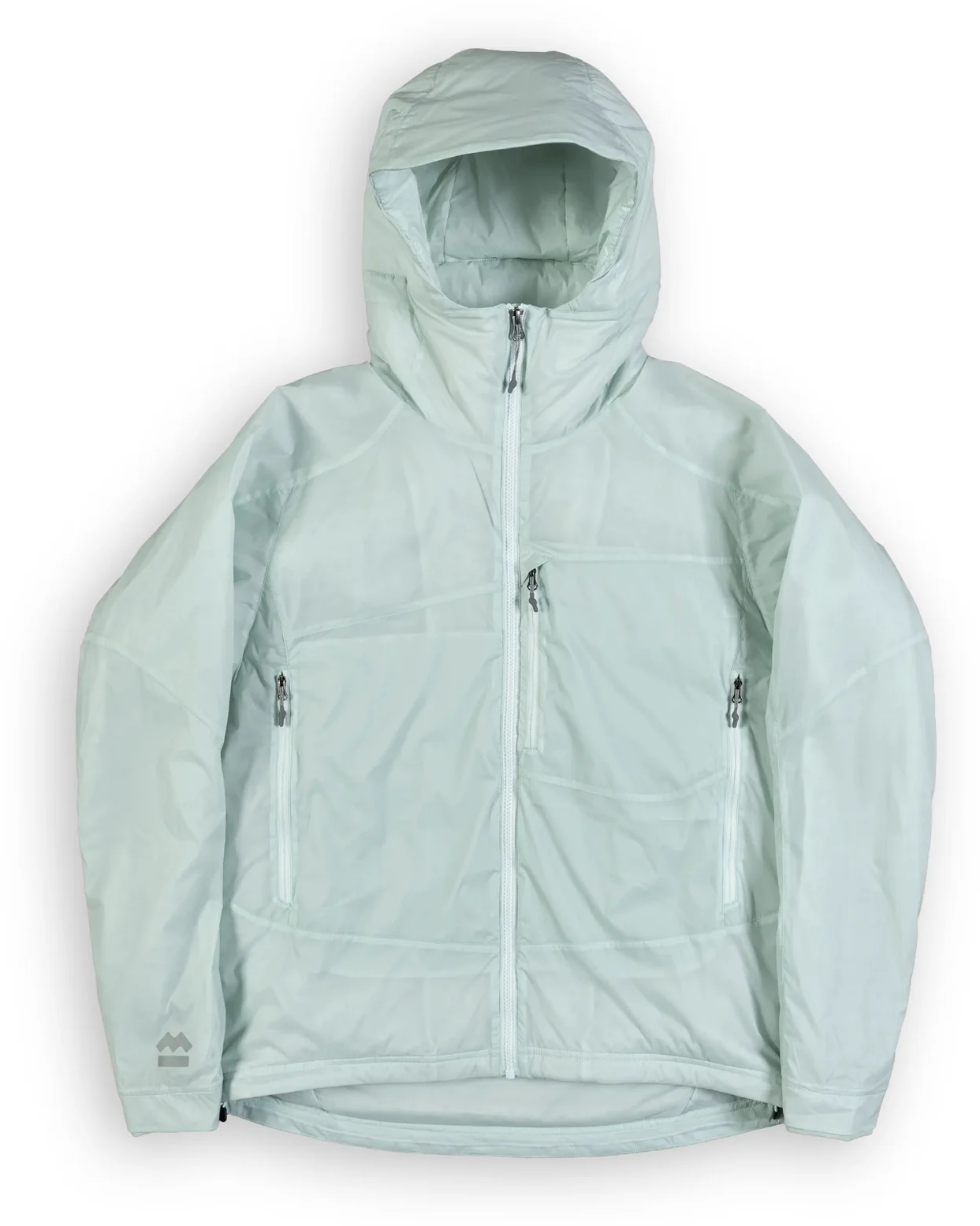
Beringia is a new-to-us brand this year, but has quickly risen to the top of our layering testing with their mobility-forward build, unique materials, and layering-optimized fit. The Lightstream Full-Zip Hoody is their popular synthetic jacket offering and feels on par with the Arc'teryx Atom Hoody in construction, with a better women's fit than almost any jacket we've tested this season. The Vivo Extreme Eco is a single-panel synthetic insulation with high breathability, which Beringia has placed in three weights throughout the jacket to optimize heat retention and venting. You get additional insulation where you need it around the chest and upper back, and lighter layers under the arms and sides. A durable, slightly textured 15-denier fabric, hat-accommodating hood, and three zipper pockets round out an incredibly versatile, hard-wearing jacket that can compete with the most recognizable name brands as either an outer or mid-layer.
We put the Lightstream to the test this year as both an active and travel jacket, including multiple overseas flights, seven days of wear in a row, and cramming it into backpack pockets for a week straight. The insulation has not compressed at all, and the material has held up to considerable use without abrasions. The fit is where this jacket shines, though. Designed for unrestricted movement, the articulated arms and shoulders can fit a base layer and midlayer underneath without binding, yet it's somehow slim enough to layer under a ski shell or rain jacket. There isn't much to dislike about this jacket, though the brand noted that the next iteration will feature a more breathable face fabric for higher-output activities. As it is, we wouldn't necessarily go for a hard run in this jacket, but the body-mapped insulation and full-zip help with venting.
See the Men's Beringia Lightstream Full-Zip Hoody See the Women's Beringia Lightstream
Weight: 12.7 oz. (men's), 11.6 oz. (women's)
Insulation: Primaloft Gold Eco (60g)
What we like: Stellar warmth in a compact, weather-resistant design.
What we don’t: Thin outer shell; tight across the chest; not as durable as others.
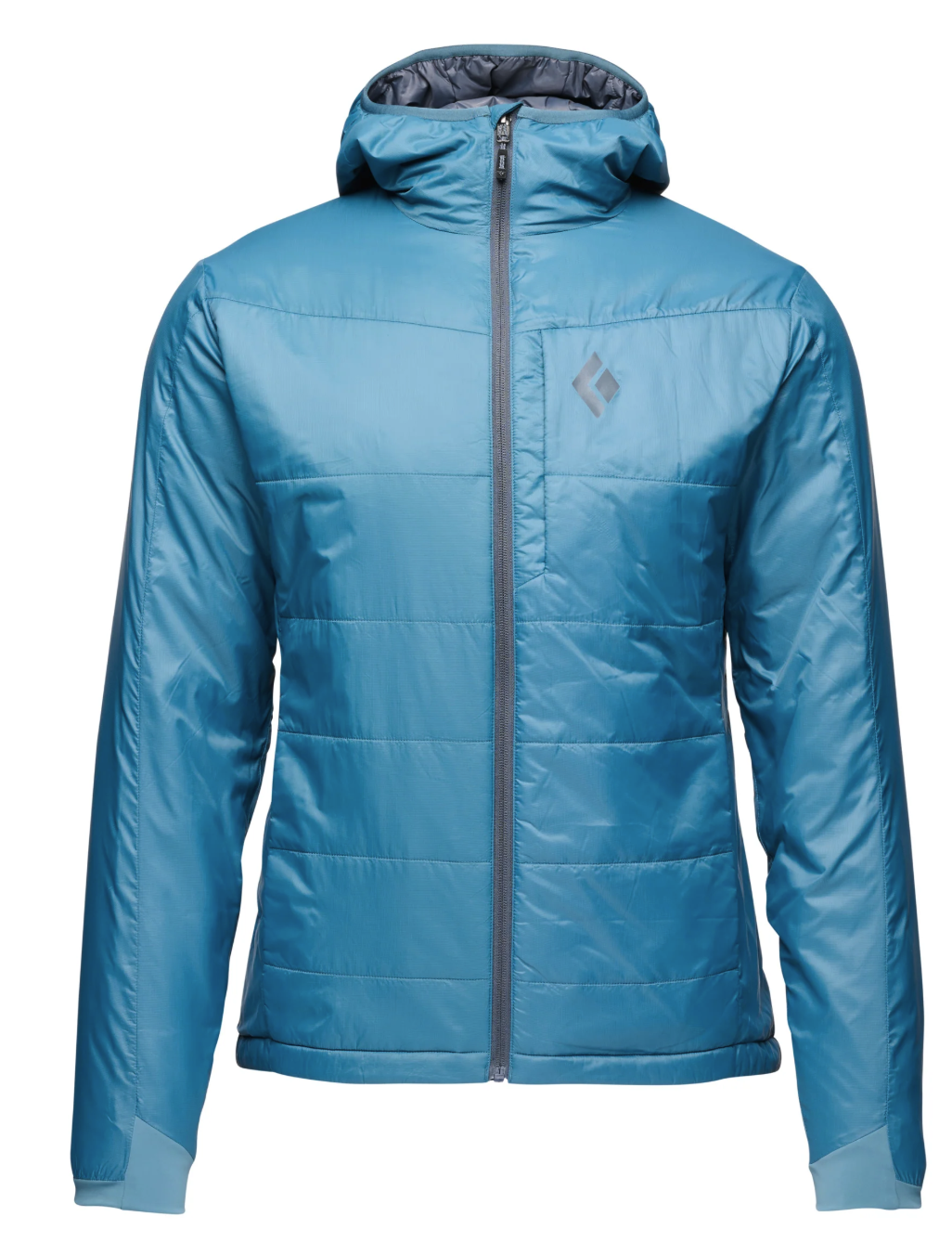
Black Diamond designed the Solution 2.0 Hoody with climbers in mind, and it shows. This synthetic jacket features 60g of PrimaLoft Gold Eco insulation for reliable warmth in cold conditions, a PFAS-free DWR-treated shell for light weather protection, and a streamlined design that works well both on and off the wall. Our tester put the Solution through its paces on guiding trips in Zion, ski patrol duties in southern Utah, and multi-pitch climbs in Red Rocks, where it kept him warm during freezing belays and snow flurries. It packs down to a decently small size in its own chest pocket (with a built-in carabiner loop) and proved to be an effective outer layer for everything from brisk fall traverses to fast-and-light winter objectives.
That said, the Solution isn’t without drawbacks. The 20-denier shell helps keep weight low (12.7 ounces) but offers limited durability for rough granite or frequent off-width battles. Fit can also be an issue: while it worked great for slender testers, those with broader shoulders found the non-stretch fabric too restrictive for climbing. We also had consistent issues with the waist cinch cords, which hang awkwardly near harness gear loops and are prone to snagging. Still, if it fits your frame and you’re looking for a warm, belay-friendly synthetic jacket that won’t weigh you down, the Solution 2.0 Hoody is a well-rounded piece for shoulder-season climbing and light alpine use.
See the Men's Black Diamond Solution 2.0 See the Women's Black Diamond Solution 2.0
We’ve put plenty of other excellent synthetic pieces through the wringer, but they ultimately didn’t make the final cut. We aim to showcase true standouts—the designs that deliver the best blend of value, performance, and long-term durability. Every model we recommend has been tested over multiple seasons, giving us full confidence in its reliability. Still, we think it’s helpful to offer a glimpse at the other contenders we’ve tried to give you a more complete sense of the broader landscape.
The Cotopaxi Teca Cálido is the first jacket we removed in this update. It held the title of our best budget for a while, but unfortunately, it is being discontinued. While stock remains, however, it's a worthy, affordable layer from a reputable brand.
We love the Outdoor Research SuperStrand LT Hoodie, but given our current line-up, it didn't offer anything the other products on our list don't cover. That said, it's a fun, lightweight jacket from a reputable brand for an affordable price. We do find that it tends to wet out faster than most of our synthetic jackets, and it isn't super warm.
With some attractive styling that mimics down jackets and a lightweight design, the Mountain Hardwear Ventano Hoody is an enticing model. It has loads of great features, but just doesn't have the competitive specs of the other jackets on this list, and isn't as light as some of the other ultralight picks we chose to include.
The Rab Nebitron Pro is a fun, beefy jacket we've been testing for a while—and it is a solid jacket. It has a high loft, is extremely warm, and has climbing-specific features, but just doesn't offer anything unique in light of the other jackets here (or the other Rab jackets we reviewed).
The Arc'teryx Proton SL Hoody is another stellar pick, and is a well-loved jacket at Switchback Travel. We felt like the regular Proton is a better, versatile fit, but the lighter SL is a solid pick to explore. It is light and packable yet surprisingly warm, and it features an excellent fit. If the regular Proton feels like overkill, don't overlook this sleek alternative.
| Jacket (Men's/Women's) | Price | Weight (M/W) | Insulation (M/W) | Fabric | Packable |
|---|---|---|---|---|---|
| Men's Arc’teryx Atom Hoody Women's Arc’teryx Atom Hoody | $300 | 12.5 oz./ 11.3 oz. | Coreloft Compact (60g) | 20D | No |
| Men's Patagonia Nano Puff Women's Patagonia Nano Puff | $289 | 14.1 oz./ 12.3 oz. | PrimaLoft Gold Eco (60g) | 20D | Yes |
| Men's Cotopaxi Capa Hybrid Women's Cotopaxi Capa Hybrid | $180 | 1 lb. 8.0 oz. (M & W) | PrimaLoft Gold PURE (40g) | 20D | Yes |
| Men's TNF Casaval Hybrid Women's TNF Casaval Hybrid | $260 | 1 lb. 0.6 oz./ 14.8 oz. | Ventrix (60g+40g) | 40 & 75D | No |
| Men's Arc'teryx Proton Hoody Women's Arc'teryx Proton Hoody | $350 | 14.6 oz./ 12.7 oz. | Coreloft Compact (80g) | 20D | No |
| Men's Patagonia DAS Parka Women's Patagonia DAS Parka | $449 | 1 lb. 3.6 oz/ 1 lb. 2.4 oz. | PrimaLoft Gold Eco (133g & 40g) | 10D | Yes |
| Men's Patagonia Micro Puff Women's Patagonia Micro Puff | $329 | 10.5 oz./ 9.0 oz. | PlumaFill (65g) | 10D | Yes |
| Men's Rab Cirrus Flex Hoodie Women's Rab Cirrus Flex Hoodie | $185 | 15.7 oz./ 13.4 oz. | PrimaLoft Silver RISE (157g/130g) | 20D | Yes |
| Men's Patagonia Nano-Air Hoody Women's Patagonia Nano-Air | $329 | 14.1 oz./ 12.4 oz. | FullRange (60g) | 30D | Yes |
| Men's Norrøna Falketind Women's Norrøna Falketind | $249 | 11.3 oz./ 9.7 oz. | Thermo40 (40g) | 10D | No |
| Men's Black Diamond First Light Women's BD First Light | $349 | 14.3 oz./ 11.5 oz. | PrimaLoft Gold Active | 20D | Yes |
| Men's Fjallraven Keb Padded Women's Fjallraven Keb Padded | $250 | 1 lb. 2.0 oz./ 1 lb. 0.2 oz. | G-Loft Supreme (60g) | Unavail. | No |
| Men's Rab Xenair Alpine Women's Rab Xenair Alpine | $260 | 1 lb. 3.5 oz./ 1 lb. 1.2 oz. | PrimaLoft Gold Active+ (133g) | 20D | No |
| Men's Patagonia Hi-Loft Women's Patagonia Hi-Loft | $329 | 1 lb. 10.8 oz./ 1 lb. 8.6 oz. | PrimaLoft Silver Eco (170g & 200g) | 20 & 50D | Yes |
| Men's EE Torrid Women's EE Torrid | $200 | 8.9 oz./ 7.6 oz. | Climashield Apex (65g) | 10D | No |
| Men's Beringia Lightstream Women's Beringia Lightstream | $350 | 12 oz./ 9.8 oz. | Vivo Extreme Eco (60g, 40g, & 25g) | 15D | No |
| Men's Black Diamond Solution Women's Black Diamond Solution | $299 | 12.7 oz./ 11.6 oz. | Primaloft Gold Eco (60g) | 20D | Yes |
Most of us at Switchback Travel get out year-round in many different ways, and as a result, we have several jackets in our quiver, depending on the conditions and our intended use. Those of us who live in wet climates like the Pacific Northwest are particularly fond of synthetic jackets for their ability to continue insulating when wet (unlike down jackets, which tend to clump up). We first kicked off this guide in 2015 with nine of our favorite weather-ready synthetics. Senior editor Chris Carter now leads the charge on this lineup. A seasoned thru-hiker, rock climber, and traveler, Chris has completed the Triple Crown of long trails in the U.S. (AT, PCT, and CDT) and continues to backpack, climb, and explore whenever he can. He's tested just about every top synthetic jacket and has included only the best in this guide.
Our testing process for synthetic jackets is similar to that of other insulating layers (including down jackets and fleece jackets): We take them out on real-world adventures, evaluating their performance on multi-pitch climbs, during ski tours in the alpine, and on backpacking and hiking trips on trails across the country. To gauge warmth, we take these pieces through a range of conditions, from frigid mid-winter days to warm shoulder-season outings and cool summer evenings at camp. We evaluate breathability by working up a sweat on the skin track or the approach, and also consider factors like long-term durability, fit, weight, and packability. Finally, we pay attention to the finer details, such as zippers, drawcords, and pockets, all of which can significantly impact overall performance.
.jpg)
In general, we see two main styles of synthetic insulated jackets: those that aim for maximum warmth at a minimum weight and packed size (similar to a down jacket) and breathable offerings intended primarily for active use. Between these two categories, the key differences include the style of synthetic fill and the weight and makeup of the shell fabric. When considering which synthetic insulated jacket is best for you, choosing between these two categories is a great place to start.
Down-Mimicking Insulation
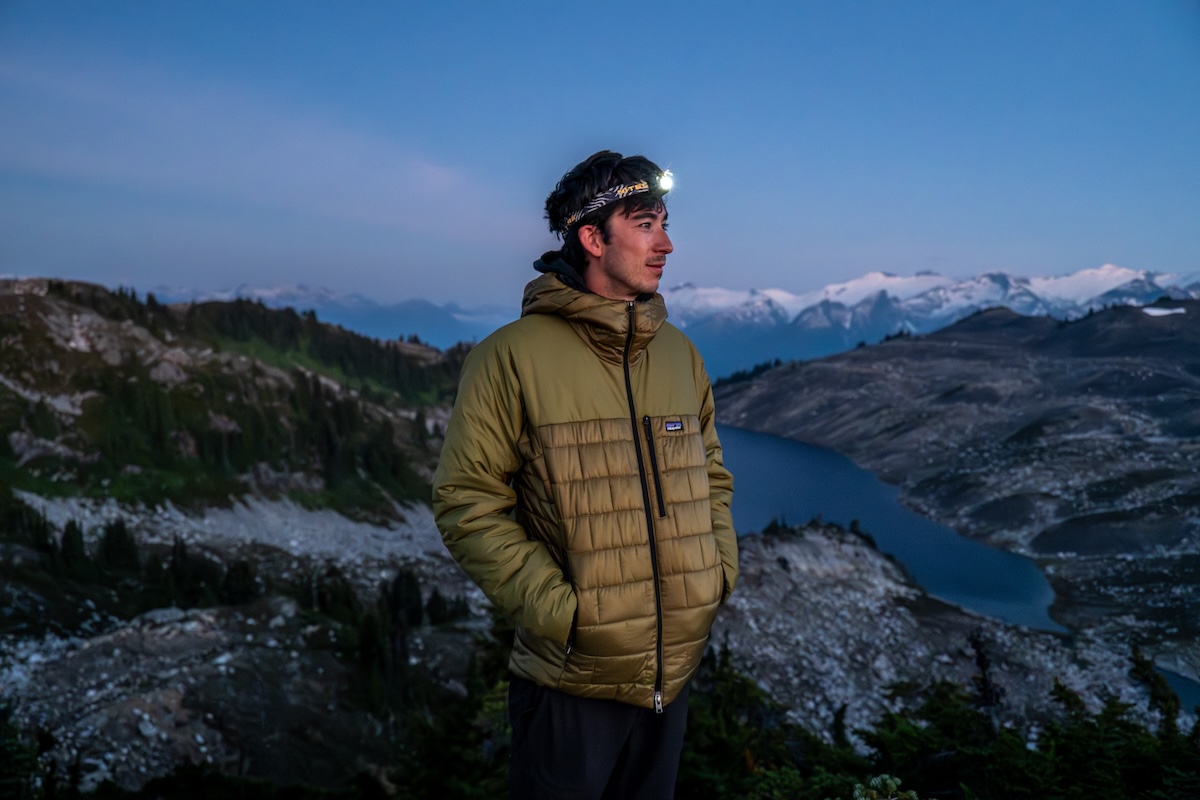
Synthetic insulated jackets that mimic the style and function of down jackets are great for those who prioritize warmth over weight and bulk. These jackets pair thin, 100% nylon shells with synthetic filaments and fibers that look and act much like goose and duck plumage. In most cases, baffles are used to keep the insulation in place. Much like down puffies, jackets in this category aren’t particularly good breathers, but they’re nevertheless great options for low-output endeavors or activities that prioritize weight-savings above all else, including multi-pitch rock climbing and backpacking. One of our favorite down-mimicking offerings is the Patagonia Micro Puff jacket.
.jpg)
Active Insulation
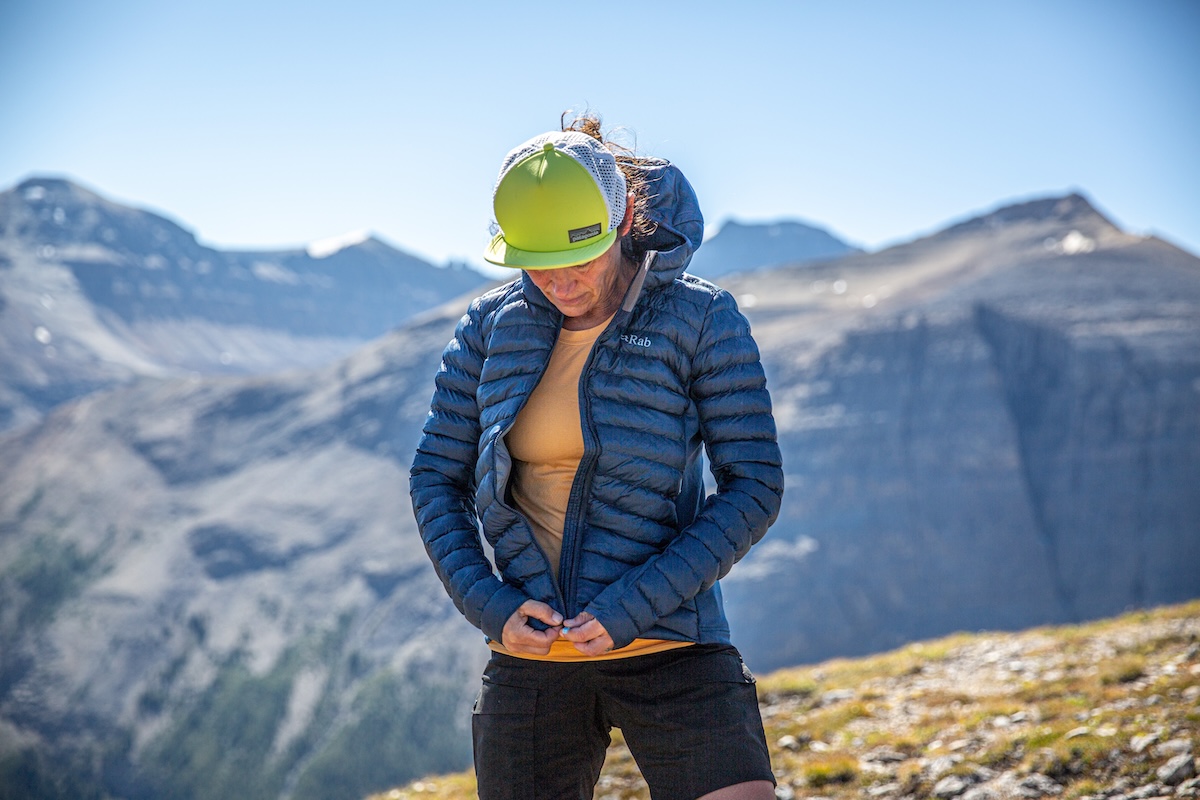
For high-output activities like backcountry skiing and hiking, we reach for a synthetic jacket in the active insulation category. These jackets feature soft and stretchy shell materials and sheets of synthetic insulation that don’t require baffles to keep them in place (common names include Coreloft, FullRange, and PrimaLoft Gold Active). While this style of insulation doesn’t mimic down plumage, it still does a great job trapping heat—albeit with more bulk and weight. Because of their sweatshirt-like material, active insulation pieces move and breathe remarkably well but are less wind- and water-resistant than all-nylon shells. We love jackets in this category for all-day wear and active use when comfort and mobility matter more than weight. Some of our favorite active insulation jackets include the Arc'teryx Atom, TNF Summit Series Casaval Hybrid, and Patagonia Nano-Air Hoody.
.jpg)
The single biggest selling point of synthetic fill over down fill is that it retains its insulating ability when wet. With a down jacket, prolonged exposure to rain or snow will eventually cause the feathers to become soaked, reducing their loft and warmth-generating potential. Even hydrophobic down technologies eventually give in to sustained moisture. A wet down jacket is heavy, won’t keep you warm, and takes much longer to dry out than a synthetic one. Synthetic insulation resists moisture and water, allowing it to retain its shape, continue to insulate, and dry more quickly. The degree to which synthetic insulation resists water varies by type, but all synthetics repel moisture better than down.
.jpg)
On both sides of the aisle, gear manufacturers are commonly adding a DWR (durable water repellent) treatment to insulated jackets. This helps water bead off the shell instead of collecting and eventually soaking through to the jacket's interior. DWR treatments do a good job of repelling light to moderate precipitation, but they do not make the jacket waterproof. Synthetic jackets do a much better job than down in wet conditions, but for prolonged exposure, you will want to consider a rain shell.
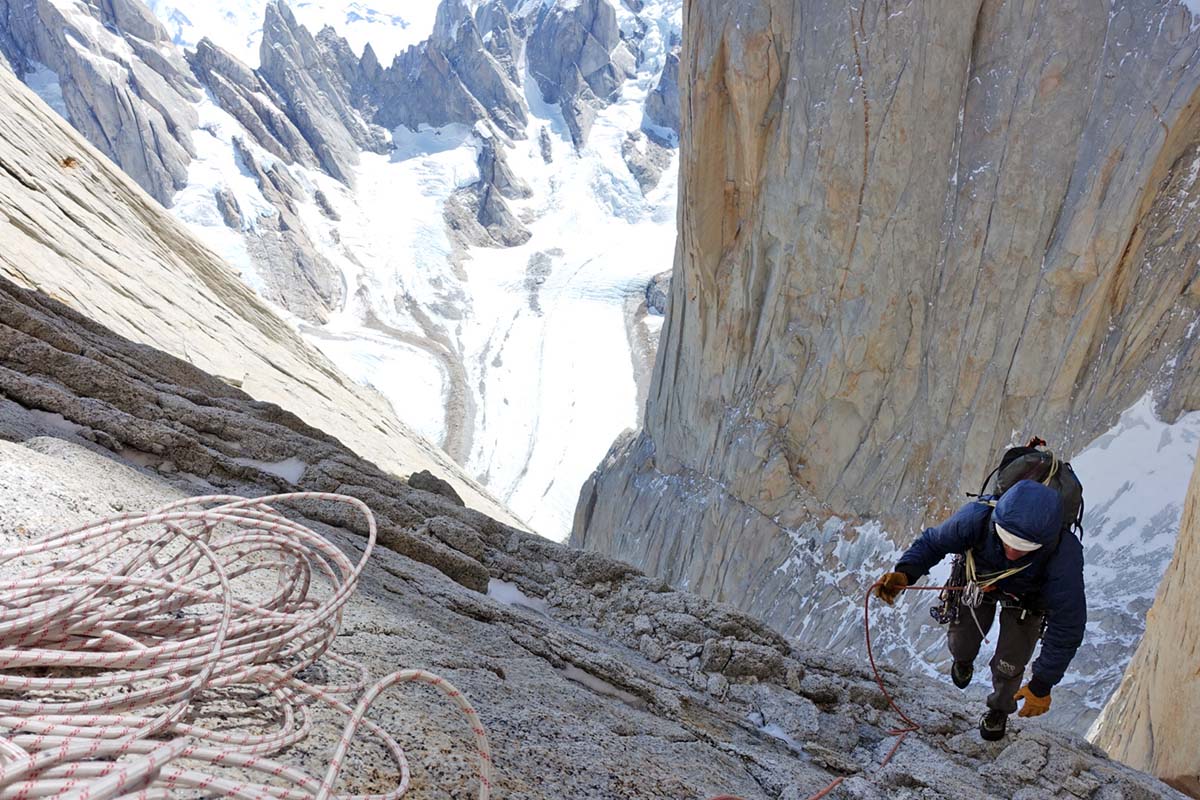
Without actually trying on a synthetic jacket, it can be difficult to discern the level of warmth it will provide. The warmth of synthetic fill is measured by the weight of a 1-meter-by-1-meter piece: For example, 60-gram FullRange weighs 60 grams for the 1-meter-squared piece of insulation. The majority of insulations are around 60 to 65 grams, and in most cases, a larger number indicates a warmer insulation. But what this number doesn’t tell you is how much of the insulation is stuffed in the jacket, which can make a sizable difference in warmth. Here, the jacket's weight is our best clue.
.jpg)
There is significant variation in the warmth of our synthetic jacket picks. Popular models like the Patagonia Nano Puff jacket and Arc’teryx Atom represent the middle ground: Both weigh 13 to 14 ounces and are designed for cool-weather fall and spring use. Jackets like the Arc'teryx Proton use lighter insulation and are ideal for active use, but might not provide enough warmth for everyday wear. For freezing winter conditions, parkas like Patagonia's DAS and Rab's Xenair Alpine are true winter-weight synthetic jackets. And compared to down, synthetic insulation provides less warmth for its weight. For example, you can expect that a 12-ounce down jacket will be noticeably warmer than a 12-ounce synthetic jacket (such as the Beringia Lightstream Full-Zip Hoody). However, down-mimicking synthetics in particular do a respectable job in this department and are only getting better.
.jpg)
The breathability of a synthetic jacket comes down to two main factors: the type of fill and the style of shell and lining materials used. Fills that mimic down tend to breathe the least, while active insulations like Coreloft and FullRange do a great job regulating heat. In terms of the shell materials, jackets with stretch-infused or sweatshirt-like fabrics are particularly good at moisture wicking and breathability, while all-nylon shells perform the worst.
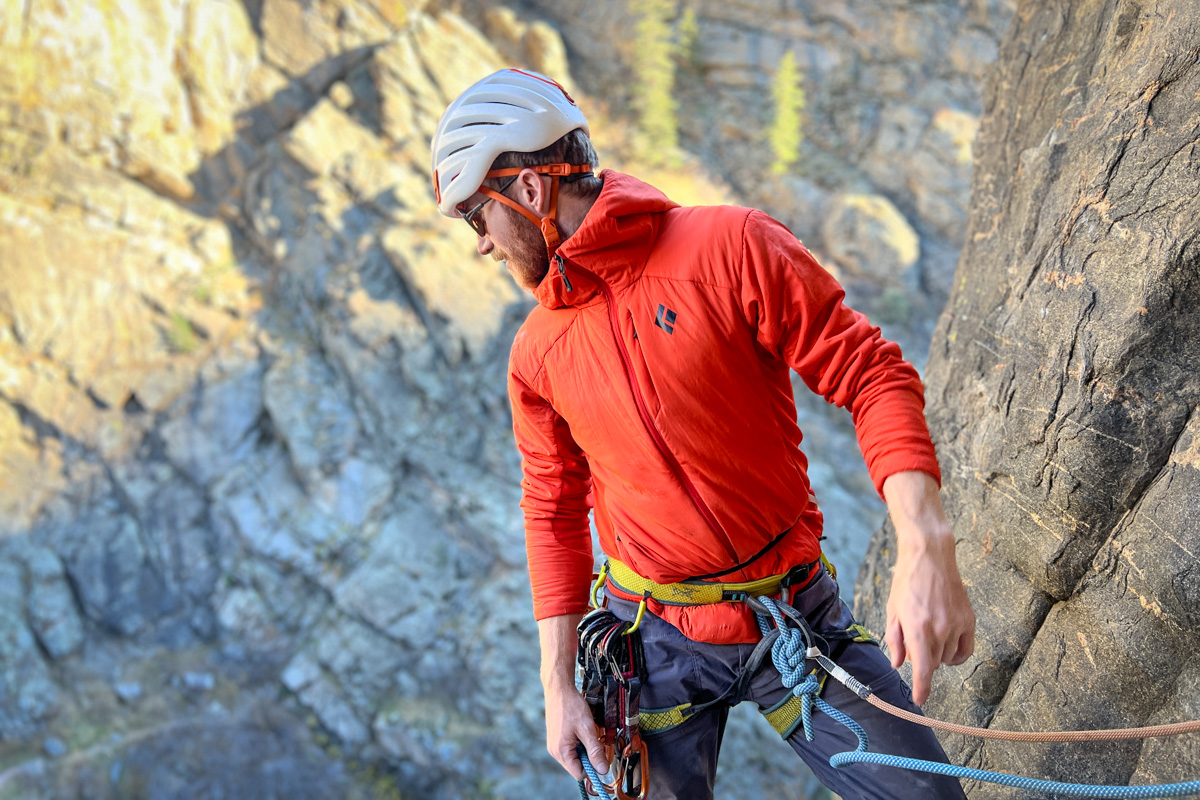
If the purpose of your jacket involves movement (like backcountry touring, cross-country skiing, or snowshoeing), active insulation pieces like the TNF Summit Series Casaval Hybrid and Arc'teryx Proton are great choices. These jackets deftly balance warmth and temperature regulation, and their soft shells maintain high mobility. But it should come as no surprise that they are by nature more air-permeable, meaning they don’t trap heat as well as down or down-mimicking synthetic jackets. On the other hand, if you’re aiming for all-out warmth (like the heavyweight Patagonia DAS Parka), expect breathability to suffer.
.jpg)
Synthetic insulation doesn’t compress as tightly as down, but recent improvements make it more impressive than ever. In general, down-mimicking jackets like the Patagonia Micro Puff have smaller packed sizes than active pieces like the Arc'teryx Atom, due to the makeup of both the insulation and shell fabrics. Regardless of their packed size, most of the synthetic jackets on this list either pack down into a pocket or come with an included stuff sack. If packability is your highest priority, we still recommend a down jacket, but for casual use and adventuring when space isn’t at an absolute premium, synthetics aren’t far behind. Thicker, warmer offerings, such as the Patagonia Hi-Loft Nano Puff, also obviously won't cram down as small as their thinner, more breathable cousins.
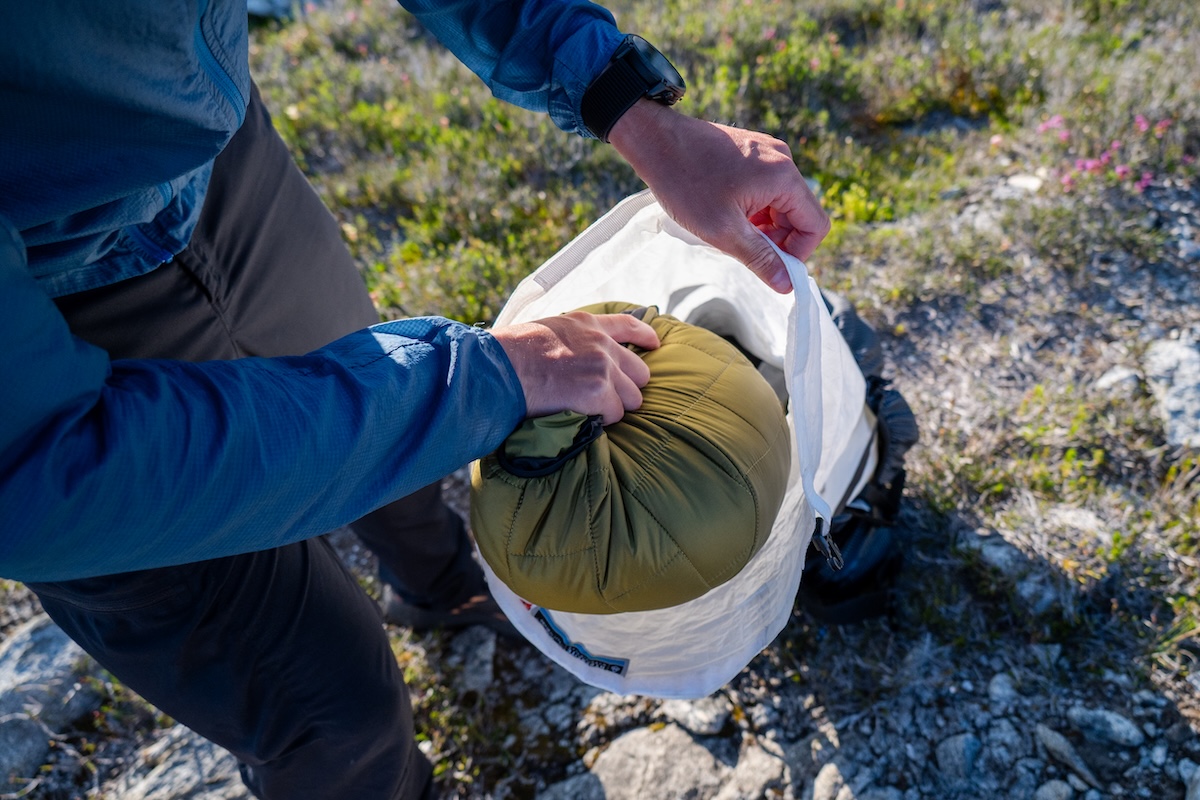
Synthetic jackets are comfortable because they regulate your body temperature. They’re the kind of mid- or outer layer you can wear out in the cold without having to immediately peel them off as you come indoors. The same is true when used as an active piece: You'll find yourself keeping it on for far longer than an equivalent down jacket.
For example, we often put on a jacket like the Arc’teryx Atom or Patagonia Nano-Air when we leave the house and can wear it literally all day. We can walk the dog in 45-degree weather, then move indoors to the office without missing a beat. These synthetics are incredibly comfortable and breathe well enough even for indoor use—you feel like you're wearing your favorite hoody or fleece jacket. If we were to put on a comparable down jacket like the Arc’teryx Cerium, it would be too warm for physical activity or sitting indoors. So, although down is undoubtedly warmer, we save it for uses like backpacking when we value warmth-to-weight.
.jpg)
Many of our top-ranked synthetic jackets are offered in either a hoody or non-hoody style. What’s best for you comes down to your use: we reach for an insulated vest or non-hooded jacket as a midlayer while skiing or around town, and the hoody is great as an outer layer or when it’s cold. For stop-and-go cold-weather activities like fall hiking, ski touring, or snowshoeing, a hoody is a nice addition for keeping you warm when you take a break. Expect to pay $20 to $50 extra for the hoody version of the same piece. A down jacket purchase shares many of the same considerations, and we’ve covered this question in greater detail in the article: Does Your Down Jacket Need a Hood?
.jpg)
One big selling point of synthetic jackets is that they are easier to care for than down jackets. First, you don’t have to worry as much about moisture, and they don’t lose feathers, meaning that you don’t have to be as vigilant about keeping a close eye on your jacket. Second, many synthetic jackets have relatively thick shells with built-in stretch (e.g., Patagonia Nano-Air and Black Diamond First Light 2.0 Stretch), which lends great durability for everyday wear. And finally, most synthetic jackets are machine washable and don’t require special supplies and care for cleaning.
.jpg)
However, it’s important to note that synthetic insulation will break down over time, causing it to lose its loft and ability to trap heat. In this respect, it’s a much less durable product—we have down jackets passed down from our parents that are arguably just as warm today as they were 40 years ago. On the other hand, synthetic jackets certainly have a shorter lifespan, and their insulating capabilities will not last throughout generations.
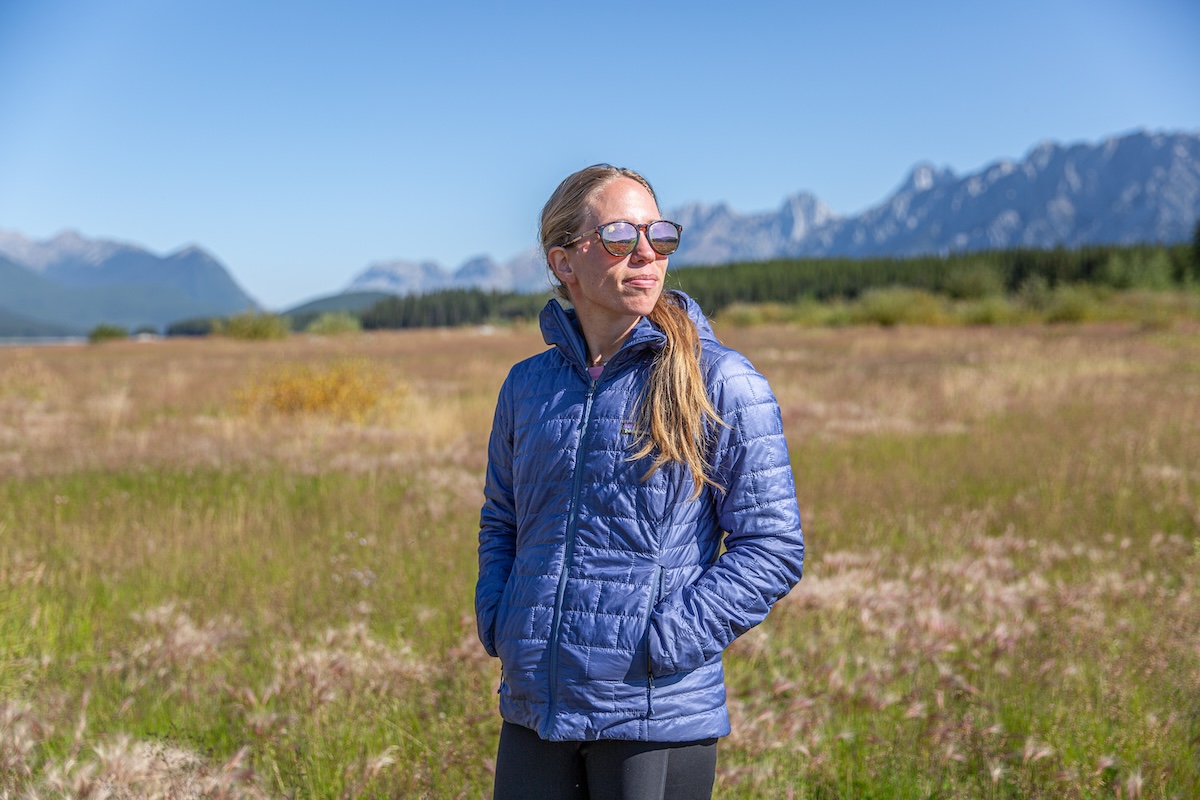
Synthetics have been less scrutinized than down—particularly by animal rights activists—but they have their own set of issues. For one, most are petroleum-based, which results in greenhouse gas emissions and potentially unsafe work environments. Many manufacturers have attempted to make their production more sustainable by using recycled materials, which is a great start (in fact, most jackets here are built primarily with recycled shell materials and fill). To add to the debate, some synthetic fills release microplastic particles into the water during each wash, an issue that is becoming increasingly widespread worldwide. In the end, the most sustainable solution is to buy nothing at all and do what you can to extend the life of what you already own. And if you do make a purchase, we encourage you to be a responsible consumer and choose products made with a sustainable ethos.
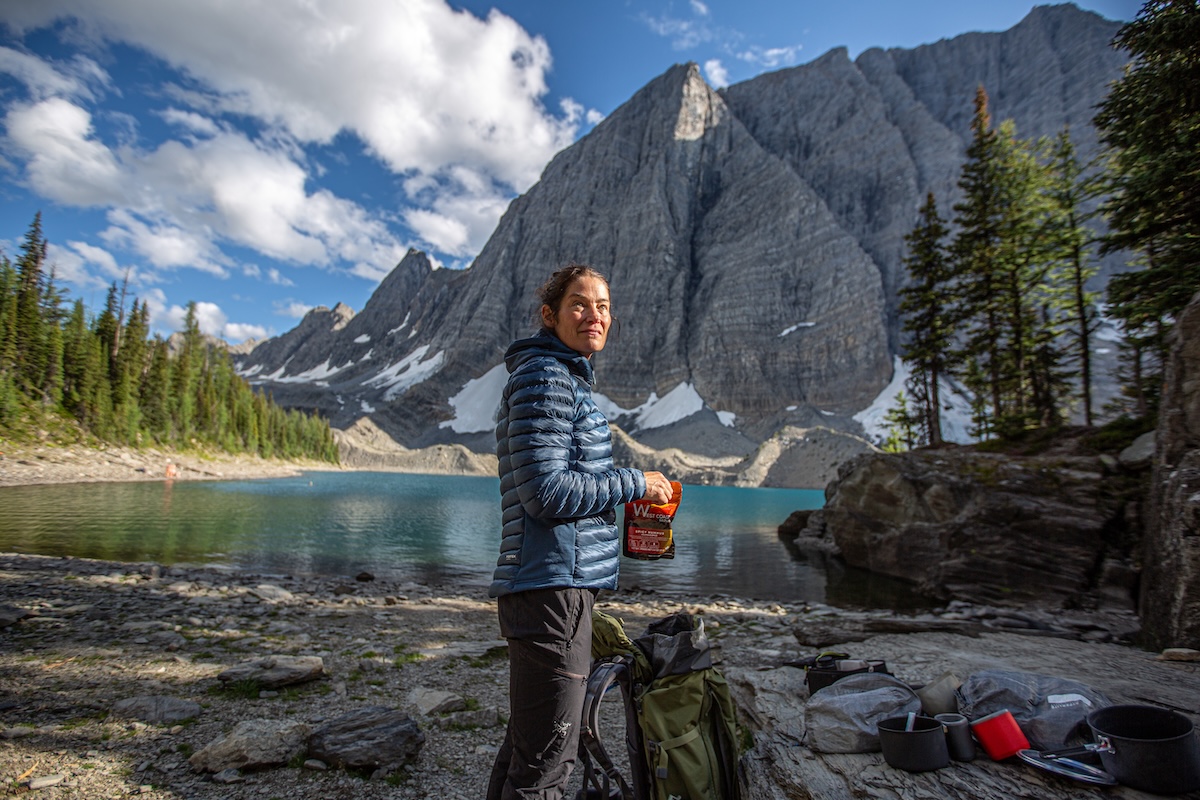
The synthetic jackets on our list span a large price range, from around $180 for the Cotopaxi Capa Hybrid to $449 for the winter-weight Patagonia DAS Parka. Jackets on the low end of the spectrum are great for casual use, but don’t expect them to breathe particularly well or pack down small. The $250 to $350 price range is where we see most jackets, including active insulation pieces like the Black Diamond First Light 2.0 Stretch ($349) and down-mimicking designs like the Patagonia Micro Puff ($329). Most synthetic jackets priced at $350 or above will be specialized, like the aforementioned DAS.
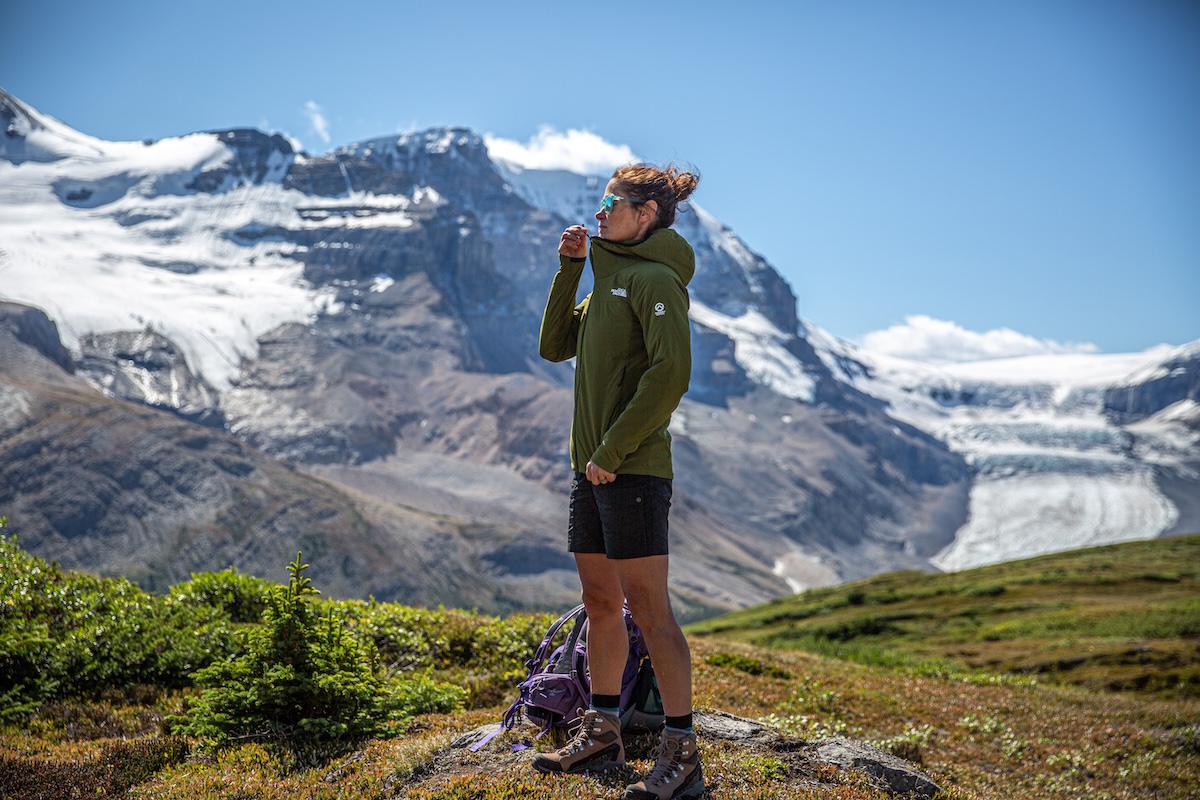
In general, it’s cheaper to produce synthetic insulation than to source down, and this is reflected in the price. What’s more, the cost of goose down has been rising, further incentivizing gear manufacturers to develop down alternatives. Look for synthetics to continue evolving, pushing ever closer to a true down replacement at a lower cost.
Back to Our Top Synthetic Jacket Picks Back to Our Synthetic Jacket Comparison Table

_033e4.jpg)
-tfe3e.jpg)
9569.jpg)
76df.jpg)
9b85.jpg)

_10426.jpg)
8d7f.jpg)