.jpeg)
.jpeg)
Photo Credit
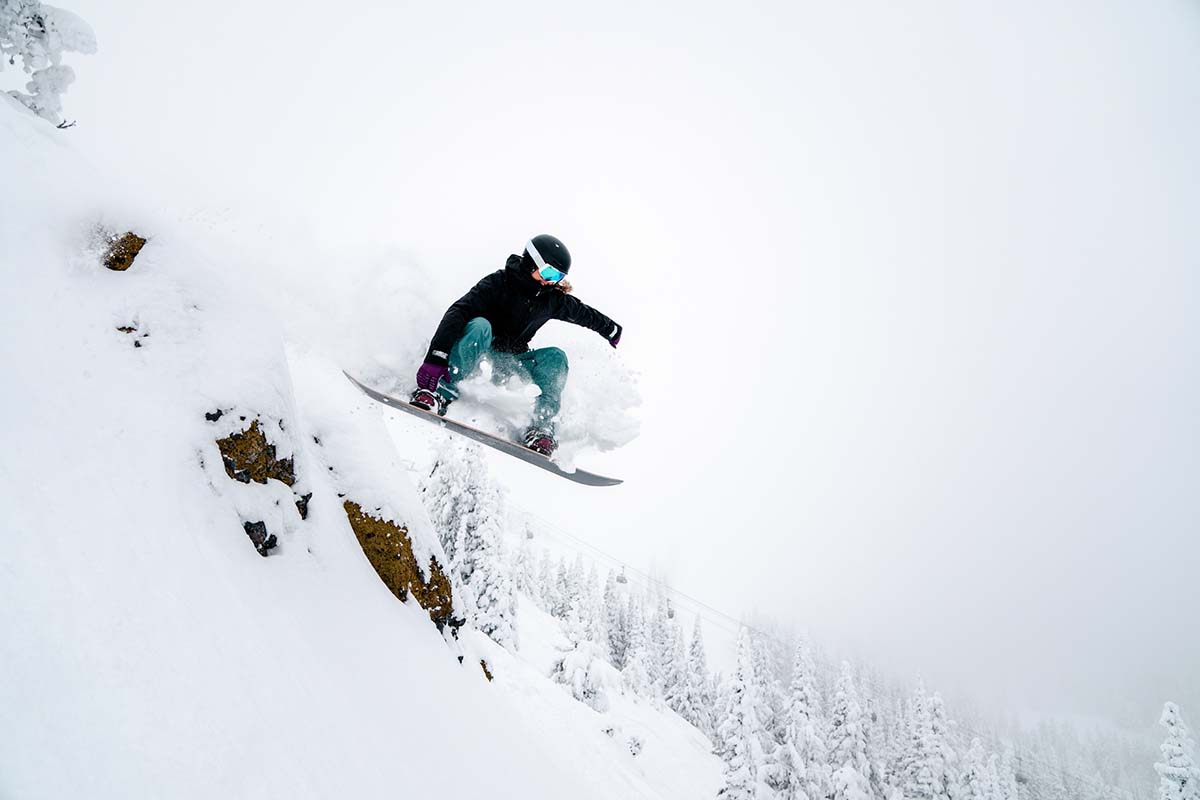
As snowboarding season kicks into high gear, it’s time to take stock of the equipment that will help make your winter that much better. Below, we break down the top all-mountain snowboards of the season, from highly versatile models to those that excel at freestyling in the park or taking on fresh powder. On this list, you’ll find everything from entry-level and budget options to high-end boards built for experts and hard chargers. Our overall favorite is the Jones Stratos for its power and versatility, while not being overly stiff. For more background information, see our all-mountain snowboard comparison table and buying advice below the picks. And for those who prefer to earn their turns, we've also put together a lineup of the best splitboards.
Editor's note: We updated this guide on February 10, 2026, to update our entire lineup after early winter testing and to elaborate on our testing process.

Category: All-mountain
Ability level: Intermediate to expert
Flex: Medium/stiff
Shape: Directional
What we like: A playful yet powerful do-all board.
What we don’t: Too stiff for beginners; not stiff enough for aggressive riders with a need for speed.
If you’re in the market for the quintessential all-mountain board, you’ll be hard-pressed to find a better option than the Jones Stratos. Mixing both freestyle and freeride attributes, the Stratos tackles most terrain and riding styles with aplomb. With a medium-stiff flex, narrow sidecut, and rockered tip, the board has an incredibly playful and poppy personality that’s begging to slash tight trees and bounce off natural or terrain-park features. Tack on a camber underfoot, and you also get an aggressive edge hold when bombing down the mountain at speed. Jones calls the Stratos a “do-it-all turner,” and we couldn’t agree more. For a quiver-of-one board that will get you from the summit to the groomers and through the park with skill and ease, it’s our top pick of the year.
What are the shortcomings of the Jones Stratos? It’s certainly not our first choice for beginners, who will want to learn the basics on a softer, more forgiving board. On the other hand, most advanced riders will want a stiffer design (like the Jones Flagship Pro) for powering through crud and uneven terrain—the Stratos’ medium-stiff flex means you’ll need a good bit of leg strength to maintain speed on anything other than smooth groomers or pow. Finally, while the board is decidedly playful, its directional tapered shape isn’t ideal for riding switch or tackling most park features. But for one board that can handle a wide variety of all-mountain conditions, both front and back, the Jones is an excellent choice.
Read more: Jones Stratos Snowboard review
See the Men's Jones Stratos Snowboard See the Women's Jones Stratos Snowboard


Category: All-mountain/powder
Ability level: Intermediate to advanced
Flex: Medium/stiff
Shape: Directional
What we like: Fun and floaty in powder yet capable in all terrain and conditions.
What we don’t: Some powder enthusiasts will want to have a dedicated powder board in their quiver.
If you live in a high-tide region like the Pacific Northwest or B.C., fresh powder days are a dime a dozen. And while some riders might have a dedicated board for these conditions, many all-mountain models also excel in the deep stuff. The Nitro Squash is one of our favorites: Defining Nitro’s “PowGroomer” category, the Squash manages to do it all, from carving through crud to catching air in the park and—of course—floating in the white room.
Like many powder boards, the Squash features a swallowtail with a long shovel nose, ideal for staying on top of deep snow. But under the hood is a more traditional all-mountain design, including a true camber and progressive sidecut that adds a lot of edge hold, stability, and snap to your turns. Of course, with its fishtail shape, the Squash isn’t built for riding switch. And while it's a great quiver-of-one board, some deep-snow enthusiasts will want a more niche, surf-inspired design for deep days—we particularly love the Weston Japow and Jones Storm Chaser. But for a powder board that can also hold an edge on hardpack and perform decently well in the park, the Nitro Squash is a great place to start.
See the Nitro Squash Snowboard

Category: All-mountain/freestyle
Ability level: Intermediate to advanced
Flex: Medium
Shape: True twin
What we like: A freestyle board that holds its own in all-mountain terrain.
What we don’t: True twin design isn’t ideal for navigating through powder.
Founded in Waterbury, Vermont, during the early aughts, Rome Snowboard Design Syndicate (aka Rome SDS) offers a wide selection of designs for resort snowboarders. The all-around Agent here is a longstanding staple in their lineup, combining a playful true-twin shape with a fusion camber that progressively stiffens toward the center—in other words, you get pop between your feet and a buttery, relaxed feel at the tip and tail. The result is a board that loves to carve and is impressively stable over chundery terrain but finds its true sense of self while catching airs and jibbing in the park. If you’re hoping to add style to your resort riding or want a freestyle board that can still keep up with your all-mountain friends, the Rome Agent is a great pick.
Looking at the competition, the Agent is most similar to the Whatever above: Both are medium-flex twin boards that beg to ride switch and hang with the park rats. But unlike most freestyle designs, they’re also impressive performers in the pow and on the corduroy. If you’re based in an area that gets consistently deep snow (like the PNW), the Whatever's directional profile makes it a better choice for floating through pow. On the other hand, the Agent features a stiffer construction (thanks to carbon-wrapped bamboo near the nose and tail) that offers more snap on firm snow. Either way you slice it, the Rome Agent is a playful workhorse that makes a great quiver-of-one board, and the price is decent.
See the Rome Agent Snowboard

Category: All-mountain/freestyle
Ability level: Advanced to expert
Flex: Medium/stiff
Shape: Directional
What we like: Powerful edge hold, excellent freeride performance.
What we don’t: Too much board for beginners or mellow cruising.
Jones has always been synonymous with big lines and deep powder turns, but with the way snowboarding and its riders have evolved in recent years, some riders want a board that can handle an Alaska spine or that infamous chute with the sketchy entrance at the local mountain, but also has the shape and pop to crank a 720 off a natural hit or cliff at the bottom of the line. Enter the Howler—a top choice of the Jones team riders who are just as comfortable on a massive cheese wedge in the Sierra as they are ripping turns in Japan. This deck is slightly tapered and directional with a medium-contoured 3D base to help you surf the powder, but the high camber means you’re not going to feel any sluggishness popping or stomping if you decide to touch the sky.
We didn’t find many gripes with the Howler, but one thing to keep in mind is that it’s far from beginner-friendly. While it might only be a 4 out of 5 flex on the Jones scale, their scale is likely skewed toward snowboarders who charge hard in general. If you’re used to a flexy park twin or a full-blown jibbing noodle, stepping on this board might feel like you lost power steering in your car. And on that note, we can assume that the riders who have this as their top choice are still predominantly riding in one direction other than a kicker run-in or the occasional switch cliff stomp. If you’re planning to spend half your winter stacking wedges, there are a few other models we’ve tested that would make better weapons for filming that sponsor-me reel.
See the Men's Jones Howler See the Women’s Jones Howler


Category: All-mountain/powder
Ability level: Advanced to expert
Flex: Medium/stiff
Shape: Directional
What we like: Super powerful and capable in soft snow.
What we don’t: Not ideal for park rats or new riders.
Many all-mountain boards excel at hardpack and taking on the front side of the mountain, but the Lib Tech T.Rice Orca has a whole different personality. For powerful all-mountain snowboarders who like speed and the deep stuff, it’s one of the top boards on the market—period. Following the fat-and-short trend, the volume-shifted Orca features a setback stance and a short radius that allow it to float extremely well, turn on a dime, and dominate in the right conditions. All in all, it’s a terrific board for big-time lines and powder hounds who like to treat an open powder field like a blank canvas.
Keep in mind that the Lib Tech T.Rice Orca is a unique board, and it’s not for all riders or uses. The tapered directional shape isn’t ideal for frequent jumps or jibbing in the park, and the stiff flex will take a skilled pilot to tame. And zooming out a bit, the Lib Tech’s volume-shifted design is non-traditional for a big-mountain board—true hard-chargers will prefer to go with a standard directional freeride board like Jones Howler. But for those who like to go fast without compromising float in powder, the Orca is a sought-after board for a reason.
See the Lib Tech T.Rice Orca Snowboard

Category: All-mountain/freestyle
Ability level: Intermediate to advanced
Flex: Medium/stiff
Shape: Directional Twin
What we like: Unmatched pop and a deep sidecut for spinning.
What we don’t: If you aren’t riding aggressively, it can have a mind of its own.
When the ATV powerhouse known as Pat Moore switched to Arbor, he needed a board that could handle his death-metal approach to snowboarding, so they created the Rain. It’s a directional twin with the hole pattern set back 1.5 inches, but it can also be set up as a true twin for those who like to ride dirty. It’s loaded with pop, and the small turning radius means you can lay it on edge in that split second you have to transition from edge to edge off the lip of a jump, and you’ll have plenty of torque to crank as big a spin as you want. Unlike most of the other boards in our lineup, the nose and tail are identical on the Rain, meaning that whether you’re on the in-run or the landing of a jump, and no matter the type of snow, this board is just as comfortable riding switch as it is in your dominant stance, provided that you are too.
One thing we noticed while riding mellow cruisers is that the second you put the Rain on edge, it’s going to turn. While this is ideal for backcountry booters and park jumps, it can be a little much for mellow runs and blue-square groomers. Also, the classic directional twin shape, camber profile, and twin nose and tail may leave some people wishing they had a dedicated directional-riding board. If you’re the type of rider who isn’t riding switch more than the occasional half-cab or to give your legs a break on a cat-track, it likely makes sense to go with a more directional deck. But if you’re dedicated to jumping and want to learn how to ride like Pat, this is the one.
See the Arbor Rain


Category: All-mountain
Ability level: Beginner to advanced
Flex: Medium
Shape: Directional twin
What we like: A super versatile board that's both playful and powerful.
What we don’t: Not a great carver.
Burton is one of the biggest names in snowboarding, and the Custom Flying V is arguably their most well-rounded design. First and foremost, the Custom Flying V is easy to ride with a mostly rocker profile (Burton added a zone of camber under each foot, but the board feels more rocker in nature). Add in a medium flex and poppy wood core with a layer of carbon, and you get a responsive and playful ride that’s still powerful when you need it to be. From beginners who want their first board to last to intermediate and even advanced all-mountain riders, the Custom Flying V is a super versatile option.
What are the shortcomings of the Custom Flying V? With a softer feel, it’s more forgiving than many of Burton’s expert-level boards, but it’s not an amazing carver at speed on hardpack and ice. This means we wouldn’t recommend the Custom to aggressive East Coast riders and hard chargers who need a reliable edge. It’s also not a true powder hound, although it offers decent float for most resort terrain. But for an approachable, jack-of-all-trades snowboard, there’s a lot to like about Burton’s Custom Flying V.
See the Burton Custom Flying V Snowboard See the Women's Burton Feelgood Flying V Snowboard

Category: All-mountain/powder
Ability level: Beginner to intermediate
Flex: Medium
Shape: Directional
What we like: Extremely intuitive ride-feel: easy to turn, responsive, while also being forgiving.
What we don’t: Not so stable at higher speeds, a little soft for riding through wet/heavy chop.
The Jones Women’s Dream Weaver 2.0 is designed for the intermediate snowboarder who wants a confidence-inspiring board to take them to the next level and into new terrain. It’s easy to turn, responsive yet forgiving, and floaty in powder. The materials of this board give it a uniquely snappy yet soft feel in a lightweight construction that makes it fun for riders of all skill levels. Jones puts the Dream Weaver 2.0 in the “friendly freeride” category of snowboards, with a tapered directional shape, hybrid camber/rocker profile, mid-soft flex, and a smaller side-cut radius, and we would agree. It’s easy for the poppy nature of this board to inspire any rider to get more playful all over the mountain.
The Dream Weaver 2.0 can handle almost any terrain you’d want to take it on, but not aggressively. It has great edge-hold in icy conditions, but doesn’t get locked into an edge when you want to turn. This board is great for slightly more timid riders, who don’t want to fight to make their board turn as the terrain gets more challenging, and aren’t looking to straight-line narrow chutes or stomp the landings of large drops. It is much softer than other “freeride” boards we have ridden and feels a little wobbly at speed, which could also be attributed to the board’s side-cut and eagerness to turn. In wet/heavy powder that is tracked out, the soft flex of the Dream Weaver makes it harder to charge through the chop, so you can get tossed around. If you’re a hard charger, a board that’s a little stiffer and more stable in steeper terrain and heavy chop is likely a better choice, but the Dream Weaver 2.0 is great for mellower days when you want to cruise around and transform the mountain into a playground.
See the Jones Dream Weaver 2.0

Category: All-mountain/freestyle
Ability level: Intermediate to expert
Flex: Medium
Shape: Stiff
What we like: Stiff, plentiful camber, Grip Tech contact points.
What we don’t: Far from playful.
The Arbor El Camino was built for one purpose—the full send. With double carbon stringers, lots of camber, and an unforgiving flex, this is the perfect snowboard for the all gas, no brakes crowd. Of all the various serrated-edge technologies we’ve tested, Grip Tech is one of our favorites. Rather than modify the entire length of the edge, Arbor’s innovation only utilizes protruded edges at the contact points of the board, so you never really feel that the board is different than a standard sidecut until you are on ice or hardpack. It’s a directional board, but maintains a mostly twin shape, so it’s more than sufficient for switch riding, whether you’re on the groomer or in the pow.
The El Camino is a gnarly board. While it’s not quite the most aggressive board we’ve ever ridden, it’s definitely near the top of that list. If you’re looking for something playful to learn butters and slide funboxes, a softer, true-twin board is going to provide more fun. This board was also designed with backcountry freestyle in mind, so it’s not volume-shifted and has a full tail. If you prefer to keep it on the ground and surf the powder in one direction, a wider board with a shorter tail will save you some of that back leg fatigue.
See the Arbor El Camino

Category: All-mountain/freestyle
Ability level: Intermediate to advanced
Flex: Medium
Shape: True twin
What we like: Loves air time.
What we don’t: Doesn’t excel at powder or hitting smaller features.
Racking up awards year after year, the Capita Defenders of Awesome is a super fun freestyle board at a good price. More than anything, you get excellent pop and jumping ability, along with an aggressive ride that experienced riders will really appreciate. With carbon in the build and a super-light poplar and paulownia wood core, it can handle bigger hits and higher speeds than many park boards and is known for being great at sticking the landings. All in all, the Defenders of Awesome is much less about jibbing and buttering than the Lib Tech Skate Banana below, but for serious air, it’s tough to beat.
Despite having a hybrid camber construction that goes camber between the bindings, flat underfoot, and rocker on the tips, the board has a ride that feels more like traditional camber. As a result, it makes you work harder to stay afloat in powder compared with more rocker-heavy designs. Its medium flex is also not ideal for charging hard in variable snow—within Capita's lineup, the Mercury is a better freeride design. But for the all-mountain/freestyle market, the Defenders of Awesome’s power for the price is nearly unmatched, which is why we include it here.
See the Capita Defenders of Awesome Snowboard See the Women's Capita Birds of a Feather

Category: All-mountain/powder
Ability level: Advanced to expert
Flex: Medium
Shape: Directional
What we like: Short and fat can be both surfy and surprisingly agile.
What we don’t: A challenging design for beginning and even intermediate riders.
The Ride Warpig is primed for deep snow, with a short and fat shape (also referred to as “volume shifted”) that’s become very popular of late. The width allows the board to feel both floaty and stable, and the shorter-than-usual length makes it easier to maneuver than you might think. What’s more, it features Ride’s Slim Wall technology, which freshens things up with a lighter weight and better energy transfer between board and snow. Added up, you get a board that’s adept at carving and taking on groomers but excels at surfing the pow. For experienced riders, it’s a viable all-mountain quiver of one (or a super fun backup).
For those who haven’t tried a stout board shape like the Ride Warpig, your intuition might be that you need more length to feel comfortable. And traditional design thinking may lean in the same direction, but the numbers are stacking up of satisfied customers who feel that short and wide can be both surfy and good at carving and holding an edge, which is a unique combination. If you’re coming from a more traditional board, you might have to adapt your riding style, but who doesn’t love a good learning curve every now and then? All told, the Warpig is a popular and modern option that's certainly worth a look.
See the Ride Warpig Snowboard

Category: All-mountain/powder
Ability level: Advanced to expert
Flex: Medium/stiff
Shape: Directional
What we like: A powder machine that's surprisingly versatile.
What we don’t: If most of your days are spent on hardpack, there are far better options on this list.
If it wasn’t obvious by the large nose, directional shape, and set-back inserts, the Never Summer Swift is a board that excels in powder. Perhaps even more so than the other all-mountain/powder options included above, the Swift is extremely floaty and borderline dreamy on deep days. In addition, the reverse camber profile helps initiate turns well, which adds up to a versatile board that doesn’t fit neatly into one box. And to top it off, Never Summer is known for making some of the most durable top sheets in the game, which resist nicking and skillfully shed snow while riding.
Why is the powder-centric Never Summer Swift included on this all-mountain list? The truth is that it transitions surprisingly well to the resort. It’s a good carver for a board of this type and fairly stable across a variety of terrain. For those who live or ride in places like British Columbia, Utah, or Colorado and get a lot of powder days but don’t want to change planks for mixed-snow or hardpack sessions, the Swift is a capable companion.
See the Never Summer Swift Snowboard
| Snowboard | Price | Category | Ability Level | Flex | Shape |
|---|---|---|---|---|---|
| Jones Stratos | $670 | All-mountain | Intermediate to expert | Medium/stiff | Directional |
| Nitro Squash | $610 | All-mountain/powder | Intermediate to advanced | Medium/stiff | Directional |
| Rome Agent | $560 | All-mountain/freestyle | Intermediate to advanced | Medium | True twin |
| Jones Howler | $700 | All-mountain/freestyle | Advance to expert | Medium/stiff | Directional |
| Lib Tech T.Rice Orca | $700 | All-mountain/powder | Advanced to expert | Medium/stiff | Directional |
| Arbor Rain | $600 | All-mountain/freestyle | Intermediate to expert | Medium/stiff | Directional twin |
| Burton Custom Flying V | $680 | All-mountain | Beginner to advanced | Medium | Directional twin |
| Jones Dream Weaver 2.0 | $530 | All-mountain | Beginner to intermediate | Medium | Directional |
| Arbor El Camino | $630 | All-mountain/freestyle | Intermediate to expert | Stiff | Directional |
| Capita Defenders | $550 | All-mountain/freestyle | Intermediate to advanced | Medium | True twin |
| Ride Warpig | $600 | All-mountain/powder | Advanced to expert | Medium | Directional |
| Never Summer Swift | $700 | All-mountain/powder | Advanced to expert | Medium/stiff | Directional |
This guide was originally created in 2020 by a team of snowsports enthusiasts working with avid snowboarders to put together a lineup of the most sought-after snowboards to showcase. Editor Maddie Downie, a snowboarder-turned-skier, took over the guide in 2024 and continues to consult based on her extensive experience at resorts throughout Colorado and the Pacific Northwest. In 2025, snowsports editor Ross Patton and gear tester Dominque Edgerly joined the team. Ross began snowboarding at the age of 15, and within a few years, he had coveted sponsorships from head to toe and was traveling to compete and film with some of the best riders in the world. During his snowboard career, he competed in contests such as Transworld Magazine’s Team Challenge, the Downtown Throwdown, and the North Face Masters. Dominique is a PSIA-certified snowboard instructor, a Wilderness First Responder, and a creative writing teacher. When she’s not teaching at Mt. Baker, you’ll find her touring around the surrounding backcountry of the Pacific Northwest. Aside from their accolades, these three have decades of combined experience testing and writing about snowboard products.
Our current lineup of all-mountain boards is the product of extensive on-snow testing, insights from trusted contributors, and feedback from friends and the wider snowboard community. When testing snowboards, we typically start by evaluating how characteristics such as flex, profile, and shape interact to contribute to a board’s overall performance. We aim to cover as much terrain as possible, carving on hardpack and through crud, venturing off piste, and hitting features in the terrain park to get a good gauge on each board’s strengths and limitations. Since preferred terrain and ability level have a big impact on which board you choose, we make an effort to test a wide variety of designs. Whether you’re a first-timer or an experienced rider, our list above offers a comprehensive look at the entire all-mountain market. And because the space is constantly evolving, we update our picks regularly to keep the guide current.
.jpg)
All-Mountain
As their name suggests, all-mountain boards are built to handle any part of the resort, from groomers to the sidecountry, and even a few laps at the terrain park. Common features of this extremely popular category include a medium to stiff flex, extra dampening, and directional or directional twin shape. These planks come up a little short on deep powder days and lack the poppy nature of some freestyle models, but their well-rounded personalities make them the type most riders turn to. Some of our favorite all-mountain designs include the Jones Stratos, Burton Custom Flying V, and Rome Agent.
All-Mountain/Freestyle
For hitting features—both natural and manmade—models in the all-mountain/freestyle category shine. This type of snowboard offers a wide range of profiles, flex patterns, and sidecut radii, making it the most widely used by pros across different riding styles and terrain. Some boards, such as the Jones Howler, have the tapered directional shape of a freeride board but offer a friendly flex and plenty of camber for those who want to take the air option in their lines. Arbor makes two heavy hitters for all-mountain freestyle—the El Camino and the Rain. The El Camino is very stiff but maintains a directional shape with a slight taper and a full-sized tail to aid switch takeoffs and landings. The Rain is a directional twin, meaning it’s a twin with the hole pattern set back, but with zero taper and a medium-stiff flex, it was truly built for hitting big jumps. If you decide to go with an all-mountain freestyle board, it’s critical to consider the style of riding and type of terrain that you’ll be riding before you choose a flex, shape, and profile.
All-Mountain/Powder
For those who frequently board out West and spend a lot of time off-trail, fresh snow is common, and you’ll want a design with plenty of float. All-mountain/powder boards like the Nitro Squash, Ride Warpig, Lib Tech T. Rice Orca, and Never Summer Swift feature wide builds, rocker profiles, large noses, and set-back stances that give them a surfy feel in deep snow. Like the freestyle crossover boards above, they do compromise a bit in hardpack and typically aren’t as maneuverable or comfortable in variable snow and ice as a standard all-mountain offering. That said, all-mountain/powder options are still perfectly suitable for keeping you entertained on those light snow days in between storms.
.jpg)
One of the most defining features of a snowboard is its flex, or how much the board bends both longitudinally (along the board’s length) and torsionally (across its width). Most snowboards are either assigned a flex rating on a scale from 1-10, from softest to stiffest, or are simply designated as soft, medium, or stiff (and sometimes a mix). It’s important to note, however, that ratings are not standardized across the industry and can vary significantly from one brand or board to another. That said, boards generally fall into one of three categories:
Soft Flex
Starting with soft boards, these are typically tuned for beginners or lightweight riders. They are easier to control and require less muscle to maneuver and turn. In addition, a softer-flexing design excels in the park and for freestyle riding. They’re a lot of fun to press, butter, and maneuver, although this comes at the sacrifice of stability. Hard chargers and those in the intermediate riding level and up will most likely want to steer clear of this flex type. Soft boards are prone to chattering and being overly loose and uncomfortable at speed.
.jpg)
Medium Flex
The sweet spot of the all-mountain category is medium flex: A quality board with this stiffness will provide good stability for railing hardpack or dipping into the trees, while still retaining enough pop for hitting jumps in and out of the park. It does require more energy to handle and turn than a soft board, but the upside is a big increase in all-around performance. All-mountain, powder, and freestyle riders in everything from intermediate to expert ability levels can be happy with a board of this type.
Stiff Flex
The final style is the most serious: stiff-flexing boards. These require a lot of energy to maneuver but hold an edge and are super stable and damp at speed. They don’t get bounced around as much in variable snow and can be trusted to hit big lines. Unsurprisingly, they’re also way too much board for the beginners or even intermediates among us, and really require a capable and confident pilot. But in the right hands, a stiff board like the Arbor El Camino is an absolute crusher.

Another major part of a snowboard’s character comes from its profile, or how the base curves. To get a good visual, lay a snowboard flat on a table or bench and take a close look at its side at eye level. All-mountain boards fall into four main profile types: camber, rocker (or reverse camber), flat, and hybrid. Each is defined by a different type of riding style, which we break down below.
Camber
A traditional camber profile arches up from the nose to the tail, giving the board energy as the base is pressed flat. Because of how they flex, camber boards are responsive, poppy, and can hold an edge through tight or wide curves. However, since the contact points are flexing into the snow, they can also be quite unforgiving if you don’t direct the board with some muscle in variable conditions. In general, you’ll find camber on more jump- and pipe-oriented models, as well as many all-mountain/freestyle and all-mountain boards that aren’t geared toward soft snow. And while some beginner designs also feature camber, the lack of forgiveness makes them best suited for intermediate to advanced riders seeking additional power and stability.
.jpg)
Rocker (Reverse Camber)
Rocker or reverse camber boards are shaped like a banana, with a lifted tip and tail. Rocker boards, like the Never Summer Swift, are generally more forgiving than camber boards due to their resistance to catching an edge and ease of initiating turns, making them a popular choice among beginners. They are also easy to press and butter, which is great for jibbing and hitting smaller features. But perhaps most notably, these boards shine in deep, soft snow (at the sacrifice of liveliness and a strong edge hold). Overall, if you prefer a looser feel or want a board that’s adept at surfing, a rocker profile is a nice match.
Flat
As their name implies, flat profiles feature a primarily flat section at the middle of the board that typically rises at the tips and tails. This shape offers a good deal of versatility: Flat boards maintain some of the poppy nature of camber shapes but will keep you better afloat in powder. To be sure, however, truly flat boards are far from perfect: They’re less responsive and energetic than camber profiles, can be prone to catching edges, and offer less overall maneuverability. Caught a little in between categories, a fully flat board is a pretty rare sight. That said, manufacturers will utilize strategic flat sections to boost performance either in soft snow or at the park.
Hybrid Rocker/Camber
Hybrid boards dominate the all-mountain market and feature both rocker and camber in different areas to harness the benefits of both profiles. Depending on where and how much is used, these boards can have very different personalities. For example, camber between the feet and rocker outside make a board responsive with the “pop” of a camber profile, but it’s still ultimately catchier than a full-on rocker board. Because of the wide range of designs, hybrids can be found in all three board categories, depending on the intended terrain. But in general, this profile is good for intermediate to expert riders looking for the most versatility.
.jpg)
A snowboard’s shape refers to the symmetry of the board between its nose and tail. This dictates where you should take a board and what type(s) of conditions it’s built to handle, so it’s crucial to make sure a board’s shape suits your riding style before buying. As with profile and flex, shape can be broken down into a few key categories: directional, true twin, and directional twin.
Directional
It likely won’t come as a surprise that directional boards are designed to be ridden in one direction. With some set back in the bolts (more than semi-twins covered below), a large, damp nose, and a stiff tail, these boards are meant to absorb chatter and provide float in front while offering a solid base in back. Some powder-specific models will also have a cutout tail and a slightly softer flex for a floatier, surfy feel in soft snow, but in general, these boards—like the Jones Stratos—are relatively stiff and purpose-built for stability and carving at speed. As such, they are tailored for more aggressive, advanced riders looking for a fast all-mountain board.

True Twin
True to the name, twin snowboards are symmetrical at the nose and tail. And while they can be found all over the mountain, twins shine in the park and on pipes, as they offer the same performance whether riding forward or switch (with your non-dominant foot in front). In general, they are the least aggressive compared to the other shapes—you can’t put the power down like a board with a directional layout—and are usually only found in park and all-mountain/freestyle designs.
Directional Twin (Semi-Twin)
Combining the two categories above, semi-twin/directional twin boards are almost (but not entirely) symmetrical. They often have a slight set back of the bolts and include moderate differences between the nose and tail. Commonly, the front end on semi-twins is longer, which helps add float in powder or dampen choppy snow. They also excel in the park and for freestyle use, as long as you don’t ride or land switch a lot. This well-rounded nature makes directional twins the most common shape type in the all-mountain category. You’ll find it on everything from the all-around Burton Custom Flying V to the Arbor El Camino
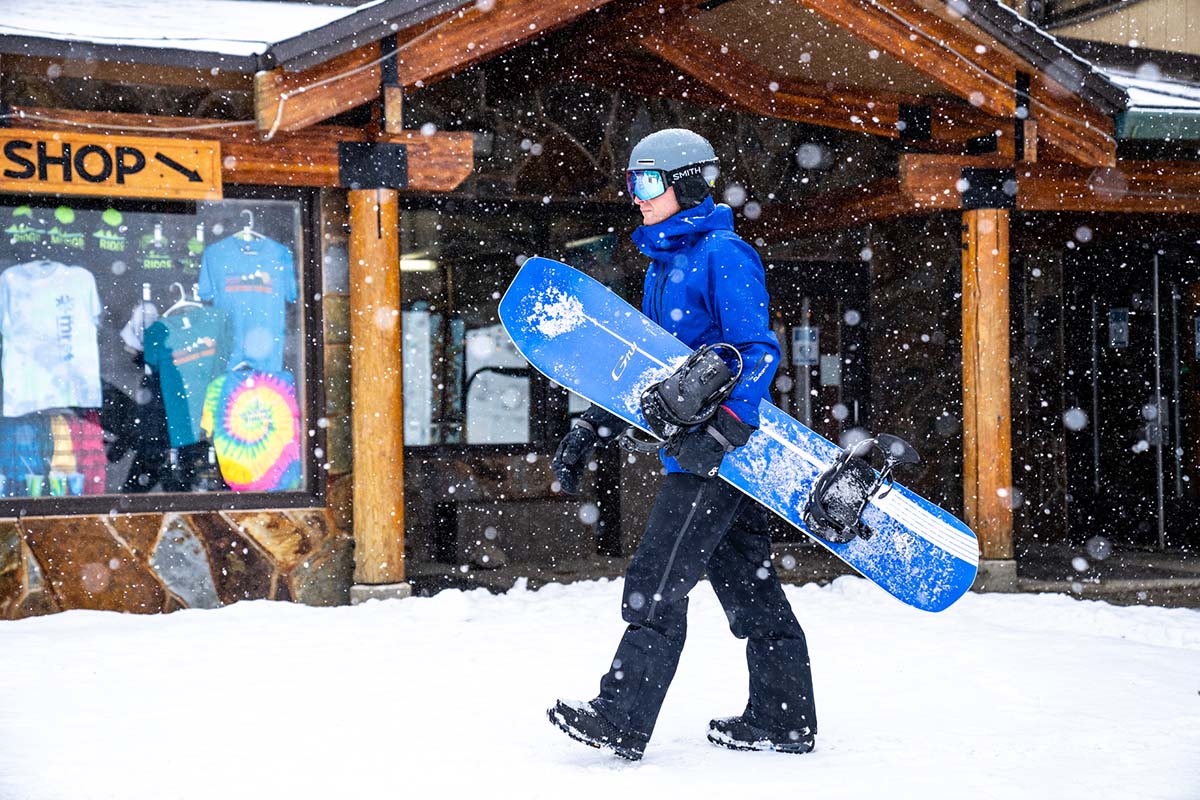
A relatively new board shape gaining momentum is the asymmetrical design. In short, what this means is that the heel side has a sharper, shorter sidecut than the toe side (the vast majority of boards have two identical sidecuts). This makes it easier and a bit more natural for some riders to roll into and hold heel-side turns, which can be a benefit to new boarders or those who take pride in precisely carving on groomers or firm snow. Whether it’s a worthwhile piece of tech is very much a matter of personal preference, but there are some tangible ride differences that some boarders will be happy with. Finally, it’s worth mentioning that most asymmetrical boards are considered “twins,” since the rest of the design is identical front to back. This allows manufacturers to make a single layout for both goofy- and regular-footed riders.
A snowboard’s profile generally describes the various types of camber between the tip and tail. However, there are snowboards that also have varying shapes from toe to heel or in a radial direction around the entire nose, tail, or both. When you hear a board described as “triple base,” it means that the center third of the board is flat, but the two outer thirds are lifted off the snow, ever so slightly. Boards with a three-dimensional shape commonly have the nose slightly curved up on the outer edges, like the shape of a spoon. Both 3D and triple base snowboards are designed for a more surfy ride and will float better in powder or even slush.
The length of a snowboard doesn’t vary dramatically (there's often only a difference of 5-10 centimeters within a whole line), but finding the right size for your weight and riding style is nevertheless crucial for maximizing performance. In general, aggressive, fast downhill riders will want a longer board, while beginners or those who prefer easy maneuverability will want a lighter, shorter board. Manufacturers and retailers will usually provide a recommended size chart for each specific model or model line. But for more general information, we’ve found this article and corresponding video from snowsports retailer Evo to be a helpful resource.
In addition to length, width is equally important to nail down when purchasing a snowboard. When sized correctly, your boots should hang slightly over the edges of the board but not touch the snow when you get on edge (this can cause your toes to drag and lead to a fall). If you have larger feet, we recommend looking for a wide board, which is often indicated with a “W” right after the length (for example, 154W). Manufacturers often publish helpful info on when to size up to a wide board, which is commonly around a size 11 or 12 for men and 9 for women (and those with very large feet should check out a short and fat board, which we cover below). Finally, women who need a wider model should also consider looking at regular-waisted men’s versions.
.jpg)
Put simply, the sidecut radius indicates how tightly or widely a snowboard turns. It’s a measurement of what size circle (usually in meters) would result from the arc created by the board’s edge. Generally, a snowboard with a narrow waist compared to its tip and tail will have a shorter sidecut radius (which equals a narrower turn), while a wide-waisted board will have a longer sidecut radius (which translates to a wider, arcing turn).
We won’t get too deep into the nitty-gritty—sidecut is actually a very nuanced and detailed topic—but there are three important considerations that ultimately affect your ride. First and foremost, sidecut interacts with your board’s flex, profile, shape, and effective edge to make turns wider, narrower, faster, slower, smoother, or more energetic. Second, the sidecut radius on the same board in different sizes will vary, which can be helpful in making a decision if you’re between lengths. Finally, beginners will generally prefer a smaller sidecut, which allows for quicker and more easily initiated turns.
.jpg)
A snowboard’s effective edge (commonly measured in millimeters) is the part that actually touches the snow while the board is on edge. Importantly, this isn’t the actual length of the board or the entire metal edge but only the section that comes into contact with the ground. So what’s the point of checking on this number? The spec can be useful when comparing similar boards: A longer effective edge bites into the ground better, which translates to greater stability and hold through a turn (especially useful in icy conditions or at high speeds). On the other hand, a shorter effective edge is a plus for beginners or freestyle riders, as it makes it a bit easier and less catchy to turn and slide. The good news is that this piece of information is commonly listed by the manufacturers. And a final note: Like the sidecut radius, the effective edge obviously changes as you switch between lengths.
.jpg)
Along with flex, profile, and shape, the core is an integral component of a board’s overall character. This is essentially the part that gives each board its unique pop, flex, dampening, durability, and responsiveness. It’s also often where you’ll find the most discernible differences between budget-friendly and high-end models. Most cores are made of wood strips—like poplar, birch, aspen, or bamboo—laid out from nose to tail and edge to edge and pressed into plywood, giving them strength and flex both longitudinally and torsionally. As a general guideline, materials like carbon, basalt, and bamboo are flexy and snappy, while urethane, cork, and Kevlar add extra dampening and are softer to better absorb impacts. All of the boards that made our list for the season are well-made and use high-quality materials. Although the price increases, the inclusion of premium touches, such as carbon fiber, delivers tangible performance benefits, including reduced weight and increased power and stability.

The job of a snowboard’s polyethylene (PE) base is to repel moisture, keep you sliding downhill, and protect the core. There are two types of snowboard bases: sintered and extruded. Sintered bases are made by compressing small bits of plastic together at high pressure to create a porous yet solid material. Because of these microscopic pores, sintered bases absorb waxes better, making them faster and more adaptable to different snow conditions. Unfortunately, they can be more difficult to repair if damaged by rocks, hard stumps, or rails. Plus, they require more maintenance to keep the wax fresh. That said, most boards—including all-mountain freestyle and all-mountain boards—have sintered bases due to the speed benefits, and are best for intermediate to advanced riders.
.jpg)
Extruded bases, on the other hand, are created by melting polyethylene pellets together, which creates a foundation with very few pores. The main benefits are that they are less expensive, cheaper and simpler to repair, and low-maintenance (they don’t need to be waxed as often). Extruded bases do tend to be slower than their sintered counterparts, but this can be a plus for those who primarily use their board for jibbing and park features. Having a rock board with an extruded base for early-season riding when damage is more likely to occur also makes a lot of sense. Finally, the ease of use is good news for beginners, who typically don’t need the added speed but will benefit from the more basic construction.
Also known as volume-shifted boards, these models trim off a surprising amount of length (sometimes 10cm or more) from a standard design while increasing the width. Quality options from the list above include the Lib Tech T.Rice Orca and Ride Warpig. Both boards have excellent stability and float, and the shorter length also helps with maneuverability in tight spots. In addition, the extra width makes them a nice match for those with large feet who have issues with their toes hanging off the edges. Downsides are that they aren’t going to be as rock-solid as longer boards for wide and fast sweepers, and they can be harder to manage for beginners. In the end, like the asymmetrical trend touched on above, there’s a time and place for short and fat boards—and arguably they offer greater performance benefits—but it does come down to personal preference if it’s the type of ride you’re looking for.
.jpg)
 Women’s-Specific Snowboards
Many of the boards above come in women’s-specific versions, which are generally softer-flexing and available in smaller sizes, and usually feature different design aesthetics (we've linked to both above when available). However, some companies have begun taking a more holistic approach to their lineups, doing away with gendered boards and instead offering unisex models in various sizes and flexes. When looking at the list above, we invite you to shop based less on your gender and more on what you know about yourself as a rider, including your body type, riding style, and desired board experience. And if a certain model appeals to you, the company often makes a similar board with a slightly softer or stiffer flex. Finally, it's worth noting that there are a few female-specific snowboard manufacturers, including Coalition and Pallas.
.jpg)
A board might be the biggest part of your snowboarding setup, but it’s only one piece of the puzzle. Boots and bindings are equally important and should align with your riding style and your board’s level of support. Starting with boots, the most crucial factor is stiffness, which is indicated by a flex rating. In general, a stiffer boot will offer better stability and is best suited to more aggressive all-mountain freeride and all-mountain boards. Alternatively, a softer boot will allow more flex and forgiveness, which can be helpful in pressing jibs and tweaking grabs on a park or softer all-mountain/freestyle board. A softer flex will also be more comfortable for beginners and require less break-in time. Boot flex ratings aren’t standardized and can vary by brand, but many manufacturers rate a boot’s stiffness on a scale of 1-10 (soft to stiff).
.jpg)
Snowboard bindings are similar to boots in that they vary from soft to stiff (again, usually on a scale of 1-10) and should match your overall riding style and preferences. Like boots and boards, softer bindings offer more flex for beginners and park-goers, while stiffer bindings are more responsive and stable. Finally, it’s important to make sure that your bindings match the connection on your board, whether it’s 4x4 bolts, 2x4 bolts, or a system like Burton’s EST sliders. If you need assistance determining the right type of binding to match your board, we recommend reaching out to your local snowsports shop (we've assembled our favorite online retailers here).
.jpg)
The boards above are built for resort terrain, but for those who like to explore out of bounds, a splitboard makes a lot of sense. These backcountry-specific designs are essentially a snowboard that’s cut in half from nose to tail with edges along the cut. On the uphill, you climb with the two pieces separated, and you reconnect them for the descent. Specialty bindings are also required, which are able to switch from a parallel setup with a free heel for touring to a perpendicular orientation for locking in on the downhill.
.jpg)
What do you compromise by going with a splitboard? First and foremost, they’re significantly more expensive than traditional downhill offerings—it’s a good idea to make sure you want to put in the uphill work before taking the plunge. In addition, the split nature of the construction impacts their performance and natural feel and flex, making them not all that versatile for lapping the resort (you certainly won’t want to use one as your quiver-of-one setup). And most importantly, before you get excited about the gear, we recommend taking an AIARE Level 1 course or equivalent to learn how to properly and safely travel in the backcountry.
Back to Our Top All-Mountain Snowboard Picks Back to Our Snowboard Comparison Table



.jpg?h=fbc67360&itok=w2MJVB1D)
 (s).jpg?h=fbc67360&itok=LvUlkI0t)

.jpg?h=fbc67360&itok=Nn7JyeJu)
.jpg?h=fbc67360&itok=glGqOBuw)
.jpg?h=fbc67360&itok=4Xc8CqwI)
.jpg?h=fbc67360&itok=oGaifWVw)
