.jpg)
.jpg)
Photo Credit
For all the minimalist backpackers, thru-hikers, and ounce-counters, the lightweight gear world offers plenty of options to complete your sleep system. While many of the leading backpacking sleeping bags will get the job done, for those looking to pare down their base weight, we think investing in the Feathered Friends Hummingbird UL 30 is a smart choice. Ultralight sleeping bags include both traditional mummy bags, as well as hoodless designs meant to be combined with a down puffy, and it's worth noting that this guide focuses specifically on those niche ultralight sleeping bags. For a more traditional selection of sleeping bags, check out our exhaustive guide on the best backpacking sleeping bags, or if you want to go further down the rabbit hole, we also have a guide to backpacking quilts, which trim even more weight.
Editor's note: In our most recent update, we added the Feathered Friends Hummingbird UL 30, removed several models, and added photos from recent testing trips. We also combed through the guide to ensure all other information—including prices, colors, and designs—was current at the time of publication.

Temperature rating: 30°F
Other option: 20°F
Weight: 1 lb. 5.2 oz.
Fill: 11.5 oz. of 950-fill down
What we like: Extremely well built and warmer than the temperature rating suggests.
What we don’t: Heavier than much of the competition.
If you aren’t familiar with the Seattle-based down specialists at Feathered Friends, the Hummingbird UL 30 is the perfect introduction. Known for their premium, ethically sourced high-loft down and meticulous Made-in-the-USA construction, this brand offers a level of quality that frequently outshines the "ultralight elephants" in the room. The Hummingbird's performance-to-weight ratio is staggering. Stuffed with 11.5 ounces of ultra-premium 950-fill goose down, it lofts almost instantly upon being unpacked—a testament to its high-quality insulation. During testing in the Canadian Rockies and the chilly shoulder season in Strathcona Provincial Park, we found that it consistently outperformed its rating (we tested the 20-degree model most recently). Even as frost formed on the tent, a simple base layer and a cinched hood were all that was needed to stay toasty, making it a formidable companion for "fast and light" adventures where temperatures dip well below freezing.
Achieving this level of warmth at a mere 1 pound 5.2 ounces requires a specialized, narrow cut that won't be for everyone. At 57 inches at the shoulder, the fit is decidedly svelte, which helps the bag warm up quickly but may feel restrictive to those with broader frames. However, for those who fit the mummy profile, the Hummingbird is a masterclass in functional design: it features a full-length two-way zipper (with a stiffened zipper guard that prevents frustrating snags) for venting, a reinforced Diamond Fuse footbox, and a thin but water-resistant Pertex Quantum Pro shell fabric. It packs down small—leaving plenty of room in your pack for a bear canister or extra layers—and maintains its loft season after season. However, the Hummingbird is overkill for summer use, and it’s on the heavy side—true ultralight aficionados will want to save weight by sacrificing features like a hood, full-length zipper, and water-resistant shell. It’s a significant investment, but for the serious backpacker, it offers one of the best warmth-to-weight ratios here and comes with a great track record for quality and longevity.
See the Feathered Friends Hummingbird UL See the Women's Feathered Friends Egret UL

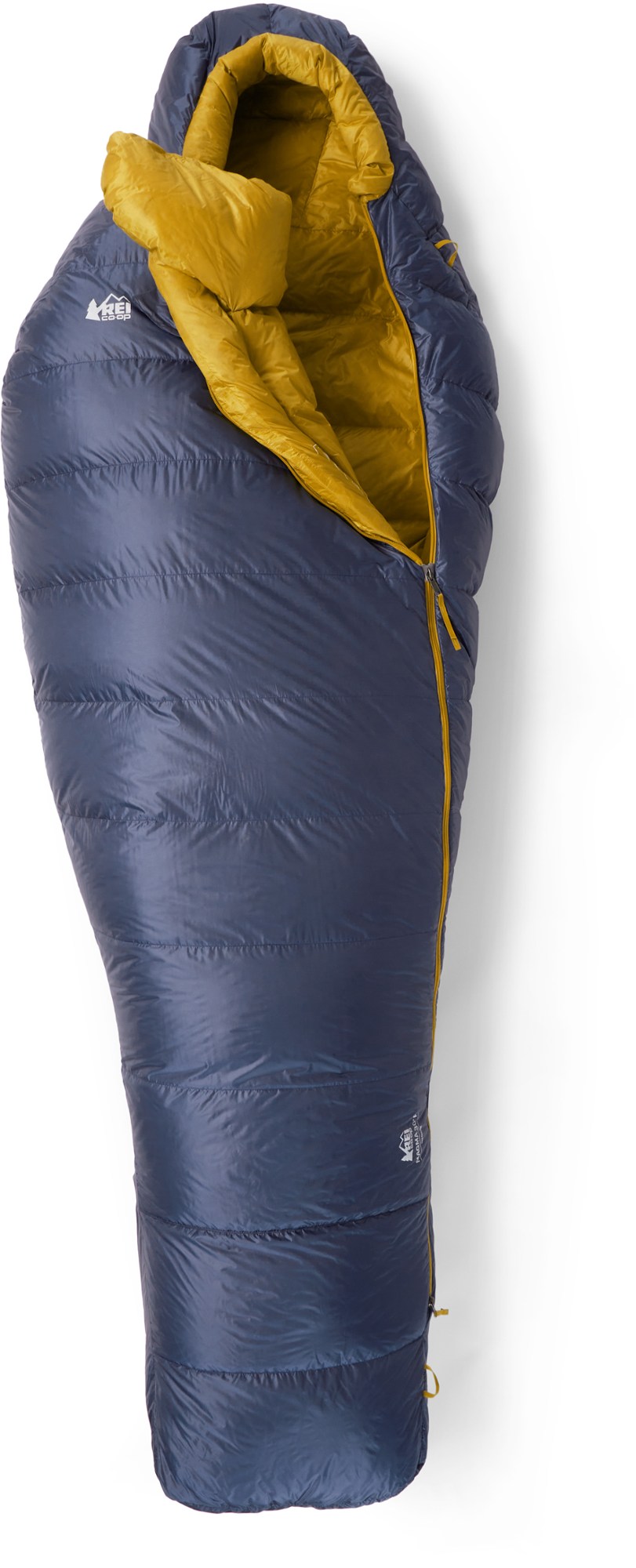 Temperature rating: 34°F ISO Comfort, 24°F Lower Limit
Other option: 15°F
Weight: 1 lb. 8.4 oz.
Fill: 12.7 oz. of 850-fill down
What we like: Light and inexpensive for what you get.
What we don’t: Lower-quality down than competing options from Feathered Friends (although it's not far off).
For the value seekers out there, REI Co-op’s hardgoods have seen a dramatic increase in quality in recent years, and the Magma sleeping bag is a case in point. For an approachable price, you get a warm and well-built 30-degree bag that weighs just 1 pound 8.4 ounces (a slight weight bump from previous iterations). In addition, the shell is 15D Pertex and the shoulder and waist dimensions are generous for a roomy night’s sleep. Dollar for dollar, you’d be hard-pressed to find a better ultralight sleeping bag that still offers 3-season warmth at such a high fill weight.
The 12.7 ounces of 850-fill down competes with 30-degree offerings from Feathered Friends and Western Mountaineering—the Lower Limit of the Magma is rated at 24 degrees, while the Comfort rating is set to 34. Alternatively, if you run warm or only camp in fair weather, you can save a lot of money with a cheaper summer-weight bag. But the Magma’s boost in insulation is considerable, and with a full-length zipper, it’s versatile for a range of temperatures. Put simply, it'd be hard to find a bag that better balances warmth, weight, and price from such a trustworthy brand.
See the REI Co-op Magma 30

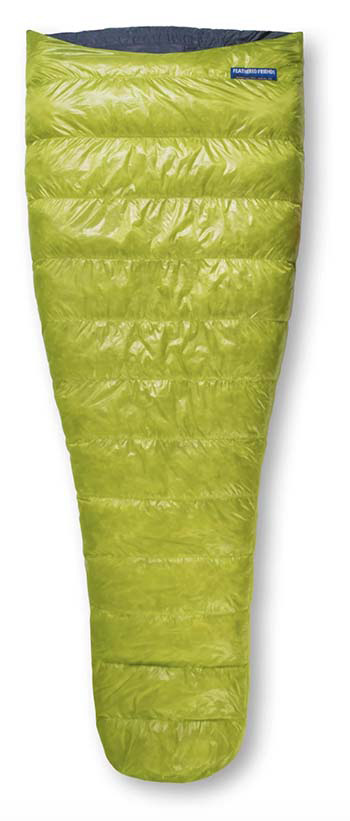 Temperature rating: 20°F
Weight: 1 lb. 2.9 oz.
Fill: 12.7 oz. of 950-fill down
What we like: Super comfortable and warm for its weight.
What we don’t: No zipper or hood; very thin materials.
A hoodless sleeping bag isn’t for everyone, but for diehard ULers who want to save weight without compromising warmth, it’s a really cool solution. Here’s the theory: You can keep your noggin warm with the hood of a down jacket or beanie (which you’re probably bringing anyway) and move that extra insulation to the rest of the bag, trapping your body’s heat with a drawstring at the neck. The net result is more insulation for less weight, which is worth the minor comfort sacrifice for most. The Feathered Friends Tanager is a shining example: Rated to 10 degrees colder than our top-ranked Hummingbird and checking in a bit lighter, its warmth-to-weight ratio is truly impressive.
We must admit: We initially were skeptical, but the Tanager has kept us warm on many chilly mountain nights. That said, it’s important to keep in mind what you give up with such a limited feature set. With a zipperless design, getting in and out is a bit of a chore, and there’s no option for venting on warm nights. Additionally, the Tanager’s 7D by 5D outer fabric is noticeably thinner than most bags here and will require some extra care to avoid snags and tears. And on occasion (especially particularly cold nights), we have found ourselves wishing for the added coziness of a traditional, hooded design. But no gear is ultralight without some amount of compromise, and we think the Tanager pulls it off better than most. If you’ve been known to saw off the end of your toothbrush or use trekking poles to pitch your tent, this bag has your name on it.
Read more: Feathered Friends Tanager 20 review
See the Feathered Friends Tanager 20
.jpg)
 Temperature rating: 51°F ISO Comfort, 45°F Lower Limit
Other options: 0, 15, 30°F
Weight: 12.8 oz.
Fill: 5.3 oz. of 850-fill down
What we like: Crazy light and provides the wet-weather assurance of hydrophobic down.
What we don’t: Only recommended for mid-summer use.
If you think the options above are ultralight, you ain’t seen nothing yet. At just 12.8 ounces, the 45-degree Spark is the lightest fully featured sleeping bag on this list and comes complete with a hood and zipper. What’s more, it features hydrophobic down and packs smaller than a 1-liter Nalgene in the included compression sack. Sure, the Spark can’t compare with most of the picks here in terms of warmth—with a 45-degree Lower Limit rating, we only recommend it for balmy nights—but these specs are undeniably impressive, even for a summer-weight bag. The Spark's previous iteration had a short, 1/3-length zipper, which limited wiggle room and ventilation but kept weight and bulk low. This has been improved a bit with a 1/2-length zip on the latest 45- and 30-degree options—adding a slight weight bump—and a 3/4-length zip on the 15- and 0-degree models.
All that said, versatility is limited with such a lightweight design. To put it in perspective, the top-ranked Hummingbird contains twice the amount of down, which makes it more versatile for 3-season use. On top of that, its 10D shell isn’t the thinnest here (the Tanager’s above is 7D), but it will require considerable care when packing or sleeping outside on rough ground. But the Spark series is about as good as it gets if you’re looking to shave weight, and it’s worth checking out the 0, 15, and 30-degree versions for more warmth.
See the Men's Sea to Summit Spark 45 See the Women's Sea to Summit Spark 45
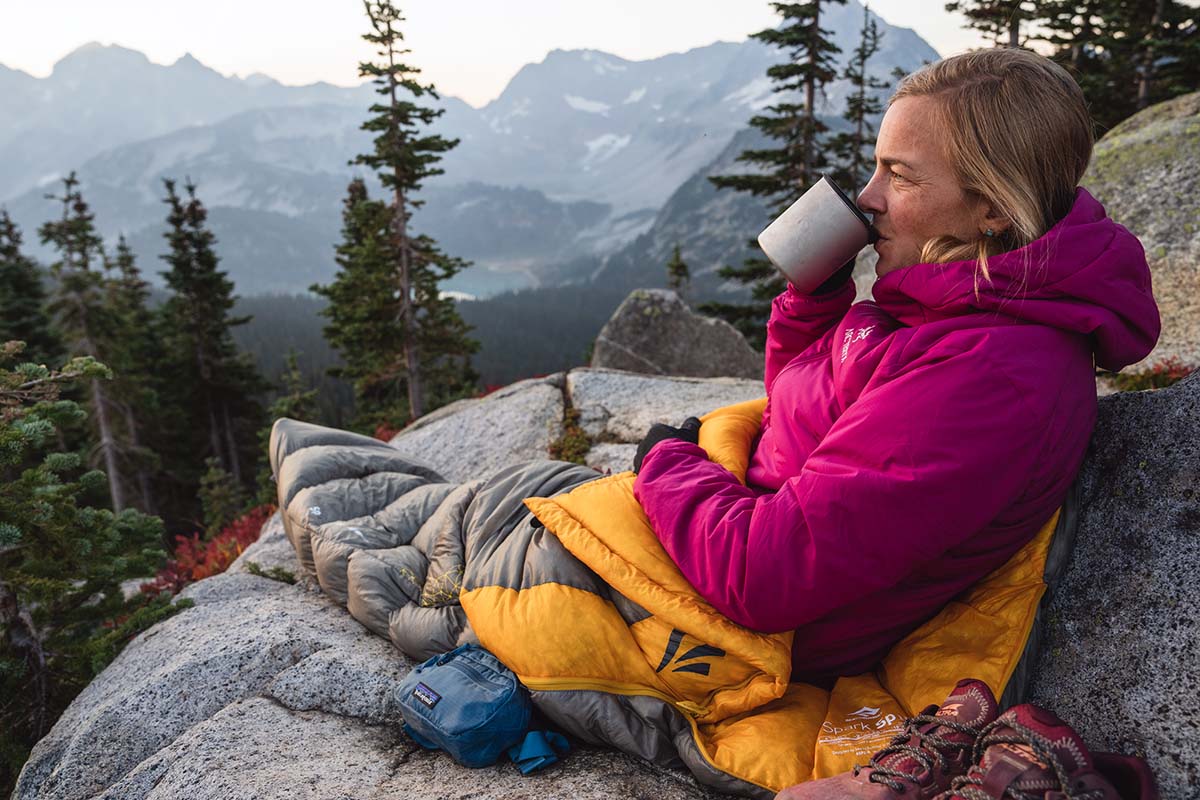
 Temperature rating: 35°F
Weight: 1 lb. 0 oz.
Fill: 7 oz. of 850-fill down
What we like: A fully featured mummy bag that weighs just 1 pound.
What we don’t: Limited warmth and a half-length zipper aren’t great for dropping heat on warm nights.
There’s no denying that the Hummingbird UL is a great ultralight pick, but at well over a pound, it’s just too heavy for some. While you won’t find a lighter fully featured bag within Feathered Friends’ lineup (the Tanager forgoes a zipper and hood), Western Mountaineering has a number of options to choose from. One of their most popular ultralight designs is the HighLite here, which weighs a pound even and includes a half-length zipper and hood. The materials and construction are top-notch, with a strong shell fabric and a combination of sewn-through and baffled seams that balance weight savings and warmth. Sure, 7 ounces of down fill isn’t a lot, but it’s hard to argue with the efficiency of this Western Mountaineering design.
The HighLite’s 35-degree temperature rating is only 5 degrees shy of the Hummingbird’s, but a quick look at the specs tells us there’s more to the story. While you get a generous 11.5 ounces of 950-fill down with the Feathered Friends, the Western Mountaineering packs in only 7 ounces, and it's a lower fill-power down to boot. Further, the half-length zipper compromises ventilation and versatility. These gripes aside, you’d be hard-pressed to find this much warmth packed into a 1-pound mummy bag, and the HighLite should be fully sufficient for most summer nights (even in the mountains). If you want to go even lighter with WM, check out their FlyLite (36°F; 14.3 oz.) or hoodless Monolite (38°F; 13 oz.).
See the Western Mountaineering HighLite
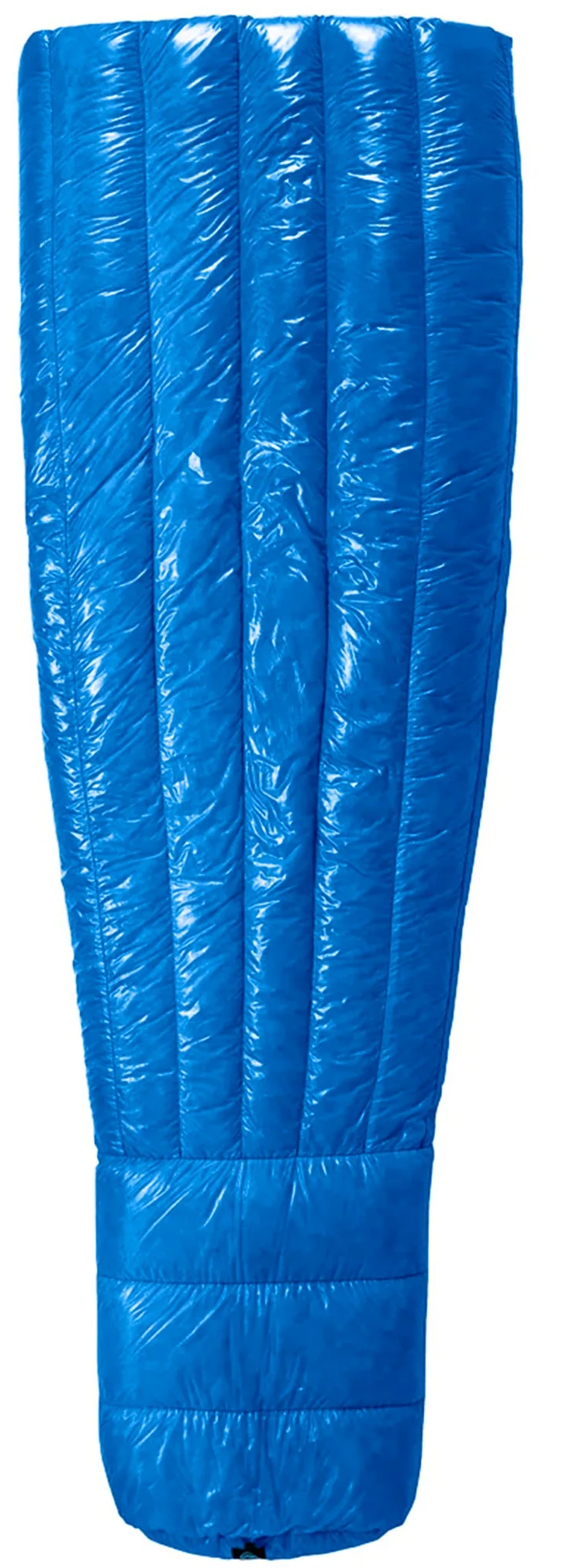 Temperature rating: 20°F
Other options: 10, 30°F
Weight: 1 lb. 2.8 oz.
Fill: 13.7 oz. of 900-fill down
What we like: Great warmth-to-weight ratio; versatile design doubles as a quilt.
What we don’t: Feels less refined than other brands.
Zpacks is one of the biggest names in ultralight gear, widely known for their Dyneema tents and backpacks. The cottage brand also makes a wide assortment of down sleeping bags and quilts, which—true to ultralight form—offer a high degree of customization in terms of temperature rating, length, width, and color. One of their three sleeping bag options, the hoodless Classic features a 3/4-length zipper along the back, which is a versatile design that allows you to drape it over you like a quilt or zip it up like a standard sleeping bag. And because the zipper will likely be under you as you sleep, the need for a draft tube is eliminated, thus saving on weight.
The 20F Classic here features 13.7 ounces of RDS-certified 900-fill down, which puts it in the realm of bags like the Feathered Friends Tanager. We like the vertical baffles, which keep down from migrating to the side of the bag, and the 2.5 inches of loft offers an incredibly plush and cozy feel. And the Classic is relatively competitive in terms of price. But you have to watch out with Zpacks: Their products do have a slight handmade feel, including occasional loose threads and uneven seams. That said, if you care about warmth-to-weight ratios above all else, the Classic is certainly worth a closer look—and while you’re at it, check out the Zpacks’ Zip Around and Mummy Sleeping Bag, too.
See the Zpacks 20F Classic
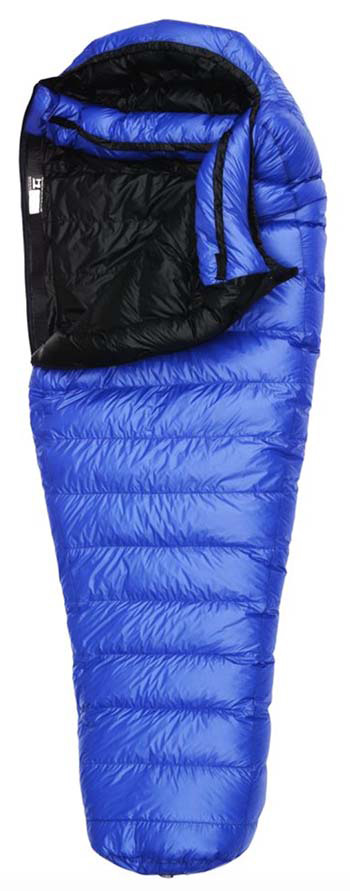 Temperature rating: 20°F
Weight: 1 lb. 13.0 oz.
Fill: 16.0 oz. of 850-fill down
What we like: Warmer than the HighLite; alpine-centric design.
What we don’t: Heavier than the 20-degree Feathered Friends Hummingbird.
A good number of the sleeping bags on this list are designed for summer adventuring, but the Western Mountaineering UltraLite is a serious step up. With 16 ounces of 850-fill down and a 20-degree temperature rating, it’s much more alpine-centric than the HighLite. You also get a plush draft collar and hood, continuous baffles, and a respectable weight of less than 2 pounds. This bag may be overkill for warm weather and low elevations, but it provides more security for mountain environments and shoulder seasons when temperatures can really drop.
The biggest competitor to the Western Mountaineering UltraLite is the 20-degree version of the Feathered Friends Hummingbird UL listed above. Interestingly, the UltraLite has a higher fill weight (16 vs. 14 oz.), although the Hummingbird uses ultra-lofty 950-fill-power down that offsets some of that difference. On the flip side, the Western Mountaineering is heavier, which is what made the difference for us. Both are excellent ultralight 20-degree bags, and your final choice might come down to availability, but we give a slight nod to the Feathered Friends. And if you want a bit more room, check out Western Mountaineering’s AlpinLite, which adds 5 inches at the shoulders and 4 inches at the hips.
See the Western Mountaineering UltraLite
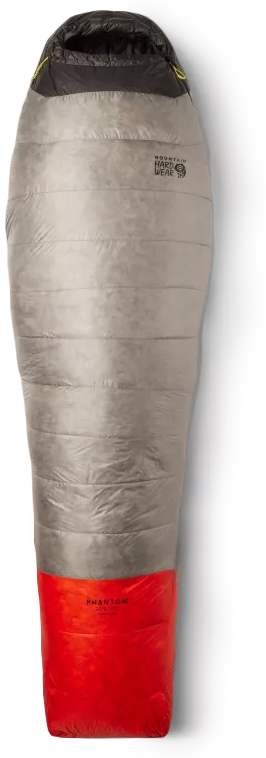 Temperature rating: 30°F
Other options: 0, 15°F
Weight: 1 lb. 6.1 oz.
Fill: 10.1 oz. of 800-fill down
What we like: Well-designed zipper and competitive price.
What we don’t: Lacks the warmth-to-weight of premium bags from Feathered Friends and Therm-a-Rest.
Mountain Hardwear is yet another brand with a great selection of thoughtfully designed sleeping bags, and the Phantom 30F is their ultralight offering. Mountain Hardwear shaves weight with a streamlined shape and thin, 10D shell fabric (the same material used in their popular ultralight Ghost Whisperer jacket), but they don’t skimp on the zipper, which is almost full-length, reasonably robust, and uses an anti-snag head. We’ve been disappointed by fragile and snag-prone zippers from Mountain Hardwear in the past, so the current Phantom’s design is a welcome improvement.
The Phantom is a suitable bag for most summer conditions, but its warmth falls short of top performers from brands like Feathered Friends and Therm-a-Rest. The 30-degree model uses 10.1 ounces of 800-fill down (a slight downgrade from the previous model's 850-fill power), which simply can’t match bags like the Tanager (12.6 oz. of 950-fill), which checks in at a lighter weight but forgoes a full-length zipper. But compared to less compromised bags like the Hummingbird, the Phantom’s warmth-to-weight is a bit more competitive, and it'll cost you less than the Hummingbird, too. We’re partial to down specialists like Feathered Friends and Western Mountaineering—the level of quality is hard to beat—but the Phantom is nevertheless a great summer-weight sleeping bag for those looking to streamline weight and bulk.
See the Mountain Hardwear Phantom 30F
Beyond the top picks featured, we’ve rigorously tested a wide range of other high-quality ultralight sleeping bags and quilts that ultimately didn't secure a spot in our final selection. Our goal is to highlight the true standouts—those that offer an exceptional blend of value, field-tested performance, and long-term durability. Every model we recommend has been vetted over multiple seasons to ensure it earns its place in your kit. Nevertheless, we believe sharing these "honorable mentions" provides helpful context and a more complete picture of the current market.
The Feathered Friends Vireo UL is a stellar ultralight sleeping bag, but given the Tanager, it just doesn't merit inclusion this round. The warmer Tanager weighs only a tad more, and we feel it is the better all-around ultralight option compared to the Vireo. We also opted to leave the Western Mountaineering SummerLite out, largely because of the sheer number of Western Mountaineering options already in this guide, but we also feel that the warmth-to-weight ratio just doesn't stack up to the competition. That said, it's a fantastic, well-featured, lightweight option that slots somewhere between the HighLite and UltraLite in terms of performance.
The Montbell Seamless Down Hugger 800 #3 lived on this round-up for a long time, but stock has been tricky to come by, and it's a fragile design. The baffle-free exterior and internal diagonal baffles are a unique design that helps balance weight, warmth, and comfort well.
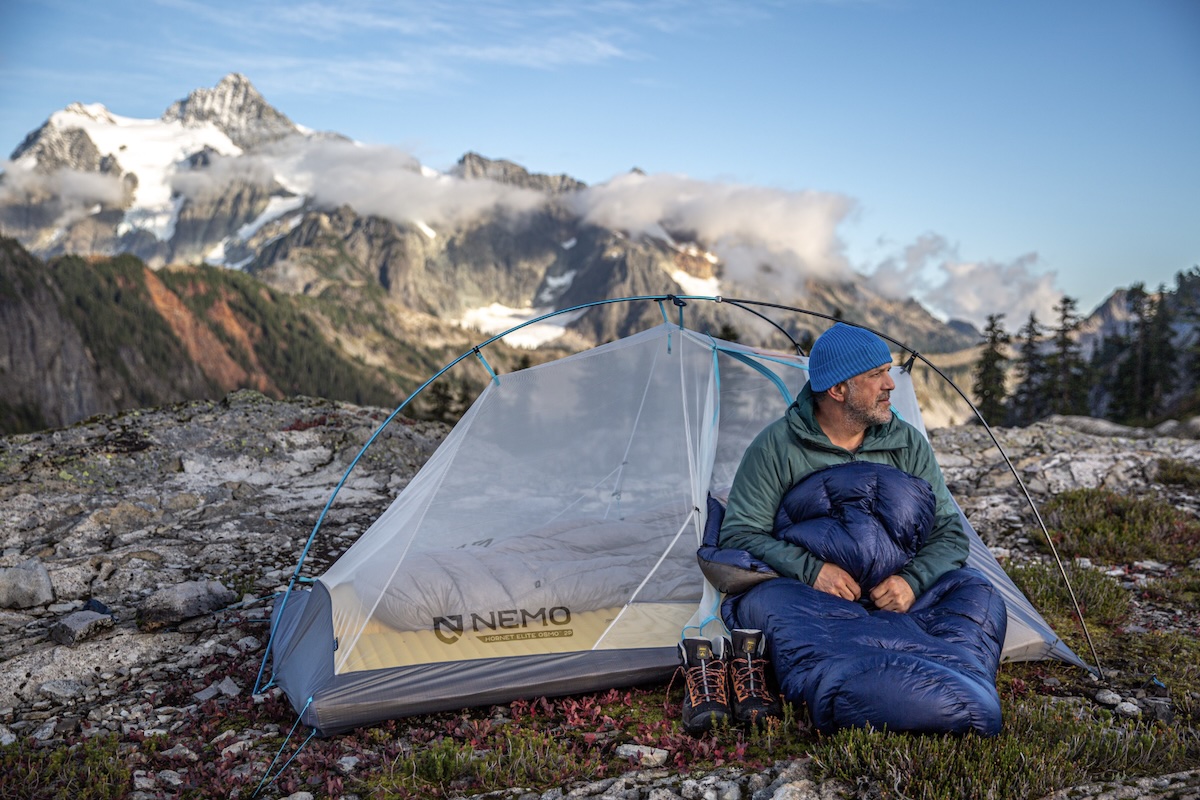
| Sleeping Bag | Price | Temp* | Weight | Down Fill* | Shell | Zipper |
|---|---|---|---|---|---|---|
| Feathered Friends Hummingbird UL | $639 | 30°F | 1 lb. 5.2 oz. | 11.5 oz. of 950-fill | 7D x 15D | Full-length |
| REI Co-op Magma 30 | $349 | 34°F (ISO) | 1 lb. 8.4 oz. | 12.7 oz. of 850-fill | 15D | Full-length |
| Feathered Friends Tanager 20 CFL | $489 | 20°F | 1 lb. 2.9 oz. | 12.7 oz. of 950-fill | 7D x 5D | None |
| Sea to Summit Spark 45 | $349 | 51°F (ISO) | 12.8 oz. | 5.3 oz. of 850-fill | 10D | 1/2-length |
| Western Mountaineering HighLite | $455 | 35°F | 1 lb. 0 oz. | 7 oz. of 850-fill | Unavail. | 1/2-length |
| Zpacks 20F Classic | $459 | 20°F | 1 lb. 2.8 oz. | 13.7 oz. of 900-fill | 7D | 3/4-length |
| Western Mountaineering UltraLite | $660 | 20°F | 1 lb. 13 oz. | 16 oz. of 850-fill | 12D | Full-length |
| Mountain Hardwear Phantom 30F | $580 | 30°F | 1 lb. 5.1 oz. | 10 oz. of 850-fill | 10D | Full-length |
*Editor's note: For the purposes of this table, we have included the EN/ISO Comfort rating where applicable, which we feel is the most accurate point of comparison. When available, we've listed both the Comfort and Lower Limit in the product specs.
Aside from a tent and backpack, your sleeping bag or quilt is the heaviest, bulkiest element of your backpacking loadout. An ultralight model is vital for reducing base weight to hike and climb efficiently—which is just what our team of trail hogs at Switchback are all about. From fast and light weekend missions in the mountains to full-blown thru-hikes up and down the country, we've clocked our fair share of miles toting all manner of ultralight sleep systems and are constantly trying to find that perfect balance between warmth and a minuscule scale reading. In short, only the absolute best quilts or bags out there are considered for this guide. Former senior editor Jenny Abegg first wrangled this list together back in 2019. A dedicated mountaineer and ultralight backpacker, she is intimately familiar with the importance of a lightweight load for tackling serious miles in the backcountry. She took countless bags and quilts on just as many adventures around the world to narrow down our initial 0f models.
Current senior editor Chris Carter inherited this guide in 2024. An avid thru-hiker and climber, Chris' adventures require absurdly small packs and a healthy amount of type-2 fun. His toothbrush is chopped nearly to the bristles, and he's considered just about every ultralight quilt out there in pursuit of the lowest base weight possible. Chris is an alumnus of each of the Triple Crown trails in the United States (AT, PCT, and CDT) and continues to trek and climb around the world. In managing this guide, we analyze a variety of key factors—including warmth-to-weight ratio, packability, and durability—to gauge a quilt or bag's merit. We work hard to stay on top of new models and designs as they surface, adding standouts to our list along the way and ensuring our existing reviews stay up to date.
.jpg)
Increased popularity in ultralight backpacking and bikepacking has led to a great deal of innovation in lightweight gear. Outdoor gear companies have found new ways to shave weight off traditional mummy bags, in addition to developing minimalist backpacking quilts. Although there is variation within each style and some crossover in designs, we’ve broken down our picks into two main categories: sleeping bags and backpacking quilts. Below we detail the main features of each, including how they compare in terms of warmth, weight, versatility, and more.
It's worth noting that this guide focuses specifically on niche ultralight sleeping bags and quilts. For a more general selection of sleeping bags, check out our exhaustive guides on the best backpacking sleeping bags and the best camping sleeping bags.
.jpeg)
Sleeping Bags
If you’ve done much backpacking, you're probably familiar with mummy-style sleeping bags. Mummy bags are narrow at the feet, widen at the hips and shoulders, and usually have a hood that extends over the head and cinches tight around the face to seal out cold. And while the contoured design of mummy bags means they’re already rather streamlined (compared to more traditional rectangular bags), ultralight styles shed even more weight with thinner shell materials, higher fill power down, shorter zippers, and smaller dimensions. Some mummy bags will even drop the hood and zipper entirely, but expect to sacrifice warmth, comfort, and versatility with these hoodless designs. The ultralight mummy bags on our list have temperature ratings from around 20 to 40 degrees Fahrenheit and weigh between 12.8 ounces and 1 pound 13 ounces, with most hovering just over 1 pound.
-1.jpg)
Sleeping bags differ from backpacking quilts in one significant way: they wrap fully around and enclose your body, whereas quilts generally cover only your top and sides (more on this below). Many ultralight sleeping bags use a zipper to cinch all the way closed, while others, like the Feathered Friends Tanager, drop the zipper for a simple slip-on “tube.” Because they provide wraparound protection, sleeping bags generally are a bit heavier than quilts, but they’re also slightly warmer. But while those with full-length zippers offer ventilation similar to a quilt, we find that zipperless bags or bags with shortened zippers are much less versatile. In the end, choosing your style of sleep system comes down to personal priorities, but mummy bags generally are our top choice for cold-weather endeavors when you need the ability to cinch your bag shut and keep out drafts.

Backpacking Quilts
Thru-hikers and diehard ultralighters are always looking for ways to shave ounces, and the backside of a sleeping bag is an obvious target (your bag’s feathers compress underneath you as you sleep, meaning that they don’t actually provide much insulation). A quilt removes the hood and back from a traditional mummy bag and pairs with a sleeping pad (attached via ties or straps) for insulation on all sides. Some quilts are wide enough to wrap fully around the body (with ties to close the gap), while others (“top quilts”) are designed to protect only the sleeper’s top and sides. In terms of the footbox, quilts will either feature a sewn-shut box or a blanket-style design with a drawcord cinch or zipper at the feet. Like ultralight sleeping bags, quilts prioritize weight savings with high-fill-power down, thin shell fabrics, and lightweight attachment systems. Our top quilt picks range from 13.3 ounces to 1 pound 7 ounces, with most models clocking in around 1 pound.
.jpg)
While the quilts on our list have temperature ratings similar to our top sleeping bag picks (20 to 40°F), there are a few factors to consider here. First off, unless you’re a perfectly still back sleeper, quilts have a higher potential for drafts, which throws a wrench in the temperature rating. But to compensate, most designs contain a bit more down fill than traditional bags (and remember, it’s concentrated on the front and sides, which means even more warmth). For example, the 20-degree Feathered Friends Tanager CFL sleeping bag has 12.7 ounces of 950-fill down, while the 20-degree Feathered Friends Flicker UL has 14.7 ounces of 950-fill down. And on warmer nights, quilts offer much better ventilation than sleeping bags. Finally, by doing away with the zipper and a whole side of materials, quilts often are a bit lighter too (consider the 13.3-oz. Western Mountaineering NanoLite).
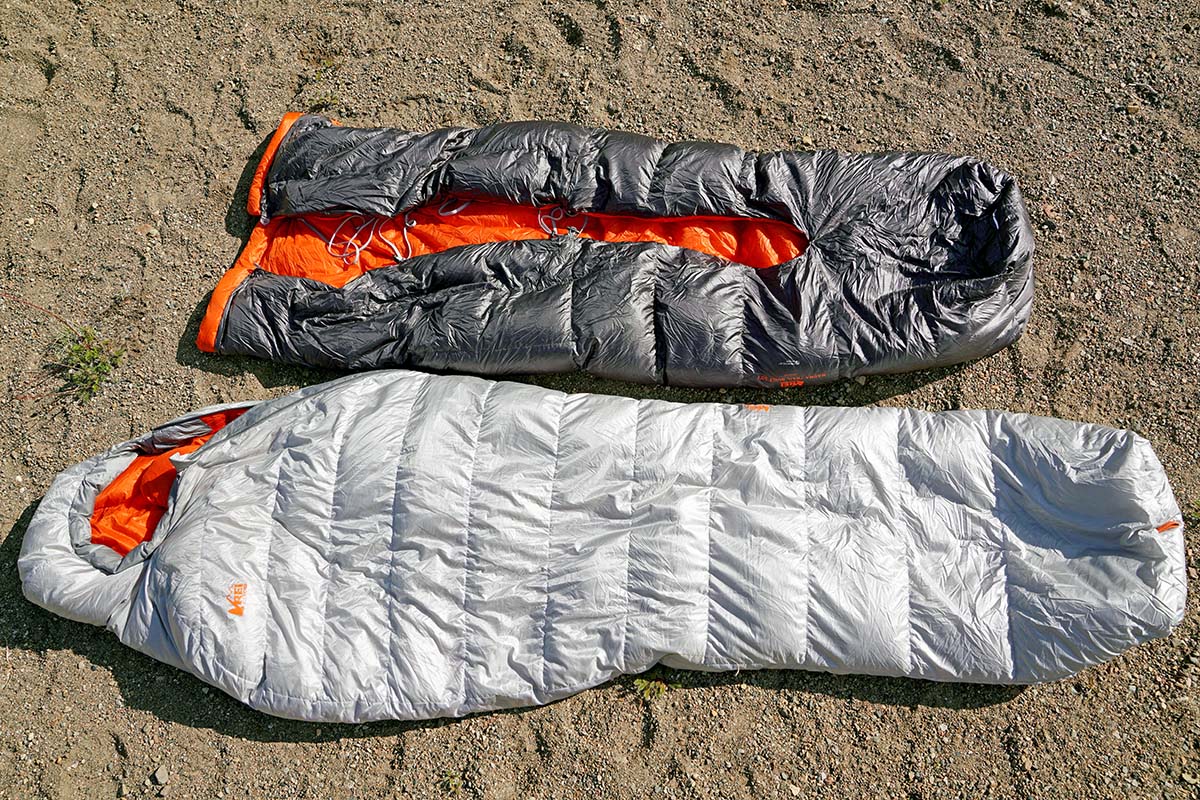
Hybrids
It’s worth mentioning that there is a tiny subgroup of sleeping bag/quilt hybrids that retains many characteristics of both. For example, the hybrid Feathered Friends Flicker UL features a full-length zipper that extends all the way through the footbox. On cold nights, the Flicker encloses your body completely, à la sleeping bag (a cinch tightens the footbox to minimize cold air spots), and on warm nights it opens all the way up into a blanket. Hybrid options are super versatile ultralight sleep systems that cross over from cold to warm better than most, but keep in mind that the full-length zipper does add some weight. For example, the 30-degree Flicker is 1 pound 6.4 ounces compared to the 1-pound-5.2-ounce Hummingbird sleeping bag and 1-pound-3.8-ounce Katabatic Gear Palisade quilt (both also 30°F). For a more detailed breakdown of the categories mentioned above, see our article on sleeping bags. vs. quilts. Another unique hybrid option is the popular Zenbivy Ultralight Bed, which pairs a quilt and sheet together in one streamlined package.
.jpg)
Ultralight sleeping bags and quilts are specifically designed for weight- and space-conscious backpackers, thru-hikers, alpinists, and bikepackers. Every sleeping bag and quilt we’ve included on our list above is under 2 pounds, aside from Enlightened Equipment's two-person Accomplish (most models hover just over 1 lb.), which is pretty impressive considering the amount of warmth they provide. And because all of these bags and quilts are insulated with down rather than synthetic fill, they pack down incredibly small. Some come with a compression sack, but if not, we highly recommend purchasing one separately. With that, many of these bags and quilts can compress roughly to the size of a Nalgene bottle, easily fitting into a corner of your backpacking backpack or bike pannier.
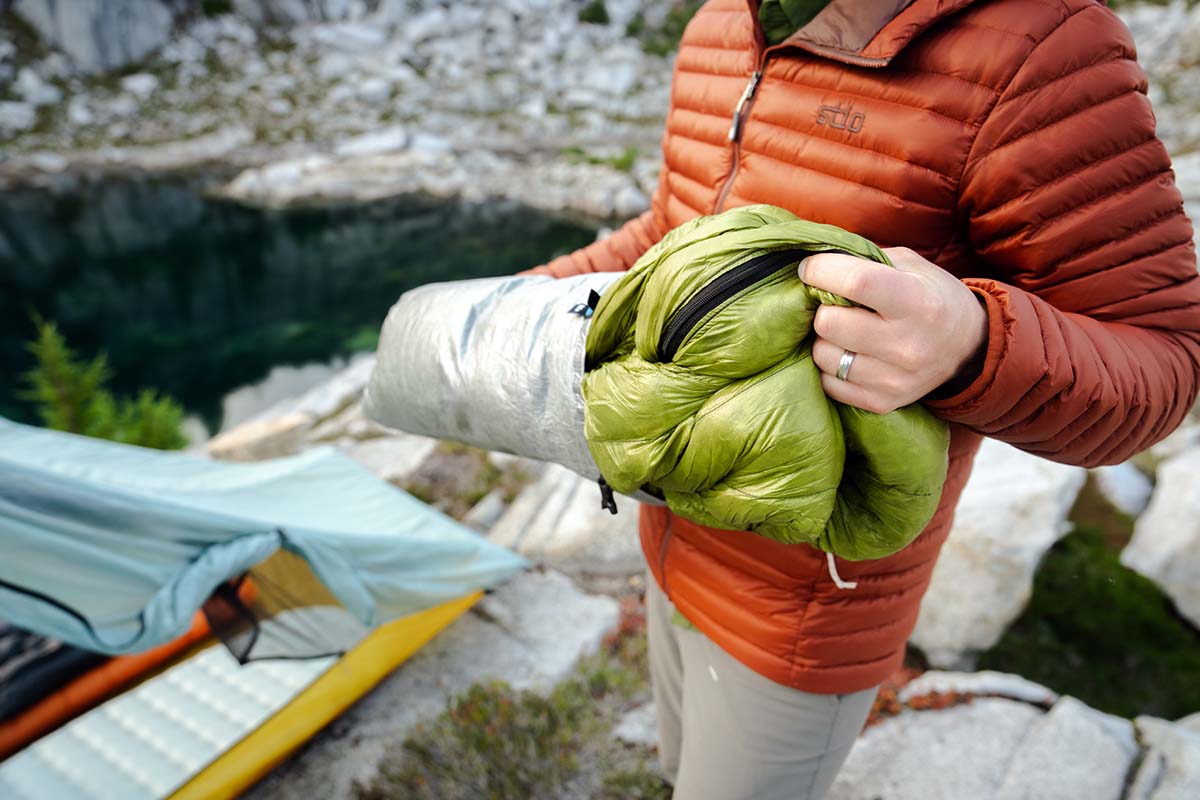
As we mentioned above, manufacturers shave weight from sleeping bags and quilts in a number of ways, including the use of ultra-thin shell fabrics (measured in denier), high-fill-power down (which offers impressive warmth for the weight), thin or shortened zippers (or none at all), and narrow profiles. Other designs eliminate the hood or footbox or include less down fill along the torso. In the case of quilts, some also leave off attachments or cinches (these are often known as “top quilts”). It’s important to keep in mind that, inevitably, a lighter sleeping bag or quilt will often result in sacrifices in durability, comfort, or warmth (or all of the above).
.jpg)
For example, consider the 1-pound-5.2-ounce Feathered Friends Hummingbird UL and 1-pound-2.9-ounce Tanager. While you’d expect the heavier model to be warmer, in this case, the Tanager is the warmer bag (by 10 degrees), with 12.7 ounces of 950-fill down vs. the Hummingbird’s 11.5. How does the Tanager accomplish this? The short answer is that the bag sacrifices both convenience and durability, with a hoodless and zipperless design and very thin shell fabric. The lesson here is that a lower weight does not always mean a less insulated bag—but it does indicate that some sacrifices are being made. In the end, it’s important to look at the specific features of each bag, which we've tried to detail above, and decide what and how much you’re willing to give up for a few ounces of weight and space. If you'd like to explore further, check out our sleeping bag weight comparison chart for a side-by-side look at most of the top contenders on the market.
One of the first things you might notice about the ultralight sleeping bags and quilts featured in this article is their insulation: every item on our list uses down fill. While there are some solid synthetic options out there, in the ultralight category, down is by far the superior insulator, beating out synthetic fill both in warmth-to-weight ratio and compressibility.
.jpg)
That said, not all down insulation is created equal. Both duck and goose down are measured in terms of their fill power, which describes (in cubic inches) how much space is filled by one ounce of down. Fill power can vary from around 500 to over 900, with most ultralight sleeping bags and quilts featuring a fill power of 850 to 950. A second measurement you’ll commonly see is fill weight, which is the total weight (in ounces) of the amount of down in a product. For example, the REI Co-op Magma 30 has 12.7 ounces of 850-fill goose down. Be sure to pay attention to both numbers—a higher fill power doesn’t always indicate a warmer product, and fill weight is the lesser-advertised but perhaps more important spec of the two. In the end, you need both to get an accurate idea of how warm a given bag is.
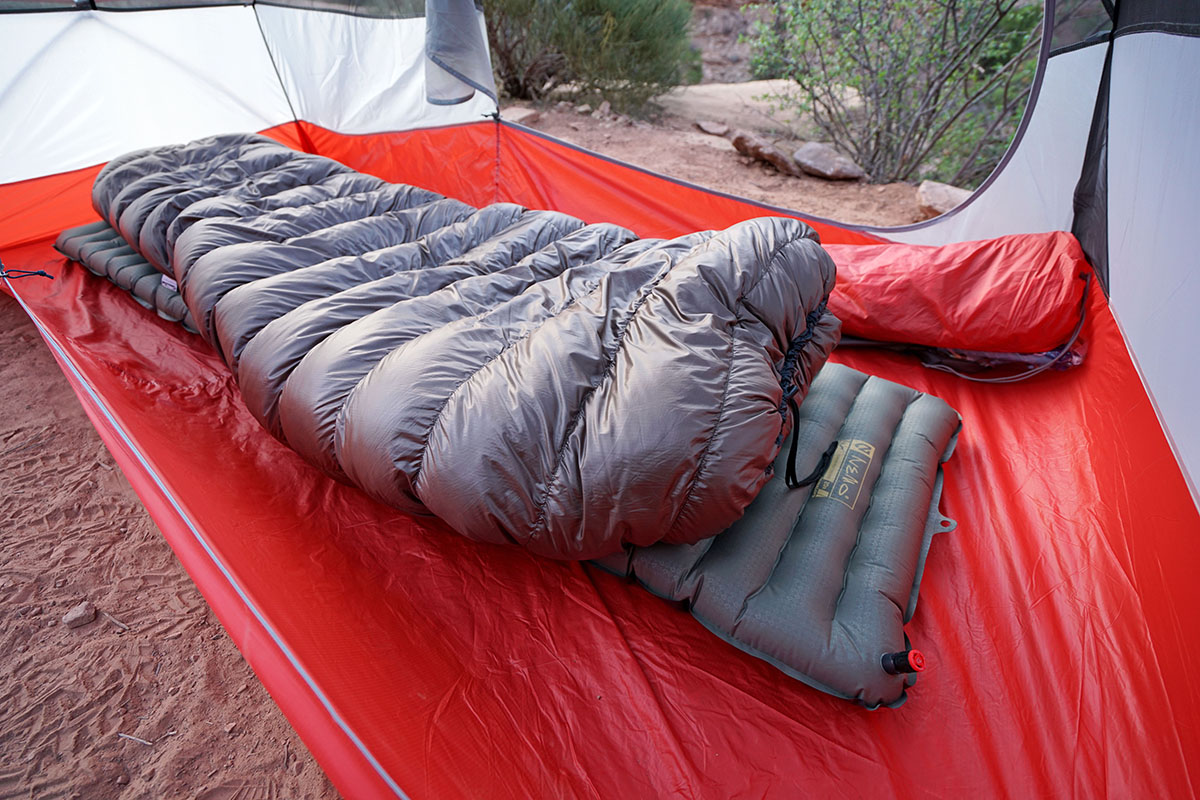
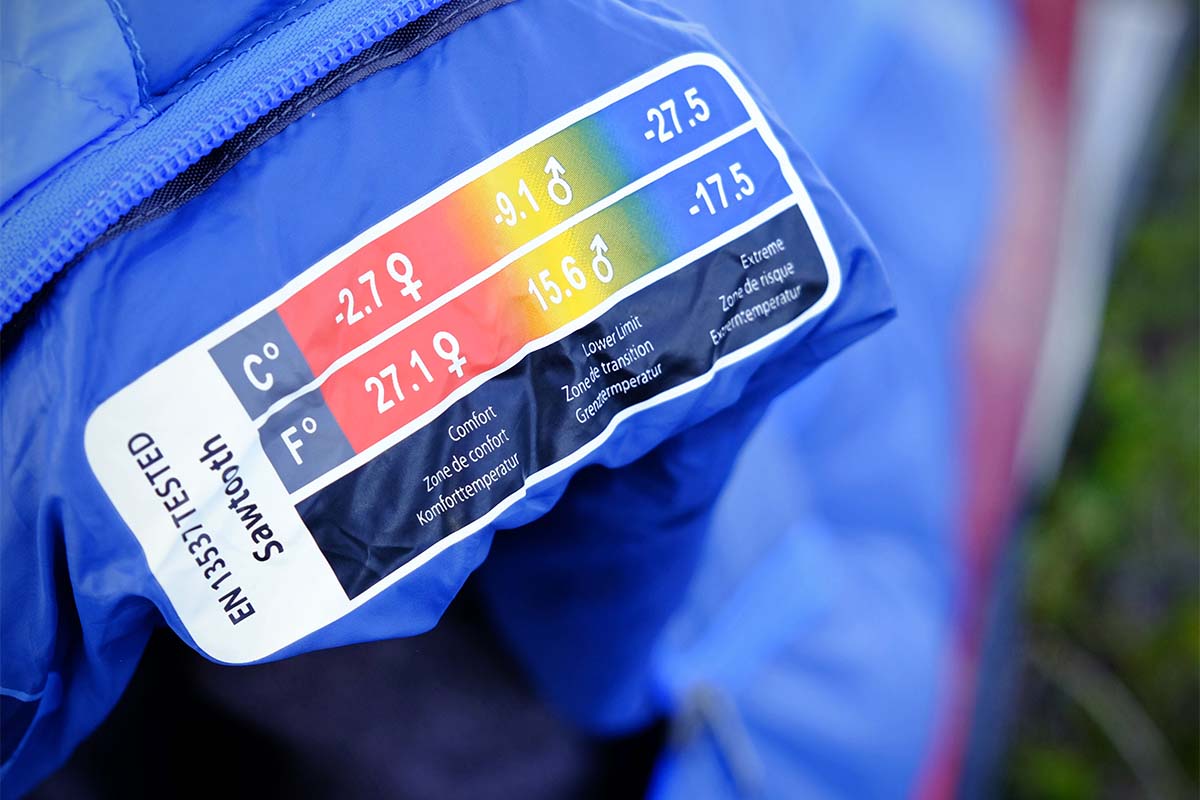
When it comes to ultralight bags, temperature ratings are a bit like the Wild West. Some companies here adhere to international testing standards (you'll see mention of EN or ISO ratings), while many of the smaller brands choose to provide their own temperature ratings. Quilts, in particular, do not qualify for standardized tests given the nature of their open design. For a deeper dive into this topic, see our article on sleeping bag temperature ratings.
For the consumer, the primary benefit of EN/ISO ratings is the ability to draw accurate comparisons between products. It's a bit trickier comparing an EN/ISO-rated bag with a non-rated bag, but there are a lot of helpful clues to keep in mind. For one, down fill power and weight are great indicators of how warm the bag will be, in addition to the construction (sewn-through or baffled) and whether or not the bag comes with a hood and draft collar. And as for models that don't undergo standardized testing, we've found that most small companies take pride in providing fairly conservative temperature ratings. For example, the Feathered Friends Hummingbird UL 30 is warmer than most bags with a 30-degree EN/ISO Comfort designation (more on this below).
.jpeg)
You'll also notice that EN/ISO-rated bags are given both Lower Limit and Comfort ratings. The Lower Limit indicates the temperature at which the bag or quilt will keep you safe—for men’s bags, this usually is the given temperature rating (or close to it). The Comfort rating denotes at what temperature the bag will keep you comfortable, and this is the number often specified for women’s bags. In practice, we've found the Comfort rating to be the most accurate predictor of warmth, which is why we've listed it (where applicable) in the comparison table above. And it's never a bad idea to err on the conservative side, giving yourself a buffer (10 degrees or so) between your bag's Comfort rating and the low temperatures you expect to be sleeping in.
We can talk about the insulation of a sleeping bag or quilt all day, but without a shell and lining, a sleeping bag would just be a pile of plumage. Typically, ripstop nylon is used for both the outer shell and inner lining, and the thickness of this nylon is specified in denier or "D" (the thickness of each thread used to create the material). Generally speaking, the higher the denier, the more durable the fabric.
One way that manufacturers shave weight off ultralight sleeping bags and quilts is by using extremely thin shell fabrics, which can go as low as 7D (or in the case of the Feathered Friends Tanager, 5D by 7D). These products require an extreme amount of care—with thousands of feathers loose inside, a small rip can mean the loss of a lot of insulation. We’ve had our fabric rip due to a snagged zipper, but you’ll also need to be careful around twigs, rocks, and sharp items in your pack. If you’re sleeping without a tarp or tent, make sure to clear the ground of any abrasive objects. Further, we recommend always stowing or packing your bag in a stuff sack or cloth bag for transport or storage.

If you tend to be rough on your gear, it’s a good idea to choose a sleeping bag or quilt with more durable fabric. Many of the items listed here come with the option of a thicker face fabric. The Feathered Friends Hummingbird YF, for example, is made with a 20D shell fabric compared to the Hummingbird UL’s 7D and 15D. The endlessly customizable Enlightened Equipment Enigma allows you to choose between a variety of different fabric color options of 7D, 10D, or 20D. Heavier fabrics will cost you a small weight penalty but may end up being worth it in the long run.

Sleeping bags and quilts come in a range of sizes, which are generally specified by length. The Feathered Friends Hummingbird bag, for example, is available in regular and long sizes. Manufacturers also specify the girth—or circumference—of each size, most commonly given as a series of three measurements taken at the shoulders, hips, and footbox. Cottage brands like Enlightened Equipment and Katabatic are known for offering more choices in terms of sizing, especially when it comes to width. For example, our top-ranked Enigma quilt is available in a plethora of different variations, ranging from short to extra-long for length and slim to extra-wide for width (for a custom quilt). This high degree of customization makes quilts a great choice for plus-sized backpackers, who might not find what they need in the traditional sleeping bag market.
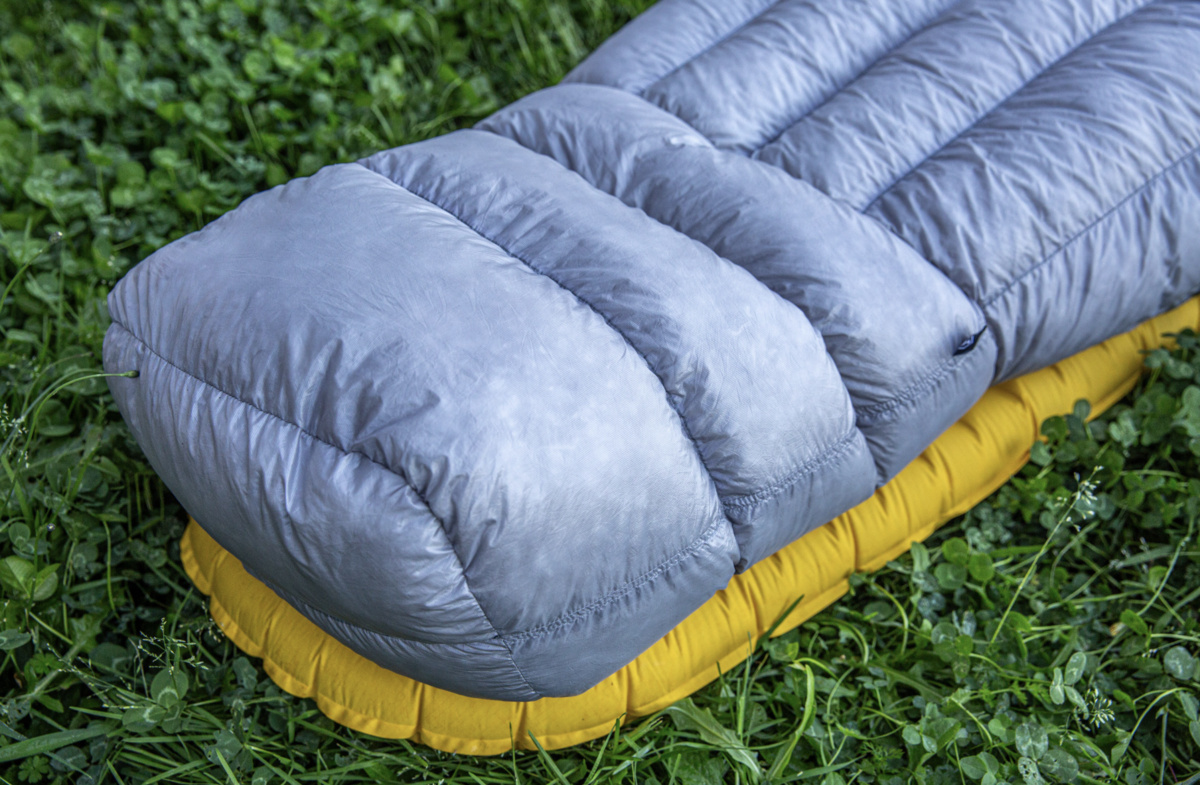
Ultralight bags and quilts are often much more streamlined (read: narrower) than their traditional counterparts. For example, compare the Feathered Friends ultralight Hummingbird UL 30 to their roomier (and heavier) Swallow UL 30. The Hummingbird (1 lb. 5.2 oz.) measures 57 inches around the shoulders, 53 at the hips, and 41 in the footbox, while the Swallow (1 lb. 7.4 oz.) is 59, 55, and 42 inches, respectively. The UL versions of the Hummingbird and Swallow are virtually identical aside from their measurements and weights. And keep in mind that shoulder girths between sleeping bags and quilts don't quite compare—for example, Katabatic Gear states that their size-regular Palisade quilt (54 in. at the shoulders) is comparable to a sleeping bag with a shoulder measurement of 63 inches.

While cutting a bag’s dimensions is effective for minimizing the total weight of the product, it can be a pain for those with broad shoulders and wide hips or for side sleepers. If you consider yourself in either category, we recommend looking at wider or roomier options. A small footbox can also make things feel squished. While we love the ultralight weight of the Therm-a-Rest Vesper 20, for example, the footbox is noticeably narrow to save weight. Quilts can often offer a nice solution for those who feel constrained by a sleeping bag, but their narrow dimensions pose a whole different issue—if you do want to batten down the hatches, there might not be enough fabric to wrap fully around your body. For the best of both worlds, look for quilts with generous shoulder dimensions that are wide enough to cinch closed. Alternatively, you might also consider opting for a double quilt, which typically measure around 86 inches at the shoulders and are available from brands like Enlightened Equipment.
.jpg)
Rear Closure
Backpacking quilts, by design, forgo the zipper closure of a traditional sleeping bag and leave the back open, draping over the sleeper like a blanket or attaching to the sleeping pad. Some are so narrow that they are unable to fully enclose a body (think hot dog bun), while others, like the Zpacks Solo Quilt, are wide enough that the two sides can meet (more akin to a taco). On these wider quilts, it’s common to see a closure along the backside, which means the quilt can be securely closed, mimicking a sleeping bag. Feathered Friends’ Flicker UL is also a notable exception here, as it has a full-length zipper to seal shut (although it’s heavier than much of the competition).
.jpg)
The most common closures we see on quilts are 1-3 clips or buckles along the sides. The Western Mountaineering NanoLite innovates with a thin, crisscrossed elastic band across the back. While these closure systems cannot be expected to fully seal out drafts, they do ensure that the quilt will stay wrapped around you while you sleep (unless you’re using sleeping pad attachments, which we think is a better option for ground sleepers). It’s important to think about your end-use when considering what kind of closure system you want—if you need one at all. For example, the elastic back of the NanoLite is super lightweight and comfortable under the body, but with no quick release, the quilt cannot be used like a blanket. On the other hand, buckles like those on the Enlightened Equipment Enigma might feel uncomfortable against your back, and we have concerns about their long-term durability. Finally, if you don’t think you’ll use it, you might want to opt for a model with no rear closure (also called a top quilt).
Sleeping Pad Attachments
More than a rear closure, the design of a quilt relies on sleeping pad attachments to keep drafts out. Sleeping pad attachments extend from the back of the quilt and around the pad and generally offer two adjustments. First, cinch the straps to the pad for a secure attachment. Second, choose where to lock your quilt in on the straps. You can lock each side towards the center for more draft protection or closer to the sides for a roomier sleep. And on a warm night, leave the attachments off for better ventilation. Sleeping pad attachments differ from brand to brand and offer varying levels of weight savings, convenience, and durability.

Footboxes: Sewn and Open
The footbox is one of the main places we see quilts differ in style and design. Take the Enlightened Equipment Enigma and Revelation, for example. The Enigma features a sewn-shut footbox, whereas the Revelation has a zipper and drawcord that allow you to open the quilt to a full blanket. Other quilts feature a snap and drawcord closure instead. And on hybrid sleeping bag/quilts like the Feathered Friends Flicker, we see a full-length zipper that extends all the way through the toe box to give you the ultimate versatility (at a weight penalty).
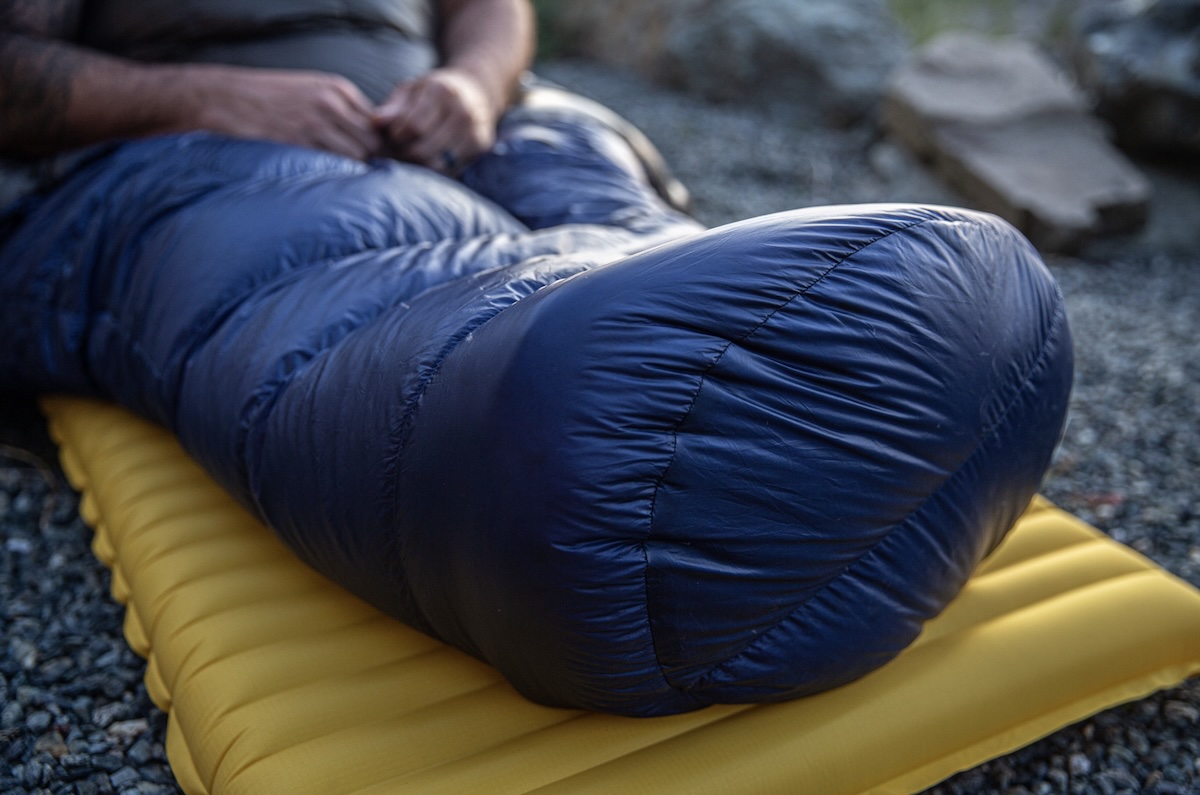
The advantages and disadvantages of each design are fairly obvious. With an enclosed footbox, you get a very simple lightweight design with no moving parts and a draft-free compartment for your feet. However, you don’t get the option of opening your quilt up into a blanket. With the open footbox, on the other hand, you get a lot of customization, but at the sacrifice of weight and a bit of warmth (although you can always stuff your jacket into the footbox to minimize drafts). The trend seems to be moving toward sewn-shut footboxes (most users don’t find a need for a blanket), but many cottage-industry models, including the Hammock Gear Burrow, allow you to choose between a sewn or zippered/drawcord footbox.
.jpg)
Zippers
Zippers are one of the heaviest features on a sleeping bag, so it’s no surprise that this is a place where we see a great deal of variation and innovation in the ultralight world. For one, manufacturers can cut weight by shortening the length of a zipper: while some ultralight sleeping bags feature zippers that extend the entire length of the bag (REI Co-op Magma), others have partial-length zippers (the Sea to Summit Spark) or forgo the zipper entirely (Feathered Friends’ Tanager).
.jpg)
Full-length zippers not only offer ease of entering and exiting the bag, but they also allow versatility in venting. On a hot night, it’s nice to be able to stick a leg out into the cool air or zip open the bag and drape it overtop like a blanket. Two-way zippers offer even more versatility, allowing you to cool off hot feet while keeping the torso completely insulated. On the other hand, partial-length zippers or zipper-less designs mean your ventilation options are severely limited. We’ve spent many nights in our Therm-a-Rest Hyperion 20 (out of stock at the time of publishing) bouncing back and forth from too hot (fully inside the bag) to too cold (bag draped overtop) with no viable middle ground.
Another way that manufacturers shave weight is by using thin zippers (often as low as #3 YKK). But keep in mind that thinner zippers are less durable and trickier to use than their more robust counterparts. Our old Mountain Hardwear Mtn Speed 32, for example, had a #3 YKK zipper that rarely shut without issue, eventually resulting in a large rip in the shell fabric beside it, leaking down, and broken teeth (thankfully, Mountain Hardwear repaired the sleeping bag under warranty and replaced the zipper with a thicker #5 YKK). In our opinion, the hassle and durability concerns associated with a thin zipper are not worth the weight savings. If you end up choosing a bag with a notably thin zipper, make sure you’re prepared to exercise a great deal of caution each time you use it.
.jpg)
Draft Collar
A draft collar is an insulated tube that encircles the top opening of a sleeping bag or quilt, closing the gap between your body and the bag. Cinched close to your neck, it provides an incredibly lofty, pillow-like feel that traps warm air in the body of the bag while allowing your head to breathe (keep in mind that a draft collar is different from a hood). Draft collars (or yokes, which serve the same purpose but are only attached at one end and rarely cinch) are ubiquitous on standard sleeping bags—especially cold-weather models—but are less popular on ultralight bags and quilts. Along with zippers and thick shell fabrics, they are one of the first things to go in the name of shaving weight. As a result, many of the lightest bags on our list do not feature a draft collar.
Similar to the Spark and Tanager, many ultralight quilts forgo the draft collar as well. But because quilts do not feature hoods, some sort of closure at the neck is vital. Most often, a simple drawcord replaces the draft collar at the neck opening, cinching tight to trap warm air below. But a cinched drawcord can be uncomfortable without the buffer of the soft, cushioned collar and does not offer the same level of draft protection. Some quilts have chosen to retain the draft collar, even at the expense of weight—the Katabatic Gear Palisade and Western Mountaineering NanoLite, to name a couple. If you are a particularly cold sleeper, we recommend choosing a quilt with a collar.
.jpg)
Baffle Design
The different stitching patterns on each individual sleeping bag and quilt may seem like they’re just for show, but this “baffling” actually is a critical design feature. Baffles essentially are tubes of fabric that help down insulation stay evenly distributed throughout a bag or quilt. Take one glance at the picks above and you’ll see a range of patterns, from the chevron baffles, such as the horizontal tubes on the Feathered Friends Hummingbird UL and the vertical body baffles on the Zpacks Solo Quilt. Despite the range in appearances, these examples can be broken down into two main designs: continuous baffling and segmented baffling.

Continuous baffles, like those found on the Feathered Friends Hummingbird UL and Katabatic Gear Palisade, are tubes of feathers that go the entire width or length of a sleeping bag without being blocked by stitching or fabric. Feathers can move up and down these tubes as the user sees fit, depending on temperature swings. During cold evenings, move your features on top for added warmth; during warm evenings, shift them underneath you for a less insulated bag. The downside of continuous baffles is that feathers can occasionally move without you guiding them, leaving the sleeper shivering through the night.
.jpeg)
If you’re the type of person who loves tweaking your gear, continuous baffles could be a good fit. However, in most cases, we prefer bags and quilts with segmented baffles that keep feathers evenly distributed throughout. In the most premium bags, these compartments, or “boxed baffles,” are separated by lightweight material inside of the shell fabric rather than draft-prone stitching. Most segmented baffles add a bit of weight, but for most, their convenience and warmth distribution are worth the tradeoff.
The origin of down insulation has become a hot topic, and we’re happy to see more companies jumping on board in support of responsibly sourced goose and duck plumage. Many brands now subscribe to the Responsible Down Standard (RDS), a global certification given to down products that indicates the birds were treated humanely and not subjected to unnecessary harm such as force-feeding or live-plucking. Further, some companies have developed their own standards, such as Patagonia’s Traceable Down Standard. All of the bags and quilts on our list above use ethically sourced down and are either certified by the RDS or backed by the manufacturer (Western Mountaineering, for example, works with a specific farm to source their down to ensure that responsible practices are being upheld).
.jpg)
If you plan to travel in humid or wet climates, we recommend looking for down insulation that has been treated to withstand light moisture. Water-repellent down, also known as hydrophobic down, is able to resist moisture much better than untreated down, dry out faster, and stay lofty even when wet. Although it’s certainly not as effective as synthetic insulation (see our article on down vs. synthetic insulation here), hydrophobic down adds a good dose of extra security (although there are very few instances when your bag or quilt should be exposed to moisture). In addition, look for shell fabrics that have been treated with a durable water repellent (DWR) finish, which adds an extra layer of caution for wet or snowy environments. Last but not least, a waterproof compression sack is a wise choice for the backcountry.
.jpg)
With an attempt to keep all of our ultralight sleeping bag options under 2 pounds, we have chosen to limit this list to 3-season sleeping bags, or bags rated to 20 degrees or higher. That said, ultralight winter sleeping bags do exist, which are ideal for temperatures you might find while adventuring in unpredictable shoulder seasons, mountaineering, or while winter camping. One noteworthy choice is the Western Mountaineering Kodiak MF, a 0-degree bag that weighs an impressively light 2 pounds 12 ounces. Although this is quite a bit heavier than all of our ultralight options above, for a hardwearing, cold-weather sleeping bag, staying under 3 pounds is impressive. A second popular pick is the Feathered Friends Snowbunting ES 0, another 0-degree option at only 2 pounds 15.2 ounces. In addition to Western Mountaineering and Feathered Friends, most of the other brands above have winter-ready models available in their lineups. The designs are similar, but they just have a lot more down fill and won't compress as small.
.jpg)
Unless you’re sleeping in a hammock, it’s incredibly important to pair your ultralight quilt or sleeping bag with an appropriately insulative sleeping pad. Even a plush, cold-weather sleeping bag will not keep you warm if you’re sleeping on the ground. This is most important when using ultralight quilts. Quilts rely on the insulation from your pad beneath you to keep you warm, as they are designed to simply drape over you, as opposed to zipping around you. Some quilts have the width to wrap around you fully and connect underneath you, but without a zipper drafts can more easily wiggle their way through. Most sleeping pads are given an R-value, which is a measurement of how well the pad can insulate you from the ground. For 3-season use, we recommend a pad with an R-value of at least 3 to 4, like the popular Therm-a-Rest NeoAir XLite NXT (R-value: 4.5).
If you’ve read through our list of quilts above, you might have noticed that many of the brands featured are not mainstream companies that sell through big retailers. The cottage industry is alive and well in ultralight gear manufacturing, and for good reason. Companies like Enlightened Equipment, Katabatic Gear, and Zpacks were founded by outdoor enthusiasts—often thru-hikers—who noticed a gap in the market for ultralight equipment. These products are made by the people, for the people. In fact, it’s only in recent years that big brands like REI, Therm-a-Rest, and Marmot have thrown their hats into the ultralight ring.
.jpg)
These products often have a number of things in common. First, the designers and manufacturers generally are thru-hikers, bikepackers, and ultralight enthusiasts who use the gear they make. The result is well-thought-out products that nail the details and often allow the buyer to customize sizes, down fill, materials, and features. Further, since these are small companies, most of their gear is handmade in the United States. While we love this culture and encourage you to support it, keep in mind that you may experience longer wait times between ordering and receiving your items. And perhaps the biggest downside for most consumers: you won’t find brands like Zpacks and Enlightened Equipment on the shelves at your local retailer, meaning you won’t be able to see your bag/quilt or "try it on" before buying. Luckily, most of these companies include detailed videos and descriptions on their websites and have reasonable return policies.

.jpg?h=fbc67360&itok=_31ZUgeg)
 (s).jpg?h=fbc67360&itok=opO7uduG)
.jpg?h=fbc67360&itok=7U3Ry5Le)
.jpg?h=fbc67360&itok=alJCQBk9)
.jpg?h=fbc67360&itok=H8kE4-37)

.jpg?h=fbc67360&itok=EZmZXoiz)
.jpg?h=fbc67360&itok=e9ctDbuO)
.jpg?h=fbc67360&itok=GoOMku-D)