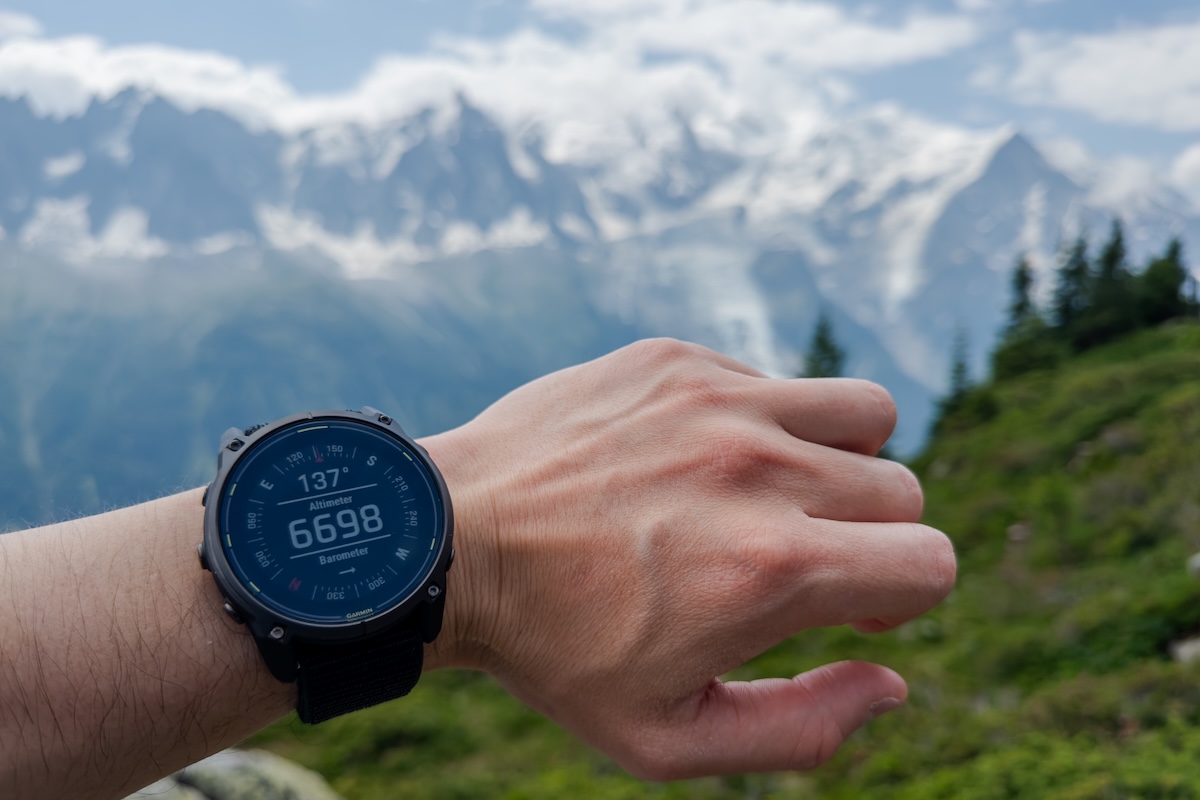
Photo Credit
For hikers and mountaineers, a quality GPS watch is a worthy addition to your gear collection. Built to handle the extremes, GPS watches have a distinct look with durable, scratch-resistant faces and large screens flanked by glove-friendly buttons. Beyond GPS tracking, these watches include ABC basics (altimeter, barometer, and compass) and modern fitness-tracking features, such as heart rate monitoring, activity tracking, and custom workout suggestions. You’ll see a lot of familiar faces in our top picks, including Coros, Suunto, and GPS giant Garmin. In fact, Garmin takes our top spot with their Instinct 3 Solar. For more background information, check out our comparison table and how to choose section below the picks, along with details about our testing process. And if you’re on the hunt for a sports watch to record frontcountry workouts, check out our list of the best fitness watches.
 Weight: 1.8 oz.
Battery: Lithium-ion and solar
Diameter: 40, 45, 50mm
What we like: A rugged, long-lasting GPS watch with smart features.
What we don’t: Garmin’s Fenix series boasts better navigation and battery life; most Garmin watches come with a steep learning curve.
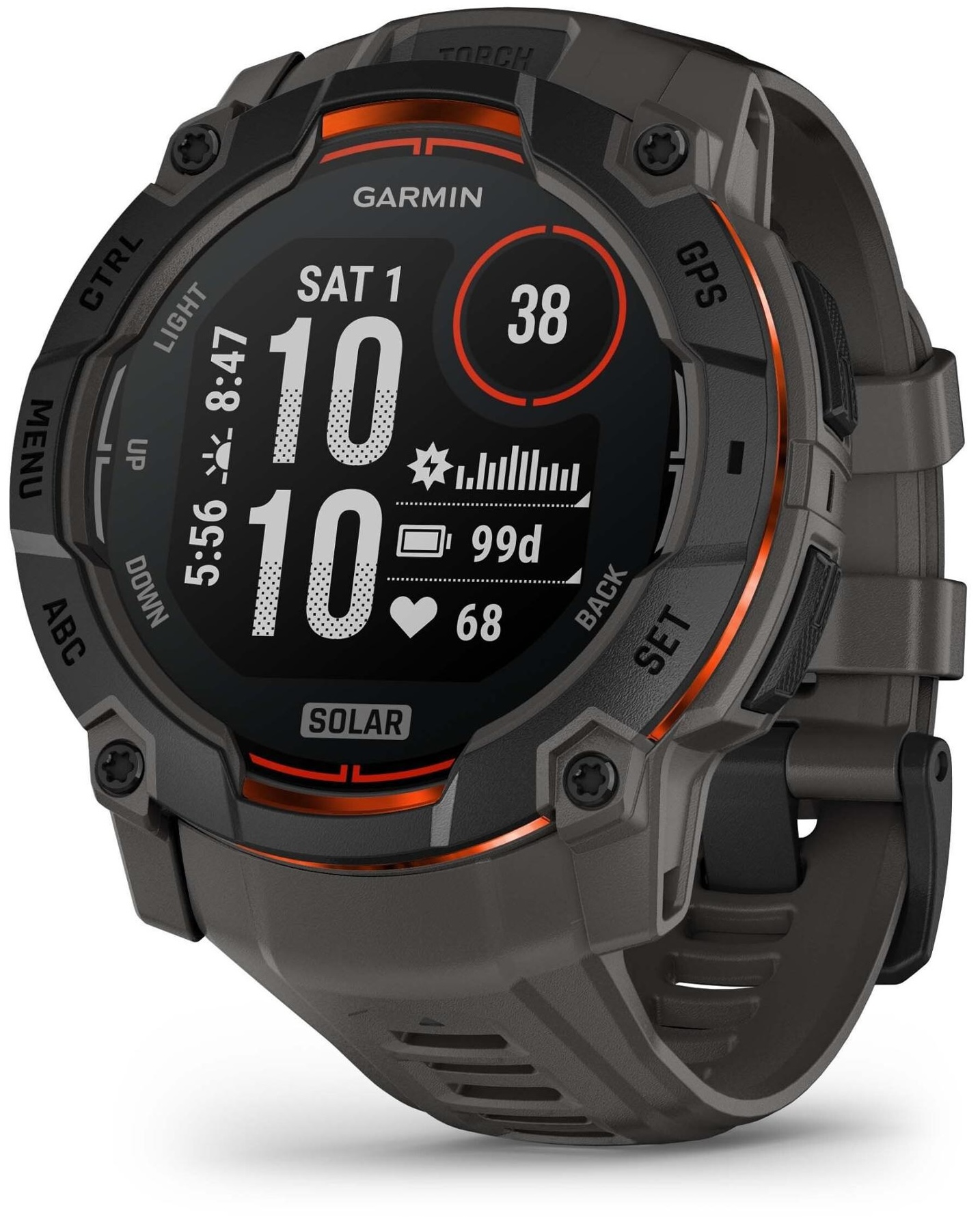
If you’re in the market for a do-all GPS watch, Garmin’s Instinct 3 Solar hits a fantastic balance of price and performance. This latest addition to the Instinct line retains the series’s all-business vibe with a durable case, a monochrome display (you can get the non-solar version with an AMOLED display for a price bump), and a five-button interface that’s easy to use in wet weather or while wearing gloves. The newest Instinct also keeps the built-in solar panel, which gives the watch a significant boost in battery life compared to non-solar designs. Most of the upgrades in this model exist inside the watch, such as a multi-band GPS chipset and updated breadcrumb navigation that now includes grid lines and city names. Lastly, it’s worth noting that the Instinct 3 offers a host of sports-tracking modes—including running, hiking, biking, skiing, and swimming—as well as practical features such as a compass, weather forecasts, elevation, and a heart rate sensor.
Despite the new bells and whistles, the Instinct 3 still falls short of the Fenix 8 Solar and Enduro 3 below in terms of battery life and mapping. While the Instinct 3 offers an impressive 40 hours of battery life with All-Systems GPS (80 hours when solar charging for the largest 50mm size), the Fenix 8 can last up to 68 hours, and the Enduro 3 up to 80 hours (92 and 144 hours respectively while solar charging). Additionally, the Fenix 8 and Enduro 3 offer more capable, detailed offline mapping and navigation, which might appeal more to dedicated backcountry travelers. That said, all of these Garmin watches have a steeper learning curve than a model from Coros, so if you prefer a simpler interface and fewer features, Garmin may not be your perfect match. Garmin watches also tend to be fairly clunky and large on the wrist. If you’re just on the hunt for basic ABC capabilities and a simple timepiece, you can save money by opting for a non-GPS watch (we cover a few in our buying advice below). But in our opinion, if you're a Garmin fan, the Instinct 3 offers an excellent balance of price and performance.
Read more: Garmin Instinct 3 Solar review
See the Garmin Instinct 3 Solar
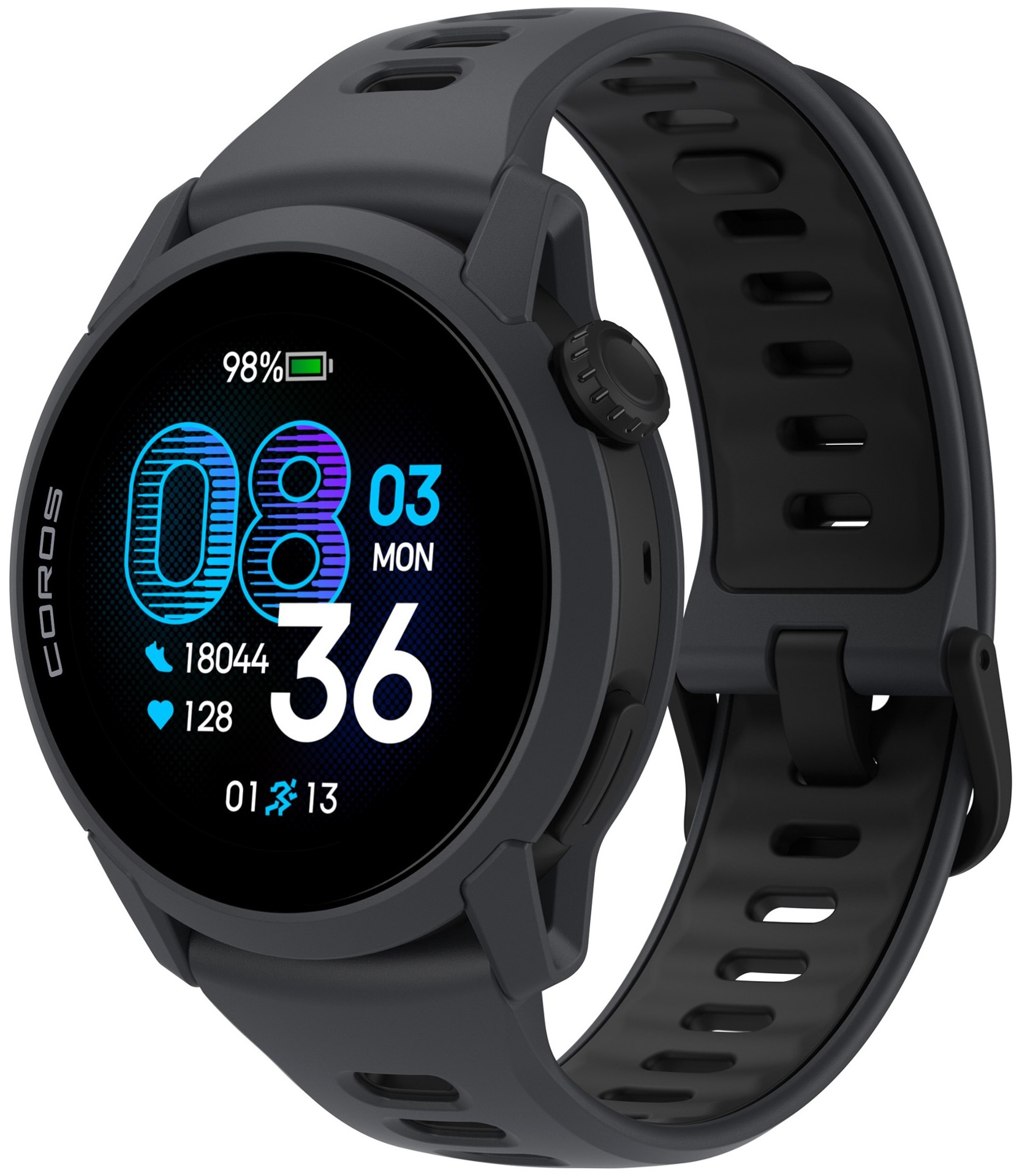
Weight: 1.4 oz.
Battery: Lithium-ion
Diameter: 43.4mm
What we like: A budget-friendly watch that will get the job done for daily wear and light backcountry use.
What we don’t: Not as backcountry-ready as the pricier options.
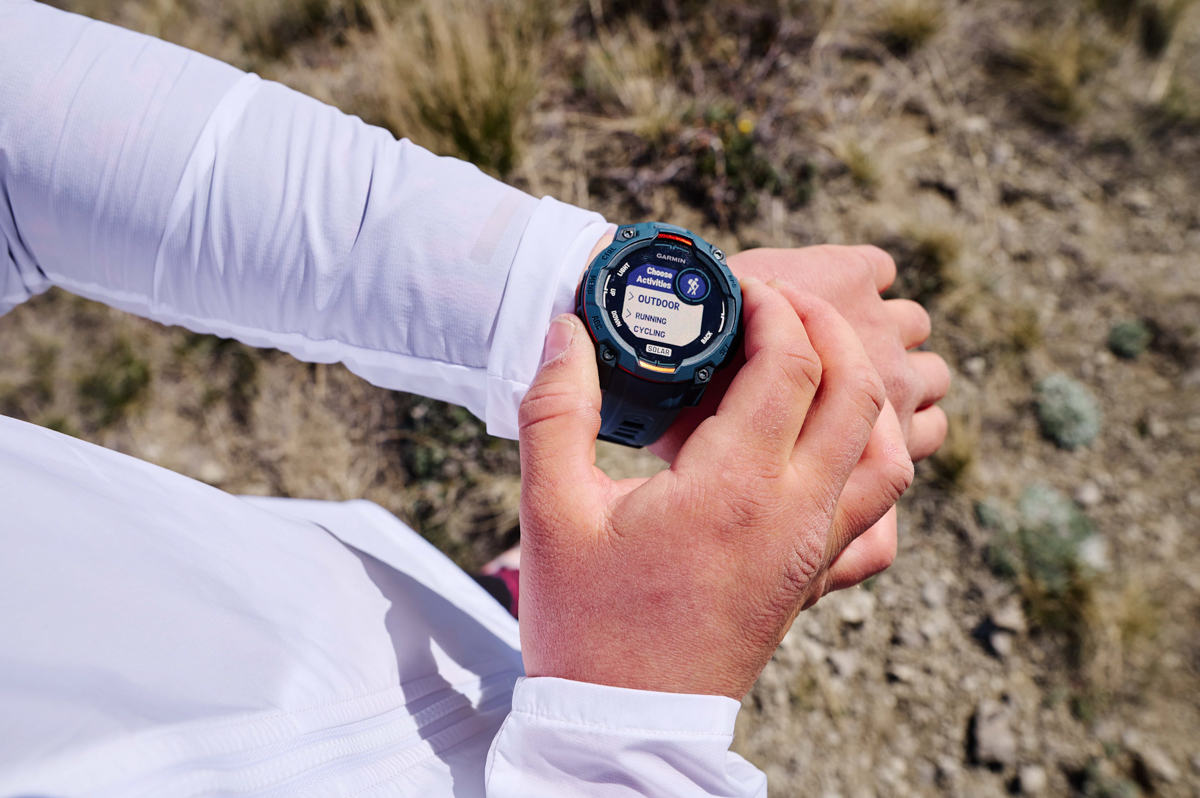
If the price of a premium, feature-filled watch takes your breath away, Coros’ simpler, less expensive Pace 4 will be a welcome relief. Despite undercutting all other picks on our list by a good chunk of change, the Pace doesn’t give up much in the way of functionality or performance, including ABC sensors, multisport activity tracking, and detailed sleep data. We’ve worn various Pace watches over the years and have always appreciated their low profile, ease of use, and accuracy. In fact, we’ve found the Pace’s GPS tracking, mileage, and elevation to be fairly consistent with high-end Garmin watches, which is flat-out impressive given the price. The cherry on top: The Pace 4 is the lightest watch here at just 1.4 ounces with the silicone band (or 1.1 oz. with the nylon band).
The latest Pace 4 comes with some upgrades over the previous version. Not only do you get a serious bump in battery life (41 hours vs. 25 hours for the 3), but a premium AMOLED display and higher resolution. The action button on the side is also new and can be customized to perform specific tasks during activity tracking. That said, the 4 is pricier than the Pace 3, which is on sale while supplies last, and neither version is particularly backcountry-focused, nor do they have the toughest build. But perhaps most notable is the lack of preloaded maps. If you like the Pace’s vibe but want something more backcountry-capable, it’s worth checking out the Pace Pro, which offers offline mapping (it still uses breadcrumb navigation, however). But overall, for daily tracking and light backcountry use, the Pace 4 is an entirely capable design in an inexpensive and sleek package. We especially like how easily it slides under our jacket cuffs, unlike many of the bulkier options that dominate the market. If you're interested, read our in-depth analysis of the Coros Pace 4.
See the Coros Pace 4
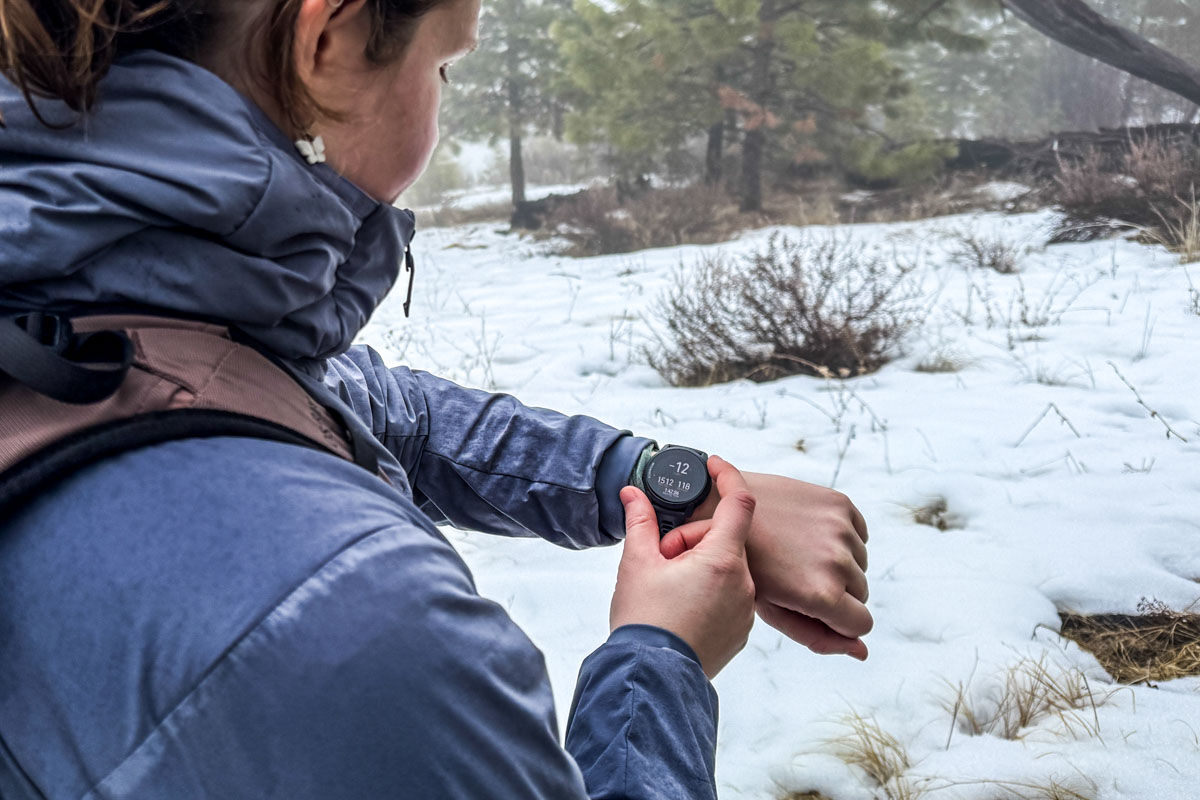
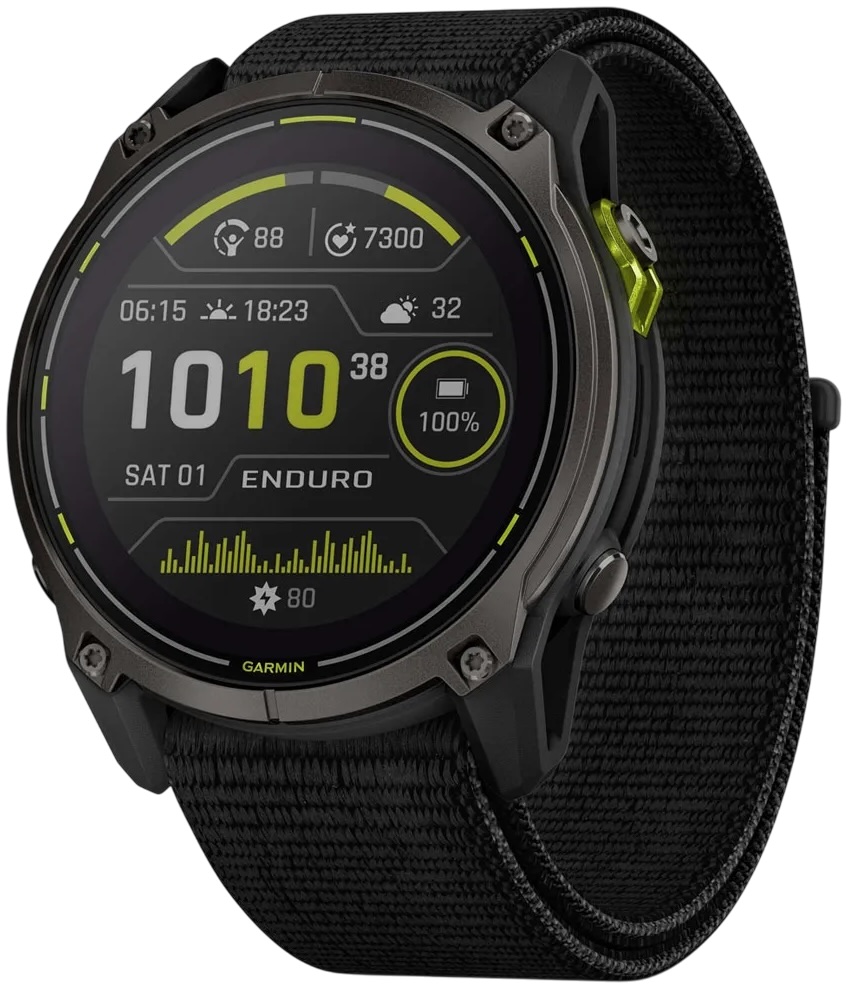 Weight: 2.2 oz.
Battery: Lithium-ion and solar
Diameter: 51mm
What we like: Best-in-class combination of mapping and battery life.
What we don’t: Expensive and overbuilt for most.
Dedicated backcountry trekkers will prioritize two things: Battery life and mapping/navigation. In these two categories, the clearest choice is Garmin’s Enduro 3. To start, the Enduro 3 has one of the best battery lives we’ve seen, lasting an impressive 144 hours in standard GPS mode while solar charging, which blows premium competitors like the Fenix 8 and Instinct 3 out of the water. It also shares the same mapping as the Fenix 8, a series popularized for its navigation. The two share a nearly identical activity-tracking and fitness-monitoring suite, including multisport modes, sleep tracking, training plans, and more. We like the more backcountry-specific features, such as ABC sensors, a compass, elevation and distance tracking, as well as sports tracking for climbing, trail running, and backcountry skiing. Tack on a hard-wearing titanium bezel and sapphire lens, and you get a watch ready to take on the long haul.
The Fenix series has been a long-time favorite of ours for backcountry missions, but there are a few reasons we moved the Enduro into this spot. To start, the Fenix 8 and Enduro 3 share the same software, so they can accomplish nearly the same tasks. And as mentioned, the Enduro 3 has the Fenix 8 beat in battery life, and also price (to be fair, the Enduro 3 is still very expensive). But what do you give up in going with the Enduro over the Fenix? The Fenix 8 is the more premium of the two, with a more extensive smartwatch feature set (including the ability to make and take phone calls) and an eye-catching AMOLED display (the Enduro’s is MIP). Additionally, the Fenix comes in more sizes and color options than the Enduro, which is only offered in the 51-millimeter size and black color. Aesthetics aside, there’s no denying the Enduro’s capabilities, especially for the dedicated backcountry enthusiast who’s unwilling to compromise on battery life and navigation.
See the Garmin Enduro 3
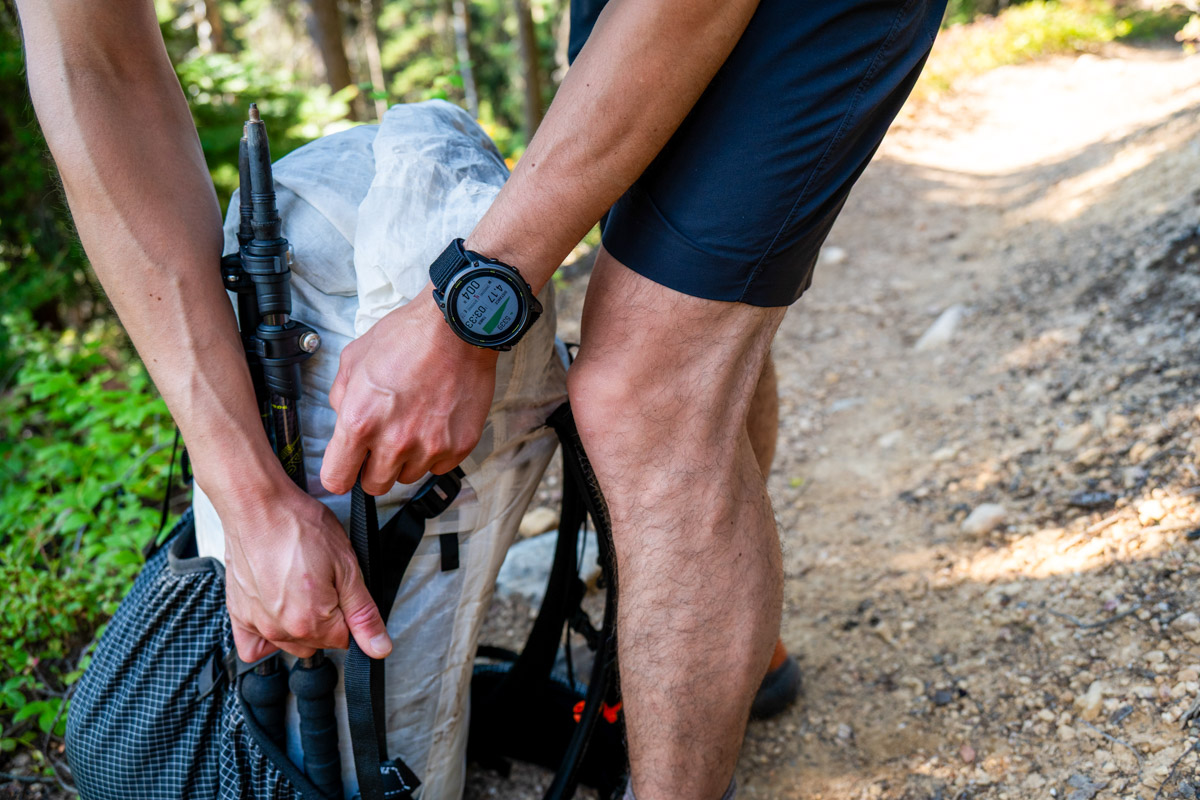
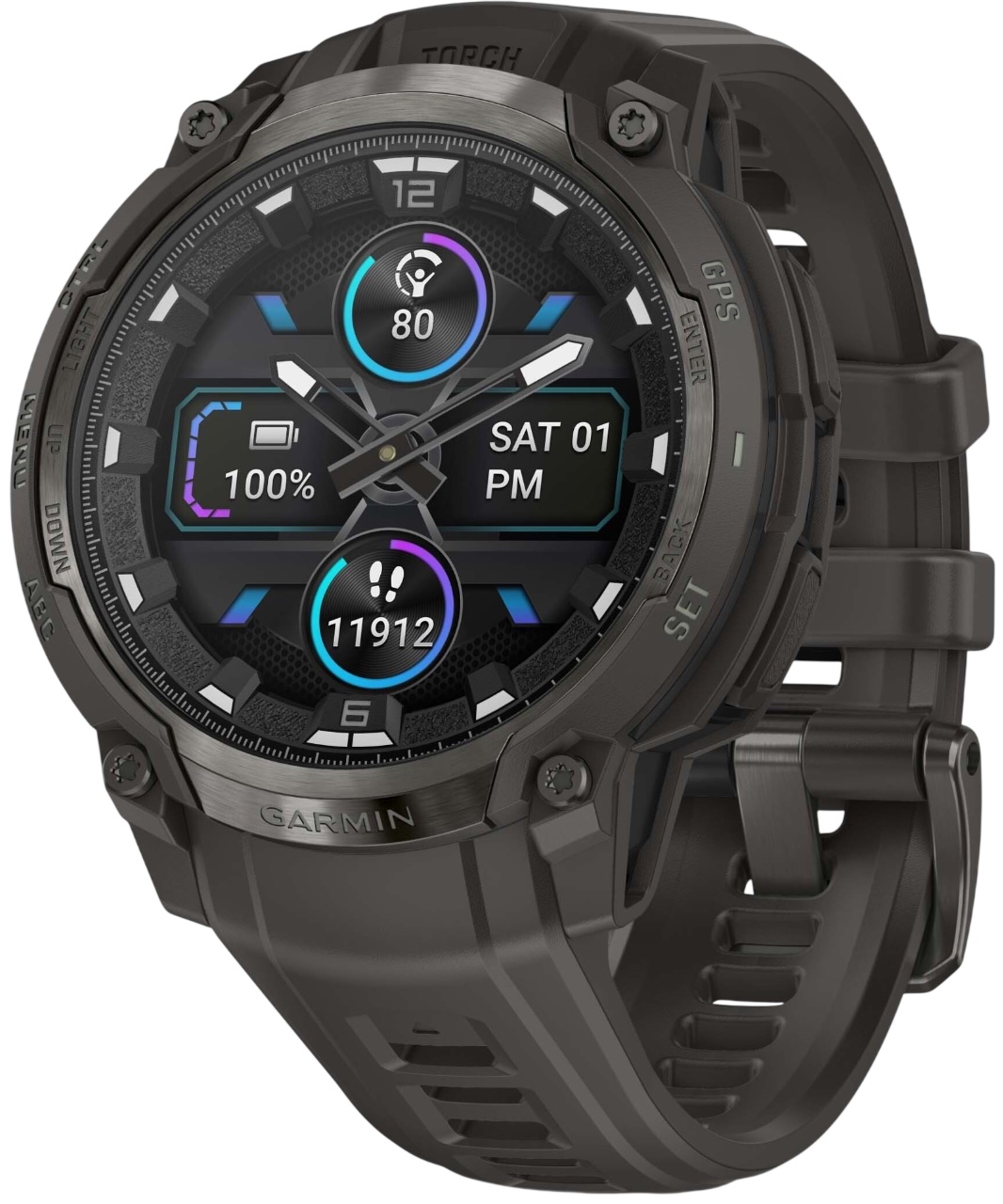
Weight: 2.4 oz.
Battery: Lithium-ion and solar
Diameter: 46.6mm
What we like: A capable GPS watch with a classy display.
What we don’t: Pricey, and not the sleekest or lightest option.
The Instinct Crossover AMOLED is the latest addition to the Instinct line, and, as its name suggests, it is a crossover between a modern GPS watch and a traditional analog watch. The main feature is the analog watch hands, which not only display the time but also highlight specific data when the watch is in use (for example, they act as a compass needle). Importantly, the Crossover shares all of the same features as the regular Instinct, including navigation, activity tracking, and health metrics. It also has the Instinct 3’s multi-band GPS chipset. This makes it a very capable GPS watch, but you also get the benefit of a superior display and classy watch hands. Of the line, the AMOLED is our favorite for its color-popping display and modern aesthetic.
However, the Instinct Crossover is far from perfect. To start, the AMOLED version doesn’t have solar charging. There is a solar version, but you give up the AMOLED display, and it still doesn’t match the Instinct 3's battery life. Additionally, the Instinct Crossover isn’t the sleekest design on the outside. The case is still rugged, which is great news for backcountry use, but it feels overbuilt and doesn’t slide easily under shirt sleeves. “Casual” is subjective here, and those who want a sleeker design will have better luck with offerings from Coros. And finally, the Crossover AMOLED is far from the cheapest option on this list. At the end of the day, your style is personal, and we happen to like what Garmin has cooked up with this design.
See the Garmin Instinct Crossover AMOLED
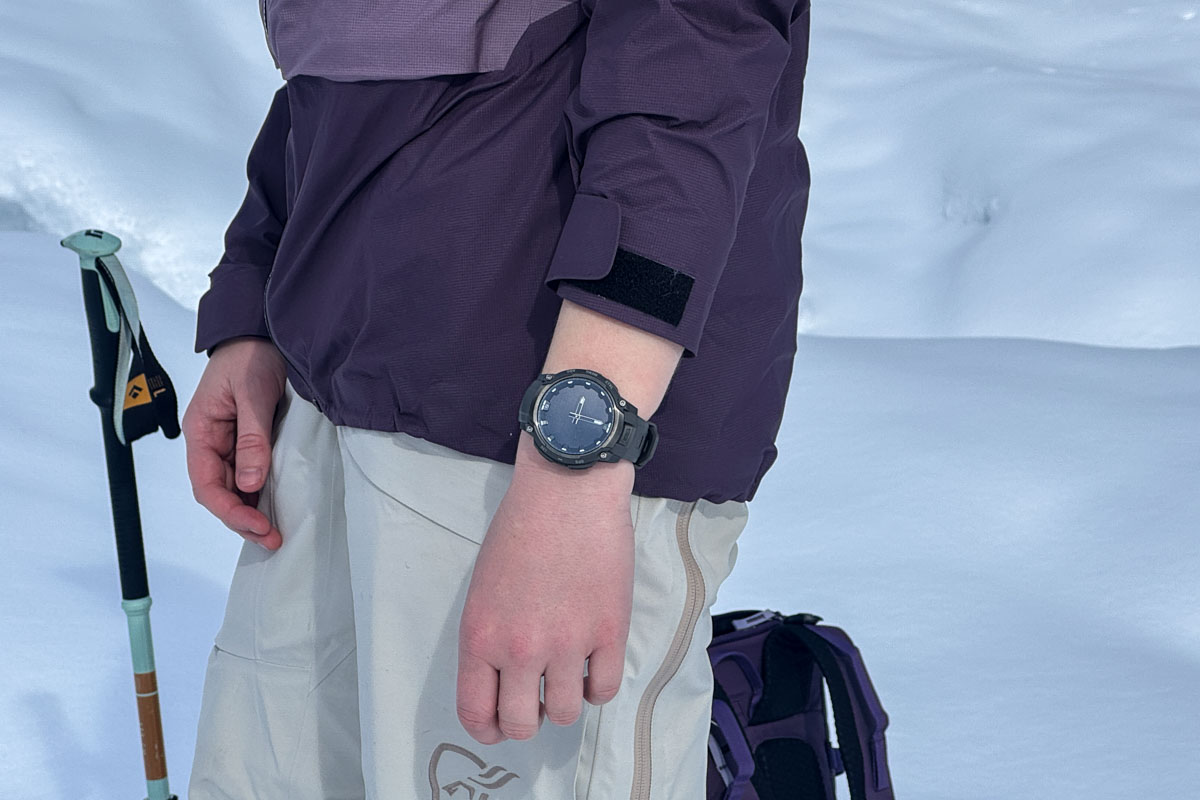
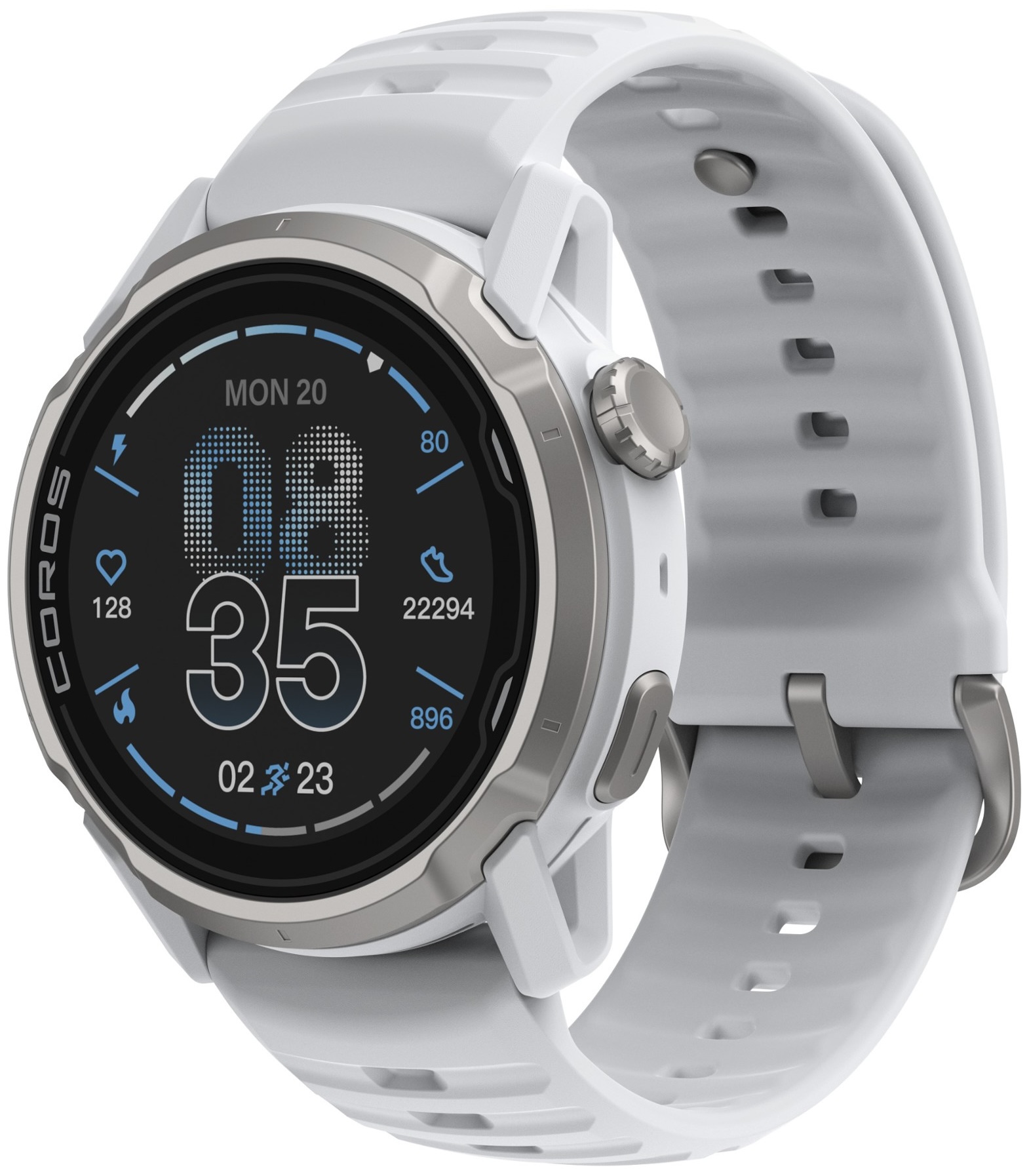
Weight: 2.3 oz.
Battery: Lithium-ion
Diameter: 42.6, 46.2mm
What we like: A simple yet premium watch at a good price; notable upgrades from the previous Apex 2.
What we don’t: Still not as well-rounded or backcountry-ready as Garmin’s offerings.
Coros’s long-standing Apex series received a big upgrade with the latest 4. To start, the Apex 4 features an extended battery life, boasting 65 hours in its Endurance all-systems tracking mode (for the 46.2mm size). Maps also received a facelift, and now include details such as location and trail names. And the screen uses a more premium MIP display and has a higher resolution. Using the mapping feature is notably smoother in the 4 than in the 2 (Coros oddly skipped a version 3 of the Apex, jumping from 2 to 4), which gives it a premium feel. The addition of a speaker is a nice touch as well, and gives users the ability to record voice notes and take phone calls. The hard-wearing construction remains the same (sapphire screen and titanium bezel), as does the extensive array of activity-tracking modes and sensors. Compared to Garmin’s offerings, the Apex 4 still falls short on some features, lacking a flashlight, an AMOLED display, and solar charging. It also doesn’t have as extensive a sports tracking portfolio. But we’ve found the Apex 4’s interface much easier to master than Garmin’s, and the sleeker, lightweight design makes it a comfortable wear over the long term.
The Apex 4 aims to replace the Apex 2 and 2 Pro, and we think it’s a worthwhile upgrade. That said, you can still find the 2 and 2 Pro on sale if the updates aren’t important enough for you. In our opinion, the Apex 4 is a nice alternative to the pricey premium Garmin watches above, and although it isn’t as feature-filled, there is something to be said for its simplicity—it’s more than enough for weekend backcountry treks and everyday frontcountry use. If you’re torn between the Apex 4 and the Nomad below, know that the Apex 4 has it beat in battery life and durability, which matter more in the backcountry. As a final note, we like that Coros slimmed down the side button and moved it away from the center of the watch. It was too easy to accidentally press the protruding button on the previous version, which would pause tracking and skew data. It’s Coros’s attention to detail and desire for continued improvement that keep us coming back to their line, and the Apex 4 is a great example of that commitment.
See the Coros Apex 4
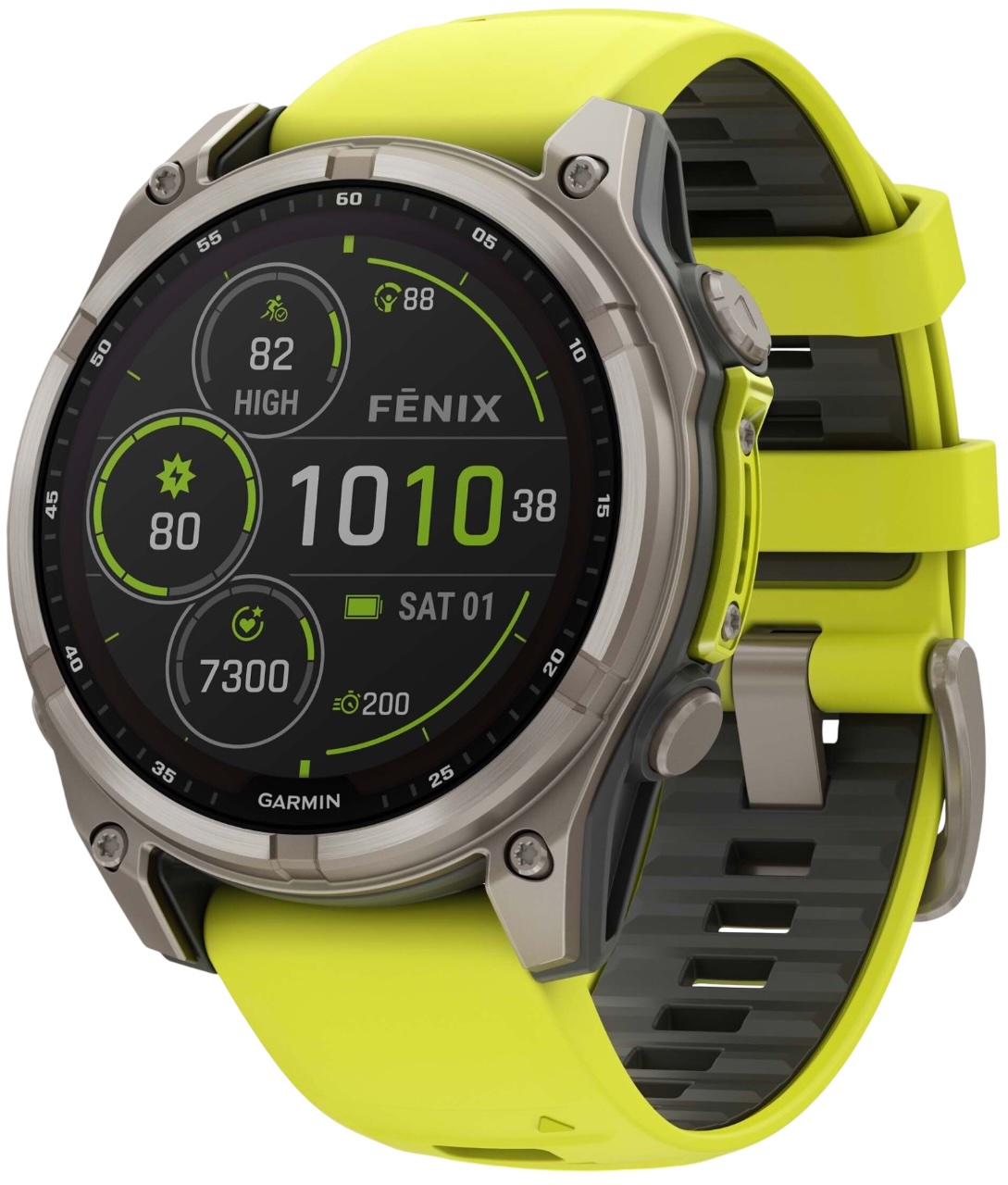
Weight: 2.8 oz.
Battery: Lithium-ion and solar
Diameters: 43, 47, 51mm
What we like: The most well-rounded GPS watch in Garmin’s line.
What we don’t: Expensive, heavy, and overkill for casual users.
If you’re unwilling to settle for anything short of the best, look no further than Garmin’s Fenix series. The latest 8 has some notable upgrades over the previous 7, including an AMOLED display that enhances colors and detail. It features the series’s famed offline mapping and navigation, with some new perks, such as the ability to change map layers and offer suggested routes. Battery life remains a highlight as well, with 59 hours in all-systems GPS mode with solar charging (48 hours without), which is plenty for multi-day treks into the backcountry. And like the Enduro 3 above, the Fenix 8 offers a host of activity-tracking features for both backcountry and frontcountry sports. The smartwatch's features are rounded out nicely with the addition of a speaker, which allows users to make and receive phone calls and record voice notes. And lastly, durability is slightly increased with leak-proof exterior buttons.
That said, there’s a reason we moved the Fenix 8 down in our rankings from where it used to be. As mentioned above, the Enduro 3 is the better choice for dedicated backcountry users, as it has a better battery life and identical mapping and navigation. Plus, it’s less expensive than the Fenix 8 and lighter weight. We’re also torn on the upgrades from the previous Fenix 7. The display improvements and smartwatch features secure it as the more premium sports watch, but they’re small changes in the grand scheme of things. The Fenix 7 series is becoming harder to find, but if you don’t mind foregoing some of the upgrades, it’s the less expensive choice if you can track it down. It’s worth noting that the Fenix 8 comes in a few versions, including a less-expensive Fenix E and more expensive AMOLED and MICROLED models, all of which don’t include solar charging. But for the best option that can crossover between the backcountry and frontcountry, we recommend the Solar version.
Read more: Garmin Fenix 7 Pro Sapphire Solar review (prior version)
See the Garmin Fenix 8 Solar
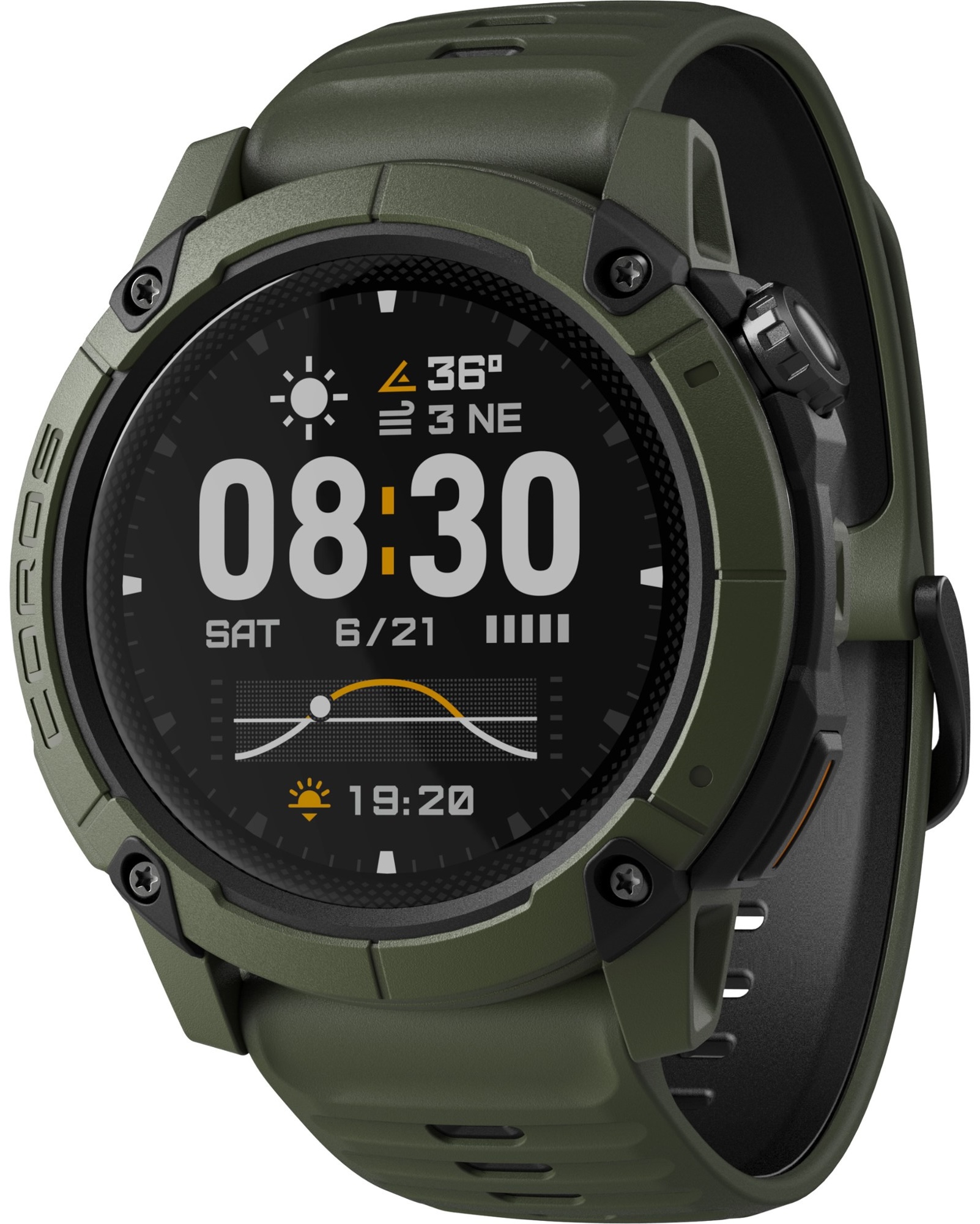 Weight: 2.4 oz.
Battery: Lithium-ion
Diameter: 47.8mm
What we like: A step up in mapping and tracking from our best budget.
What we don’t: Not the most backcountry-ready watch.
The Nomad lands in a sweet spot in Coros’s line. It offers a host of intriguing improvements from the basic Pace series, but it still costs less than most of the other watches here. Most notable is the Nomad’s offline mapping, a big upgrade from Pace's basic breadcrumb navigation. It includes street names, points of interest, and topographical details. The Nomad also has a longer battery life than the Pace (50 hours vs. 41 in all-systems GPS), a more durable build, and more activity-tracking features for climbing and water sports. Additionally, the Nomad is the only watch in Coros’s line to feature fishing activity modes for fly, boat, shore, and kayak fishing, and its maps display water depth. And finally, it’s worth noting the action button, which debuted on the Nomad and is now standard on all new Coros watches. This secondary button can be customized to perform various tasks (such as recording a voice pin) while tracking an activity.
Like the Pace, however, the Nomad isn’t our first choice for dedicated backcountry treks. At this price, it’s unfair to compare it to the Enduro 3 above, but it’s worth noting that it lacks solar charging and Garmin’s advanced mapping technology. Most importantly, the Nomad doesn’t have offline rerouting like the Enduro, which helps get you back on track when you stray from your course. Coros’s manual track-loading is still pretty clunky compared to Garmin’s, which is automatically synced to the watch upon creation. But that’s asking a lot of a watch that comes in at a really competitive price. A better comparison for the Nomad would be to Garmin’s Instinct 3, which doesn’t offer detailed mapping either. So long as you keep your expectations reasonable, the Nomad is a solid offering and can keep up well on most backcountry excursions.
See the Coros Nomad
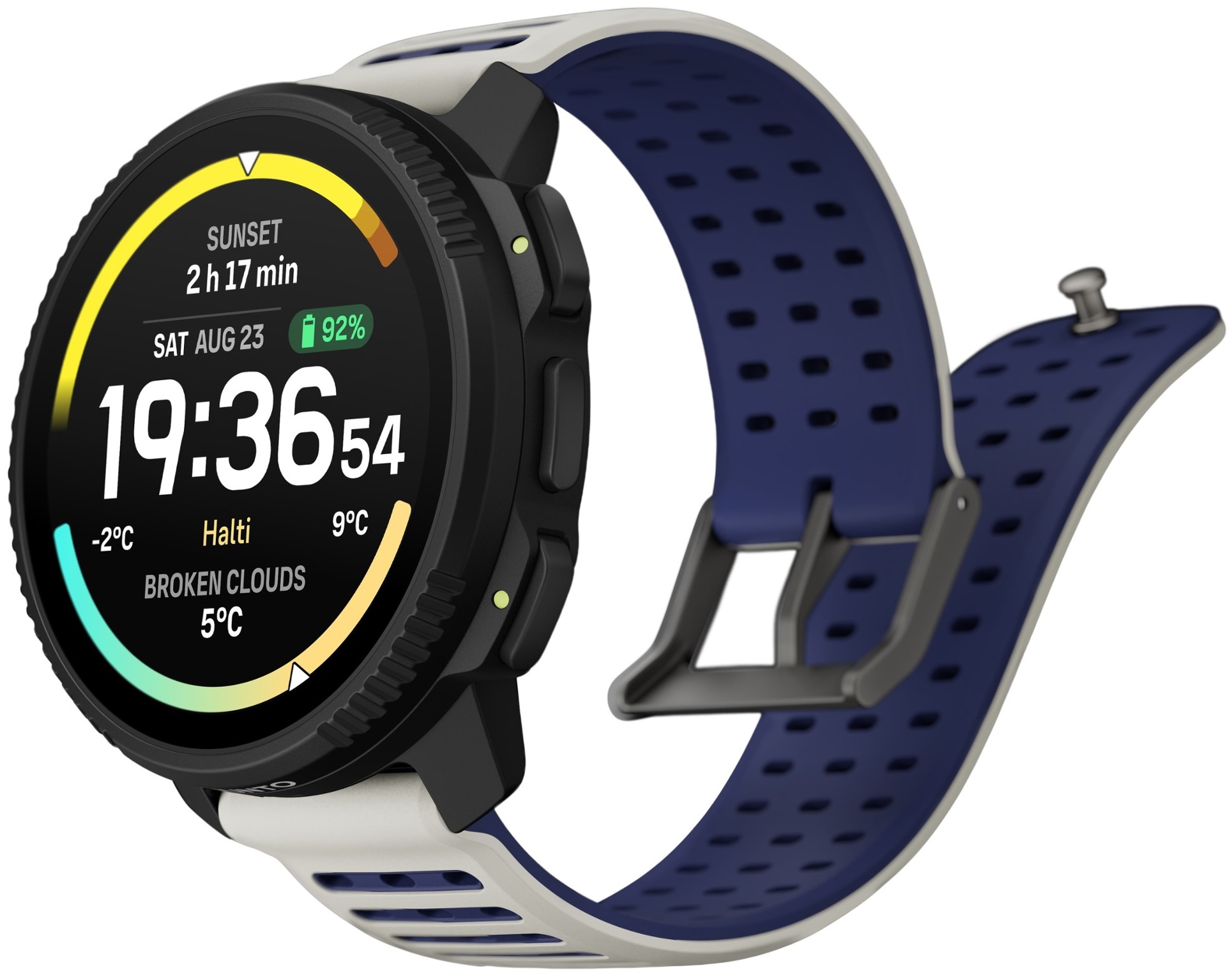
Weight: 2.6 oz.
Battery: Lithium-ion
Diameter: 48.6mm
What we like: Impressive battery life, accurate tracking, and sleek design that crosses over nicely for daily wear.
What we don’t: Lacks the navigational prowess of Garmin's offerings; no solar version in the 2 yet.
Finnish brand Suunto has been in the exploration game for nearly a century, and the Vertical 2 watch is a nice reflection of their continued innovation. Combining stellar battery life, precise GPS and activity tracking, and a sleek, refined design, the Vertical 2 quickly impressed in testing. Battery life is the most noteworthy feature, lasting 65 hours in its most demanding GPS mode (multi-band). But what’s more impressive is the 250-hour battery life in power save GPS mode. In this mode, the Vertical saves battery by lowering GPS accuracy and limiting the use of certain sensors, such as optical heart rate. But even then, the Vertical remains very accurate in its tracking. The latest update also improved the display (AMOLED and a faster processor), added a flashlight, and added a new optical heart rate sensor. Despite its expedition-ready performance, the design is classy-looking and wears well casually. A final feather in Suunto's cap is durability, which is excellent thanks to the stainless steel bezel and sapphire screen (a titanium version is also available).
However, while the Vertical 2 stacks up well to premium Garmin offerings in most metrics, it falls short in one area: maps and navigation. Specifically, the Vertical's maps lack location names and turn-by-turn directions, making the Enduro 3 and Fenix 8 above better options for those who plan to rely on their watch for navigation. The Vertical 2 also doesn’t come in a solar version. You can still find the previous generation Vertical Solar, which boasts a 500-hour battery life in tour mode (similar to the power save mode on the 2), but it doesn’t have the display and sensor upgrades of the Vertical 2. And in our opinion, 250 hours of battery life is plenty for most users. Lastly, we don’t think Suunto’s ecosystem is as refined as Garmin's or Coros's, but that’s subjective. Nitpicks aside, the Vertical 2 is a great choice for those looking for the utmost in battery life and tracking accuracy.
Read more: Suunto Vertical Titanium Solar review (prior version)
See the Suunto Vertical 2
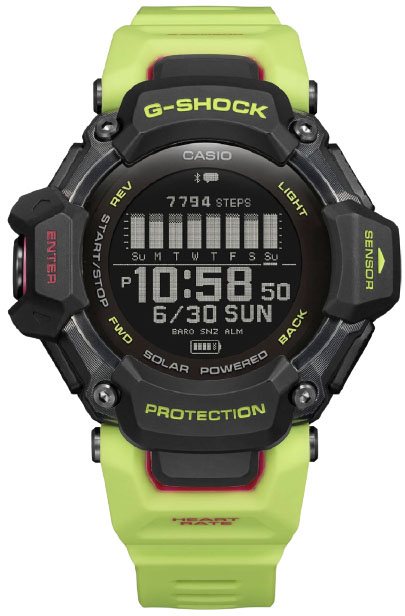 Weight: 2.2 oz.
Battery: Lithium-ion and solar
Diameter: 59.6mm
What we like: Hard to kill.
What we don’t: Outdated, heavy, and more expensive than modern options with similar tech.
Whether you’re looking for a tough, no-nonsense design with easy-to-learn features or you simply like the aesthetic of Casio watches, the G-Shock Move GBD-H2000 is a great choice. The Move combines Casio’s trademark durability and solar power with modern features such as activity tracking, heart-rate monitoring, and a variety of additional sensors (including a barometric altimeter, compass, thermometer, and accelerometer). Importantly, the watch integrates with Casio’s app to make all this data easier to digest. And as expected from a G-Shock design, the G-Shock Move GBD-H2000 is about as bombproof as an outdoor watch gets.
Perhaps the most compelling reason to opt for the Casio over other watches here is its rugged, shock-resistant case, which you’ll either love or hate. The G-Shock Move also features the most impressive water rating on our list (it can withstand a depth of 200m), which adds even more credence to its bombproof construction. And finally, with a built-in solar panel, it can last for up to a year of daily use without needing a charge. But nowadays, most of these features are fairly standard in outdoor watches, and the Casio doesn’t offer anything remarkable the the price. In the end, we’re partial to more modern and sleek designs from brands like Garmin, Coros, and Suunto.
See the Casio G-Shock Move GBD-H2000
The GPS watch market is constantly evolving as manufacturers introduce new technologies that enhance user experience, tracking accuracy, and battery life. We're continually testing the latest designs, often before they hit the market, and we have high standards for the watches that make this list—so not every design makes the cut. Yet, we understand that you might be curious about which watches we've tested and dismissed, and why.
In this update, the only watch that we dismissed is Coros's Vertix 2S. In short, the design is outdated and doesn't compare to more recent Coros models. It's heavier than most of the other watches here, burly to wear, and while the battery life was impressive upon its release a few years back, it's been edged out by the current market. It's still a good watch and boasts great durability in extreme conditions, but for the price, there are better options out there.

| GPS Watch | Price | Weight | Battery Type | Battery Life* | Diameter(s) | Height |
|---|---|---|---|---|---|---|
| Garmin Instinct 3 Solar | $400 | 1.8 oz. | Lithium-ion/solar | 80 hours | 40, 45, 50mm | 14.9mm |
| Coros Pace 4 | $249 | 1.4 oz. | Lithium-ion | 41 hours | 43.4mm | 11.8mm |
| Garmin Enduro 3 | $900 | 2.2 oz. | Lithium-ion/solar | 144 hours | 51mm | 15.7mm |
| Garmin Instinct Crossover | $650 | 2.4 oz. | Lithium-ion | 18 hours | 46.6mm | 15.1mm |
| Coros Apex 4 | $479 | 2.3 oz. | Lithium-ion | 53 hours | 42.6, 46.2mm | 13.7mm |
| Garmin Fenix 8 Solar | $1,100 | 2.8 oz. | Lithium-ion/solar | 92 hours | 43, 47, 51mm | 14.5mm |
| Coros Nomad | $349 | 2.4 oz. | Lithium-ion | 50 hours | 47.8mm | 14.8mm |
| Suunto Vertical 2 | $599 | 2.6 oz. | Lithium-ion | 75 hours | 48.6mm | 13.5mm |
| Casio G-Shock Move | $399 | 2.2 oz. | Lithium-ion/solar | 16 hours | 59.6mm | 19.4mm |
Editor’s note: The stated battery life is the manufacturer’s claim for the biggest watch size while in all-system GPS mode, with solar charging when applicable/advertised. Changes to the settings, features, and type of tracking (e.g., standard or multi-band/dual-frequency GPS) will affect this number. Read more about GPS tracking in the buying advice below.
Everyone on the Switchback Travel team loves spending time outdoors, especially when it means getting far off the beaten path to enjoy backcountry solitude. However, as we’ve learned firsthand, route-finding can be downright challenging in remote areas and inclement conditions. With that in mind, we can’t overstate the value of bringing some form of GPS navigation into the backcountry, whether it's a handheld GPS device or a wearable GPS watch like those featured above. As we covered, GPS watches are highly accurate at pinpointing your location and purpose-built to handle the rigors of outdoor use, but we’ve also grown to love modern features like multisport activity tracking, detailed sleep data, custom workout suggestions, and music storage (among others). Of course, considerations like weight, bulk, and battery life are always top of mind, especially on longer, more gear-intensive missions (like climbing Island Peak in Nepal, which one of our editors did while wearing the Garmin Fenix 7).
This list began in 2015 as a round-up of the best altimeter watches, with former editor Jenny Abegg drawing on her extensive experience in the Pacific Northwest backcountry to choose six standouts for the guide. Given the significant overlap with GPS watches, we opted to revamp the guide in 2024 to cover exclusively GPS-equipped designs, with a separate section in our how to choose section for non-GPS (altimeter) watches. Editor Maddie Downie currently manages the guide and is a self-proclaimed peak-bagger with big goals of getting to the top of obscure, remote mountains all over Washington state’s North Cascades. Maddie regularly relies on GPS to help her navigate through the backcountry.
.jpg)
Originally popular with runners and triathletes, there is a growing number of GPS-enabled watches that excel in the backcountry, which was a driving force behind starting this guide. In short, these models combine the feature sets of a handheld hiking GPS, altimeter watch, and fitness tracker (some entry-level designs forgo ABC sensors). Compatibility with a range of satellites, including GPS, Galileo, and GLONASS (also known as multi-GNSS support), improves coverage and accuracy. And features like downloadable routes, tracking to recount your travels, and extended battery lives make these ideal partners for hikers, mountaineers, skiers, and ultra-distance athletes. For more fitness-focused options that excel for daily training, see our round-up of the best fitness watches.

ABC: Altimeter, Barometer, and Compass
All the watches on this list come with the ABC basics: an altimeter, a barometer that measures current atmospheric pressure, and a compass. Beyond that, many take it a step further with more detailed data, such as mapping elevation gained and lost, as well as shifts in barometric pressure. Finally, it’s worth noting that while all of the picks above come with GPS tracking, there are plenty of non-GPS-equipped ABC watches, many of which will save you a substantial chunk of change. If GPS isn’t a must-have for you, we’ve included a few of our favorite altimeter watches in the "Non-GPS Watches" section below.
.jpg)
Mapping
One area where GPS-enabled watches vary significantly is in their mapping and navigation abilities. In general, the market can be broken into two categories: topo-equipped models like Garmin’s Fenix 8 Solar and Enduro 3 that feature detailed contour lines, and simple mapping that includes only a basic line or marker on an otherwise blank screen. Both are useful for following a preset route or retracing your steps with the breadcrumb functionality (which works just as it sounds), but topo mapping provides helpful insights into the terrain, including expected elevation change if you’re off-trail or considering a different route. No matter the mapping abilities, as with all technology, GPS watches should not be relied on as your only source of backcountry navigation. We love using the Gaia app on our phones, and there's always the good old paper map and compass.
.jpg)
Multisport Features
As we touched on above, outdoor GPS models share many features with sports watches for running, cycling, and swimming. High-end designs like the Suunto Vertical 2 and Fenix 8 Solar can pretty much do it all, with built-in ABC sensors, wrist-based heart rate monitoring with zone recording for training, and dedicated triathlete modes. The Coros Apex 4 is a great value option with excellent battery life that excels for long runs.
.jpg)
Ski Functionality
For winter use, some of the higher-end models offer extensive capabilities for activities ranging from XC skiing to resort and backcountry riding. The Fenix line, including the standard and Solar models, can record everything from distance covered and elevation change while XC skiing (for both skate and classic) to the number of laps you ski or snowboard at the resort. Taking it a step further, the Fenix 8 Solar and Enduro 3 have preloaded maps for more than 2,000 ski resorts, which we found provided impressive detail for navigating on-trail runs. And in the backcountry, you can quickly check data like topo maps to analyze terrain steepness, barometric pressure, distance covered, and elevation gained/lost throughout the day. Like with the mapping section above, the watch shouldn’t be your only resource for navigating and understanding your winter surroundings, but it’s undeniably a fun and valuable tool in a range of conditions.
.jpg)
Smartphone Connectivity
A final notable feature of many GPS watches is their connectivity to smartphones. Similar to everyday devices like the Apple Watch, you can pair the two via Bluetooth to receive notifications, such as text messages, or download activity data to your phone. Further, some units store and play music (via Bluetooth headphones), while others let you use the watch face to control music on your smartphone. Finally, it's worth noting that the Garmin watches above allow you to connect to popular music streaming services like Spotify, while the Coros models require you to manually upload MP3 files.
.jpg)
Since you’ll be wearing it for extended periods, the physical size of a watch is another important consideration (we’ve included the diameter of each model in our product write-ups, and the comparison table above includes both diameter and height). Even sleek designs like the Coros Nomad take up quite a bit of real estate and can be uncomfortable if you prefer a light, compact shape. The good news is that there are several trimmed-down models, including the 42-millimeter Coros Apex 4 (also available in a 46mm). You do sacrifice a little screen size and often some battery life in going with the smaller variations, but the trade-off in comfort will be worth it for some.
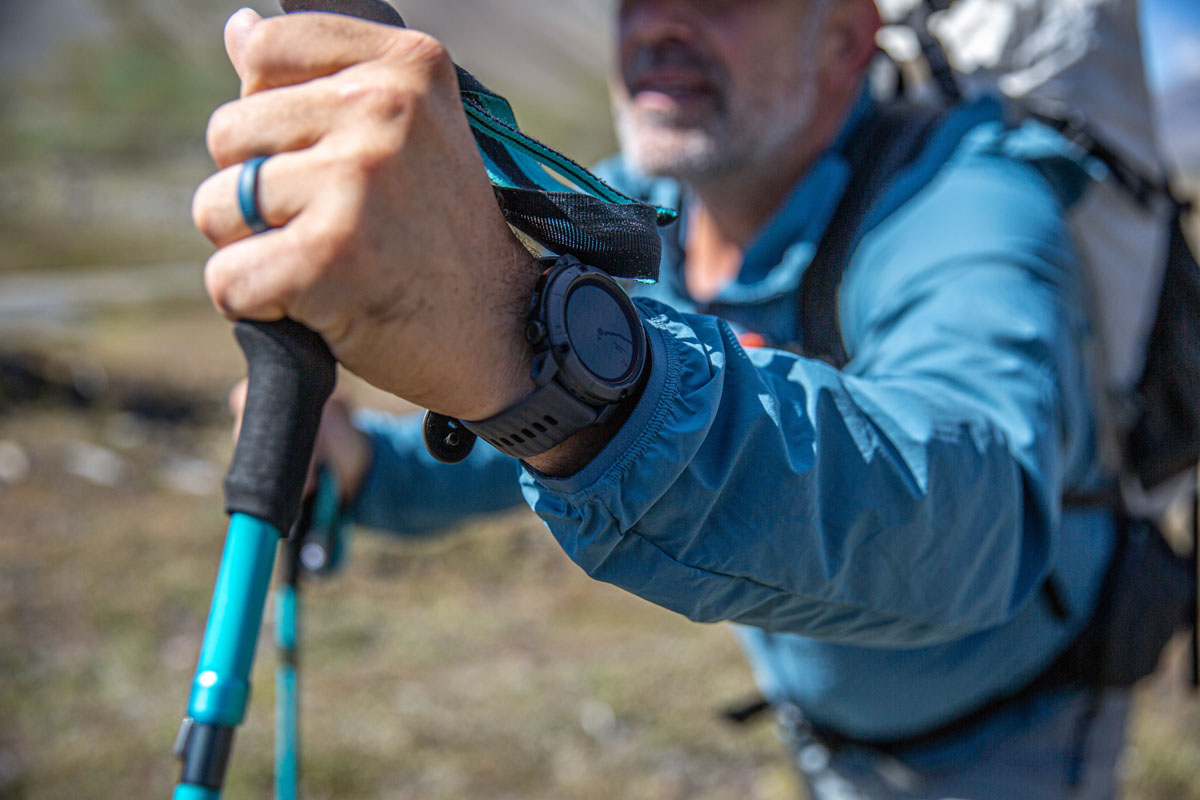
Closely tied to dimensions is a watch's weight. As expected, a lighter, more compact design is one you won’t notice as often, especially during active pursuits like running, biking, or backcountry and XC skiing. Weight inevitably increases with more durable, longer-lasting materials and with a feature-rich model. Our picks above vary widely, from the hefty Garmin Fenix 8 Solar (2.8 oz.) to the sleek, low-profile Coros Pace 4 (1.4 oz.). Many of our favorites land in between at around 2 ounces, which we’ve found to be a good balance of durability and all-day comfort.
.jpg)
Lithium
Like a smartphone, GPS-enabled watches rely on rechargeable lithium batteries. Traditionally, these watches drain battery life fairly quickly due to their digital screens and connectivity to phones and satellites for tracking. As a result, they can only go for brief stretches in between charges, although the technology is making big improvements as of late. On the short end, the Garmin Instinct Crossover AMOLED lasts only 18 hours in all-systems GPS mode, while the Garmin Enduro 3 can stay powered for up to 80 hours in all-system GPS mode (144 hours using solar charging).

Solar
Solar offers the benefits of reducing waste and not having to worry about packing a replaceable battery or charging the watch every few days. Not to mention, a self-sufficient little instrument has a simple beauty, especially for travelers and extended backcountry trips. You also don’t have to worry about getting the watch its vitamin D that often, since many can store a charge for months at a time. Garmin has made serious inroads in solar technology with the Power Glass featured in our top-ranked Instinct 3 Solar.

It’s worth noting that battery life has been improving with just about every new release. Using the Garmin Instinct 3 Solar as an example, the outgoing version maxed out at 30 hours when tracking in standard GPS (48 hours with solar charging), while the updated 3 lasts up to 40 hours and a whopping 130 hours when solar charging. In addition, Suunto, Garmin, and Coros offer battery-saving modes that reduce smart features and extend the time between satellite signal collections, thereby increasing battery life. The Suunto Vertical 2 is a standout in this area, with its Power Save GPS mode that extends battery life to 250 hours while still tracking via GPS.
As mentioned above, GPS watches are compatible with a range of satellites, which improves tracking accuracy and coverage. These include the US's GPS satellite, Russia's GLONASS, the EU's Galileo, China's Beidou (BDS), and Japan's QZSS. Modern GPS watches can also use these satellites in different ways. When perusing the manufacturer's specs for each watch, you might notice that the data varies depending on whether a watch uses standard, all-systems, or dual-frequency/multi-band GPS. Without getting too much in the weeds, here's a quick breakdown of each: Standard GPS connects to just one satellite at a time and takes readings about every second in optimal conditions (i.e., clear skies). All-systems GPS pairs with multiple satellite systems simultaneously, further increasing tracking accuracy. Dual-frequency GPS (or multi-band GPS) takes this a step further by enabling the device to communicate with the previously mentioned satellites simultaneously and in two frequencies, which provides even greater accuracy (if you want to read more about dual-frequency GPS, Garmin explains it nicely).
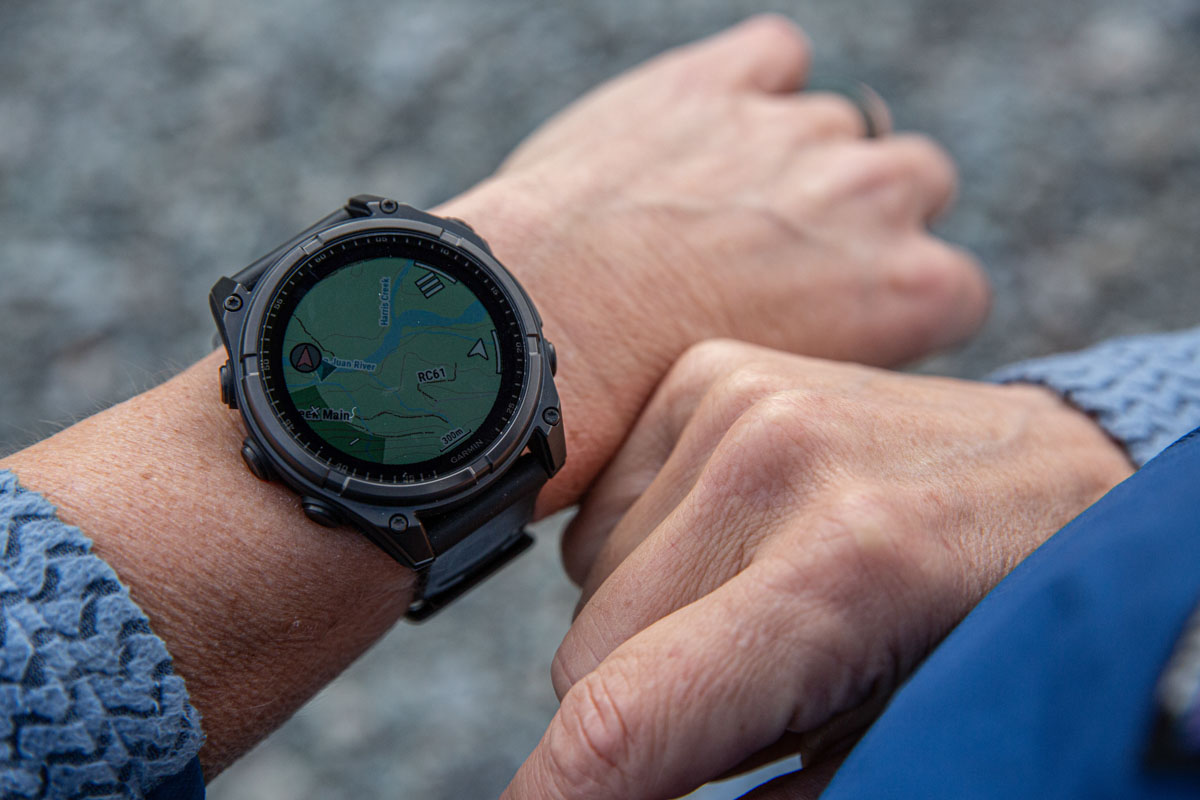
In a perfect world, we'd always track in dual-frequency GPS as it's the most consistent and least prone to error, but this mode will zap your watch's battery faster than standard or all-systems GPS. Of note: Some manufacturers (like Coros) are moving away from standard GPS tracking altogether and only providing all-system or dual-frequency GPS tracking. For that reason, the comparison table above lists the battery life specifications for each watch in all-systems GPS mode.
The designs on our list are purpose-built for outdoor use, and as a result, many have a decidedly outdoorsy look. However, while options like Garmin’s Fenix and Instinct may look out of place in the office or around town (depending on the town, of course), there are plenty of lower-profile and more everyday-friendly designs to consider. On our list above, a couple of sleek standouts include the Coros Pace 3 and Suunto Vertical 2. We also really like the Garmin Instinct Crossover AMOLED, which isn't the most low-profile design, but has analog watch hands and an eye-catching display. For those who don’t need all the backcountry bells and whistles, smartwatch designs like the Apple Watch Ultra 3 (among others featured in our fitness watch round-up) are a viable alternative.
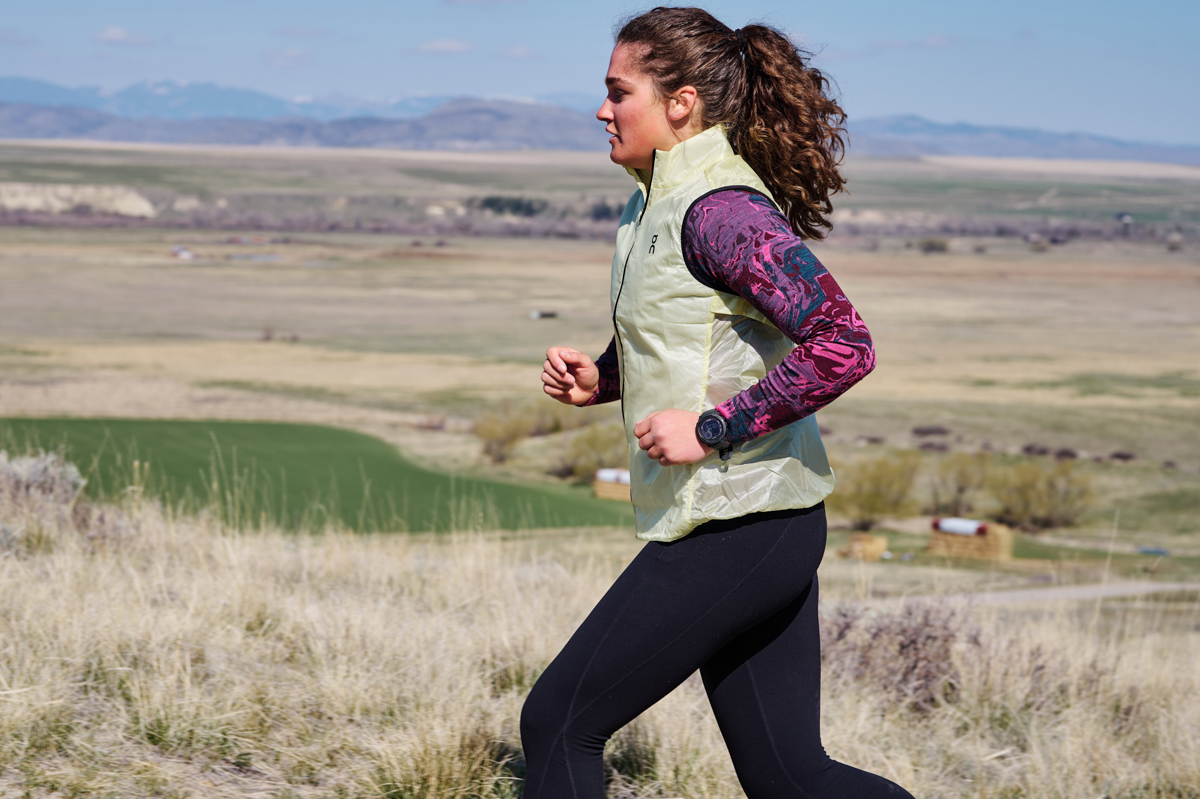
While GPS watches make a lot of sense for outdoor-goers venturing far off the grid, the reality is that not everyone needs GPS tracking. In fact, there are several upsides to going the non-GPS route, including massive cost savings, superior battery life, and a simpler interface (most have limited to no smartphone connectivity, activity tracking, or music capabilities). Often referred to as ABC or altimeter watches, non-GPS watches are stripped down to the basics and forego the bells and whistles of modern GPS-equipped designs.
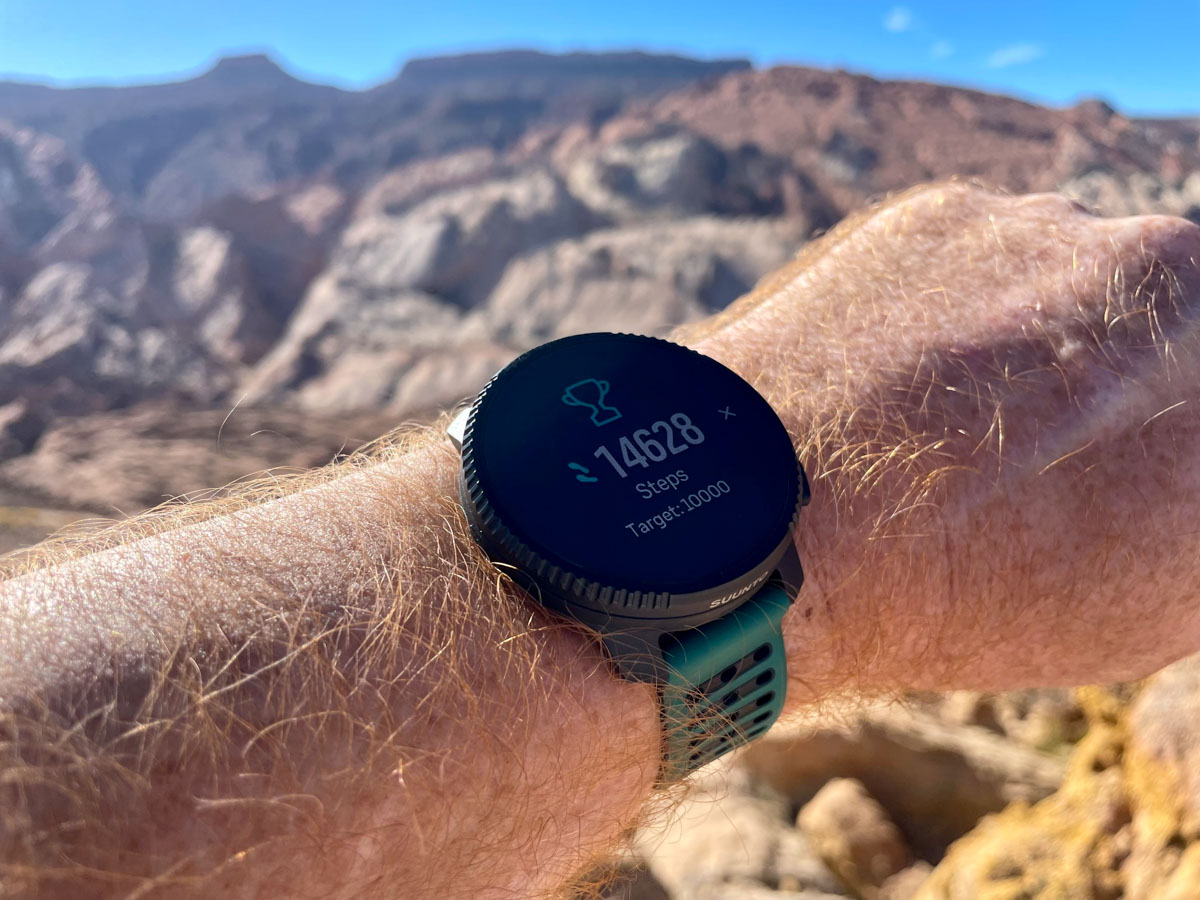
In pinpointing some of our favorite altimeter watches, Suunto’s Core is a solid value, offers great accuracy with a premium barometric altimeter, and packs in tons of helpful features. It also boasts a 12-month battery life, which blows non-solar-powered GPS watches out of the water (most ABC watches use coin-cell batteries, which last considerably longer than lithium-ion batteries). Casio also offers a handful of well-built, affordable designs, including the Pro Trek PRG-270-1. In the end, only you can decide whether or not GPS tracking is worth the added cost and complexity, but the good news is that there are plenty of quality options on both sides.


_08b31.jpg)
d1f5.jpg)
_083fa.jpg)
84f9.jpg)
8ef8.jpg)
-teaserf4b1.jpg)
_099a8.jpg)