_0.jpg)
_0.jpg)
Photo Credit
Whether you’re cutting your climbing teeth outside or in the gym, the last thing you want to spend your time worrying about is your shoes. From sizing, materials, price considerations, and transitioning into more advanced disciplines, we tested as many as we could get our hands on, and our top choice is the Butora Endeavor 2.0. If you want to delve deeper into shoe types and what they're best for, check out our article on choosing the right pair. If you’re ready to take the next step, check out our article on the best overall climbing shoes.
Editor's note: In our most recent update, we included fresh notes from recent testing, added some more info about the parts of a climbing shoe in the buying advice, and ensured all other information was up to date at the time of publication.
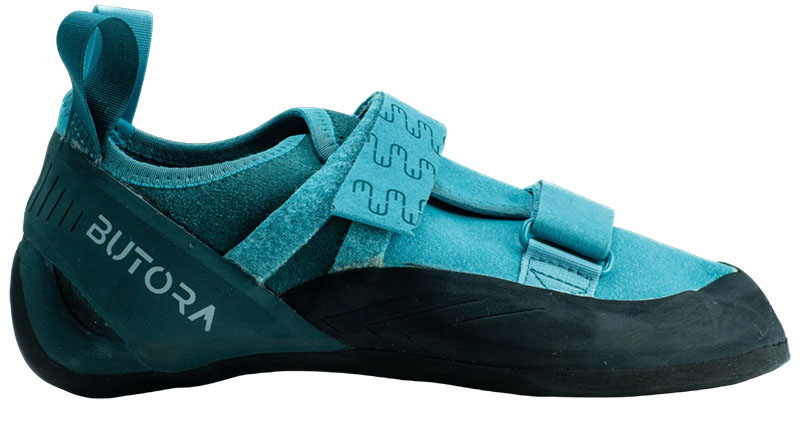 Upper: Synthetic
Closure: Velcro
Ability level: Beginner to intermediate
What we like: Great price for a well-designed and well-built shoe.
What we don't: Moderate downturn means this shoe won’t excel on overhanging terrain.
Butora might not be as well-known as Scarpa or La Sportiva, but the Korean-born company has established itself as an important player in the U.S. climbing shoe market. Before launching the brand in 2014, shoe designer Nam Hee Do was in the business for over 30 years (most notably, he worked with Chris Sharma to design the Shaman), so it comes as no surprise that Butora’s shoes display an impressive attention to detail and use top-notch materials. The Endeavor 2.0 is their premium entry-level design, offering decent performance, high comfort, and a relatively low price, and it has secured its place as our favorite beginner shoe.
Compared to the many true beginner shoes, the Endeavor 2.0 features a slightly downturned shape and very sticky rubber (Butora uses the same Neo Fuse on their high-end models), both of which leave room for progression and reward precise footwork. It’s also available in two widths and half sizes from 34 to 49, so most climbers should find a comfortable fit. But while it’s a wonderful shoe for brand-new gym climbers (especially those learning on ropes) and slabby outdoor climbing, it’s not our top pick for most gym bouldering or steep outdoor terrain. We also don’t love Velcro shoes for crack climbing, since the straps can create painful pressure points and might come undone while jamming. But the Endeavor 2.0 nevertheless strikes an excellent balance for those who prioritize price, performance, and comfort.
See the Butora Endeavor 2.0 Wide Fit See the Butora Endeavor 2.0 Narrow Fit

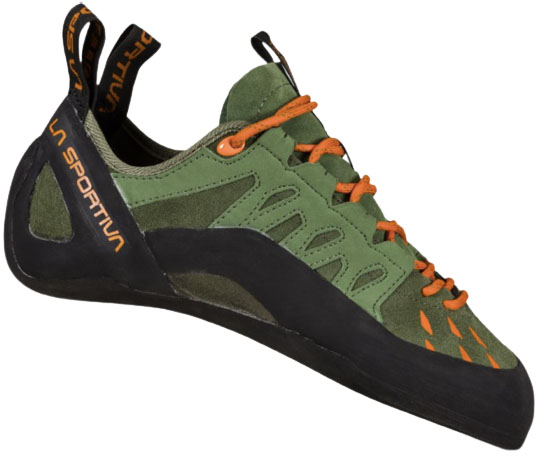 Upper: Leather
Closure: Lace
Ability level: Beginner
What we like: Comfort-oriented, durable, and very affordable.
What we don’t: Roomy fit lacks precision; outsole rubber isn’t particularly sticky.
When shopping for your first pair of shoes, most beginner climbers will prioritize affordability, durability, and comfort over outright performance. And for good reason: Proper footwork takes time to learn, and you’ll burn through a lot of rubber in the process. The Tarantulace brings these factors together better than most at a bargain-basement price with all the features beginner climbers need. You get 5 millimeters of stiff and durable rubber, a long-lasting leather upper that will conform to your feet over time, and a roomy toe box that maximizes comfort. Although it’s been around forever, the Tarantulace is far from outdated: La Sportiva gave their beginner model some love in their most recent update, with new aesthetics and colors along with small design changes.
Build-wise, the Tarantulace is closer to an approach shoe than most models on this list, with a thick outsole, fairly symmetrical toe, and flat, wide last. In other words, it’s a great combination for all-day comfort (think moderate multi-pitch routes or long gym sessions) but not ideal for steep or technical climbing. The flat last doesn't offer much power, and the rubber isn't as sticky as the rubber on other models we've tested in this space. For quick learners or those primarily interested in bouldering, La Sportiva offers the Tarantula Boulder, which features a softer build and higher-performance toe and heel for better hooking. The lace-up version might also not be the most efficient choice for indoor climbers who remove their shoes between attempts. In addition to the Tarantula Boulder, the design is also available in a simpler Velcro version (the Tarantula), which offers a similar feel to the lace-up model here. Regardless of which version you go with, the Tarantulace is great for new climbers looking for a comfortable, no-frills shoe at a good price.
See the Men's La Sportiva Tarantulace See the Women's La Sportiva Tarantulace

 Upper: Leather
Closure: Lace
Ability level: Beginner to intermediate
What we like: Durable and incredibly well-made.
What we don't: Pricey; not good for steep bouldering or face climbing.
It shouldn’t come as a surprise that the La Sportiva Mythos Eco makes an appearance near the top of this list. Many beginner-oriented climbing shoes are clearly built for novices, and all too often this means reduced craftsmanship and lower-quality materials to boost the bottom line. The Mythos, however, prioritizes quality. It’s a popular choice for crack climbers specifically, and built to withstand the rigors of outdoor climbing: Even after shoving it relentlessly into cracks, the stitching stays strong, and the leather remains superbly comfortable and durable. The lacing system is also unique, wrapping around the ankle and extending far down the toe for a precise fit. Put together, it's a great shoe for those who want to refine their crack-climbing technique while retaining some comfort in the effort.
The Mythos’s success as a beginner shoe stems from its versatility across different terrain types. As a climbing novice, you likely don’t know yet whether you prefer cracks or face, boulders or roped climbing. Getting an all-rounder like the Mythos is the best way to hedge your bets and be covered in most scenarios. That said, those who want to stick to indoor climbing or techy bouldering might find the Mythos limiting. The rubber lacks grip for smearing on volumes and gym walls, and the flat last doesn’t give them much power. The Mythos will be plenty for someone learning in a gym setting, but we’d upgrade to a shoe like the Scarpa Veloce or Unparallel UpMocc below for greater indoor performance. But for crack climbing, the Mythos has both beat thanks to its durable materials and comfortable fit.
See the Men's La Sportiva Mythos Eco See the Women's La Sportiva Mythos Eco


Upper: Leather/synthetic
Closure: Velcro
Ability level: Beginner to intermediate
What we like: A comfortable design with the addition of toe rubber and a premium Vibram outsole.
What we don’t: Pricier than many true beginner offerings.
Many new climbers start out in the gym, whether out of convenience or simply wanting to learn in a more controlled environment where assistance is readily available. For pulling on plastic, La Sportiva’s Kubo stands out as a highly capable and versatile choice from one of the best shoe manufacturers in climbing. It follows the same formula as many entry-level shoes here, with a roomy toe box, an unlined leather upper, a two-strap closure, and a padded tongue (with a breathable cotton liner). But the Kubo offers a slight level up from a true beginner shoe, thanks to its slight downturn and asymmetric toe, along with the large patch of toe rubber that offers extra grip and durability for toe hooking. It all adds up to a solid all-around choice for indoor climbers who are ready to level up from a shoe like the Endeavor or Tarantula above.
You can learn a lot about a climbing shoe by looking at its rubber, and the Kubo’s Vibram XS Edge (or XS Grip 2 for the women’s version) hints at its intermediate performance slant. These are high-quality rubber blends used on the best shoes in the game and will give mid-level climbers the tools they need to improve their footwork and gain confidence on the sharp end. We also appreciate the choice between the firmer, more durable XS Edge and the softer, stickier XS Grip 2, which lets you tailor your shoe to your body type and/or climbing style (don't get too caught up in the men's and women's designations). All told, the Kubo is an excellent modern option that won’t hold you back, and the good news is it still costs less than most of the high-end competition.
See the Men's La Sportiva Kubo See the Women's La Sportiva Kubo

 Upper: Synthetic
Closure: Velcro
Ability level: Beginner
What we like: A durable, time-tested classic that’s great for steep climbing.
What we don’t: Newest version might not be as comfortable out of the box; a stiffer shoe will be better for all-day wear.
If you’re looking for contenders at reasonable prices (compared to top models from La Sportiva and Scarpa), Evolv’s shoes might be the answer. The Defy here is our favorite for bouldering. The newest version—billed as the “most advanced entry-level shoe on the market”—features a touch more camber and slightly more asymmetric fit than the previous version, which gives it more power and precision. It remains as soft and highly flexible as the prior version, making it an excellent choice for steep terrain. And there are a few other thoughtful touchpoints in this most recent update, including a split tongue for easy put-on and a perforated upper for breathability. The shoe also comes in both Velcro and lace versions, but we recommend the Velcro option for bouldering specifically, as it's easier to pull on and off between attempts (and it's less expensive).
The latest updates to the Defy directly address our gripe with the previous model: nothing about the shoe stood out. The increased downturn and slight asymmetry push these shoes closer to the ranks of the Kubo above and Veloce below without increasing the price too much. Though we anticipate this new version to be slightly less comfortable out of the box for most folks, due to these features. To help dial in fit, the Defy comes in medium-volume and low-volume versions, as well as half sizes. Lastly, keep in mind that this build will tax your feet more than a stiffer shoe, but that shouldn't be an issue if you're sticking to short sport burns and bouldering.
See the Evolv Defy See the Evolv Defy Low Volume

 Upper: Leather
Closure: Velcro
Ability level: Beginner to intermediate
What we like: Extremely comfortable and well-thought-out design.
What we don’t: Neutral last might hold back more intermediate climbers
Scarpa’s legendary designer, Heinz Mariacher, the brains behind uber-high-performing shoes like the Drago, doesn’t stop at elite. In an effort to encourage more and more folks to start climbing, Mariacher set out to design the perfect beginner shoe. Enter the Scarpa Origin. Its superior comfort is immediately noticeable, and the padded tongue gives the shoe a pillow-like feel. And while the last is flat, the sole is stiff enough to provide decent support. What’s more, the latest update improved upon fit and comfort with a retooled fit at the widest part of the foot and Scarpa’s PAF (short for Pressure Absorbing Fit) system to reduce Achilles strain. Needless to say, we appreciate Scarpa’s thoughtful, intentional approach to nailing the details.
The Origin is essentially Scarpa’s answer to the Evolv Defy above, one of the world’s best-selling beginner climbing shoes. In fact, we think the Origin is better-designed and made with higher-quality materials, although you do pay for it. But as far as performance goes, the two have very different strong suits: Whereas the Defy is great for gym climbing and outdoor bouldering, the Origin’s stable sole and cushioned upper make it a better fit for high-mileage and multi-pitch days (the generous 5mm outsole helps). Though it might not feel as precise on steep or technical terrain, it’s a wonderful option for those getting into the sport who want something comfortable and well-built.
See the Men's Scarpa Origin See the Women's Scarpa Origin
 Upper: Leather
Closure: Slip-on
Ability level: Beginner to advanced
What we like: Easy on/off, sock-like fit once broken in, and very sticky rubber.
What we don’t: Tough to dial in a good fit; comes with some inherent performance drawbacks.
While still relatively new to the scene, California-based Unparallel has a storied history: Following Adidas’ acquisition of longtime climbing shoe brand Five Ten in 2011, former Five Ten designer Sang Lee founded Unparallel in 2017 to continue and improve upon Five Ten’s legacy (fun fact: They even took over the manufacturing facility). Unparallel’s Up Mocc is an intriguing option for beginners: While unlined and stiff out of the box, the shoes’ flat last and easy on/off make it approachable for those just starting out, and the leather upper provides a sock-like fit once worn in (note: It does take considerable time to break the shoes in). What really makes it stand out is its rubber, which is among the grippiest we’ve tested. It smears easily on volumes and provides a trustworthy grip on a range of outdoor terrain as well.
All that said, slippers like the Up Mocc have some inherent downsides. First is the lack of closure, which makes the shoes tough to fit: If you go too big, you risk sloppy footwork, while downsizing will result in an uncomfortable break-in period but a closer, more precise fit in the long run. It doesn't help that Unparallel shoes are hard to track down in person, which can make it tough to find the right size. Further, the Up Mocc isn’t the best option for overhanging climbs due to its flat last—although it’s soft enough to toe in on edges and pull your hips into the wall—and the lack of straps makes it difficult to heel or toe hook without coming out of the shoe. But again, the Up Mocc’s appeal lies in its versatility: It can edge, smear, and jam with the best of them, and you shouldn't need to upgrade anytime soon. If you don’t mind taking some time and doing your research to dial in the right fit, the Up Mocc is a true standout with a loyal following of crack climbers and boulderers.
See the Unparallel Up Mocc
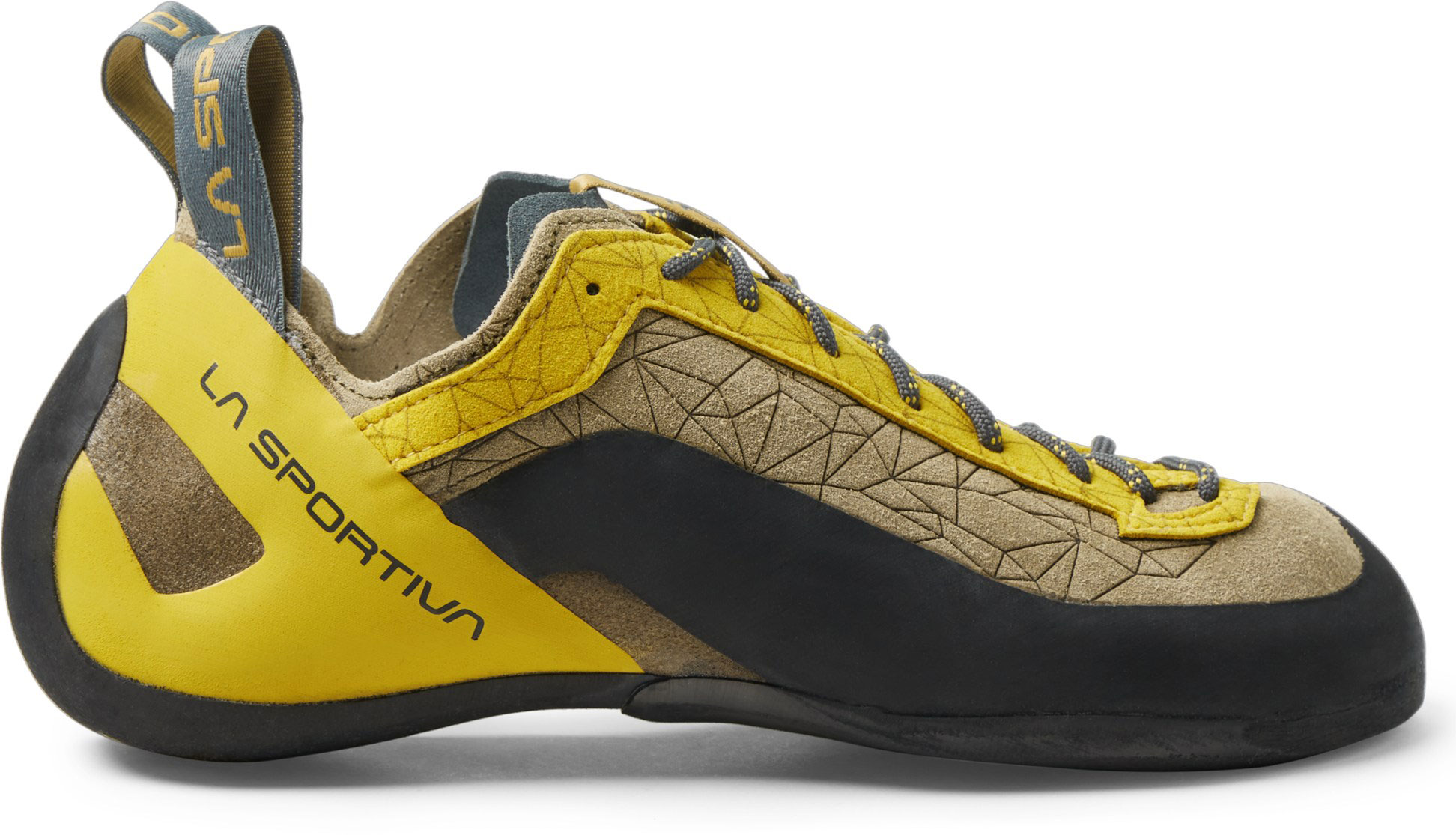 Upper: Leather/synthetic
Closure: Lace
Ability level: Beginner to intermediate
What we like: Durable; great support for all-day trad climbs.
What we don’t: Stiff construction requires a longer break-in.
The Finale is an entry-level climbing shoe with features that help you get a feel for what a high-performance shoe might be like. Like La Sportiva’s top models, this shoe features Vibram's stiff XS Edge rubber, a padded mesh tongue, a tensioned heel rand, and the company’s proprietary P3 system that maintains the shoe's downturn over time. However, given the Finale’s unlined construction (great for out-of-the-box comfort) and durable 5-millimeter sole, it’s not lost on us that this shoe is tailored toward new climbers.
The Finale is one of the stiffer, burlier options on this list. This is good for durability, and the Finale can handle much more wear and tear than the more flexible shoes here, but it might take longer to break in. The lack of underfoot sensitivity also might lead to a clunkier feel while gym climbing or bouldering. It’s a wonderful shoe for alpine climbers and trad climbers, however, especially for those who prefer more structure and support. And we’ve found the grip more trustworthy than the Mythos’s, which is a plus for those weary of losing their footing. Overall, it’s a well-rounded shoe with the right amount of versatility for beginners dipping their toes into several disciplines.
See the Men's La Sportiva Finale See the Women's La Sportiva Finale
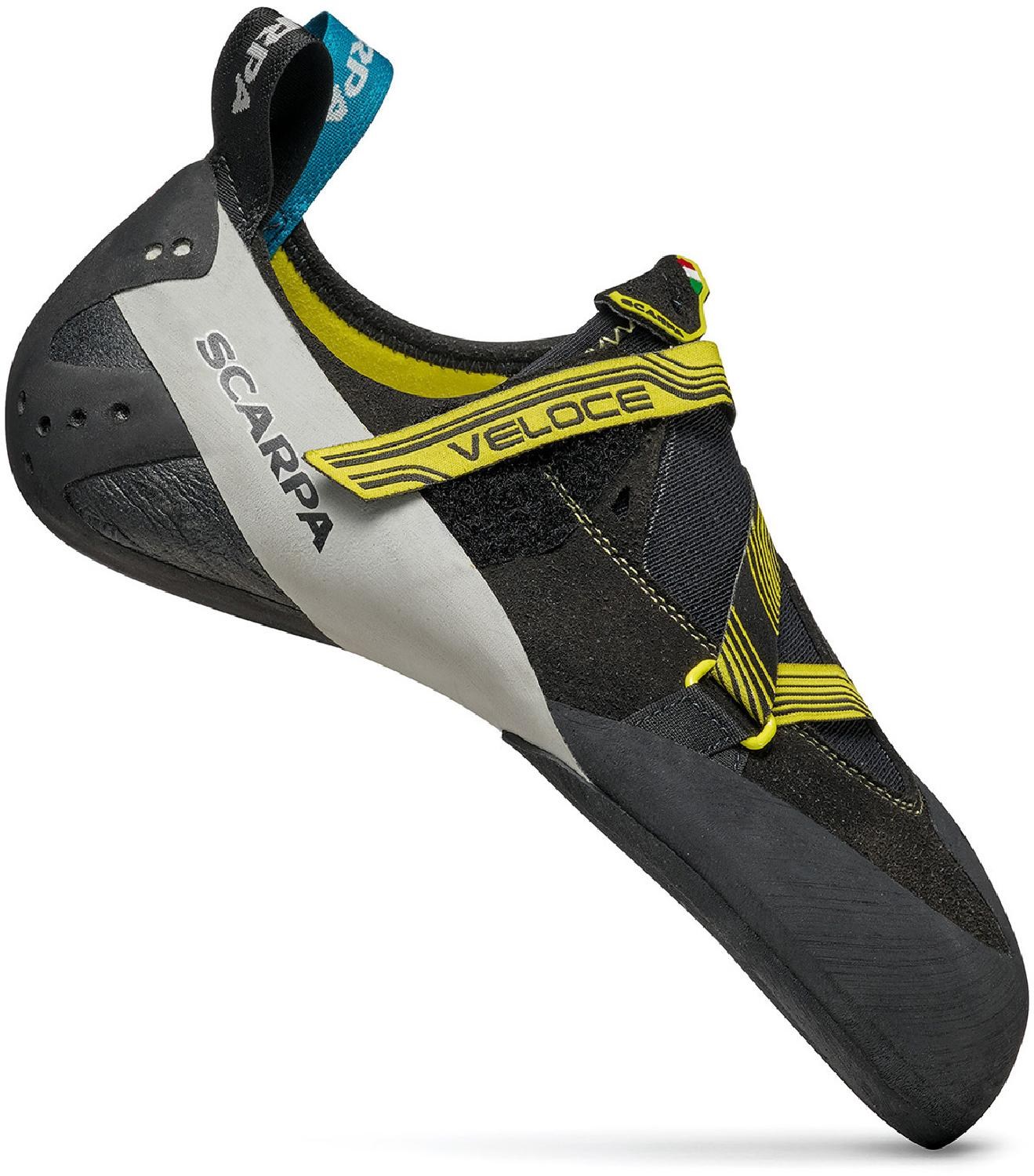 Upper: Synthetic
Closure: Velcro
Ability level: Beginner to intermediate
What we like: A high-performance beginner shoe for the gym.
What we don't: Expensive and not all that versatile.
In years past, beginners typically cut their teeth on low-angle slabs outside, where flat and stiff shoes shine. But with more and more climbers getting their first taste of the sport on indoor walls (read: steeper routes with bigger holds), there’s a new demand for softer and more downturned beginner kicks. The Veloce is Scarpa’s answer, merging gym climbing precision with a comfort-focused shape, durable rubber, and a price that undercuts much of the more performance-specific competition.
We love the concept of the Veloce and, given the popularity of gym climbing, expect other brands to follow Scarpa’s lead. That said, it is still a sizable investment for many newcomers. And with a clear indoor focus and rubber that’s more sticky than long-lasting, the Veloce has limited appeal for outdoor use (its super soft build isn’t ideal for true beginners either). As an alternative, the Evolv Defy above provides a similarly soft feel but lacks the aggressive downturn for precision on overhanging terrain. Finally, it’s worth noting the lace version of the Veloce, which retails for the same price and provides a very adjustable fit. Either way you go, the Veloce is a great option for quick learners who want to excel in the gym.
See the Men's Scarpa Veloce See the Women's Scarpa Veloce
 Upper: Leather
Closure: Lace
Ability level: Beginner to advanced
What we like: The best shoe for crack climbing—period.
What we don’t: Expensive and overkill for most beginners.
We’ll address the elephant in the room right up front: The La Sportiva TC Pro is decidedly not a beginner shoe. In fact, this is the shoe that Tommy Caldwell designed (hence the “TC”) and wore during his free ascent of the Dawn Wall. Heck, Alex Honnold free-soloed El Cap in it, too. The TC Pro can do just about anything on granite, from perching on tiny dime edges to gripping vertical slab. But while most beginners won’t need this level of performance for moderate routes, we recommend the TC Pro for one discipline in particular: crack climbing.
We’ve taught many crack-climbing clinics, and one of the most consistent obstacles for new climbers is foot pain. In short, there’s nothing natural about shoving your entire foot into a crack and then fully weighing it. And while most climbing shoes don’t offer much help with their fairly thin (and often unlined) uppers, the TC Pro features padding on the top of the foot and full ankle protection, which makes a massive difference. Although the price is a tough one to justify for a first shoe, if you’re stoked on cracks or are cutting your teeth in mountainous areas like Washington Pass or the Sierra, there’s no better option, even for newer climbers.
Read more: La Sportiva TC Pro review
See the La Sportiva TC Pro
While the beginner climbing shoe market doesn't evolve as quickly as the broader market, manufacturers often find ways to improve their intro models, updating features such as outsole rubbers and closures. We're always keeping an eye out for new designs or updates to existing models and test them before considering them for this list. That said, not every shoe we test makes the cut, and we have high standards for comfort, quality, and durability. We know you might be interested in the models we've tested and dismissed, along with the reasons we did so.
First, we decided to remove the Black Diamond Momentum in this update. While not a poor design, it doesn't stand out in any particular way. A recent design update led to a price increase, making it less desirable for beginner climbers.
We also opted to remove the Evolv Rave. When compared to the Unparallel UpMocc, the Rave is more expensive and doesn't have as grippy an outsole. It's worth checking out if the UpMocc doesn't fit your foot, but in most cases, we'll stick with the UpMocc.
Lastly, we dismissed the Scarpa Force. While far from a poor design, it felt clunky during testing. We also think most folks will be happy with one of the cheaper models on the list or committing to the La Sportiva TC Pro's high price for higher quality materials and performance.

| Shoe (men's/women's) | Price | Upper | Closure | Rubber | Ability Level |
|---|---|---|---|---|---|
| Butora Endeavor 2.0 | $120 | Synthetic | Velcro | Neo Fuse | Beginner to intermediate |
| Men's La Sportiva Tarantulace Women's Tarantulace | $99 | Leather | Lace | FriXion RS | Beginner |
| Men's La Sportiva Mythos Eco Women's Mythos Eco | $179 | Leather | Lace | Eco rubber | Beginner to intermediate |
| Men's La Sportiva Kubo Women's La Sportiva Kubo | $169 | Leather/synthetic | Velcro | Vibram XS Edge/Grip 2 | Beginner to intermediate |
| Evolv Defy | $119 | Synthetic | Velcro | Trax SAS | Beginner |
| Men's Scarpa Origin Women's Scarpa Origin | $129 | Leather | Velcro | Vision | Beginner to intermediate |
| Unparallel Up Mocc | $134.50 | Leather | Slip-on | RH/VD rubber | Beginner to advanced |
| Men's La Sportiva Finale Women's La Sportiva Finale | $139 | Leather/synthetic | Lace | Vibram XS Edge | Beginner to intermediate |
| Men's Scarpa Veloce Women's Scarpa Veloce | $175 | Synthetic | Velcro | S-72 | Beginner to intermediate |
| La Sportiva TC Pro | $239 | Leather | Lace | Vibram XS Edge | Beginner to advanced |
The truth is that we all start somewhere, and even the experienced climbing editors at Switchback Travel were beginners at one point. We’ve come full circle since our humble beginnings dialing in footwork at local gyms and low-angle crags, now focusing our efforts on objectives like multi-pitch routes in the North Cascades and big walls in Yosemite. Former senior editor Jenny Abegg began climbing at a young age and fine-tuned her technique on rugged granite peaks in Washington state. This list of beginner climbing shoes began in 2015 with four designs hand-picked by Jenny, who leveraged her extensive experience testing a variety of models throughout her climbing journey. Editor Maddie Downie took over the guide in 2024. Although she grew up in the Colorado foothills, Maddie didn't start climbing until her adult years, but quickly developed a passion for the sport. For several years, she worked as a youth coach at a local climbing gym, helping beginners gain confidence on the wall.
In selecting our 10 favorite beginner climbing shoes, we prioritized qualities different from those sought in advanced designs. While experienced climbers are typically willing to sacrifice comfort for higher performance, beginners should focus on shoes that are durable, within budget, and comfortable enough to wear all day. For comfort, we look for flat-lasted, symmetrical shoes. Leather designs are our top choice because they stretch and conform to your foot over time better than synthetics. Durability is also crucial: We value shoes with thick midsoles and high-quality components that hold up well over time. Finally, since we know many beginners will upgrade as they progress, we balanced overall performance with affordability.
.jpg)
Climbing shoes are purpose-built to make climbing easier by providing grip, precision, and support. Unlike running shoes or most hiking footwear, climbing shoes don't have generous midsoles, cushion, or room for your toes to spread. Instead, they have narrow toes that can stand on small ledges or fit inside cracks, and rubber that's designed to stick to rock and indoor gym holds. There is a lot of variety in climbing shoes, however. For instance, some have stiffer midsoles that provide more support to the foot, while others are flexible, making it easier to press your foot against steeper surfaces. Below we break down the parts of a climbing shoe and what to look for as you look for your first pair.

Beginner climbing shoes are easily discernible if you’re staring at a wall of all your options. To start, they’re generally flat, while more advanced shoes have at least some downturn (think a banana-shaped curve). The toe tends to be almost rounded and only slightly asymmetrical (if at all) compared to the more pointed toe of an aggressive shoe. And finally, beginner shoes are often less flashy; they lack many of the bells and whistles found on higher-level models.
That said, a quality starter shoe should come with a few very important features, not all of which are immediately visible. First is a low price. As a beginner, you can easily spend more than $200 on a pair of climbing shoes, but you don’t need to (for more, see our section on Why Beginners Should Spend Less below). Second is a durable sole. Some rubbers are softer (and thus grippier) than others, but beginner shoes are made with harder, stiffer blends to ensure they last while you’re learning how to use your feet on the wall. And the most important feature, by far: comfort. Climbing is a tough sport with a steep learning curve, and it’s a lot harder to stick with it if your feet are screaming every time you put on your shoes. Over time, you will adapt to the pain of tighter shoes, but we recommend starting with a pair that you can wear all day.
.jpg)
All of the shoes on this list can be worn for both gym and outdoor climbing, although many lean toward one discipline or the other. If you’re sticking mostly to the gym, you’ll likely want Velcro closures or slip-on shoes for easy on and off, and durable soles (5mm of rubber) that can take a beating. Your shoes will see a lot more mileage in the gym than outside. On the flip side, indoor routes tend to be significantly steeper than lower-grade climbs on real rock, so soft shoes with a good amount of flex and sensitivity (like the Evolv Defy) can be helpful, especially if you favor bouldering over roped climbing.
Those learning outside will likely want to bump up to a higher-performance shoe. You might not think twice while climbing a gym 5.7, but climbing on real rock is a whole different ballgame. Having more confidence in your footwear when the consequences are greater (like a ground fall) can help considerably. Look for high-quality rubber blends like Vibram’s XS Grip 2 and XS Edge, and if you plan to stick your feet in cracks (as is common in trad climbing), a lace-up shoe is a good idea. Finally, because you’ll likely start on slabs rather than overhanging terrain, we recommend a stiffer shoe with good edging capabilities, like the La Sportiva Finale. For more information on the various features important to climbing shoes, continue reading our breakdown below.
.jpg)
Like all footwear, climbing shoes are more intricate than they appear. From rands, insoles, and midsoles, to uppers, pull tabs, and lasts, below is a rundown of all the pieces of a climbing shoe:
Sole (outsole)
The sole is the rubber exterior on the bottom side of the shoe, and it is the part that comes in contact with the wall. There are lots of different rubber blends used for climbing shoe soles, each with varying degrees of stickiness and durability (more on that below). As a beginner, there's no need to get too hung up on rubber types. Instead, opting for a thick, durable outsole will help your shoes last longer as you hone your footwork.
Midsole
The midsole is the part that sits on top of the shoe's rubber sole. Its job is to provide rigidity to the shoe and to create and maintain the shape of the footbed. Climbing shoes undergo significant torsional and flexural loads, so the midsole is usually composed of a thin, lightweight, highly flexible, and resilient plastic laminate.

Footbed (insole)
This is the part of the shoe that your foot physically stands upon. It covers the midsole and is usually made of durable synthetic leather or a leather-like material.
Rand
The rand is on the edge of the sole and wraps the edge of the forward half of your foot. In a climbing shoe, it’s responsible for sucking the foot in tight over the footbed and reinforcing the edging platform of the sole. The outer part of the rand on climbing shoes is always composed of some blend of sticky rubber, which is important for wedging your feet into thin cracks (called rand smearing)
Heel/heel cup
All climbing shoes have a molded heel specifically shaped to fit a typical human heel. Some shoes have a highly molded cup-like shape that supports the heel while driving the toes forward, creating greater power in the front of the shoe. Internally, a heel cup is made of the same material as the footbed. Externally, it’s composed of sticky rubber.

Toe box/Toe Rubber
While beginner climbing shoes don't have the narrowest and most precise fit in the toe, they still fit tightly around the front of the foot. In climbing shoes, the goal is almost always to eliminate dead space, and the toe box is no exception (more on fit below). Some climbing shoes feature a rubber patch on the toe, providing additional grip on steep routes.
Upper
The upper is the part of the shoe that rests upon the top and sides of your foot. Uppers are typically made of a soft, durable fabric, often high-quality leather or synthetic leather. Most of the upper of a shoe is typically free of rubber and should be comfortable and wick sweat well.
Closure
This part of the shoe tightens down the upper and makes the whole shoe fit snugly and firmly to your foot. We tend to break climbing shoe closures into three styles: laces, velcro, or slippers. Each has its pros and cons in terms of comfort, support, and climbing performance, and we break those down below.

Pull tabs
Putting on a properly fitting pair of climbing shoes is not easy. To help, most climbing shoes feature small woven loops on the back that you can stick your fingers into to pull the shoe on.
Last
The last is the physical foot shape the shoe was modeled upon. There are lasts for wide feet and narrow feet, short feet and long feet, and feet with high arches and low arches. Ultimately, the last a shoe is built upon (along with the shoe’s ability to adhere to that shape) dictates how well the shoe will fit your foot. Many shoe companies use the same last on various models.
It can be confusing to understand the often-subtle differences between materials in outdoor gear, but in this case, there’s a golden rule: Leather stretches, but synthetic doesn’t. While there are a couple of exceptions (leather is sometimes lined, which prevents it from stretching as much), this rule will hold true for almost all climbing shoes.
For beginners, both leather and synthetic can be good choices, but it’s important to consider the implications. If you choose an unlined leather shoe like the La Sportiva Mythos, expect it to stretch a whole size over time. That means you’ll have to size it small from the get-go and face a potentially painful break-in period. If you go with a synthetic option like the Butora Endeavor, expect the shoe to stay true to size. While this might sound (and feel) like a good thing at first, leather provides superior comfort in fit as it conforms to your foot over time. If we were to make a recommendation, we’d tell you to stick it out and go with leather. What's more, leather tends to be more durable, which is an important consideration for beginners still learning technique.

There are three main types of closure systems for climbing shoes: lace, Velcro, and slip-on. Since there’s no unanimously superior closure type for beginner shoes, we’ll let you make the final decision. Below, we break down the pros and cons of each. And keep in mind that many of the shoes in this article are available in both lace-up and Velcro versions. If you like the sounds of a shoe but prefer a different closure system, you may be in luck.
Lace
Laces are helpful for novice climbers because you can tailor the comfort-to-performance ratio specifically to your level of climbing. In other words, you can adjust the tightness and fit of the shoe around your foot depending on how you want it to perform. At first, you’ll likely find comfort more important, but over time, you’ll care more about performance. Laces give you the versatility to tighten or loosen your shoes accordingly. That said, laces can quickly become a pain if you’re putting on and taking off your shoes repeatedly, as is the norm in the gym or while bouldering. They can also break and be difficult to replace. We recommend lace-up shoes like the La Sportiva Mythos or Finale if you’re primarily crack climbing outside, but for everything else, beginners should stick with Velcro or elastic closures.
.jpg)
Velcro
Velcro is incredibly practical. For one, it makes it easy to put on and take off shoes, which is important for gym climbing and bouldering, both indoors and outdoors. The downside? Velcro can be somewhat limiting in how well it fits—you can only tighten or loosen as much as the material allows. It also tends to fail over time, which is a major concern for a shoe like the La Sportiva Tarantula. And a quick note for the crack climbers out there: If you plan on spending a lot of time wedging your way up ‘em, Velcro is not an optimal choice, as it can snag, undo mid-route, or cause painful pressure points. However, if you’re primarily bouldering or gym climbing, we absolutely recommend a Velcro shoe like the Scarpa Veloce or La Sportiva Kubo.

Slip-on
Slip-on climbing shoes forego Velcro or lace closures in favor of a simple elastic closure. Much like a slipper, these shoes are incredibly easy to put on and take off (even easier than Velcro designs), and the low-profile shape makes them an excellent choice for jamming into cracks, too. However, there's a reason the Unparallel Up Mocc is the only slip-on shoe on our list: The lack of an adjustable closure often requires downsizing to achieve a proper fit, which can result in an uncomfortable break-in period. In the same vein, if the shoe is too loose, there's no way to cinch it down, leading to sloppy footwork and the risk of pulling the shoe off when heel hooking. However, if you're willing to grit through your first few sessions, slip-on shoes will improve as you do and offer a sock-like fit that other styles lack.
.jpg)
A simple way to categorize climbing shoes is by the stiffness of the midsole and sole. Climbers who gravitate toward steep boulder problems or gym climbing will likely prefer a soft shoe that allows them to flex their feet around holds. These shoes provide far greater sensitivity between the rock and your foot, but as a result, your foot will have to work much harder than it would in a stiffer, more supportive shoe. Those who plan to climb long routes outside will benefit from the edging, stability, and support offered by stiffer shoes. In general, unless you’re just bouldering at the gym, we recommend that beginner climbers wear a shoe with a moderately stiff midsole (such as the La Sportiva Tarantulace and Scarpa Origin) to help support their foot muscles and ligaments as they build strength.
.jpg)
Rubber is one of the most important features of a climbing shoe. The more time you spend climbing, the more you’ll geek out about it: the different styles, thicknesses, and the perfect recipe for sending your project. But for now, we’ll keep it simple and talk about two main features: grip and durability.
Your best bet as a beginner is to get the most bang for your buck, and in terms of rubber, this means a fatter sole. Anything 4 millimeters and up is a good start; anything thinner won’t last nearly as long. But not all rubber is created equal: Some blends prioritize grip, while others excel at durability. For example, Five Ten’s Stealth C4 and Vibram’s XS Edge are stickier than La Sportiva’s FriXion RS but not as durable. For true beginners, durability will outweigh the minor differences in stickiness. But as you progress, a lack of grip will hold you back.

You may have been told by a friend, store clerk, or climbing gym employee that you need to buy shoes so tight they hurt your feet. We’re here to tell you the opposite. Beginner climbers need tight shoes just like any climber, but only comfortably so. The initial investment in climbing is so great, and the learning curve so steep, that the last thing you want is to loathe the idea of climbing because your feet are in constant pain. Besides, the terrain you’re climbing as a beginner generally doesn’t warrant a high-performance shoe with a super-tight fit. It’s great to be able to stand on dime-sized edges, but most beginners realistically aren’t going to be doing that.

There’s another important lesson here: How you use your feet is more important than what you put on them. If your shoes are on the roomy side, it will only force you to improve your footwork. Over time, it’s best practice to get used to overcoming obstacles by working on technique rather than buying different gear. In general, get the same size you would in street shoes or a half size down. Major exceptions to this rule (like the Butora Endeavor 2.0) will typically state them explicitly. As we mentioned above, leather will stretch more than synthetic materials, so size your leather shoes down and expect a few mildly uncomfortable break-in sessions.
Most climbing shoes are available in both men's and women's versions, with the main differences in colors and rubber (contrary to popular belief, there are rarely differences in fit and sizing). Although this doesn't always apply to the beginner market, it's common to see stiffer (and more durable) rubber like Vibram XS Edge on men's shoes and softer (and stickier) Vibram XS Grip 2 on women's shoes. Stiffer rubber is great for edging and slab climbing, while many sport climbers and boulderers prefer softer compounds for better grip and sensitivity.
_0.jpeg)
Climbers can be picky about their rubber choices, so it's very common to see men wearing women's shoes and vice versa. In the end, we like to think of a shoe's two models as being Option A and Option B rather than assigning them genders. Butora offers their shoes in “wide” and “narrow” rather than in men's and women's versions, and it's also common to see high-volume and low-volume fits. Finally, keep in mind that some unisex models (like the popular La Sportiva TC Pro) aren’t made in varying widths. If your foot is wider or narrower than most, it’s likely that these shoes won’t work for you.
Rock climbing isn’t the cheapest outdoor sport. A harness will run you $60 at minimum, then add in a belay device and locking carabiner for another $50, and a gym membership for up to $130 per month. Factor in $25 for a chalk bag and $5 a month for chalk. Adds up quickly, doesn’t it? If you get into outdoor climbing, you’ll also need a rope, helmet, quickdraws, and so on (you should be hearing the sound of a cash register right about now). As a beginner, it’s all new, and it’s all a hefty investment in something you know very little about.
All that said, why break the bank on a pair of shoes? More to the point, why spend extra for features you don’t need? You’re a beginner, so don’t worry about a highly asymmetric toe, aggressive downturn, powerful slingshot rand, top-notch heel- and toe-hooking ability, or incredible edging precision. If you’re like most beginners, you probably don’t even know what half of those things mean, and you don’t need to. Your only job as a new climber is to enjoy yourself and figure out if you want to commit to the sport. So go ahead, buy cheap. Permission granted. And if you continue to enjoy climbing, you’ll upgrade down the road.
.jpg)
“Beginner” is a broad and relative term. Some climbers are sending 5.12s and V6s after just a month of practice. They’re still beginners, just innately talented ones. If you’re one of those people, few of the shoes in this article are right for you, and you should instead consider one of our top rock climbing shoes. We’ve also included a few models on this list (including the La Sportiva TC Pro and Scarpa Veloce) as options to help you transition to tougher grades. Generally speaking, they are more expensive, so only start out with these shoes if you’re hell-bent on becoming proficient, learn quickly, or climbed out of your crib before you could walk.
If you’re like the rest of us, you can expect it to take longer to break into harder grades. As you do, you’ll start to feel like your shoes are limiting you. This is when you upgrade. But remember: Don’t buy new shoes because you think they will help you progress. Buy new shoes because you have already progressed, and your old shoes are holding you back. If you use your shoes as a crutch, you’ll tend to make excuses for what is a lack of strength and technique. Conversely, if you develop the strength and technique first and turn to new shoes second, you’ll get the boost you’re looking for because you’ll already be adept at doing more advanced moves with less advanced shoes.


.jpg?h=fbc67360&itok=ZEme7qNA "climbing (s)")
_0.jpg?h=fbc67360&itok=FWwnR4YK)
_0.jpg?h=fbc67360&itok=qBzD69RD)

_0.jpg?h=fbc67360&itok=ZM9NSULw)
.jpg?h=fbc67360&itok=DK0dwVWG)
.jpg?h=fbc67360&itok=bKHI1r1q)
 (s).jpg?h=fbc67360&itok=Iq4VmyM7)