.jpg)
 (m).jpg)
Photo Credit
A good night’s sleep on a backpacking trip used to be a rarity, but today’s sleeping pads are much improved over their predecessors. Comfort is better than ever with advanced baffling and cell designs, weight and packed size continue to drop, and you can get all the insulation and warmth you need for cold weather. After many nights sleeping under the stars all over the world—from Southern Patagonia to East Africa—we narrowed in on the best backpacking sleeping pads. We included a diverse range of air, self-inflating, and foam models for all types of adventures, with the Therm-a-Rest NeoAir XLite NXT coming out on top. For more background information, see our comparison table and buying advice. And for campers who care more about comfort than weight and packability, we’ve also put together a list of the best camping mattresses.
Editor’s note: We updated this guide on January 21, 2026, to add the Sea to Summit Ether Light XR, Big Agnes Rapide SL Insulated Double, Nemo Tensor Extreme Conditions, and remove several models. We also added a tested and dismissed section, shared new photos from recent testing trips, and ensured all information was up to date with current specs, colors, and designs.
 Category: Air pad
Weight: 13.0 oz.
Thickness: 3 in.
R-value: 4.5
What we like: Great warmth-to-weight ratio for 3-season backpacking; new, quieter design.
What we don’t: Pricey; not as easy to fill as the Tensor.
Therm-a-Rest is synonymous with quality backpacking pads, and the NeoAir XLite NXT is their leading lightweight model. For many people and uses, it’s the whole package: The XLite is comfortable with 3-inch thick baffling, features durable 30-denier fabric, and has a decently high R-value of 4.5. The pad also weighs just 13 ounces and stuffs down small, making it a premium choice for weight-conscious hikers, climbers, and more. The most recent "NXT" version uses new technology to deliver quieter sleep, addressing one of our main complaints about the older version. All told, the NeoAir XLite NXT is Therm-a-Rest’s most uncompromised offering yet. It was one of our editor's steeds of choice for each trail of the Triple Crown (AT, PCT, and CDT), and kept him cozy through a full spectrum of conditions and climates. He won't set off on a long trek with anything else (unless it's a full-blown winter excursion).
The Therm-a-Rest NeoAir XLite NXT is expensive, but you’d be hard-pressed to find another pad that offers the same amount of warmth and comfort at such a low weight. If you’re serious about backpacking, often find yourself out in the shoulder seasons, and want the best 3-season pad money can buy—this is it. On the other hand, if your backpacking trips are characterized by warm, summery conditions, a lower R-value pad can save you some money (that said, very few can compete with the Therm-a-Rest in terms of weight). And when choosing your Therm-a-Rest, keep size in mind: The mummy-shaped XLite NXT is offered in three lengths.
Read more: Therm-a-Rest NeoAir XLite NXT review
See the Therm-a-Rest NeoAir XLite NXT
.jpg)
 Category: Air pad
Weight: 14.1 oz.
Thickness: 3.5 in.
R-value: 5.4
What we like: Slightly thicker, warmer, and cheaper than the NeoAir XLite; our favorite pump sack design.
What we don’t: Small drop in comfort with the latest update; still heavier and bulkier than the Therm-a-Rest.
Nemo is perhaps best known for their backpacking tents, but it has assembled a solid lineup of quality sleeping pads. The Tensor All-Season Ultralight Insulated is a case in point, combining a lightweight, packable build with a comfortable sleeping platform and generous 3.5 inches of cushion that isolates you from the ground. We’re also big fans of Nemo’s intuitive Vortex pump sack that requires very little effort: Snap it onto the flat, micro-adjustable valve, blow lightly into the opening, and roll the collar down to force air into the mat. All in all, the Tensor’s blend of comfort, quality, and ease of use makes it a standout. The latest All-Season Ultralight pad is more competitive than ever. In addition to a boost in warmth (R-value went from 4.2 to 5.4) and thickness (from 3 to 3.5 in.), Nemo managed to trim 0.4 ounces off the pad’s weight while increasing durability with a thicker fabric on the bottom.
Our only real complaint is that the nylon build feels less supple than the polyester shell in the past. The Tensor is also still heavier than the NeoAir XLite and doesn’t pack down as small—in fact, the packed size got a little bigger with the update. But overall, we think the recent changes were a resounding net positive, making it a very close call between the Nemo and Therm-a-Rest. If you find yourself venturing into colder climates than you would with the XLite, it's worth snagging this for your backpacking missions.
See the Nemo Tensor All-Season UL Insulated

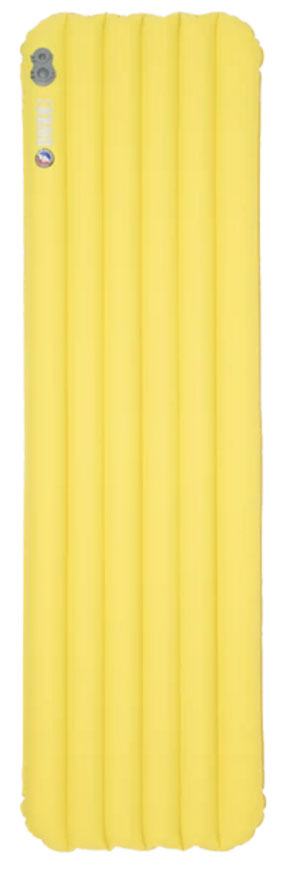 Category: Air pad
Weight: 1 lb. 6.0 oz.
Thickness: 3.25 in.
R-value: 4.0
What we like: Impressive warmth and plush padding for just $120.
What we don’t: Heavy, vertical baffles are not the most comfortable design.
You can spend hundreds on a sleeping pad, but for budget-minded backpackers or those who only get out a few times a year, the Big Agnes Divide Insulated gets the job done for about half the cost. Aside from the price, there’s not a whole lot that screams “budget” about the Divide: You get a generous 3.25 inches of padding (including taller 3.5-in. outer chambers to keep you from drifting off the side), a competitive R-value of 4.0, and a 4 x 7.5-inch packed size (for reference, the Nemo Tensor compresses to 4 x 10 in.). Along with a two-way valve with dedicated inflation and deflation openings and easy micro-adjustment, Big Agnes also includes a pump sack for easy setup.
For non-picky sleepers, recreational backpackers, or new campers with few points of comparison, the Divide Insulated is capable in most 3-season conditions. But at 1 pound 6 ounces, it’s not light, and the consensus is clear that vertical baffles are not as comfortable as horizontal or boxed baffles like those found on the NeoAir XLite and Ether Light. That said, side sleepers will like the Divide’s plush 3.25-inch thickness, and it’s an impressive pad for the price.
Read more: Big Agnes Divide Insulated review
See the Big Agnes Divide Insulated
.jpg)

Category: Air pad
Weight: 1 lb. 2.5 oz.
Thickness: 3.9 in.
R-value: 4.1
What we like: Excellent comfort and isolation from the ground, thanks to a super-thick build; durable materials for sleeping on tough surfaces.
What we don’t: Not as light as pads with similar R-values.
The Sea to Summit Ether Light XR Insulated is one of the more comfort-forward sleeping pads we’ve tested, delivering a plush, mattress-like feel that stands out in the three-season category. Its Air Sprung Cell construction and nearly 4-inch thickness do an excellent job distributing weight and eliminating pressure points, making it a great option for side sleepers and toss-and-turn types. The XR is durable for an air pad, thanks to beefy 30D and 40D fabrics, and the integrated pump sack/stuff sack combo keeps setup quick and moisture out of the pad. With an R-value of 4.1, it’s warm enough for most spring, summer, and fall trips, and it packs down small for the level of comfort on offer. We also love the unique pump sack, which doubles as the pad's stuff sack. This may be a turnoff for those who leave the pump sack out to save weight (since you can't separate the stuff and pump sack), but it's a plus in our book.
That comfort does come with tradeoffs. At just over a pound for the regular size, the Ether Light XR is heavier and bulkier than many competing pads in its warmth range, which may turn off ultralight purists. The rubbery-feeling surface can get clammy on warm nights or noticeable to light sleepers. While the valve system allows for easy micro-adjustments, we’ve found it less secure than some designs, with the pump sack occasionally popping off. All told, the Ether Light XR is best suited for backpackers who prioritize a great night’s sleep and long-term durability over shaving every last ounce from their pack.
See the Sea to Summit Ether Light XR Insulated


Category: Air Pad
Weight: 2 lb. 11.0 oz.
Thickness: 3.5 in.
R-value: 4.8
What we like: Above-average comfort; quiet; raised baffles on perimeter.
What we don’t: Takes a while to inflate by mouth, and the pump sack isn't our favorite.
If you're already sharing the weight of a two-person tent, you might as well share a sleeping pad. For those hiking as a pair, two-person sleeping pads are game changers for sleep system efficiency, letting you bring your kit and base weight down even more. The Big Agnes Rapide SL Insulated is one of our favorite solutions for couples who want real backcountry comfort without resorting to awkwardly strapped-together single pads. With a generous 50-inch width (tapering to 40 inches at the feet), plush 3.5-inch thickness, and oversized 4.3-inch side rails to keep sleepers centered, the Rapide SL feels stable and supportive even when sharing the load. Insulated with dual layers of heat reflective film and boasting a 4.8 R-value, it delivers reliable three-season warmth for shoulder-season camping, whether you’re pairing it with a two-person sleeping bag or quilt. The springy surface does an excellent job distributing weight between two sleepers, eliminating cold spots and the dreaded “pad gap” that plagues dual-pad setups.
The trade-offs are mostly tied to weight and inflation. At 2 pounds 11.0 ounces for the pad alone, the Rapide SL is heavier than most single-person backpacking pads and is best suited for couples who prioritize comfort over ultralight efficiency. We were also disappointed with the included pump sack, which is undersized for a pad of this volume and makes inflation more time-consuming than it should be. That said, once inflated, the Rapide SL is warm, quiet, and comfortable—making it an excellent choice for couples backpacking, bikepacking, or car camping who want a shared sleeping surface that works.
See the Big Agnes Rapide SL Insulated Double


Category: Air pad
Weight: 1 lb. 2.0 oz.
Thickness: 3.5 in.
R-value: 8.5
What we like: High R-value for below-freezing conditions; durable; comfy.
What we don’t: Difficult to fit into a stuff sack; slippery material; not our favorite valve construction.
Nemo’s Tensor Extreme Conditions is a legitimate game-changer in the sleeping pad world, delivering an eye-popping 8.5 R-value at just 1 pound 2.0 ounces. Building off the Tensor platform, Nemo’s new Apex baffle construction and suspended Thermal Mirror insulation stack four reflective layers inside a slim, quiet, and supportive design. We’ve slept on the Tensor EC during frigid fall backpacking trips, overnight climbing missions, and even big wall ascents, and it consistently delivered furnace-like warmth without the bulk typically associated with true winter pads. For ultralight backpackers, mountaineers, and hunters pushing into freezing or shoulder-season conditions, there’s nothing else that matches its combination of warmth, packability, and low weight.
That said, achieving this level of thermal efficiency comes with a few trade-offs. The pad’s 20-inch width feels narrow given its lofty 3.5-inch thickness—especially when paired with bulky winter sleeping bags and layers—and the slick surface can lead to some nighttime sliding. We also found the included stuff sack frustratingly tight, making it difficult to pack down, particularly with cold hands. Finally, while Nemo’s Lay-Low valve allows for easy micro-adjustments, it’s not our favorite for mouth inflation. Taken as a whole, these are small compromises considering what Nemo has accomplished, and for those prioritizing maximum warmth at minimum weight, the Tensor Extreme Conditions remains the gold standard.
See the Nemo Tensor Extreme Conditions

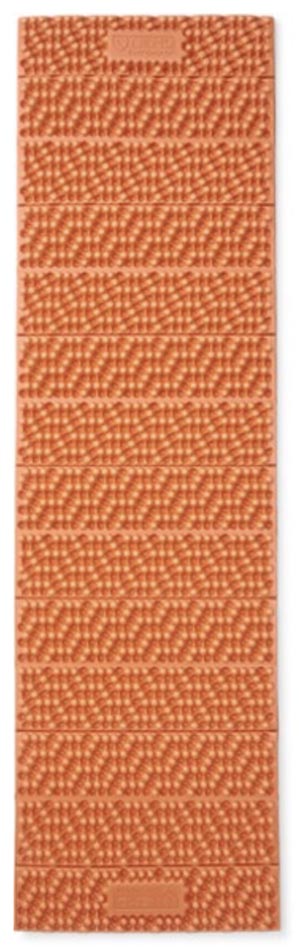 Category: Closed-cell foam
Weight: 14.5 oz.
Thickness: 0.9 in.
R-value: 2.0
What we like: Cheap and will never pop; thicker than the Therm-a-Rest Z Lite.
What we don’t: Not nearly as comfortable as inflatable sleeping pads.
We’ll start by saying that the Switchback from Nemo isn't the right choice for those looking for a cushy, comfortable sleeping pad. You get less than an inch of closed-cell foam, along with a reflective coating that captures radiant heat. But we love this pad for two very important reasons: it's cheap, and it won't pop. Despite the foam's thin, simplistic nature, we’ll take the Switchback over a $150+ air pad with a hole any day. Plus, it’s incredibly versatile: Use it as a seat around camp, sub it in for your pack’s foam backpanel to save weight, or slide it under your air or self-inflating pad for additional warmth or protection. Heck, we even use our foam pad to keep dinner or water warm in our camp kitchen by wrapping it around the pot.
Compared to the uber-popular and longstanding Therm-a-Rest Z Lite Sol, the Switchback wins out in most ways. For the same price, the Nemo is thicker (0.9 in. compared to 0.75 in.) yet packs down to the same size. We also think it’s a touch more comfortable, although it's a close call between the two. All that said, you’ll still feel rocks and roots beneath you much more than with the air-filled options, and with an R-value of just 2, it won’t keep you insulated from the cold ground outside of the summer months. But as a versatile add-on or a dedicated UL pad that won’t pop, the Switchback is a great piece of gear to add to your kit.
See the Nemo Switchback

 Category: Air pad
Weight: 1 lb. 9.0 oz.
Thickness: 4.6 in.
R-value: 4.7
What we like: Light for its thickness, warm R-value, cozy stretch-knit face fabric.
What we don’t: Heavy and bulky; takes up a lot of tent real estate.
Despite its beautifully plush appearance, the NeoLoft is indeed a backpacking sleeping pad, with competitive specs that challenge models half its thickness and with less insulation. A true testament to the fact that innovation in the backpacking world still exists. Boasting a whopping 4.6-inch thickness (the highest on this list), and a toasty 4.7 R-value—all in an impressive 1 pound 9 ounce package (regular)—this work of art is a boon for those seeking the utmost comfort. It's also a dream come true for chronic side sleepers, if you're willing to carry more weight than the Ether Light XR. The true headliner for us, however, is the plush stretch knit face fabric. If you're sick of the crinkly nylon feel of essentially every other pad out there, the knit fabric is quiet, soft, and seems to lull you to sleep. You just can't find this on other pads billed for the backcountry.
This cozy material also has multidirectional elasticity, boosting contouring support and helping to minimize pressure points. Coupled with large side-rail chambers, the pad seems to hold you snugly in the center without feeling constricting. Packing so much tech and comfort into a streamlined design is difficult, so the NeoLoft has one of the largest packed sizes of any backpacking pad we own, and is a good deal heavier than pads with higher R-values, like the 15.5 oz. Therm-a-Rest NeoAir XTherm NXT (R-value: 7.3). That said, it has a comparable weight to pads like the 1 lb. 8.5 oz. Rab Stratosphere 4, which only has an R-value of 3.8. In the end, if you're willing to schlep some extra weight and bulk, the comfort this pad offers is second to none. As the thickest pad on this list, it's our go-to for shorter backpacking trips where we can afford some luxury items, or as a remote basecamp bed on longer expeditions.
See the Therm-a-Rest NeoLoft Sleeping Pad

 Category: Air pad
Weight: 1 lb. 7.0 oz.
Thickness: 2.5 in.
R-value: 3.7
What we like: Warmer and more plush than the Ether Light XR.
What we don’t: Heavier than the leading Therm-a-Rest pads.
Sea to Summit’s Ether Light XR Insulated is our favorite pick for side sleepers, but for a solid all-rounder, it’s worth checking out their Comfort Light Insulated here. In contrast to the horizontal or vertical baffles of most air pads, both Sea to Summit models feature an innovative cell design (dubbed Air Sprung Cell technology) that maximizes surface area between the pad and your body, resulting in better support and weight distribution throughout. Importantly, the Comfort Light Insulated tacks on a second layer of cells at the torso, increasing warmth and comfort where you need it while minimizing weight and bulk everywhere else. And like the Ether Light XR, the Comfort Light features a wider shape than most designs and durable face fabric (30D and 40D).
When deciding between the Comfort Light and the Ether Light XR, there are a few things to keep in mind. As we mentioned, the Ether Light XR’s 3.9-inch loft is ideal for keeping side sleepers off the ground, and the pad is lighter (which also translates to less bulk). On the other hand, the Comfort Light offers a plusher feel than the more rigid Ether (especially for back sleepers). Neither pad can match the warmth-to-weight ratio of the Therm-a-Rest or Nemo, but the added comfort of the Air Sprung Cells will be well worth it for some. Finally, you can bump up to the celebrated Comfort Plus Insulated Air for a warmer design (R-value: 4), but in our opinion, it’s not worth the extra weight and cash.
See the Sea to Summit Comfort Light Insulated See the Women's Comfort Light Insulated
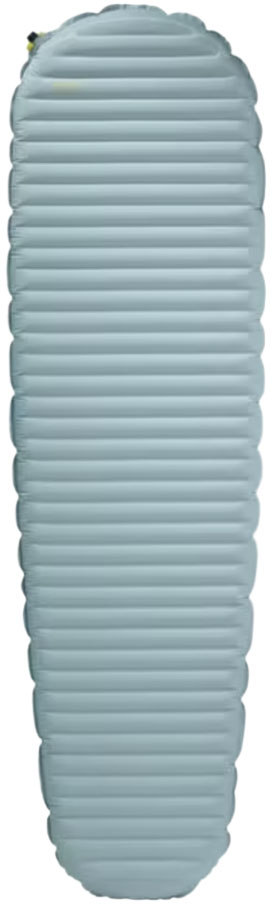 Category: Air pad
Weight: 15.5 oz.
Thickness: 3 in.
R-value: 7.3
What we like: High R-value for below-freezing conditions; new, quieter design.
What we don’t: Pricey and overkill for most backpackers.
For high-altitude climbers, winter campers, or those who experience sub-freezing temps on their backpacking trips, Therm-a-Rest’s NeoAir XTherm NXT is worth a serious look. This pad has a similar design to the brand’s popular XLite but adds more layers of ThermaCapture, mimicking a built-in emergency blanket by reflecting your body heat back to you. The result is a winter-ready R-value of 7.3 for just 15.5 ounces, which is an impressive feat. And like the XLite, the XTherm NXT features new technology that delivers a quieter sleep than the outgoing version. If you’re on the hunt for a premium 4-season pad, it's hard to beat this streamlined design.
Price is the biggest hurdle for most backpackers, with the Therm-a-Rest XTherm starting at a steep $230 for the regular size. Further, the high R-value is overkill for most 3-season trips, which constitute the majority of backpackers. But on the other hand, the XTherm is still lighter and more packable than the vast majority of sleeping pads here, and significantly more hardwearing with its thick 70-denier bottom. If you need the extra warmth or durability and can afford it, the XTherm NXT is an exceptional cold-weather standout for serious adventurers.
See the Therm-a-Rest NeoAir XTherm NXT
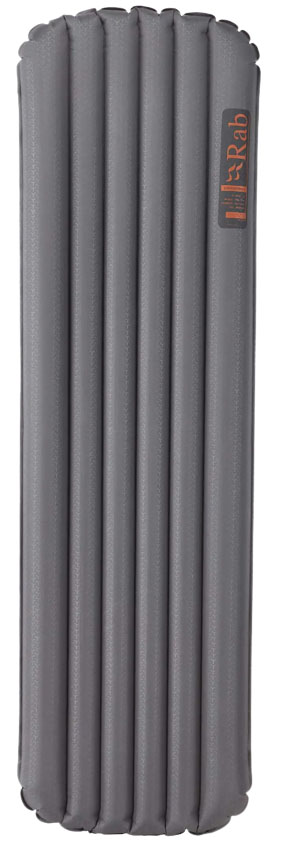 Category: Air pad
Weight: 1 lb. 8.5 oz.
Thickness: 3.1 in.
R-value: 3.8
What we like: A durable pad for a great price.
What we don’t: Heavy; unreliable valve design.
Rab Equipment is known for its alpine-ready outerwear, which offers no-frills performance at a reasonable price. The U.K.-based brand only recently entered the sleeping pad market, and its collection here includes the self-inflating Exosphere, the high-tech Ionosphere, and the mid-range Stratosphere. We tested the Ionosphere 5 and the Stratosphere 4 on a recent trip to Patagonia, and while we were disappointed with the slippery and overly streamlined nature of the former, we came away with more promising impressions of the latter. For both pads, the highlight was the large, elasticized opening on the stuff sack, which is the best design we’ve seen yet.
The Stratosphere's main selling point is its 75-denier material, which makes the pad significantly more hardwearing than most. If you're hard on your gear or like to sleep outside of a tent, finding a thicker design like the Rab here is a great idea. We also appreciated the Stratosphere's roomy rectangular shape and oversized outer baffles, which kept us centered on the pad (this was relieving after sleeping on the Ionosphere 5 the night before, which seemed to want to spit us off with each movement). But we were very disappointed with the Stratosphere's valve, which easily popped out of the pad when we removed the pump sack. The warmth-to-weight ratio is nothing to write home about, either. Added up, we see a lot of room for improvement in Rab’s offerings, but if you want an affordable pad to use and abuse and don’t mind schlepping the added ounces, the Stratosphere 4 will get the job done.
See the Rab Stratosphere 4
 Category: Closed-cell foam
Weight: 14.0 oz.
Thickness: 0.75 in.
R-value: 2.0
What we like: Durable and lightweight.
What we don’t: The Nemo Switchback is thicker and more comfortable.
Therm-a-Rest’s Z Lite Sol is a backpacking classic. This basic 3/4-inch pad features tough, closed-cell foam, a reflective coating for added warmth, and a budget-friendly price. Further, the pad folds up accordion-style into a compact package for storing on the top, side, or bottom of a pack. As with the Nemo Switchback, the Z Lite isn't a leader in comfort, but it’s hard to argue with the dependability of a cheap foam mat.
You’ll see the Therm-a-Rest Z Lite Sol strapped to a high number of packs. Ultralighters love the low weight and dependability, budget backpackers love the price, and winter campers use it as a second mat for extra warmth. In the end, the Switchback beats it in comfort with its thicker, more plush design, but the Z Lite is the proven choice that still edges it out in weight (14.0 oz. vs. 14.5 oz. for the Nemo).
See the Therm-a-Rest Z Lite Sol

Category: Air pad
Weight: 1 lb. 5.0 oz.
Thickness: 3 in.
R-value: 4.9
What we like: Comfort-first design and inclusive pricing/sizing.
What we don’t: More expensive than the similarly spec’d Big Agnes Divide Insulated above.
REI’s Flash used to be one of our favorite budget pads, but its Helix takes aim at a different market with a warmer, more insulated design (R-value: 4.9). Like the old Flash, the Helix’s gridded baffle pattern mimics designs from Sea to Summit, providing arguably better weight distribution and comfort compared to pads with horizontal or vertical baffles. It also features a thoughtful shape that maximizes the 20-inch width throughout, narrow just above the foot to slot nicely into tapered tents. And the rest of the pad is competitive with most modern offerings, including layers of reflective insulation that provide warmth without bulk and easy-to-use inflation and deflation valves.
What stands out to us most about REI’s new Helix Insulated is the standardized price tag—for $169, you can get a medium, medium wide, or long wide size. This is part of REI’s push towards inclusive sizing, and we appreciate the effort (with most pads, you’ll spend up for longer or wider models). At this price point, it slides into a nice middle ground on our list, offering more comfort than a budget pad like the Big Agnes Divide Insulated and more warmth for the weight than a pricier offering like the Sea to Summit Comfort Light Insulated. We’ve used REI’s air pads in the past with varying results (initial designs suffered in terms of durability, but their quality has improved over time), but all signs point to the Helix Insulated being one of their best efforts yet.
See the REI Co-op Helix Insulated
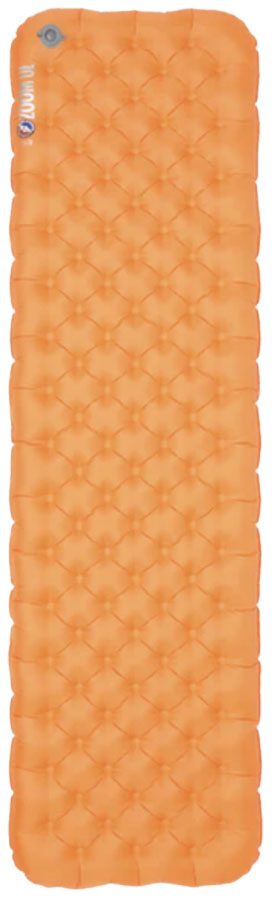 Category: Air pad
Weight: 14.0 oz.
Thickness: 3.5 in.
R-value: 4.3
What we like: Solid comfort for less than the competition.
What we don’t: Doesn't live up to its 4.3 R-value; basic two-way valve slows down deflation.
The Big Agnes Zoom UL is a worthy competitor to the likes of the Therm-a-Rest NeoAir XLite NXT and Nemo Tensor All-Season. It slots in between the two headlining pads in terms of weight but goes above and beyond with a roomier rectangular build and supportive O-beam construction that’s similar to that of our top comfort pick, the Sea to Summit Ether Light XR Insulated. You also get a generous 3.5 inches of cushion, which is identical to the Tensor and thicker than the NeoAir XLite.
In our opinion, it’s clear that Big Agnes did everything possible to make the Zoom UL’s specs look as good as possible, but to the pad’s detriment. Take the packed size, for example: It’s impressively small, but you’ll have to do a lot of wrangling to get the pad back into its stuff sack after removing it for the first time. Second, the two-way valve is basic, and unlike more modern designs, you’ll have to push the air out when it’s time to deflate. But our primary gripe is the Zoom UL’s warmth: The pad simply does not live up to its 4.3 R-value. We took it backpacking in the heart of the summer and suffered two very cold nights, and we’ve heard similar reports from others. Overall, the Zoom UL fell well short of our expectations, but if you’re looking for lightweight comfort and plan to use the pad in very mild conditions, it’s still a worthy contender.
See the Big Agnes Zoom UL
 Category: Air pad
Weight: 1 lb. 4.0 oz.
Thickness: 2.5 in.
R-value: 4.4
What we like: Wide sleeping platform and great price.
What we don’t: Not a standout in any specific category.
Klymit’s radical X Frame pad may have put the company on the map, but their follow-up Insulated Static V Lite is their best offering. Whereas the X Frame cuts away excess material, resembling a skeleton (and offering no insulation from the ground), the Static V Lite is more traditional and comfortable. We like the 23-inch width (most regular pads are 20 in. wide). Combined with raised side baffles, the Klymit is a stable, roomy sleeping platform that is great for active sleepers. And priced at just $110, it’s a great value, too.
Outside of the extra space and very competitive price, however, the Insulated Static V Lite doesn’t stand out. Using 30-denier fabric, we’d expect it to weigh less than 1 pound 4.0 ounces (the warmer 15.5 oz. XTherm has 70D material on its bottom), so you sacrifice durability without the typical weight savings. Its V-like baffles also can’t match the sleeping comfort of the premium options from Sea to Summit, Therm-a-Rest, Big Agnes, and Nemo, which drops the Klymit to the very bottom of our list.
See the Klymit Insulated Static V Lite
Our aim with this round-up is to spotlight the true standouts—pads that consistently deliver strong performance, lasting durability, and standout value over time. Every pad we recommend has seen real-world testing across multiple seasons, so they’ve earned their place. But there are also numerous pads we've tested that, while functional, don't compare to our top choices.
We removed the Nemo Quasar 3D Insulated pad in this update. We felt it was too heavy for true backpacking. It's comfortable, and performs well, but we couldn't justify bringing it on trail with us, compared to the comfort-first Therm-a-Rest NeoLoft.
We also left the Nemo Flyer out this round. This self-inflating pad boasts the thickness of an air pad and the reliability of a self-inflating model, but has a very large packed size, and the thin 20-denier shell just didn't hold up to the rigorous backpacking tests we put it through.
We also decided to axe the cherished Exped Ultra 7R from our round-up. This is a super fun design—stuffed with 700-fill goose down for a significant boost in insulation—but stock is hard to come by, and it doesn't hold the same competitive appeal in light of the current market. There are other great options for cold-weather conditions.

| Sleeping Pad (Regular Size) | Price | Category | Weight | Thick | R-Value | Denier | Packed |
|---|---|---|---|---|---|---|---|
| Therm-a-Rest NeoAir XLite NXT | $210 | Air pad | 13.0 oz. | 3 in. | 4.5 | 30D | 4.1 x 9 in. |
| Nemo Tensor All-Season UL | $260 | Air pad | 14.1 oz. | 3.5 in. | 5.4 | 20Dx40D | 4 x 10 in. |
| Big Agnes Divide Insulated | $130 | Air pad | 1 lb. 6.0 oz. | 3.25 in. | 4.0 | Unavail. | 4 x 7.5 in. |
| Sea to Summit Ether Light XR | $199 | Air pad | 1 lb. 2.5 oz. | 3.9 in. | 4.1 | 30Dx40D | 4.3 x 8.1 in. |
| Big Agnes Rapide SL Insulated | $340 | Air pad | 2 lb. 11.0 oz. | 3.5 in. | 4.8 | Unavail. | 50/40 x 78 in. |
| Nemo Tensor EC | $250 | Air pad | 1 lb. 2.0 oz. | 3.5 in. | 8.5 | 20Dx40D | 4.5 x 10 in. |
| Nemo Switchback | $60 | Foam | 14.5 oz. | 0.9 in. | 2.0 | N/A | 5 x 20 in. |
| Therm-a-Rest NeoLoft | $250 | Air pad | 1 lb. 9.0 oz. | 4.6 in. | 4.7 | 50Dx75D | 5.7 x 9.5 in. |
| Sea to Summit Comfort Light | $199 | Air pad | 1 lb. 7.0 oz. | 2.5 in. | 3.7 | 30Dx40D | 4.5 x 9 in. |
| Therm-a-Rest XTherm NXT | $230 | Air pad | 15.5 oz. | 3 in. | 7.3 | 70D | 4.5 x 9 in. |
| Rab Stratosphere 4 | $140 | Air pad | 1 lb. 8.5 oz. | 3.1 in. | 3.8 | 75D | Unavailable |
| Therm-a-Rest Z Lite Sol | $60 | Foam | 14.0 oz. | 0.75 in. | 2.0 | N/A | 5.5 x 20 in. |
| REI Co-op Helix Insulated | $169 | Air pad | 1 lb. 5.0 oz. | 3 in. | 4.9 | Unavail. | 5 x 9.5 in. |
| Big Agnes Zoom UL | $200 | Air pad | 14.0 oz. | 3.5 in. | 4.3 | Unavail. | 4 x 8 in. |
| Klymit Insulated Static V Lite | $100 | Air pad | 1 lb. 4.0 oz. | 2.5 in. | 4.4 | 30D | 5 x 8 in. |
Popped sleeping pads, torn tents, broken zippers—the editors at Switchback Travel have seen it all in the backcountry. As a result, we put a premium on quality, well-built designs, especially when they can potentially impact our sleep. We started this list in 2016 with just 10 sleeping pads—including past versions of the Therm-a-Rest NeoAir and Sea to Summit Comfort, both of which are still featured. Senior editor Chris Carter now manages this round-up, and as a lifelong backpacker and alumnus of all three Triple Crown trails (AT, PCT, and CDT), he has his systems dialed in to maximize comfort while minimizing weight.
Our current lineup of sleeping pads reflects the market's variability: Casual backpackers may be willing to deal with added heft and bulk for the boost in comfort on short weekend trips, in which case a self-inflating pad makes a lot of sense. On the other hand, thru-hikers spending months on the trail are typically willing to make considerable sacrifices to keep their base weight as low as possible, often opting for basic foam pads that won’t pop and can serve a number of purposes (e.g., as a camp seat or additional insulation in the cold). That said, while individual needs may vary, all the recommended pads stand out in one way or another—and many impressed us across multiple categories during testing. As the market changes and we gain experience with new and noteworthy designs, keep an eye out for updates to our list.
.jpg)
Air Pads
Backpacking sleeping pads fall into three general categories: air, self-inflating, and closed-cell foam. Air pads offer unmatched compactness, often rolling down to the same size as a Nalgene bottle. They’re also the lightest option while still providing unmatched thickness. Bonded insulation or baffling techniques can bring impressive warmth, highlighted by pads like the Nemo Tensor Extreme Conditions (R-value: 8.5). The primary downside is a greater puncture risk, and it’s a big consideration. Middle-of-the-night deflations can ruin a trip in a hurry. Bringing along a patch kit should alleviate most concerns, but it’s still the biggest reason not to buy an air pad.
.jpg)
Self-Inflating Mats
The self-inflating mattress was a revolutionary idea when the Therm-a-Rest was invented in 1972. By combining open-cell foam and a space for the pad to expand and fill with air, it brought convenience, decent durability, and comfort. It’s a testament to that technology that most of today’s self-inflating pads haven’t deviated much from it. Compared with air pads, self-inflating options are more puncture-resistant, and you still have some semblance of padding if it deflates in the middle of the night. Negatives are that the foam adds extra weight, and it doesn’t pack down as small as an equivalent air pad. Backpacking options are also often not as thick (exceptions include Sea to Summit's SI line), leading to complaints from side sleepers.
.jpg)
Foam Pads
The old closed-cell foam pads still have a place on this list as a dependable, tried-and-true option. Yes, they’re the least comfortable option, don’t pack as small, and don’t have the highest R-values, but they also have exactly a zero percent chance of deflating in the middle of the night. And they’re the perfect secondary pads to bring along for winter camping. Designs like the Therm-a-Rest Z Lite Sol and Nemo Switchback are staples for long-distance trekkers and thru-hikers due to their versatile, lightweight designs.
.jpg)
Two-person backpacking sleeping pads let couples or partners who often trek together save weight and space while improving overall sleep comfort. While they are too bulky and heavy for individual backpackers, if you are already sharing the weight of your tent, cook kit, and other categories in your pack, it makes sense to share a sleeping pad as well. Have one person carry a heavier pot or stove while the other totes a pad for two. You'll be surprised at how much space you can conserve.
Pads like the Big Agnes Rapide SL Insulated Double (our favorite two-person pad for backpacking) strike a healthy balance between comfort, bulk, and weight. At 2 lb. 11.0 oz., it is lighter than carrying two of certain single-person pads and simplifies the setup process when it's time for bed. The downside to this sleep system is that you can't separate mid-journey and go off on your own. While this isn't a big concern on shorter weekend or week-long trips, those embarking on long thru-hikes or multi-month excursions will want to be as self-sufficient as possible.
.jpg)
Weight is a primary consideration for many backpackers—just look at the quick rise of the ultralight backpacking movement. We think the best backpacking pad options are in the 12- to 18-ounce range, offering cutting-edge materials and respectable levels of comfort and warmth. Keep in mind that, as with any piece of outdoor gear, the lighter it is, the more fragile it will be. It doesn’t make a ton of sense to buy a $200 ultralight sleeping pad if you only plan on using it on a couple of easy weekend trips each summer. And regardless of its weight, make sure to take reasonable care when setting up camp and stowing your pad. If you'd like to focus your search on lighter options that appear in this review, check out our dedicated round-up of the best ultralight sleeping pads.

Comfort is relative when sleeping on the ground, and most people who can’t handle a night under the stars don’t backpack or camp at all. Backpacking pads are thinner and less plush than camping mattresses and pads, but the latest outdoor gear technology has advanced in this area. We think Sea to Summit’s Air Sprung Cells (2 in. thick on their Ultralight Insulated, 2.5 in. on their Comfort Light, and 3.9 in. on their Ether Light XR Insulated) make for some of the most comfortable lightweight sleeping pads around, although they can’t compete with Therm-a-Rest in terms of weight and R-value per ounce. For a noticeable boost in comfort and stack height, Therm-a-Rest's plush NeoLoft boasts a groundbreaking 4.6-inch thickness, with a supremely soft, quiet stretch-knit face fabric. It's heavier and bulkier than most backpacking pads, but a dream come true for backcountry comfort in a packable design.
.jpg)
You may notice a lot of chatter in product comments about being a back sleeper or a side sleeper. Back sleeping more evenly distributes your weight, whereas side sleeping puts a higher percentage of your weight on your hips and shoulders. If you are a side sleeper or don’t sleep well in the outdoors, check out a substantial pad like the Sea to Summit Ether Light XR Insulated (3.9 in. thick). If you need serious cushion, consider one of the lighter options on our list of the best camping mattresses and pads.
Baffle Design
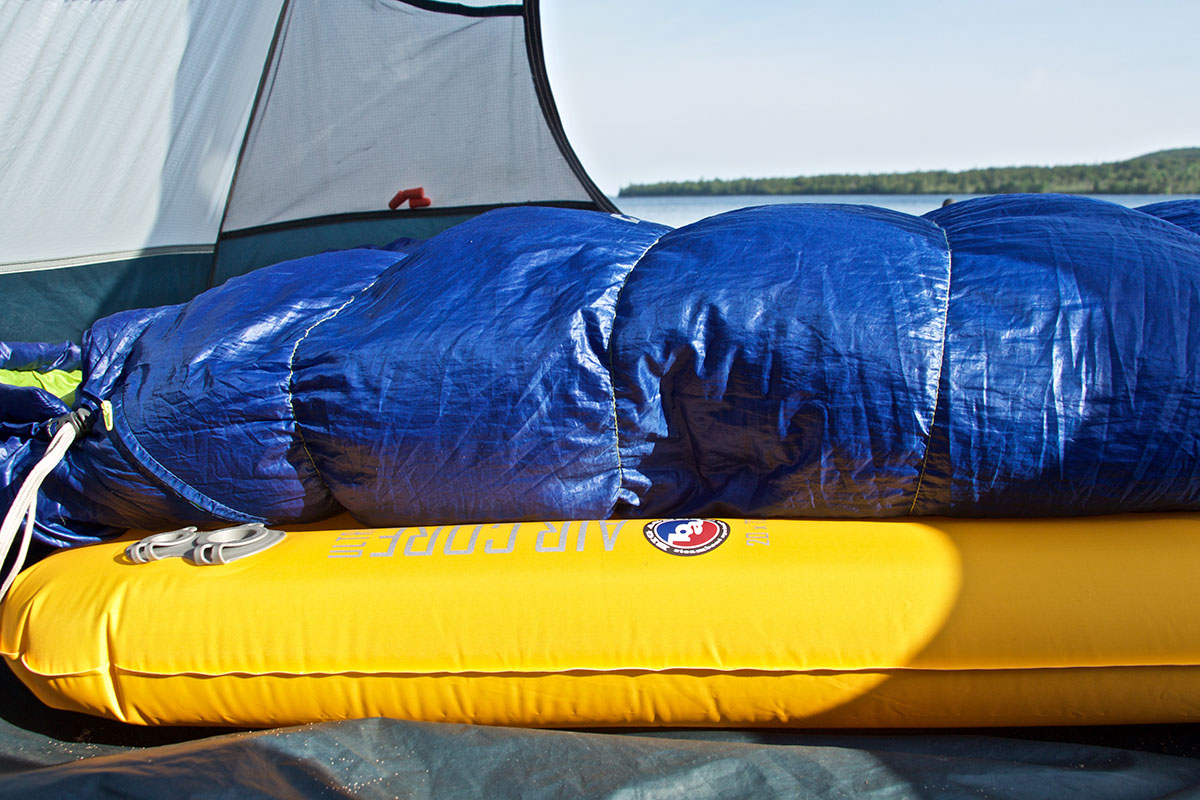
While on the topic of comfort, it’s important to note that baffle design can have a considerable impact, too. In general, we’ve found that vertical baffles—like those found on Big Agnes’ Divide Insulated—tend to be less supportive and comfortable than horizontal or boxed. On the flip side, we like Sea to Summit’s Air Sprung Cells on their Ether Light XR and Comfort Light pads, which have a plush, padded feel. To be fair, baffle shape and layout are a matter of personal preference, and there are some quality vertical designs available. But overall, we’ve found they feel less natural and fall short in both comfort and stability.
.jpg)
A critical spec for comparing sleeping pads is the R-value, which measures how well a pad insulates from the ground. Don’t underestimate the R-value: Using an uninsulated or underinsulated pad, even in cool temperatures, can leave you cold throughout the night. Even a warm, thick sleeping bag won’t save you, because your body compresses the insulation along the bottom of the bag, letting cold air in and compromising its ability to keep you warm. To prevent this, you’ll need a sleeping pad that provides adequate protection from the cold ground.

For recommended ranges, summer-only backpackers who stick to warm conditions can get away with an R-value of 3 or less. Most 3-season backpackers should get a sleeping pad with an R-value of 3 to 5, and this is where most of our picks fall. Last but not least, winter camping requires an R-value that exceeds 5, with the most popular models being the Therm-a-Rest NeoAir XTherm (R-value: 7.3) and Nemo Tensor Extreme Conditions (8.5 R-value). If you will be camping on snow, it’s a good idea to bring a combination of pads, especially if one is inflatable. If it pops, imagine waking up in the middle of the night on top of snow, essentially on a deflated balloon. For this reason, many winter campers bring along a closed-cell foam model like the Nemo Switchback or Z Lite Sol to be safe. For a deeper dive into this topic in general, see our article on Sleeping Pad R-Value Explained.
.jpg)
Recommended sleeping pad R-values:
The ASTM Standard
All modern sleeping pads are now rated based on a standardized ASTM International test. In this process, pads are sandwiched between a hot plate (35˚ Celsius) on top, which mimics the body, and a cold plate (5˚ Celsius) underneath, which mimics the ground. Over the course of four hours, testers measure how much energy the top plate consumes to maintain a consistent 35 degrees Celsius. The less energy it takes, the more insulating the pad. The more energy it takes to heat, the less insulating the pad. The net result is more accurate and dependable ratings across the board.
.jpg)
Packed size depends on pad type, insulation amount, and fabric thickness. Uninsulated or lightly insulated air pads are far and away the most compact. Some even compress to the size of a can of soda, which is a far cry from the foam and self-inflating pads that dominated the market only a decade ago. A quick scan of our comparison table shows that most air pads, even warm options like the Therm-a-Rest XTherm NXT, pack down small enough to easily fit inside a backpacking pack. Designs like the XLite NXT pack down small and can be gripped in one hand.
.jpg)
If you are considering a self-inflating or closed-cell foam pad, the packed size can present a problem. A foam option like Therm-a-Rest Z Lite is 20 inches long (most air pads are about 7 to 10 inches), which means you’ll need to strap it to the outside of your pack. Self-inflating pads can have similar issues, though modern designs are small and should be workable for storage in most bags. For some, packed size may not be an issue at all, but it’s one of many reasons air pads have become so popular.

Most sleeping pads are unisex and come in two or three sizes, allowing you to choose based on your height and comfort preferences. A “regular” pad is right around 72 inches long and 20 inches wide (at its widest point), and the “large” is often between 77 and 80 inches long and 25 inches wide. In terms of shape, they fall into two basic categories: Mummy pads that taper towards the feet to reduce weight, and rectangular pads that are more spacious and better suited to comfort-minded or active sleepers.

Occasionally, you’ll find a “small” size, and some brands even offer torso pads that are only about 2/3 the length of a regular pad. These aren’t the most comfortable models, but they do allow you to cut significant weight. Because your legs have fewer contact points with the ground, some people don’t mind the short length (and they sometimes throw an extra piece of gear under their feet for cushioning and warmth). On the other end of the spectrum are two-person pads like the Big Agnes Rapide SL Insulated Double. Measuring 50 inches in width at the head and 40 inches in width at the feet, it takes up nearly the entire tent floor to eliminate any possible gaps. Realistically, a double pad is impractical as it’s heavy and bulky to pack, but it can be a fun option for couples and small families.
.jpg)
Some sleeping pads also come in a women’s version that looks nearly identical to its unisex counterpart—so what’s the difference? To start, they’re usually shorter, since they’re designed with average female body proportions in mind. Many also have a higher R-value (or more insulation), making them a solid pick for any shorter adult who tends to sleep cold, regardless of gender. In addition, manufacturers often adjust the foam distribution to better support areas such as the hips and torso, where women tend to have greater contact with the pad. Some models even include slight adjustments in shape or width for improved comfort and warmth retention.
.jpg)
The most common measure of durability in the outdoor gear world is denier (D), which indicates a fabric's thickness. The higher the denier, the tougher the material will be. Let us be clear: Denier matters, and you can feel the difference. So does weight, however, so it’s important to find the right balance for your backpacking style. Ultralight backpackers cut every possible ounce and usually know how to take care of their gear (otherwise it would be an extremely expensive hobby, if it isn’t already). The downside is that lower-denier fabrics have shorter lifespans and a higher propensity for durability issues in the backcountry.

Both air and self-inflating sleeping pads use a valve to inflate/deflate, and there have been a fair number of design changes over the past few years. Traditional sleeping pads open and close by twisting and pushing or pulling a round plastic valve connected to the side of the mat. These work well in general and are still used on some older, budget-oriented designs, but they have downsides. For one, the valve works inefficiently because it’s open during inflation, allowing some air to escape between breaths. Further, their upright profile takes up space when rolled up, and they are slow to deflate.
.jpg)
To address these issues, a number of manufacturers, including Sea to Summit, Nemo, and Big Agnes, have turned to flat valves. Beyond the slim profile, they often have dedicated openings for inflating and deflating, and importantly, a flap that keeps air from escaping while blowing into the opening. We've found these pads with two separate valves for inflating and deflating to be reliable, efficient (it takes about 10 breaths total to inflate, and deflation is almost instantaneous), and add essentially no weight—all excellent characteristics.

Moreover, most of Therm-a-Rest's new offerings feature its WingLock valve, a twist on a more traditional design. Their new build allows for one-way inflation—with no air loss between breaths—and twisting the side “wings” quickly releases air. In use, we’ve found it’s not as fast as flat-valve competition, but its sturdy build and replaceability (something not typically possible with a flat valve) make it worth the trade-off in efficiency for high-volume users like thru-hikers.
.jpg)
A number of air pads on our list come with dedicated pump bags, which offer a host of benefits over a standard inflation valve. Most notably, pump sacks let you save your breath, reduce inflation time, and prevent moisture from getting inside your pad (which can lead to mold if not dried out properly or even freeze on cold nights). And in many cases, the pump bag doubles as the pad’s stuff sack, so you’re not adding any weight for the convenience.

That said, not all pump sacks are created equally, and some designs are much more functional and convenient to use than others. For example, we’ve found that the Nemo Tensor’s Vortex pump sack is incredibly efficient and user-friendly: Snap the Vortex onto the pad’s flat inflation valve, blow lightly into the open bag, then roll the collar down and push the trapped air into the mat. Sea to Summit includes a similar system with models like their Ether Light XR and Comfort Light Insulated, and we’ve found it takes only around three or four full bags to inflate the pads. On the flip side, Therm-a-Rest’s pump sack is less intuitive and takes longer to fill its NeoAir models. To be fair, the differences are minimal, and we always appreciate saving time and breath after a long day on the trail.
.jpg)
The outdoor industry as a whole has committed to more recycled fabrics and Bluesign-approved materials in recent years. These meet stricter safety and environmental requirements for workers, consumers, and the environment. Nemo is one brand at the forefront of using these new technologies, and Big Agnes also uses recycled nylon in its Divide and Zoom UL pads.

If you are like most backpackers, you don’t head out year-round. To store a self-inflating pad in the offseason, make sure it's unrolled, and the valve(s) are open. By doing this, you’ll keep the foam in good shape. If it’s stored compressed, the pad will lose its self-inflating nature because the foam will become overly compacted. Having a hard time finding a spot to store the pad? Under a bed or behind a couch are popular options.
Air pad storage and care are simpler. Remove all the air from the pad and keep it rolled up in its storage bag to protect it from punctures. As for caring for a closed-cell foam pad—try not to let your dog eat it, how about that? But seriously, it's not much harder than that. Don’t leave heavy objects on top of it to avoid undue compressing of the foam, and (if it’s a rollable type) store it unrolled so it doesn’t lose its shape.

Backpacking sleeping pads are light, pack down small, and reasonably comfortable. But if you don’t plan to venture far from the car, we recommend a thicker, more luxurious camping mattress instead. These mats are plush and warm, often layered with extra foam padding. They’re also a whole lot more durable because manufacturers don’t have to use thin materials to keep weight down. To see our full list of favorites and a breakdown of important features, check out our article on the best camping mattresses and pads.
Back to Our Top Sleeping Pad Picks Back to Our Sleeping Pad Comparison Table


.jpg?h=fbc67360&itok=yGfeH92X)
 (s).jpg?h=fbc67360&itok=opO7uduG)

.jpg?h=fbc67360&itok=0H8jyoRL)
.jpg?h=fbc67360&itok=GoOMku-D)
.jpg?h=fbc67360&itok=UDFSaoHc)

.jpg?h=d1272f3a&itok=pIiUisJh)
.jpg?h=fbc67360&itok=t8ThYCXY)