.jpg)
 (m).jpg)
Photo Credit
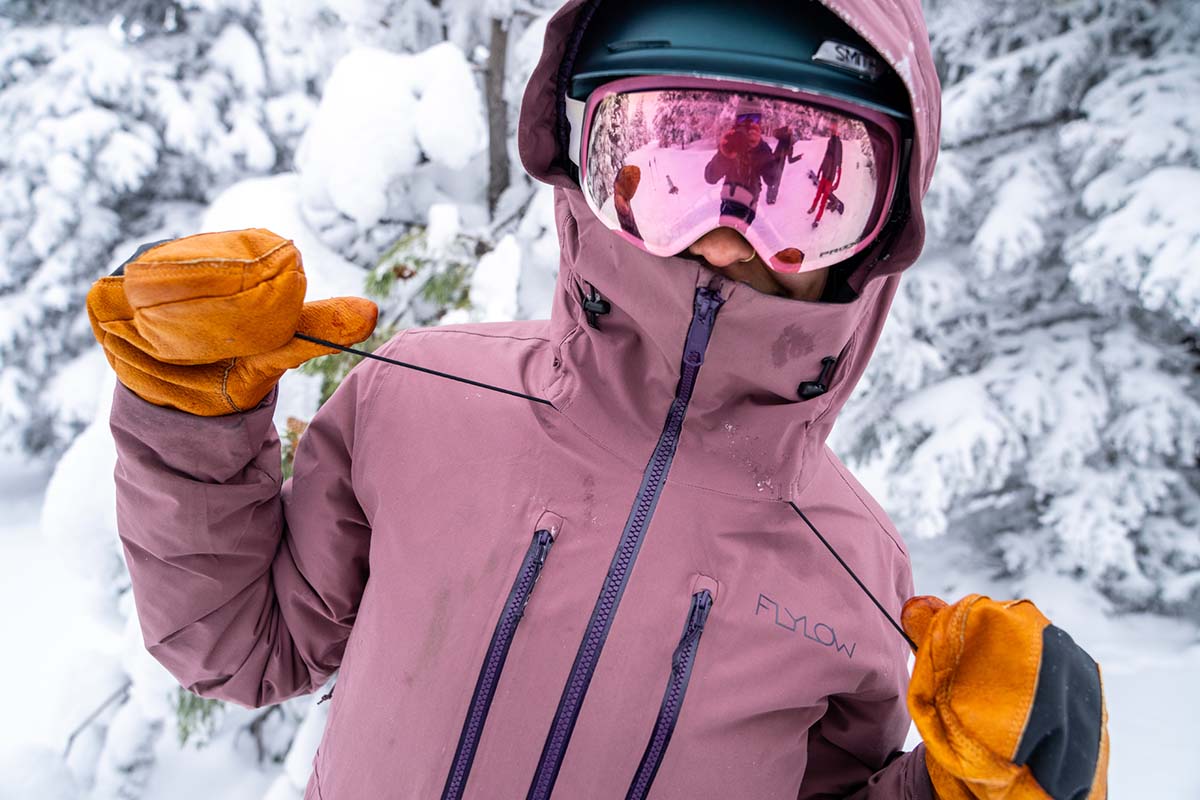
As your main line of defense against snow and wind, a quality snowboard jacket is a key piece of your kit. Designs fall into three basic categories: versatile and light shells, insulated models for a boost in warmth, and 3-in-1 jackets that include a zip-out midlayer. Prices also vary, ranging from budget-oriented models that sneak in around $200 to technical, Gore-Tex-equipped pieces that can cost $800 or more. Below, we break down the best snowboard jackets for the 2025 season, which cover everything from resort and park favorites by popular brands like Burton and Volcom to uncompromising, premium designs for serious riders. Our top recommendations for 2026 are the Burton [ak] Swash Gore-Tex 2L for men and the Volcom VS 3L Stretch Gore-Tex for women. Both of these models stood out to our team of dedicated testers for their fit, style, and weather-defending performance. For more background information, see our comparison tables and buying advice below the picks, along with details about our testing process. Of note: This article includes picks for both men and women, but we’ve also written a dedicated round-up of the best women's snowboard jackets.
Editor's note: We updated this review on January 16, 2026, to incorporate new recommendations and provide additional details about our testing process. We also added a new tested and dismissed section, where we discuss products that we’ve reviewed but that didn’t quite make the cut.

Category: Insulated
Insulation: 60g PrimaLoft Silver
Waterproofing: 2L Gore-Tex
What we like: Sturdy protection, premium features, and high-quality build.
What we don’t: Not a standout in breathability or weight.
Burton’s AK line has a well-earned reputation for quality builds, and their men’s Swash (and women’s Embark) hit a nice balance of protection, comfort, and features. This lightly insulated jacket features 60g PrimaLoft Silver in the torso only (the Embark has 60g throughout) and is built around a sturdy 2-layer Gore-Tex construction that shrugs off high winds and heavy precipitation. The interior has a surprisingly plush and soft feel, thanks to the mesh and stretchy taffeta lining. Tack on premium touches like a dedicated phone pocket that’s insulated to keep your battery fresh, pit zips, and mitten-friendly zippers, and it's easy to see why this Burton offering earned our top spot for the season.
As with the rest of the AK collection, the Swash has a fairly high price and will likely be overkill for occasional riders and those new to the sport. For beginners and fair-weather boarders, it's likely worth considering cheaper alternatives, such as Burton's own Reserve or the women's-specific 686 Athena (both highlighted below). At the other end of the spectrum, Arc’teryx’s Sabre/Sentinel series gets you improved breathability at a lighter weight, but with a serious jump in price. This keeps us coming back to the Burton Swash, which strikes a great combination of proven Gore-Tex protection for deep days, comfort and mobility for sidecountry hikes, and practical features for discerning riders. If you plan to get out on the slopes with any regularity, there's no doubt this Burton jacket will get the job done.
See the Men's Burton [ak] Swash GTX 2L See the Women's Burton [ak] Embark GTX 2L
.jpg)

Category: Shell
Insulation: None
Waterproofing: 2L Gore-Tex
What we like: Relaxed fit without excessive bagginess, awesome range of motion, and performs well in all types of weather.
What we don’t: Hood is a little funky with a helmet; expensive.
At long last, we’ve found a jacket designed by women, for women, that checks all of the boxes. The Volcom VS 3L Stretch is just stretchy enough to increase mobility, but still utilizes a “guaranteed to keep you dry” Gore-Tex membrane. So far, it has kept our lead tester drier than other friends with brand-new jackets in the highly volatile weather of the Pacific Northwest. The jacket material is thin, making it a great shell for all temperatures, and we love the extra features incorporated into the design: the VS has hand gaiters, goggle clips, a face mask, and convenient pockets throughout. Fit is, of course, subjective, but out of the jackets we’ve tried where the designers attempt a “relaxed” fit, this is the model that nails it best. It’s a nice length without being so baggy that it bunches up under a backpack, yet it can still accommodate a midlayer underneath for added warmth.
We were a bit disappointed to learn that the VS 3L is currently only available in one colorway—it would be nice to have more options for such an epic design. Also, for some people, the bells and whistles might be too much. If you’re looking for a basic shell, the pockets, hand gaiters, goggle clips, powder skirt, drawstrings, and face mask might seem like a lot. Additionally, we found that the hood doesn’t fit a helmet as well as we'd like—it was fine while standing in line or riding the lift, but when actually riding with the hood on, it felt like it was designed for a beanie rather than a helmet. And lastly, standard Gore-Tex isn't quite as protective as Gore-Tex Pro, so if you’re planning a real deal, multi-night expedition, it’s probably worth it to level up. These caveats aside, the VS 3L was our female testers' new stand-out favorite for the 2026 season.
See the Women's Volcom VS 3L Stretch Gore-Tex


Category: Insulated
Insulation: 80g ThermacoreEco
Waterproofing: 2L Dryride
What we like: A wallet-friendly jacket that doesn't sacrifice much in the way of features or performance.
What we don’t: Decidedly less premium than the Swash above; we have concerns about long-term durability.
For casual boarders and those just getting into the sport, there's little need to spend up for premium tech and features. Thankfully, Burton has plenty of quality options available for less than the Swash above. Their Reserve 2L is a case in point: The 2-layer Dryride construction is durable and decently weather-ready, and the moderate dose of synthetic fill (80g ThermacoreEco) offers a nice amount of warmth for frigid temperatures without being totally overwhelming when the sun peeks out. You also get a nice assortment of features, including fleece-lined hand pockets, pit zips, and Burton’s soft interior lining. Last but not least, we're big fans of the laid-back styling and appreciate that the design is offered in a healthy range of sizes and colorways.
What do you give up in going with a cheaper design like the Reserve? Most notably, the design makes some compromises in long-term durability and wet-weather performance. The Dryride shell is a notable step down from Gore-Tex in terms of all-out protection, so if you're headed into gnarly weather, you may want to drop the extra funds on a burlier jacket. It's also likely that the insulation will pack out over time, which is true of most budget designs. Committed riders who experience a lot of rain and heavy snow will likely want to upgrade, but if you set realistic expectations, we think the Reserve nails the basics for those just starting out.
See the Men's Burton Reserve 2L Jacket

Category: Insulated
Insulation: 80g (body), 60g (sleeves), & 40g (hood) InfiLoft
Waterproofing: 2L InfiDry
What we like: A warm and affordable design from a well-respected brand.
What we don’t: Not well-suited for particularly wet climates.
California-based 686 has a strong foothold in the snowboard jacket market, consistently hitting an excellent balance of price, performance, and styling. At the budget end is their women’s-specific Athena, which offers a basic but well-rounded feature set, a nice array of color options, and a cozy interior—all for an affordable $210. In terms of warmth, the jacket is moderately insulated with 80-gram (g) synthetic in the body and a less bulky 60g in the arms (an even lighter 40g is used in the hood). Another nice touch is the jacket’s generous storage layout—a common area that brands cut back on to save manufacturing costs: The Athena boasts a dedicated pass pocket on the sleeve (perfect for RFID cards), an interior phone pocket, a drop-in mesh pocket for goggles or gloves, and a key clip-equipped external chest pocket. Tack on pit zips and a powder skirt, and the Athena checks a whole lot of boxes for resort days.
Like the men's Burton Reserve 2L above, the 686 Athena does cut a few corners to help keep costs down. Specifically, the jacket is only critically seam-taped, which doesn't inspire a ton of confidence in heavy, extended moisture (it's more likely that water will make its way through the exterior than with full taping). The hood also lacks refinement—we found it difficult to achieve a secure, batten-down-the-hatches feel due to its limited adjustability. But for those who get out in mostly favorable weather, the Athena is a perfectly capable entry-level option that looks good to boot.
See the Women's 686 Athena Insulated


Category: Shell
Insulation: None
Waterproofing: 3L Gore-Tex Pro
What we like: Superb protection from the elements.
What we don’t: Hefty price, stubborn zippers, and the hood doesn’t fit helmets well.
If you know you want to be well-prepared for the storm of the century, the Volcom Anyox Guide Gore Pro offers the ultimate in weather protection. Employing a Gore-Tex 3-Layer Nylon Pro Shell, we’d feel perfectly comfortable bringing this jacket on real-deal multi-night mountaineering expeditions. But unlike other top-tier shells on the market, the Anyox Guide was built by snowboarders, for snowboarders. With details such as a fleece face lining, a removable balaclava, pockets galore, and a relaxed fit, this shell will keep you dry and comfortable whether you’re lapping the resort or stacking a backcountry booter. We also love the Volcom bells and whistles: the powder skirt zips to compatible pants, the primary zipper is also a safety whistle, it’s Recco-chipped, and there are goggle clips inside the hood.
The elephant in the room is the price. Unless you know that you’re going to be riding in gnarly weather for a lot of the life of your outerwear, the Anyox is likely overkill. The side zips are in a bit of a strange place on the torso rather than in the pits, but we’ve found that this can be useful for accessing chest pockets on bibs without letting all of your body heat escape out of the main zipper. And while we appreciate the beefy zippers, they are not very glove-friendly. Lastly, while the hood is technically compatible with most helmets, the fit is a little off. Small gripes aside, if you have the budget and you want to make the most of your time on the mountain, no matter what the weather is doing, this is the one. See the Volcom Anyox Guide Gore Pro


Category: Shell
Insulation: None (flannel backer)
Waterproofing: 3L Gore-Tex ePE
What we like: Top-notch weather protection and durability for the resort and backcountry.
What we don’t: Expensive.
Serious snowboarders and splitboarders will get a lot out of a high-performing jacket like the Arc’teryx Sentinel and corresponding men's Sabre. This uninsulated, 3-layer Gore-Tex shell is purpose-built to handle wet and rowdy conditions, and it's lightweight and breathable enough for sidecountry forays and short trips into the backcountry. At the same time, the jacket is well built with an 80D shell fabric that's confidence-inspiring for frequent chairlift rides and fending off the occasional tree branch. And as we've come to expect from Arc'teryx, the Sabre and Sentinel are built with a keen attention to detail—we especially love the functional StormHood that offers great coverage and adjustability without impeding vision.
There's a lot to love about the Sentinel, from the stalwart protection to smaller details like the soft flannel backer, which adds a nice dose of coziness and warmth. That said, $750 is a steep price to pay, and casual resort riders can save a lot by stepping down to a less streamlined 2-layer design. On the flip side, value-oriented backcountry-goers may want to consider a standard hardshell jacket, although you'll likely forgo helpful snow-specific features like a powder skirt and extended coverage. But for those who hit the slopes often and like to spend time both in and out of bounds, the Sentinel is hard to beat. A final bonus: this jacket utilizes Gore's latest ePE membrane, which is free from harmful "forever chemicals."
Read more: women's Sentinel Jacket review and men's Sabre Jacket review (prior versions)
See the Women's Arc'teryx Sentinel See the Men's Arc'teryx Sabre
.jpeg)

Category: 3-in-1
Insulation: 160g InfiLoft (men's), 100g InfiLoft (women's)
Waterproofing: 2L InfiDry
What we like: A waterproof shell and insulated midlayer in one purchase.
What we don’t: Heavy, prone to drafts, and big differences between the men's and women's models.
3-in-1 snowboard jackets offer strong value, combining two purchases—a shell and an insulated midlayer—into one. Among the myriad options, 686's Smarty Form and women's Smarty Spellbound stand out for their well-rounded performance and thoughtful design choices. For a very approachable price, you get a tough 2-layer shell that's effective at shedding moisture and combating snags, along with a synthetic jacket that can be zipped in for warmth or removed when the mercury rises. Both models are equipped with ample storage (on both layers), underarm vents, fully taped seams, and a powder skirt for sealing out snow at the waist.
However, 3-in-1 designs come with some inherent trade-offs: The added zippers and snaps make them heavier and bulkier than standard insulated designs, and we've found that drafts can enter between the layers. 3-in-1s also tend to run warm, even with the midlayer zipped out. Finally, it's worth calling out a few key differences between the men's and women's styles of this jacket: the men's Form uses 160g insulation throughout, while the Spellbound packs in thinner 100g insulation with sherpa fleece covering the arms. The Form also includes stretchy side panels for improved mobility (which the Spellbound lacks), although the Spellbound tacks on a soft tricot lining along the collar. Finally, the Form's storage layout comprises five external and two internal pockets, while the Spellbound has three pockets on both the inside and outside. Ultimately, both jackets deliver strong performance for the price, earning them a spot high on our list this season.
See the Men's 686 Smarty 3-in-1 Form See the Women's 686 Smarty 3-in-1 Spellbound


Category: Shell
Insulation: None
Waterproofing: Pertex 3L
What we like: Minimalist, stylish, offset front zipper, and high mobility.
What we don’t: Lacks bells and whistles.
Since the dawn of standing sideways, snowboarders have gravitated toward pullover jackets, and there’s no question why—they’re simple, they’re relaxed, and they don’t look like a ski racing team uniform. Beringia is fresh on the scene, and we can confirm that their threads compare to some of the top-tier established brands. With design details such as a pass pocket on the sleeve for those stubborn RFID gates and a main zipper that’s not directly in the middle of your face, this jacket was clearly designed by people who’ve spent a lot of time on snow. Straying from the standard, Beringia uses Pertex 3L waterproof membranes, which are made from 100% recycled Japanese polyester.
Anorak-style jackets aren’t for everyone. Getting in and out of them is decidedly harder than jackets with full-length zippers, and they also tend to have a baggy fit. If you’re looking for a jacket with features like powder skirts, hand gaiters, audio routing, or goggle clips, the Tasma might leave you wishing you’d gone with a more technical model. Small gripes aside, this is an all-around high-performing pullover shell at a reasonable price. Also, since we just recently got our hands on the Tasma, we haven't yet seen if the 20,000mm Pertex 3L fabric can keep up with the well-established waterproofing titans, but we'll report back as we learn more.
See the Beringia Tasma Anorak


Category: Insulated
Insulation: 80g (body) & 40g (sleeves) Thermogreen
Waterproofing: 2L H2No
What we like: A high-quality insulated jacket for $100 less than the top-ranked Burton Swash and Embark.
What we don’t: Too warm for anything more than lapping groomers; fairly athletic fit.
Patagonia’s Insulated Powder Town lands in a real sweet spot: cheaper than the top-ranked Burton Swash and women's Embark but decidedly more premium than budget picks like the Reserve and Athena. While Patagonia's in-house H2No membrane isn't quite up to Gore-Tex standards, we came away impressed by how well it held up to challenging conditions in British Columbia. We also enjoyed the moderate dose of insulation (80g in the body and 40g in the sleeves) and well-rounded feature set, including an adjustable hood, tall collar, powder skirt, and fully taped seams. All in all, if you like the sound of the Burton offerings but want to save a little cash, the Powder Town will get the job done without too many compromises.
However, the Powder Town's 2-layer, insulated construction limits it to groomers—we were quick to overheat during sidecountry trudges and when lapping the terrain park. Patagonia does offer an uninsulated variation for $349, but even that model can't match 3-layer competitors when it comes to breathability. A final downside worth calling out may not be one, depending on your styling preferences: The Powder Town fits on the more athletic end of the spectrum compared to most designs here, although we had no room fitting a lightweight down puffy underneath. If you don't mind the trimmer fit, it's a really high-quality resort piece.
Read more: Patagonia Insulated Powder Town review (women's version)
See the Men's Patagonia Insulated Powder Town See the Women's Patagonia Insulated Powder Town

Category: Shell
Insulation: None
Waterproofing: 3L PNW Primo
What we like: A highly protective and stylish 3-layer design that lines up well with premium competitors.
What we don’t: Overbuilt for dedicated backcountry riding.
Trew Gear's ski and snowboard apparel has been quick to win us over for its combination of clean styling and reliable performance, and their Cosmic and women's Stella Primo jackets are prime examples. For a significantly lower cost than our top-recommended shells, the Trew jackets stack up competitively well. Trew's in-house PNW Primo membrane offers protection comparable to Gore-Tex, and the shell fabric is both robust and stretchy. Finally, we think Trew's styling is hard to beat, with both the Cosmic and Stella offering excellent coverage, a relaxed fit, and eye-catching colorways (including several two- and three-tone options that are very fun).
That said, while the Cosmic and Stella are highly competitive overall, they're not as well-suited for backcountry use as the pricier Volcom and Arc'teryx jackets. Both Trew jackets are relatively heavy for uninsulated shells (1 lb. 14.1 oz. for the Cosmic and 1 lb. 13.5 oz. for the Stella), so dedicated splitboarders will likely want to look elsewhere. To be fair, you do get pit zips for dumping excess heat, which we found to be decently effective on sidecountry jaunts. In the end, if most of your days are spent inbounds, the Cosmic and Stella are well-priced for the performance they offer. A final note: While the two styles are largely the same, the women's Stella has 4-inch-shorter pit zips and features slanted (rather than vertical) hand pockets and extended cuffs.
Read more: men's Cosmic Primo review and women's Stella Primo review
See the Men's Trew Gear Cosmic Primo See the Women's Trew Gear Stella Primo

Category: Lined Shell
Insulation: PrimaLoft Pure
Waterproofing: 100% recycled 2L 20K
What we like: Comfortable, great pockets, recycled materials, and PFAS-free.
What we don’t: Bulky when packed down, less waterproof than others.
Many manufacturers use recycled materials for zippers, the shell, or maybe the liner, but Jones has stepped it up by using 100% recycled materials with a documented supply chain, and they’ve done it without compromising performance. Sometimes insulated jackets can be way too much depending on the time of the year and where you are in the world, but the MTN Surf is lined with lightweight PrimaLoft PURE, which we found to be the perfect amount of insulation for most resort days in the Pacific Northwest. We love the details of this jacket–a helmet-compatible hood, hand pockets, one chest pocket, two internal mesh drop pockets, arm pit vents, a forearm pass pocket, and easily readable avalanche rescue tips on an inner label. Fit is subjective, but our team agreed that they nailed it on this one with a cut that’s relaxed but not overly baggy.
The obvious downside of the MTN Surf is its 20K waterproof rating. With Gore-Tex Pro having entered the chat and the competitors racing to catch up, plain old 20K will not keep you as dry as some of the competition on those wet and gnarly days. That said, it's likely fine for the vast majority of days on the mountain, especially considering that a lot of the outerwear you’ll see in the lift line is 10K or less, or not rated at all. We also took the MTN Surf on a few backcountry missions where we had to shed layers and discovered that it’s a bit bulky to pack down, no matter which way you fold it or stuff it. Gripes aside, we love the environmental initiative, the supply chain transparency, and the overall design of this jacket.
See the Women's Jones MTN Surf Recycled

Category: Insulated
Insulation: 80g (body) & 60g (sleeves)
Waterproofing: 2L Gore-Tex
What we like: Dependable protection and balanced warmth in a pretty affordable package.
What we don’t: There are some signs of cost-cutting; no women's version.
Volcom’s L Insulated Gore-Tex shares some similarities with our top-tanked Burton Swash, but for considerably less. Like the Swash, the L boasts a reliable 2-layer Gore-Tex construction but swaps in slightly thicker 80g synthetic insulation (the Swash uses 60g) for a modest bump in warmth. The L's styling is also more subdued, which may be a pro or a con, depending on your preferences (we find it a little dull). We've come to like the well-executed storm hood, which makes it easy to batten down the hatches, and Volcom's Zip Tech System—which connects the jacket to Volcom snowboard pants—is both easy to use and effective at maximizing coverage. All in all, it's a pretty solid value from the California-based brand.
What do you give up by going with the Volcom L Insulated over the Burton Swash? In our experience, material quality is the biggest sacrifice: The L has a cheaper look and feel overall—the gym-short-like mesh lining backing the underarm vents is one area where it's clear Volcom cut costs—and the cuff adjustments feel relatively flimsy. But our jacket has held up well thus far, and we appreciate that Volcom also offers the design in an uninsulated version for a little less.
See the Men's Volcom L Insulated Gore-Tex
On our mission to provide you with the best guidance for your outdoor gear purchasing needs, we have reviewed products from dozens of manufacturers across a wide range of price points. Over the last five winters, we’ve come across a lot of amazing jackets, but many are in the middle of the road in terms of price and performance, and many of them don’t stand out in any particular way.
The Flylow Gear Men’s Albert Jacket and Women’s Avery Jacket are warm and stylish, but the 40D shell fabric isn’t the most durable. There are burlier insulated jackets that cost less.
If you’re shopping for a snowboard jacket on a tight budget, the REI First Chair GTX is a solid option, especially for members, and if you can snag one during a sale. Otherwise, we’ve found better quality jackets that cost less.
The Men’s Trew Gear Jefferson Jacket and Women’s Astoria Jacket check most of the boxes we’re looking for in a quality resort companion, but they’re a little lacking in refinement. They’re very reasonably priced for a 2L shell, but weighing 1 lb. 14 oz. and 1 lb. 12 oz., respectively, they are very heavy.
Lastly, for those who like the idea of a 3-in-1 jacket, the North Face Thermoball Triclimate performs well, but it’s significantly more expensive than other 3-in-1 options without enough to show for it.

| Jacket (men's / women's) | Price | Category | Insulation | Waterproofing | Seams |
|---|---|---|---|---|---|
| Men's Burton [ak] Swash Women's Burton [ak] Embark | $520 | Shell | 60g PrimaLoft | 2L Gore-Tex | Fully Taped |
| Women's Volcom VS 3L Stretch | $710 | Shell | None | 3L Gore-Tex | Fully Taped |
| Men's Burton Reserve 2L | $290 | Insulated | 80g Thermacore | 2L Dryride | Fully Taped |
| Women's 686 Athena Insulated | $210 | Insulated | 80g / 60g / 40g | 2L infiDry | Critically Taped |
| Men's Volcom Anyox Gore Pro | $840 | Shell | None | 3L Gore-Tex Pro | Fully Taped |
| Men's Arc'teryx Sabre Women's Arc'teryx Sentinel | $750 | Shell | None (flannel liner) | 3L Gore-Tex ePE | Fully Taped |
| Men's 686 3-in-1 Form Women's 686 3-in-1 Spellbound | $310 | 3-in-1 | 160g InfiLoft | 2L InfiDry | Fully Taped |
| Beringia Tasma Anorak | $475 | Shell | None | Pertex 3L | Fully Taped |
| Men's Patagonia Powder Town Women's Patagonia Powder Town | $399 | Insulated | 80g / 40g Thermogreen | 2L H2No | Fully Taped |
| Men's Trew Gear Cosmic Primo Women's Trew Gear Stella Primo | $599 | Shell | None | 3L PNW Primo | Fully Taped |
| Women's Jones MTN Surf | $475 | Lined Shell | PrimaLoft Pure | 2L 20K | Fully Taped |
| Men's Volcom L Insulated | $420 | Insulated | 80g / 60g | 2L Gore-Tex | Fully Taped |
Winter is our busy season at Switchback Travel, so we take ski and snowboard gear testing very seriously. Whether that means getting after it underneath the chairlift or earning our turns in the backcountry, having gear we can trust is a big part of maximizing enjoyment on the slopes. This guide was originally kicked off in 2020, but editor Maddie Downie took over coverage in 2024. With a background in both skiing and snowboarding, Maddie is very in tune with the snow apparel market and fills in the gaps by leveraging an extensive network of testers and gear-savvy contributors, many of whom are featured in the photos throughout this guide. Starting in 2025, snowsports editor Ross Patton joined the team, bringing his decades of snowboard product R&D experience and a lifelong mission to stay drier than his friends despite often clocking the most tomahawks throughout the day. He’s lapped resorts, splitboarded, and built backcountry kickers all through the West, but he currently resides in Ogden, Utah, where he’s mere minutes from some of the best resorts in the US. For our most recent round of testing, we headed to Powder Mountain, Utah, the day after a sorely-needed 14-inch storm, where we were able to harvest all of the face shots, tumble repeatedly, and enter the whiteroom all day long.

Our lineup of 12 snowboard jackets above is the result of countless hours of on-snow testing, lots of research into the current landscape, and feedback from our readers and the wider snowboard community. Testing these pieces involves a lot of analysis: We look closely at the materials and components used, evaluating how everything holds up in inclement weather and over the long term, from the waterproof membrane to the zippers and drawcords. We also note fit and layering ability, scrutinize breathability by hoofing it into the sidecountry or up the skin track, and consider factors like weight and packability for backcountry-focused designs. Additionally, we prioritize sustainability, including pieces made with recycled materials, PFAS-free DWR coatings, and more. As the market continues to evolve, we'll keep our picks fresh through ongoing testing.

Shell
Snowboard jackets generally fall into three main categories: non-insulated shells, insulated models with synthetic or down fill, and 3-in-1 designs. Shell jackets are the most versatile option for season-long use. Without built-in insulation, you can fine-tune your layering based on weather—wear a lightweight layer on mild days or add a thick midlayer for extra warmth on colder days. Premium shells are also ideal for sidecountry and splitboarding due to their superior breathability, reducing the risk of overheating. The primary drawback of a shell is cost: They’re made with premium materials and often incorporate the largest number of taped seams and the highest quality zippers. Plus, since they don’t provide much warmth on their own, you’ll need to invest in an insulating layer. If you know you’re headed for gnarly weather or plan to use your jacket out of bounds, it’s worth it to buy a high-end shell, such as the Volcom Anyox Guide Gore Pro Shell for men or the Arc’teryx Sentinel for women. If you want a shell jacket that’s a notch more casual for everyday use that still offers high-end protection from the elements, our hands-down favorite snowboard jacket for women is the Volcom VS 3L Stretch, which uses Gore-Tex waterproofing and also has lots of bells and whistles.
.jpg)
Insulated
As the name suggests, these jackets incorporate insulation between the outer shell and inner lining to provide extra warmth on the slopes. Most models use synthetic insulation because it’s cost-effective and continues to insulate even when wet (unlike down). Insulated jackets are particularly useful for riders who run cold or frequent colder regions, such as the Northeast or high-elevation areas in the Rockies. However, they can lead to overheating on mild days or during hikes, making a shell a better option for those scenarios. Some of our favorite insulated snowboard jackets include the Burton [ak] Swash Gore-Tex 2L, women's Embark, and Patagonia’s Insulated Powder Town.
3-in-1
These jackets include a waterproof outer shell and an insulating layer that can be zipped in or out, allowing for adaptable use depending on the conditions. 3-in-1 designs typically fall on the budget-friendly end of the spectrum, ranging from $200 to $400, making them a popular choice for beginners and casual riders.
However, there are some compromises. The additional zippers and buttons add extra weight, making these jackets the heaviest and bulkiest option. Insulating efficiency is also lower, and these models can be drafty in harsh weather. Additionally, the zip-out layers tend to be of lower quality, often lacking key features such as adjustable hems, resulting in an awkward fit when worn separately. In the end, while 3-in-1s like the 686 Smarty Form and women's Spellbound ($310) represent a solid value, it’s important to be aware of these trade-offs.
.jpg)
Given the stop-and-start nature of snowboarding—waiting on lifts, strapping in and out of bindings, and spending time in the terrain park—many resort riders opt for jackets with insulation. The level of warmth varies between models, so consider how much insulation you actually need. If you tend to feel cold or frequently ride in frigid conditions, a well-insulated jacket makes sense. However, if you run warm or ride in fluctuating temperatures (like the Pacific Northwest), opting for light insulation or a shell is the better choice. It’s easier to layer up for warmth than to cool down when overheating, which can also lead to fogged goggles and excessive sweat buildup.
Most snowboard jackets use synthetic insulation, measured in grams per square meter (g/m², often abbreviated to just "g"). While material quality impacts insulation effectiveness, you can make general assumptions based on fill weight. Jackets with 40g to 60g insulation provide lightweight warmth but usually require a midlayer in colder conditions. This level of insulation works well for milder weather or occasional sidecountry hikes. Stepping up to 80g to 100g insulation allows riders to forgo a midlayer in all but the coldest conditions. Many designs also include thicker insulation around the core while keeping the sleeves thinner to maintain warmth while maximizing mobility.
.jpg)
Construction
All the jackets that made our list provide protection against snow and wind, but their waterproofing effectiveness varies. Three factors influence this: the quality of the waterproof membrane, the durable water-repellent (DWR) coating, and seam taping. For top-tier waterproofing, Gore-Tex remains the gold standard, offering reliable wind and water protection in both 2-layer and more breathable 3-layer constructions. Recently, Gore-Tex has released the Gore-Tex Pro line, designed for the most demanding, rugged weather conditions, as well as the Gore-Tex ePE line, which uses PFC-free (sans polyfluorinated chemicals) materials for the environmentally conscious consumer. Many brands use proprietary alternatives, such as Patagonia’s H2No and 686’s inifniDRY, which perform well but are typically less durable than Gore-Tex. Budget-friendly jackets in the $200 to $300 range use lower-end waterproofing, which works fine in moderate conditions but may struggle in extended wet weather. For more details on 2- and 3-layer construction, see our breakdown on ski jacket construction (snowboard jackets are built the same way).
.jpg)
Durable Water-Repellent (DWR) Finish
DWR coatings help prevent the outer face fabric of a jacket from absorbing moisture, allowing water to bead and roll off rather than soaking in. This protects the inner waterproof membrane, preserving breathability and preventing leaks. A well-functioning DWR treatment makes snow and water easy to brush off with a glove. Lower-end snowboard jackets (under around $200) often lack a DWR coating, which is why we recommend investing in a higher-end model—especially for riders in wet-snow regions like the Pacific Northwest.
Seam Taping
Seam taping reinforces a jacket’s waterproofing by sealing potential entry points for moisture. Mid- and high-end models feature fully taped seams, while many budget options, like the 686 Athena Insulated, only tape the critical seams, such as the shoulders and the front zipper. The quality of seam taping also varies—Arc’teryx, for example, is known for lightweight yet highly durable seam sealing. Cheaper versions may peel or deteriorate over time.
.jpg)
For most resort riders, breathability isn’t a top concern. As long as you choose an appropriate insulation level and stick to groomed runs or short tree runs, most jackets provide sufficient airflow. However, if you hike to access sidecountry terrain or splitboard, breathability becomes a much higher priority.
Among waterproof options, 3-layer non-insulated shells offer the best breathability by efficiently wicking moisture. Jackets like the Arc’teryx Sabre and women's Sentinel, which use 3-layer Gore-Tex, do an excellent job keeping riders comfortable during high-exertion activities. Our women’s testing team found the Volcom VS 3L Stretch to be exceptionally breathable and comfortable while remaining dry in the high-water-content snow common in coastal mountain ranges. Another stretchy model, the Beringia Täsmä Anorak, incorporates their proprietary 3L tech and kept us dry as a bone on some uncharacteristically thick Utah powder days. For the most breathability—ideal for spring splitboarding—a non-waterproof softshell is also an option. However, softshells trade off waterproofing for airflow, making them less practical for season-long use.

Snowboard jackets frequently advertise two key metrics: waterproof and breathability ratings. Waterproof ratings (measured in millimeters) use a static-column test, where fabric is placed under a 1-inch-diameter tube, and water is added until leakage occurs. The height of the water column before leaking determines the rating. Breathability ratings (measured in grams) indicate how much water vapor the fabric allows to escape over 24 hours.
However, these lab-based tests don’t perfectly replicate real-world conditions, so we don’t recommend relying solely on them. Breathability ratings, in particular, lack standardized testing methods. There isn’t an established procedure for comparing products, and the test is conducted in a controlled lab environment (in other words, not out in the snow). There is some value in the static-column rating—a higher number typically indicates better waterproofing—but plenty of other factors come into play, including DWR coating, fabric denier, and seam taping. Instead, a good rule of thumb is that higher-end jackets (such as those with Gore-Tex) provide better waterproofing, while uninsulated shells offer superior breathability.

Snowboard jackets are designed to withstand harsh conditions, featuring durable outer fabrics that resist chairlift wear, terrain-park abuse, and exposure to sharp gear. Unlike rain and hardshell jackets, snowboard jacket manufacturers rarely list fabric denier (a measure of thickness), making it difficult to compare durability at a glance. However, some general trends apply: Budget jackets tend to use thicker materials for weatherproofing, while mid-range options like Volcom’s L Gore-Tex use higher-end fabrics that balance durability and weight. Technical shells and backcountry-oriented jackets prioritize lighter materials for improved mobility and breathability, but models like the Trew Gear Cosmic Primo/women's Stella Primo and Arc’teryx Sabre/women's Sentinel remain impressively tough despite their lighter builds.
.jpg)
Closely linked to durability, weight may or may not play a role in your buying decision, but is worth considering as part of the larger picture. Heavier jackets tend to be more rugged and durable, while lighter models prioritize mobility. Weight also correlates with jacket type: Shells are the lightest, insulated models sit in the middle, and 3-in-1s are typically the heaviest due to their multi-layer construction.
For most resort riders, weight isn’t a major concern. While reducing bulk can improve comfort (one of our main complaints about 3-in-1 designs), many snowboarders are content with a moderately heavy jacket. In fact, most brands don’t even list weight specs since it’s not a primary comparison factor. However, for those venturing into the backcountry or spending time off-trail, a lighter shell enhances mobility and all-day comfort. Jackets like the Arc’teryx Sabre and women's Sentinel, along with the Volcom Anyox Guide Gore Pro Shell, excel in this area, offering robust weather protection while feeling nearly weightless during use.
.jpg)
Snowboard jackets are traditionally known for their relaxed and slightly baggy fits, though more brands are now offering trimmer cuts to reduce excess bulk. Park riders often prefer a looser fit for unrestricted movement (and style plays a role here too), whereas those who explore sidecountry terrain tend to opt for a more streamlined silhouette, often labeled “standard” or “regular.”
When selecting a jacket, it’s essential to consider layering. If you plan to wear thick midlayers, ensure there’s enough room to accommodate them without restricting movement. Additionally, back length is an important factor: Most snowboard jackets provide sufficient coverage for sitting on lifts or in the snow, but some park-specific models can be excessively long, while dedicated backcountry shells may be too short for resort use.
Fit is highly subjective, but the women on our testing team love the Volcom VS 3L Stretch, noting it has the right amount of bagginess without bunching. We also appreciate that this particular jacket was designed by women, for women, as we’ve seen many manufacturers create women’s models as more of an afterthought, where nothing about the jacket is changed from the men’s version, other than colorways and sizes.
.jpg)
Hood
For protection against strong winds and heavy snowfall, a helmet-compatible hood is a key feature in a snowboard jacket. Higher-end models generally offer better hood designs, with improved adjustability for a secure fit, better coverage to minimize exposed skin, and structured brims that help keep snow off your goggles. Budget-friendly jackets often lack refinement, making it harder to achieve a snug, protective fit. Our favorite hood design is Arc'teryx's venerable StormHood, but we also like Burton's [ak] series, many of Patagonia's offerings (including the Powder Town), and Volcom's L Gore-Tex.
.jpg)
Pockets and Organization
Most snowboard jackets include a variety of pockets, though some designs offer more functional storage than others. Chest-height pockets are great for quick access to essentials like a phone or wallet. Some designs even feature insulated media pockets to minimize battery drain in cold weather (Burton’s Therma-Pocket is one example). Handwarmer pockets keep gloved hands warm, and those with an RFID pass will appreciate an exterior pocket on the left sleeve for easy scanning. For backcountry riders, large interior drop-in pockets are excellent for storing goggles, gloves or mittens, or splitboard skins.
.jpg)
Pit Zips (Underarm Vents)
Pit zips are a valuable but often overlooked feature. You may go days without using them, but when temperatures rise, you hit the sidecountry, or you’ve layered too much, opening these vents provides instant relief. Pit zip designs vary, with some featuring a mesh lining to keep out blowing snow, though this slightly reduces airflow. Regardless of the specific design, we consider underarm vents a must-have, and nearly all of our recommended jackets include them.
.jpg)
Powder Skirt
A powder skirt (or waist gaiter) is designed to keep snow from entering your jacket when riding in deep conditions or after a fall. These skirts typically fasten with buttons at the front and sit above the hemline. While not essential for all conditions—a snug hem cinch and extended back length usually suffice for resort riding—powder skirts add an extra layer of security against snow intrusion. Some riders find them cumbersome when left unbuttoned, in which case it could be worth looking for a detachable design that can be removed on mild days.
.jpg)
Jacket-to-Pant Attachment System
Similar to a powder skirt, jacket-to-pant attachment systems help seal out snow and trap warmth. These vary in design, ranging from simple button attachments (like Patagonia’s) to zippered interfaces that create a near-seamless barrier against the elements (such as Volcom’s Zip Tech system). While not essential, these systems are popular among riders who frequently ride in deep snow or take frequent falls. Keep in mind that these interfaces generally require snowboard pants from the same brand to function properly.
Bells and Whistles
There are a few basic bonus features that can make a big difference in your experience on the mountain. We appreciate things like wrist gaiters that form a better seal around your hands and help keep snow from going up your sleeves. Little details like snaps for keeping your powder skirt out of the way when it’s not in use, fleece lining on the inner face of a jacket, and incorporated balaclavas can keep you cozy on the hill rather than needing to head to the lodge to warm up or readjust.

Recco
Many mid-range and high-end snowboard jackets come equipped with Recco reflectors. These passive, battery-free units can be detected by Recco search-and-rescue equipment, offering an added safety measure for riders venturing off trail or beyond the ropes. While not a substitute for an avalanche beacon, Recco reflectors provide an additional layer of assurance. More information on the technology can be found on the Recco system website.
.jpg)
Sustainability has become a key focus in the snowboard apparel market and beyond, with many leading brands adopting eco-friendly materials and production practices in recent years. Key measures include the use of recycled fabrics and PFAS-free DWR coatings (traditional coatings contain per- or polyfluorinated substances—commonly known as “forever chemicals”—which are known to be harmful to the environment). As more states move to ban PFAS, we appreciate that many outdoor brands are shifting to safer alternatives for water- and stain-resistant finishes.
Bluesign-approved fabrics are also becoming more widespread, ensuring that materials are produced with minimal environmental impact. Many brands also offer Fair Trade-certified products, ensuring ethical labor practices. Transparency has improved, with brands clearly labeling their sustainability initiatives. Patagonia has long been a leader in this space, but brands like Burton, Beringia, Jones, and Trew Gear have made notable inroads, too. Notably, Jones has a “Recycled” line that uses sustainable components and constructs the entire piece of gear from recycled materials, from the zippers to the liner to the shell. They even have a supply chain map so consumers can see exactly where their products are sourced. While the industry still has progress to make, the momentum toward more responsible production practices is promising. Finally, one of the best ways to shop sustainably is to invest in high-quality gear that lasts and repair old gear rather than replace it frequently.
.jpg)
Given the similarities between snowboarding and skiing, many jackets are designed to work for both. In fact, you’ll often see jackets labeled as suitable for both activities on manufacturer and retailer websites. Brands like Patagonia and Arc’teryx explicitly state that their designs cater to both skiers and snowboarders.
However, there are some subtle differences. Snowboard jackets typically have a looser fit to allow unrestricted movement. They also tend to feature longer back lengths for better coverage, which is helpful since snowboarders frequently sit on the snow while strapping in. Additionally, many snowboarders prefer mittens over gloves, so snowboard jackets often have larger zipper pulls for easier handling. These differences may or may not impact your decision, but we've found that many snowboarders are perfectly comfortable wearing a ski-specific jacket. For a full look at the market, check out our article on the best ski jackets.
Back to Our Snowboard Jacket Picks Back to Our Jacket Comparison Tables


.jpg?h=fbc67360&itok=w2MJVB1D)

.jpg?h=fbc67360&itok=4Xc8CqwI)
.jpeg?h=fbc67360&itok=HLds9oe4)
.jpg?h=fbc67360&itok=Nn7JyeJu)

.jpg?h=fbc67360&itok=_RZ8v0GW)
.jpg?h=fbc67360&itok=DoDpnx6p)