

Photo Credit
A sleeping pad is a critical—and often overlooked—element to a backpacking system. And while early backpacking sleeping pads were bulky and often weighed several pounds, plenty of current ultralight offerings pack down to the size of a water bottle and weigh under 16 ounces. From the Great Divide to the Appalachian Trail, these are our favorite ultralight sleeping pads, with the Therm-a-Rest NeoAir XLite NXT coming out on top. With advanced insulation, durable materials, and a variety of baffle styles, ultralight sleeping pads are warm, offer ample protection from the ground, and add little weight to your system without much compromise. We tested these pads on backpacking and bikepacking trips where weight, packability, and a good night's sleep are crucial. For a broader overview of the top sleeping pads, check out our general picks for the best backpacking sleeping pads.
 Category: Air pad
Weight: 13 oz.
Thickness: 3 in.
R-value: 4.5
What we like: More efficient valve, quieter insulation, excellent warmth-to-weight ratio.
What we don’t: A little bouncy when fully inflated, more prone to punctures than other materials.
Some version of Therm-a-rest's NeoAir has been ubiquitous on long-distance trails for more than a decade. While previous versions were much more crinkly (you could tell who had a NeoAir at camp anytime they rolled over), the current version has updated insulation materials that are notably quieter. This pad landed at the top of our list thanks to its impressive specs—the 3-inch baffles, 13-ounce weight, 30-denier surface material, and 4.5 R-value make it hard to beat for warmth-to-weight. Further, the pad rolls up to the size of a Nalgene, and the updated WingLock valve significantly reduces inflation time compared to prior models. While it's not the lightest pad here, we feel it balances performance and low weight better than any other pad. And, not for nothing, it was one of our author's ultralight pads of choice for all three trails of the Triple Crown of thru-hikes, keeping him warm and protected for months of rough abuse in all manner of conditions.
This pad is popular for many reasons, but you do have to treat it with care. We've found the surface material to be more prone to punctures than Sea to Summit's Ultralight Insulated Air Pads (which use thicker material on the bottom). Some people might prefer Sea to Summit's gridded baffles, which conform better to your body. As far as cost goes, the NeoAir XLite NXT was on the more expensive side of things when it debuted, but the rest of the market has caught up and similar pads from reputable brands are often priced around the same Overall, the impressive warmth-to-rate ratio and lofted design are worth the cost, and at 72 inches long and 20 inches wide at the shoulders (for the Regular size), this pad provides a decent amount of surface area for most campers. For more winter-ready warmth, check out the NeoAir XTherm here, which weighs 15.5 ounces with an impressive R-value of 7.3.
Read more: Therm-a-Rest NeoAir XLite NXT review
See the Therm-a-Rest NeoAir XLite NXT
.jpg)
 Category: Air pad
Weight: 16 oz.
Thickness: 2.5 in.
R-value: 1.9
What we like: A budget-friendly, warm, and lightweight sleeping pad.
What we don’t: Lower loft and stiffer than similarly warm pads, which means side sleepers might feel the ground; low R-value limits usability.
A reliable, lightweight sleeping pad can be a financial hit to the kit, and a durable model that provides good specs and a comfortable night's sleep isn't going to be cheap. That said, in a category that easily reaches upwards of $200 for an air pad, Klymit's budget-friendly Insulated V Ultralite SL offers impressive specs across the board, a durable surface material, and variations in side rails and baffle patterns for greater sleeping stability. The unique V-shaped design felt supportive during testing, and the pad inflates thanks to synthetic chamber insulation and deep grooves between baffles quickly (which reduces the space to fill).
That said, this definitely isn't the springiest or softest pad we've slept on, and it has a decidedly "budget" feel to it. Fully inflated, it feels stiffer than body-cradling designs like the Big Agnes Zoom UL, and while we didn't necessarily feel the ground under us thanks to the deep baffles and insulation along the bottom of the chambers, it has less of a "mattress" feel than the premium brands. It does have standard 72-by-20-inch dimensions, but the 2.5-inch height, combined with stiffer baffles, is where you lose plushness. However, it took us less than 10 breaths to inflate each night thanks to a valve similarly designed to the updated Therm-a-Rest—one of the fastest inflations on this list. So if you want to save some serious cash compared to the Therm-a-Rest NeoAir XLite and don't plan to take trips in colder temperatures, this is a solid choice.
See the Klymit Insulated V Ultralite SL

Category: Air pad
Weight: 1 lb. 1 oz.
Thickness: 3.5 in.
R-value: 8.5
What we like: Unparalleled warmth-to-weight ratio for the coldest temps.
What we don’t: The surface material is a little slippery; pricey.
Going over our unofficial 16 oz. weight limit is worth it here, because at 1 lb. 1 oz. (for the regular size mummy) the Nemo Tensor Extreme Conditions provides 3.5 inches of supportive, densely cushioned baffles that feel springy and keep you well protected from the ground. This pad has one of the highest R-values in its category, thanks to the Thermal Mirror film in Nemo's "Apex" baffling, which provides incredible heat retention. Essentially, four layers of thermal film are applied to trapezoidal truss supports, increasing surface area compared to standard rectangular trusses with little weight penalty. Nemo further reduced weight (and increased thermal efficiency) by eliminating the need to weld each sheet of film in place, thanks to its free-floating construction. It is a brilliant design that lands this at the top of its class for an extreme-weather ultralight pad.
With all this in mind, the Tensor Extreme is a highly specialized pad and sacrifices some comfort in bounciness and a slippery 20D top material, though the 40D bottom material is robust. Nemo's dense baffle design and impressive warmth-to-weight ratio edged the Therm-a-Rest XTherm NXT down a few slots in our lineup, but hikers looking to drop even more weight can consider the XTherm's 15.5-ounce / 7.3 R-value specs. For those sticking with the Nemo line, the Tensor Extreme is available in several sizes depending on your personal preference and sleeping style. It’s also worth checking out the Nemo Tensor All-Season pad, which has a 5.4 R-value and shaves a good amount of weight from the Extreme Conditions.
See the Nemo Tensor Extreme

 Category: Air pad
Weight: 14 oz.
Thickness: 3.25 in. & 3.5 in. (side baffles)
R-value: 4.3
What we like: Loftier side chambers help keep you stable throughout the night.
What we don’t: Not as warm as other pads with the same claimed R-value.
The Big Agnes Zoom UL Insulated is a very lightweight pad in Big Agnes' lineup, and by the specs, it's worthy competition for the Therm-a-Rest NeoAir XLite and Nemo Tensor All-Season. But this pad remains high on our list as our favorite side-sleeper pad thanks to 3.5 inches of cushion in the outer rails, which helps keep active sleepers in place, and the 3.25-inch thickness of the rest of the pad. The caveat is that when the pad is inflated enough to prevent your hips from hitting the ground, it becomes stiffer and less forgiving. The O-beams and variable thickness do help side sleepers stay in place without rolling off the pad, though, and the two layers of reflective film on the trusses are used similarly to the Nemo Tensor line to help increase thermal efficiency.
We had a few gripes with this pad during testing, which we attribute to Big Agnes focusing on impressive specs at the expense of some aspects of usability and performance. This pad packs down small, but it can be challenging to get back into the stuff sack. And while that's a minor inconvenience, our main issue is that we found the Zoom UL to be significantly less warm than sleeping pads with similar claimed R-values. We took the Zoom backpacking during mild conditions and still felt cold conducting from the ground, and on a later trip into the Canadian Rockies, we were cold as the temperatures dipped into the high 30s Fahrenheit. If you're worried about temperature, we would recommend the more accurately warm NeoAir XLite over this pad. But for moderate conditions and those who prioritize comfort for side sleeping, the Zoom UL is still a solid bet.
See the Big Agnes Zoom UL

 Category: Foam
Weight: 2.7 oz.
Thickness: 0.2 in.
R-value: 0.5
What we like: A versatile extra pad that can also be used as a sit pad or pack support.
What we don’t: Has limited warmth and ground protection and is best used in a pinch or as a backup.
For true minimalists—fast packers, record-setters, etc.—a sleeping pad is little more than the merest bit of protection from the ground, and the 2.7-ounce Gossamer Gear ThinLite does the trick in that regard. Available in several varieties (including rolled and folded), this pad has multiple uses beyond just a ground cushion. We've used it to add extra insulation to our existing sleep system and as a sit pad during on-trail breaks. The rolled version tucks into the side pocket of many backpacking packs, and the folded version can double as a back panel for Gossamer Gear packs like the G4-20 and Mariposa. We've also used this to add a layer of protection for more fragile ultralight air pads, helping them withstand sharp rocks and desert spines.
The downsides to this pad are clear. With an R-value of 0.5 and just a 0.2-inch thickness, this doesn't even compare to full sleeping pads. We recommend this only for the most ultralight backpackers, or as a backup to your air pad. We've also tested a similar option from Outdoor Vitals, but we found the Gossamer Gear version to hold up somewhat better over the course of a season. Neither pad is going to last forever, but our Outdoor Vitals pad suffered gashes and chunks torn out from narrow passageways and rugged surfaces. You won't go wrong with either as a spare pad, but overall, we recommend the slightly more reinforced, updated surface of the Gossamer Gear ThinLite.
See the Gossamer Gear ThinLite Foam Pad
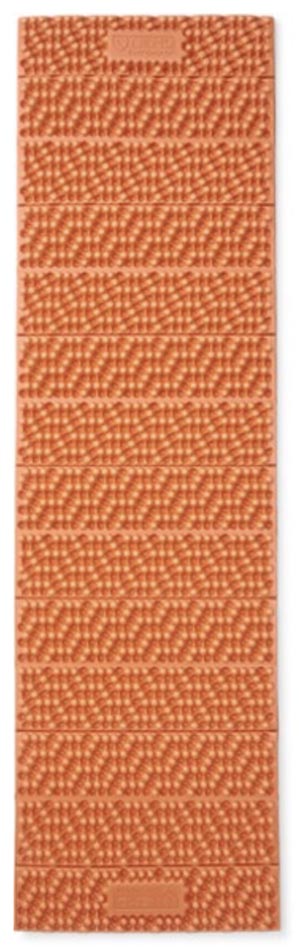 Category: Closed-cell foam
Weight: 14.5 oz.
Thickness: 0.9 in.
R-value: 2
What we like: Cheap and will never pop; thicker than the Therm-a-Rest Z Lite.
What we don’t: Not nearly as comfortable as an inflatable sleeping pad.
Closed-cell foam pads like the Nemo Switchback are polarizing. Revered by thru-hikers and desert hikers for their indestructible build and zero-effort unfolding, they are simply not as comfortable as inflatable air pads. In fact, some people use these as backup for extra warmth and durability when paired with an ultralight air pad (similar to the ThinLite). But as standalones, they don't provide the cushioning or warmth of our favorite air pads. However, the ways in which these pads differ from air pads are exactly what makes them appealing. They require zero effort to unfold, saving you time and energy at the end of a long day compared to inflating an air pad, and you can't pop them. Plus, they can be used instantly as a sit pad during trail breaks.
Nemo's Switchback is the only direct competitor to the Therm-a-Rest Z Lite Sol here, and we put it higher on this list thanks to a thicker build (0.9 in. vs. 0.75) and similar weight. The Switchback also has a little more cushion and compresses less over time than the Z Lite. Even so, you'll still feel rocks and roots beneath you, and we don't recommend these for side sleepers. Plus, with an R-value of 2, it's definitely a warm-weather pad. All that said, these are wildly popular with weight-and effort-conscious thru-hikers, and the durability and convenience can't be beat. Lastly, if you're looking for a budget-friendly pad for added cushion or to protect your ultralight air pad, Exped makes the FlexMat, which doesn’t pack up as small as the Switchback or Z Lite and has a thinner build with an R-value of 1.5.
See the Nemo Switchback

Category: Air pad
Weight: 8.5 oz.
Thickness: 3.0 in.
R-value: 2.4
What we like: Mylar lining and an internal truss system provide impressive loft and low weight.
What we don’t: The 10D face fabric is super thin and requires extra care.
With three inches of loft, Nemo's stable gridded baffles, and an unbelievably low weight of just 8.5 ounces for the regular mummy size, the Tensor Elite is an impressive addition to the ultralight sleeping pad category. Like the other pads in the Tensor line, Nemo uses its Apex baffles, which utilize a mylar truss layering system to maintain loft while keeping weight minimal. This is similar to the triangular layering of Therm-a-Rest's NeoAir line, allowing these pads to have impressive height for their tiny packed size (compared to pads that use insulation like Sea to Summit and Klymit). The Tensor Elite relies on only one layer of thermal mirror film at the top of the baffle, which means they could further reduce weight by using a streamlined baffle shape rather than a trapezoidal one. This, in combination with the 10D Cordura, helps reduce weight even further. This featherweight feat of engineering was one of our author's pads of choice for an ultralight alpine traverse in Wyoming's Wind River Range, and kept him warm and toasty on narrow ledges high above the deck without weighing him down.
As with any ultralight piece of gear, there are some notable tradeoffs. The 10D Cordura ripstop nylon is durable, but less so than the thicker materials on other lightweight pads—though most will add more weight to your pack. Ultralight items are often a toss-up between weight savings and durability, but we've been careful with our Tensor Elite and haven't experienced any punctures or failures. Our tester used this on a climbing trip where weight was critically important and would recommend it for portaledge use and ultralight backpacking... as long as you don't thrash around too much. Lastly, this pad offers less thermal protection than others on this list—we wouldn't recommend it for much more than moderate temperatures. But if the temps will be on the milder end and you're counting every ounce, this is a compelling option.
See the Nemo Tensor Elite
 Category: Air pad
Weight: 1 lb. 0.6 oz.
Thickness: 3.9 in.
R-value: 4.1
What we like: Nearly 4 inches of loft paired with air-spring cells and thermal insulation make for a warm, lightweight package.
What we don’t: The warmth-to-weight ratio doesn't totally hold up for the most discerning ultralighters.
Comfort doesn't have to take a backseat with lightweight gear, and while Sea to Summit's Ether Light XR weighs just over one pound for the regular mummy, its plush cushioning and body-conforming air-sprung cells can make the extra few ounces worth it. Sea to Summit achieves these specs by using ultralight layers of TRM material, a quiet, reflective fabric that radiates your heat back to you without excess bulk or weight. These layers also help create the pad's structure, with honeycombed cells that reduce air movement within the pad and help cradle your body. For an ultralight pad, these cells get us the closest to feeling like we're sleeping on a mattress at home. The Ether Light XR uses Sea to Summit's reliable Xpress valve with welded seams to reduce leaks and failures, provide fast inflation, and allow for microadjustment of air levels via the two-way valve. In the morning, opening both valve closures deflates this pad almost instantly.
By specs alone, this pad doesn't look as impressive as the 13-ounce, 4.5 R-value Therm-a-Rest NeoAir XLite NXT or the 14.1-ounce, 5.4 R-value Nemo Tensor All-Season. But again... comfort. The Ether Lite XR inflates with significantly fewer breaths than either of those pads, and the structure feels more comfortable for a good night's sleep, with less rolling around than the stiffer NeoAir. Sea to Summit also offers this pad in five sizes. You save less than one ounce by going for the shortest option, though, so for all but the shortest campers, we recommend opting for the regular length.
See the Sea to Summit Ether Light XR
 Category: Air pad
Weight: 14.1 oz.
Thickness: 3.5 in.
R-value: 5.4
What we like: Slightly thicker, warmer, and cheaper than the NeoAir XLite.
What we don’t: Small drop in comfort with the previous update; still heavier and bulkier than the Therm-a-Rest.
Another excellent contender from Nemo's Tensor line is the All-Season Ultralight Insulated. This is one of the top-rated sleeping pads in our backpacking sleeping pad roundup, combining a lightweight, packable build with a comfortable sleeping platform and 3.5 inches of cushion. This pad also includes Nemo’s Vortex pump sack, which some ultralighters will choose to leave behind. But for just a few ounces, it makes inflation significantly easier: Just snap it onto the inflation valve, blow lightly into the opening, and roll down the collar to force air into the mat. We also prefer this pump sack to Therm-a-Rest's offering. All in all, the Tensor’s blend of comfort, quality, and ease of use makes it a standout.
In the latest Tensor collection, the All-Season is more competitive than ever. In addition to a boost in warmth (impressively, the R-value went from 4.2 to 5.4) and thickness (from 3 to 3.5 in.), Nemo managed to trim 0.4 ounces off the pad’s weight while increasing durability with a thicker fabric on the bottom. Our only real complaint is that the nylon build feels less supple than the past version’s polyester shell. The Tensor is also still 1.1 ounces heavier than the NeoAir XLite and doesn’t pack down as small, plus the packed size got bigger with the update. All of this contributed to a lower ranking for specifically ultralight trips. But overall, we think the changes were a net positive. We're continually impressed with the entire Tensor line, including the 8.3-ounce Tensor Elite (8.5 oz., 2.4 R-value) and the Tensor Extreme (1 lb. 1 oz., 8.5 R-value), and it just keeps getting better.
See the Nemo Tensor All-Season
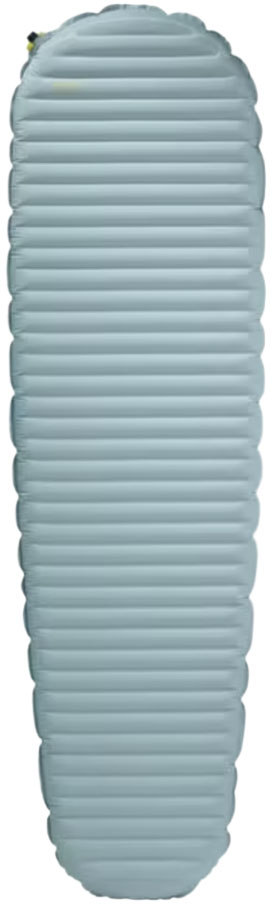 Category: Air pad
Weight: 15.5 oz.
Thickness: 3 in.
R-value: 7.3
What we like: High R-value for below-freezing conditions; quieter design than past models.
What we don’t: On the expensive side, and still a bit bouncy.
The lightest winter-ready ultralight sleeping pad on our list, Therm-a-Rest's classic and reliable sub-one-pound NeoAir XTherm NXT with a 7.3 R-value is ideal for high-altitude climbers and long-distance four-season backpackers. This winter-worthy pad has a similar design to our top-rated NeoAir XLite but adds more layers of ThermaCapture, which mimic an internal emergency blanket by reflecting your body heat back to you. And like the XLite, the XTherm NXT features new technology that delivers quieter sleep than the outgoing version, as well as a more efficient WingLock valve for inflation and deflation.
This is an impressive sleeping pad that you can get away with having as your only model if you tackle a lot of cold-weather trips. The 15.5-ounce weight is excessive, and most conditions won't call for an R-value above 7.3. So why did this pad lose out to the Nemo Tensor Extreme for our top winter pad? It was a close call, but we've found Nemo's baffle shape to be more comfortable and less bouncy, and for just 2.9 extra ounces, you get more surface area with the Extreme's rectangular model and an 8.5 R-value compared to 7.3. Still, the XTherm is lighter and more packable than the vast majority of sleeping pads, and hardwearing thanks to its 70-denier bottom. If you need extra warmth and durability and only want one go-to pad, the XTherm NXT is an exceptional cold-weather standout for serious adventurers.
See the Therm-a-Rest NeoAir XTherm NXT
The "best" warmth-to-weight ratio will depend on the temperatures and conditions you plan to adventure in, and on your comfort threshold. Striking that perfect balance between weight, comfort, and thermal protection on ultralight missions is a fickle beast, and in the quest to whittle down their base weight to that elusive sub-five-pound mark, many ultralighters will sacrifice safety and cut too many corners. It's important to consider the full range of conditions you'll encounter in the backcountry, and pack appropriately warm gear to avoid rescue—or worse.
For most scenarios in moderate climates, we advocate for the Therm-a-Rest NeoAir XLite NXT pad as the most versatile balance of weight to performance. With an adequate 4.5 R-value at a measly 13 ounces and a small packed size, it will cover your bases across a broad range of temperatures without weighing you down. For shoulder-season missions in warmer climates, true ultralighters can sacrifice some warmth to shave weight by opting for a pad like the 2.4 R-value, 8.5-ounce Nemo Tensor Extreme pad. It's narrow and cooler, but it is just about as tiny and featherweight as it gets. On the other end of the spectrum, the toasty 8.5 R-value, 1 lb. 1 oz. Nemo Tensor Extreme Conditions pad is our top choice for full-blown winter expeditions where weight is still a key consideration.
| Sleeping Pad | Price | Category | Weight | Thickness | R-Value | Denier | Packed Size |
|---|---|---|---|---|---|---|---|
| Therm-a-Rest NeoAir XLite NXT | $210 | Air pad | 13 oz. | 3 in. | 4.5 | 30D | 4.1 x 9 in. |
| Klymit Insulated V Ultralite SL | $140 | Air pad | 16 oz. | 2.5 in. | 1.9 | 20D | 4.5 x 7 in. |
| Nemo Tensor Extreme | $260 | Air pad | 1 lb. 1 oz. | 3.5 in. | 8.5 | 20D/40D | 4.5 x 10 in. |
| Big Agnes Zoom UL | $200 | Air pad | 14 oz. | 3.25 in. | 4.3 | Unavail. | 4 x 8 in. |
| Gossamer Gear ThinLite | $22 | Foam | 2.7 oz. | 0.2 in. | 0.5 | N/A | 3 x 19 in. |
| Nemo Switchback | $60 | Foam | 14.5 oz. | 0.9 in. | 2 | N/A | 6.8 x 11 in. |
| Nemo Tensor Elite | $230 | Air pad | 8.5 oz. | 3.0 in. | 2.4 | 10D | 3 x 5.5 in. |
| Sea to Summit Ether Light XR | $199 | Air pad | 1 lb 0.6 oz. | 3.9 in. | 4.1 | 30D/40D | 4.3 x 8.1 in. |
| Nemo Tensor All-Season | $200 | Air pad | 14.1 oz. | 3.5 in. | 5.4 | 20D/40D | 4 x 10 in. |
| Therm-a-Rest NeoAir XTherm | $230 | Air pad | 15.5 oz. | 3 in. | 7.3 | 70D | 4.5 x 9 in. |
Several editors on the Switchback Travel team are ultralight backpackers, high-alpine travelers, and thru-hikers. Sometimes all three. Thru-hiker and weight weenie Maggie Slepian put this guide together, along with input from thru-hiker and alpine climber Chris Carter. Maggie began thru-hiking in 2015 on the Appalachian Trail (she used an early-edition Therm-a-Rest NeoAir XLite that took 35 breaths to inflate and sounded like a bag of potato chips) and has continued long-distance backpacking and thru-hiking since, always with an ultralight sleeping pad. Chris is an alumnus of the Triple Crown, having completed the AT, PCT, and CDT, and also gravitates toward sleeping miles above sea level on precarious precipices where every ounce counts.
Our current lineup of ultralight sleeping pads is a tighter list than the more generalized backpacking gear roundups. The ultralight world is limited compared to standard gear, especially for sleeping pads. In fact, many cottage-industry brands we turn to for ultralight gear don't touch sleeping pads, which narrows the list down even further. To develop this initial list, Maggie came up with some basic guidelines: 16 ounces for three-season pads, aiming for an R-value of around 3.5 or more to be as versatile as possible, and well-cushioned for passing out after long days on the trail. As the market changes and we test more pads that don't compromise on durability and comfort, we'll continue to update this list.

A lot of companies use the term ultralight as a buzzword, but in general, the metric for an ultralight sleeping pad should be no more than 16 ounces for a 3.5 R-value pad. Is this science? Not at all. And true ultralighters with a five to eight-pound base weight will likely consider a 16-ounce sleeping pad abhorrent. It all depends on your goals and overall pack weight, but note the overuse of the word "ultralight" and make sure you actually check the specs for any product you're considering. For the purposes of the roundup, we mostly stuck to these specs but allowed some wiggle room for standout contenders or winter-ready pads with higher R-values. We've found the best models are between 12 and 16 ounces and are solid for three-season warmth. This allows you to save weight without compromising too much on materials, warmth, and comfort. For comparison, our primary backpacking sleeping pad review features pads weighing an average of about 20 ounces, while this roundup averages about 13 ounces each.

Air Pads
Backpacking sleeping pads fall into three general categories: air, self-inflating, and closed-cell foam. Air pads offer unmatched compactness, often rolling down to the same size as a Nalgene bottle. They’re also the lightest option while still providing more thickness. Bonded insulation or baffling techniques can deliver impressive warmth, as seen with the Therm-a-Rest XTherm NXT, which has an R-value of 7.3. The primary downside is a higher risk of puncture, and it’s a major consideration. Middle-of-the-night deflations can ruin a trip in a hurry. Bringing along a patch kit should alleviate most concerns, but it’s still the biggest reason not to buy an air pad.
Foam Pads
Designs like the Therm-a-Rest Z Lite Sol and Nemo Switchback are staples for long-distance trekkers and thru-hikers due to their versatile, lightweight constructions, but side sleepers and backpackers used to the luxury of a 3-inch inflatable air pad won't feel nearly as comfortable. But the old closed-cell foam pads are still a dependable, durable, tried-and-true option. Yes, they’re the least comfortable option, don’t pack as small, and don’t have the highest R-values, but they also have exactly a zero percent chance of deflating in the middle of the night. And they’re the perfect secondary pads to bring along for winter camping or where you want extra protection for an ultralight inflatable pad in the desert.
.jpg)
Self-Inflating Mats
The self-inflating mattress was a revolutionary idea when the Therm-a-Rest was launched in 1972. By combining open-cell foam and a space for the pad to expand and fill with air, it brought convenience, decent durability, and comfort. It’s a testament to that technology that most of today’s self-inflating pads haven’t deviated much. Compared with air pads, self-inflating options (like the Therm-a-Rest Trail ProLite) are more puncture-resistant than an air pad, and you'll still have some semblance of padding if it deflates in the middle of the night. However, the foam adds weight, and this style doesn't pack down as small as an equivalent air pad. Backpacking options are also often not as thick (exceptions include Sea to Summit's SI line), leading to complaints from side sleepers. For all these reasons, our ultralight lineup doesn't currently include any self-inflating options.

The most common measure of durability in the outdoor gear world is denier (D), which indicates a fabric's thickness. You'll see this on everything from rain gear to sleeping bag material to sleeping pad face fabric. The higher the denier, the tougher the material will be, and the more the pad will weigh. This goes hand in hand with taking care of your ultralight gear, and the lighter your pad, the more likely it is that the denier will be lower and the material thinner. The thinnest denier material on our list is the 10-denier face fabric on the 8.5-ounce ultralight Nemo Tensor Elite. The Nemo Tensor Extreme and the Exped Ultra 3R both use 20D materials, and many Sea to Summit pads use a lighter material on top and a more durable material on the bottom. This helps prevent punctures from where you lay the pad on the ground—just be sure to have it on the correct side when you inflate it. The toughest material on our list is the 70-denier base of the Therm-a-Rest NeoAir XTherm, which is then reduced in weight with 30D material on top.

Ultralight backpacking pads are thinner and less plush than standard backpacking pads, and certainly less luxurious than front-country models. But the latest outdoor gear technology has made advances in this department, and we've found that Sea to Summit’s Air Sprung Cells make for some of the most comfortable sleeping pads around, although they can’t quite compete with Therm-a-Rest in terms of weight-to-warmth ratio. You may notice a lot of chatter in product comments about being a back sleeper or a side sleeper. Back sleeping more evenly distributes your weight, whereas side sleeping puts a higher percentage of your weight on your hips and shoulders. If you are a side sleeper or don’t sleep particularly well in the outdoors, consider a thicker pad like the Sea to Summit Ether Light XR (3.9 in. thick). If you need serious cushion, consider one of the lighter options on our list of the best camping mattresses.

Baffle Design
You'll also see that the baffle designs vary between brands and product lines. In general, we’ve found that vertical baffles—like those on the Exped Ultra 3R—tend to be less supportive and comfortable than horizontal or boxed baffles, though you save on welding and the risk of seam failures. On the flip side, we like Sea to Summit’s Air Sprung Cells found on pads like their Ether Light XR, which have a plush, supportive feel. Therm-a-Rest's more bouncy horizontal baffles offer stellar loft for their small packed size and low weight, but some find them too bouncy. Overall, baffle shape and layout are matters of personal preference, and it comes down to priorities: cushion vs. weight vs. warmth.
.jpg)
A critical spec in comparing sleeping pads is the R-value, or how much insulation a pad provides from the ground. Don’t underestimate the R-value: Using an uninsulated or underinsulated pad, even in cool temperatures, can leave you cold throughout the night. And even a warm, thick sleeping bag won’t save you, because your body compresses the insulation along the bottom of the bag, letting cold air in and compromising its ability to keep you warm. To prevent this, you’ll need a sleeping pad that provides adequate protection from the cold ground.

In terms of recommended ranges, summer-only backpackers who stick to warm conditions can get away with an R-value of 3 or less, and some warm-weather backpackers will feel comfortable with the 2.4 R-value of Nemo's Tensor Elite. Most 3-season backpackers should get a sleeping pad with an R-value of 3 to 5, and this is where most of our ultralight picks land. For winter camping, you'll want an R-value of 5 or higher, with the most popular models being the Therm-a-Rest NeoAir XTherm (7.3 R-value) and the newer, impressive Nemo Tensor Extreme Conditions (8.5 R-value). If you will be camping on snow, it’s a good idea to bring a combination of pads, especially if one is inflatable (imagine waking up in the middle of the night on top of snow on a deflated balloon). For this reason, many winter campers bring along a closed-cell foam model like the Nemo Switchback or Z Lite Sol to be safe. For a deeper dive into this topic in general, see our article on Sleeping Pad R-Value Explained.

Recommended Sleeping Pad R-Values:
The ASTM Standard
All current sleeping pads are now rated based on a standardized ASTM International test. In this process, pads are sandwiched between a 35˚ Celsius hot plate on top, which mimics the body, and a 5˚ Celsius cold plate underneath, mimicking the ground. Over the course of four hours, testers measure how much energy the top plate uses in order to stay at a consistent 35 degrees Celsius (95˚F). The less energy it takes, the more insulating the pad. The more energy it takes, the less insulative the pad. The net result is more accurate and dependable ratings across the board, though brands are not required to prove the results, and models may still vary in warmth.

Packed size will be a direct reflection of the pad type, amount of insulation, and fabric thickness. Uninsulated or lightly insulated air pads are the most compact. Some even compress to the size of a can of soda, which is a far cry from the foam and self-inflating pads that dominated the market only a decade ago. A quick scan of our comparison table shows that most air pads, even warm options like the Therm-a-Rest XTherm NXT, pack down small enough to easily fit inside a backpacking backpack. Designs like the Nemo Tensor Elite pack down small and can be gripped in one hand. If you are considering a closed-cell foam pad, the packed size can be problematic, depending on your packing style. A foam option like Therm-a-Rest Z Lite is 20 inches long (most air pads are about 7 to 10 in. long), which means you’ll need to strap it to the outside of your pack—a common sight on long-distance trails.
Most sleeping pads are unisex and come in two or three sizes, allowing you to choose based on your height and comfort preferences. A “regular” pad is generally around 72 inches long and 20 inches wide (at its widest point), and the “large” is often between 77 and 80 inches long and 25 inches wide. In terms of shape, they fall into two basic categories: Mummy pads, which taper towards the feet to reduce weight, and rectangular pads that are more spacious and better suited to comfort-minded or active sleepers. We've listed most specs for the mummy pad versions in our guide, as they are more popular with the ultralight crowd and save weight without sacrificing too much.

Some sleeping pads also come in a women’s-specific version that looks nearly identical to its unisex counterpart, albeit with smaller dimensions. Women's-specific pads are usually shorter than the unisex pad. They also may offer more insulation, making them a great choice for shorter adults who sleep cold. And finally, some models tweak the dimensions and foam density around the hips for greater comfort and more room.
.jpg)
Air pads use a valve to inflate/deflate, and there have been a fair number of design changes over the past few years. Traditional sleeping pads open and close by twisting and pushing or pulling a round plastic valve connected to the side of the mat. These work well in general, and they’re still used on some old and budget-oriented designs, but there are downsides. For one, the valve works inefficiently because it’s completely open while inflating, which allows some air to escape in between breaths. Further, their upright profile takes up space when rolled up, and they are slow to deflate.

To address these issues, a number of manufacturers, including Sea to Summit, Nemo, and Big Agnes, have turned to flat valves. Beyond the slim profile, they often have dedicated openings for inflating and deflating, and importantly, a flap that keeps air from escaping while blowing into the opening. We've found these pads with two separate valves for inflating and deflating to be reliable, efficient (it takes about 10 breaths total to inflate, and deflation is almost instantaneous), and add essentially no weight—all excellent characteristics.
.jpg)
A blessed update in the past few years has been Therm-a-Rest's new WingLock valve, which is a twist on a more traditional design. Their new build allows for one-way inflation—with no air loss between breaths—and twisting the side “wings” quickly releases air. In use, we’ve found it’s not as fast as the flat valves on other pads, but its sturdy build and replaceability (something that’s not typically possible with a flat valve) make it worth the trade-off in efficiency for high-volume users like thru-hikers. It also offers much faster deflation than their previous valves.
.jpg)
For the lightest of ultralighters, there are options beyond even our lightest-weight air pads. Some backpacks like the Gossamer Gear Mariposa have a removable foam back panel that super weight-conscious folks use as a sleeping pad, albeit one that's just an inch thick and less than two feet long. This is pretty extreme, though, and unless you're going for a speed record, this likely isn't a preferred choice. Some ultralighters also cut their closed-cell foam pads in half, using just half the pad under their torso and elevating their legs on their empty pack. This saves around 7 ounces, but again... we're not sure it's worth it. Some models offer "short" options as well, like the Therm-a-Rest NeoAir XLite (66 in.,11.5 oz.) and the Nemo Switchback (51 in., 10.5 oz.). Going with a short pad will provide insulation for your torso (technically more critical than insulating your legs), but having your legs drop off the end of the pad isn't worth the several ounces of weight savings if it compromises a good night's sleep.

As is often the case, the lighter the gear, the more fragile it will be. Sleeping pads are no different and are actually more prone to this reduced durability, thanks to lower-denier face fabrics, which save weight but make them more likely to end up with seam failures and punctures. This was never more apparent than in the short-lived Therm-a-Rest NeoAir Uberlite from a few years back. If you're heading into the desert with an ultralight gear system, we recommend using a footprint under your tent to add an extra layer of protection against cactus spines and sharp rocks, and many thru-hikers prefer the near indestructibility of closed-cell foam pads like the Nemo Switchback or Therm-a-Rest ZLite Sol. Otherwise, choose your pad carefully, and it's worth opting for a model with a higher denier on the bottom, like the Nemo Tensor All-Season (40D on the bottom, 20D on the top), and carrying a bit more weight. Saving two ounces won't matter if you pop your sleeping pad on the first night of a 200-mile trail. Don't ask us how we know.

If you are like most backpackers, you don’t head out year-round. If you have a self-inflating pad (not featured in this lineup because they are generally too heavy), make sure to leave it unrolled with the valve(s) open during the off-season—this will keep the foam in good shape. If it's stored compressed, the pad will lose its self-inflating nature because the foam will become overly compacted. Having a hard time finding a spot to store the pad? Under a bed or behind a couch are popular options.
Air pad storage and care are a little simpler. Remove all the air from the pad and keep it rolled up in its storage bag to protect it from punctures. As for caring for a closed-cell foam pad—try not to let your dog eat it, how about that? But seriously, it's not much harder than that. Don’t leave heavy objects on top of it to avoid undue compression of the foam, and (if it’s a rollable type) store it unrolled so it doesn’t lose its shape.

The pads on this list are all in the ultralight category, but standard backpacking pads and camping mattresses present another option for people heading into the front-country or who don't care too much about weight. These other models are often thicker and more luxurious and can be made with heavier face fabrics for more durability. You'll also find plenty of self-inflating models, which ease some of the burden and light-headedness of inflating with your own tired breath. Front-country mats are also often layered with extra foam padding, and these are even more durable because the manufacturers aren't concerned with keeping weight down. To see our full list of favorites and a breakdown of important features, check out our article on the best camping mattresses and our standard best backpacking sleeping pads review.

Sleeping preferences are highly subjective, but the most "comfortable" pad is ultimately the one that lets you wake up well recovered after a high-mileage day. Before pulling the trigger on a new model, ensure it checks your specific boxes for dimensions, loft, and face fabric durability—but at the end of the day, out-of-the-box comfort remains the most critical metric. While there are more comfortable options in our standard backpacking sleeping pads round-up, the most comfortable pad in our ultralight lineup is a toss-up between the Big Agnes Zoom UL Insulated and the plush, 3.9-inch-thick Sea to Summit Ether Light XR.
Right now, the lightest ultralight sleeping pad that we feel comfortable recommending for serious backcountry use is the Nemo Tensor Elite as a short regular mummy. Weighing a wildly low 7.6 ounces (the standard regular width is 8.5 ounces) while still providing an R-value 2.4 and 3 inches of cozy loft, this is an impressive feat of engineering from one of the best brands in the game. We've been using this tiny pad on ultralight backpacking trips and alpine missions for months now, including a rapid traverse of all the major peaks in Wyoming's Cirque of the Towers, and it hasn't disappointed. There are obvious setbacks to a pad this tiny and light, but if weight is your primary concern on shoulder-season missions in mild temps, it's difficult to ding.
We have identified the plush Big Agnes Zoom UL Insulated as the best ultralight pad for side sleepers—and after months of testing, we feel confident in our decision. While it's not as warm as other pads with the same claimed R-value, the loftier 3.5-inch side chambers help keep side-sleepers stable throughout the night, and it just seems to cradle you in a soft pillow as you snag your backcountry Zs.
With a blisteringly high R-value of 8.5 at a low 1 lb. 1 oz., the Nemo Tensor Extreme Conditions is currently the warmest pad that we would classify as truly ultralight and would trust in freezing winter temps. We've been testing this unique pad for years now, and have weathered sub-freezing temps in the dead of winter, frigid whipping winds high on big walls in a portaledge on El Cap in Yosemite, and it has kept us warm and cozy through it all.



.jpg?h=fbc67360&itok=_31ZUgeg)
.jpg?h=d1272f3a&itok=pIiUisJh)
.jpg?h=fbc67360&itok=alJCQBk9)

 (s).jpg?h=fbc67360&itok=opO7uduG)
 (s).jpg?h=fbc67360&itok=gCwlp_N_)
.jpg?h=fbc67360&itok=0H8jyoRL)
_0.jpg?h=fbc67360&itok=ihdMep3a)