.jpg)
Photo Credit
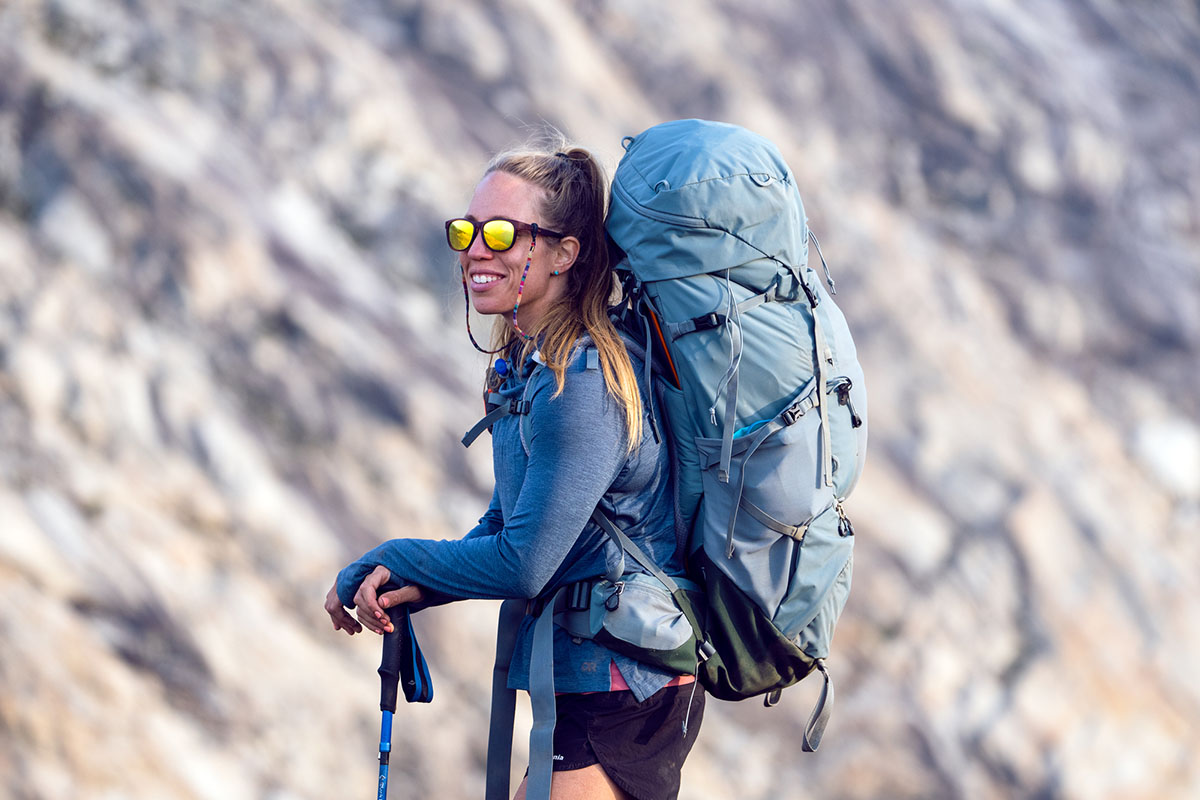
Choosing a suitable backpacking pack can be daunting, with myriad models offering different capacities, organization, suspension designs, and more. Our breakdown will help you identify your backpacking style and which pack category is best for you. Our top pick is Osprey’s Aura AG LT, which is comfortable, durable, and lightweight for its capacity and features. While not every option below is specified as a dedicated women's model, all of our picks have been extensively tested by our female staff and vetted as comfortable and well-fitting. We’ve also compiled a list of the best backpacking packs, covering both men’s and women’s designs.
Editor’s note: In our latest update, we added our experiences with the latest version of the Gregory Deva 70 after testing it on a multi-day trip in the Kananaskis Wilderness. Lastly, we ensured all other information was up to date and included new photos from recent testing.
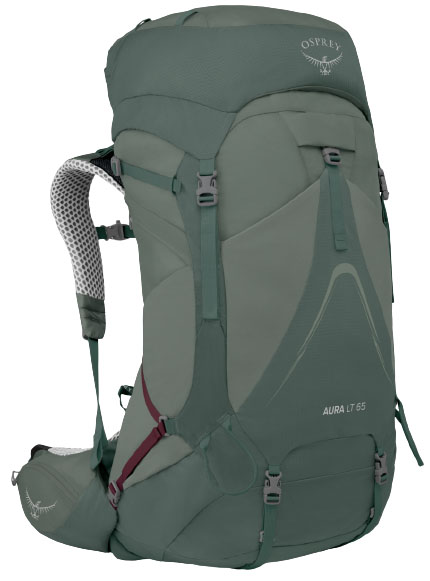 Weight: 4 lb. 0.2 oz.
Fabric: Nylon (210D & 500D)
Capacities: 50, 65L
What we like: The comfort, durability, and performance of a high-end backpacking pack in a reasonably light package.
What we don’t: You give up some pockets and organizational add-ons; plenty of lighter options are available.
The best overall pick isn’t always an obvious choice, but the Aura AG LT 65 is a runaway favorite thanks to its well-balanced design. With the LT, Osprey took the organization, comfort, and durability of a high-end backpacking pack and streamlined it, removing all superfluous bells and whistles. What remains is everything you need (and nothing you don’t) for brief overnights to week-long sagas, including best-in-class comfort, convenient pockets and storage, reliable weather resistance (including a rain cover), and top-of-the-line ventilation. The Aura AG LT also features an adjustable torso length and, unlike true lightweight models, doesn’t compromise on durability (it’s built with a substantial 500D base and 210D body). You’d be hard-pressed to find a better combination of price, weight, and performance.
But for some backpackers, the Aura AG LT is too much of an all-rounder. Those who like a lot of pockets and organization will appreciate a more featured design like the Gregory Deva 70 below (or the standard Aura AG 65, which adds secondary side-zip access to the main compartment, one more lid pocket, and two front pockets, and dedicated sleeping bag storage). On the other hand, the Aura AG LT is too heavy to slot into the lightweight category, and weight-conscious hikers might want to consider alternatives like the ULA Ultra Circuit 68 (2 lb. 4.8 oz.), Hyperlite Southwest 55 (1 lb. 13.3 oz.), or Osprey's own Eja 58 (2 lb. 13.2 oz.) below. Still, the Aura AG LT strikes an excellent middle ground between the two extremes, making it an easy recommendation for most backpackers.
Read more: Osprey Aura AG LT review
See the Osprey Aura AG LT 65
.jpg)
 Weight: 2 lb. 12.0 oz.
Fabric: Nylon (100D & 210D)
Capacity: 55L
What we like: Relatively inexpensive; great adjustability and customization.
What we don’t: Materials and load limit are a step down from pricier designs.
REI’s packs are reliably high in value, but they aren’t usually standouts in performance. However, we’ve been pleasantly surprised by the Flash 55, enough so that we moved it up our list a couple of seasons back, dethroning the brand's cheaper Trailmade below as our favorite budget design. Importantly, despite its low price, the Flash is competitively light and features a variety of convenient features, including four large side pockets (great for longer items like tent poles and a tall water bottle) and a generous front dump pocket. We also appreciate the convenient roll-top closure, which makes it easy to compress the pack down when you're hauling a smaller load. And the Flash is hallmarked by a range of customizable features that are easy to remove and reattach, including compression straps, two hipbelt pockets, and a shoulder strap pocket (dropping all of them shaves 7 oz.). This adds up to a steal for weight- and price-conscious backpackers.
We took the Flash 55 on a three-day trek through Wyoming's Wind River Range and came away with a lot of praise. Despite its affordable price and competitive weight, the Flash handled a full load well, even as we approached its 30-pound limit. We also found storage to be mostly adequate, although the single lid pocket and lack of secondary access to the main compartment detract from the otherwise well-rounded layout. Additionally, we weren't huge fans of the shoulder strap pocket, which is prone to falling off, difficult to reattach, and barely fits our iPhone in its case (we ended up removing it partway through the trip). But it’s hard to be overly critical at this price, especially considering the Flash’s generous customization options and decidedly modern-feeling design (both of which are uncommon among packs at this price). A final bonus: The latest model is available in four sizes, including a unique extra-small torso with a medium hipbelt, making it suitable for a wide range of body types.
Read more: REI Co-op Flash 55 review
See the REI Co-op Flash 55
.jpg)
 Weight: 2 lb. 4.8 oz.
Fabric: Ultra (200D & 400D)
Capacity: 68L
What we like: Competitively lightweight and durable construction designed for and by thru-hikers.
What we don’t: Not the lightest pack here; you can save considerably with the Robic nylon version.
Headquartered in northern Utah, ULA Equipment is well regarded in the thru-hiking and ultralight backpack communities, and the Circuit is their flagship design. Building on that pack’s impressive comfort and customizability, ULA released the Ultra Circuit last year, offering upgrades in durability and weather resistance over the Robic nylon version. The Ultra model costs $80 more, but we think the innovative fabric—considered the latest and greatest in ultralight tech—is worth the upgrade for those who get out a lot and are hard on their gear. We also appreciate that the pack comes in a wide range of sizes, with the option to customize torso length, hipbelt size, and shoulder strap style to suit your fit preferences. And at just 2 pounds 4.8 ounces, the Ultra Circuit is competitively light given its 68-liter capacity and practical organization layout, including generous front and side pockets, zippered hipbelt storage, and ample exterior attachment points (including ice axe/trekking pole loops).
We’ve brought the Circuit on multi-day trips in Patagonia and up 14ers in Colorado and have been very pleased by how easy it is to load up, adjust, and even streamline as a daypack on short outings from camp. In fact, we’ve been so impressed by the Circuit that we moved it up in our rankings during the last update, replacing Hyperlite’s Southwest 55 below as our favorite women’s ultralight pack. The biggest reason was customizability, but the ULA is also 13 liters larger, and we prefer its stretchy front pocket over the Southwest’s solid Dyneema design (though the flip side is reduced durability). The Southwest does win out in weight by about 7 ounces, but the Ultra Circuit offers similar abrasion resistance and waterproofing in a more sustainably built package (the Ultra fabric is made from 100% recycled polyester).
See the ULA Equipment Ultra Circuit 68

Weight: 4 lb. 11.8 oz.
Fabric: Nylon (210D & 420D)
Capacities: 60, 70, 80L
What we like: Top-of-the-line comfort, organization, and load-bearing suspension.
What we don’t: Heavy and expensive; overbuilt for most backpackers.
Some backpackers shave weight by cutting off the end of their toothbrush, while others like to travel with all the comforts of home. If you identify more with the latter, it’s worth considering a feature-rich pack like the Gregory Deva 70. The Deva is built to carry up to 65 pounds thanks to its strong suspension and plush harness, which features a free-floating backpanel, a refined lumbar and hipbelt system, and shoulder straps that pivot with the body’s movements. Plus, there’s no shortage of organization for all your gear, including nine exterior pockets, U-shaped access to the main compartment, cavernous hipbelt pockets, and multiple exterior attachment points. For la crème de la crème of backpacking packs, look no further than the Deva 70.
The latest version of the Deva received a few upgrades, including an updated back panel that foregoes foam for a more breathable mesh, a softer harness, and more durable materials along the front and sides of the pack. We put the latest version to the test on a multi-day backpacking trip in Alberta’s Kananaskis Wilderness and felt that the comfort lived up to the hype. That said, unless you work as a guide, regularly schlep expedition-style loads, or need excessive amounts of organization, it’s worth thinking twice about the Deva. In fact, we found the copious storage options to be a downside. With a dozen separate compartments, you’re bound to misplace gear in your own pack. And held up against more streamlined designs, many of the Deva’s features have started to strike us as cumbersome rather than luxurious, including the bulky Velcro fit adjustments and dedicated access to the bottom sleeping bag compartment. Finally, the pack is on the heavy side and among the more expensive packs on this list. But if you plan to carry 50-plus pounds, the Deva will shoulder the load better than most.
Read more: Gregory Deva 70 review
See the Gregory Deva 70

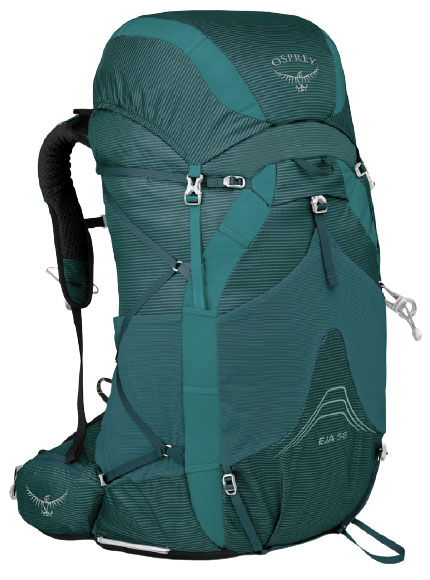 Weight: 2 lb. 13.2 oz.
Fabric: Nylon (100D & 400D)
Capacities: 38, 48, 58L
What we like: A comfortable and feature-rich pack for the ultralight-curious.
What we don’t: You can save a lot of weight and bulk with a pack like the ULA Circuit above.
If you’re ultralight-curious but not yet ready to take the full deep dive, the Osprey Eja is an excellent backpack to consider. Checking in over a pound lighter than our top-ranked Aura AG LT, the Eja drops weight with stripped-down features, simple organization, and thinner fabrics. But comfort remains a priority: The body-hugging hipbelt, lightweight aluminum frame, and full-mesh backpanel offer significantly more support than the streamlined suspension typically found on UL packs such as the ULA Ultra Circuit above and the Hyperlite Southwest below, and the design features an adjustable torso length. All told, the Eja is a soft landing for those transitioning from traditional backpacking to lighter-weight gear.
Compared to the Aura AG LT above, the Eja’s biggest compromises are in organization and durability. You get a single access point to the main compartment, and the body fabric is thin 100-denier (D) nylon. Osprey also advertises a 35-pound load limit for the Eja (compared to the Aura’s 40-lb. limit), although we’ve found the Airspeed suspension and Exoform harness to be very comfortable. And if you’re looking for a true competitor to a pack like the ULA Ultra Circuit, this isn’t it: The Eja is over 8 ounces heavier, falls short in durability and waterproofing, and features a plusher carry system that's far more reminiscent of a standard backpacking pack than a traditional thru-hiker pick (this may be a pro or con depending on your priorities and preferences). Despite its compromises, we’ve found the Eja to be a really nice middle ground for those looking to balance comfort and weight savings. For an even more streamlined design from Osprey, check out the 2-pound Eja Pro 55.
Read more: Osprey Eja 58 review
See the Osprey Eja 58
.jpg)
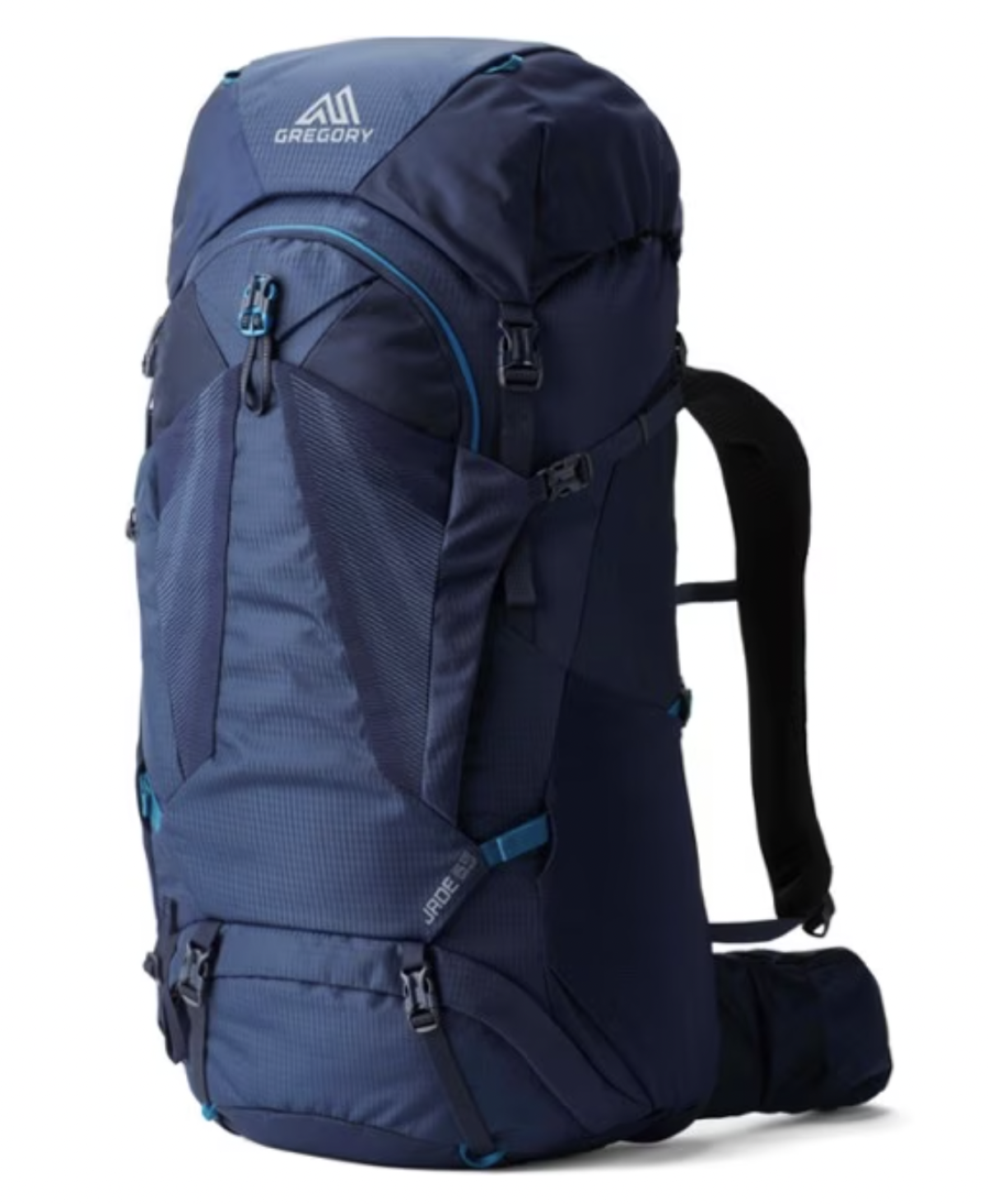
Weight: 4 lb. 2.6 oz.
Fabric: Polyester (400D & 420D)
Capacity: 63L
What we like: A well-rounded pack that's thoughtfully built to accommodate a more diverse range of body shapes and sizes.
What we don’t: Only comes in one color and capacity.
Part of Gregory's growing line of plus-size packs, the Jade 63 is a versatile all-rounder that strikes a nice balance of comfort, weight, and features at a competitive price. While smaller, less plush, and less feature-rich than the brand’s Deva above, the Jade is easy to adjust, boasts Gregory’s FreeFloat suspension system that evenly distributes weight while minimizing sway, and has a mesh-heavy backpanel that does a decent job of promoting airflow. Additionally, the zippers and foam feel well-built and durable, and the pack doesn’t skimp on useful extras, such as U-shaped access to the main compartment, large mesh front and side pockets, and bear canister-friendly dimensions. And importantly, Gregory didn’t just extend the hipbelt with the plus-sized version; they also tweaked pocket placement and strap sizing to accommodate a wider range of body shapes.
We’re happy to see big-name brands like Gregory and Osprey expanding their plus-size offerings, but options still remain limited. Within Gregory’s own lineup, the Amber 68 Plus Size is $30 cheaper and over 5 ounces lighter, but only comes in one size and uses less durable (210D and 420D) fabrics. It also has fewer pockets and lacks the Jade’s U-zip access to the main compartment. As for Osprey alternatives, their Extended Fit collection includes several packs, including the budget-friendly Renn 65 and heavy-hauling Ariel 65, but neither is as well-rounded as the Jade. Editor’s note: We haven’t reviewed the plus-size Jade yet, but we did bring the standard model on a demanding trip to Patagonia, and you can read about its performance here.
See the Gregory Jade 63 Plus Size
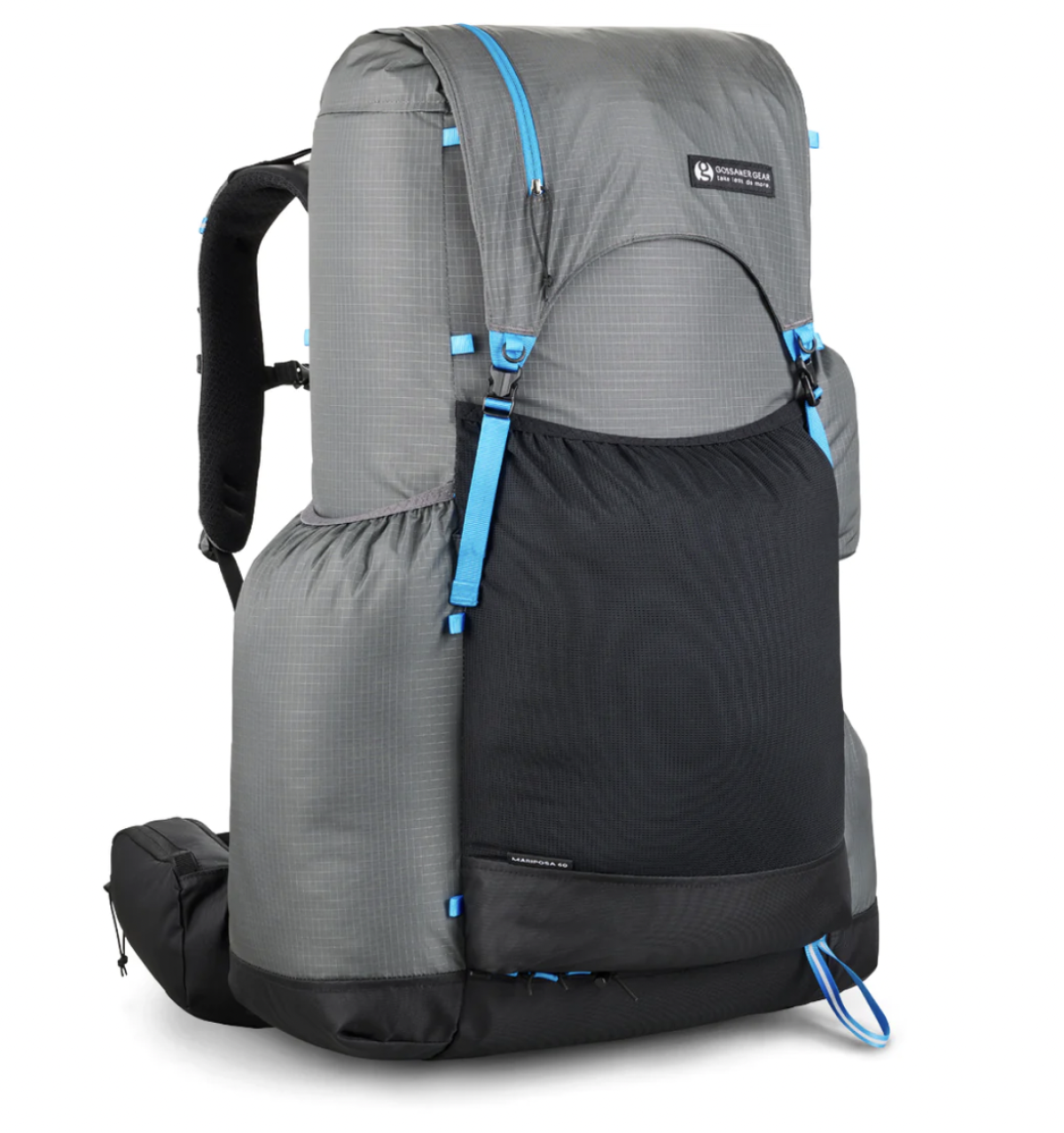
Weight: 2 lb. 2.1 oz.
Fabric: Robic nylon (100D & 210D)
Capacity: 60L
What we like: A lightweight, streamlined design with great organization and a promising recent update.
What we don’t: Thinner fabrics and less customizable than the ULA Circuit above.
The ultralight cottage brand scene is strong these days, with Texas-based Gossamer Gear right up there with Hyperlite, ULA, and Zpacks. The flagship Mariposa is the brand’s largest-capacity hauler and has become one of our go-to packs for everything from quick overnights to week-long missions. Recently updated with an upgraded frame, more durable exterior, and retooled load lifters, the pack offers 60 liters of capacity split between the main compartment and seven exterior pockets while checking in at just over 2 pounds (for the medium size with a medium hipbelt). The feature set is designed for and by experienced thru-hikers: The extra-tall side pocket can accommodate a backpacking tent or trekking pole-supported shelter, the stretchy front pocket is great for stashing spare layers and other essentials, and the large hipbelt pockets make it easy to divvy up electronics and snacks. All told, the Mariposa is a streamlined but highly practical design that's even more competitive after the recent changes.
Along with the ULA Ultra Circuit above, the Mariposa is one of the most popular cottage-brand UL packs on the trail. The Gossamer Gear is a few ounces lighter than the ULA but uses thinner fabrics (100D and 210D compared to 200D and 400D for the Circuit), which is noteworthy if you’re hard on your gear. The ULA also offers better fit customization, including the choice between two shoulder strap styles, although we appreciate that Gossamer Gear increased the number of hipbelt options with this latest update. Finally, we found that the new grab handle location (a few inches below the top of the frame) makes it somewhat awkward to pick up, so we wouldn't recommend exceeding the pack's 35-pound load limit. It felt unbalanced and painful to be weighed down by a water cache on an otherwise ultralight outing last fall. But for weight-conscious backpackers who prioritize organization and on-the-go access, the Mariposa remains hard to beat.
Read more: Gossamer Gear Mariposa review (prior version)
See the Gossamer Gear Mariposa 60
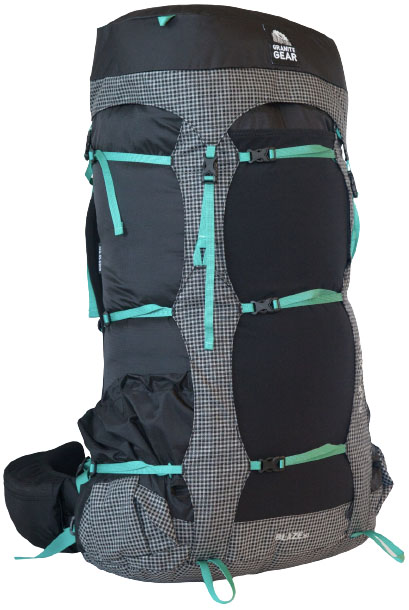 Weight: 3 lb. 0.2 oz.
Fabric: Robic nylon (100D & 210D)
Capacity: 60L
What we like: A capable hauler at a very reasonable weight.
What we don’t: We'd love more external pockets and a more precise fit.
Granite Gear is a classic example of a homegrown brand that makes gear by the people, for the people. Their Blaze 60 is a true workhorse, combining heavy-hauling credentials and smart organization for just 3 pounds. We tested the pack during a challenging multi-day trek through the Grand Canyon and were impressed with its load-carrying capabilities and all-around performance. The Blaze is rated for 50 pounds, and the sturdy framesheet and substantial hipbelt and shoulder strap padding carried a full load well. Plus, the side-zip access made it easy to find gear without unpacking the whole bag, and the oversized front and side dump pockets proved functional (you can fit two standard water bottles in one side pocket). Perhaps most impressive, the Blaze pulls it off while checking in at least a full pound lighter than most of the competition.
What’s not to like with the Blaze 60? The padded backpanel favors comfort and support over breathability, and we found it to be stiffer and sweatier than a suspended design like the Aura or Jade above. Moreover, the fit adjustments aren’t fine-tuned, with heavy Velcro patches and difficult-to-reach clips. But these are small nitpicks, and the Blaze joins designs like the Eja above as a lightweight offering that gives up little in the way of comfort and features. On top of that, many will appreciate its customizable build: You can remove the lid, secure it to the shoulder straps for on-the-go storage, or even convert it to a fanny pack. All told, the Granite Gear is a nice alternative to bigger-name brands like Osprey and Gregory, and traditionalists will appreciate the standard foam backpanel design.
Read more: Granite Gear Blaze 60 review
See the Granite Gear Blaze 60

Weight: 1 lb. 13.3 oz.
Fabric: Dyneema Woven Composite 3.9
Capacities: 40, 55, 70L
What we like: A true trail icon; Dyneema construction offers great durability and waterproofing.
What we don’t: No lid or secondary access to the main compartment; simplified backpanel compromises comfort and ventilation.
There’s a lot of value in traveling light on the trail: In addition to expending less energy with each step, it's likely you'll have a more enjoyable overall experience (provided you can dial in a good fit). Once you’ve pared down the rest of your kit, it’s time to start thinking about an ultralight backpack. Hyperlite’s offerings sit at the top of the food chain thanks to their Dyneema construction (technically, Dyneema woven to a polyester face fabric), which translates to incredible strength and water resistance without the weight penalty. Their options differ in capacity and external pocket fabric, and the Southwest 55 is our favorite, offering 55 liters of storage split among a cavernous main compartment, three burly exterior pockets, and two hipbelt pockets. For just under 2 pounds, it’s an incredibly hardwearing and high-quality pack that should last you season after season of hard use.
If you’re transitioning from a traditional backpacking pack, expect a learning curve with the Southwest. Like most UL models, including the ULA Ultra Circuit above and Zpacks Arc Haul Ultra below, the Hyperlite does not feature a lid, and with no secondary access to the main compartment, you’ll have to empty your whole pack to access contents at the bottom. What’s more, although Hyperlite gives a 40-pound load limit for the Southwest 55, most ULers try to keep their base weight (gear minus consumables) under 13-ish pounds. In other words, you’ll want to make sure the rest of your kit is proportionally streamlined. All told, the Southwest is not without compromise, but for dedicated UL enthusiasts looking for the premium performance of Dyneema, it’s hard to beat. It’s also worth mentioning Hyperlite’s Unbound 55, which is purpose-built for those sticking to the trail (including svelter features and a convenient stretch-mesh dump pocket) but lacks the Southwest’s tank-like feel.
Read more: Hyperlite Southwest 40 review
See the Hyperlite Southwest 55
 Weight: 3 lb. 8.0 oz.
Fabric: Nylon (100D, 210D, & 300D)
Capacities: 48, 58, 68L
What we like: Updated design has better gear access and fit adjustability.
What we don’t: Feels a bit overbuilt; lid flops unless pack is filled to capacity.
The Maven has been around for a while in 45-, 55-, and 65-liter capacities, but this year's update pared down the design and retooled the size offerings, including a sleeker build and new 48-, 58-, and 68-liter options. The latest iteration weighs about the same as the previous version (the 58 is 1.6 oz. heavier than the outgoing 55) and uses a 300D nylon base instead of 420D. The Maven still has all the bells and whistles of traditional packs and is a notable step up in features from designs like the Osprey Eja above, including an adjustable backpanel and multiple access points. We added the Maven to our list this year, thanks to its mid-range comfort and weight limit, for backpackers who don't need the heaviest, most padded pack but appreciate lots of organization and solid durability.
While the Maven slots nicely between the lightweight and feature-filled packs in this list, it falls into an awkward in-between spot in the market. We found the backpanel to be cumbersome, and the pack still feels overbuilt in today's world of increasingly streamlined options. And while we appreciate the adjustable torso system, we found the mechanism to be somewhat clunky, and the bottom sleeping bag compartment will feel unnecessary for most. In the end, we like this pack for casual backpackers but anticipate most will either want something lighter (like the Osprey Eja above) or with heftier load-bearing (like Gregory's own Deva above).
See the Gregory Maven 58
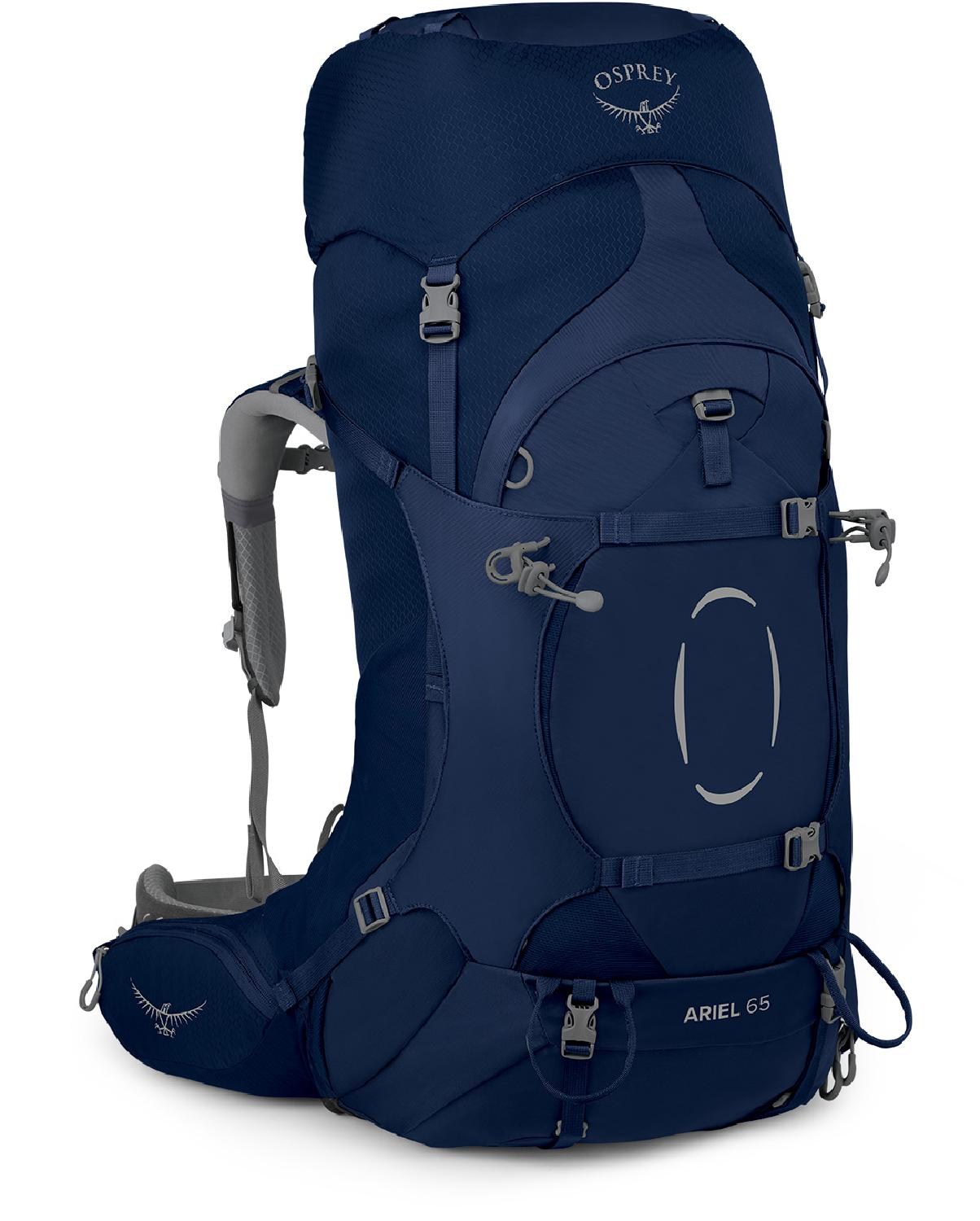 Weight: 4 lb. 14.3 oz.
Fabric: Nylon (210D & 420D)
Capacities: 55, 65L
What we like: Great adjustability and very comfortable for hauling heavy loads.
What we don’t: Most backpackers are better off with the Aura.
For heavy-hauling and light mountaineering, Osprey's Ariel offers a nice balance of comfort and features. The latest update dropped the AntiGravity (AG) suspension system for an AirScape backpanel, which is less elaborate but still has breathable foam and mesh to help keep you cool (and can handle loads of up to 60 lb.). And you get all kinds of adjustability, including Osprey's Fit-on-the-Fly system that easily tailors the fit of the shoulder straps and hipbelt, along with ample compression straps and attachment points for ice axes, tent poles, and more. Last but not least, the large J-shaped zipper at the front provides easy on-the-go access to the main compartment.
The primary downside of the Ariel 65 is its weight, which is just under 5 pounds. On top of that, organization is middling: You get only five external pockets (seven if you’re counting water bottle holders), and the hipbelt stashes are oddly placed and hard to reach. For most backpackers, we think the Aura AG LT is the more practical all-around choice for 14 ounces less; on the other hand, the Gregory Deva above offers more capacity for a similar weight (though it costs more). But in terms of premium haulers, the Ariel has a lot to offer, and it's available in an Extended Fit version to accommodate a broader range of body sizes. Osprey also makes the beefed-up and feature-rich Ariel Plus, which could be a great alternative depending on your needs.
Read more: Osprey Ariel 65 review
See the Osprey Ariel 65

Weight: 3 lb. 4.0 oz.
Fabric: Nylon
Capacity: 60L
What we like: Decent performance for the price, and the sizing is very adjustable.
What we don’t: Cheap materials and budget-feeling fit and finish.
We’re big fans of everyone getting outside, but we're unfortunately aware that the cost of gear can be a significant hurdle. REI Co-op’s Trailmade series is built to address this issue, with a modest collection of budget-priced clothing and backpacking equipment. The Trailmade 60 isn't the nicest pack we’ve tested (it feels more like an old-school gear hauler than a modern design), but it gets the job done without breaking the bank. The suspension felt decently comfortable on a tough overnight trip, and organization was intuitive with a large main compartment, easy-to-access sleeping bag storage, and six external pockets. For the price, the Trailmade 60 is an excellent pick for those on a budget or backpackers who only get out a few times a year.
It’s worth noting that we previously had the Trailmade as our top budget pick, but replaced it with REI’s pricier Flash 55 after thoroughly testing both packs. Despite costing less, the Trailmade’s materials feel cheaply made, the front pocket and side water bottle pockets use solid fabrics rather than mesh and have minimal stretch, and we expect the foam along the hipbelt, shoulder straps, and backpanel will lose its squish over time. Sizing options are also limited. REI offers the pack in regular and “extended” versions, although there’s enough adjustability to share the pack with a friend, and the exterior is more hardwearing than what you get with the lighter-weight Flash. As long as you set reasonable expectations, the Trailmade is perfectly workable for beginners and those who prioritize durability and affordability. Note: At the time of publication, the Trailmade 60 was in low stock. We expect an updated version in the near future, but in the meantime, the current version can be bought at a discount.
Read more: REI Co-op Trailmade 60 review
See the REI Co-op Trailmade 60
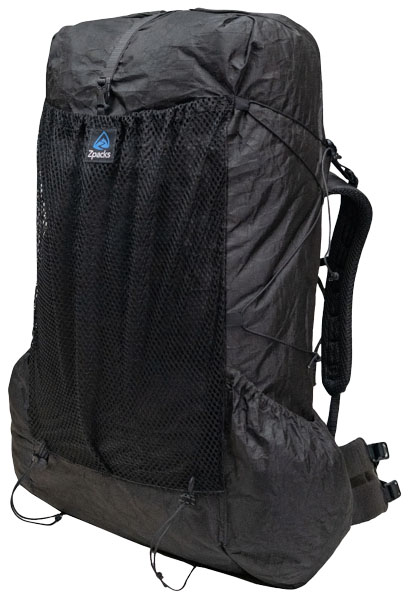 Weight: 1 lb. 5.8 oz.
Fabric: Ultra (100D)
Capacity: 60L
What we like: Incredibly lightweight; better ventilated than the Hyperlite Southwest.
What we don’t: Not very durable and doesn’t carry loads as well as other UL packs.
Weighing nearly 10 ounces less than the next-lightest pack on our list, the Zpacks Arc Haul Ultra 60L handily takes the ultralight crown. The pack achieves its 1-pound-5.8-ounce weight (for a women’s medium) with a specialized build that's made from Ultra High Molecular Weight Polyethylene (UHMWPE) laminated to a waterproof lining. Dubbed Ultra 100, the fabric offers comparable strength and abrasion resistance to Dyneema, while weighing less. The pack also eliminates the need for a foam backpanel, featuring a unique “Arc” tensioning system that pulls the middle of the bag away from your back (which also helps a great deal with ventilation). Finally, the Arc Haul Ultra uses an ultralight carbon fiber frame and very basic organization, with just one main compartment and three external pockets (you can add extras like hipbelt pockets to your order, which weigh 0.9 oz. each).
The Zpacks is very lightweight and, in our experience, comfortable with a 30-pound load (we'd hesitate to push it to its advertised 40-lb. load limit). That said, we’ve found its thin fabric lacks durability for rough treatment and off-trail scrambling, and the tmesh front pocket can’t match the Southwest’s Dyneema pockets or the more abrasion-resistant "UltraStretch" pocket on the ULA Ultra Circuit. The pocket layout is also very limited: We wish Zpacks included an internal zippered pocket and/or hipbelt pocket. Both can be purchased separately, but the accessories add both weight and cost. And finally, the Zpacks isn’t a great value, especially considering its very specialized build. But for serious hikers and minimalist trekkers who prize weight savings above all else (you know who you are), it’s a reliable option that will shave considerable ounces from your back.
See the Zpacks Arc Haul Ultra 60L
It's easy to see there are many backpack options available, and it can be hard to narrow down the right choice. To help you cut down on the noise, we're testing new and interesting backpacks each season. Our standards are high, and we carefully consider the weight, features, durability, and price of each model we test. As such, not everyone we test makes it onto this list, and we understand you might be curious about the reasons we dismissed the ones we did.
The Rab Hyperon ND65L didn't make the cut. Not only is the pack very heavy (5 lb. 5.0 oz.), but we found it tricky to pack properly. Without the right weight distribution, it was uncomfortable. Additionally, the side water bottle pocket was inaccessible when wearing the pack. We like Rab's gear, however, and hope to see an update of this pack soon.
The Black Diamond Beta Light 45 was removed in this update as well. When compared to the other ultralight packs in this list, the Beta Light felt unrefined. For instance, we couldn't get the load lifters cinched tight enough to bring the weight close to our backs, and the stretchy sternum strap wasn't as supportive as we liked. The 45-liter capacity (the only one offered) is also on the small side for overnights.
Lastly, we dismissed the Osprey Renn 65. We preferred the Flash 55 for the large front pocket and the removable lid. The Renn is also only available in one size. It's a step up from the true budget REI Trailmade, but we think most folks are better off with the Flash 55 for a slight investment.

| Backpack | Price | Weight | Fabric | Capacities | Access | Pockets |
|---|---|---|---|---|---|---|
| Osprey Aura AG LT 65 | $320 | 4 lb. 0.2 oz. | Nylon (210D & 500D) | 50, 65L | Top, side | 6 exterior |
| REI Co-op Flash 55 | $229 | 2 lb. 12.0 oz. | Nylon (100D & 210D) | 55L | Top | 6 exterior |
| ULA Ultra Circuit 68 | $380 | 2 lb. 4.8 oz. | Ultra (200D & 400D) | 68L | Top | 5 exterior |
| Gregory Deva 70 | $400 | 4 lb. 11.8 oz. | Nylon (210D & 420D) | 60, 70, 80L | Top, front | 9 exterior |
| Osprey Eja 58 | $285 | 2 lb. 13.2 oz. | Nylon (100D & 400D) | 38, 48, 58L | Top | 6 exterior |
| Gregory Jade 63 Plus Size | $300 | 4 lb. 2.6 oz. | Polyester (400D & 420D) | 63L | Top, front | 6 exterior |
| Gossamer Gear Mariposa | $315 | 2 lb. 2.2 oz. | Robic nylon (100D & 210D) | 60L | Top | 7 exterior |
| Granite Gear Blaze 60 | $300 | 3 lb. 0.2 oz. | Robic nylon (100D & 210D) | 60L | Top, side | 6 exterior |
| Hyperlite Southwest 55 | $420 | 1 lb. 13.3 oz. | Dyneema Woven Composite 3.9 | 40, 55, 70L | Top | 5 exterior |
| Gregory Maven 58 | $300 | 3 lb. 8.0 oz. | Nylon (100D, 210D, 300D) | 48, 58, 68L | Top, side | 7 exterior |
| Osprey Ariel 65 | $370 | 4 lb. 14.3 oz. | Nylon (210D & 420D) | 55, 65L | Top, front | 7 exterior |
| REI Co-op Trailmade 60 | $179 | 3 lb. 4.0 oz. | Nylon | 60L | Top | 6 exterior |
| Zpacks Arc Haul Ultra 60L | $399 | 1 lb. 5.8 oz. | Ultra 100 (3.3 oz./sqyd) | 60L | Top | 3 exterior |
Many folks on the Switchback Travel team are avid backpackers, including all of our female staff. To supplement our unisex backpacking pack guide, former senior editor Jenny Abegg put together our initial list of 16 women’s-specific picks in early 2023. An ardent ultrarunner and mountaineer, Jenny has an affinity for ultralight gear but is no stranger to hauling serious weight into the backcountry, from close-to-home outings in the North Cascades to far-off alpine adventures in southern Patagonia. Contributing editor Maggie Slepian took over the guide in 2024, using her decade of technical gear testing and numerous thru-hikes to refine the list. And in 2026, editor Maddie Downie inherited the list. Maddie spends most of her summers (and springs and falls) backpacking throughout Washington State and British Columbia, preferring an off-trail expedition to established routes.
Our lineup of 13 women's packs above is the result of our collective experiences on the trail, along with feedback from our network of testers and backpacking-savvy friends. As women who spend a lot of time outside, we’re familiar with the plight of finding a well-fitting pack that’s comfortable to carry and holds up over time (there’s always a trade-off). When we test backpacking packs, we take them on trips ranging from a few nights to a week (or more) and pay attention to the comfort of the padding along the shoulder straps and hipbelt, how well the fabrics hold up against abrasive surfaces like rocks and branches, and how sweaty our backs get. We also dial in all the adjustments and use all the pockets to understand how the features work. As we continue testing, we’ll add and remove options above depending on their performance.

Multiple factors come into play when choosing backpack capacity, including how many nights you plan to stay out, the season and expected conditions (you'll need bulkier gear for cold weather), and if you’re planning any extra activities like mountaineering or packrafting while you're out. Most backpackers embark on two- or three-day trips, and packs in the 45- to 60-liter range will work well for those outings. If you opt for a smaller pack, you'll need to streamline your key gear (including your backpacking tent, sleeping bag, and sleeping pad). We recommend sticking to the essentials and bringing lightweight, packable (i.e., dehydrated) backpacking food. A 60-liter (or more) pack has enough capacity to carry a week’s worth of food and a few additional items, which is great for gear-heavy trips or parents with kids.
Remember to consider the nuances of your trip and gear when choosing backpack capacity. Here are our general guidelines for anyone who doesn't pack ultralight:
Overnight and/or ultralight gear: 35-55 liters
Long weekend (2-3 nights): 50-70 liters
Extended trips (over 3 days): 60+ liters

In addition to the space your gear takes up, consider its overall weight. Backpackers refer to the weight of carried items (excluding food and water) as the "base weight," which can range from an ultralight 7 pounds to 20 pounds or more. Once you add consumables, you can be carrying anywhere from 15 to 50 pounds on your back. We recommend prioritizing lowering your base weight, as most backpackers feel more comfortable hiking with a lighter load.
.jpg)
Most manufacturers provide a load limit (or range) for each pack model. In our picks, these range from 30 pounds for the REI Co-op Flash 55 up to 65 pounds for the Gregory Deva 70. Several factors influence a pack's load limit, such as the materials and construction of its frame, suspension, and padding. If you don't find a specified load limit, the pack's empty weight can serve as a useful reference point. A heavier pack typically indicates greater carrying capacity due to its sturdy frame, durable fabrics, and ample padding. We believe load limits should be treated more as directives than suggestions, and we've found that exceeding a pack's load limit leads to a discernible decrease in comfort.

The backpacks listed above range in weight from 1 pound 5.8 ounces for the Zpacks Arc Haul Ultra 60L to 4 pounds 14.3 ounces for the Osprey Ariel 65. Backpack weight presents a trade-off: While a heavier pack adds pounds to your load, that weight goes toward padding and load-carrying ability. Heavier packs typically feature sturdy suspension systems and harnesses that enhance comfort and distribute the load more effectively compared to simpler, lighter designs. We’ve found that packs in the 2.5- to 4-pound range, such as the Gregory Maven 58 (3 lb. 8.0 oz.) and Osprey Eja 58 (2 lb. 13.2 oz.), strike a nice balance of weight and performance for loads up to about 35 pounds. If you anticipate a heavier load, it’s worth considering a heavier pack, while ultralight backpackers have the option of simplified, lighter designs like the Zpacks Arc Haul Ultra 60L or Gossamer Gear Mariposa 60.
.jpg)
Ultralight Backpacks
Weight is such a crucial consideration for many backpackers that a whole category has emerged based solely on this spec. Ultralight (or UL) packs shave roughly 2 to 3 pounds off the weight of standard designs and feature streamlined storage (most have one main compartment, hipbelt pockets, and a few exterior pockets). In addition to minimalist organization, they also use ultralight, premium materials like Dyneema, Ultra, and Robic nylon, plus simple suspension systems that generally include only an aluminum stay and foam backpanel. As a result, ultralight backpacks can compromise comfort, especially with loads of 25-30 pounds or more. But for ounce-counters looking to keep weight to a minimum, the difference between a traditional and UL pack can be significant. For a deep dive into this category, see our article on the best ultralight backpacks.
.jpg)
Every backpacking pack on our list is built to withstand abuse. What other piece of gear do you squeeze through rock slots, rake across sharp branches, chuck on the ground, and sit on? That said, not all packs are created equal, and some are more durable than others. When evaluating a pack's durability, fabric denier (a measure of the fabric's thickness) is a good place to start. The packs on our list range from 100D to 600D, with high-abrasion areas (most notably the bottom) often reinforced with thicker fabrics.

The main trade-off with thicker fabrics is added weight, so lightweight and ultralight backpacks often sacrifice some durability. One solution common among premium UL backpacks is the use of Dyneema or Ultra, materials known for their incredible strength-to-weight ratio. However, thin fabrics shouldn’t be a total deterrent unless you’re hard on your gear, love to bushwhack, or wear a backpack for trail crew or guiding. In fact, we’ve been downright impressed by the durability of lighter designs like the Osprey Eja (100D & 400D) and the REI Co-op Trailmade 60 (made with thinner nylon).

Foam padding is a requisite feature among overnight packs, often used along the shoulder straps, hipbelt, and sometimes backpanel. This padding varies in thickness and quality to increase comfort, improve load distribution, and isolate the contents of your pack. The foam (and fabric that covers it) adds weight, so manufacturers are always looking for the ideal balance between weight and comfort. As a general rule, heavier packs have more padding (and are more comfortable as a result), while lighter designs use less (which means less comfort under heavy loads).
.jpg)
We look for foam that errs on the firm and supportive side rather than overly soft and squishy. While it may feel great when trying on packs, excessively plush padding will pack out and lose its supportiveness, which is a major downside when shuttling significant weight. Designs like the Osprey Ariel are great examples of packs with firm yet comfortable, high-quality padding. On the flip side, some models (like the Osprey Aura and Eja) swap out some foam for suspended mesh to minimize weight while boosting ventilation, which we’ve found to be effective and still comfortable. In fact, with loads of less than around 40 pounds, these airy backpanels offer just as much comfort as their foam counterparts, plus better breathability.
.jpg)
Staying organized when you’re packing a week’s worth of gear (or more) can be a challenge, which is why we value packs with well-organized but not overly complex storage layouts. As expected, organization and weight are often at odds: Ultralight packs are typically built with just one cavernous main compartment and a few external pockets, while feature-rich heavy haulers often have a dedicated sleeping bag compartment, multiple access points to the main compartment, a lid, and more external storage. However, we've found that there's a sweet spot: The number of pockets and lash points you need is a personal preference, and sometimes too many options can make it harder to stay organized.
.jpg)
Main Compartment Access
Most backpacking packs have top openings secured with either a cinch cord or a roll-top. These packs are referred to as top-loaders. Some designs also offer additional access to the bottom or middle of the pack via a side or U-shaped zipper. These added openings make it much easier to find and retrieve items deep inside your pack without rummaging through or removing all your belongings. Some openings, like on the Gregory Deva or Osprey Ariel, are so wide that you can essentially access the entire main compartment at once (similar to a clamshell opening common among travel packs).
.jpg)
Exterior Pockets
We listed the number of external pockets for each pack in our comparison table above, and you’ll see most packs have at least five: three drop-in pockets and two hipbelt pockets. Some of the more feature-rich designs tack on several more. Hipbelt pockets are invaluable for on-the-go access to trail snacks, Chapstick, and ideally a phone. We often stash a spare layer or two in the stretchy front pocket, and side pockets are perfect for water bottles, trekking poles, or tent poles. Finally, most packs (except some UL models) include a top lid with at least one zippered pocket. This area is ideal for storing smaller items like a headlamp or sunscreen, and some lids can be removed to tote essentials around camp. But remember that sometimes less is more: We’ve found five or six pockets to be the sweet spot, while nine makes it easy to lose things. Plus, you can always use stuff sacks to divvy up smaller items inside the main compartment.

Sleeping Bag Compartment
Many fully-featured designs include a dedicated space for sleeping bag storage below the main compartment, often accessed via an external zipper. This area is big enough to fit most sleeping bags and features external straps to compress the load and minimize any unused space. In some cases, the main compartment can be accessed via a zippered divider, though we’re not fans of this design due to the added weight and bulk. Instead, we prefer packs without sleeping bag compartments, which let us maximize the interior and slot items where they fit best.

Water Reservoir (Bladder) Compatibility
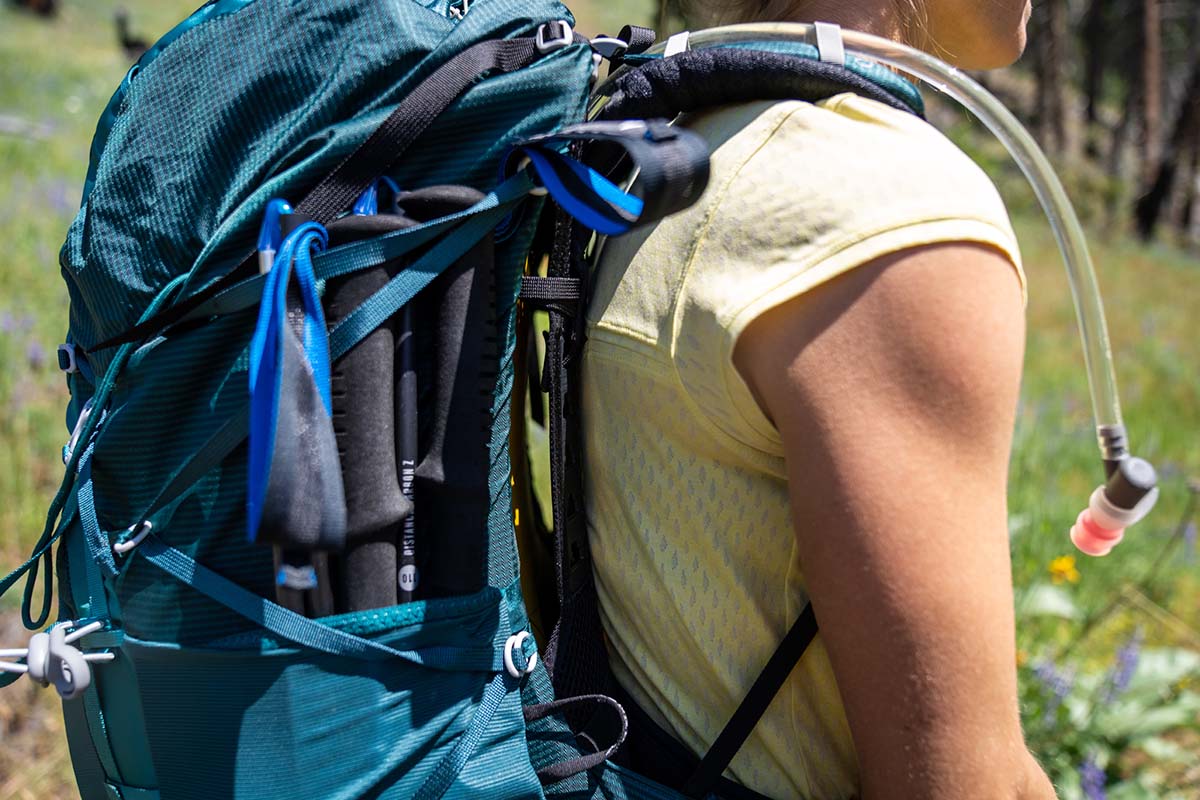
Water reservoirs are a convenient way to stay hydrated on the trail, and most backpacking packs offer features to accommodate them. These can include a dedicated sleeve or clip for hanging the reservoir, an exit port for the tube, and clips or magnets to secure the tube to the shoulder strap. If you opt for a hydration bladder over a water bottle, remember to load it before the rest of your gear so it lies flat along the length of the backpanel. If you forgot about it until you’re already packed (as we often do), don’t fret: Just rest it on top of your gear or stash it in the front dump pocket (if it’s stretchy enough) until the next time you unload. To minimize sloshing, invert the reservoir and suck all the air out.
.jpg)
Compression Straps
Compression straps located at the sides of a pack tighten it from front to back to help keep the load close to your body. In addition to aiding with balance on the trail, getting a close fit can also reduce back strain. Look for side compression straps at the top and bottom to help with load stability, and give them a good cinch each time you pack your bag. Compression straps can also be handy for securing taller items like a tent or trekking poles along the side(s) of your pack. We like the versatility of REI’s Packmod system (as seen on the Flash 55), which lets you adjust the straps' height (or remove them entirely) via daisy chains.

If you run in warm weather or plan to hike in the heat of summer, backpanel and hipbelt ventilation should be a critical consideration. Finding a breathable design can be tough, since the goal is for your pack to hug your body. Smart material and design choices can help maximize airflow with minimal impact on stability. Most packs are built with offsetting foam and mesh panels that do a decent job of promoting airflow, but you’ll likely still experience sweat where your body meets the foam. Alternatively, some packs (like the Osprey Aura) feature suspended mesh back panels and hip belts that cradle the body while maintaining ample airflow. This can be a great solution for hikers who value maximum ventilation, although the trade-off is reduced load-carrying capacity.
Plenty of our gear is vulnerable to moisture when backpacking, including cameras, phones, and down sleeping bags, so water protection is high on our priority list. Most packs offer decent weather resistance with hard-face nylon and a durable water repellent (DWR) treatment, though sustained moisture will eventually seep through the coating and outer fabric. If protection is a concern, there are plenty of waterproof designs, including packs made with Dyneema, X-Pac, or Ultra. These specialized packs are so reliable that we’ve used one (the Dyneema Hyperlite Windrider) as a dry bag with no issue.
.jpg)
If you don’t have a waterproof backpack, we recommend taking additional steps to keep your gear dry and protected. Some packs come with a built-in rain cover that stashes neatly away when not in use. It’s also possible to purchase a cover separately (we like the REI Duck's Back Raincover), but keep in mind that these can allow moisture to creep in at the sides in blustery weather. If you don’t mind the exterior of your pack getting wet, you can also protect items from the inside by lining the interior with a trash compactor bag or a dedicated pack liner, or by using waterproof stuff sacks for gear storage.

It doesn’t matter how much padding or suspension your pack has; it won’t be comfortable if you don’t size it correctly. Many packs come in a women’s version, which generally feature shorter torso lengths than men’s packs, shoulder straps and hipbelts contoured specifically to fit a female shape, and dedicated colors. The exception to this rule is ultralight packs like the Hyperlite, Gossamer Gear, and ULA above, which are only offered in unisex models. However, thanks to their broader size and customization options (for the Ultra Circuit 68, ULA lets you choose between four torso lengths, six hipbelt sizes, and two types of shoulder straps), these packs ensure a great fit for bodies of all sizes.

Most traditional backpacking packs are offered in two or three sizes, which differ most in torso and hip measurements. Sizes are most often differentiated by torso length. For example, the Osprey Aura AG LT comes in sizes extra small/small and medium/large, with the former built for torsos 13 to 17 inches and the latter for 16 to 20 inches. Most hipbelts are so adjustable that you’re safe to size your pack based on torso measurement alone. For example, the Osprey Aura AG LT’s hipbelt has a 26-50-inch range. That said, if your body doesn’t fit the mold for “standard” proportions, there are designs that allow you to swap in a different-sized hipbelt, including the ULA Equipment Circuit, Gossamer Gear Mariposa, and REI Co-op Flash.
.jpg)
A final consideration is whether or not a pack features an adjustable torso length. This is standard fare on feature-rich backpacking packs, and most offer at least 4 inches of torso adjustment via integrated Velcro or ladder systems. This is a great feature for growing bodies or for sharing your pack with friends and family. However, adjustability can be cut in the name of weight savings. Generally, packs with fixed torsos come in more sizes (the Grainte Gear Blaze 60 is offered in two sizes, while the Hyperlite Southwest comes in five), and we’ve been surprised by how often we've nailed a good fit with most of these models. It helps to educate yourself on how to correctly adjust your pack: With the load lifters loosened (the straps that secure the top of the shoulder straps to the pack), snug the hipbelt first, then the shoulder straps. Then, give the load lifters a tug so that the shoulder straps are flush with your body and the pack is flush against your back. Finally, secure the sternum strap. For more on this, see our Backpack Fit and Sizing Guide.
.jpeg)
Plus-Size Backpacks
Backpackers come in all shapes and sizes, and a growing number of brands are rising to the occasion with dedicated plus-size versions of some of their core models. Gregory and Osprey are at the forefront, with several designs available in extended sizing, such as our favorite, the Gregory Jade 63. And importantly, these brands didn’t just make the packs bigger; they took an intentional approach by widening the shoulder strap spacing, adjusting pocket placement, and allowing ample adjustments to accommodate a range of body types. Plus-size options are still limited, but we’re excited to see more of our favorite packs become available to a wider range of hikers and backpackers (for more info, you can check out Osprey’s Extended Fit Collection and Gregory’s Plus Sizing).

Our impact on the environment has never been of greater concern, and we’ve been pleased to see many leading outdoor brands step it up with more sustainable practices across sourcing and manufacturing. One key measure is the use of recycled fabrics, with companies like Osprey and Gregory at the forefront. We’re also seeing more and more PFAS-free DWR finishes on backpacks, which avoid per- and polyfluoroalkyl substances (also known as “forever chemicals”) linked to several environmental and health issues. With several states working to ban the sale of products containing PFAS, the outdoor industry is seeking more eco-friendly alternatives to traditional water- and stain-resistant finishes. All told, we’re excited about the changes thus far and look forward to seeing more sustainably built packs on the trails.

.jpg?h=fbc67360&itok=alJCQBk9)
.jpg?h=fbc67360&itok=v6TMqRap)
.jpg?h=fbc67360&itok=XyD9FfSo)
.jpg?h=fbc67360&itok=kRkiF6Vi)

_0.jpg?h=fbc67360&itok=Y_CF_sgL)
.jpg?h=fbc67360&itok=tRH946OI)
.jpg?h=fbc67360&itok=pxb5dEl2)
.jpg?h=fbc67360&itok=_31ZUgeg)