_0.jpg)
_0.jpg)
Photo Credit
A great pair of hiking pants offers comfort, freedom of movement, and durability over the long haul. We took some of the best on rowdy romps through the Pacific Northwest, technical treks through the Himalayas, and multi-month thru-hikes to bring you our favorites, with the Men's Outdoor Research Ferrosi and Women's Stio Pinedale coming out on top. For more information, refer to our comparison table, buying advice, and breakdown of our testing process. This article includes recommendations for both men and women, but we’ve also written a dedicated round-up on the best women’s hiking pants. If you happen to be looking for rain pants, read our full roundup of the best rain pants.
Editor's note: We updated this guide on January 7, 2026, to remove several models, add photos from recent testing trips, and make the guide more inclusive for all genders. We also added a tested and dismissed section, updated our comparison table, and reviewed the guide to ensure that all information was current at the time of publication.
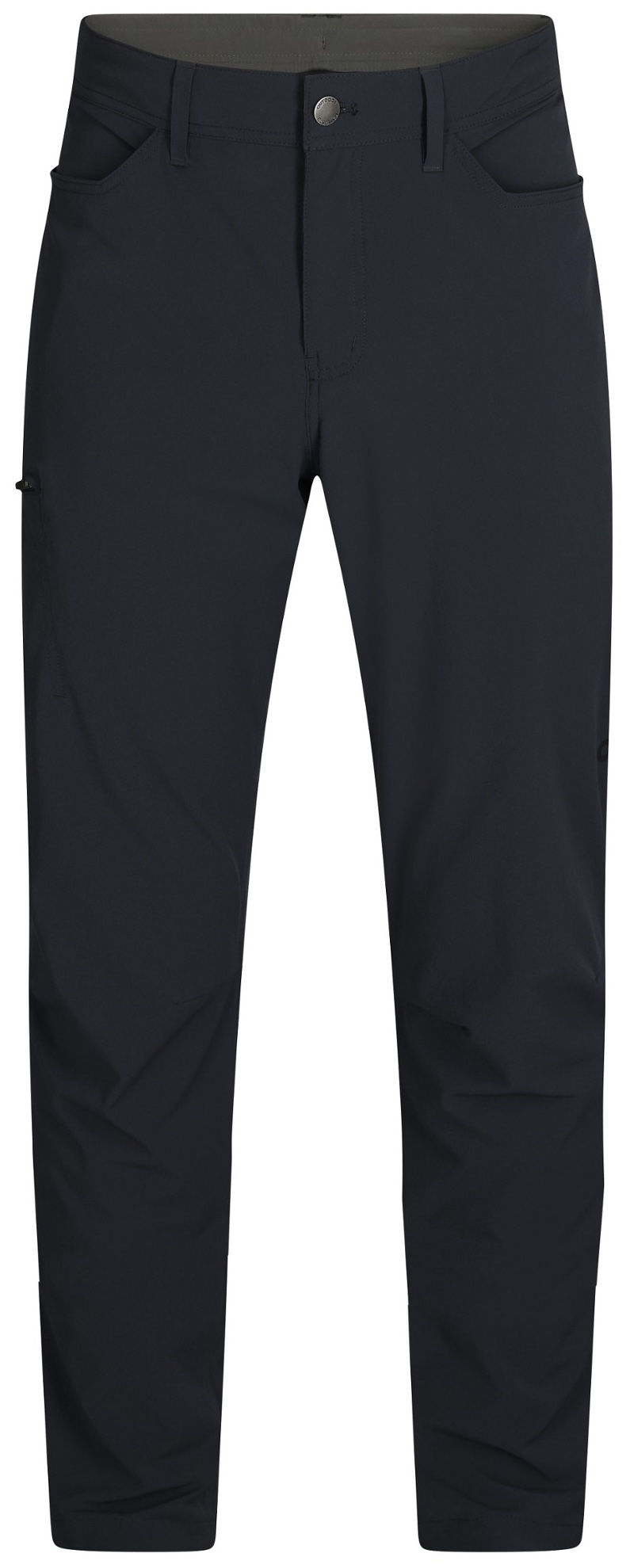 Materials: 86% nylon, 14% spandex
Weight: 12.7 oz. (men's), 9.0 oz. (women's)
Belt included?: No
What we like: Ferrosi fabric is stretchy, breathable, lightweight, and tough.
What we don’t: Doesn’t come with a built-in belt and is not as around-town-friendly as some.
The fabric of a pair of hiking pants makes or breaks it, and Outdoor Research has a real winner in its signature Ferrosi nylon blend. Featuring a healthy dose of spandex, this highly stretchy and lightweight material offers excellent mobility for hiking, scrambling, and even climbing. In addition, the Ferrosi excels at temperature regulation: We’ve found it to be tough enough to cut the wind and shed light rain, but it dries quickly and breathes when temperatures start to climb. It’s worth noting that the latest Ferrosi update brought minimal changes, with highlights including a bump in recycled content—the fabric is now Bluesign-approved and 46% recycled, but the winning formula has remained largely unchanged for years, which is fine by us. We've already put the latest iteration through several taxing treks—including a backpacking trip through the Grand Canyon and a bushwhacking mission in East Africa—and find it downright difficult to ding. It breathes beautifully, is surprisingly durable, and packs down to nothing.
OR's Ferrosi has been a longtime favorite of ours, but we do have a couple of nitpicks with the design. First off, you don’t get a built-in belt like the Stretch Zion, and the drawstring inside the waistband is less effective (it's harder to quickly adjust if you need to tighten or loosen the fit). Additionally, the thin fabric and basic pocket layout make the Ferrosi less appealing than alternatives like the Prana Stretch Zion or Kühl Silencr for everyday wear and travel. That said, for hitting the backcountry, it’s a fantastic and highly comfortable option and has been our go-to pair of hiking pants for years now. Notably, the Ferrosi line also features a convertible option, a jogger, and a travel variation, the Transit Pants.
See the Men's Outdoor Research Ferrosi See the Women's Outdoor Research Ferrosi
.jpg)
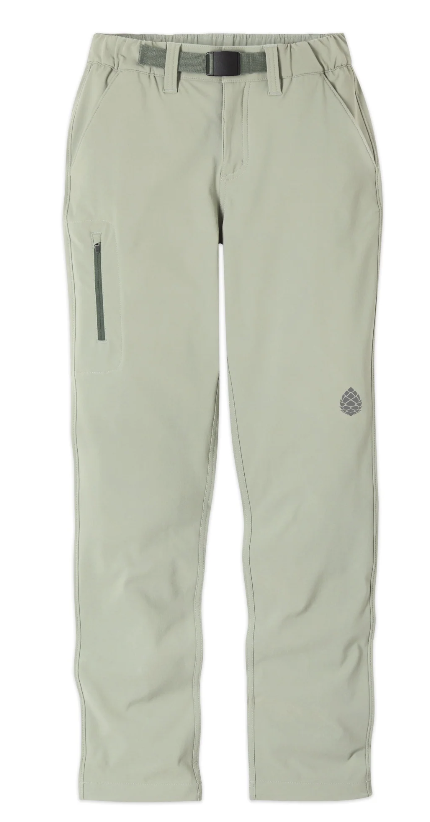 Materials: 63% nylon, 26% polyester, 11% spandex
Weight: 15.0 oz. (women's), 17.0 oz. (men's)
Belt included?: Yes
What we like: Super-soft and stretchy; a flattering and comfortable fit.
What we don’t: Integrated belt twists in the wash.
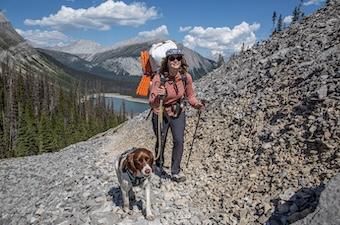
Stio has been making capable hiking apparel for years, and their experience is on full display with the Pinedale hiking pants. We tested the Pinedale on a multi-day backpacking trip in Alberta’s Kananaskis Wilderness and came away impressed by its well-rounded blend of comfort, performance, and fit. The fabric is notably soft and flexible, providing ample stretch for steep climbs and technical terrain. The interior has a smooth, next-to-skin feel that’s uncommon among trail-ready pants. We’re fans of the mid-rise waist and integrated belt, which makes it easy to fine-tune the fit. While the Pinedale sits on the pricier end of the spectrum, ours have shrugged off bushwhacking and light scrambling without issue. Thoughtful features round out the design, including two zippered pockets (one thigh and one rear), cuff cinches, and a DWR finish that effectively repels light moisture, making the Pinedale a dependable do-it-all pair of hiking pants.
The fit is true to size, and we appreciate the availability of multiple inseam lengths, although the Long option is currently limited to select colors. The most notable drawback is cost: the materials and construction feel premium, but hikers sticking to well-maintained trails can save with simpler options. We’ve also experienced some twisting with the integrated belt after washing, which isn’t a deal-breaker but can be mildly frustrating. Beyond that, there’s little to fault here. If the price aligns with your budget and your adventures regularly venture off-trail, the Pinedale is a rugged and reliable option worth considering. The women's and men's models are largely identical, but the women's model features a vertical thigh pocket, while the men's model has a horizontal one. The men's also features a zippered stash pocket in the right-hand pocket.
See the Women's Stio Pinedale Pants See the Men's Stio Pinedale Pants
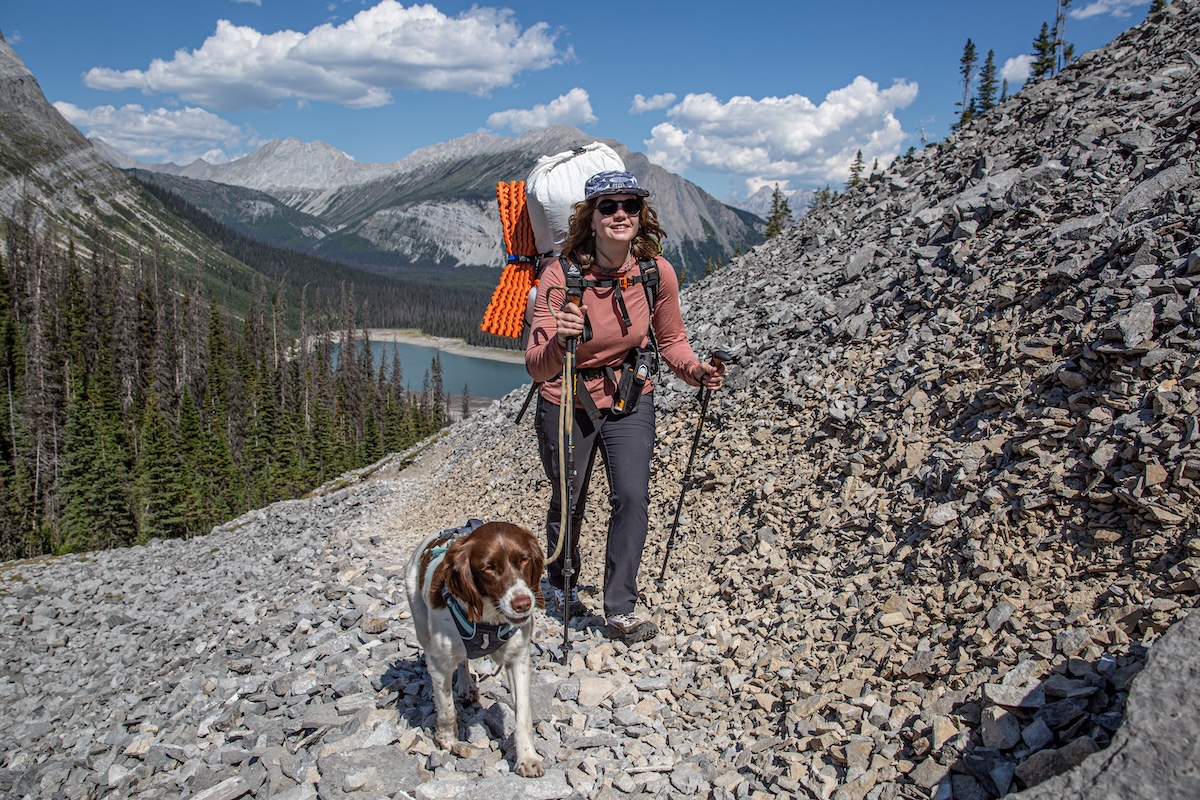
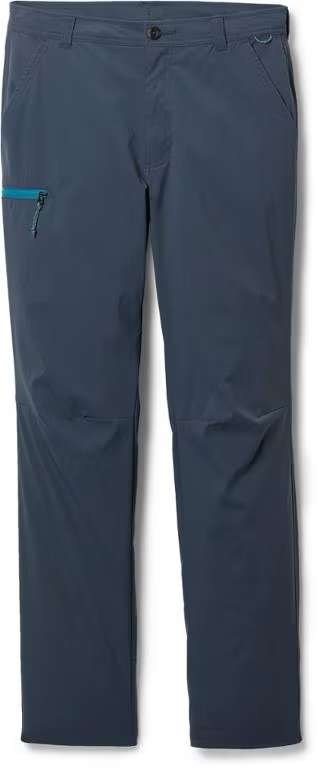 Materials: 94% nylon, 6% spandex
Weight: 11.6 oz. (men's), 8.1 oz. (women's)
Belt included?: No
What we like: Excellent price for a light and comfortable design; offered in a good range of colors and sizes.
What we don’t: Not a standout in build quality or toughness; thin fabric is best in mild weather.
We’ve had mixed experiences with REI’s budget-oriented Trailmade line, but the namesake pants are a strong product. Both the men’s and women’s versions stand out for their lightweight nylon construction, which makes them breathable and quick-drying—ideal for summer hiking and travel. Comfort is another highlight: On a recent alpine lake-hopping backpacking trip in Washington State, we were consistently impressed by the soft, stretchy fabric, athletic fit, and functional articulation that minimized bunching. Add practical storage with the zippered thigh pocket, and reinforce the cuffs for added durability, and you have a well-rounded, warm-weather pair of hiking pants.
The Trailmade undercuts the Outdoor Research Ferrosi by a few bucks, and the build quality drops accordingly. The thin fabric isn’t as tough or weather-resistant—although the DWR coating and quick-dry material are helpful if the pants get wet—and some stitching has come loose in areas that rubbed against rock while scrambling and hanging out at camp. As such, we think it’s worth upgrading if you’ll be out in rough terrain or want something truly long-lasting. But for summer hiking, occasional backpacking, and travel, the REI Trailmade checks nearly all the boxes at a great price. It doesn’t hurt that they are available in a decently wide selection of sizes and lengths.
See the Men's REI Co-op Trailmade See the Women's REI Co-op Trailmade
.jpg)
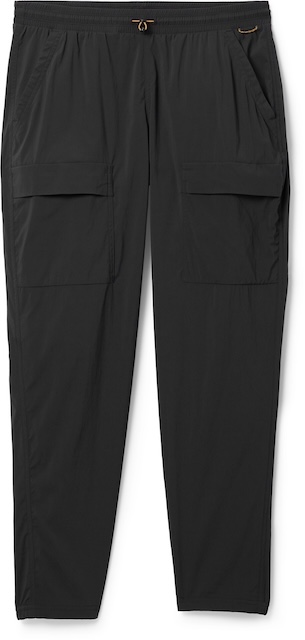 Materials: 94% nylon, 6% spandex
Weight: 7.4 oz.
Belt included?: No (drawstring)
What we like: Affordable pants for warm-weather hiking; available in a wide range of sizes.
What we don’t: Not the most flattering fit, somewhat bulky around the waist.
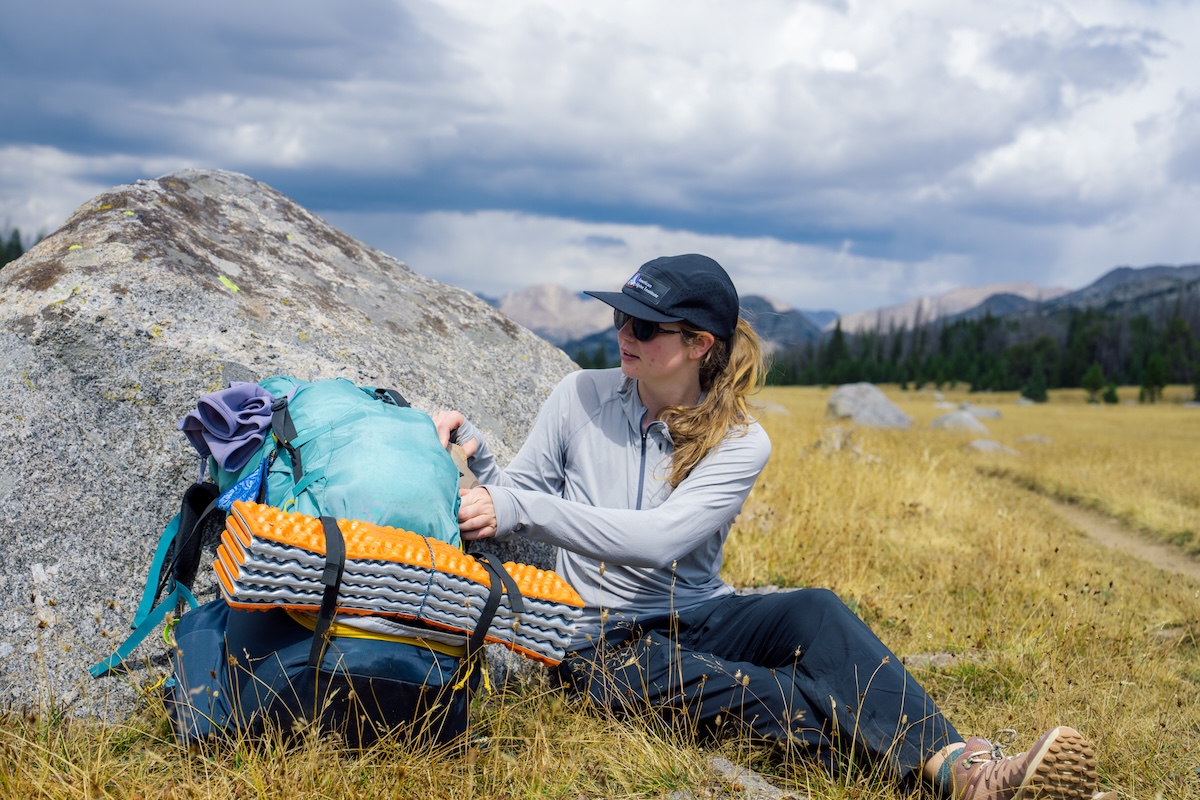
We often turn to the REI Co-op for high-quality gear at an approachable price, and the Trailmade Pull-On pants are among our favorites. We tested the Trailmade Pull-Ons on a backpacking trip in Wyoming's Wind River Range, and they surprised us in a few ways. To start, while the thin fabric may not feel the most robust out of the package, it held up well to poky underbrush and proved resistant to drizzles (they're equipped with a DWR coating). They're also comfortable and feel more like pajama pants than hiking pants. A drawstring at the front is easily adjustable and thin enough to avoid getting in the way of a backpack's hipbelt. And REI didn't skimp on storage: The Trailmades come with two hand pockets, two back pockets, and two thigh pockets.
To be sure, the Trailmade Pull-Ons aren't technical pants. It performed well on established routes, but we do worry about the fabric's durability when exposed to abrasive rock. They also weren't the warmest layer and especially susceptible to wind gusts, but the relaxed fit does make it easy to toss on a baselayer underneath. It's also worth noting that none of the pockets have zippers (the thigh pockets have flaps), so you'll want to be careful when storing your valuables. Simply put, we'd opt for a more technical model if you want to explore off-trail, but if you're sticking to mellow terrain and aren't too concerned about sustained storms and cold weather, the Trailmades are a great choice. REI also deserves credit for its inclusive sizing.
See the Women's REI Co-op Trailmade Pull-On Pants
 Materials: 95% nylon, 5% spandex
Weight: 1 lb. 2.5 oz.
Belt included?: No
What we like: A versatile pair of pants with ample storage; they withstand rough use.
What we don’t: Slightly baggy fit, expensive, and heavy; not as easy to convert into shorts as the prior version.
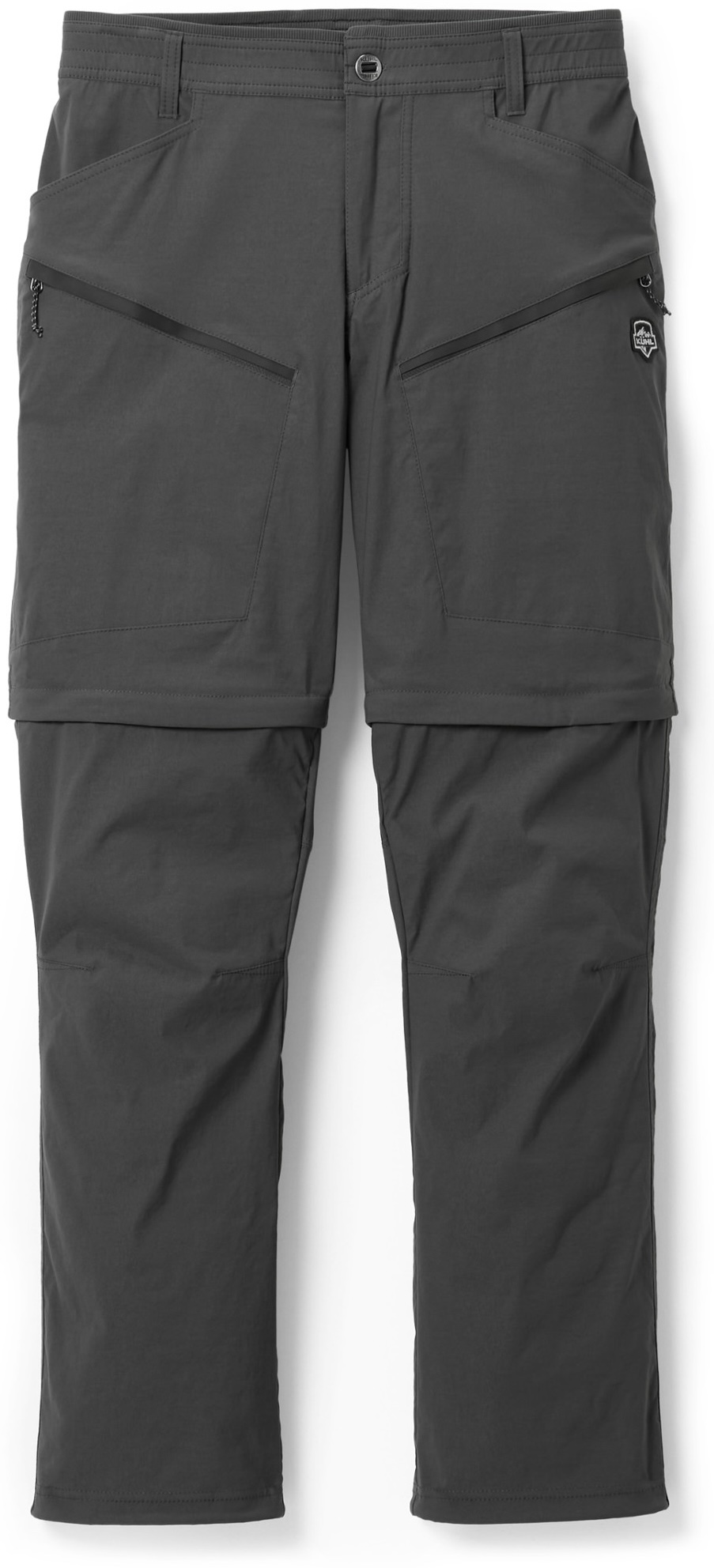
Kühl clothing has a distinctive overall styling, but it’s the durable fabric and well-considered zip-off design that earned the Renegade Cargo Convertibles a spot on this list. The thoughtful mix of materials and solid construction make the Renegade impressively tough—our pair still looked like new after extensive use—and the generous amount of stretch is a helpful touch when vaulting over downed trees or navigating boulder fields mid-trek. The fit of the Renegades is baggy for our tastes, but those who like a relaxed cut should find them perfectly suitable.
The Renegade’s convertible design is among the best. We particularly like its low-profile styling, which does a decent job of disguising the zippers. The 9.5-inch length of the shorts is a practical choice for hiking and backpacking. Additionally, if you’re the type who likes to carry a number of gadgets in your pockets or will be using the pants for travel, the Renegade's dual zip pockets will be welcome (though heavy items tend to flap uncomfortably). We have read many reviews complaining about the lack of side leg zippers on the latest Renegade Convertible, which means you'll most likely have to take your hiking boots off to convert them into shorts. All told, the Renegade won't be for everyone, but the feature-rich build offers a great combo of zip-off versatility, storage, and toughness.
See the Men's Kühl Renegade Convertible
.jpg)
 Materials: 96% nylon, 4% spandex
Weight: 12.7 oz. (women's), 13.4 oz. (men's)
Belt included?: No
What we like: Practical features at a low price.
What we don’t: Baggier fit, shallow pockets, and fabric tends to pill.
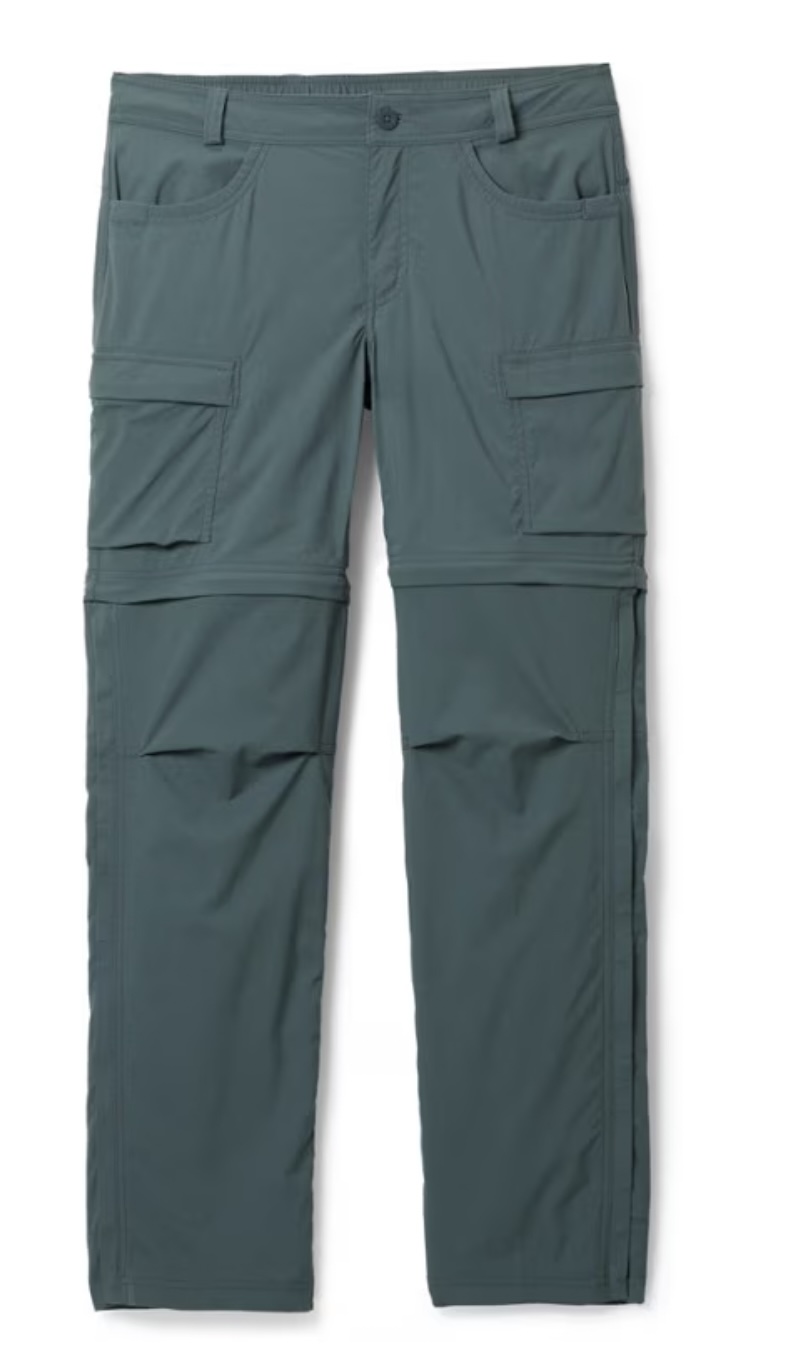
For hikers who prioritize utility over aesthetics, REI Co-op’s Sahara Convertible is about as practical as it gets. Convertible pants have long been a favorite for their do-it-all versatility—you essentially get pants and shorts in one—and the Sahara doubles down on that appeal with thoughtful touches like color-coded leg zippers and wide hem openings that let you zip off the lower legs without removing your footwear. The quick-drying fabric incorporates stretch for comfort on the move, and the elasticized waist features both a drawcord and belt loops. Storage is another strong point, with ample pockets including cargo pockets at each thigh, making the Sahara well-suited for everything from trail days to travel.
The Sahara is offered in an impressively broad range of sizes and inseam lengths, making it easy for most women to find a good fit. That said, the budget-friendly price does come with some trade-offs. The zippers can be finicky, and the lightweight fabric isn’t the most durable we’ve tested, with a tendency to pill or develop small holes over time. Still, value is the Sahara’s calling card, and it’s tough to find a similarly versatile convertible at this price.
Read more: Women's REI Co-op Sahara Convertible Pants review
See the Women's REI Co-op Sahara Convertible See the Men's REI Co-op Sahara Convertible
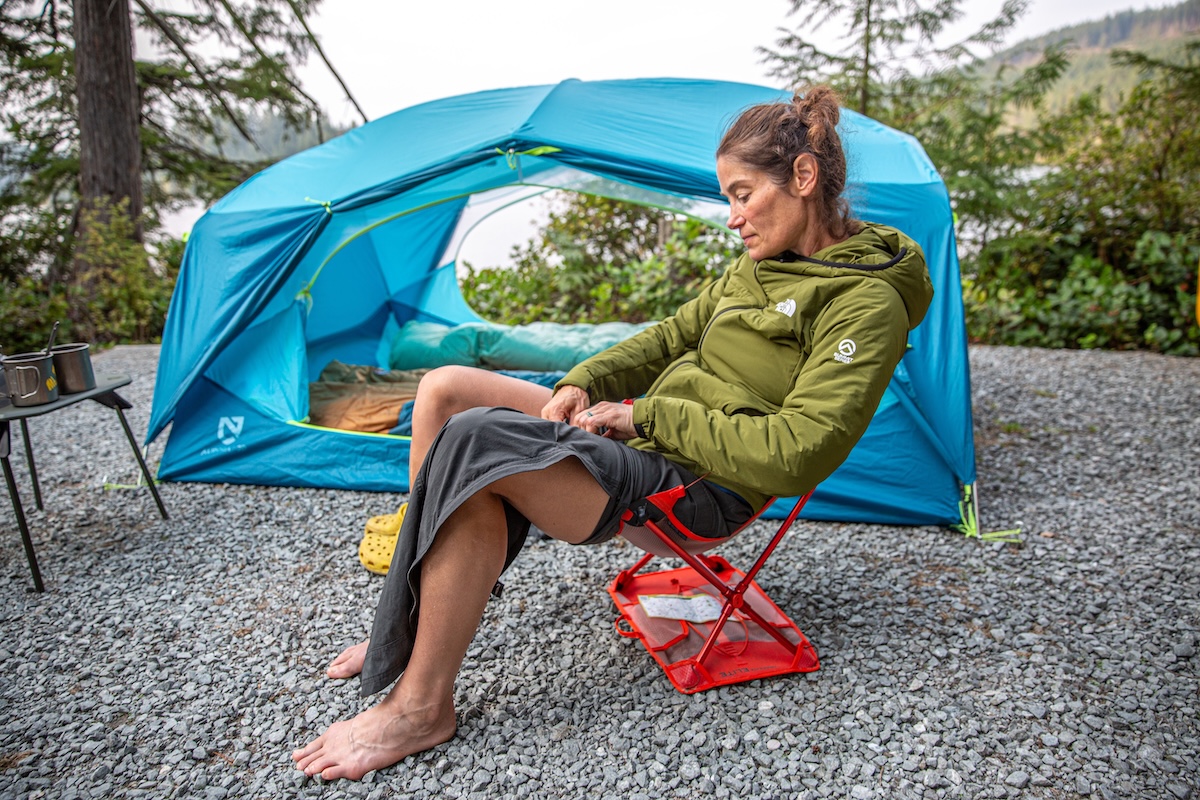
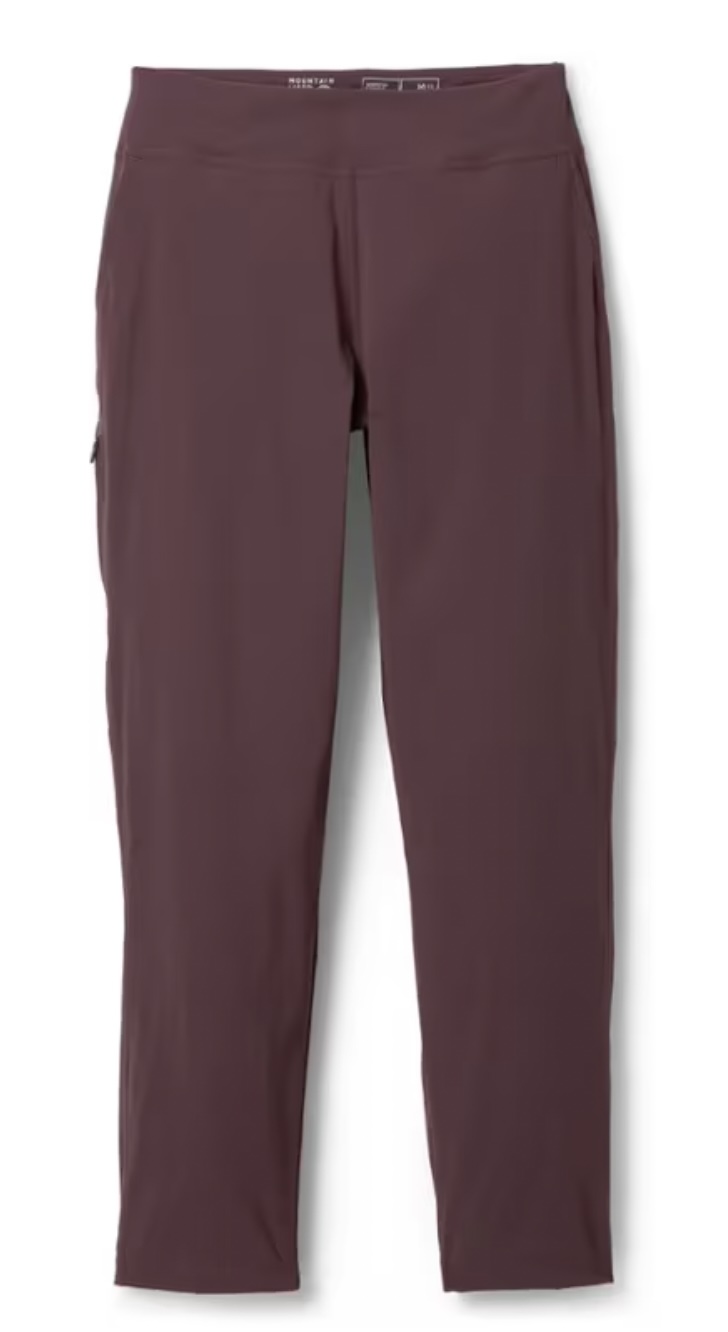 Materials: 94% nylon, 6% elastane (women's), 95% nylon, 5% elastane (men's)
Weight: 4.9 oz. (women's), men's unavailable
Belt included?: No
What we like: A style and performance combination in a lightweight and breathable package.
What we don’t: Odd fit and no functional phone storage.
Many hikers reach for shorts once summer rolls around, but for those who prefer full coverage, Mountain Hardwear’s Dynama Ankle Pant remains one of our top warm-weather picks for women. The lightweight nylon/elastane fabric strikes a nice balance between breathability and durability, with excellent moisture-wicking performance and quick dry times after creek crossings or afternoon showers. A standout feature is the wide, closure-free elastic waistband, which sits comfortably under a pack’s hipbelt and helps eliminate pressure points. Add in the relaxed cut, cropped ankle-length design, and roomy drop-in hand pockets, and the Dynama delivers a comfortable, easygoing pant that works just as well for hot trail days and post-work bouldering sessions as it does for casual wear.
That said, the Dynama Ankle isn’t built for technical terrain and makes a few trade-offs to achieve its lightweight, laid-back feel. Storage is fairly limited: The hand pockets are nicely sized, and the zippered thigh pocket is useful, but there’s no truly secure or convenient place to stash a phone. The tapered, ankle-length hem can also be tricky to roll up over larger calves, leaving part of the lower leg exposed to brush and bugs. We’ve also noticed that the fabric pilling occurs over time, along with a slightly awkward fit that can feel baggy around the hips. If the cut works for your body, however, the Dynama is a fun and breathable alternative to more traditional hiking pants—just consider sizing down if you’re between sizes. The men's Dynama pants are similar, but longer, have articulated knees, and feature two back pockets instead of one on the women's.
See the Women's Mountain Hardwear Dynama Ankle See the Men's Mountain Hardwear Dynama
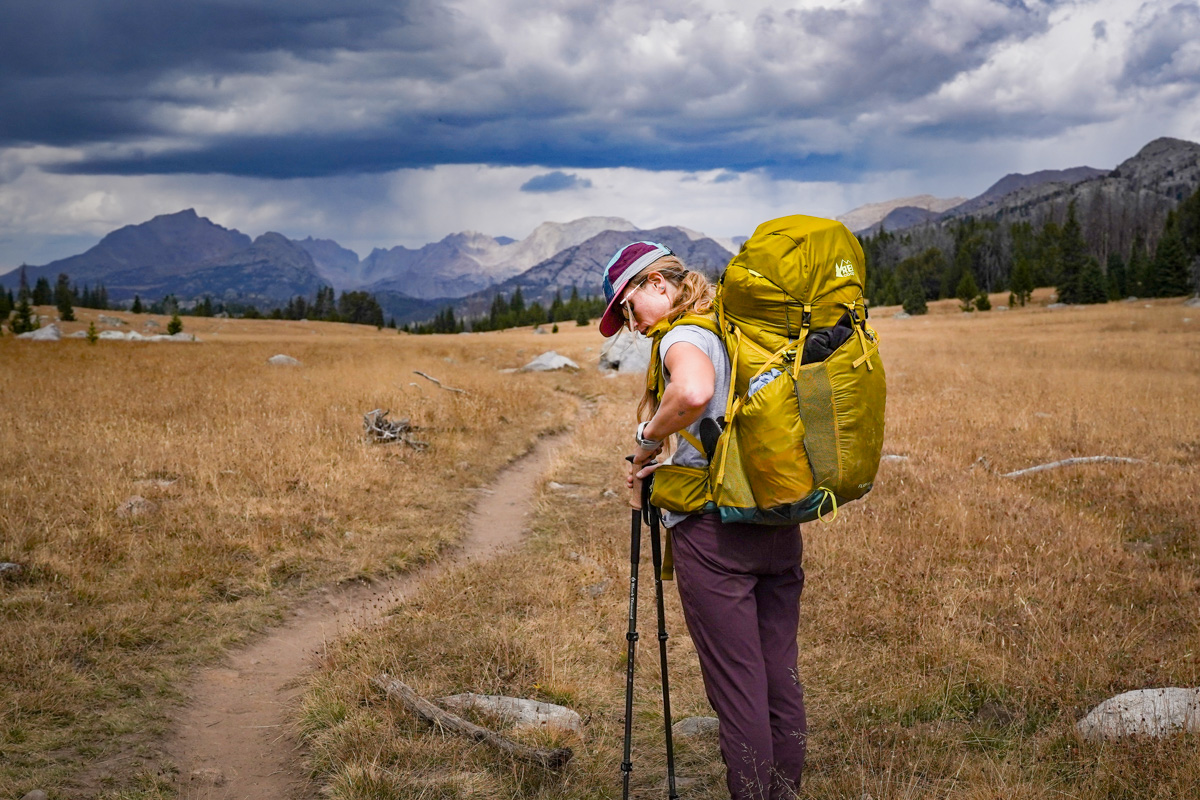
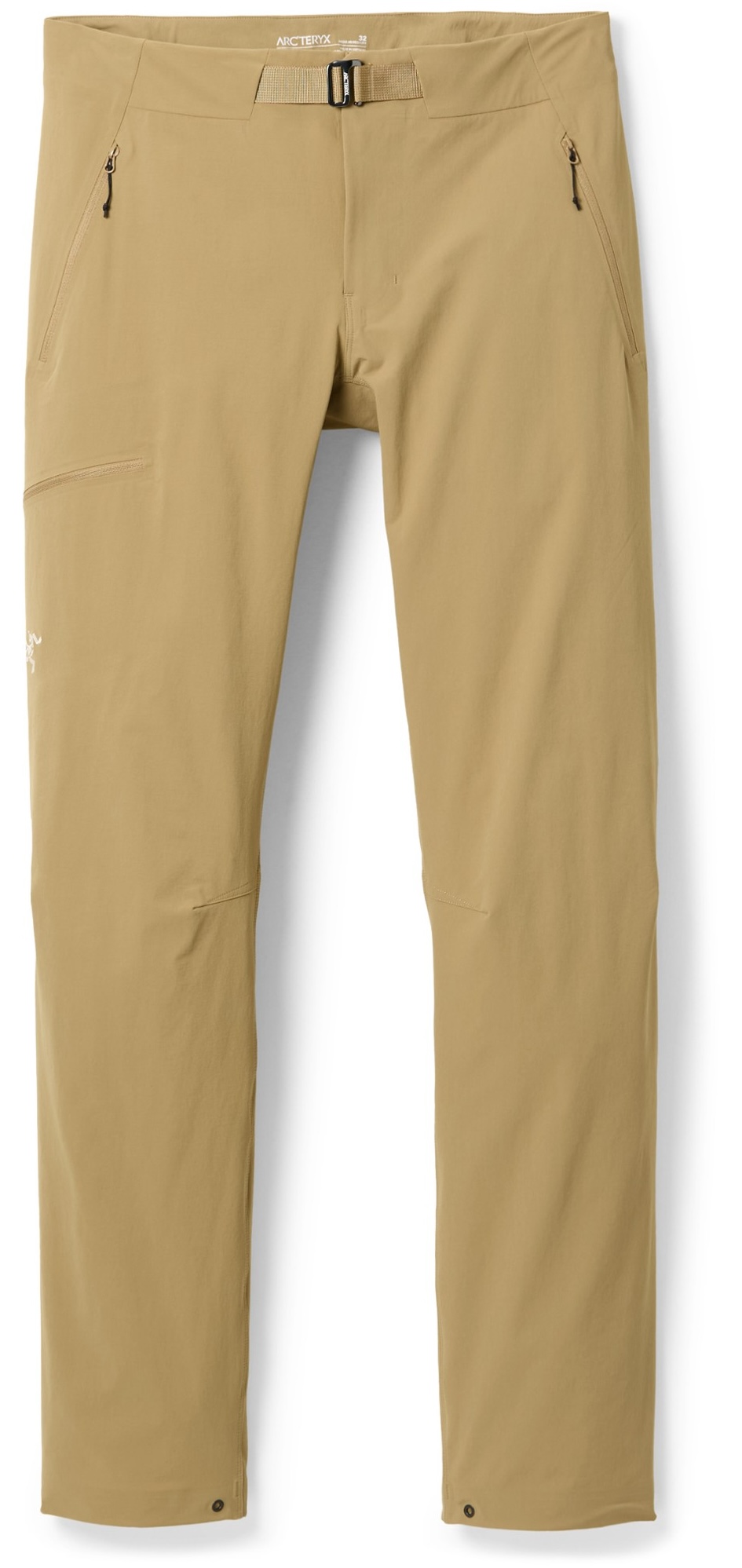
Materials: 88% nylon, 12% elastane
Weight: 12.5 oz. (men's), 10.6 oz. (women's)
Belt included?: Yes
What we like: A tough, mountain-ready build with great stretchability.
What we don’t: Expensive and runs warm in mild temps.
Outdoor Research’s Ferrosi is a great match for summer heat, but on a trek through Peru’s Cordillera Huayhuash, we turned to the more serious Arc’teryx Gamma. What sets these softshell pants apart is their fantastic stretchiness, durability, and weight. We wore it all day in the alpine for nine days while hiking, setting up camp, filtering water, cooking, and lounging, and it came home looking like new. Moreover, the Gamma’s high-quality softshell fabric was stretchy enough to layer comfortably over thermal pants in cold evenings and retained its shape throughout. These were also the pants of choice for another editor's two-week trekking and climbing trip in Nepal. Their versatility, as light yet durable hiking pants with the chops for technical climbing, makes them the perfect pick for higher-elevation expeditions with long approaches.
The Gamma is the most expensive pair of pants on our list. For most 3-season backpacking trips, you can spend significantly less and be just as pleased with the performance. In fact, you’ll likely find the Gamma overkill if temperatures rise, as the burly build can’t match the breathability of a thinner alternative like the OR Ferrosi or Patagonia Quandary. All in all, the Gamma lacks the versatility of our top picks, but for alpine adventures or shoulder seasons when you need a step up in toughness and weather protection without adding much weight, it’s a terrific option. And a final note on fit: It’s worth consulting the sizing chart. We ended up going down a size and got a just-right-for-us trim. The men's model features a large integrated webbing belt, while the women's model includes a small ladderlock waist adjuster.
See the Men's Arc'teryx Gamma See the Women's Arc'teryx Gamma
.jpg)
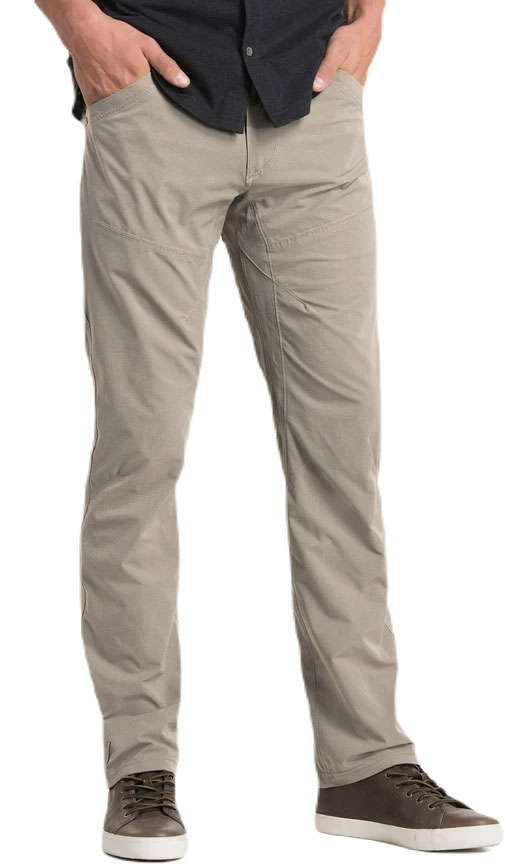 Materials: 100% polyester
Weight: 14.4 oz.
Belt included?: No
What we like: Clean crossover design for hiking and daily use.
What we don’t: None of the pockets have closures; it's not available in a women's version.
Kühl offers a diverse array of hiking pants, with numerous high-quality options available beyond the popular Renegade Convertible. For something different, the sleek Silencr strikes the perfect balance between performance and casual wear. The softshell material is tough and comfortable, and it resists the elements well thanks to a DWR finish. But the design of these pants is so streamlined and clean that they're also easy to wear around town. It’s true that the Silencr isn’t as mountain-ready as other softshell models like the Arc’teryx Gamma or Outdoor Research Cirque III, but we love the crossover appeal.
Our biggest gripe with the Kühl Silencr is that none of the pockets have closures or even clips. With two large drop-in side pockets and four standard pockets on the front and back, the storage options are plentiful; however, none provide secure stowing for your electronics or wallet. This isn’t a dealbreaker for us, however, and the Silencr still has a lot going for it in terms of versatility. For hiking pants that can be worn every day and excel on the road, it’s a nice option.
See the Men's Kühl Silencr
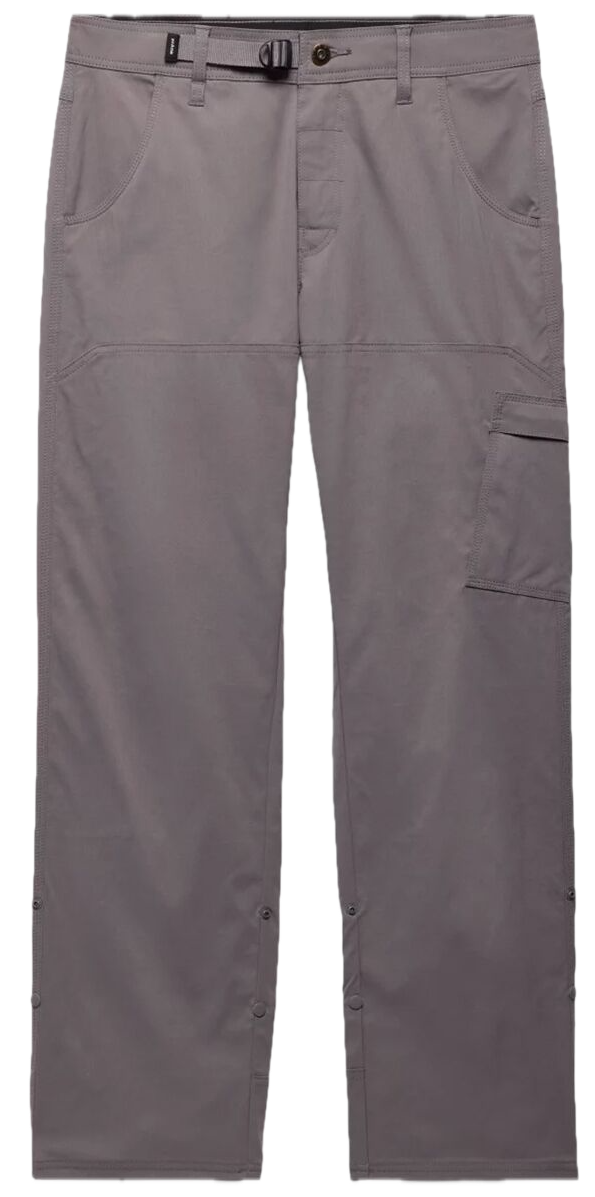
Materials: 97% nylon, 3% spandex
Weight: 13.6 oz. (men's), women's unavailable
Belt included?: Yes
What we like: The original Stretch Zion—and its standout comfort, durability, and versatility—has returned.
What we don’t: Breathability can be an issue in hot weather.
It’s back! Prana has reintroduced the legendary Stretch Zion pants, which many users missed after a not-as-great update, the Zion II. We're jazzed they brought it back—the original Stretch Zion was our team's all-time favorite design, striking a near-perfect combination of comfort, fit, durability, and on-trail performance. These double as great climbing pants, thanks to their stretchy fabric, which allows for a nice range of motion. We also appreciate the semi-slim cut, which provides excellent mobility. In terms of features, the Stretch Zion has a zippered cargo pocket that fits a smartphone, snaps for rolling up the legs, and a low-profile waistband adjuster to the right of the top button. All told, the Stretch Zion is just about the whole package in a hiking pant and looks good around town, too (much better than most other hiking models). The Stretch Zion's nylon is more substantial than some other designs on this list, almost resembling a lightweight softshell. This added thickness makes the pants run warm during summer hiking and backpacking.
On the other hand, the shell fabric is durable and can withstand a range of weather conditions—we’ve even worn them snowshoeing. For a thinner and more breathable option (albeit with less casual appeal), see the Outdoor Research Ferrosi. Finally, while we're grateful that Prana brought the beloved Stretch Zion back, it's important to note that the latest design differs from the original. Specifically, the metal button on the old one has been replaced with a plastic one, and numerous reports cite reduced durability and a less flattering fit. We were finally able to properly test the latest design on a trip through the Wind River Range in Wyoming. We came away with mixed feelings. While we appreciate the return to Zion's original fabric, the fit feels different, and they have a flaring—almost bell-bottom—boot cut to them that swishes around while hiking. Though some who trek with clunky hiking boots may appreciate this, we prefer a more slim fit on the trail. Couple this with the lack of a metal button and the reported decreased durability, and we're not as pleased with the revamp as we thought we'd be. We still think it deserves a spot on this list, but have slotted it much lower than before. The men's and women's models have a few notable differences (aside from the name itself). The back pockets on the Halle are buttoned, while the Stretch Zion's are patch pockets with flaps on the right pocket. The Halle has a zippered welt stash pocket at the upper-right leg, while the Stretch Zion's left thigh pocket is a zippered cargo pocket with double entry. The Stretch Zion also features an integrated belt and a ventilated inseam gusset, which are not present on the Halle (it has two button closures instead of the single closure on the Stretch Zion).
Read more: women's Prana Halle review
See the Men's Prana Stretch Zion See the Women's Prana Halle
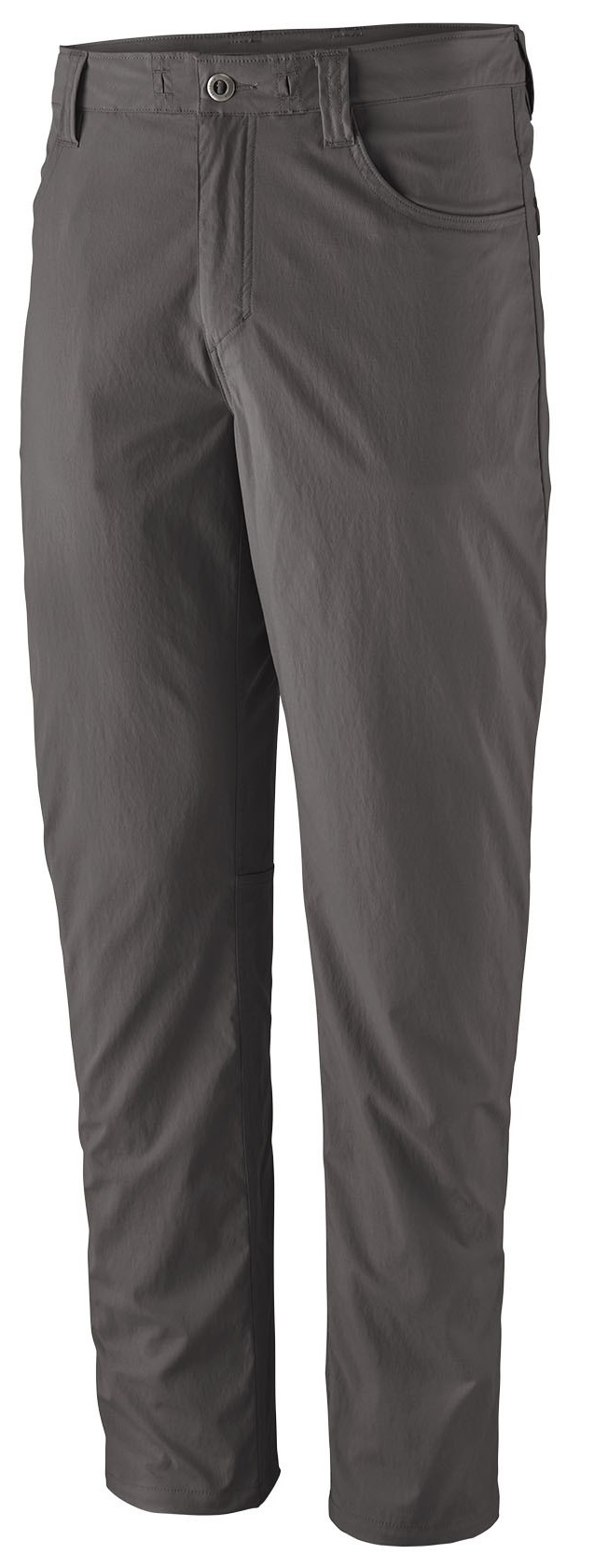 Materials: 96% nylon, 4% spandex
Weight: 11.2 oz. (men's), 10.0 oz. (women's)
Belt included?: No
What we like: Well-built and good-looking crossover hiking and travel pants.
What we don’t: Thin build is best only in the summer months.
Billed as lightweight hiking and travel pants, the Patagonia Quandary strikes a balance between performance and casual needs. It checks all the important boxes: clean styling, articulated knees, a gusseted crotch, and a tough yet light fabric with a DWR coating and a 50+ UPF rating for sun protection. Furthermore, Patagonia remains a leader in textile innovation. The proprietary name of the nylon used is Quandary’s NetPlus, a post-consumer recycled nylon made from used fishing nets.
In many ways, the Quandary is a lighter and simpler alternative to the Prana Stretch Zion. Both offer good stretch and an athletic fit that pleases hikers and urban explorers alike, but we prefer the belt adjustment on the Prana to the Quandary's internal drawcords. And for those who prioritize pockets and organization, the Stretch Zion gets the clear edge. Finally, although the Patagonia's weight savings and streamlined design may appeal to warm-weather backpackers, we still favor the more versatile and tougher Stretch Zion for most uses. The men's and women's models are largely identical, but the men's feature a roll-up cord and a button fastener on each pants leg for ventilation.
See the Men's Patagonia Quandary See the Women's Patagonia Quandary
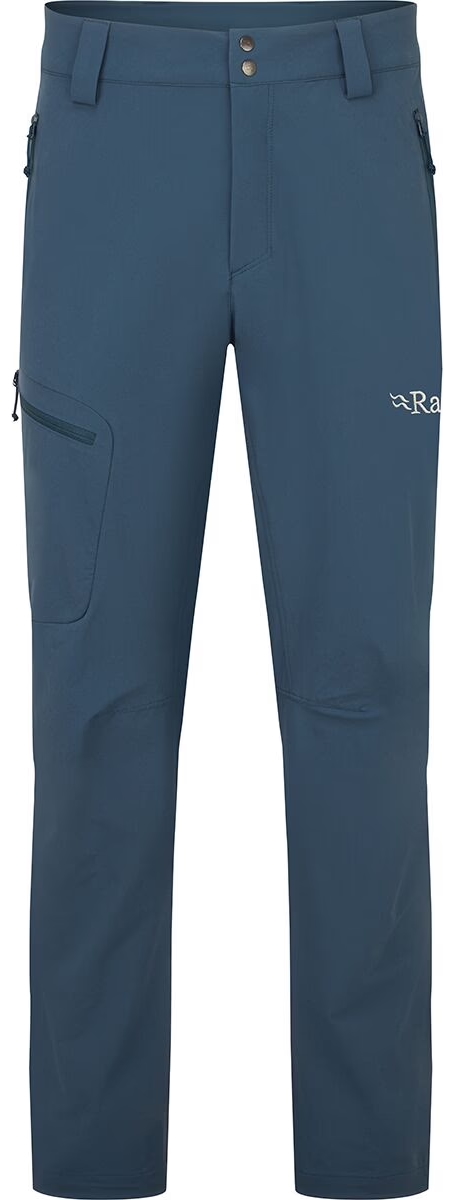 Materials: 88% nylon, 12% elastane
Weight: 12.0 oz. (men's), 10.3 oz. (women's)
Belt included?: No
What we like: Lightweight and packable; durable; comfortable tapered fit.
What we don’t: Too tight in certain areas; multiple zippers add bulk.
Rab clothing has quickly become a staple in our wardrobes—and for good reason. Most Rab goodies we test are incredibly durable, functional, and streamlined. The Incline pant is no exception. In line with other Euro brands, Rab pants tend to have a slim, tapered fit, which isn't for everybody, but we love them for all sorts of outdoor uses—from long treks to dynamic rock climbs. These follow suit, but articulated knees and just the right amount of elastane baked into the stretch nylon fabric mean the Incline boasts stellar mobility and comfort in the backcountry. We recently put this pant through the wringer on a long backpacking trip through Wyoming's Wind River Range, and it held its own on sharp granite scrambles and light off-trail bushwhacks. Despite the low scale reading and stellar packability, our pair remains strong, with only minimal picks and tears. These have become one of our favorites.
So why the lower position in this round-up? While we personally love the Incline's slim fit and low profile, this look and feel can be polarizing for many trail users. Some have expressed that the tight fit limits airflow and is restrictive when tackling technical terrain. Additionally, while we appreciate zippers on every pocket for certain occasions (like rock climbing), they can be annoying when hiking. They also add weight and bulk. Finally, we aren't fans of the tiny two-button design. The buttons are so small that we often spend a lot of time fiddling with them when sliding the pants on or off, and they can feel uncomfortable when pressed against a backpack hipbelt. They have also opened up on us a couple of times during the hike. These gripes aside, we still opt for the Incline pants for more trips than we anticipated, given their affordable price and unassuming specs.
See the Men's Rab Incline See the Women's Rab Incline
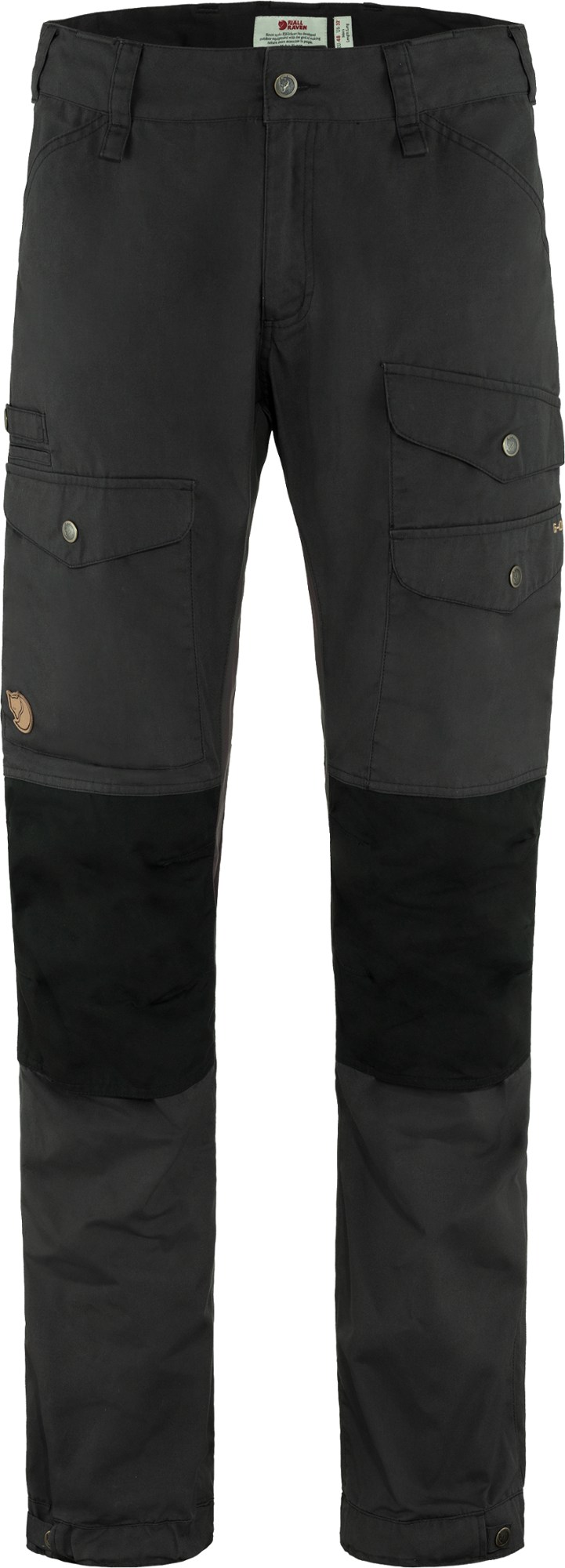 Materials: 65% polyester, 35% cotton
Weight: 1 lb. 3.4 oz. (men's), 1 lb. 3.2 oz. (women's)
Belt included?: No
What we like: Classic Fjallraven build that's tough, durable, and now more breathable.
What we don’t: Thick and not ideal for covering long distances.
It’s rare to see hiking pants made with cotton—or any outdoor gear for that matter—but the Vidda Pro from Swedish company Fjallraven is a different breed. This pant is made from Fjallraven’s tough 35% cotton G-1000 material, which is heavier than most other options on this list, and it doesn’t excel at water resistance (for waterproofing, Fjallraven recommends applying their wax for added protection). On the flip side, the thickness of the G-1000 fabric allows you to move through brush and slide over rocks without worrying about tears. Simply put, the toughness and durability can’t be beat.
Note that we’ve included the Vidda Pro Ventilated version here. This design takes the original and adds side zips between the thigh and knee for heat dissipation, along with stretch fabric on the insides of the legs for improved mobility. Both are positive changes in our opinion, making the pants more versatile. We still don’t love the Vidda Pro Ventilated for hikers and backpackers covering a lot of ground, but for off-trail jaunts (think fishing and hunting) or extra warmth and protection around camp, it’s an interesting option. For a lighter version without the venting, check out their Vidda Pro Lite.
See the Men's Vidda Pro Ventilated See the Women's Vidda Pro
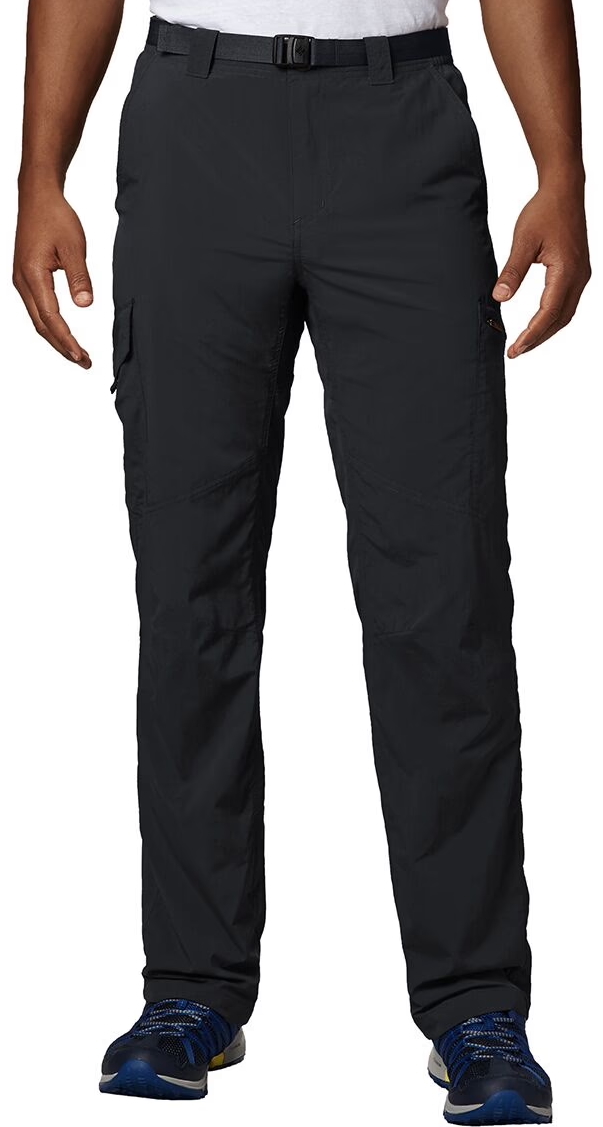
Materials: 100% polyester
Weight: Men's and women's unavailable
Belt included?: Yes (men's)
What we like: Great value and lots of pockets; breathable in the heat.
What we don’t: Thin materials aren't durable; all-nylon build lacks stretch.
For casual hiking and even summer backpacking, the Columbia Silver Ridge is a great value. Offered at a reasonable price and often discounted, these pants perform well thanks to breathable, quick-drying fabrics (which also makes them popular among travelers). Storage isn’t lacking either, including easily accessible hand pockets, three massive cargo pockets (two at the back and one on the right leg), and a zippered security pocket on the left thigh. All in all, we’ve been pleasantly surprised with the performance and comfort of these pants, and the generous storage layout is the cherry on top.
What are the shortcomings of the Columbia Silver Ridge? Despite being reasonably well built for the price, the materials feel relatively thin and don’t provide as much weather protection as some of the pricier options on this list. In addition, the zippers aren’t as smooth as those we tested, and the less expensive materials lack stretch and won’t hold up as well as the more premium designs here (including REI's Trailmade). But it’s hard to argue with the price or vast color and size options, which is why we’ve included the Silver Ridge here. For those seeking zip-off capabilities, the men's pants are also available in a convertible version. For a comparable women's model, consider the Silver Ridge Utility Convertible pants, which feature a zip-off design and are otherwise largely similar. The women's model has roll-up cuffs with snap-button tab holders, a cargo pocket, and a drop-in pocket on the right leg for small items. It doesn't have an integrated belt like the men's model.
See the Men's Columbia Silver Ridge Cargo See the Women's Columbia Silver Ridge Utility
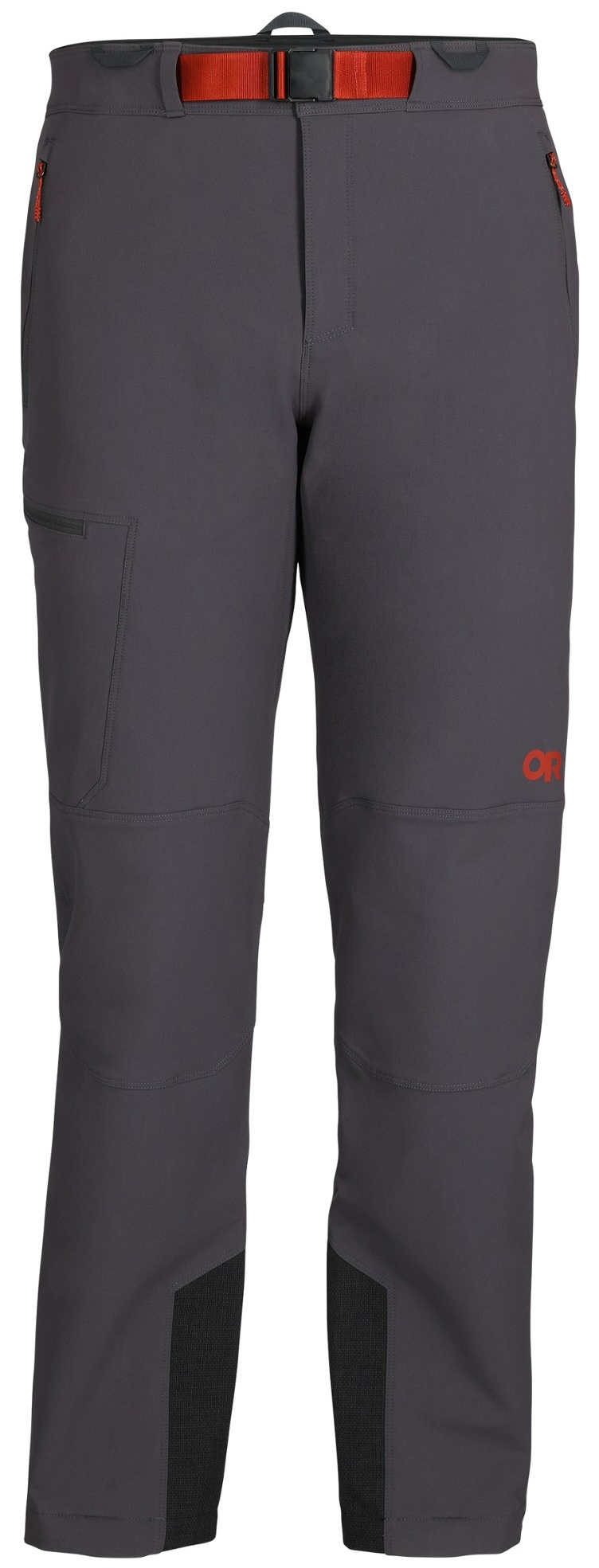 Materials: 50% nylon, 43% polyester, 7% spandex
Weight: 1 lb. 8.7 oz. (men's & women's)
Belt included?: Yes
What we like: An alpine-ready build that's extremely tough and water-resistant.
What we don’t: Heavy and overkill for most conditions; expensive.
Without intending to open a new can of worms, certain types of cold-weather hiking and bushwhacking beckon a more serious pair of pants. For this reason, we’ve added a technical softshell to this list: the Cirque III from Outdoor Research. This pant offers an impressive mix of protection from the elements and excellent mobility: It’s water-resistant, breathable, and tough enough for off-trail adventuring that might tear some of the lighter-weight pants to shreds (the face fabric of the Cirque III is a burly 90D). For hiking, the double-weave stretch fabric offers a much better range of motion and breathability than you get with rain pants or a hardshell.
Please note that the Cirque III is a specialty pair of pants. It’s listed as being ideal for “high-energy alpine climbing, mountaineering, and ice climbing,” so it’s clearly built with alpine conditions in mind. The pants are water-resistant but not waterproof, meaning that they will eventually soak through in sustained rainfall or wet snow. And at over 1.5 pounds for the pair, it's roughly double the weight of most lightweight hiking pants on this list. But for fall, winter, and spring hiking in nasty or off-trail conditions, the Cirque can be your bomber hiking pants. It doubles up well for snowshoeing and spring skiing as well.
See the Men's Outdoor Research Cirque III See the Women's Outdoor Research Cirque III
Our aim is to spotlight the true standouts—pants that deliver the best mix of long-term value, on-trail performance, and durability. Every model we recommend has been thoroughly tested over multiple seasons to ensure its reliability over time.
We decided to remove the REI Co-op Activator Pants. While these are fine middle-of-the-road hiking pants for light adventuring, they don't offer much more than the other pants on this list.
The Marmot Arch Rock Pants also got cut. While these are fine hiking pants, they are basic in construction, and don't offer the most flattering fit. They offer an attractive price and are adequately ventilated for warm-weather trekking, but are less versatile than their competitors.
After some deliberation, we also axed the Patagonia Terravia Trail Pants. These trousers are stretchy and durable, with plenty of zippered storage, but in light of the other offerings (particularly Patagonia's own Quandary Pants), they just don't offer much that merited inclusion in this guide. We love their durability, but they are too warm for summer-time jaunts. That said, these are still stellar offerings from one of the best brands in the game, and could be perfect for the right hiker.
Finally, we removed the Vuori Ripstop Pants this round. While these have a lot to offer in the style department, the cotton construction limits their backcountry appeal, and we didn't find ourselves wearing them while hiking much. For light adventuring, they fit the bill, but we rarely wear them outside of town. They are undeniably comfortable, though, and the cotton fabric lends them good durability.
| Pant (Men's/Womens) | Price (M/W) | Materials (M/W) | Weight (M/W) | Convertible? (M/W) | Belt? (M/W) |
|---|---|---|---|---|---|
| Men's OR Ferrosi Women's OR Ferrosi | $99 | 86% nylon, 14% elastane | 12.7 oz./ 9.0 oz. | No | No |
| Men's Stio Pinedale Pant Women's Stio Pinedale | $169 | 63% nylon, 26% polyester, 11% spandex | 17.0 oz./ 15.0 oz. | No | Yes |
| Men's REI Trailmade Women's REI Trailmade | $80 | 94% nylon, 6% spandex | 11.6 oz./ 8.1 oz. | No | No |
| REI Trailmade Pull-On | $70 | 94% nylon, 6% spandex | 7.4 oz. | No | No |
| Kühl Renegade Convertible | $149 | 95% nylon, 5% spandex | 1 lb. 2.5 oz. | Yes | No |
| Men's Sahara Convertible Women's Sahara | $90 | 96% nylon, 4% spandex | 13.4 oz./ 12.7 oz. | Yes | No |
| Men's MH Dynama Women's MH Dynama | $89/ $85 | 95% nylon, 5% elastane/ 94% nylon, 6% elastane | Unavail./ 4.9 oz. | No | No |
| Men's Arc'teryx Gamma Women's Gamma | $200 | 88% nylon, 12% elastane | 12.5 oz./ 10.6 oz. | No | Yes |
| Kühl Silencr | $99 | 100% polyester | 14.4 oz. | No | No |
| Men's Prana Stretch Zion Women's Prana Halle | $98 | 97% nylon, 3% spandex | 13.6 oz./ Unavail. | No | Yes |
| Men's Quandary Women's Quandary | $99 | 96% nylon, 4% spandex | 11.2 oz./ 10.0 oz. | No | No |
| Men's Rab Incline Pants Women's Rab Incline | $115 | 88% nylon, 12% elastane | 12.0 oz./ 10.3 oz. | No | No |
| Men's Fjallraven Vidda Women's Fjallraven Vidda | $190/ $180 | 65% polyester, 35% cotton | 1 lb. 3.4 oz./ 1 lb. 3.2 oz. | No | No |
| Men's Silver Ridge Women's Silver Ridge | $65/ $75 | 100% polyester | Unavail. | No/ Yes | Yes/ No |
| Men's OR Cirque III Women's OR Cirque III | $179 | 50% nylon, 43% polyester, 7% spandex | 1 lb. 8.7 oz. | No | Yes |
From casual weekend treks to full-blown thru-hikes across the country, the Switchback Travel team is no stranger to long days on the trail in all manner of hiking pants. We've taken a wide variety of pants on expeditions in the Himalaya, long slogs across the African savannah, and countless other hiking trips. We know the importance of well-fitting pants for all-day comfort in the backcountry, and you won't find us trotting around in just any trousers. This guide was first established in 2015 with an initial selection of 13 models. Senior editor Chris Carter took over the guide in 2024. A seasoned thru-hiker, Chris has completed the Triple Crown of long trails in the U.S. (AT, PCT, and CDT) and continues to backpack around the world.
We meticulously tested numerous top-rated hiking pants, drawing on personal experience and feedback from seasoned contributors and the broader hiking community, and focused on key factors when making our decisions. Weight, mobility, durability, and fit are all primary considerations when assigning real estate in this round-up. Each pair had to stand out in several—if not all—categories to merit our attention. Finally, we recognize that the competition for the hiking pants podium is fierce and constantly evolving, which is why we incorporate this guide into an iterative update schedule to stay current with the latest trends and new designs. We add standouts to our list as we go and ensure that our existing reviews stay up to date. Whether you're a dedicated weekend warrior getting after it on local trails or a thru-hiker spending months in the same pair of grungy pants, there's an option that fits the bill.
_0.jpg)
Hiking pants are typically made of a nylon blend, and most of the options here have at least a small amount of built-in stretch from spandex (elastane). A higher percentage of spandex will result in a stretchier feel, which can be especially nice for those who tend to size their pants on the tight side. The added give in the material also can be a real boon on the trail, and even more so when it comes to setting up a tent and moving around camp. The Outdoor Research Ferrosi is one of the stretchiest hiking pants available (86% nylon and 14% spandex), while the Fjallraven Vidda Pro Ventilated are made of 100% polyester and cotton and have no added stretch.
In addition to nylon hiking pants, this list includes a few softshell pants, such as the Arc’teryx Gamma and Outdoor Research Cirque III. These are essentially tougher, more weather-resistant pants ideal for alpine conditions, cooler weather, precipitation, and bushwhacking. For truly wet weather, it might be worth opting for a fully waterproof model, such as the REI Co-op Rainier, which are rain pants that will keep you dry but lack breathability for extended treks.
.jpg)
Unlike other types of outdoor gear, for most hikers, the exact weight of their pants isn’t a top consideration (after all, you're not usually carrying them on your back). We’ve worn pairs ranging from 8 ounces to well over a pound on everything from day hikes to multi-day treks, and it's only the rare pair that felt heavy on the trail. However, if you will be carrying pants in your backpack, lightweight and packable designs like the Outdoor Research Ferrosi (12.7 oz.) and Patagonia Quandary (11.2 oz.) are great options. On the other end of the spectrum, for high-alpine adventures that require added weather protection and durability, taking on extra weight for a pant like the 1-pound, 8.7-ounce Outdoor Research Cirque III may be worth it.
.jpg "Depending on the trip, weight and packability can be an important consideration")
Pockets aren’t for everyone—we often prefer not to overload our hiking pants with excess bulk—but organization can be a plus for some. Hiking pants typically offer several storage options, such as a cargo pocket or two. One standout in our group is the Kühl Renegade Convertible. These pants feature creative storage options, including large zippered thigh pockets and compartment-style pockets. The various sizes mean you should be able to find a spot for just about anything you decide to throw in. But if you’re like us, a simpler design, such as the single side pocket found on the Prana Stretch Zion or REI Trailmade, is plenty.
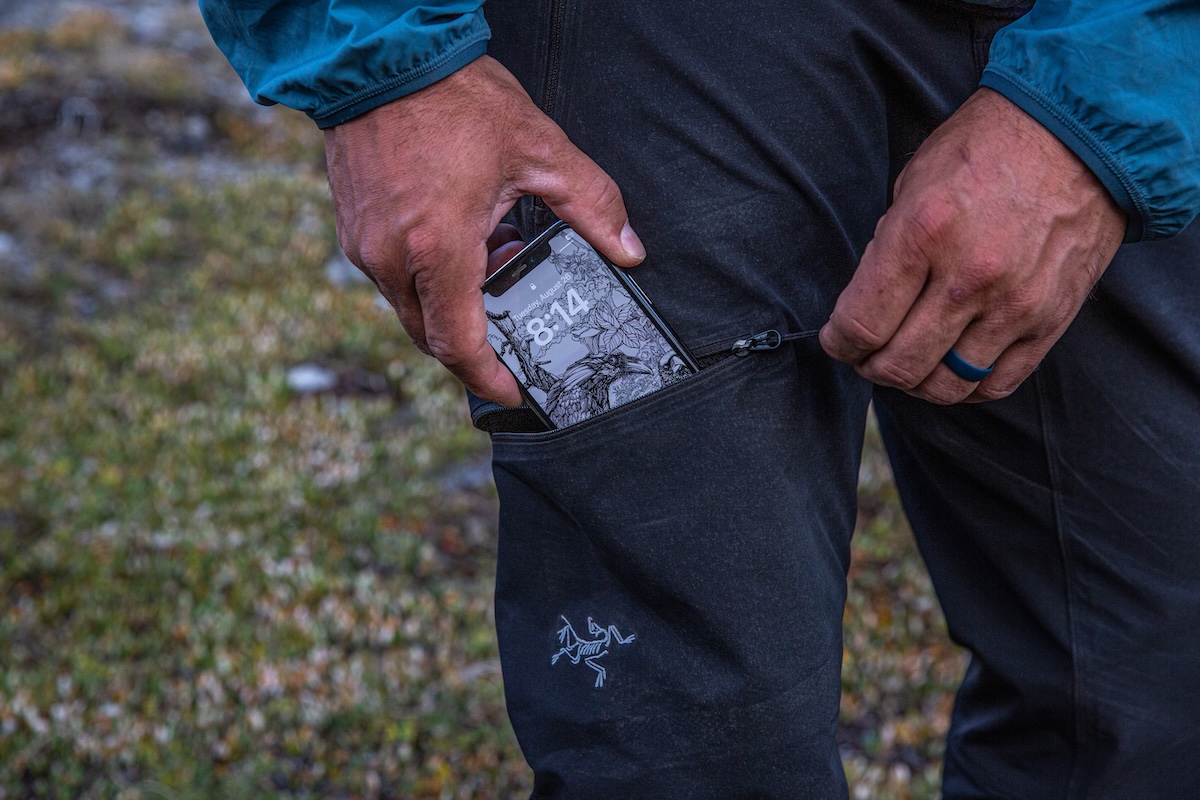
Two wonderful design features to look out for in your hiking pants search are articulated knees and gussets in the crotch. Articulated knees mimic a person’s walking motion by creating a natural bend in the knee area of the pants. In contrast to traditional, straight-legged pants, the improved range of motion is immediately apparent. A gusset is a patch of diamond-shaped fabric that runs along the inner thigh of the pants, replacing a standard seam. As with an articulated knee design, the extra fabric improves range of motion and general fit and comfort.
.jpg)
Originally popular with rock climbers who required a good fit to perform at peak levels, these features have trickled down nicely into the world of hiking pants. There are additional costs associated with the greater complexity of constructing these types of pants, so hikers heading out for short day trips on well-maintained trails with flat grades, or those on a budget, may be able to do without. However, the tangible benefits are enjoyed by almost everyone, so we highly recommend stretching your budget and choosing pants with both articulated knees and gussets. It just makes for a more comfortable wear.
.jpg)
Dialing in fit can be difficult, so those who fall between sizes (like several members of our team) appreciate a waistband with adjustability. Enter the integrated belt. One of our favorites comes with the Prana Stretch Zion—its low-profile, small adjuster is made out of webbing and resembles a shortened belt. The downside of an integrated belt, particularly one that wraps all the way around your waist, is the added bulk, which can potentially interfere with a backpack’s hip belt. A more minimalist alternative is pants with an inside drawstring waistband (Patagonia’s Quandary and OR’s Ferrosi feature this), although we’ve found it less user-friendly (it’s difficult to make quick adjustments) and less functional overall than a belt-like design. Unfortunately, it's common for the women's version of many of these pants to lack a belt, even though the men's versions often include one.
_0.jpg)
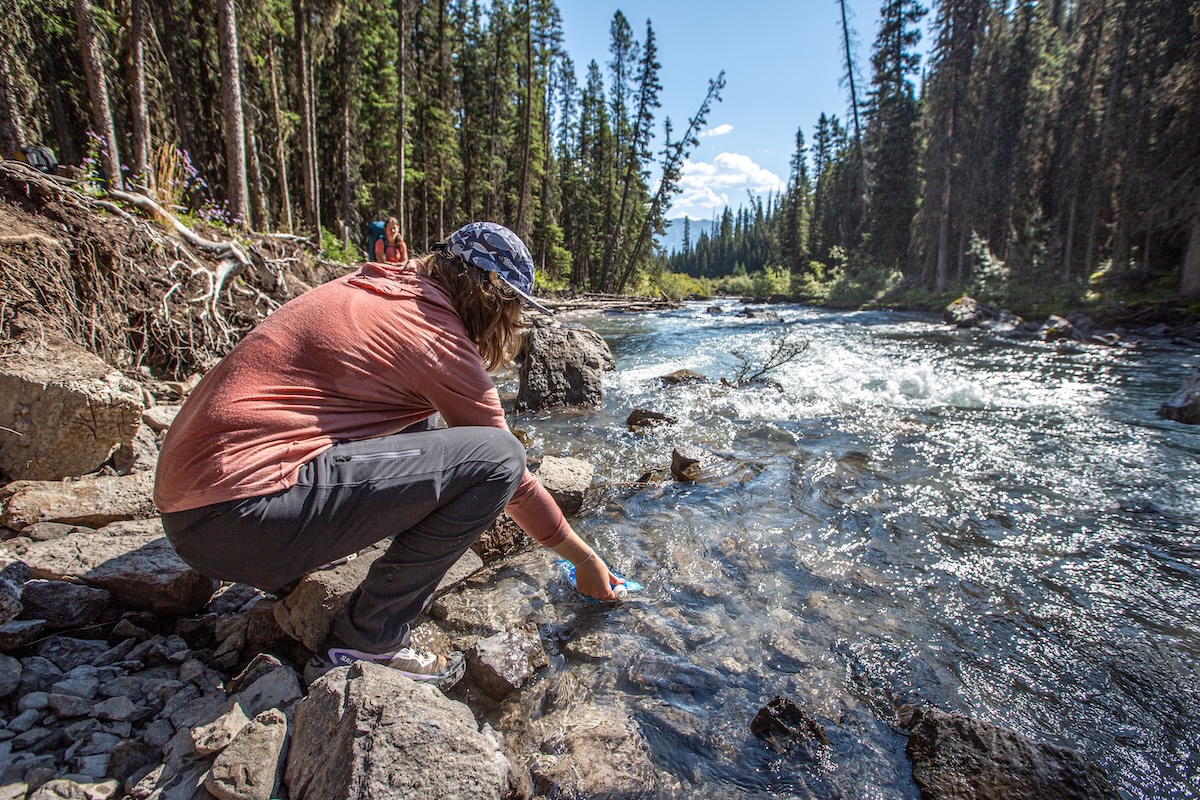
No hiking pants that you’d want to bring along on a summer backpacking trip will be truly waterproof. The reasons for that are the same reasons you don’t often find yourself hiking in a fully waterproof jacket unless it’s actually raining: They just don’t breathe as well. So, how well do hiking pants perform when the rain starts to fall? Depending on the model, they can actually be decent performers. As a result, we often prefer to keep our hiking pants on rather than swap them out for rain pants, even in a shower.
.jpg)
Most hiking pants shed light rain fairly well, thanks to a durable water-repellent coating (often listed as DWR), which causes droplets to bead up and roll off. And, as long as you avoid a more casual cotton construction, the nylon blends aren’t prone to soaking up moisture. If and when they eventually soak through, drying time isn’t too shabby either—particularly among thin designs like the OR Ferrosi and REI Trailmade—reason enough for us to recommend sticking to hiking pants in all but the most extreme rainy days (and this is coming from a group of Seattleites).
.jpg)
The thickness of the material plays a significant role in how pants are used. You’ll see everything from thin, summer-ready designs all the way to medium-thick softshell pants in this wide-ranging category, so it’s important to know what you’re looking for. Options like the Columbia Silver Ridge Cargo excel in hot weather thanks to their thin, breathable fabrics. Many are designed for three-season use, like the Outdoor Research Ferrosi, Prana Stretch Zion, and Kühl Renegade. And thicker pants, such as the Arc'teryx Gamma and Outdoor Research Cirque, are great for the alpine, shoulder seasons, and even light winter use. Keep in mind that wearing a pair of baselayers underneath can make many three-season pants suitable for winter wear as well.
.jpg)
It's essential to put in a healthy handful of miles in your hiking pants before embarking on any serious trek, so you're confident they won't restrict your movement or cause chafing during the trip. This can be difficult to gauge from a product description, and we recommend trying hiking pants on in a store whenever possible before making a decision. A thick, durable pair of hikers may sound attractive, but when you actually take them for a spin in the backcountry, that chunky fabric may rub uncomfortably on your legs or cause you to overheat. Conversely, your objective may require bombproof fabric if bushwhacking or technical scrambling is on the docket, and heavier materials may be required. Taking the full range of conditions you plan to encounter on your trip into account is key to narrowing down the perfect pants for your needs.
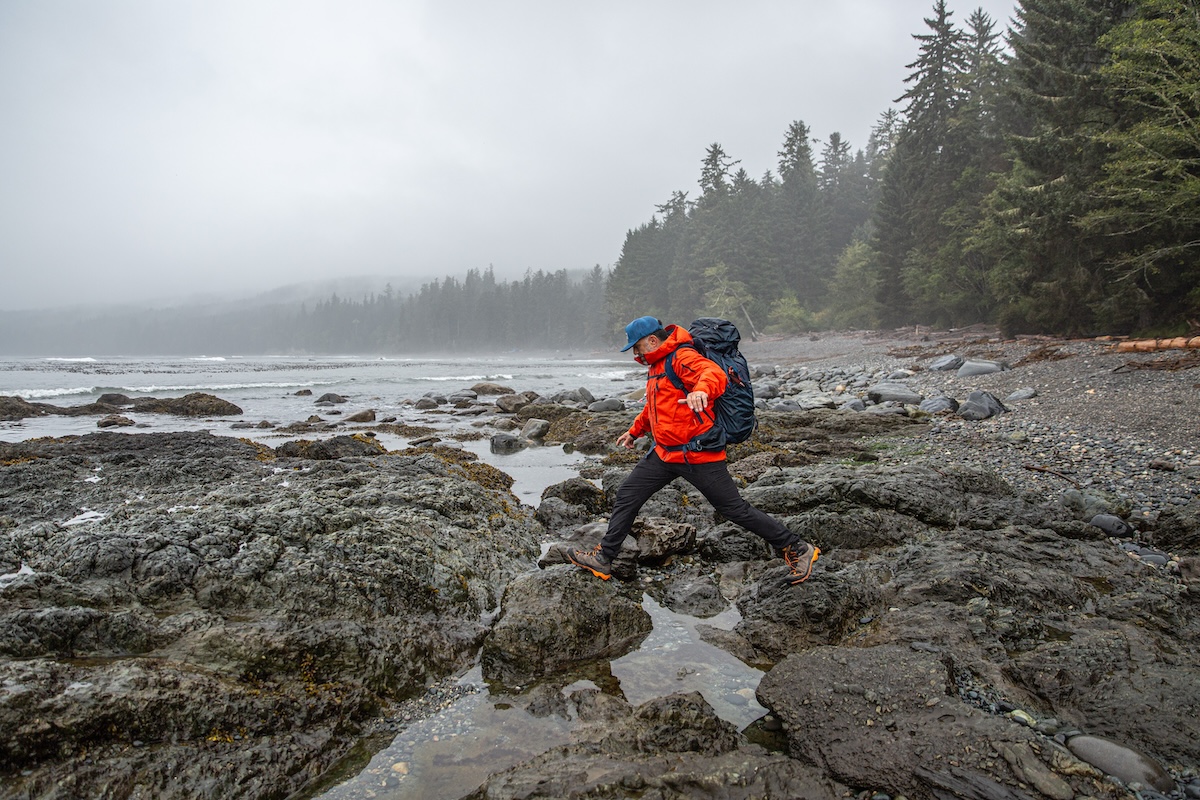
Beyond temperature considerations, thickness often correlates with durability and tear resistance. Most of the softshell-style pants, like the Prana Stretch Zion, are tough enough that we had few concerns brushing up against and squeezing between rocks and brush on the trail. The OR Ferrosi has surprising levels of durability despite its lighter feel. Truly summer-specific pants, such as the Columbia Silver Ridge, are more prone to tears and should be reserved for more casual hiking and backpacking activities.
.jpg)
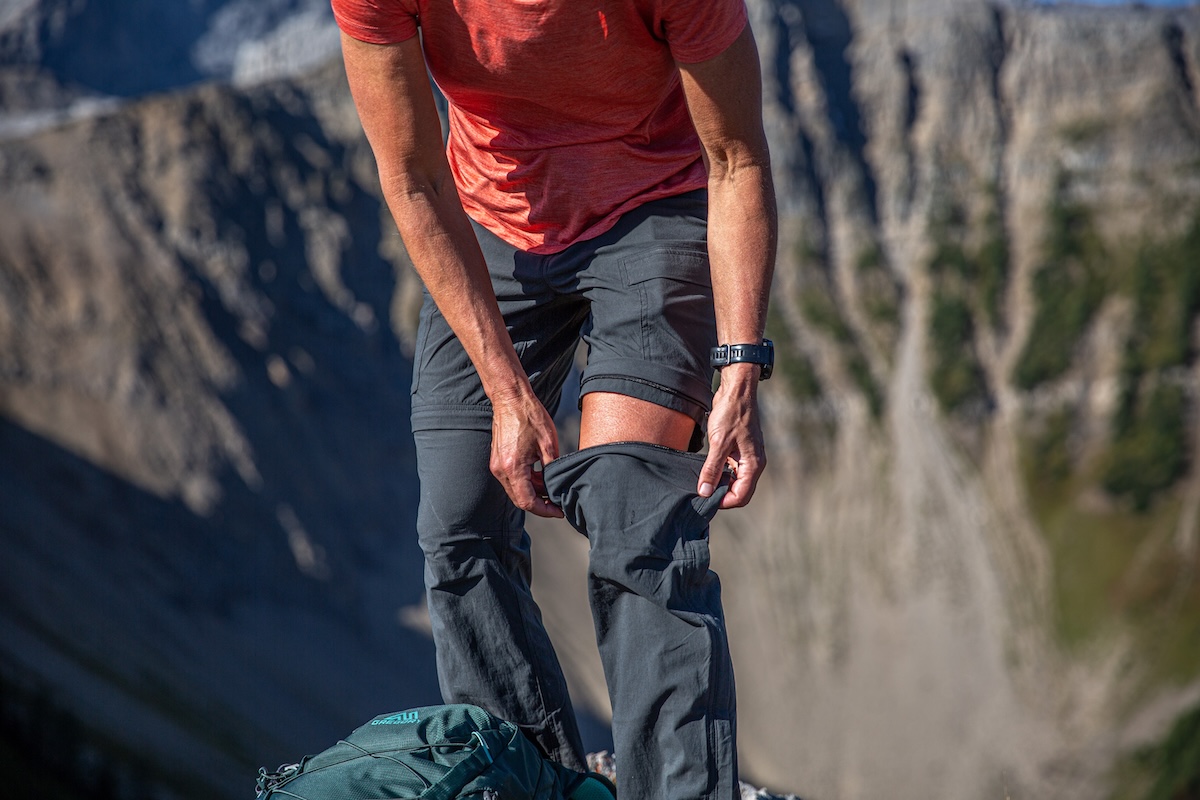
With the ability to zip off and convert into shorts, convertible pants are a popular choice for year-round hikers and outdoor adventurers. The benefits are readily apparent: A 2-in-1 style means you don’t have to pack extra clothing, and it's a quick process to increase leg ventilation.
While we appreciate the flexibility that convertible pants bring, in use, they’re still not for everyone. Outside of the potential qualms that some have about the look, zip-off pants are often not as practical as you’d probably think. The extra zippers can be a nuisance to use, and regardless of the design, they add bulk. Additionally, when designing pants that accommodate the pinch points created by zippers, you’ll often end up with a baggier fit. One of the better designs, the Kühl Renegade is still heftier-feeling than standard hiking pants, even with its low-profile zippers. As a result, roll-up pants are gaining popularity in both men’s and women’s styles. The big benefit is you don’t have to fuss with zippers; all that’s required is a low-profile button and some tabs to secure the pants' legs, and you get many of the ventilating benefits of a zip-off in a ¾ length.
Many of the pants on this list are hiking-centric and look more at home on the trail than off. That said, we do appreciate hiking pants that can double as everyday wear or be worn as travel pants. In particular, outdoor clothing brands like Kühl, Prana, and Patagonia (depending on the model) tend to transition well into everyday pants. Even more capable hiking models, such as the Outdoor Research Ferrosi, can also serve as versatile everyday wear, although the thin fabric and basic pocket layout make them less appealing for everyday use than options like the Prana Stretch Zion. And our Fjallraven Vidda Pros look so unique that we always jump at the chance to wear them. The point is, if you like to wear your hiking pants around town, there are a number of good options for that.
.jpg)
Finding the right fit in hiking pants can be a tough task, particularly in the past when the options were more limited. At that time, we found that Rab was one of the few brands offering a more agreeable cut that didn’t feel excessively baggy, unlike the Incline pants from Rab. Nowadays, there are several pairs of pants that hit the sweet spot for us, offering an athletic fit that isn’t overly tight. Outdoor Research, Prana, and Arc'teryx all have this concept mastered, and REI and Columbia have recently adjusted the fit of several of their pants to align with the competition. For a more relaxed fit, the Kühl Renegade strikes us as a good balance of extra space without swishing around like a pair of old windbreakers.
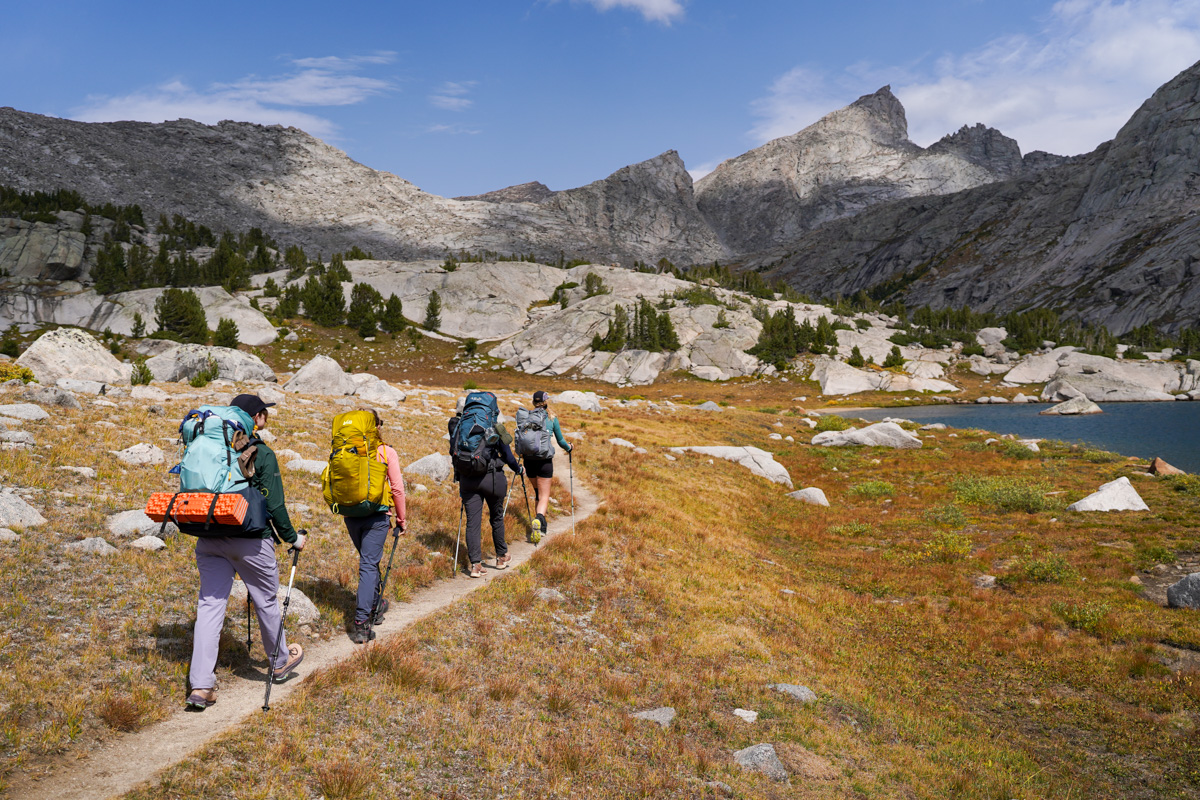
We appreciate it when companies go the extra mile to innovate with textile production, and the most common practice in the hiking pants world is the use of recycled fabrics. Many are made with at least some recycled content, including designs like the Outdoor Research Ferrosi (46% recycled material). Other measures to look out for include certification to the Fair Trade standard, Bluesign-approved materials, and PFAS-free DWR coatings, which reduce the use of per- or polyfluorinated chemicals—known as "forever chemicals"—which are harmful to the environment. Leading brands in the innovation space include Patagonia, REI Co-op, and Prana, although many companies have begun incorporating at least some of these practices into their production.
.jpg)
If you're heading out on an overnight backpacking trip or the weather is iffy, pants are the obvious choice. But hikers who hit the trail in the warm summer months are left with a difficult decision: Pants or shorts? Choosing full-length pants gives you better sun protection and helps keep dirt and rocks from getting into your shoes. Further, they're the preferred choice for technical hikes or summit bids, reducing the number of scratches or cuts you get when brushing against rocks or branches. But we love shorts for day hikes on well-maintained trails. Shorts are less expensive and offer better freedom of movement and ventilation. The final option is convertible pants—such as Kühl's Renegade Convertible—which allow you to switch between styles, although they come with a few downsides.
.jpg)
The good news for those looking to pick up a pair of hiking shorts is that many of our favorite pants are available in this style. Generally, the short version will have a similar fit, fabric blend, and pocket layout to its full-length counterparts. From the models we've worn, we think the Outdoor Research Ferrosi Short is one of the best. Other favorites include Prana's Stretch Zion Short II and Kuhl's durable Renegade. And if you want a superlight and breathable option, a trail-running-specific short can do the trick (we've worn a range of styles from Salomon, Brooks, and REI). The biggest downside of running shorts is that they sacrifice some durability due to their thin polyester construction.
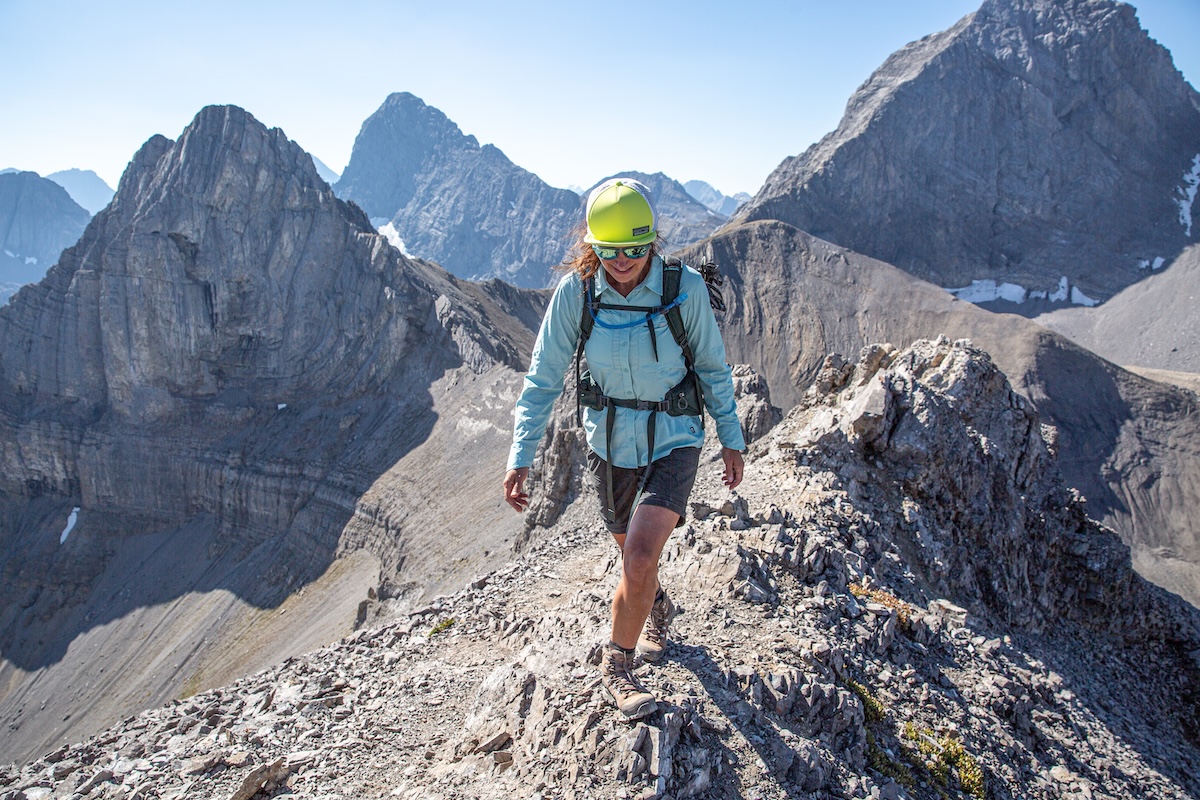
Our picks were selected based on the experiences of both male and female testers, and wherever available, we link to both the men’s and women’s versions. That said, due to this category’s noteworthy variation in styles, we’ve also created a unique round-up of the best women’s hiking pants. In this article, you’ll find many of the same models here in addition to a variety of women’s-specific hiking pants.
Back to Our Top Hiking Pants Picks Back to Our Hiking Pants Comparison Table


f342.jpg)
7208.jpg)
1d38.jpg)
56da.jpg)
c9f6.jpg)