.jpg)
.jpg)
Photo Credit
Price: $220
Weight: 2 lbs. 0.7 oz. (men's size 9)
Waterproof: Yes (GTX)
What we like: Glove-like fit, excellent cushioning and comfort, and reliable traction.
What we don’t: Durability concerns with the exposed midsole; pricey.
See the Men's Adidas Terrex Free Hiker 2 See the Women's Adidas Terrex Free Hiker 2
Adidas has leaned more into its Terrex outdoor collection in the past few years, and its Terrex Free Hiker 2 lands in a popular segment of modern hiking shoes: It’s not a full-on boot, but you get over-the-ankle protection and extra support in a lightweight, fast-moving package. We tested the Free Hiker 2 in southern Patagonia and found its casual styling belies its capable design. Durability suffers with the exposed foam midsole, but the Adidas’ sock-like fit and strong on- and off-trail performance won us over. Below we break down our experience with the Free Hiker 2. To see how it stacks up to the competition, see our articles on the best waterproof hiking boots and best hiking boots.
Editor's note: We updated this review on February 20, 2026, to ensure all specs and comparison models were up to date at time of publication.
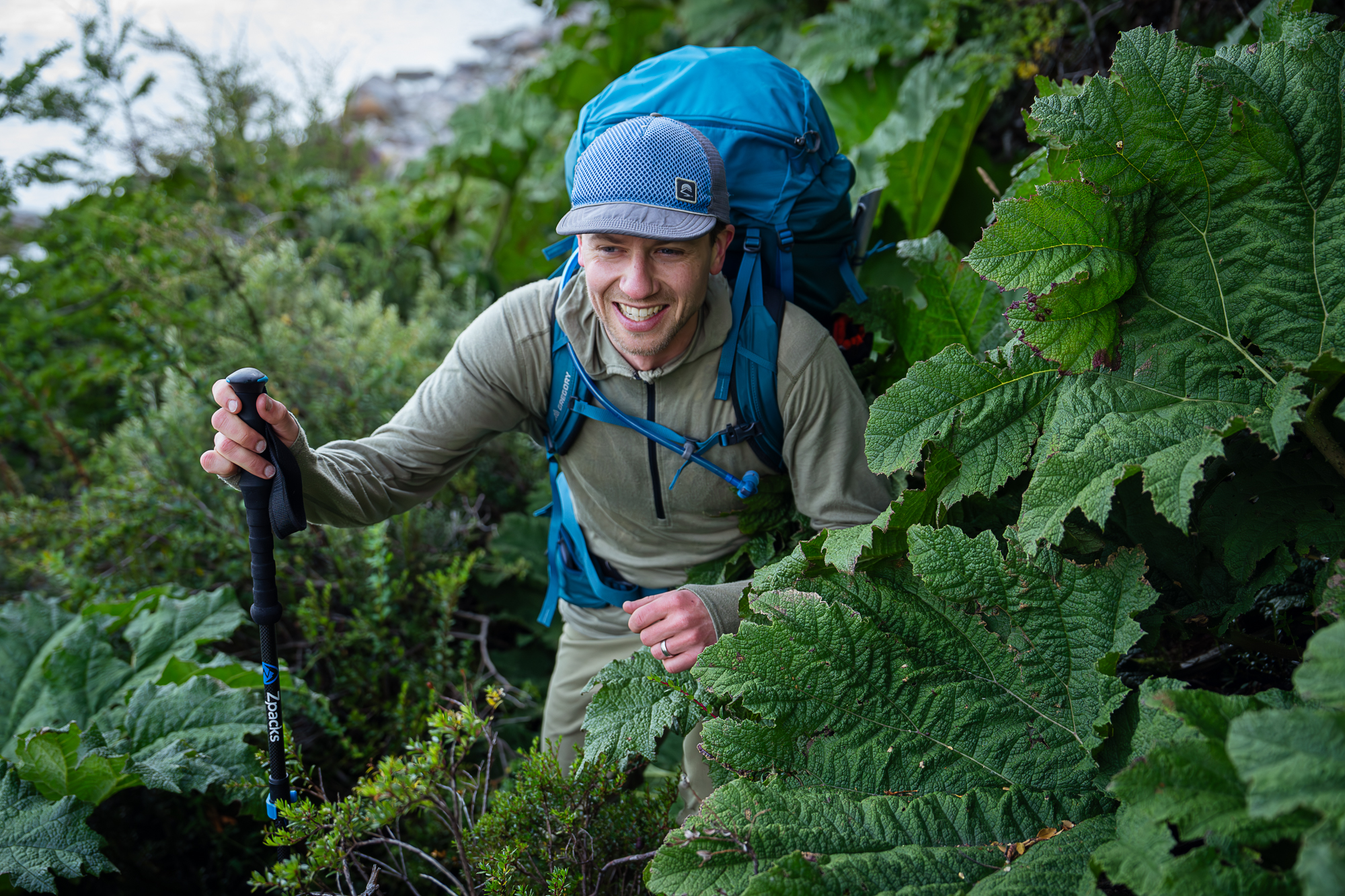
With its sneaker-like looks and high price, I came into this test of the Adidas Terrex Free Hiker 2 GTX skeptical. But partway into my first hike with the shoe, I was already a fan. The Free Hiker has a performance fit that’s snug in the heel, and there’s a just-right amount of cushioning in the collar and tongue. The lacing system is another highlight: It tightens evenly around the foot, and I had no issues with it loosening throughout the day. I took the Free Hiker straight out of the box on a challenging day hike in southern Patagonia and suffered no repercussions. It required essentially zero break-in, and there’s a great balance of stiffness and flexibility for moving quickly on the trail and boulder hopping.
.jpg)
One takeaway I kept coming back to during the Free Hiker 2 test is that it feels wholly modern. Inspired by trail running shoes, the Adidas is lightweight, agile, and soft underfoot. But there’s a noticeable dose of support, and the over-the-ankle build provided extra waterproofing for creek crossings and protection on rocky slopes. The thick Boost midsole's exposed foam along the side is hard to miss, helping limit foot fatigue on long days. For day hiking and light backpacking, it’s a compelling and well-rounded design.
.jpg)
The Terrex Free Hiker 2 has a tweener height that’s hard to define—"mid-height shoe” is as close as we got—but its 2-pound-0.7-ounce weight for my men’s size 9 puts it in the lightweight boot category. Alternatives like the HOKA Anacapa Mid 2 GTX (2 lb. 4 oz.) and Salomon X Ultra 5 Mid (1 lb. 15 oz.) have a similar weight and feel. If you’re looking for fast and light, there are plenty of trail runners that can save you a half pound or more. And the same goes for boots equipped for heavy hauling—expect to add about a half pound for a taller height and greater protection and support. Landing in the middle is a sweet spot in the market, and Free Hiker’s weight was never a complaint for me.
.jpg)
Adidas partnered with Continental for their outsoles years ago—bucking the Vibram trend of most brands—and we have yet to be disappointed. The tacky rubber on the Free Hiker provided excellent grip on rock—both dry and wet—and the lugs are plenty aggressive for biting into dirt and mud on steep climbs and descents. Even for off-trail use and over hard-to-trust terrain, the grip was reliable and secure. We know some folks who use the Terrex Free Hiker as an approach shoe to the mountains outside El Chaltén (the region where we did this test), and we agree that the shoe’s well-rounded grip is a great match in this zone.
.jpg)
The Adidas Terrex Free Hiker Gore-Tex comes with a high collar that proved a nice match for the numerous creek crossings, where the liner did its job of keeping moisture out. The boot’s synthetic upper effectively shed moisture, and I had no issues with water absorbing into the fabric, which is a common problem with leather uppers. It’s worth noting that the shoe’s gusseted tongue separates near the ankle, so be mindful of the water depth before splashing through. But in terms of waterproofing, the Free Hiker GTX was completely sufficient.
.jpg)
Unsurprisingly, adding a waterproof layer impacted breathability, and I wound up with warm feet by the end of our hikes. The extra insulation is nice in the cold, but it can be a drawback for those who run warm or are working hard. And as with all waterproof footwear, you’ll want to do your best not to let water come in over the collar and into the shoe. The liner is slow to dry, even with the Free Hiker’s thin upper material. In the end, the Gore-Tex model was a nice match for this trip, but a non-waterproof boot or shoe would be better in most summertime conditions.
Like its ankle height, the Terrex Free Hiker’s level of stability and support lands in an in-between place. Underfoot, there’s a decently solid base that wasn’t prone to rolling over even while traversing boulder fields, and Adidas reinforced the sides of the shoe with some light EVA “frames.” That said, there was a clear focus on making it feel fast and trail runner-esque with the soft midsole and plenty of flex under the forefoot. The net result should make a lot of folks happy: It’s a fast-moving shoe that doesn’t feel overbuilt on an average hiking trail, but there’s still enough support for off-trail use and hauling an overnight load.
.jpg)
For quality and durability, the Adidas Terrex Free Hiker was a mixed bag, given its steep price. On the one hand, the materials are high-end: the upper is a light, sleek synthetic with ripstop patterning, and you get quality cushioning. Plus, there’s a nice amount of foot protection with the molded toe cap and raised EVA frames along the sides of the foot. Most of the design is holding up well, including the laces, mesh collar, fabric loops, and rubber outsole, which is wearing evenly and as expected.
.jpg)
The rocky, difficult terrain of southern Patagonia revealed one weakness: the exposed Boost midsole. The soft foam is left unprotected on both sides of the shoe, and it began showing signs of wear almost immediately. I ended up with small slices and chunks of foam missing after the trip, but if you plan to primarily stick to well-maintained trails, this won’t be a dealbreaker. We’d love to see Adidas do a better job of reinforcing this space in a future update.
.jpg)
The fit of the Terrex Free Hiker was a highlight of the design. There's an immediate glove-like feel, and my standard men’s size 9 fits true to size. The heel and midfoot are snug—great for my narrow heel—and it was easy to tune the fit with the great lacing system. There was enough space in the toe box to avoid any rubbing or discomfort, but it wasn’t overly wide, which wouldn't negatively impact foot feel or support in challenging terrain. I’d love to see Adidas offer dedicated wide sizes to broaden its appeal, but the standard fit should work for many folks.
.jpg)
We’ve seen a significant recent movement in the outdoor market towards more sustainable practices. As a brand, Adidas pledged to replace virgin polyester with recycled polyester “wherever possible” and to ensure that 9 out of 10 articles contain a sustainable material by the end of last year. For the Free Hiker 2, Adidas states that the upper contains at least 50% recycled materials.
For this test, I took the men's Adidas Terrex Free Hiker 2 GTX to southern Patagonia, and it's also available in a women's version. The women's Terrex Free Hiker 2 GTX has an identical build but weighs a few ounces less at 1 pound 15.2 ounces. You can also opt for the Free Hiker style in a low-top waterproof hiking shoe, which offers similar materials and a Boost midsole in a lighter, more nimble package.
.jpg)
.jpg)
| Boot | Price | Category | Weight | Waterproof | Upper |
|---|---|---|---|---|---|
| Adidas Terrex Free Hiker 2 GTX | $220 | All-around/mountain | 1 lb. 15.4 oz. | Yes (Gore-Tex) | Synthetic |
| HOKA Anacapa 2 Mid GTX | $195 | All-around | 2 lb. 4 oz. | Yes (Gore-Tex) | Nubuck leather |
| Altra Lone Peak 9 Waterproof Mid | $190 | All-around | 1 lb. 13.7oz. | Yes (in-house) | Textile |
| Salomon X Ultra 5 Mid GTX | $190 | All-around/mountain | 1 lb. 15 oz. | Yes (Gore-Tex) | Leather / textile |
With a great mix of comfort and trail performance, the Adidas Free Hiker 2 GTX is a solid offering in the hiking footwear market. One of our favorite over-the-ankle designs is Hoka's Anacapa 2 Mid GTX, which brings the brand's signature midsole to the hiking space. The Hoka feels more boot-like, with a taller ankle height and a bump in overall stability, though both are a good mix of cushioning with lightweight builds. The Hoka's thick midsole and wide base make it feel more ungainly than the Adidas, though the Hoka costs less than the Terrex. For designs that offer similar comfort and performance, it's enough for us to give the Anacapa the edge.
Another lightweight boot to consider is Altra’s Lone Peak 9 Waterproof Mid. Based on their popular trail runner, the mid-height boot includes a waterproof liner, over-the-ankle cushioning and protection, and the brand’s signature zero-drop shape. The wide toe box is also part of the design, which has its pros and cons. It’s great for hikers who need the extra space, but it gives the boot a sloppy feel over technical terrain. If you’ll spend much time off-trail or prefer more precision in your boot, the Free Hiker is the better option.
.jpg)
A lightweight boot comparison wouldn’t be complete without Salomon’s X Ultra 5 Mid GTX, which is easily one of the best sellers year after year. The Salomon is the lighter of the two (our men’s 9 weighs only 1 lb. 11.5 oz.), has similarly well-rounded traction and waterproofing, and saves some money. The Adidas nets you extra cushioning underfoot—the Salomon is thin by comparison—but otherwise, we'd recommend the X Ultra 5 to most people. For more, see our previous version X Ultra review.
Back to the Adidas Terrex Free Hiker 2 GTX Review See Our Waterproof Hiking Boot Guide

.jpg?h=fbc67360&itok=94jbD15Q)
_0.jpg?h=fbc67360&itok=9jCMZqJc)
.jpeg?h=fbc67360&itok=ioMgSwrw)
.jpg?h=fbc67360&itok=3lNBbzz3)
.jpg?h=fbc67360&itok=D8ZHlU6d)

.jpg?h=fbc67360&itok=uj5sROnf)
.jpg?h=fbc67360&itok=p8LpihYI)