.jpg)
 (m).jpg)
Photo Credit
Price: $189
Weight: 6.4 oz. (women’s)
Materials: 93% nylon, 7% elastane
What we like: Impressively breathable and water-resistant at a low weight.
What we don’t: Heavier and more expensive than competing windbreaker jackets.
See the Women's BD Alpine Start Hoody See the Men's BD Alpine Start Hoody
Softshell jackets from a decade ago were heavy and thick, but the push for lighter and more packable options rendered them nearly obsolete for true performance-oriented activities. For years, climbers and skiers would turn to less breathable windbreakers for ultralight protection. However, softshells are making a comeback, often as innovative hybrid designs that merge technical performance with lighter constructions. Black Diamond’s Alpine Start Hoody is one of the most competitive and well-rounded in this category: it’s breathable, highly protective against the elements, and still keeps weight low. Below we outline our experiences with this impressive hoody—to see how it stacks up to the competition, see our articles on the best windbreaker jackets and best softshell jackets.
Editor's note: We updated this review on March 4, 2026, to recheck all specs and update the products in our comparison table to their latest versions.
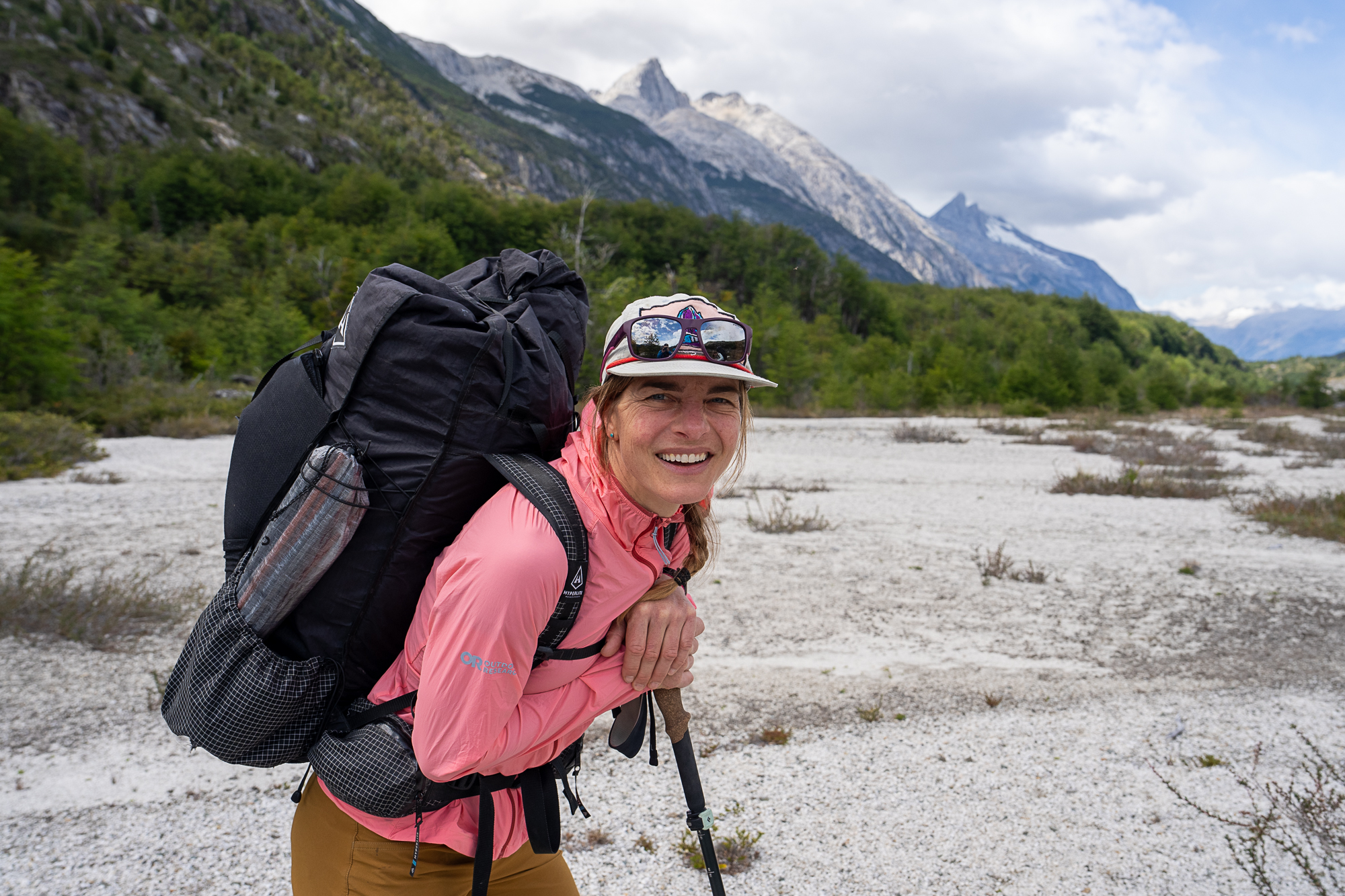
As an ultralight piece designed to protect against light weather, the Black Diamond Alpine Start Hoody toes the line between softshell and windbreaker. But no matter what you call it, the jacket puts it all together better than most: it’s light and breathable while still packing in solid resistance to water and wind. In terms of construction, Black Diamond used a stretch-woven nylon shell (93% nylon, 7% elastane) and a Schoeller Eco-Repel Bio DWR coating that’s designed to repel water, dirt, and oil. Although the jacket is water-resistant and not fully waterproof, the Eco-Repel Bio does an impressive job in rain and wet snow. While my hiking partners donned their rain jackets in Patagonia, water rolled off my hoody, and I stayed dry despite constant drizzle. In terms of wind protection, the jacket provides a serious buffer. In fact, it does such a good job keeping wind out that I’m often able to layer it over just a t-shirt, even in cold gusts.
_0.jpg)
In addition to the wind- and water-resistant fabric, the Alpine Start has several protective features. The helmet-compatible hood offers great coverage, and the one-hand pull cord at the back of the head is easy to use, providing a secure fit and full range of vision. The hood stayed put on my head even during some of the strongest Patagonian winds I’ve ever experienced. Simple elastic cuffs keep the jacket off my hands, and a single drawcord at the right hip cinches it tight at the hem.
_0.jpg)
Breathability is a hot topic in the debate between softshell and windbreaker jackets. In general, softshells are great breathers but are bulkier and heavier, while wind shells are light but can feel like you’re wearing a plastic bag. Here’s where the Alpine Start shines: at only 6.4 ounces (just slightly heavier than most windbreakers), the Alpine Start is incredibly breathable. I wear it during high-output activities like trail running and ski touring, and it lets heat escape better than most in its weight class. Compared to the Patagonia Houdini and Outdoor Research’s (now discontinued) Helium Wind, the Alpine Start is on an entirely different level in terms of breathability.
_0.jpg)
Weighing just 6.4 ounces for the women’s jacket, the Black Diamond Alpine Start falls at the lightweight end of the softshell spectrum, even when stacked up against other minimalist options. For example, the 8.8-ounce Rab Borealis offers similar weather protection and breathability for a few extra ounces, though the Rab has hand pockets, which I miss on the Alpine Start. On the other hand, windbreakers such as the 3.3-ounce Patagonia Airshed Pro Pullover, undercut the Alpine Start significantly. However, these jackets are thinner, less breathable, and offer less water resistance. The Alpine Start falls in a nice middle ground: it's everything we look for in a lightweight softshell without going overboard on unnecessary features.
_0.jpg)
In terms of packability, our women’s small Alpine Start stuffs into its chest pocket to about the size of a softball, and even smaller when compressed. While this isn’t as tiny as some windbreaker jackets—the Patagonia Houdini packs down to half the size—it’s a standout among softshells. For my purposes, the Alpine Start is a reasonable size to hang off the back of my climbing harness or stuff into a running pack.
_0.jpg)
To keep weight low, the Alpine Start Hoody has a minimalist feature set: one chest pocket (which doubles as a stuff sack), a single-pull hood adjustment, and a hem cinch on the right hip. When cinched up, the helmet-compatible hood is secure, and the brim keeps rain off my face. Despite the lack of bells and whistles, I haven’t found myself wishing for any more storage or adjustments. For those who prefer more organization options, the Arc’teryx Gamma and Rab Borealis both include hand pockets at a slight weight penalty.
_0.jpg)
Black Diamond can be hit or miss with soft goods quality, and the Alpine Start is a mixed bag here. I love the overall design, but it lacks the fit and finish you get from brands like Arc’teryx and Patagonia. The hoody has exposed stitching throughout the inside and loose threads (at least on my jacket) poking through the hole at the hood cinch. In general, it feels like a slight step down from a premium softshell jacket.
.jpg)
That said, the Alpine Start is holding up surprisingly well to rough use. After wearing it almost daily for the past two and a half months, the jacket shows no major signs of wear, which is especially impressive given it’s not uncommon for me to run through fields of prickly manzanita. The stretch-woven nylon shell feels incredibly abrasion-resistant, and aside from the loose thread issue in the hood cinch, no stitches are threatening to come undone. Further, the zippers are robust and run smoothly, and the simple hem and hood adjustments are easy to operate.
.jpg)
My standard women’s small in the Alpine Start fits true to size. I love the extended range of motion provided by the underarm gussets, which offer more coverage and versatility than the trim-fitting Patagonia Houdini. I can easily fit a lightweight down or synthetic jacket underneath, whereas the Houdini accommodates only a thin layer unless you size up. Even with Alpine Start’s generous fit, I can pair it with just a t-shirt while running without it feeling overly baggy.
.jpg)
We tested the women’s Alpine Start Hoody for this review, and Black Diamond also makes a men’s version. Compared to the women’s model, the men’s Alpine Start has an identical feature set, including gusseted underarms, a single chest pocket, and a helmet-compatible hood. Where the two differ is in colors and weight, with the men's weighing 7.3 ounces.
.jpg)
.jpg)
| Jacket | Price | Category | Weight | Stretch | Packable |
|---|---|---|---|---|---|
| Black Diamond Alpine Start | $229 | Softshell/windbreaker | 6.4 oz. | Yes | Yes |
| Patagonia Houdini Jacket | $119 | Windbreaker | 3.4 oz. | No | Yes |
| Dynafit Ridge Dynastretch | $250 | Softshell/windbreaker | 12.3 oz. | Yes | Yes |
| Rab Borealis Jacket | $120 | Softshell/windbreaker | 8.8 oz. | Yes | No |
The Black Diamond Alpine Start Hoody fills a nice gap: it’s lighter than most softshell jackets while offering better breathability than many windbreakers. One of its closest competitors is Patagonia’s Houdini. For just over half the weight, the Houdini offers comparable wind protection and breathability. You get the same limited feature set, including a single chest pocket and a simple hood with a rear cinch, although Patagonia’s hood is not helmet-compatible. However, Houdini’s fabric doesn’t have any give, unlike Alpine Start’s 7% elastane, and the fit is trimmer, meaning you won’t be able to squeeze extra insulation underneath. The Houdini is a more running-focused jacket and a better pick during summers and shoulder seasons. The Black Diamond is more versatile for four-season use, and the stretch-nylon shell and helmet-compatible hood are better suited for high-output activities.
.jpg)
The Dynafit Ridge Dynastretch is another competitively stretchy softshell to consider. At 12.3 ounces, it's almost twice as heavy as the Alpine Start, but you're getting a high-functioning crossover between a wind shirt and a softshell without losing the articulated movement and pocket storage missing from simpler jackets. Despite the heftier build, the Dynastretch is highly packable, which makes sense considering Dynafit's ski-mountaineering heritage. If you're looking for more features and some added protection from a heavier jacket, we love the Dynastretch, but hikers and runners looking to save weight will do better with the more packable, lighter Alpine Start.
.jpg)
Rab offers a similar design to the Alpine Start in their Borealis softshell. At 8.8 ounces, the Rab is several ounces heavier than the BD but offers great mobility and breathability. It also adds two harness-compatible chest pockets—the left one doubles as an integrated stuff sack—with water-resistant zippers. However, we prefer the Alpine Start’s helmet-compatible hood to Rab’s under-the-helmet design and find it easier to take on and off. You do save significant money with the Rab, but the Alpine Start is a more well-executed, technical jacket.
Back to the Black Diamond Alpine Start Hoody Review See Our Softshell Jackets Guide


_0.jpg?h=fbc67360&itok=9jCMZqJc)
.jpg?h=fbc67360&itok=0-PrNtr4)


.jpg?h=fbc67360&itok=ZEme7qNA "climbing (s)")
S.jpg?h=fbc67360&itok=VAiYxF4s)
_0.jpg?h=fbc67360&itok=qBzD69RD)