.jpg)
 m.jpg)
Photo Credit
Shopping for a hiking shirt isn’t as research-intensive as looking for the best hiking boot or backpack, but the next-to-skin layer is still an important part of your trail apparel. Our top choice is Patagonia's Capilene Cool Daily, which is high-performing, comfortable, and fairly-priced. When shopping, consider the shirt’s fabric—polyester offers the best in durability and moisture-wicking, although some might prefer the softer feel and odor resistance of natural fibers like merino wool. Like most active-layer recommendations, we steer clear of cotton. Otherwise, it's as simple as choosing the style that best suits your needs: a tank or t-shirt, a button-up (short-sleeve or long-sleeve), or a sun hoodie. For men, we have a list of our favorite men's hiking shirts. And if you prefer a full-coverage top with UFP protection, check out our guide on the best sun protection shirts.

Material: 100% polyester
Weight: 3.7 oz.
Styles: Tank, SS, LS, hoodie
What we like: A well-priced yet durable shirt that wicks moisture, dries quickly, and feels great next to skin.
What we don’t: Has a techy look and feel; we can detect some lingering stink after heavy use.
Choosing a hiking shirt isn’t rocket science: Most trail-goers will want a short-sleeve design that looks good and is lightweight and airy, breathable and moisture-wicking, and comfortable under a backpack. The Patagonia Capilene Cool Daily delivers in all these categories. We’ve worn the classic summer-weight shirt for everything from week-long backpacking trips to 100-mile running races, and we've been impressed by its soft, flowy feel and quick-drying nature (significantly better than merino tops in our testing). It’s also notably durable and long-lasting, and our shirt has yet to show any wear despite heavy use. There aren’t a ton of features to mention (a good thing, in our opinion), but we do appreciate the Daily’s thin cord loop at the nape for drying, as well as its sleek seams that minimize chafing under a backpack.
Polyester’s primary downside is its tendency to retain odor, but modern odor-control technologies are very effective. Patagonia’s HeiQ Pure doesn’t eliminate stink (a sniff test on our recently laundered test shirt reveals this), but it's a big improvement from untreated polyester. It’s also worth noting that the shirt has atechy look and feel and is not the most form-fitting. That said, some users have reported the shirt fitting small, so we recommend sizing up if you’re in between sizes or want a flowy fit. But for function above all else, the Daily is still our top choice for everything from sweaty summer hiking to mild-weather running, biking, spring ski touring, and more. For a deep dive on our favorive women's hiking shirt, read our in-depth review of the Patagonia Cool Daily hiking shirt.
See the Patagonia Capilene Cool Daily
.jpg)

Materials: 92% polyester, 8% spandex
Weight: 3.8 oz. (small)
Styles: Tank, SS, LS, ¼-zip
What we like: Great performance and flattering fit for a great price.
What we don’t: Those with particular needs might need to spend up for other fabrics, fabric weights, or features.
If your budget is tight, it’s worth checking out REI’s Active Pursuits shirt. We often turn to REI for their high-value gear, and the Active Pursuits is no exception. The quality is far from cheap, with a soft, stretchy fabric that breathes well and moves easily. Plus, the polyester is moisture-wicking and quick-drying. And unlike some other budget offerings, the Active Pursuits has a nice shape, which is relaxed without being too boxy (although some might want to size down), and features a curved hem for a nice combination of style and coverage. We also like that the shirt is offered in a range of color choices and sizes from XS to 3X, which makes it easier to dial in fit.
We tested the Active Pursuits on a recent backpacking trip in Alberta’s Kananaskis Wilderness and were impressed by its overall performance. We’re still convinced it’s a great value, though there are a few downsides to keep in mind. First, the neckline fits snugly, though we didn’t find it overly restrictive. There also isn’t an anti-odor treatment for fending off stink. And finally, some might find it too thick for high-output use in hot conditions. Breathability was perfect for the late-season backpacking trip in the Canadian Rockies, but for true mid-season summer use, a thinner shirt might be a better choice. But we keep coming back to value, and so long as these aren’t dealbreakers for you, the Active Pursuits is a great choice for an excellent price.
See the REI Co-op Active Pursuits T-Shirt


Materials: 53% merino, 47% Tencel lyocell
Weight: 3.1 oz.
Styles: Tank, SS
What we like: All the benefits of merino in a lightweight, soft, and breathable design that feels athletic without being too body-hugging.
What we don’t: Absorbs moisture much more than polyester; slightly boxy fit; shows sweat more than other shirts.
Merino wool is far and away our favorite material for cold-weather baselayers and socks, thanks to its warm yet breathable, soft, and odor-resistant properties. But added insulation can be too much for warm-weather use, and thinner merino can lead to a host of durability issues. Our favorite workaround for mild weather is a blended material, and the Smartwool Active Ultralite is our headliner for this category. This shirt features a mix of 53% merino and 47% lyocell, a fiber derived in part from wood pulp. We tested the hybrid shirt side by side with Smartwool’s Merino SS (88% merino), and the differences were palpable: While the higher percentage of merino caused us to overheat on a number of occasions, the Active Ultralite felt light and smooth, kept air flowing, and was a great match for summer backpacking in the Cascades.
Pilling and other durability issues (such as small holes) can be one of the biggest downsides of lightweight merino shirts, but the Active Ultralite has yet to show signs of wear despite heavy use. It’s not our first choice for very hot days or use around water, as lyocell and merino are both more absorbent than polyester, and we found this shirt to show more sweat than others. Plus, the fit of the Smartwool is more boxy and relaxed than we prefer in a hiking shirt, although we’ll take it over the skintight look of other merino designs. All told, we love the feel and odor resistance of merino for everything from multi-day treks to casual day hikes, and the Active Ultralite pulls it off better than most.
See the Smartwool Active Ultralite Short Sleeve

 Materials: 88% polyester, 12% spandex
Weight: 3.6 oz.
Styles: Tank, SS, LS, pullover
What we like: Classy style meets high-end comfort and performance.
What we don’t: Not great for layering or sleeping.
Button-up hiking shirts offer a boost in style compared to standard t-shirt designs and are just as at home on the trail as they are during après at the local brewery. They’re also more ventilated, which has its benefits in hot weather or when you’re hiking fast and building up heat. Among the options, the Rabbit High Country SS is our team’s runaway favorite. Don’t be fooled by the classy looks: the High Country is a performance piece. The stretchy polyester/spandex fabric feels premium and is highly mobile, lightweight, and a joy to wear, and Rabbit even included a subtly perforated back for increased venting.
durable enough to withstand all manner of trail abuse. And while the ventilated backpanel was initially eyebrow-raising, it didn’t pose any issues under a full backpacking pack. What’s more, the metal snaps are well executed, hardwearing, and much quicker to operate than buttons. Plus, they’re spaced enough to allow air to flow through the gaps, creating a nice cooling effect. Do keep in mind that the button-up design isn't very versatile for activities like layering and sleeping, meaning it's not our first choice for extended backcountry trips. But if you like the style or are intrigued by the added ventilation, the High Country’s lightweight, stretchy, and airy personality makes it our favorite button-up hiking shirt of the year. Note: At the time of publication, the High Country SS has limited stock and few color choices, though we expect stock to return soon.
See the Rabbit High Country SS
.jpg)

Material: 100% polyester
Weight: 3.9 oz.
Styles: Tank, SS, LS, hoodie
What we like: Light, breathable, and quick-drying; lots of styles and sizing options; the hood has a ponytail hole.
What we don’t: Fabric is prone to pilling and snagging; it does not have the best UPF protection.
Ah, the sun hoodie. We love this small but mighty piece of gear, which provides nearly complete sun protection without adding too much insulation. Among the options, we’re big fans of Outdoor Research’s Echo Hoodie for its low weight and airy feel. At just under 4 ounces and featuring a 100% polyester construction, the Echo breathes and wicks moisture better than most of the competition, making it a great pick for mid-summer hiking and other activities when you’re likely to work up a sweat. You also get effective odor resistance thanks to OR’s ActiveFresh treatment. And with availability in 10 sizes for women (including plus sizes from 1X to 4X), plus several different styles to choose from, there’s likely an Echo for you.
While lightweight, the Echo's fabric tends to pill and snag, and it’s less soft against the skin than alternatives. Compared to many other sun hoodies, the Echo also has a low UPF rating of just 15. But some sun protection is better than 0%, which is what you’ll get when your thicker sun hoodie heats up too much, and you take it off. That said, if you prefer a thicker sun hoodie, check out the Mountain Hardwear Crater Lake Hoody, our top-ranked sun shirt, and a great choice for shoulder-season hiking. REI’s Sahara Shade below is another thicker option. All told, for a breathable sun shirt ideal for hot hiking conditions, the OR is hard to beat.
See the Outdoor Research Echo Hoody


Materials: 81% polyester, 11% lyocell, 8% spandex
Weight: 4.2 oz.
Styles: Tank, SS, LS, Hoodie
What we like: Lightweight, soft, and quick-drying with odor-resistant treatment.
What we don’t: Hemline is short for the hemline worn, under a pack hipbelt.
We don’t always recommend tank tops for hiking, especially when you’re schlepping a heavy backpack. Most don’t offer the coverage you need across the back and shoulders, which can lead to chafing, pressure points, fabric bunching, and more. But if you’re dead set on freeing your arms, the Free Fly Elevate Lightweight Tank is a great option. The Elevate features a higher neckline and generous shoulder coverage, but a flowy fit that allows for air to flow through the shirt. Made with a blend of fast-drying polyester, lyocell for softness, and spandex for stretch, this packable hiking shirt has all the properties of a technical shirt without the slippery feeling and too-techy-for-town look. We've felt just fine hitting the brewery after a hike while wearing this shirt, and the antimicrobial treatment fends off odors even after a full season of wear and washes.
That said, the Elevate Lightweight Tank wouldn't be our first choice for a backpacking pack. The shoulder and back coverage is excellent, but the hemline is too short for wearing under a hip belt, and we've experienced some riding up and bunching. And while we appreciate the UPF 25+ protection, you’ll still want to take extra care to apply sunscreen to your arms and shoulders. For more coverage, the Elevate Lightweight is also available as a tee, long-sleeve, and hoodie, so you have plenty of options with the material blend.
See the Free Fly Elevate Lightweight Tank Top


Materials: 95% polyester, 5% elastane
Weight: 6 oz.
Styles: SS, LS, hoodie
What we like: Lightweight, UV-resistant, and breathable.
What we don’t: The cropped style isn't for everyone; no odor treatment.
Marmot’s Windridge UPF 50 shirt quickly gained our editor’s stamp of approval after testing it on several hiking missions in the Pacific Northwest last season, surpassing several legacy favorites in her closet. It’s a great choice for hot-weather hiking with a slightly cropped fit (ends just below the belt) and breathable, moisture-wicking fabric. What’s more, the fabric is UPF 50, which is more protective than many sun hoodies (though it doesn’t offer the full coverage of a hoodie). And, in our opinion, the shirt translates well between on-trail and casual use. We have no issue wearing it straight from the trailhead to lunch, and it pairs well with most bottoms.
However, there are a few downsides to note. While the Windridge’s synthetic build offers several performance benefits and keeps the price reasonable, it’s not the softest shirt we’ve worn. Marmot also doesn’t use an odor treatment. Ours has yet to come out of the wash stinky, but we have doubts it will remain stink-free over the long term. And finally, some might not like the cropped styling, especially when wearing a backpack with a hipbelt. Our editor has a shorter torso and liked how the shirt fits, but those with longer torsos might feel exposed. In our opinion, the benefits far outweigh the cost, and we find ourselves reaching for the Windridge more often than not anymore.
See the Marmot Windridge UPF 50 T-Shirt


Materials: 92% polyester, 8% spandex
Weight: 6.4 oz.
Styles: SS, LS, hoodie
What we like: Full-on sun protection at a great price.
What we don’t: Not everyone will love the roomy fit, the shaped hem, or the thicker fabric.
REI’s Sahara Shade Hoodie offers a great combination of performance and price. The fabric is buttery-soft and stretchy, a polyester/spandex blend that moves easily with you and holds its shape between washings. Its UPF 50+ is much more protective than the OR Echo Hoodie above, and while the fabric is thicker and dries more slowly, the material offers a nice cooling effect. And unlike many performance-driven pieces, the Sahara Shade has a decently roomy fit, and the flowy drape is complemented by a scoop hem and subdued, pastel colors. Some hikers might want a more technical vibe, but we think the Sahara Shade hits a nice balance for use both on and off the trail.
Compared to other sun hoodies, the Sahara Shade’s hood design is one of the best we’ve seen, with a hidden cinch that stays out of the way but still allows you to batten down the hatches in windy conditions. You also get well-designed low-profile thumbholes and an effective antimicrobial treatment. Our main gripe is the scooped hem, which isn’t the most comfortable under a backpack (the men’s version doesn’t have this feature, so you could opt for it instead). But our impressions are overall positive. For a calm, cool, and relaxed sun hoodie, the Sahara Shade is a very well-rounded and well-priced pick.
See the REI Co-op Sahara Shade Hoodie

Materials: 38% merino, 50% polyester, 12% modal
Styles: Tank, SS, LS, hoodie
What we like: A soft, durable shirt with exceptional odor-resistance.
What we don’t: Absorbs water and doesn’t dry super quickly.
This soft, stylish tee looks perfectly acceptable when worn with jeans in town, but is deceptively high-performing on the trail. Built with a blend of lightweight (150 gsm) merino wool, the Duckworth Vapor Tee is airy, silky smooth, and incredibly durable. The softness and durability come from the combination of polyester and modal, a pulp made from beechwood (similar in feel to Tencel), a unique material combination not found anywhere else on this list. We also love that this Montana-based brand's clothes are made in the U.S., with Montana-sourced merino and tested in the mountains around their headquarters in Bozeman.
We wore the Vapor Tee for nine weeks during an extended backcountry trip, and the shirt carried almost no odor and showed hardly any dirt. It was easy to clean, and we're also fans of the Vapor line's other options, including hoodies and tanks. So why does it rank lower? With so many merino tees on this list, the Vapor Tee is in tough competition. In this case, it comes down to style. This tee is one of the more fitted shirts on this list, and some hikers might prefer a roomier fit for airflow. We also noticed it dries more slowly than synthetic shirts (a common issue with merino layers). But we keep reaching for this layer for its comfort and odor-fighting abilities. So long as you don’t mind the fit, it’s a wonderfully soft addition to the closet. Note: At the time of publication, the Vapor Tee is low on stock, but we expect availability to improve soon.
See the Duckworth Vapor Tee

Materials: 94% nylon, 6% spandex
Weight: 6.7 oz.
Styles: LS
What we like: Great feature set and sun protection.
What we don’t: Nylon fabric is thicker and more rigid than most hiking shirts.
If you’re in the market for a traditional long-sleeved hiking shirt, the REI Co-op Sahara Solid is a classic go-to. With a design that’s equally at home for travel, going on safari, or hiking, the Sahara Solid features a full button-up closure at the front, a collared neck, and a host of useful features. Storage is great for both on- and off-trail commutes, including two chest pockets with hook-and-loop closures, a secure zip pocket at the lower back, and a hang loop for sunglasses at the left chest. And when the mercury rises, a mesh-lined back vent keeps air flowing, and rolled-up sleeves are secured with button tabs. Finally, the Sahara Solid touts a 50 UPF rating, which pairs well with its high-coverage design.
Unlike most synthetic shirts here, the Sahara Solid is made from nylon, which offers greater durability and water resistance than polyester. But while nylon is ideal for items like tents and hardshells, it’s a tougher sell in a shirt. The Sahara Solid has a sturdier feel than we’re used to and might cause overheating on hot days. It also tends to wrinkle, which we’d rather avoid in a hiking shirt. Finally, we wish that REI had chosen a different placement for the zippered pocket—it lies right underneath a backpack’s hipbelt, and also makes the shirt difficult to tuck in (if that’s your style). But for day hikers and cool summer conditions, the Sahara Solid has a lot going for it, and availability in eight sizes and several colors boosts its appeal.
See the REI Co-op Sahara LS Solid Shirt

Materials: 85% nylon, 15% spandex
Weight: 5.6 oz.
Styles: Tank, SS, LS, Hoodie
What we like: Zip-up sun shirt with nice features; it can act as a lightweight jacket over tanks and tees.
What we don’t: Expensive, and not the most breathable.
Outdoor Research’s Astroman is one of the more versatile shirts in this list. With a full-length zipper and a hood, the Astroman looks like a jacket but feels more like a shirt, thanks to its lightweight, stretchy fabric. In most cases, we use it as an additional layer over a tank or t-shirt for extra sun protection (it’s UV 30+). It’s lightweight, stores easily in a backpack, and the loose fit slides over a next-to-skin layer. It could also be worn as a standalone shirt over a sports bra. Its convenience isn’t limited to trail use, either. When testing the Astroman in Honduras, we loved wearing it over our bikinis when hanging out on the beach. It even provides some wind protection (though it can’t stack up to a windbreaker). And we like the addition of the hand pockets, which are great for storing essentials.
As a dedicated hiking layer, the Astroman falls short of the others on this list in terms of breathability. And those moving fast on the trail likely won’t need it, or would rather pack a lightweight windbreaker for true protection on gusty ridgelines and peaks. It’s also not the softest against the skin, though we didn’t experience any specific irritation while wearing it over a bikini. And lastly, there’s no denying it’s pricey, so you’ll have to ask yourself whether it's worth the investment. But if you’re looking for versatility in a hiking shirt, the Astroman Full-Zip is definitely worth checking out.
See the Outdoor Research Astroman Full-Zip
The term "wicking" refers to how well a shirt pulls sweat away from the body. Most of the shirts in this list have high-wicking fabrics, including polyester, nylon, and merino wool. That said, a high-wicking fabric isn't necessarily breathable. Breathability is also dependent on the garment fit (looser-fitting shirts are generally more breathable than tight-fitting) and fabric thickness (thinner fabrics are more breathable). A shirt's ability to dry is another concern in this vein, with synthetic fabrics drying more quickly (and thus wicking sweat away) than natural materials like wool. A more breathable shirt will also dry quicker.
We removed the Icebreaker Merino 150 Tech Lite Short Sleeve in this update because we found the 100% merino build to trap warmth and absorb moisture more than synthetic or merino blends. It also showed early signs of wear, including pilling where backpack straps sit.
We also left out the Ridge Merino Wander Crew Neck because it didn't stand out compared to the other merino options on this list. We weren't the biggest fans of the neckline (only available in crew or V neck) for hiking, specifically, either, as the skin is more exposed to the sun and to backpack straps.
The Outdoor Research Astroman Sun Shirt didn't make the cut, either, because we felt the Rabbit High Country button-up performed better on the trail. The High Country is more fitted and feels more comfortable under a pack. Not to mention, it's much less expensive.

| Hiking Shirt | Price | Materials | Weight | Styles |
|---|---|---|---|---|
| Patagonia Capilene Cool Daily | $49 | 100% polyester | 3.7 oz. | Tank, SS, LS, hoodie |
| REI Co-op Active Pursuits | $35 | 92% polyester, 8% spandex | 3.8 oz. | Tank, SS, LS, ¼-zip |
| Smartwool Active Ultralite SS | $70 | 53% merino, 47% lyocell | 3.1 oz. | Tank, SS |
| Rabbit High Country SS | $75 | 88% polyester, 12% spandex | 3.6 oz. | Tank, SS, LS, pullover |
| OR Echo Hoodie | $85 | 100% polyester | 3.9 oz. | Tank, SS, LS, hoodie |
| Free Fly Elevate Lightweight | $48 | 81% polyester, 11% lyocell, 8% spandex | 4.2 oz. | Tank, SS, LS, hoodie |
| Marmot Windridge UPF 50 | $39 | 95% polyester, 5% elastane | 6 oz. | SS, LS, hoodie |
| REI Co-op Sahara Shade Hoodie | $60 | 92% polyester, 8% spandex | 6.4 oz. | SS, LS, hoodie |
| Duckworth Vapor Tee | $69 | 38% merino, 50% polyester, 12% modal | Unavail. | SS, LS, tank, hoodie |
| REI Co-op Sahara Solid LS | $70 | 94% nylon, 6% spandex | 6.7 oz. | LS |
| OR Astroman Full-Zip | $135 | 85% nylon, 15% spandex | 5.6 oz. | Tank, SS, LS, hoodie |
Hiking shirts come in all shapes and sizes, from tank tops for staying cool on hot-weather hikes to sun hoodies for maximizing coverage against harmful UV rays. The female editors at Switchback Travel vary in terms of their preferred style. Former senior editor Jenny Abegg, who put together this guide in late 2023, typically wears short-sleeve tops for hiking and backpacking, while contributing editor Maggie Slepian and senior editor Maddie Downie (who now manages the guide) are sucker for sun hoodies. Maggie is constantly traveling domestically and overseas, spending time in sunny tropical landscapes or hiking and backpacking in the high mountains of the US West. Maddie prefers to stick close to home in Bellingham, Washington, but finds plenty of hiking and backpacking in the North Cascades. We prioritized designs available in multiple styles to meet the varied needs of female hikers and backpackers. Depending on your preferences and intended use(s), we’ve also put together detailed guides on the best sun protection shirts and best women’s baselayers, the latter of which covers long-sleeve designs.
In addition to available styles, we considered several other factors when deciding which hiking shirts to feature. Our favorite designs wick moisture effectively, keep air flowing, and move with us. They also help reduce odor between washings, offer UV protection, and resist durability issues like snags and pilling. Finally, while fit is entirely subjective, we look for shirts that are flattering but not restrictive, with a long enough hem to clear a backpack hipbelt or a climbing harness. As the hiking shirt market evolves, we’ll continue putting new and noteworthy designs to the test and will amend our list to reflect our current favorites.

Synthetics (Polyester and Nylon)
The majority of hiking shirts are made with at least some polyester, which is soft and comfortable, lightweight and breathable, moisture-wicking and fast-drying, and abrasion-resistant. Polyester is also robust enough to keep most UV radiation at bay. Some shirts, like the traditional button-up REI Sahara Solid or Outdoor Research Astroman Full-Zip, use nylon, which is another synthetic that’s stiffer and more durable but not as comfortable or moisture-wicking as polyester. The primary downfall of both polyester and nylon is that they can hold a stink, though most shirts now include effective odor-resistant treatments. All told, for the vast majority of use cases—particularly for warm weather and activities around water—synthetic hiking shirts are our top choice.
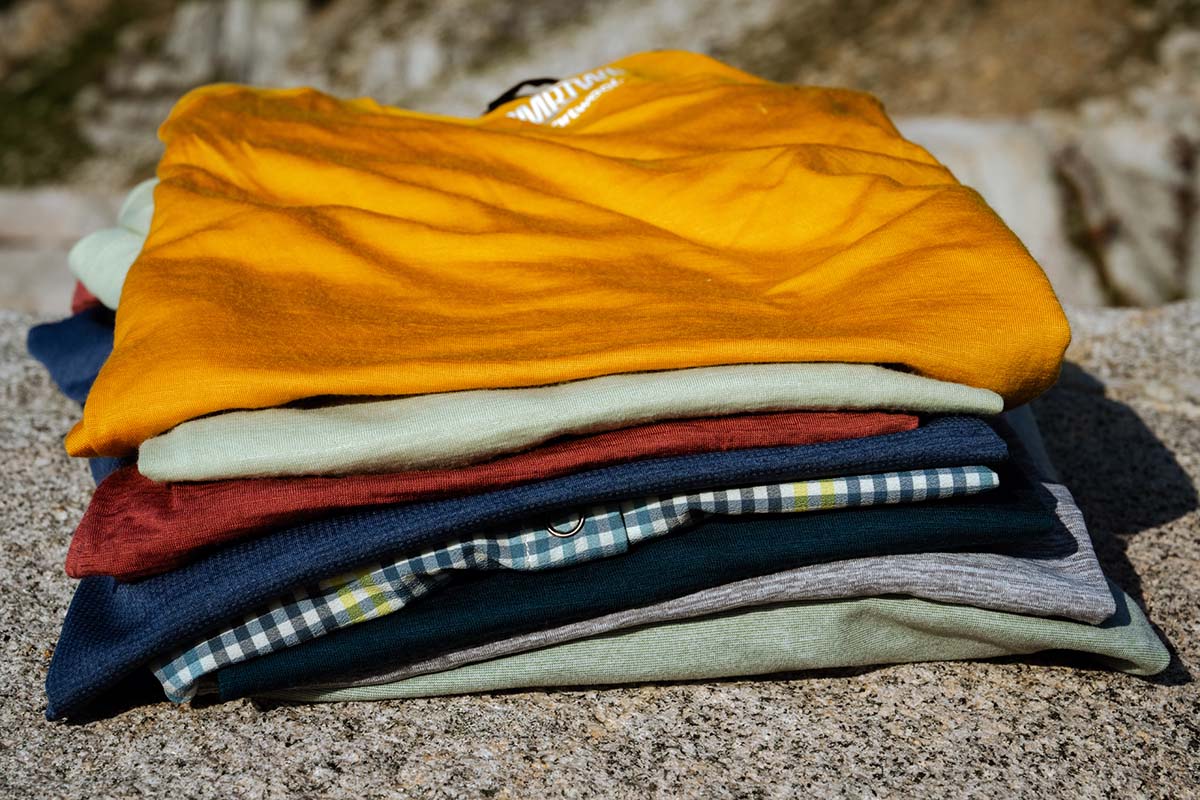
Merino Wool
Merino is our favorite material for cold-weather baselayers and socks, thanks to its warm, breathable, soft, and antimicrobial nature. We also love it as the key material in our hiking shirts, with a few caveats.
Merino's insulating properties can be too much in warm temperatures, so you'll want to select a light enough material. This can be difficult to discern online, but in general, lower fabric weights (often measured in grams per square meter, or gsm) will be lighter, and blended tops with polyester, nylon, or lyocell can also feel lighter. Another caveat is that merino absorbs more moisture than synthetics like polyester, which can make it heavy and slow to dry, but it still insulates when wet. And finally, it's not the most durable, so we recommend looking for blended fabrics over pure merino if you expect to be hiking in high-abrasion areas. Caveats aside, we find ourselves reaching for our merino hiking shirts at least half the time, especially for multi-day trips or crossover use. They have a nice, casual vibe compared to techy synthetics, are delightfully soft, and have unmatched odor resistance. Our favorites in this category include Duckworth's Vapor Tee and Smartwool's Active Ultralite Short Sleeve.
.jpg)
Other Natural Fibers
A few hiking shirts above use modal and lyocell, which are two similar fibers derived from wood pulp. Both materials are incredibly soft, offer a cooling effect, and are highly breathable. They're also very water-absorbent (lyocell is said to be 50% more absorbent than cotton), which means they're great at wicking moisture away from the skin. But like merino, they can retain water and don't dry out quickly. These fibers are often blended with merino (as seen in the Smartwool Active Ultralite and Duckworth Vapor Tee) to add durability and softness. It's worth noting that lyocell, modal, and merino require extra care when laundering and won’t hold up to heavy use as well as comparable synthetics (those blended with polyester fare best). Regardless of their downsides, fibers like lyocell and viscose are well worth checking out for the comfort they offer.
.jpg)
Many of the hiking shirts above come in multiple styles, including tank top, short-sleeve (SS), long-sleeve (LS), and hoody variations. In most cases, a short-sleeve t-shirt is the most versatile style. It’s airy enough to keep you cool on warm days, yet covers enough to avoid sunburned shoulders or chafing from pack straps contact. However, there are some merits to the other varieties. Tank tops can be a great choice for those who need a lot of ventilation (and don’t mind sun exposure), and a wide variety, like the Free Fly Elevate Lightweight, is designed to offer coverage under a backpack. On the other hand, long sleeves and hoodies boost sun protection with coverage and UPF ratings, and many feature roomy designs that keep air flowing.

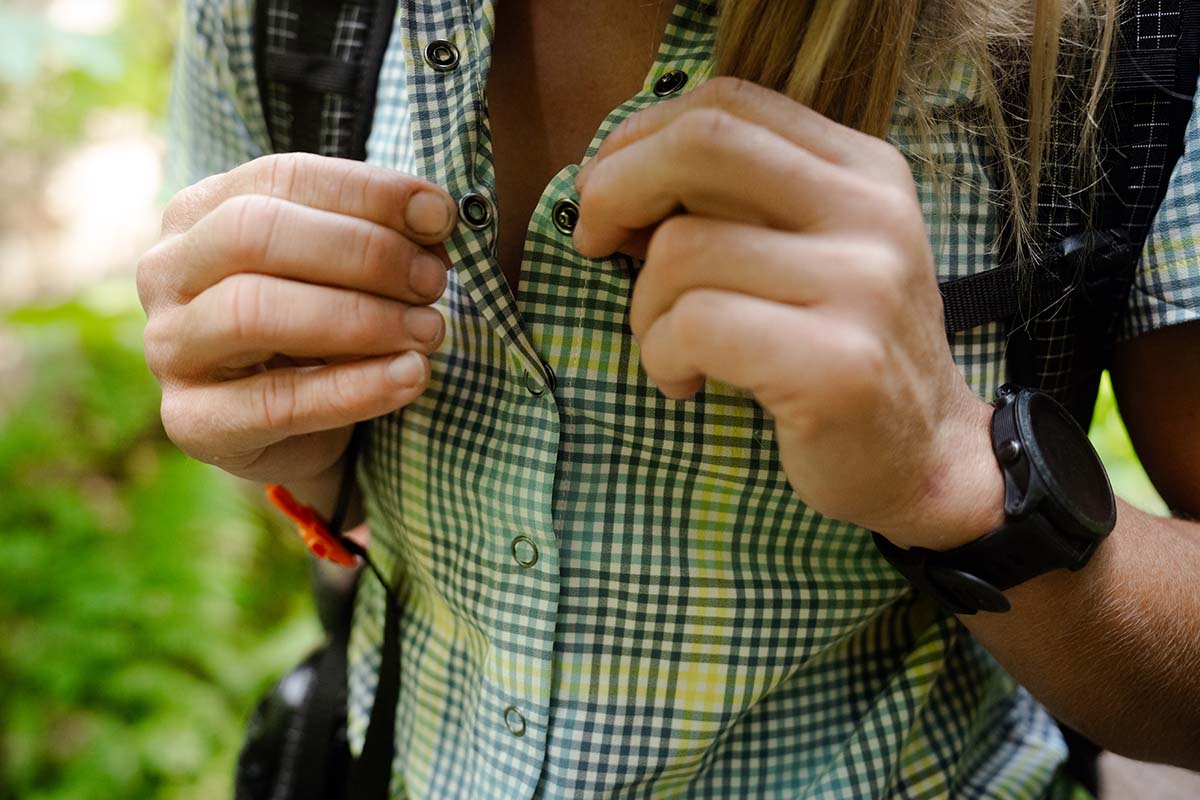
Some hikers will opt for a button-up shirt, available in both short- and long-sleeve styles. Aside from style, one of the benefits of a button-up is its built-in ventilation. Along with front venting (the gaps between the buttons/snaps), many shirts incorporate rear venting: The Rabbit High Country has a perforated back, while the Sahara Solid has a horizontal vent across the back with a mesh underlay. Button-ups aren’t our top choice for layering (the front panel of snaps is bulky under a snug baselayer), and they’re not super comfortable to sleep in, so they do have their limitations compared to standard t-shirt designs. But for great sun protection (especially in the long-sleeved varieties) alongside natural cooling, they’re a nice option.
.jpg)
No matter what time of year you’re hitting the trail, you’ll want a hiking shirt that can wick moisture, keep air flowing, and move with you. Thin polyester designs like the Patagonia Capilene Cool Daily or Marmot Windridge UPF 50 T-Shirt are the best for venturing out in real-deal heat: They’re breathable, lightweight, and free-flowing, and their hydrophobic nature means they’re much quicker to dry than merino wool, lyocell, or thicker nylon. Natural fibers are excellent for wicking sweat, but they absorb moisture and take some time to dry (and merino has insulative properties, which are unwelcome on hot days). Nylon sits at the bottom of the list for both breathability and ventilation, making it best suited for mild conditions and when durability matters most.
.jpg)
It's also worth considering how a shirt's fit and features affect ventilation. Free-flowing shirts can feel much better in warm weather than snug-fitting designs, and most of the shirts on our list are fairly loose (even the trimmer designs like the Duckworth Vapor Tee are not skin-tight). Button-up shirts also boost airflow with built-in ventilation at the front (between the buttons/snaps) and a neckline that can be lowered to let in more air. As mentioned above, most also feature a vent at the back.
Most of us aren't buying hiking shirts for their warmth. That said, all fabrics insulate to some degree, which should be an important consideration in the purchasing process. In general, synthetics and natural fibers like lyocell add little warmth and may even have inherent cooling properties. On the other hand, merino is naturally insulating and provides noticeable warmth, even in the thinner varieties, especially if you're generating some of your own heat. As a result, we recommend avoiding merino for warm, sunny conditions, but in mild weather, it can provide a nice first line of defense against the chill while also promoting breathability.

A fabric's weight can also be an important spec to consider, especially when discerning between similar designs. This is often given in grams per square meter (g/m2, or gsm) or ounces per square yard. For example, the Patagonia Capilene Cool Daily uses 3.7-ounce polyester, while the Capilene Cool Lightweight uses 2.3-ounce polyester. In terms of merino, Duckworth gives its Vapor Tee a 150-gram designation, while Smartwool's Active Ultralight uses 120-gram merino. In these apples-to-apples comparisons, it's clear which shirt is heavier (and thus warmer) than the other. Unfortunately, this isn't a foolproof strategy: Not every shirt specifies a fabric weight, and it doesn't perfectly align with warmth due to variations in fit and material.
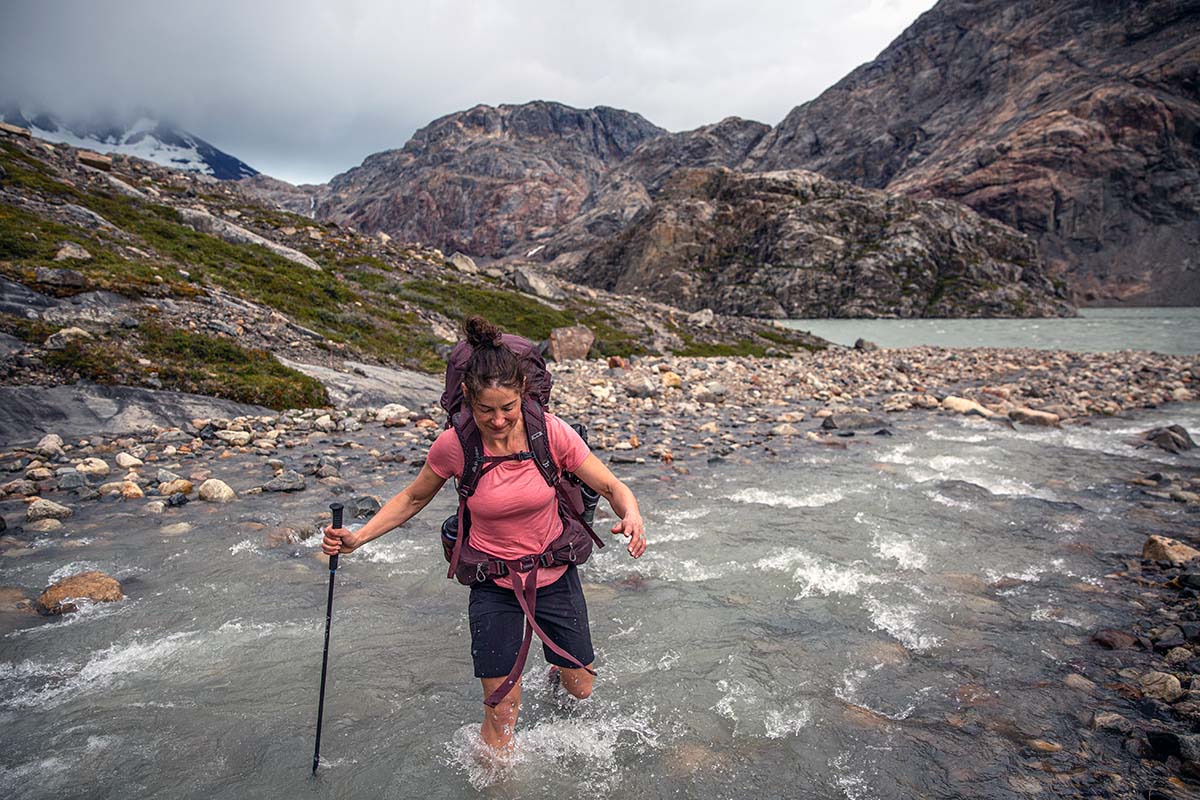
Synthetic fabrics are known to build stink, which isn’t a great characteristic when sweat is a given. To help keep B.O. at bay, most modern synthetic sun shirts incorporate an anti-odor treatment. Patagonia uses HeiQ Pure on its Capilene Cool Daily, while Outdoor Research’s Echo features ActiveFresh tech. These technologies generally work well, which is good news for everyone. And if you prefer to keep your clothing natural and chemical-free, natural fibers like wool are odor-resistant without any additional treatments.

Most hiking shirts have a UPF rating, which indicates how much UV radiation the fabric allows to pass through. A UPF rating of 50 means that just 1/50th (or 2%) of the available UV rays are able to make their way to the other side of the fabric, while a UPF rating of 30 denotes that 1/30th of the rays will pass through. For reference, a UPF of 15 is the lowest possible rating, and 50+ is the highest (of note: UPF 30 is the minimum rating that qualifies for the Skin Cancer Foundation’s official recommendation). And of course, if you’re wearing more than one layer, you get more sun protection. We have yet to meet anyone who’s been burned through a hiking shirt, but if your priority is maximizing sun protection, it’s worth aiming for the higher numbers.
Several factors contribute to a hiking shirt’s UPF rating, including fabric thickness and color, fiber type (polyester and nylon are more effective than wool and cotton), and whether the material has been treated with a UV-resistant chemical or dye. In general, darker fabrics offer better sun protection than lighter ones, but that's not a given. And to boost protection, one technique (used by Patagonia) is to apply a titanium dioxide additive to the yarn, similar to the active ingredient in many reef-safe sunscreen products. This allows manufacturers to use lightweight, breathable fabrics while still maximizing UV resistance.
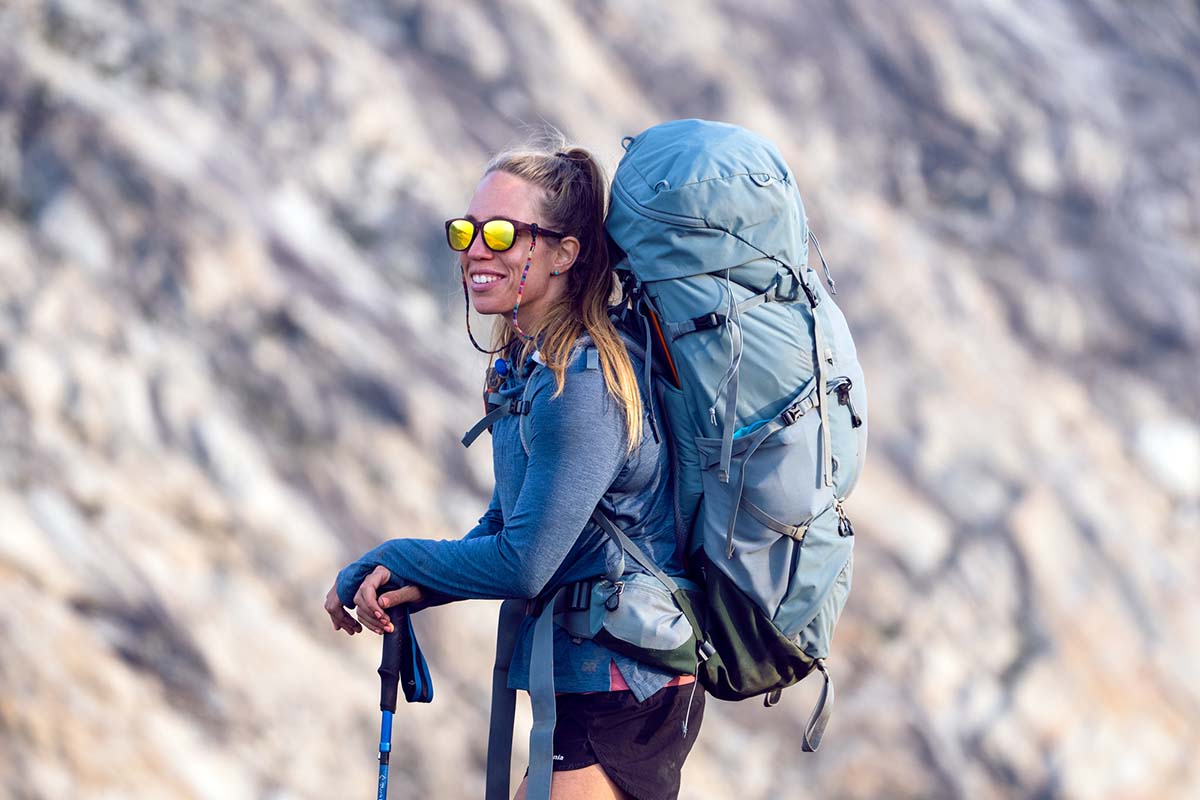
Hiking shirts can vary greatly in durability: Some are built to withstand the rigors of bushwacking and hard use, while others are so thin they’re prone to ripping and snagging. Nylon is very hardwearing (seen in designs like the REI Co-op Sahara Solid LS and Outdoor Research Astroman), and polyester is next in line. Merino wool will not hold up well to sustained wear and tear. Natural fibers like lyocell, bamboo, and modal fall somewhere in the middle, and when blended with a small percentage of polyester or spandex, they've proven sufficient for activities like hiking and backpacking. Finally, thicker fabrics offer better tear resistance than thinner designs (the REI Sahara Shade Hoodie compared to the thinner OR Echo Hoodie, for example), although fabrics of any weight can be prone to pilling and snagging.
.jpg)
Hiking shirts are incredibly simple pieces of gear, with many having very few features to speak of. Take the Patagonia Capilene Cool Daily, for example: it’s just a t-shirt, nothing less and nothing more. Under the hood, these simple shirts will have a few features we love to see, including streamlined stitching or offset seams, both of which help to reduce chafing when worn underneath a pack. On the other hand, a shirt like the Rabbit High Country has a more feature-rich design, including a front metal snap closure and perforated vents at the back. Some shirts, like OR's Astroman Full-Zip, have pockets, and long-sleeve shirts often add thumb loops (helpful for maintaining coverage down the arm) and hoods.
There are a few factors to consider when evaluating hoods. Size is the first: You’ll want to think about whether or not you want to wear the hood over your bare head, a ball cap, or a climbing helmet. Further, some hoods incorporate a drawcord, which can be a nice feature in the wind, though we rarely use it. If you opt for this style, we’d recommend a sleek system like the one on the REI Co-op Sahara Shade Hoodie over a long drawcord design, as the latter can get in the way and be impractical. A hat can be an excellent way to tame an unruly hood. Not only does it keep it off your face, but it also provides friction to secure it in place in the wind or while hiking briskly.

The two most common fits we see among hiking shirts are regular (or relaxed) and trim (or slim). Regular shirts might feature some shape at the waist, but in general, they’re meant to drape in a relaxed manner rather than cling tightly. Trim-fitting shirts, on the other hand, are usually made with decently stretchy material and are built to fit snugly. They’re usually not skin-tight, but they do follow the contours of the body. This distinction is apparent in Patagonia’s Capilene Cool line: The Daily features a regular fit, while the Lightweight is a slim fit. Button-ups are generally relaxed, but there’s still some variation within the category. For example, the Rabbit High Country is svelte (Rabbit advertises it as semi-relaxed), while the Outdoor Research Astroman Full-Zip has roomy dimensions.
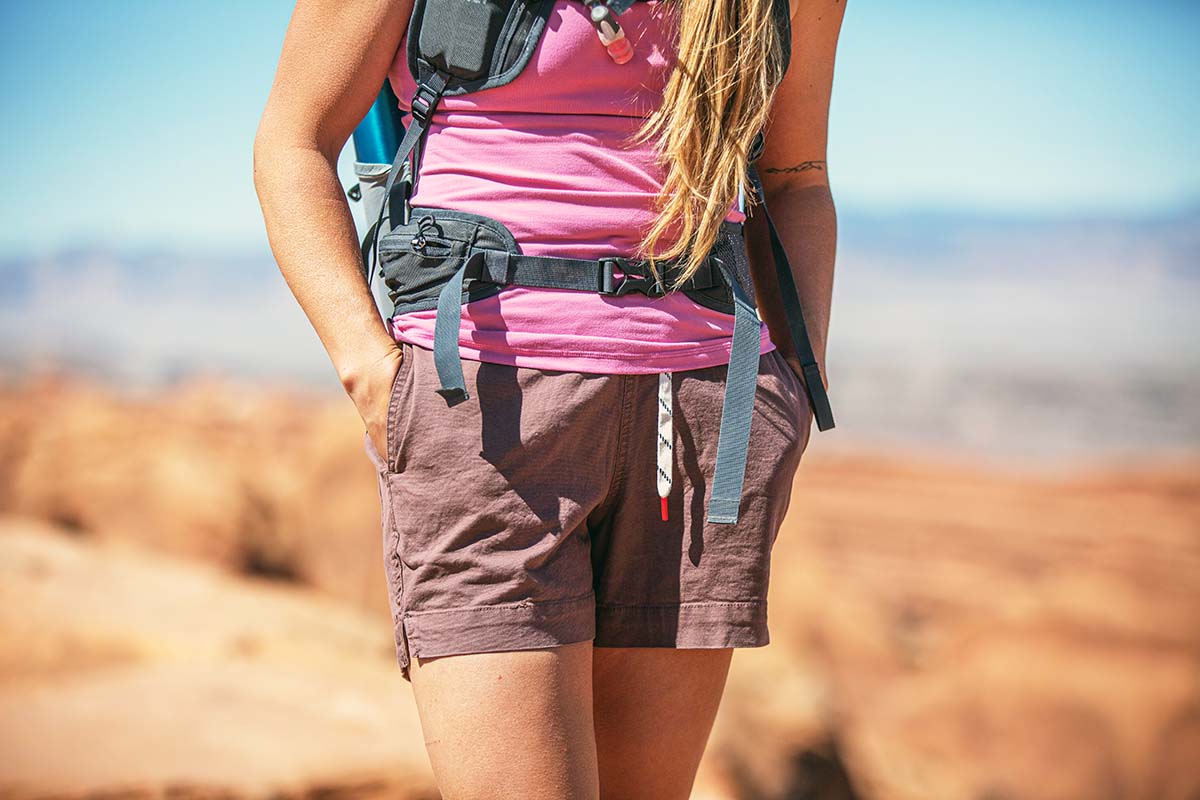
Shirts with built-in stretch are a popular choice for hiking, and for good reason: They feel great, and the extra “give” in the fabric is appreciated both on the trail (for freedom of movement while hiking and scrambling) and at camp (for bending down to cook, setting up a backpacking tent, etc.). In terms of construction, stretchy shirts fall into two camps: those with an elastane (spandex) blend and those woven with mechanical stretch. The former type gets you the most elasticity, and we love the extra-stretchy feel of a shirt like the Free Fly Elevate Lightweight Tank (8% spandex). But a 100% merino or polyester shirt can still have enough give for most intended uses. Even if manufacturers don’t advertise it, we’ve found that most hiking shirts have added stretch. This is by no means a necessary feature (a relaxed, non-stretchy design can offer similar amounts of mobility), but a forgiving/soft shirt is a nice luxury item in the backcountry.

The vast majority of hikers head out in fair-weather conditions, when a t-shirt, sun hoodie, or button-up is the primary layer. But for cooler evenings or shoulder-season conditions, you’ll want more insulation. When layering is in the forecast, we’ll leave the button-ups at home and stick with a short- or long-sleeve shirt or sun hoody as our primary layer.
.jpg)
The jacket you choose to layer over your hiking shirt depends on the weather and your personal preference. For windy conditions or when you just need to cut the chill, we love a windbreaker jacket, especially those with stretchy, breathable designs. If you need to add more warmth, a performance fleece or breathable synthetic jacket is an ideal outer layer. And if precipitation is in the forecast, a rain jacket or hardshell is your best bet.
There are pros and cons to both designs, but we find ourselves reaching for long-sleeve shirts over t-shirts for many reasons. First, long-sleeve shirts have greater sun protection (especially sun hoodies). And a light-colored long-sleeve shirt is usually cooler than a t-shirt, despite covering more of the body—they wick sweat and keep the sun off the skin. In our opinion, short-sleeve shirts are great for day hikes or adventures where sun protection isn't a major concern. But for most backpacking trips, we'll reach for a sun hoodie over a tee.
We don't often see cotton used in outdoor clothing, and hiking shirts are no exception. In fact, there's even an old adage that says "cotton kills." The reason is this: Cotton absorbs moisture and doesn't dry quickly. Unlike merino, it does not retain its insulating properties when wet. This can be a dangerous combination for backpacking, especially in alpine zones or during shoulder seasons when things can cool down quickly. However, you can get away with cotton for day trips in dry, sunny areas like the Utah desert. In fact, some prefer it for its cooling properties (just get it wet, and you'll have natural AC all day). And as we all know, cotton is soft and comfortable, and is decently breathable too.

At the end of the day, "comfortably" is the best answer, but there are plenty of factors that play into this. A hiking shirt should allow you to move freely, so one with some mechanical or material stretch is good. Whether you prefer a fitted or non-fitted shirt is up to you, but we lean towards the latter for breathability. Women shouldn't get too caught up in gendered differences either. Often, women's shirts have tapered waists, lower-cut collars, or shorter hems than their men's-specific counterparts. If the men's version of a shirt makes you feel more comfortable, go with that. There aren't as many size nuances with shirts as there are with hiking pants, but many hiking shirts come in petite or plus sizes. Use sizing guides on brand sites to help you dial in the right fit.
In our experience, no. Most of the shirts we've tested that use recycled polyester or nylon perform just as well as non-recycled shirts. There are many factors that determine a garment's durability, and while material quality is important, fabric thickness, stitching quality, and material blends also matter. Ultimately, we don't think you should avoid recycled fabrics for fear of their performance; it's unlikely you'll notice a difference.

.jpg?h=fbc67360&itok=Gb-Weg4D)
s.jpg?h=fbc67360&itok=UYOIL-cW)


.jpg?h=fbc67360&itok=XyD9FfSo)


.jpg?h=fbc67360&itok=SLAVOvNV)