

Photo Credit
A quality ski sock gets the basics right: a close but not restricting fit, soft-touch materials that don’t itch, and enough cushioning to keep you on the slopes all day. Every sock that made our “best of” list for the season accomplishes this and more. In terms of construction, the current top dog is merino wool. It’s not scratchy like wool socks of old—in fact, it’s soft, warm, and comfortable—and repels odor well. Our top pick, the Smartwool Ski Targeted Cushion OTC, is a case in point. For more background, see our ski sock comparison table and buying advice, as well as details on our testing practices.
Editor’s note: We updated this guide on December 24, 2025, to refresh the list with a few new favorite socks, including the Bridgedale Easy On Merino Endurance, Minus33 Micro Cushion OTC, and Falke SK6 Pro. We removed a few socks from the list that were no longer competitive (see our list of tested and dismissed ski socks). Finally, we ensured all other information was up to date at the time of publishing and added some photos from recent testing.

Materials: 57% merino wool, 40% nylon, 3% elastane
Thickness: Light/medium
What we like: Great fit and performance with strategic cushioning and mesh for added breathability.
What we don’t: Can’t match Darn Tough’s warranty.
Merino wool specialist Smartwool dominates the ski sock market, and our favorite model for the season is their Ski Targeted Cushion OTC. Like many Smartwool products, this sock is soft and comfortable, fits and performs extremely well, isn’t prone to loosening (you can wear it multiple times between washes), and looks good, too (it’s offered in several fun patterns and designs). As the name suggests, the sock also boasts the brand’s targeted cushioning, which concentrates padding in high-wear areas like under the heel and toes with mesh zones for added breathability. The net result: a supportive and intentionally built design that’s great for bombing laps downhill, ski touring, and everything in between.
It’s worth noting that Smartwool falls short of Darn Tough in both durability and warranty (two years vs. Darn Tough’s lifetime guarantee). However, their Indestructawool construction—a dense wool blend added to high-wear areas like under the heel and toes—has given them a nice boost in longevity. Of note: The model listed here is good for those who run cold, but modern ski boots are designed to fit snugly and have quality liners that do much of the insulating work for you. If your boots are already tight or you prefer less cushioning, check out Smartwool’s own Ski Zero Cushion OTC. On the flip side, Smartwool’s Ski Full Cushion OTC boasts more merino (63%) and is a step up in thickness, coziness, and warmth.
See the Men's Ski Targeted Cushion OTC See the Women's Ski Targeted Cushion OTC

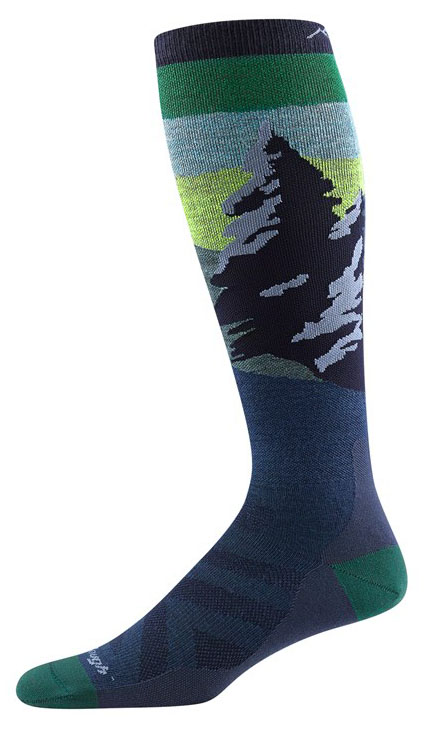 Materials: 52% nylon, 45% merino wool, 3% Lycra
Thickness: Light
What we like: Quality and durability are hard to match.
What we don’t: Not the softest (but not far off).
Darn Tough is another brand churning out some of the best socks: They’re constructed mostly of merino wool, made in Vermont, and come with a lifetime warranty to back them up. But what truly sets Darn Tough apart is its durability: We still have ski and hiking models going strong after 5+ years of consistent wear. Their lineup is undeniably extensive—and admittedly hard to decipher with all the various names—but we especially like the OTC Lightweight models (including the Solstice and women’s Alpine), which hit a nice middle ground in cushioning and warmth for season-long resort use. There are many variations that differ slightly in price and materials, but all share the same excellent build quality and long-lasting construction.
The merino/nylon combination of Darn Tough’s OTC Lightweight models is reasonably soft to the touch yet tough, and the seamless design helps to avoid irritation against your foot from a long day on the mountain. Further, the socks have just enough cushioning to offer moderate warmth and protection when leaning hard into your boots. We ranked the Smartwool higher because we prefer its slightly snugger fit and more merino-heavy build, and the Darn Tough socks are more prone to loosening if you don’t wash/dry them after every outing. But the quality and durability are truly top-notch.
See the Men's Solstice OTC Lightweight See the Women's Alpine OTC Lightweight

 Materials: 60% wool, 30% stretch nylon, 9% stretch polyester, 1% spandex
Thickness: Medium
What we like: Great cushioning and price.
What we don’t: Bulky and loses its shape over time.
If you’re struggling with the idea of spending $30 or more on a pair of ski socks, the good news is that there are deals out there to be had. Our favorite value option is the Wigwam Sirocco, which costs nearly half the price of the Darn Tough and Smartwool options yet still offers plenty of warmth and comfort for a typical day on the slopes. Keep in mind that the Sirocco is prone to losing its shape over time, but the mix of wool and nylon is cozy and soft, and the medium-thickness cushioning can help fill out a pair of loose-fitting rental boots (although there's no replacement for getting sized right).
It’s important to note that the Wigwam Sirocco is not ideal for performance-oriented skiers, as the sock is too thick and doesn’t hug your foot as well as the pricier models. But on the plus side, it offers similar levels of warmth from the healthy dose of wool in its construction, and we’ve found it as cheap as $10 even in the heart of the winter buying season. That’s a downright bargain for weekenders who want a reliable pair of ski socks on a budget.
See the Wigwam Sirocco Midweight OTC
 Materials: 55% merino wool, 41% nylon, 4% elastane
Thickness: Ultralight
What we like: Close, performance-oriented fit and great breathability for active pursuits like touring.
What we don’t: Durability falls short of the light- and midweight competition.
Ultralight ski socks can be a great option for those with snug-fitting, performance-oriented ski boots—again, your liner does most of the insulating work—and the Smartwool Ski Zero Cushion OTC is our favorite in this category. The close, minimally padded fit keeps you close to your boots for added precision and feel on the slopes, and you get the same level of comfort and odor-fighting power that Smartwool is known for. We’ve worn several generations of this sock over the years, and they continue to boast an excellent fit and breathability—a great combination for high-output uses like ski touring and exploring the sidecountry.
In choosing an ultralight sock like this one, you do sacrifice some durability. The thicker Smartwool and Darn Tough models will last much longer, and we don’t recommend wearing the Ski Zero Cushion for anything other than skiing. Keeping them on around the house or in town will add unnecessary wear to the thin build. But for backcountry skiers and those who demand a lot from their setup, it’s a well-executed and comfortable performance option at a reasonable price.
See the Men's Ski Zero Cushion OTC See the Women's Ski Zero Cushion OTC
 Materials: 64% polyamide, 28% Lycra, 8% Nanoglide
Thickness: Light
What we like: Excellent compression design for ski touring.
What we don’t: Expensive.
Dissent Labs may not be on everyone's radar, but they’ve developed a loyal following among the ski touring crowd. What stands out about their GFX Compression Hybrid model is its comprehensive feature set: You get compression for a snug, reliable fit, padding in strategic areas for comfort on both uphill and downhill, and a synthetic build that breathes well and dries quickly. And the benefits of a compression sock extend beyond fit. By improving circulation, compression socks can help keep feet warm and reduce muscle fatigue and soreness. The fully synthetic build also reduces friction inside the boot, which might help those who struggle with blisters. All told, it’s a great option for discerning backcountry skiers who have had a tough time finding a well-fitting sock.
The biggest impediment to the GFX Compression Hybrid, by far, is its price. It’s the priciest option on our list, but that’s par for the course for compression socks. In truth, most resort and backcountry skiers will be just fine with a sock like the Smartwool or Darn Tough options that come in at around half the Dissent's price. The sheer expense is what hurts it in our rankings, but you can’t fault the GFX’s quality and performance.
See the Thermic Dissent GFX Compression

Materials: 19% merino, 19% polypropylene, 60% nylon, 2% elastane
Thickness: Light/medium
What we like: A mostly-synthetic sock that’s just as soft as merino options.
What we don’t: Expensive for a synthetic sock.
Bridgedale’s Easy On Merino Endurance Socks won us over on a recent ski testing trip, and we’d be remiss not to include them here. Of all the merino-blend socks on this list, the Easy Ons have the lowest merino content (19%), but we don’t think that’s a bad thing in this case. In fact, we found the Easy Ons just as soft as most of the other merino socks in this list, and the heavy dose of nylon gives them a serious boost in durability. Ours have held their stretch and shape after a full season of use. The fit is snug but not restrictive, they wick sweat easily, and the light cushioning provides just enough support for long days on the hill. Though they’re labeled lightweight, we think they’re thicker than most other lightweight socks we’ve tested.
That said, these socks are on the expensive side for the amount of merino they have. The mostly synthetic build means these socks need to be washed more often to avoid a stink (luckily, they’re durable enough to withstand many trips through the wash). But other than that, we don’t have many bad things to say about them. They’re a great choice for those who want the next-to-skin softness of a wool sock, but also want something that will last more than a couple of seasons of heavy use. So long as the price is within your budget, the Bridgedales are a great choice.
See the Men's Easy On Merino Endurance See the Women's Easy On Merino Endurance
 Materials: 80% MicroSupreme, 15% nylon, 5% elastane
Thickness: Medium
What we like: A well-made synthetic sock at a great price.
What we don’t: Slightly less comfortable than merino designs.
One of only a few synthetic models on our list, the Eurosock Ski Zone Medium Weight offers a performance fit at a great value. Made primarily of a hollow-core acrylic fiber called MicroSupreme, these socks are designed to address the biggest complaint about synthetic socks: stink retention. While a merino wool sock usually can last a couple of days before needing a wash, most synthetics smell rather ripe by lunch. The Eurosocks do an admirable job in this department, falling short of merino. And importantly, the rest of the design is well thought out, including extra padding in high-wear areas and a snug, secure fit around the entire foot—plus a nice selection of bright colorways to choose from.
The Eurosock Ski Zone undercuts much of the competition in price while still delivering fit and performance that stack up decently well to the options. That said, while the synthetic build does a decent job of mimicking merino’s odor-fighting abilities, these socks will still require more frequent washing than wool alternatives. Comfort is another concession, although the difference isn’t too major. Editor's note: The Medium Weight model here is great for those who prefer the extra volume and warmth, but if you require less cushioning and shin padding, we recommend Eurosock’s Ski Supreme (lightweight) or Ski Superlite (ultralight).
See the Eurosock Ski Zone Medium Weight

Materials: 49% nylon, 48% merino wool, 3% spandex
Thickness: Medium
What we like: Another good value option from our favorite co-op.
What we don’t: Those who get out frequently will benefit from spending up for Smartwool or Darn Tough.
We often turn to REI’s in-house collection when value is a top priority, and their Powderbound Midweight Snow Socks are no exception. Part of the brand’s wider Powderbound lineup—which also includes resort-focused ski jackets, pants, and bibs—these socks will save you per pair compared to leading options from Smartwool and Darn Tough while stacking up favorably in many areas. Like our top-ranked picks, the Powderbound boasts a healthy dose of merino (48%) to maximize moisture wicking and odor prevention, along with nylon and a little spandex for added durability and stretch. REI also equipped the socks with seamless toes to limit chafing and hot spots, and we appreciate that the fit is snug but not restrictive—plus, the Powderbound holds its shape well over time, which isn’t always the case with REI socks.
What’s not to like with the REI Co-op Powderbound Midweight? For starters, these socks are designed for both skiing and snowboarding, which means you forgo the targeted shin cushioning many ski-specific models offer. They’re also on the thicker side, which is great for riders who run cold but overkill for mild conditions (modern ski boots can provide a surprising amount of warmth if fitted properly). If you like the value of the Powderbound Midweight but prefer something thinner, REI also offers the socks in a lightweight version. Both options are nice for beginners and casual resort-goers who don’t demand a lot of performance out of their socks, but we’d point dedicated skiers to one of the pricier and more specialized options.
See the REI Powderbound Midweight

Materials: 60% merino wool, 26% nylon, 13% stretch nylon, 1% spandex
Thickness: Medium
What we like: A thick sock for cold feet and those who want a lot of cushion.
What we don’t: Overkill for most; not as soft as the other merino options.
New Hampshire-based Minus 33 is well-acquainted with the cold, and their expertise shows in the Micro Cushion OTC sock, which is the thickest on this list. Despite what the name might suggest, this merino sock has a ton of padding along the shin, back of calf, heel, and toes. They’re a great option for those who need a lot of cushion to stay happy all day on the hill, or for those who run cold and don’t want to spend up for a compression sock. And if you’re worried about overheating, the sock has a thinner material at the top of the foot to improve ventilation. For reference, we tested this sock in milder spring ski conditions in the PNW and didn’t overheat. The merino does a great job at wicking sweat and other moisture, too.
In a side-by-side comparison, the Minus 33 isn’t as soft as most of the other merino options on this list, despite its high merino content (60%). The less-than-premium materials do help keep costs low, and we like that durability remains a high point. Between the thick padding in high-wear areas and the synthetic materials in the build, the OTC HM Elite socks are hard-wearing, and aside from some light pilling, they’ve held up well to consistent use.
See the Minus33 Micro Cushion OTC

Materials: 38% nylon, 31% merino wool, 29% polyester, 2% elastane
Thickness: Medium
What we like: Fun array of designs and patterns adds a nice dose of flair; newest version ups the amount of merino wool.
What we don’t: You can still get more wool for less.
Stance may lack the name recognition of big-time players like Smartwool and Darn Tough, but make no mistake: this California-based brand knows how to make a solid pair of socks. We’ve tested several of their hiking and skiing designs over the years and have had largely positive experiences with overall quality, durability, and performance. Their Medium Performance Wool Snow OTC socks here are no exception, combining a functional merino blend with the brand’s medium cushioning, mesh zones for added breathability, built-in arch support, and a seamless toe closure to prevent rubbing. And we can’t help but love the vibrant selection of fun patterns, which have some serious flair.
The newest version of the Stance Medium Performance reduces the nylon component from 46% to 38% and increases the merino wool component from 20% to 31% across all patterns (the previous version varied by color, with merino ranging from 20% to 31%). This makes the Stance more competitive, though you can still get more merino wool for less or just a couple of dollars more. For example, our top-ranked Smartwool sock has 57% merino, and the Darn Tough has 45%. Those socks will cost you an additional buck per pair, making them the better overall value if you appreciate wool in your ski socks. That said, the Stance still stacks up well in overall performance, and we like its fun, good-looking designs.
See the Stance Medium Performance Wool OTC

Materials: 29% bamboo rayon, 48% nylon, 21% merino wool, 2% elastane
Thickness: Light
What we like: Purpose-built for long days on the skin track.
What we don’t: Expensive and overkill for most.
Designed in collaboration with decorated freeskier Cody Townsend, the namesake Cody Townsend Pro Socks from Lé Bent are tailor-made for committed backcountry riders. One unique addition is the use of rayon from bamboo, which is soft and smooth against the skin and provides a nice boost in all-day comfort. The socks also include silicone strips along the back of the ankle and around the cuff to minimize bunching, which is especially helpful while ascending steep slopes. Rounding out the build, you get added cushioning at the toe box for extra warmth and impact resistance, a compression-like fit at the shin and calf, and mesh ventilation zones over the top of the foot to release excess heat. Taken together, the Cody Townsend Pro is about as purpose-built as it gets for heart-pumping backcountry riding.
All that said, they are a steep investment for a pair of socks, and not everyone needs (or will want to pay for) this level of performance. For reference, you can save a lot by opting for the Smartwool Ski Targeted Cushion OTC or Darn Tough OTC Lightweight, both of which include more merino for better odor resistance and moisture management. That said, we’ve found the Cody Townsend Pro to be a quality competitor to those designs with excellent comfort, shape retention, and stretch. And for an even more breathable option, Lé Bent offers the socks in a Zero Cushion model for the same price.
See the Lé Bent Cody Townsend Pro

Materials: 38% polyamide, 24% merino, 18% lyocell, 18% Polypropylene, 2% elastane
Thickness: Light
What we like: Thin, performance sock with a precise fit; the line comes in many thicknesses.
What we don’t: Overbuilt for most.
Germany-based Falke has been making socks since 1895, so it’s safe to say they’re experts in the field. The SK series is a case in point: These socks are constructed with a mix of natural and synthetic materials for a great balance of comfort and durability. The SK6 Pro is our favorite for performance skiers because it has just the right amount of cushioning along the ankle and shin to stay comfortable, but is otherwise thin enough for precise power transfer. Fit is our favorite part about these socks, and we think that Falke does it better than most. Even the bottom of the sock is considered: The ribbed cushioning expands and contracts with your foot throughout the day, providing the right amount of warmth and padding depending on the conditions.
We also like the SK series because Falke makes it easy to determine the level of cushioning you need. The series has six models in total, each with a different thickness, from the SK1 Comfort (thickest sock) to the SK7 Race (thinnest sock). All have a slightly different blend of materials, but use both synthetic and natural fibers. To be sure, there is a lot that goes into these socks, and most weekend warriors won’t be able to tell the difference between them and the less engineered ones in this list. But those with finicky feet might find the thoughtful designs helpful for eliminating hotspots. As a last downside, the SK series socks don’t come cheap, but the 6 Pros have so far proven very durable in testing and haven’t stretched out as much as other thin socks we’ve tried.
See the Men's Falke SK6 Pro See the Women's Falke SK6 Pro
Unlike more technical gear, it can be tough to differentiate among ski socks, but we prioritize softness, durability, support, and cost each season. There are lots of great options, but our standards are high, and we try to include the best designs for a variety of use cases. Not every sock we test makes the cut, and we understand you might be curious which socks we've dismissed and why we decided to do so.
In this update, we removed the Icebreaker Merino Ski+ Light OTC from the list because we didn't find the material quality as high as Smartwool's Targeted Cushion OTC sock. The Icebreaker is also pricier, which pushes the Smartwool forward as the better choice.
We decided to remove the Darn Tough Thermolite RFL Over the Calf Ultra Light sock from the list as well. Though it performed well in testing, it didn't outperform any of the merino blend socks on this list. And for a fully synthetic design, it lands on the pricey end.
The CEP Ski Ultralight sock didn't make the cut either because we found the Thermic dissent GFX Compression Hybrid sock to be a better compression design in testing. It wasn't as soft as the Thermic or other merino options, and it comes at a high price.
There are also several socks we tested last season that simply didn't stand out from the competition. It's not that they performed poorly; they just didn't outperform any of the socks already listed here. These include the Gordini Ripton UL, Helly Hansen Alpine Socks Technical, Ortovox Ski Tour Comp Long Sock, and the Ridge Merino Ritter Sock.

| Sock (Men's/Womens) | Price | Materials | Thickness | Padding |
|---|---|---|---|---|
| Men's Smartwool Targeted Cushion/ Women's Targeted Cushion | $30 | 57% merino, 40% nylon, 3% elastane | Light/medium | Yes |
| Men's Darn Tough Solstice/ Women's Darn Tough Alpine | $30 | 52% nylon, 45% merino, 3% Lycra | Light | No |
| Wigwam Sirocco Midweight OTC | $17 | 60% wool, 30% nylon, 9% polyester, 1% spandex | Medium | Yes |
| Men's Smartwool Ski Zero/ Women's Ski Zero Cushion OTC | $29 | 55% merino, 41% nylon, 4% elastane | Ultralight | No |
| Thermic Dissent GFX Compression | $63 | 64% polyamide, 28% Lycra, 8% Nanoglide | Light | Yes |
| Men's Bridgedale Easy On Merino/ Women's Easy On Merino | $32 | 19% merino, 19% polypropylene, 60% nylon, 2% elastane | Light/medium | Yes |
| Eurosock Ski Zone Medium Weight | $25 | 80% MicroSupreme, 15% nylon, 5% elastane | Medium | Yes |
| REI Co-op Powderbound Midweight | $25 | 49% nylon, 48% merino, 3% spandex | Medium | No |
| Minus33 Micro Cushion OTC | $27 | 60% merino wool, 26% nylon, 13% stretch nylon, 1% spandex | Medium | Yes |
| Stance Medium Performance Snow | $29 | 38% nylon, 31% merino wool, 29% polyester, 2% elastane | Medium | No |
| Lé Bent Cody Townsend Pro | $44 | 29% rayon, 48% nylon, 21% merino, 2% elastane | Light | Yes |
| Men's Falke SK6 Pro/ Women's Falke SK6 Pro | $42 | 38% polyamide, 24% merino, 18% lyocell, 18% Polypropylene, 2% elastane | Light | Yes |
One key to a great day at the resort or in the backcountry is happy feet, and a quality pair of ski socks can go a long way. Former editor-in-chief and lifelong skier John Ellings put together our initial list of eight socks in 2015, drawing from years of experience on the slopes throughout the Pacific Northwest. Former managing editor Sarah Nelson began contributing to the guide in 2020, bringing her years of experience skiing at resorts all over the Mountain West. Editor Maddie Downie currently manages this guide as of 2025. Maddie splits her winter between skiing in bounds at Mount Baker Ski Resort and in the North Cascades backcountry, and she’s picky about the socks she wears in either case.
Our current selection of 12 ski socks is the result of ongoing testing, firsthand info from trusted contributors, and feedback from the online skiing community. Comfort is at the top of our priority list when we test socks, and we also look closely at warmth, cushioning, and overall fit. We note how quickly each pair gets smelly between washes, hoof it into the sidecountry or backcountry to gauge breathability, and document any durability issues (e.g., tears and pilling) over the long term. As always, we continue to test new and noteworthy socks as they become available.

Merino Wool
Despite a higher cost, merino remains the most popular and our most recommended ski sock material for a number of reasons: excellent fabric feel that’s soft and comfortable, odor resistance, and superior temperature regulation. In other words, merino socks keep your feet warm when the mercury drops, but you should also stay cool when spring rolls around. All told, it’s the full meal deal for your sock needs (we cover this information in greater detail in our article: Merino Wool: Is It Worth It?).
Granted, merino wool socks are rarely pure merino. A blend of fabrics, usually including some nylon for toughness and elastane or spandex for stretch, is required to provide a supportive fit that stays in place. Additionally, the fabric weave and construction are important considerations: some brands, like Darn Tough, prioritize long-term durability over supreme softness with a dense weave, while others, like Icebreaker, sacrifice on lifespan for coziness.
.jpg)
Synthetic
Most of our top picks are made with merino. However, not everyone is totally smitten with the higher price tags (an exception is Wigwam's Sirocco, which uses non-merino wool). For a more cost-effective alternative, consider a synthetic option. The designs will vary by brand, but some common features of synthetic socks include a performance fit and superior moisture-wicking. Keep in mind you’re not going to experience amazing breathability inside a ski boot—the hard shell of the boot prevents that—but these synthetic socks do manage to pull sweat away from your feet as efficiently as possible. The downsides are warmth and stink prevention, though some brands have worked hard to address the latter complaint. The acrylic-based MicroSupreme fabric in the Eurosock Ski Zone Medium Weight is an example of a synthetic that does a decent job of keeping odors to a minimum.

Nylon
Merino and synthetic are the two most common materials used in sock construction, while nylon is a secondary fabric that boosts durability and gives the socks a consistent shape. Ski socks are designed to fit snugly and not bunch up or slide around (we cover this more in our “Fit and Sizing” section), and this is where nylon and spandex come into play. Elastane (spandex) lets the fabric flex, while nylon gives the sock structure that retains its shape even after being stretched and supports your foot, ankle, and lower leg. We list the fabric construction for each product on this list, and you’ll notice a theme: 15-50% nylon. More nylon is usually associated with a performance fit that should retain its shape and avoid sagging over time. A prime example is the Bridgedale Easy On Merino Endurance sock, which is 60% merino and boasts great durability.

Ultralight
Amazingly, a super-thin ultralight sock can be a suitable option even in cold conditions—as long as you’ve spent big bucks on a nice pair of modern ski boots. Boot liners insulated with products like microfiber Thinsulate can trap hot air against your feet far better than ever before. As long as your liner fits you well and you don’t go out in positively frigid conditions, an ultralight sock is perfectly suitable. The closer, streamlined fit also improves contact with the boots, enhancing performance.
Durability-wise, ultralight socks fall short of the other options simply because of their thickness. We wouldn’t suggest wearing them too much outside of your boots. These ultralight options, including the Smartwool Ski Zero Cushion OTC, are most popular among those who work hard—hikers or ski tourers. Those who require extra cushioning or warmth may want to look at the more all-around friendly lightweight category.
Lightweight
For standard downhill skiers, the lightweight category is a great place to be—with enough cushioning around and under your foot to be comfortable but not so thick and bulky that it feels awkward inside your boot. Those who like to run an ultralight sock for average conditions or for ski touring may want a slightly thicker, lightweight option for chilly days. Some of our favorite options include Darn Tough’s OTC Lightweight models and the Falke SK6 Pro.
.jpg)
Midweight
Ski socks of old used to fall into this category, but the changes in ski boot technology have made a thicker sock far less important. The benefit of a midweight sock, such as REI Co-op’s Powderbound Midweight and Stance Medium Performance Snow, is added cushioning inside a boot, and for those who run cold no matter what, it may be worth having a midweight option. But keep in mind, boot liners are meant to fit snug, so a sock that is too thick can actually restrict blood flow and make your feet even colder. Be sure to dial in your fit just right if you plan to run a thicker midweight sock, like the Minus33 Micro Cushion OTC. If your boots are too big or you’ve packed out your liners, it could be a viable option.

We usually recommend choosing a ski sock with some shin padding for all-day comfort and to take the sting out of shin-bang (or when landing a jump). It’s enjoyed by casual and performance skiers in both the resort and backcountry, and is especially helpful for skiing on hardpack when your stance is more forward (as opposed to powder, when you’re more upright). Most often, ski-specific socks with more cushioning underfoot also provide adequate shin protection. There are, however, a few ultralight padded options out there that combine a non-cushioned design with some shin protection. And a final point here: Be wary when eyeing crossover ski and snowboarding socks, as these models typically forgo the targeted shin cushioning (we cover more of the differences in our section on Ski Socks vs. Snowboard Socks).
.jpg)
Ski socks have a few simple tasks: keep you warm, fit well, stay in place, and wick moisture. A sock’s wicking ability is particularly important for backcountry skiers or those prone to sweating. If the sock gets wet and stays wet, your feet can become cold quickly. This is where merino wool shines—not only does it wick moisture well, but it continues to insulate even when wet (unlike cotton). And while synthetic materials dry quickly, they can’t retain as much moisture as merino wool, and working up a sweat will make them smell bad. The thickness of the material also plays a role, and thinner merino wool socks, like the Lé Bent Cody Townsend Pro, are standouts in this category.
.jpg)
Following trends in running and performance gear, ski socks brands have been offering up more and more compression options. The goal of a compression sock is improved blood flow. In a ski sock application, the goal is to leverage this improved blood flow to boost warmth and possibly reduce muscle fatigue. While it’s difficult to prove, our experience with compression socks has been that they have a close fit that may offer a slight increase in warmth. What we can say definitively is that compression socks offer a supportive fit with zero bunching, which performance skiers should enjoy.
A compression sock fits exactly as you’d expect: tightly. Enough that it requires a strategy to slide them on and off. Another downside of designs like the Thermic Dissent GFX Hybrid and CEP Ski Ultralight is a substantial price bump, which can be nearly double that of a comparable standard ski sock. The average skier absolutely does not need a compression sock; only those looking for a tight, secure fit—and perhaps a slight improvement in recovery time and warmth—should consider spending that much on a pair of socks.
More than nearly any other application, having a properly fitting sock for skiing is essential. Make sure your socks feel tight around your toes, ankle, and shin without being restrictive. Any excess material and bunching can spell trouble when pinched between your foot or leg and the boot liner. This can create hot spots or worse, blisters. You also shouldn’t have to peel the socks off (compression options are the exception). Look to the sock fit range for sizes, and if you’re right on the fence, we recommend sizing down.
.jpg)
You might notice that all of our sock picks fall just below the knee. This accounts for the height of ski boots, which typically rise to the mid- or high shin. Any sock that falls below the top of your boot can cause serious discomfort and skin rubbing, so it’s important to leave wiggle room. The main takeaway: It’s best to choose a ski-specific model (rather than a hiking sock or another type of sock) to ensure you get enough coverage.
.jpg)
Many ski socks are sold as unisex, but some on our list offer women’s-specific versions. These models are often shorter—for example, the Smartwool Ski Zero Cushion OTC men's sock is 14 inches long, while the women's version is only 13 inches. Why? Women’s legs, on average, are shorter than men’s, and the difference is meant to provide a better, more tailored fit. All that said, we consider many socks gender-neutral—go with what feels best.
.jpg)
The outdoor industry has made notable inroads in the sustainability realm over the past several years, and one common practice is the use of recycled fabrics, as seen in Smartwool’s Ski Targeted Cushion OTC (30% recycled nylon) and Ski Zero Cushion OTC (31% recycled nylon). You may also come across socks that are certified to the Responsible Wool Standard (RWS)—a designation that indicates that the wool has been sourced humanely without unnecessary harm to the sheep and the land they graze on is being managed responsibly. The RWS label is more common among wool baselayers, but we hope to see it used more in socks as well.
.jpg)
Ski socks are purpose-built for skiing, but there are plenty of options for snowboarders as well. Due to differences in boot fit (snowboarding boots are typically much looser than ski boots), most snowboarding socks fall toward the thicker end of the spectrum, with midweight varieties dominating. Further, socks designed for snowboarding focus much of the padding at the top of the foot rather than the shin, which helps maintain comfort while strapped tightly into bindings. Given these important distinctions, we advise choosing a sock that aligns with your specific objectives. Smartwool’s Performance line includes several snowboard-friendly options with varying levels of cushioning. Burton’s Performance Midweight Snowboard Socks are another popular pick and come with premium touches like an odor-resistant footbed and a quick-drying toe panel for added breathability at the front of the foot.
.jpg)
All of our picks are downhill-oriented ski socks, but cross-country skiers have different requirements. In terms of construction, most dedicated cross-country models have a lower cut that falls about mid-calf, added cushioning around the foot, and no shin padding due to differences in boot design and foot movement. We also find that these socks cross over nicely for other winter activities like snowshoeing and ice skating. While regular ski or hiking socks will work just fine, XC models are much more purpose-built and will help maximize comfort and performance. A couple of our favorite designs are Darn Tough’s Oslo and Smartwool's Nordic Targeted Cushion.
Getting the proper sock fit is a key part of the warmth equation—a well-fitting sock should fit snugly to maximize heat-trapping abilities. But if you’ve exhausted your options and still find yourself getting cold feet on the slopes, heated socks could be a viable solution. Hotronic and Lenz are consistent leaders in this space, and their offerings range from minimally padded options to compression socks designed to reduce fatigue. Importantly, the heating elements are sold separately, but the process is simple: Snap one of the brand’s battery packs into the inner cuff, turn the device on, and choose your heat setting. Hotronic also sells kits that include compatible heated insoles as well for additional warmth underfoot. The biggest downside is cost: The kits are expensive (in the hundreds). Alternatively, budget shoppers can also consider disposable toe warmers—Ignik sells packs at a low price.
.jpg)
The advanced construction and materials used in ski socks do not lend themselves to durability. The nylon and merino wool blends are designed for a low-profile fit that sits well in your boot and are prone to developing holes over time. As such, we recommend taking good care of your expensive ski socks. And if you’ll be skiing a lot, it may be worth investing in a more expensive pair with a warranty. Darn Tough stands out here with its amazing lifetime guarantee, and Icebreaker also offers a 100% satisfaction guarantee (with no time limit).
.jpeg)
For sock care, it’s always best to follow the instructions given by the manufacturer. What we’ve found most successful is to turn them inside out, wash in cool or warm water, and use Tech Wash occasionally to help get out any lingering smells. To avoid pilling and premature wear, we always suggest line-drying them instead of the dryer.
Back to Our Top Ski Sock Picks Back to Our Ski Sock Comparison Table


.jpg?h=fbc67360&itok=ofljNFTS)
.jpg?h=fbc67360&itok=oGaifWVw)
.jpg?h=fbc67360&itok=-to2I6ZO)
.jpg?h=fbc67360&itok=1n06ZZey)
_0.jpg?h=fbc67360&itok=LZfjph4c)
.jpg?h=fbc67360&itok=roLTspKI)
.jpg?h=fbc67360&itok=JShxB9ES)
.jpg?h=fbc67360&itok=94jbD15Q)
.jpg?h=fbc67360&itok=FRXGLkaB)